2020, dir. Murray Pope
⭐️⭐️⭐️½
52-week film challenge, film 22
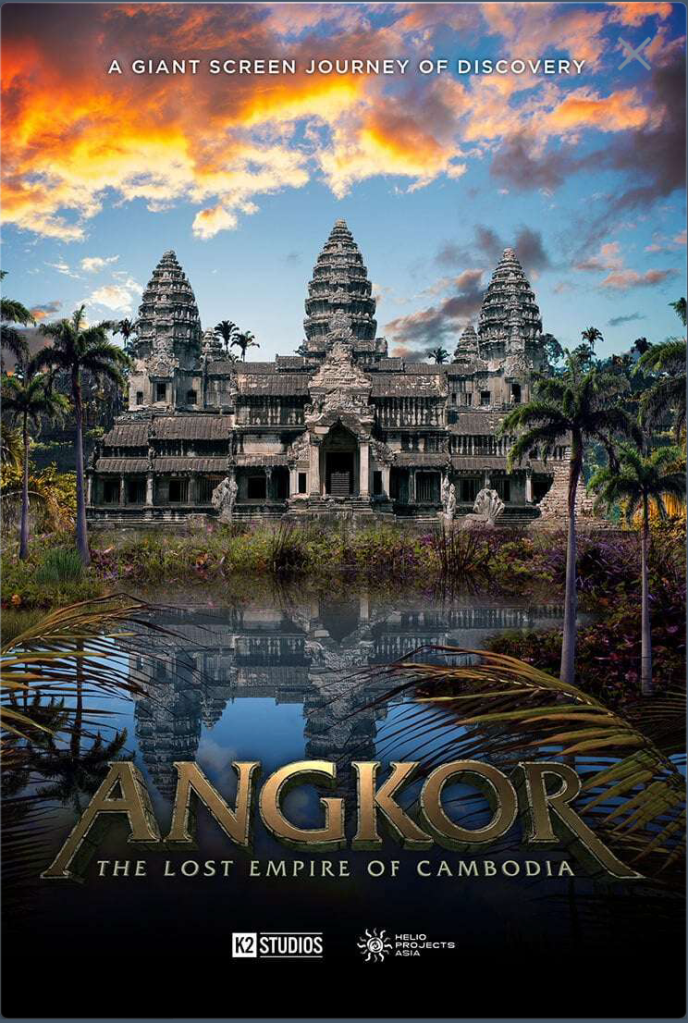
This documentary is another one of those you might see at an IMAX cinema somewhere near you, possibly in 3D (as I did). I’ve always liked travel/archeological documentaries about places I’m not familiar with or haven’t visited, and Angkor Wat in Cambodia is definitely one of those places. The structures that remain behind from this abandoned city, and the recreations of what it would have looked like in its very, very long day (from the 9th through the 15th centuries) were eye-popping.
Angkor was filled with amazing and very original stone buildings of a stunningly elaborate design, and even all these centuries later, where the foliage has reclaimed so much of the space, the merger of the two is haunting and beautiful. As great as the ruins and recreations of the buildings are to look at, it reflects a remarkable emphasis on careful engineering, which isn’t just reflected in the buildings — the entire city had a maze of waterways and carefully-managed rice paddies that enabled the population to thrive, thus funding the stone temples and palaces.

The big mystery of Angkor, which the film does drag out more than a little, is why it was eventually abandoned for the later (and still current) capitol of Phnom Penh (pronounced Pen-OM Pen). The short answer is a remarkable example of climate change, which serves as a reminder that although we hear a lot about mankind’s current influence on climate change, it is a thing that happens with or without our actions; the Ice Age was another example of mankind-free climate change.

The rest of the film concerns itself with a mix of showing off some of the restoration of Angkor Wat (the multi-temple center designed to resemble the mythical home of the Devas, Mt. Meru) that has occurred in the past few decades, once the ruins were rediscovered. The center complex, known as Angkor Wat, was constructed in the 12th century to serve Khmer King Suryavarman II, and serve as his tomb. Originally designed as a Hindu temple complex, it evolved in the 13th century into a Buddhist complex, which it remains to this day.

The film spends a bit of time on some of the techniques used to spot other ruins and structures lost in the overgrowth of the jungle away from the central complex, using helicopters and LIDAR to search do ground-mapping that can distinguish remnants of buildings through the jungle. Much more remains to be discovered, but the central complex has been mostly restored and is a popular tourist and religious destination, just 3.5 miles away from Siem Reap.

Although tourist promotion is not really the point of the movie as much as highlighting the ancient and surprisingly sophisticated culture of Cambodia, it certainly makes me want to see the place with my own eyes. Historical drawings of what it must have been like when populated are astonishing, and even today the complex water-management system of old has been restored, showing off the superb control of their environment the Khmer people once had until a decades-long drought, followed by a decades-long flood, forced them to move far to the south.
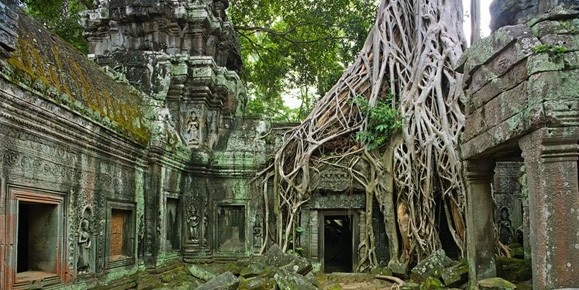
Although the design is a world away from the Mayan ruins of Mexico that I have visited, both sets of ruins serve as a powerful reminder that the peoples of the past thought deeply about the centers of their cities, usually along religious lines, and that this inspired great labours in the same way that the great cathedrals we can visit today, whether from centuries past or more recent, are likely to be rediscovered in another millenium or so. Those things we think of as “permanent” are often looked back on as fleeting, given enough distance by the march of time.
 The Chasbah