dir. Fernando de Fuentes
⭐️⭐️⭐️½
52-week film challenge, film 29
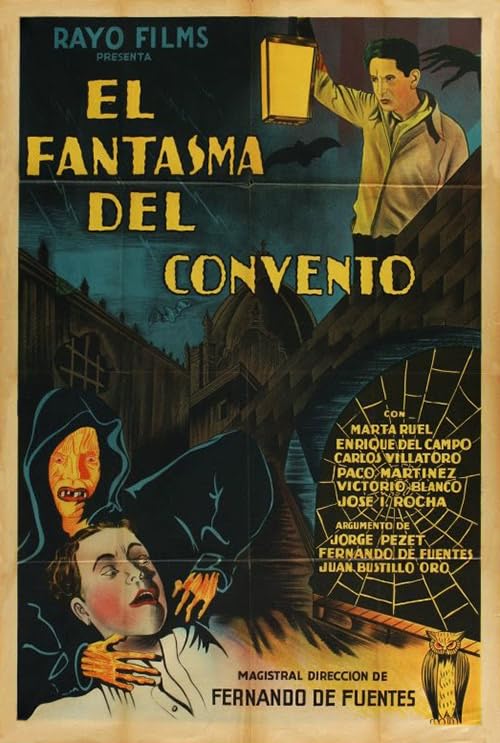
This film, often retitled in the US as Phantom of the Monestary because sexism, is a good old-fashioned ghost story for adults, made in Mexico in the mid-1930s, that’s nice and creepy. By today’s standards, it moves a bit slowly, but it lays on the atmosphere nice and thick, just like I like it.
It was largely forgotten for decades because of its paucity of “jump scares” or relatively little body horror, or maybe because it’s not dumb, nor does it have El Santo anywhere in it (he was a teenager when this came out, perhaps he saw it and thought to himself “I could do that … wearing a mask!”). Happily, it was rediscovered thanks to a Blu-ray release in 2022, and has taken its place as a well-regarded classic of early Mexican horror.
It’s just a good creepy morality tale, perhaps a touch too heavy-handed, but the surprises are spaced out just right to keep you roped into the story, and the use of lighting, cinematography, and non-music sound are superb (more about the music later). There’s also a lot of silence in this, as befits a movie that mostly takes place in the Convent of Silence.

A married couple, Eduardo (Carlos Villatoro) and Cristina (Marta Roel), and Eduardo’s best friend Alphonso (Enrique del Campo), find themselves lost in the woods and, as the film opens, Eduardo has slipped off a ravine edge and is hanging on for dear life as Christina and Alphonso rescue him in a nice bit of foreshadowing. It’s obvious right from the get-go that Eduardo is kind of a wimp in the eyes of Cristina, who has the hots for Alphonso, and the feeling appears to be mutual — though they try to behave honourably, even though Eduardo is obviously aware of the flirting.
Once he’s back up and on his feet, they hope to find shelter in a nearby convent, only to run into a mysterious monk-like figure and his large dog Shadow (although the stranger is not named, it is Brother Rodrigo, returning to the convent). He leads them to the convent, then (of course) disappears inexplicably.

The lights are on in the convent, but at first there appears to be nobody home. Eventually the Prior (a wonderfully wizened Paco Martinez) appears, explaining that the other monks have taken vows of silence, and welcoming the trio to stay the night and find their way back in the morning. Walking through the convent, our heroes notice various oddities, such as how old-fashioned the monks appear to be, including a self-flagellating monk (in shadow), and a tumbled cabinet near a room that Alphonso attempts to straighten, but which reverts the moment his back is turned.
The “wandering around” part is reprised a few times, including once where our heroes come across a room with a dozen or so open – and empty – coffins. They also come across a door to one of the cells that is blocked, and has a huge crucifix nailed to it – to keep something out, or to lock something in?

Before they can ask any questions, they are invited to share a meal with the monks. The atmosphere is thick with tension, which only ratchets up when the convent is attacked by unseen forces, which moves the monks into action. Our trio follows along discreetly, as the monks reassemble in a “battle station” of sorts to try and fend off the unseen horror through vigorous prayer. The threat passes, and the trio quickly return to the dining room — only to find that all the bowls of soup they were eating before are full of ash now — until the monks return to the room.
The one monk who is allowed to speak but previously didn’t want to talk much returns to the dining hall and speaks mysteriously (of course) about the brothers and the threat they face. He relates a story about Brother Rodrigo that has a direct parallel to the adulterous triangle of our hapless heroes. Rodrigo lusted for his best friend’s wife, eventually murdering his friend and subsequently was consumed with guilt, returning to the convent to unsuccessfully atone for his sins. The blocked cell with the giant crucifix is, you guessed it, Rodrigo’s cell.
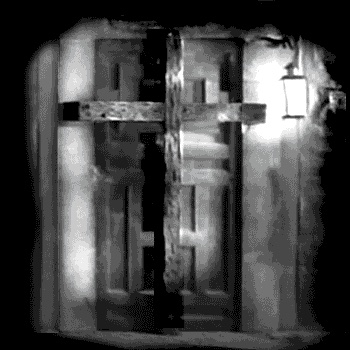
All three of our protagonists seem enraptured with the story and feel that they are under a spell of some kind, but in particular Cristina appears to (and even articulates) be most influenced by the events in a strange way – seemingly getting more and more aroused by the events they are witnessing. When the three are escorted to their three separate cells (it is a convent, after all), she goes immediately to Alphonso and makes allusions that she is as ready as she’ll ever be to consummate their relationship (it is the 1930s, after all). Alphonso is also ready, but finds the willpower to resist her under the spooky circumstances, which angers Cristina.
The mystery deepens, weirder things happen, and the film slowly builds to a deliciously scary climax (not involving Cristina, har har) in which Alphonso wrestles with his guilt, and his temptation, and works his way into Rodrigo’s cell, where the mummified body of the monk still resides, and he encounters an undead version of Eduardo and a book that drips blood, and is tortured by visions before collapsing.
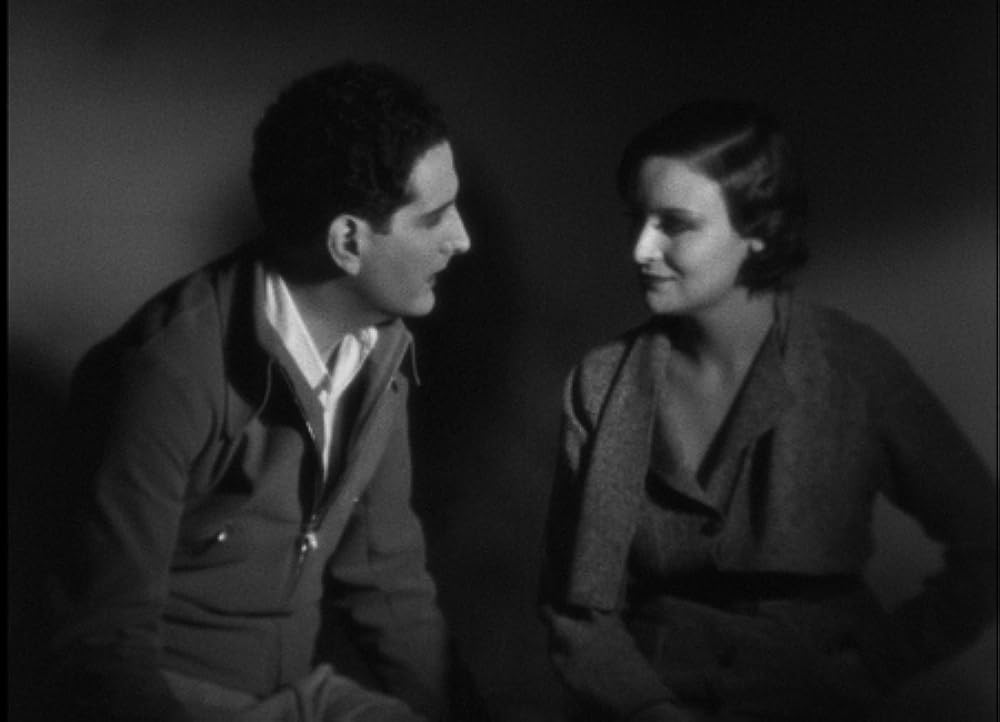
He awakes in the morning, gathers his friends (who are all okay), and they hurriedly try to leave. There’s a great denouement where they discover a caretaker (Jose I. Rocha), who doesn’t believe a word of their adventure and shows them the reality of the place, which has been abandoned for centuries. Was it all a shared hallucination, time travel, or what?
If you are in the mood for an old-fashioned ghost story, if you enjoyed the Mexican version of Dracula, or if you just appreciate well-shot, moodily-lit horror films like Frankenstein, you’re likely to enjoy The Phantom of the Convent as well. The biggest flaw in the film, in my view, is the sometimes-histrionic and mostly-stock soundtrack, which tries far too hard and too often to built tension or suggest a climactic moment that, until the film’s actual pinnacle arrives, is ill-suited to this gentler horror movie. Thankfully, it’s not there all the time, and when a genuinely climactic scene does finally appear, the music is finally ready for it.

I think the film holds up very well, particularly given that it was made in the 1930s, though viewers should be aware that the influence of Catholicism in Mexico was strongly dominant at the time. Even better, it’s left hanging as to the ultimate fates of the three friends, though it would appear the lust factor has been forgive me – exorcised from Alphonso and Cristina.
 The Chasbah