⭐️⭐️⭐️⭐️½
52-week film challenge, film 32

I don’t think I’ve ever seen the full Japanese version of Godzilla before, certainly not as an adult, but of course I’ve seen the Americanised “Raymond Burr” version — Godzilla: King of the Monsters! — a time or 10. Like many people, I climbed aboard the kaiju train as a kid, when all these great monster movies started showing up on TV on the weekends, so I caught most of them back then. TV stations at the time of course tended to show the later colour films which were more aimed at kids, so I don’t think I’ve even gotten around to seeing Godzilla Raids Again (1955) either, a grievous mistake that should be corrected soon.
The first Godzilla is most definitely not a kid’s movie: it is a lightly-abstracted but still powerful statement on the horrors of nuclear weapons, and a philosophical exercise pondering where Japan (and the world) goes from here. In this film, Godzilla is the spawn of the atomic bomb — and wreaks similar terror on Tokyo as the bombs dropped on Hiroshima and Nagasaki did, with incredible loss of life and property.

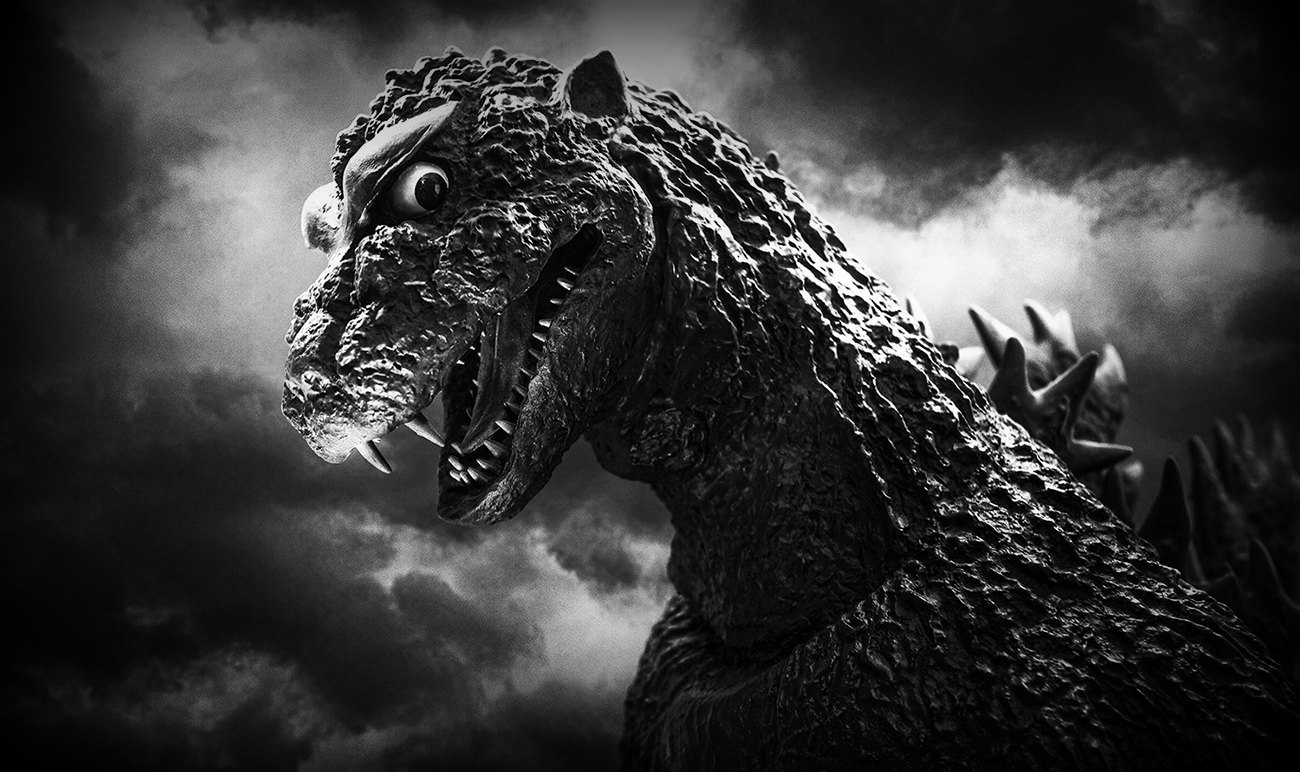
When the film was made, postwar Japan was still wrestling with the consequences of its own actions in WWII, just eight years earlier, as well as the devastating and overwhelming American response, which was to destroy entire cities full of innocent civilians (about a quarter million in total) — the greatest act of deliberate mass-murder had seen at the time, until the full horror of the Holocaust was revealed. The Godzilla creature in this first movie was intended to be seen as an utterly terrifying and unstoppable force, even though even I have to admit the face they gave it is … unintentionally kind of cute.
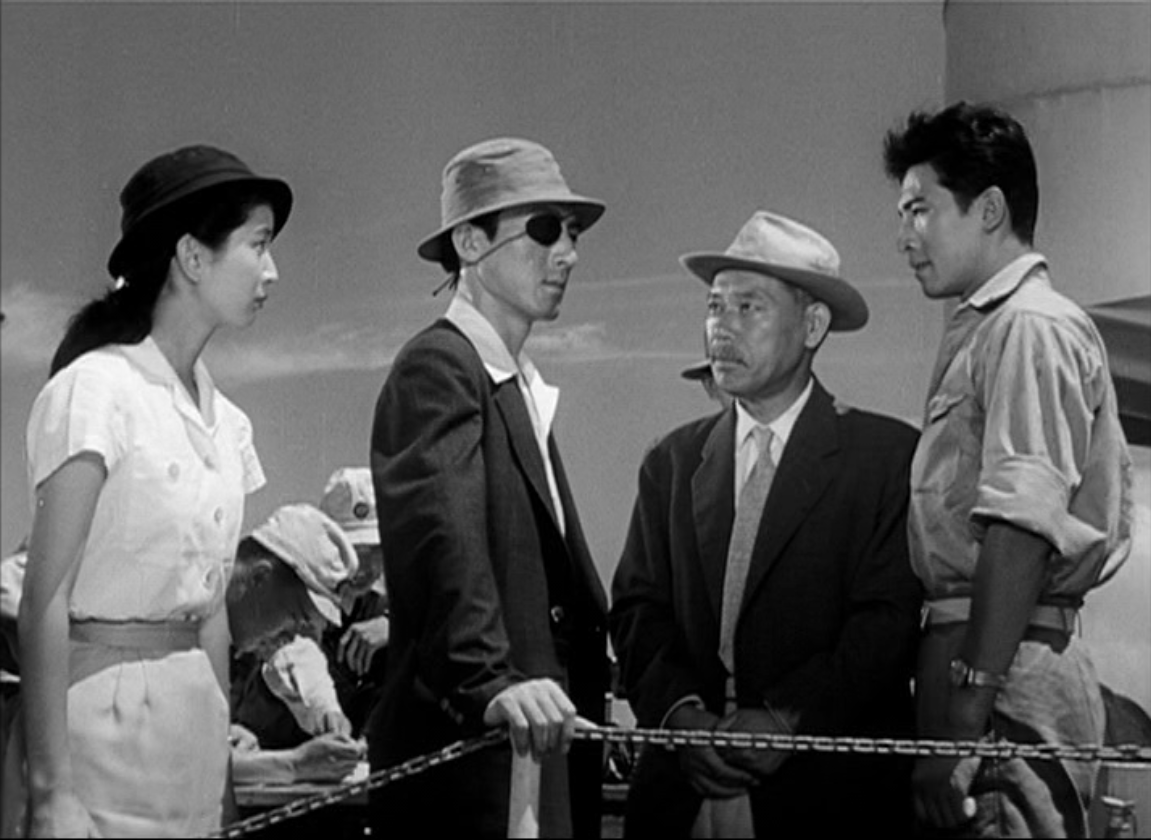
The B&W cinematography of Godzilla is terrific, and the cast are first-rate: from venerated actor Takashi Shimura (best known as the leader of The Seven Samurai, but also featured in Roshomon, Ikiru, Yojimbo, The Hidden Fortress and many more classic films, here playing the pacifist scientist Kyohei Yamane) to relative newcomer Akira Takarada (playing the hero role of Ogata), Akihiko Hirata as the anti-hero scientist Serizawa, and the radiant Momoko Kôchi as Emiko Yamane, Kyohei’s daughter — a role she reprised in her last film, 1995’s Godzilla vs. Destroyah. All the players, from the greatest to the smallest roles, are played with deep conviction and seriousness.
I will take an indulgent moment here to note my deep fondness for the fashion of the 1950s — everyone in the film looks fantastic, with the men in suits or lab coats, police and military in sharp uniforms, and Emiko in fashionable garments of the time, with everyone looking smart and well-groomed. It’s a reminder of one element of the world gone by I wish would make a comeback, even as I myself fail to adhere to it.
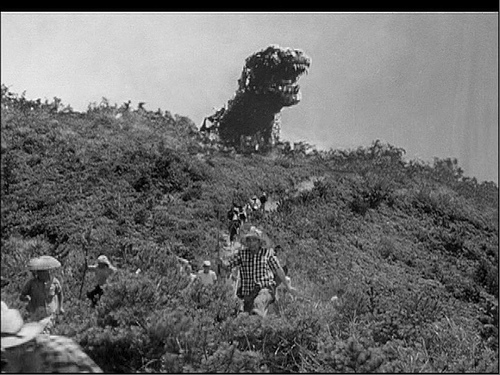
The compositing in the film should also be noted, as it is considerably above-average for the time. I caught only one moment in the film where the effect wobbled a bit — some power-line fortifications meant to stop Godzilla — but was otherwise nearly flawless. The moment when Godzilla’s head pops up over a mountain being approached by scientists is a perfect example: though it might be seen as amusing now, it was undoubtedly surprising and convincing in showing Godzilla’s scale early on in the film.
The analogy of the war that had recently devastated Japan couldn’t be more clear: while the authorities work feverishly to stop this new threat (also featuring lots of scenes of how Japan has rebuilt its civil defenses), nothing is effective against Godzilla. Dr Yamane is the lone voice calling for a less militaristic approach and for studying the creature, but doesn’t really have an answer on how to balance his wishes against the safety of the population. Emiko discovers that her other admirer, Serizawa, may have a way to stop Godzilla — but is too scared to use it, lest the secret of his super-destructive weapon fall into the wrong (or anyone else’s) hands.

This film has a lot of tension and conflict in it, with no comedic elements at all, and a lovely slow buildup of the conflict. Godzilla first attacks some ships at sea while remaining hidden underwater, eventually emerges to wreak havoc on land, and with no effective defense, the country is helpless as many are killed or injured (the scenes of attack survivors in hospital are pretty heart-rending), unveiling not only huge size and strength, but also “atomic breath” that incinerates everything on contact (oh wait, now I get it — Godzilla is the US!).
Emiko and her true love interest Ogata eventually convince the very conflicted Serizawa to use his “Oxygen Destroyer” technology to attack Godzilla underwater (also killing all sea life in the area), but you can see where the film is going from here — there is no solution without great tragedy and wasted opportunities. In the end (in real life, not the film), the point of view of Dr Yamane won out — Japan today strongly embraces nuclear power for its energy needs, but has shunned becoming a nuclear (weapon) power as you might expect, despite being surrounded by countries that do have nukes.
This film, thought of today as the start of the “giant monster movie” genre, was so powerful and effective in its analogy that it may well have helped convince the west to avoid using atomic weapons thereafter. The original Japanese version of Godzilla is a much darker, more thoughtful, and overall deeper film than the lighter, more entertaining genre it spawned, and was undoubtedly effective on both sides of the Pacific in its day. It was a serious attempt to illustrate the terror of atomic weapons — which thankfully haven’t been used since, though the world is still plagued with senseless wars.

 The Chasbah