⭐️⭐️
52-week film challenge, film 36

Normally when someone says “wanna watch a pre-Code horror movie from the early 1930s during October?” I’d be all-in. I’m disappointed to report that I’ve finally found one that, despite a few good things going for it, completely wastes its potential.
The good things first: Doctor X has a mostly-stellar cast, including Lionel Atwill, Lee Tracy, and Fay Wray. It’s in a sort of colour (more on this in a moment), which was rare for 1932. The sets are wonderful, complete with an eccentric mad-scientist lab — that oddly doesn’t belong to the mad scientist — and some downright neo-German Expressionism moments.
At the core of this movie is a plot that involves ritual murder and partial cannibalism — so yes, it’s a pre-Code horror movie all right. Despite this, almost none of what is lurid about this tale is actually shown, there’s an endless amount of talking about doing things before actually doing them, and the “comedic” element meant to lighten the tone is just irritatingly jarring, and completely amusement-free.
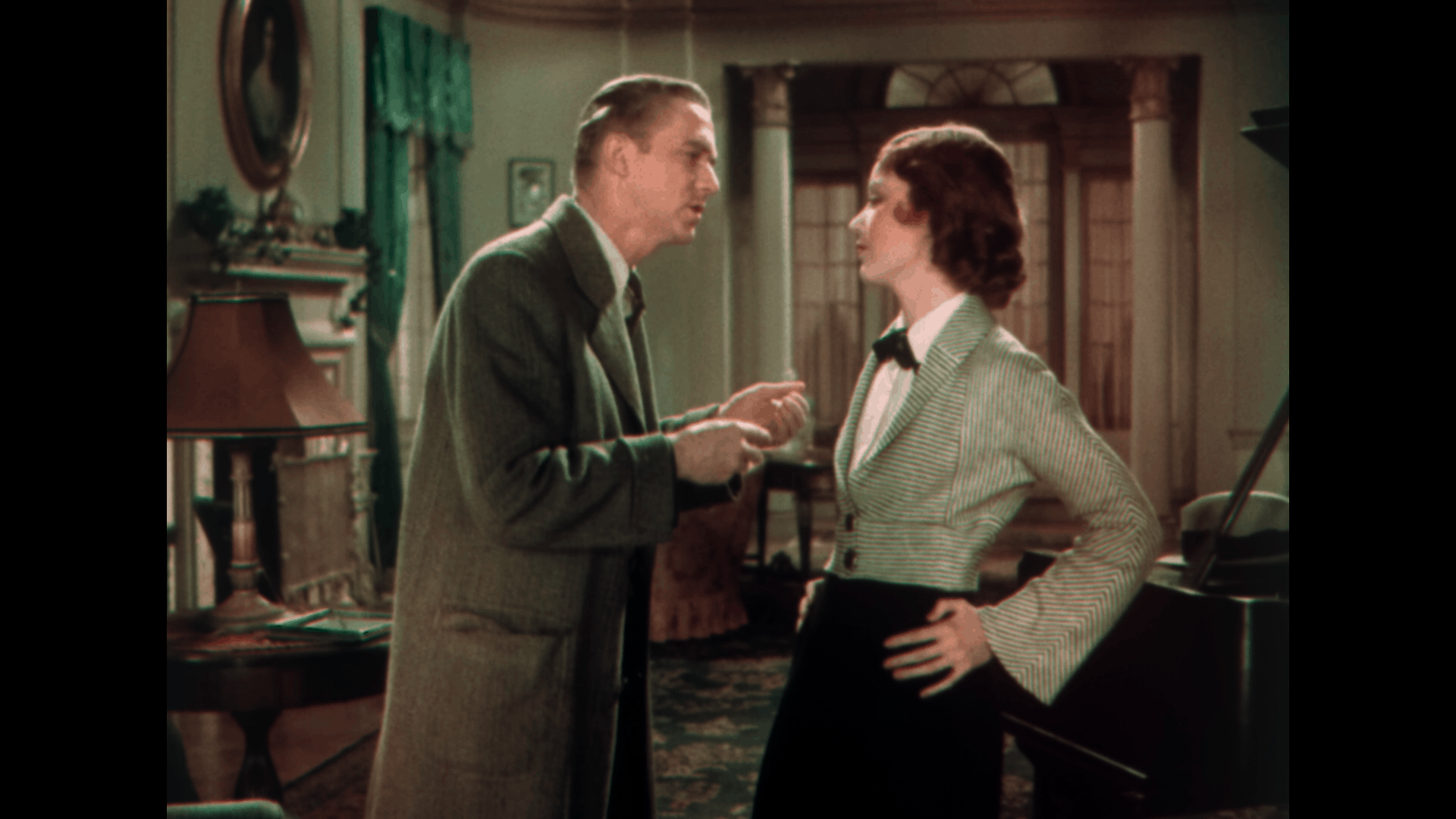
This film gets one star just for its cast, though many of the players seem off their A-game at times, occasionally having to correct their own lines as though the cost of the color filming was too expensive for second takes. It only gets a second star because the film is simply gorgeous to look at, with great sets, Max Factor makeup (!!), and the novelty of colour.
Well, as I say, sort-of colour — not quite full colour, but rather the third “process” used for two-colour Technicolor (often and incorrectly referred to as “two-strip” Technicolor). This is the same process used for the later, and more famous (but also not great) Michael Curtiz horror film, Mystery of the Wax Museum (1933).

Without getting too technical about it, anything red or green really stood out, and the filmmakers played that up here, but oddly not with blood as much as one might expect. The plot of the film belies its origins as a stage play: a handful of key sets, lots of talking, very little action.
I’m still left wondering why the movie is even called Doctor X — since the lead character, Doctor Xavier (Atwill), is not the title character, the mad killer (and that’s not really a spoiler). I suppose its because it is meant to keep you guessing who the villain is, but I picked him out around the halfway mark, and only stuck around to get the inevitable explanation of how he kept his true identity secret.
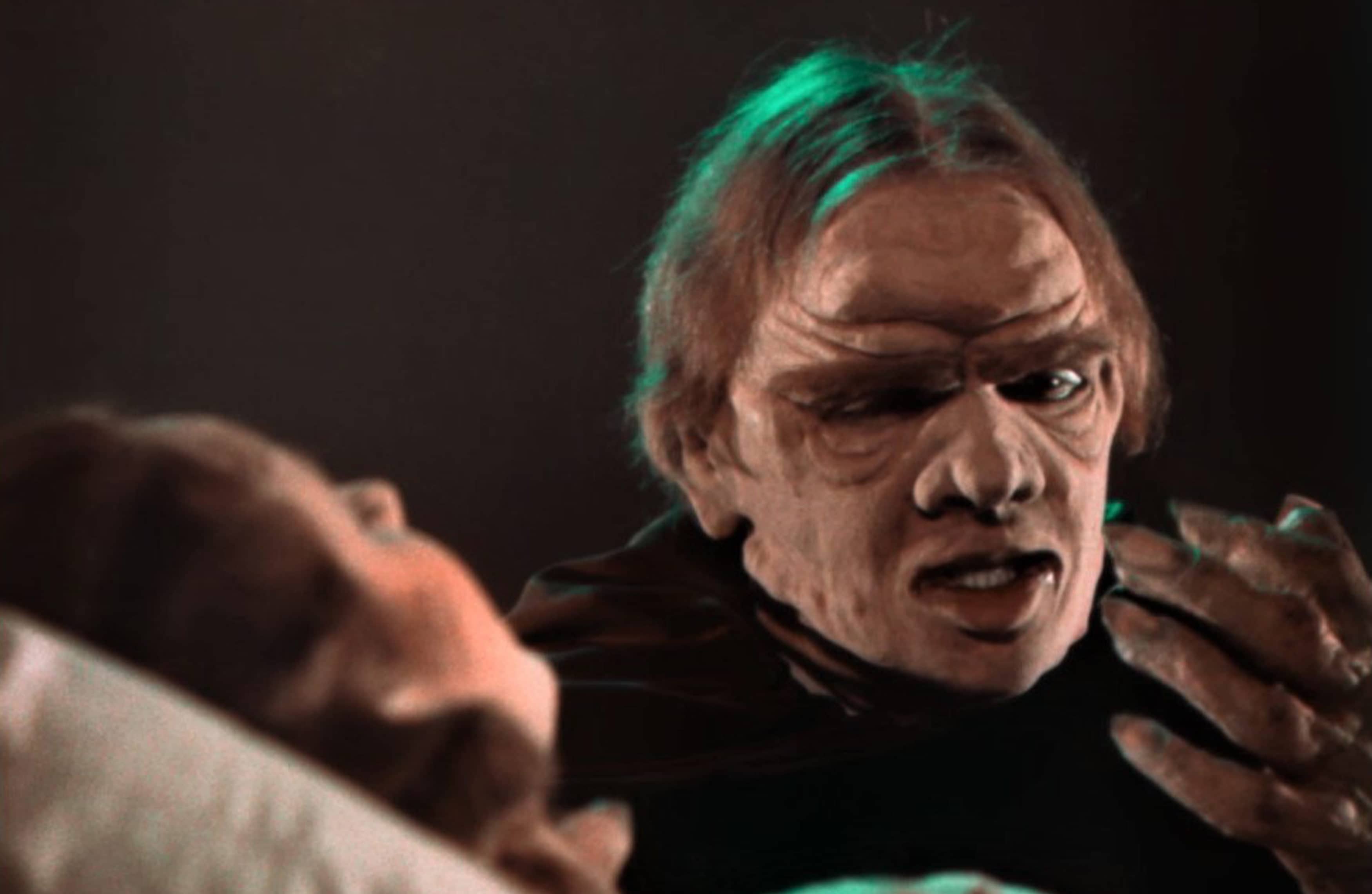
In the film itself, the series of murders that only happen under a full moon and involved a partial cannibalisation of the body means the police (and the press) refer to the murderer as the Moon Killer, which really would have been a better title. As the film opens, we find a curiously aggressive but determined reporter, Lee Taylor (Tracy), trying to find new leads on the story of the killer by quizzing police.
When that doesn’t work, he gets wind of a new victim being delivered to the morgue, and sneaks in and hides as another body in order to overhear what the coroner, police, and Dr. Xavier (called in to consult on the body) have to say. The police put the screws to Xavier quickly, pointing out that all the victims have been killed and mutilated using a special kind of scalpel found only at Xavier’s medical academy.
Xavier, fearing bad publicity that could ruin the school, persuades the police to let him conduct his own secret investigation first for the next 48 hours before telling anyone — especially the press — about this direct connection to the killer. They very reluctantly agree, and Taylor has gotten his scoop, but he also withholds some of it from his editor to see where this is all going to go.
Dr. Xavier, knowing that the scalpel connections means that the killer is one of his own colleagues, tells the other doctor/instructors of the academy of this, and arranges an experiment to determine who the killer might be — not even ruling himself out. The only doctor of the group who is pre-cleared is Dr. Wells, because he only has one hand and the killer clearly has two, and thus Wells stands in for Xavier in actually running the experiments.
Meanwhile, in the process of breaking and entering into the academy and also trying to steal a few photographs for the newspaper to use, Taylor is caught by Xavier’s daughter Joanne, thus setting up a later romantic angle — after all, how could she resist a jerk and petty criminal she caught ransacking her home in the name of a scoop?
Down in the basement, Xavier starts his investigation by having all the doctors but Wells sit in special chairs (including himself), where fantastic electrical equipment will record each man’s heart rate while they witness a staged re-creation of the last murder, using Xavier’s butler and maid to play those parts. At the height of the very Frankenstein-like electrical show, just as the readings are to reveal the killer, a blackout occurs.

When the lights come back on, the doctor whose pulse was the highest, Dr. Rowitz, is found murdered by a scalpel to the brain. Later his body is discovered to have been partially cannibalised — so the killer is obviously in the room! Dun dun DUNNNNN!
While a second experiment is arranged where the suspects will all be locked down this time (except, again, Wells), we spend way too much time following up on the efforts of Taylor to romance Joanne — which slowly begins to win her over. Because that’s how you handle obnoxious jerks who might ruin your father’s academy in the 1930s apparently. Men really could behave badly back then, and still be seen as “the hero.”

We do also see that the maid and butler are getting kind of creeped out by the events, and that the police are putting even more pressure on Xavier to find the killer. We also get lots of “funny” shots of the actual killer lurking around the house, almost but never quite getting his hands on Taylor, which is a damn shame.
After the maid refuses to participate as the victim in the second staged murder recreation, she is actually killed by the killer. Under this cloud of tragedy, Joanne steps up to play the victim role, which puts Xavier on edge, but he has no options left.

With everyone strapped in, the recreation begins again, and without spoiling things we’ll just say that the killer reveals himself by entering a secret laboratory, where his disguise method is seen by us, and then he tries to kill Joanne. Finally, Taylor has a genuine heroic moment and stops the killer, since the other doctors are restrained, and the killer meets his gruesome comeuppance.
Doctor X is woefully short on any real tension (because those moments keep getting defused by Taylor’s pratfalls and dumb luck), and as a whodunnit it probably came off as fresher in 1932 than it does now. The film is only an hour and 16 minutes long, but seems to drag in places — especially the “comedy” moments.
To borrow and paraphrase a quip from another reviewer: if you love film history, the significance of Doctor X means you sorta have to see it. If you love movies for how they make you feel, you should skip this one.

 The Chasbah