dir. Chris Petit
⭐️⭐️
52-week film challenge, film 45

I’ll admit it, the soundtrack of Radio On is what pulled me into watching it. The very late 70s, 1978-79 in particular, were the original “post-punk” years and pivotal to me finding my musical “tribe,” which covered punk, ska, and especially New Wave with its synthpop vibes, calling back to Kraftwerk and other synth pioneers.
On that front, the film ticks many of my musical boxes: early Devo, Kraftwerk, Robert Fripp, Ian Dury, Wreckless Eric, Lene Lovich, The Rumour, and David Bowie all appear in full or (mostly) bits, so the soundtrack would normally get five stars from me — except that you rarely hear the full songs. Still, the aesthetic is there, and it’s the best part of the movie.

As for the film itself, it has the loosest of possible plots: a man named Robert (David Beames) who works as a DJ for a chain of biscuit (cookie) factories — yes, playing music live to workers — has to leave his empty life in London to drive to Bristol, as his brother there has committed suicide for no discernible reason. Most of the movie is simply Robert driving to — and then back from — Bristol, making this technically a (rare) British road movie.
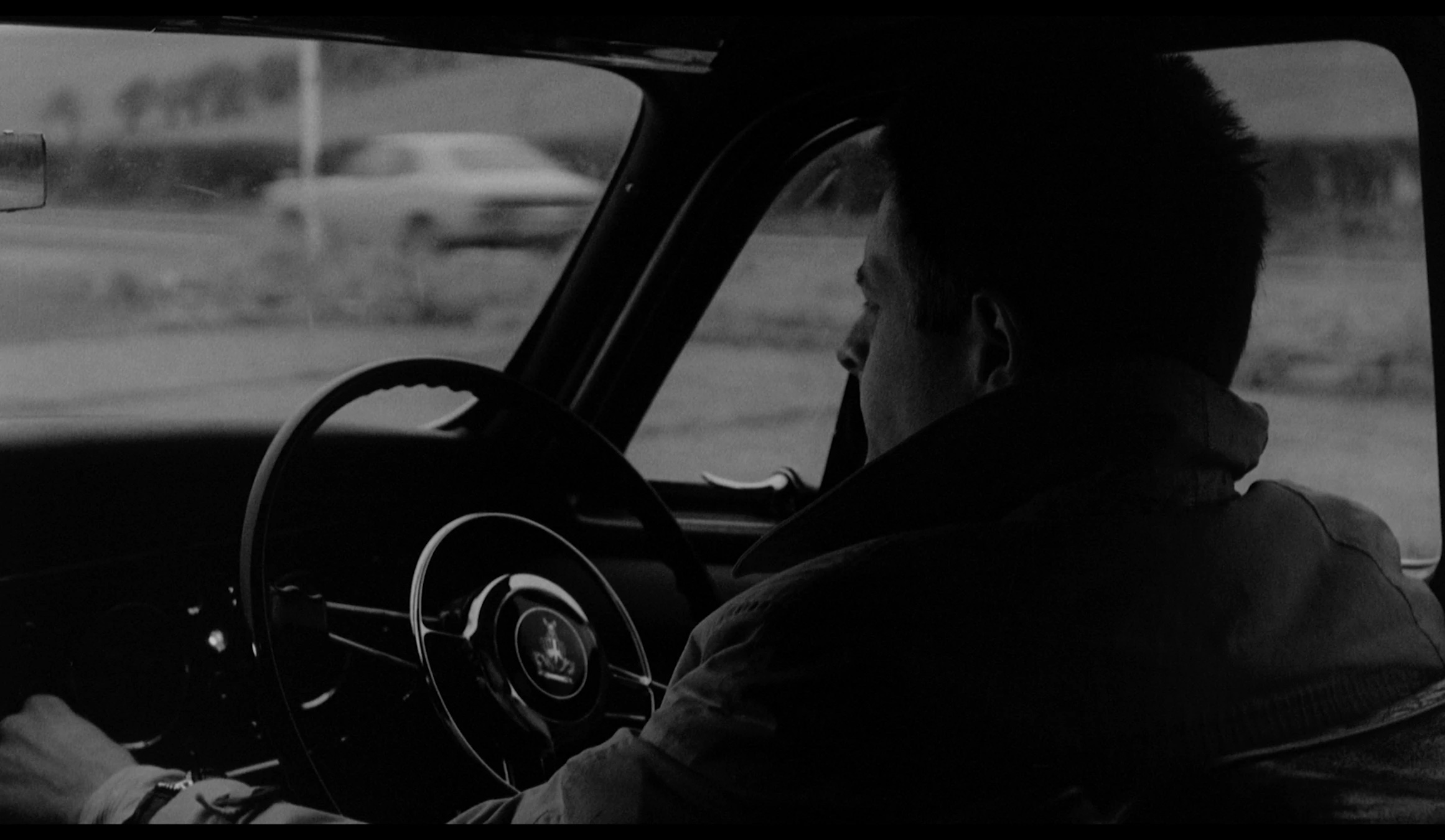
It’s shot in black and white by Martin Schäfer, best known for being Wim Wenders’ assistant cameraman — and indeed, Wenders is also involved in this. Along the journey to Bristol, he meets a few people (including Gordon Sumner, better known as Sting from The Police, who plays a homeless troubadour) and shares a few moments with various people, including a couple of girls, but nothing much actually happens.
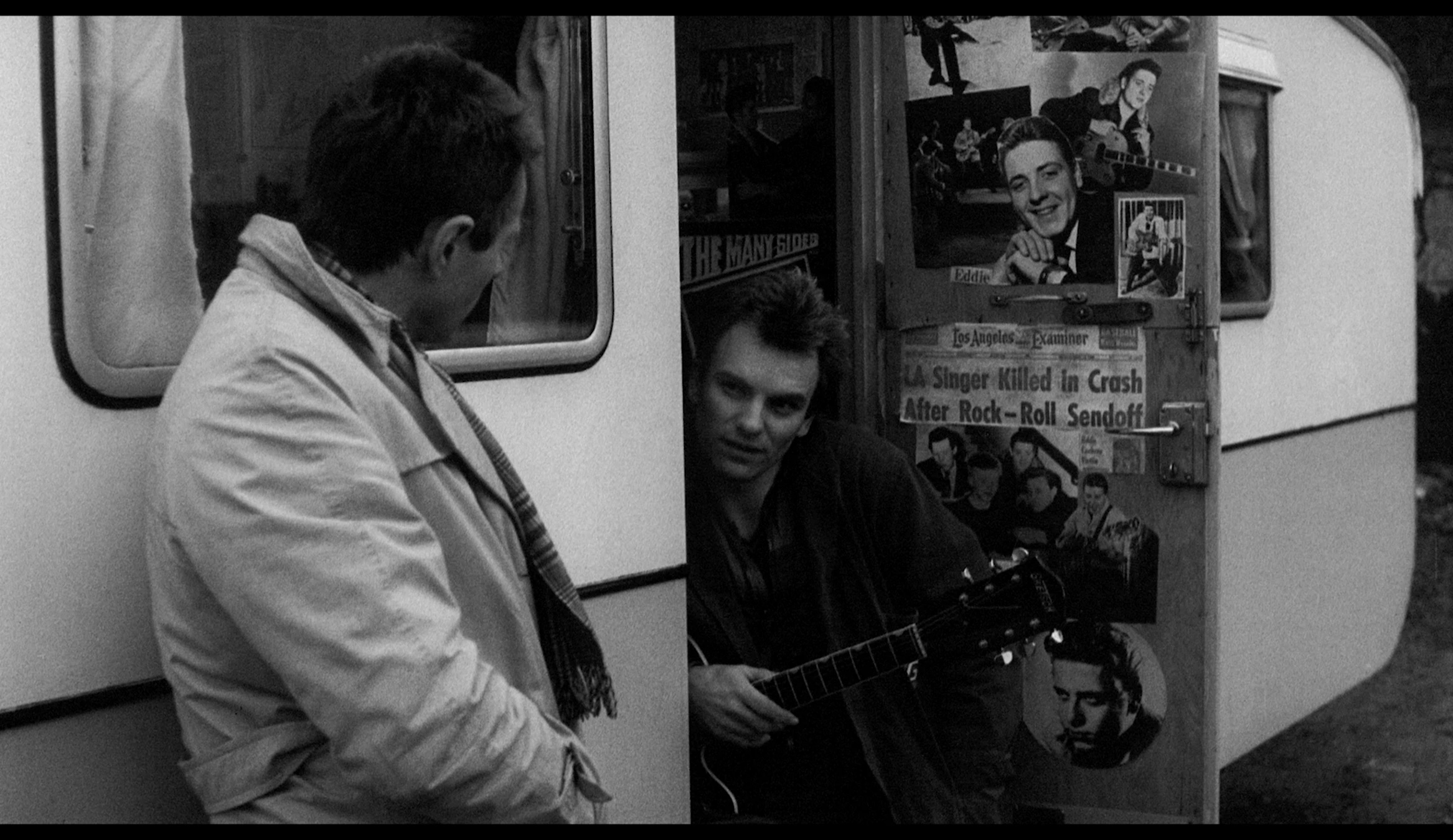
This lack of clear story and the litany of drifting, directionless characters is undoubtedly meant to convey the post-punk generations’ alienation from “society” and general ennui and aimlessness in the aftermath of punk, heralding an ongoing emergence of a world where not much gets done, and nobody seems to care much, or commit to anything. The performances, particularly Beames’ Robert, offer moody minimalism and slacker angst, which has been the soundtrack to successive generations ever since.

As symbolism, that angst and purposlessness comes across in the film; 40+ years after Radio On was made, things haven’t changed that much, though some inconsequential music and fashion trends have periodically managed to march through in the meantime. So we get a lot of well-shot but visually-flat driving to “nowhere” and then back again.

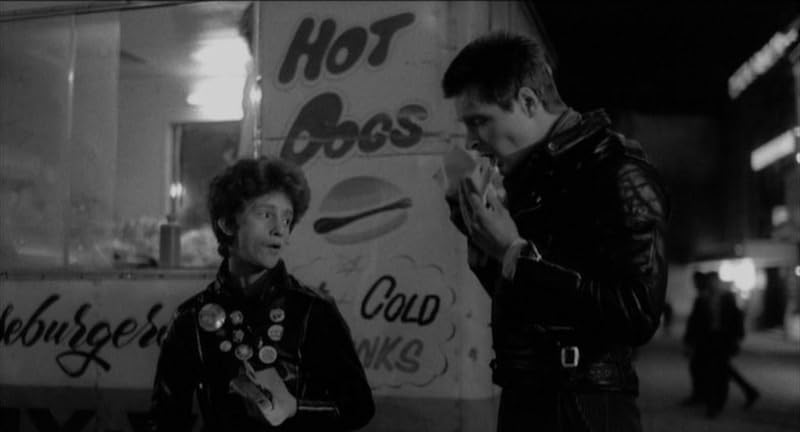
Robert finally gets to Bristol, pokes around a bit, talks to his brother’s girlfriend/partner (who has little to say) for a few days, hangs out in Bristol a bit, then begins the journey home, none the wiser. As mentioned, he meets some people going to Bristol and on the way back, and while these encounters inject some interest and really minor amounts of insight, nothing much comes of them.
The “ending” of the film, where Robert finally must abandon his misbehaving car and take the train the rest of the way home is the most interesting point in the film, primarily in contrast to the monotony that came before it.

I don’t want to make it sound like I hated this film, I didn’t — a journey is a journey, and some scenes were filmed in specific neighbourhoods I know from my own travels, and did I mention the soundtrack? — but Radio On has little to offer beyond its great musical choices and some kind of vague statement on the desperation of living in the very late 70s as a member of the “lost” generation, which as far as I can tell are still mired in their own entropy.

 The Chasbah