(Czech title: Cesta do pravěku) dir. Karel Zeman ⭐️⭐️⭐️⭐️
There’s a song by the Norwegian band synth-pop band a-ha on their debut album, Hunting High and Low, called “Living a Boy’s Adventure Tale.” Karel Zeman’s remarkable second feature film, Journey Into Prehistory (US title: Journey to the Beginning of Time) is that phrase fleshed out in colour.
It uses the framework of a group of pre-teen and teen boys thirsty for knowledge and adventures as a vehicle to achieve Zeman’s own boyhood dreams, combining 2D and 3D models, animation, and live-action into a seamless Sci-fi fantasy film. While slow-moving by today’s standards, it is a perfect illustration of the kind of imaginative escapades you would have found in books and serialized magazine stories in the late 19th and early 20th centuries.
For those not familiar with Zeman’s work, his films are some of the most effective combinations of live-action and animation ever done to that point — until a fan of his, Terry Gilliam, began his own filmmaking career. While I haven’t seen many Zeman films, the other two I have seen — the amazing 1962 Baron Munchausen and the jaw-droppingly incredible 1958 Invention for Destruction — are just mind-blowing masterpieces of imagination. Zeman combines his own filmic skills with whimsical tales and brings great stories into the visual world of movies.
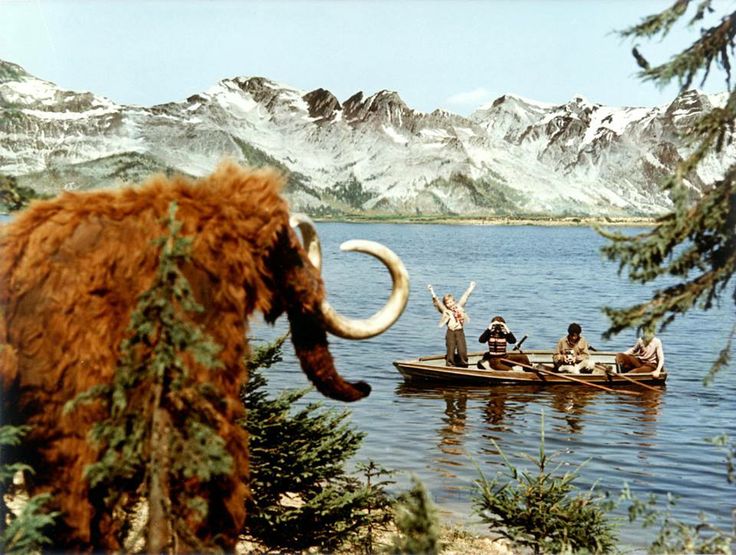
The boys encounter their first prehistoric creature — a curious wooly mammoth.
In the film, the boys learn about the prehistoric creature the trilobite by examining the fossil of one. The youngest, Jirka (Vladimir Bejval), is disappointed that there are no living triobites left, so the older boys propose taking a trip back in time to find one — like you do — and take a boat up river into a cave that allows them to pass through it, and into progressively earlier eras of earth’s development as the continue upstream.
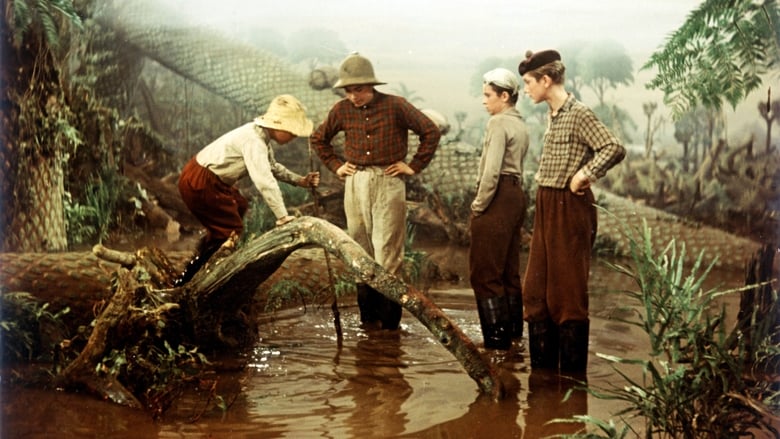
The oldest boy Petr (Josef Lukáš) narrates most of the film and does most of the rowing and planning, while the second-oldest Toník (Petr Herrmann) keeps a logbook. Jenda (Zdeněk Husták) and Jirka, the younger boys, help out as they can, with Jirka in particular running off to explore too eagerly, which causes the occasional misadventure.
Jirka (left) is a bit of a jerk-a sometimes, deliberately ignoring safety warnings to explore.
They indeed pass through the four main periods of prehistory (as defined in 1955) — from the Ice Age, to the Tertiary, the Mezozoic and the Paleozoic, and all the way back to Silurian age.
This film is more sparse on the effects compared to Zeman’s later ones, but importantly when special effects appear, they are as realistic as it was possible to make them. Some effects used puppetry, some used a very smooth form of stop-motion, but clever use of shot-matching allowed the actors to travel with beautiful backgrounds and “living” prehistoric creatures very smoothly integrated and fluidly animated.
Along their journey, they encounter and learn about progressively older examples of prehistoric creatures. Interestingly (at least to me), the film makes no attempt to get the boys back to their own time, even after tragedy befalls their original vessel. I don’t want to say more about the plot to avoid spoilers, but the film is both blatantly educational but also filled with moments of danger, suspense, and the single-minded energy of the young to sate their curiosity.
The Czech version runs 93 minutes, and while the pacing makes it sometimes hard to stay on board with the slowly-unfolding story, the promise of another effects sequence soon will hold most viewers, and also curiosity about how the story will be resolved.
A life-size Stegasaurus model was built for this sequence.
A US version was created later, using a new intro and outro where the boys (replaced by US actors shot only from the back of their heads in the opening and end sequences) imagine the whole adventure while visiting the Museum of Natural History, and stretches credibility pretty hard. The recut US version runs only 84 minutes, dropping some exposition to get to the effects more quickly.
The story is a mash-up of Jules Verne’s 1912 novel The Lost World and a Russian novel called Plutonia from 1915, both obviously influences on Zeman (he would go on to a brilliant and straight-up later film combining several Verne stories named after the primary story its based on, the novel Facing the Flag).
For many years, the existing prints of Journey Into Prehistory were of such low quality that the film almost passed into unseen obscurity, following its initial worldwide success. Thankfully, the film has since been digitally restored and repaired, so we can see it the way Zeman intended.
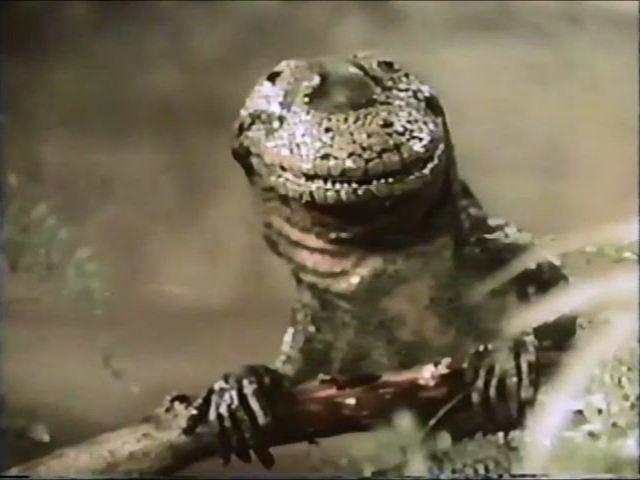
A friendly creature from long before the dinosaurs
Sadly, we’re coming to the end of the Toy Box set with Lene’s final album for Stiff — No Man’s Land from 1982. As usual, it’s a another album choc-a-bloc with catchy tunes, including one of my favourites of hers. Unfortunately, as I wrote many years ago in a review for a newspaper, “it sounds like they didn’t really have enough material for a full album, so they threw in what should have been the b-sides to the five potential singles, and called it day.”
Kind of a brutal assessment, in retrospect, but not wrong. The album is thin on fully-fleshed-out songs and heavy with other tracks that are quite good musically but light on lyrics with much meaning. The “A” material here is pretty strong, particularly the two lead-off tracks — both of which were in fact singles that found some traction — “It’s You, It’s You (Mein Schmerz)” and “Blue Hotel.”
I also very much liked “Special Star,” “Sister Video,” and “Maria,” and I remember all three getting some college/indie radio airplay at the time. Most of the rest of the tracks, while catchy, seem seriously undercooked lyrically. This could have been papered over with more of those great “Slavic male chorus” bits that made the first record so entertaining, but after the original band broke up, we only ever get (double-tracked) Les handling that — and just him is kinda thin and too sparsely used.
Starting with the New Toy EP, most of the background vocals were done by Lene herself — which is not by itself a bad thing because she’s awesome — but the call-and-response you got on Stateless and to a lesser extent on Flex has gone, and the songs sound less varied as a result — even as the production work improves.
Speaking of production, the fact that this album has more engineers/studios listed (eight!!) than it does musicians adds to the inconsistency factor. The truth is that this record was cobbled together from the multiple smaller sessions with various producers and studios by order of Stiff Records’ Dave Robinson, who wanted another “hit” from Lene, which he eventually got in the two lead tracks — at least in the US.
This one also had the most “writers” on any of Lene’s 80s albums, with “It’s Only You” and “Sister Video” both being written by others, and “Blue Hotel” using a co-writer (Maruo Goldsand). While still equal parts hit and miss, No Man’s Land is still a better record than most acts at the time were putting out, but it misses the high bar Lene and Les set for themselves on the two previous albums, and is very symbolic of their deteriorating relationship with Stiff.
Lene writes about Stiff a lot in the booklet, and is generous with her thanks to Dave Robinson and the other people who worked there, but from her perspective Dave was growing increasingly disenchanted with the lack of UK hits (she did better in the US, particularly on this album), and eventually lost interest, making No Man’s Land the last album on Stiff.
It’s still an enjoyable album, make no mistake, but even the bonus tracks are (mostly) extended or remixed versions of the album tracks. Speaking of which, the legend that is Bob Clearmountain did the remixing on the album (with assists from Lene and Les and Dick Wingate), so from a high-fidelity perspective this is the best-sounding album to date.
THE BONUS TRACKS
Just for variety’s sake, we finally get the two “missing” tracks from the “New Toy” EP that was release prior to the album here: the original studio version of “Savages” and the original “Special Star,” which both ended up in extensively reworked (and superior) versions on the album. Likewise, the “Single Version” of Blue Hotel is a pretty different version to what ended up on the album, though it does actually have Les and Lene singing together on the chorus, which is nice.
We then move on to the “Remixed, Extended Version” of “It’s Only You,” which you might be forgiven for thinking is actually the “Instrumental Version” for the first 1:06 before Lene finally comes in. The vocal and Lene’s background vocal are the same, but quite differently mixed from the album version. This bonus version uses more of Lene’s own bv’s and so I kinda like it better, though the album version swings more.
This is followed by a wholly new song, “Blue,” (no hotel involved). It’s rather frantic, and will remind listeners of “old” Lene, even though the vocal is a bit sparse. It probably should have been on the album proper, but its a lightweight effort despite the speedy 50s overtones.
Next up, a very remixed and mostly instrumental “dub” version of “It’s Only You,” with Lene only providing bv’s and sound effects here and there. It’s not really suitable for your own karoke version, since it wanders off from the better-known version of the song, but for anyone who wants to hear Les’s isolated contribution to a given Lene song, this is a good example — and it runs nearly two full minutes longer than the album version, so there’s some great noodling going on here.
Oddly, this is followed by the “US Extended Dance Mix” version, which is nearly as long as the Instrumental Version at 5’39”, but hurrah, we have Lene’s vocal back in. The lengthening comes in the form of a long mid-song instrumental break that gets sparse at the beginning and end, but is very effective and makes you all the more thrilled when the vocals return, and we even get some extra vocals.
From there, we go on to a “US Dance Mix” of “Blue Hotel,” which adds a minute-and-a-half to the song more cleverly than it was with “It’s Only You,” by keeping the instrumental extensions, mostly quite short until the mid-point. These two “US” extended versions are the most successful of the bonus tracks, since they simply give us more of what we love in the respective songs … and by that of course I mean “more Les Chappell croaking like a frog.” Bonus points for the fake-out false ending before the real ending!
The album ends with a genuine B-side: “O Seasons, O Castles.” It’s a slow-moving but another colourful, well-performed theatrical number with a sudden ending.
THE WRAP-UP
If you like Lene Lovich’s work beyond just any singles you might have heard, you should pick this box set up (if you can find it — it has sold out from Cherry Red!). The remastering work really adds spit and polish to the sound of all three albums, and the plethora of bonus tracks get as close as anyone outside hardcore Lene artifact collectors are likely to come to “everything” she recorded for Stiff.
It’s clear that the “project manager” for this box set, Michael Robson, really cared about the material and getting the look of the set and booklet right. Scott Davies of Rubellen Remasters did a fabulous job of remastering, and the previously-unseen (by me, at least) photo taken in Boston in 1983 just perfectly showcases the amazing look and talent of Lene, alongside other rare photos within the booklet. Best of all from a collector perspective, the box is the same size as the CDs, making for easy storage (waves to fellow obsessive-compulsive collectors).
Lene’s written comments, supplemented by Robson and Davies, do a good but brief job of telling the story of the albums from her perspective as well as some historical background. The booklet also touches on some other things Lene did (including “Mata Hari” and her pre-Stiff musical escapades) and places those events into the timeline succinctly. Lene’s post-Stiff career and home life is also mentioned, which is nice.
Cherry Red have been a winning streak of late, and this is another gold star for them for getting this out. I hope they will continue to work with Robson and Davies on other projects that the pair are passionate about, since they love they have for Lene and Les shows through every aspect of the care evident in this package.
The only downside to Toy Box is that I am now hungry — nay, starving — for Super Deluxe Editions (SDEs) of March and Shadows and Dust, but in the meantime, get the single CDs of her later albums — they’re also great!
Lene’s second album is, in my view, just about as delightful as her first — more strong songs, even more great singing, and more of the great sound and mainstream-friendly yet angular pop music that charmed the listener with the last album. There’s still nothing quite like the formidable combination of Lene and Les and their original band lineup of Nick Plytas, Jeff Smith, Ron François, and Bobby Irwin.
There’s also little bit of further growth in the songwriting, performance and art direction, continuing to define goth before it was cool. Throw in another batch of similarly great tunes, even more professionally produced, and a smattering of big-time commercial success (more on that shortly), and you basically have the perfect sequel record.
THE ALBUM
Flex opens with a low-end sonic hum you could easily imagine Kraftwerk employing on one of their earlier albums, with just a hint of actual birdsong before Lene brings in her incredible birdsong call before launching into the song (called, of course, “Bird Song”) proper for the first verse. This is followed by the signature male chorus’ sonic wall over the lyrics of a spurned lover, and lovely “organ” to add to the Goth atmosphere. “Bird Song” would have been right at home on the first album, and closes with more of her incredible bird vocal.
One thing you notice immediately is the improved sound and more sophisticated production, which I’ll credit to Roger Bechirian and Alan Winstanley, both of whom were names frequently seen on many great New Wave records of the era, especially on Stiff and Sire. The pair really “get” what makes Lene and the band great, and plays up their strengths for maximum possible radio- and headphone-friendliness.
“What Will I Do Without You” continues the heroine-as-victim motif, this time, worrying what might happen if her love ever left her. The song replaces the organ with some piano and more of Lene doing more of her own bv’s, but that Slavic-style male chorus is still present. This is another contribution by Chris Judge Smith, and it has “single” written all over it. It really focuses on Lene’s performance, and throws in some strangely underrated (synth) horns here and there that probably should have been played up a bit more.
The first hit single for this album was “Angels,” and it keeps that Goth-y Eastern European vibe going but not focused on a specific lost love and yet still fixated on potential death. This of course contrasts with the uptempo, upbeat and generally danceable groove. This is where the band starts to branch out (a little, and I mean just a little). The contrast between Lene’s swooping vocals and softer, more vulnerable verse singing is quite seductive and effective.
“The Night” was a cover from other songwriters and a sleeper hit for Lene, not really coming into its full appreciation until years after release, with some help from a Marc Almond cover of the song, which refocused some attention on the original. There is also “US mix” of “The Night,” but we’ll come back to that later as it is included here as a bonus track. This one features a really great, short chorus that contrasts so well with the dark and eerie mood of the verses and sub-chorus.
In the hands of any other artist, the first four songs being about a love falling apart would have been repetitive. Lene manages to find different viewpoints to cover such similar topics, and with Les carefully giving each song a different feel with the same players really pays off. This one has some bells and sax to throw into the band’s bass-leading, synth-augmented sound.
That said, the fatalistic theme does start to wear a little on the fifth song, “You Can’t Kill Me,” again by Judge Smith, but it is buoyed by some funny lyrics and a more novel arrangement. The vocals and bv’s are really front and center on this one, and it also has a little nod to Japan — a second gesture to that country after the Japanese version of “I Think We’re Alone Now.”
The mortality subtext doesn’t let up on “Egghead,” with its very sing-song style, but the enthusiasm of the vocal style and upbeat music, as with many of the songs we’ve heard thus far, keep the listener entertained and holding despondency at bay.
Finally, on track 7, “Wonderful One” breaks the mold and finds Lene in a happy mood, sort of. This one features a more jaunty riffs, nice organ fills, and more birdsong-like Lene bv’s. It’s a close as Lene gets to a straightforward love song.
“Monkey Talk” follows in its official recorded version, which the live takes elsewhere in the box set follow closely. I’m still not sure what the song is actually about, except that she seems to be comparing mankind and monkeykind as closer cousins than even the Leakeys would have it. There’s plenty of “monkey chittering” from Lene, and a great Soviet-style “worker’s playtime” chorus.
This takes us to “Joan,” which keeps up the relentlessly catchy dance-tempo music even as Lene sings of the obsession and sacrifice of the historical subject of the song. “Like Joan of Arc, you must be brave/and listen to your heart/Imagination is essential to creative art” is a great twist on persuing your vision at all costs, though of course it didn’t pan out so well for Ms. d’Arc …
The album closes with “The Freeze,” which uses a sonic moonscape, and rather different two-tracked vocals from Lene in what is the spookiest and slowest song on the album. My joke about this when the album originally came out was that this could easily be the Soviet Union’s national anthem.
That said, if you’re old enough to remember the Soviet Union — and the threat of nuclear war that hung over the world in the closing decades of the last century (and now trying to stage a comeback …), you’ll get the vibe the band was going for on this one.
BONUS TRACKS — FLEX
“The Night (US mix)” — in addition to a slightly different mix, the record company (or someone) added ska horns to the sub-chorus, which works well.
“What Will I Do Without You (single version)” — the name implies that this is just a different mix of the album version. It’s not — it’s the demo (generally referred by this box set as the “original version,” but not in this case). Among the many differences is Lene’s singing (a half-octave lower!), very restrained bv’s, more reliance on synth, bass and drums, and generally a far more basic version.
“Bird Song (edit)” — by contrast, this single version of “Bird Song” is identical to the album track except it’s 30 seconds shorter. They cut the vocal birdsong intro and went straight into the song proper. It also fades out quicker then the album version, but keeps some of Lene’s haunting angry birdsong at the end.
“Details (Original Version)” — Having these demos scattered around the set is interesting, since they are usually located close to the finished versions, but two things come across very well in these cruder, less polished version: that Lene is an incredible vocal talent even without much in the way of polished production, and that Les and her bandmates can put together extremely good demos that communicate the design of the song very well. I love their use of occasional bits of stopping cold as a musical punctuation mark.
As for the song itself, its a jaunty number that misses out (in this version) on the trademark Slavic male supporting vocals. It features a dreamy lyric where Lene laments her fate and demands the “details” of the plan for her life.
“New Toy” — this was another song, this time from new (but sadly temporary) band member Thomas Dolby that was a popular (irresistible more like) single on original release, and the extended version we’ll get to in a minute was a solid club hit, and once again found a second life later when US retailer Target licensed it for a massive ad campaign and millions of people said “What is that song and how can I get a copy?!”.
This one is solid gold from the first note, focusing on a mostly-straightforward but perfectly-put vocal from Lene and incredibly solid bv’s from the boys (though less Slavic in style) and music from the band, including more excellent piano and synth work brought more to the fore by Dolby, who had joined up with the band for a brief time.
Flawlessly mimed version for UK TV (with Dolby on keyboards)
“Cats Away” — another energetic instrumental, but this time with some snazzy (synth) horn sounds to jazz it up.
“New Toy (Extended Version)” — The intro, first verse and chorus (sans vocal) serve as the “extension” before the vocals get underway. Thankfully they kept the saucy sound effects of the first lines (Les’ purr, and the whip sounds). The middle-eight gets and “breakdown” type selection of isolated instruments and bv’s are added before Dolby’s keys come back into play. An even longer version of the first and best song about conspicuous consumption and consumer capitalism run amok
NEW TOY (US MINI LP)
It’s quite peculiar that for this box set, the New Toy “Mini-LP” as they call it took the title track and put it among the Flex bonus tracks, leaving us without the title track to this EP here, where it belongs. Instead, we only get the second side of the original record, and slightly out of order to boot.
“Cats Away” — a gentler intro that ramps up to speed real quick and a punchier sound with real horns (played by Lene!), it’s still a heckuva swinging number, but an instrumental is a strange choice for the first track on this altered version of the US “mini-LP,” which Stiff/Epic issued to play for time while Les and Lene took a rest (losing the band in the process, regrettably). Lene writes in the booklet that they felt under pressure from Stiff, like some of the other artists, to come up with more “hit singles.” Lene says that they then did a lot of short sessions with different producers.
The lack of a regular band did result in Lene’s work getting some fresh new sounds, but sadly a lot of eclectism that characterized her previous work was reduced, though of course you can’t eliminate it entirely.
“Details” — The polished version of “Details” gets a glow-up from the demo, and makes for a nice change of subject matter. This is a far more polished production as you might expect, but still sticks pretty close to the original.
Boring video, but you get the song as it appeared on the EP
“Never Never Land” — a song from Jimmie O’Neill, but certainly Lene makes it her own (as she generally does with all her covers). It’s a lovely song, not single material but a well-chosen addition that also features stronger vocal contributions from Les.
Because the final two tracks of the five-track “New Toy (US mini-LP)” were just demos that got revamped later on, only the three songs from Side Two of the record were included on this disc, with the two “Side One” tracks saved for accompanying Disc 4, the No Man’s Land album, as bonus tracks.
Next time: The Wrap Up, and the breakdown of the Stiff relationship
Having directly compared the albums, let’s move on to the bonus tracks, which are different for each version of the album.
BONUS TRACKS(DISC 1)
“Lucky Number (Early Version)” — three things leap out at you immediately from the beginning notes of this: a) holy crap these drums are terrible! Actually, the whole thing is pretty crudely done. b) Lene’s performance is still great, but far more straightforward. Still, this has “hit” written all over it. c) definitely cruder in most respects, with lots more background “humming.”
“I Think We’re Alone Now (Japanese Version)” — I’ve always loved this version, identical to the single version except for the vocal. I doubt it’s a direct translation, but I can’t imagine that this wasn’t a rare treat for Japanese fans of UK music, even if the title (only) is still spoken in English.
“Monkey Talk (Early Version)” — Compared to the demo of “Lucky Number,” here we start to get closer to “the full Lene” in terms of her unique vocal styling, including lots of “bird call” she would put to better use later. This being the demo version of this song, it’s heavier musically but similar to the studio version that appears on the Lucky Number/The Best Of album that came from Oval in 2005. One interesting difference — the bv’s are almost all Lene on the version here, which lays down a marker we’ll come back to later.
“Be Stiff” — The A and B side of this single are back-to-back here, with the A side being Lene’s version of the song, originally written by Devo. Practically everyone who was on Stiff Records at the time recorded a version, but in my opinion Lene’s is one of the truest and best. The B-side version includes “the entire ensemble” (ie every Stiff artist they could get in the room) live at Leeds University. This remastered version of the supergroup beats the crap out of the original single version, even if its from the exact same tapes. Hats off, Scott.
“Lene Lovich Speaks (1)” — part of an interview record sent out to radio stations where the live DJ was supposed to ask the question and then play the track with Lene’s answer. As I discovered when I acquired the interview disc, it’s disarming to hear Ms. Lovich speak in her original midwestern American accent. It’s a very short piece where she explains how to pronounce her name.
“Lucky Number (Instrumental)” — perfect for your next karaoke party, this includes some of the vocal “effects” from Lene, but no lead singing (well, a trace here and there — they didn’t do a perfect job removing her vocal, oddly enough). It’s also a great chance to study the construction of the song and it’s various components.
“One Lonely Heart/Big Bird” — a pair of non-LP songs where “One Lonely Heart” feels like an entry to the Eurovision Song Contest, while “Big Bird” is just a synth-based instrumental — perhaps originally intended as the music bed for a future full song. This feels like a bit of a “contractual obligation” release to meet a deadline, since it’s pretty obvious that it was just her and Les in the studio mucking about.
“Lene Lovich Speaks (2)” — Lene tells the story of creating “Lucky Number.”
“Lucky Number (Slavic Dance Version)” — It’s the same version of the song as the single version, except it has a new 1’20” instrumental section in the middle.
BONUS TRACKS (DISC 2)
“Trixi” — This is quite the oddity. Roger Bechirian’s sole producer credit with Lene during this period, it’s a lovely Victorian-era type instrumental with Lene doing various odd vocal muttering and other sounds that seem like singing along, but are indecipherable.
“The Fly” — A more interesting effort in the department of “lyric-less music with vocals,” in part due to the presence of both Lene and (presumably multi-tracked) Les — it’s another catchy mostly-instrumental with another great sax solo from Lene. This time, the word “yummy” can be deciphered, and some convincing “fly” noises as well, reminding us that Lene is incredibly varied in her vocal use.
Most of the live tracks that make up the rest of the bonus tracks are taken from a live promotional EP called 1980 Global Assault — Recorded Live in London and Boston, with the exception of “The Fall.”
“The Fall (live)” — this performance is from the Live at the Lyceum gig, which took place exactly 44 years ago as I write this on 02-March-2024. I mention this song specifically for three reasons: first, it was not included in the 1980 Global Assault album, most likely some kind of rights issue.
Secondly, it’s the first of at least three cover songs written by Judge Smith, an interesting artist in his own right, that Lene has committed to record over time (the other two are on the album Flex). “The Fall” first appeared on a three-song single taken from the Stateless album, but wasn’t included on the album or anywhere else until the German CD reissue of Stateless in 1991 as a bonus track, and of course Stateless … Plus, the European reissue from 1993.
Stateless … Plus was, quite possibly, the first CD I purchased that I got specifically because of unheard “bonus tracks.” The song was also included as a b-side from the extended “Angels” 12-inch single, which of course is taken from Flex.
And finally, because unlike the other tracks, they Lyceum performance of “The Fall” really doesn’t sound like a live recording at all — there’s no hint of audience noise throughout.
As for the song itself, it’s easy to see why Lene wanted to record it: it’s definitely not as upbeat and poppy as her own material, but does give her a chance to do something really dramatic in song. The tale told, of a battle raging and city falling in some bygone war, is rendered with the appropriate amount of agony and woe from Lene’s stunning vocal performance, which includes a dog barking near the end. It’s something different from her, and darker than she’s gone thus far.
Turning to the three tracks that make up the EP version’s A-side/Lyceum performances — “Monkey Talk,” “The Night,” and “Too Tender to Touch,” the audience sound is very limited to mostly just applause at the end of the songs. except for the clap-along at the start of the (bonus bonus!) “You Can’t Kill Me,” which wasn’t included on the vinyl version of Global Assault. As with the previous tracks, it certainly does show off how tight the band has gotten by this point. Live, Lene, Les and the band were a pop music machine that were clearly firing on all fronts.
The three songs from the Paradise Theatre in Boston (“Angels,” “Lucky Number,” and “Home”) also included here are considerably extended “jam” versions with long instrumental breaks. This may just be me, but that sort of practice is rarely exciting in my view, though I acknowledge it gives the singers a chance to relax a bit, and it sure sounds like everyone involved was having a great time.
Toy Box: The Stiff Years is a four-CD box set covering everything (or nearly so) Lene and her band recorded for Stiff Records, which amounts to three albums, two “mini-LPs,” and some odds and sods, all of which have been gathered up together. For me, who has collected Lene faithfully for decades (and once did a lovely interview with her and Les in Atlanta), there’s not a lot here I hadn’t already heard or own, except for one pretty significant thing (which we’ll get to shortly).
From her 70s and 80s peak years, most everything is here apart from the brilliant 1989 album March, but of course it wouldn’t be — it didn’t come out on Stiff. Each of the albums are supplanted with bonus tracks, including a lot of “early versions” (home studio demos), instrumental versions, variations, remixes, live versions, and promo or b-side type stuff.
As with these sorts of “everything boxes,” as I like to call them, it’s really great having this all in one place (super handy when storage is tight, eh, fellow collectors?), and while I’m sure there’s a few oddities missing — for example I have the full Lene “Interview Disc” on vinyl where the DJ would ask questions and “Lene” (on the included record) would respond — but this is as complete a catalog of the Stiff music from her as we’re likely to get. Plus, it’s Cherry Red — there’s a fabulous booklet that includes Lene’s own memories and comments, plus some supplemental information from Scott Davies (of Rubellan Remasters, who handled the audio remastering for this project) and Michael Robson (who sheparded the project and designed the booklet and box).
One last thing before we dive in: It wasn’t originally my intention to do another artist who rose to full prominance in 1979 this soon, I had actually picked out another quite different artist boxset to do; but I was joking to some friends one day last month that it would be ironic if I covered three of Lene’s four 70s/80s albums in … wait for it … March, and so here we are.
STATELESS — BACKGROUND
A two-CD version of Lene’s debut album, you ask? How can this be, even with bonus tracks? The original album was barely longer than 30 minutes! This is the “pretty significant thing” I alluded to earlier — both the US and UK versions of Stateless are present here, and as I’m embarrassed to admit (having owned a vinyl UK copy of the album for decades but never actually listened to it because I also had the US version) — I was unaware of just how different the two versions were/are until now. So, for me at least, there’s a brand-new record in here.
Consequently, this calls for a side-by-side comparison of each album track. We’ll also review the non-album bonus tracks — all 21 of them! — and pick out the gems.
The short story on the two versions is that after the record originally came out in the UK (with the pre-release hit single of “I Think We’re Alone Now”) in October of ’78, the US label felt it needed some further cooking, and had Roger Bechirian (well known among New Wave et al album collectors) remix and re-record some parts for the US release, which made “Lucky Number” a minor hit in the States as well.
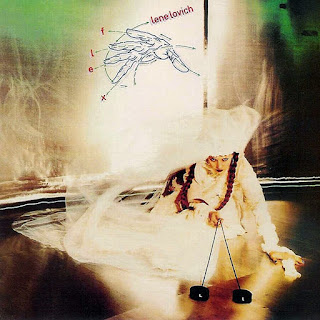
The US version used a different — and frankly better — cover shot as well, though I like the way Lene (in the booklet) refers to the UK cover as “like ‘The Scream’ by Edvard Munch.” When the album was re-issued in the UK in ’79, some (but not all) of the Bechirian versions were included, so getting to hear the original mix is a treat.
The Bechirian version of most of the songs was then used for the subsequent rest of world versions, which along with the US version came out in April of ’79. The full story on this is a bit more complicated (variations on how many Bechirian remixes were used on different countries’ album version, plus a couple of mis-stamped pressings), but to consolidate matters Cherry Red has Disc 1 as the original LP mix (only a little Bechirian) and Disc 2 as the “US/UK remix” version (tracks 1-8 and 11 were “Bechirian’d”). For the bonus tracks it is not spelled out, but our Roger is also credited with production as well as backing vocals (for “Trixi,” meaning that song was likely created during the re-record sessions).
The album did pretty well: while it didn’t chart in the US, it went Silver in the UK (250,000 sold) and did well all over Europe, Australia, and New Zealand. The first single, a remake of Tommy James and the Shondells’ “I Think We’re Alone Now,” reached #3 in the UK. It had the “early version” of “Lucky Number” as the b-side.
The subsequent single, the revamped “Lucky Number,” went to #2 in Australia and #3 in New Zealand, and also charted elsewhere. In the US, the song was a sleeper success, never hitting the Top 40 but it was an early video and club hit.
Before we get to the UK vs US compare, I do want to mention my general feelings for this album: obviously I liked it at the time, but this revisit has reminded me of how much I adore this record. It’s a rare album where 100 percent of the songs are strong, polished, and timelessly enjoyable, and of course Les and Lene’s talents mesh so beautifully here that the whole thing — UK or US version — is just a joy. It’s one of the very best albums Stiff ever put out, and was by no means a one-shot wonder.
STATELESS — SONGS SIDE-BY-SIDE
These will be comparisons of the “UK original” and “US/remixed” versions of each song, acknowledging that having an experienced engineer remix/redo some stuff is bound to sound better a lot of the time. We’ll use the original UK running order for the album.
Lucky Number Winner: US/remixed Bechirian knows what he’s doing when it comes to mixing: this has a brighter tone and a more swinging tempo; beefier drum fills; more manly background vocals; a slightly more “quirky” lead vocal, and the brilliant addition of the monk-like “number” chant for the outro.
A slightly different, live (?) version from Top O’ the Pops
Sleeping Beauty Winner: US/remixed The US version has a new vocal (this will be a theme in many of the US/remix wins), but the UK original is clearer and more natural — Lene doesn’t fight the instruments to be heard as much. That said, the US version is better mixed throughout, and adds more bv’s and stronger bell sounds. It also has a new guitar solo, and the song cuts to the ending much quicker, losing 30 seconds of repetitive vamping from the original version, which gives it the win.
Home Winner: UK original Some may disagree, but I think the UK original mix retains more of that surfer/psychedelic feel. This seems like the first song were Lene’s vocal wasn’t re-recorded in the US version, but then again, the US mix adds some new guitar twang and louder FX during the middle eight.
Lip synced version from Dutch TV
Too Tender (to Touch) Winner: UK original The US version features the bells much more prominently, which is an improvement on the UK version, but oddly tries to bury Lene’s vocal under a significantly louder piano (excellent work by Don Snow) and some organ bits. Again, it’s the same vocal on both versions, but Lene never really comes to the fore in the US version until the bridge, and even then a new and different piano solo gets thrown in for no clear reason.
Say When Winner: US/remixed Conversely, on this one it’s not even close: Bechirian’s significantly re-mixed and re-recorded version is just vastly superior. It’s a fun song either way, but Lene’s terrific new vocal contrasted with more male bv humming, and a far more prominent organ, some nicely-placed reverb and other touches just make this one the definitive version (plus an extra count-up!).
Lip synced for Dutch TV
Tonight Winner: tie Nick Lowe’s “Tonight” gets a really nice 1950s treatment in both versions, but each one drops the ball in one way or another. The UK version puts Lene front and center vocally throughout, as it should, but it criminally dwells on the sax (which is very good, don’t get me wrong) at the expense of not bringing in the crucial supporting background “echo” bv’s until the song is more than half over. While the US version corrects that mistake, Bechirian piles on all the instruments too much, frequently drowning out Lene’s climatic vocals in the choruses.
Writing on the Wall Winner: US/remixed Another 50’s influenced number, this time the tragic story-song that skirts doo-wop territory at times. The US version brings in sax, better mixing for the organ, and adds more male bv’s to give the song more atmosphere.
Telepathy Winner: US/remixed A very funny song, which backs off the 50s influence somewhat but still has an echo of it. Once again, the US version brings in the background vocals right away and keeps them around throughout, and Lene’s re-recorded vocal actually improves on the UK original. The better mixing and more vocal power wins the day.
Momentary Breakdown Winner: UK original We’ve now moved firmly (with “Telepathy” and now this one) into early 60’s (fake) girl group sound. This time it’s the UK version that gives the “girls” plenty of spotlight, and Lene’s incredible, four-octave finale is just … (chef’s kiss). The US version mostly buries the bv’s until the middle eight, but does offer better separation for the instruments, and the end of Lene’s octave stunt isn’t the end of the song this time, she just descends and starts over (briefly).
One in a 1.000.000 Winner: UK original This song always reminds me of “Say When” in its franticness, strong vocal, and playful arrangement — you could image a chorus line of western burlesque dancers high-stepping this number at an old west saloon. The US version again puts Lene back a little in the mix (with bv’s more prominent, but to be fair they’re very good), but the two versions are by far the most similar between the two releases, with only a slight change to the sonic staging on this one.
I Think We’re Alone Now Winner: tie Bewilderingly, the US version on this song flips the typical script on the way it’s mixed, with the instruments nicely separated from Lene’s vocal, with the bv’s a little less prominent and her own background sounds getting some of that spotlight also. The difference between the US version and UK version is still a little subtle and for me, either one is the best version of this song I’ve ever heard.







 The Chasbah