[Cherry Tree, 2019]
Ten Man Mop, or Mr Reservoir Butler Rides Again (1971)

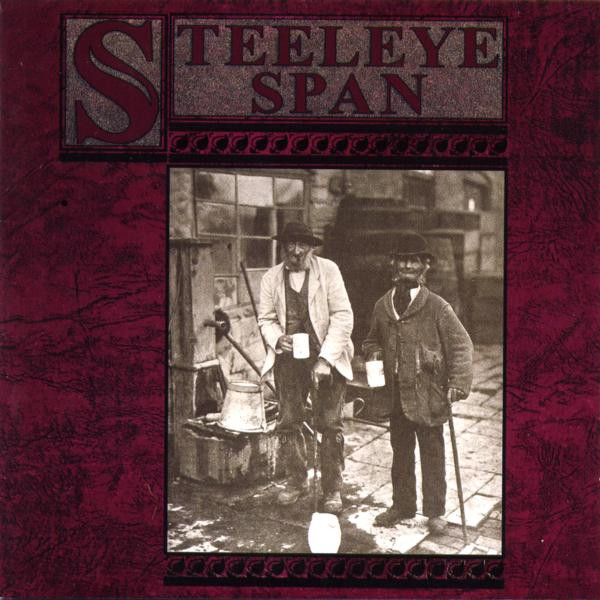
THE OVERVIEW
Following the new lineup’s first album together (recorded in late 1970) and its surprising chart success the following year, the final album of this box set and the third official Steeleye Span album was made in the fall of 1971. As with its predecessor, it continued to draw on the traditional folk music of England (saves a lot of time when you don’t have to write the material, I guess!).
The stability of the lineup was short-lived, however: founding member Ashley Hutchins would leave the band shortly after this was recorded, feeling that the group was relying too much on Irish folk music when his interest was in English folksong. He was also apparently reluctant to travel to the US, where the band had been invited to tour.
Once again, the cover art is pretty terrible, but once again the music is harmonious and well-performed. The band veers a bit more back into “pure” acoustic folk overall, but the electric instruments continue to make their presence felt right from the get-go, along with spoons, a tabor, organ, timpani, mandolin, fiddle, various banjos, and some dulcimer and various guitars for good measure.
Also again, there’s some terminology in the title that requires a bit of explanation. A “mop” in English slang for a job call, where unemployed men would gather to see if they could gain a day’s work — you might see the modern equivalent of a “mop” outside temp agencies, or construction sites, to this day. Some things never change.
As for the origin of Mr. Reservoir Butler, he was a real person, though unknown to the band — apparently he was the original performer of one of the songs on the record (it’s not mentioned which one, even in the extensive liner notes of the original gatefold vinyl album).
The version of the album on this box set copies the 2006 Castle Music CD reissue, including a smattering of bonus tracks (which we’ll get to), but sadly this collection omits the bonus live show that was included on that reissue’s bonus disc: a September 1971 performance on DJ John Peel’s “Sunday Concert” radio programme. It included a selection of tracks from across their career thus far, including a few songs not yet captured on the proper albums. I really must hunt that one down at some point.
THE ALBUM
The very first sounds one hears are electric, on the Christmas traditional “Gower Wassail,” with Tim on lead and the rest of the band contributing a splendid chorus. Tim Hart gives anything he sings a traditional, old-timey feel, but his vocal “instrument” is best used a bit more sparingly, rather than taking sole lead — at least in my view. It’s not clear when this particular wassail was written, but the standard (sung) version comes from the tradition of wassails from the 12th century, which have come to mean a type of song often accompanied by drinking, rather than “wassail”’s original meaning akin to a farewell greeting.
The band did well with a Chrismassy song on the last album, so why not do one again? And while we’re at it, the pair of jigs on the last album went down well, let’s do that again also! This time it’s Paddy Clancy’s Jig and Willie Clancey’s Fancy, a natural pairing if ever there was one. Dueling acoustic guitars and fiddle with a bit of spoon work is always a delightful thing, but here’s that Irish bent that got Ashley all “bent” out of shape.
The third cut features the funny, clever “Four Nights Drunk,” sung by Martin Carthy. It’s a song about a man who comes home so drunk he sees things that may or may not be there, questions his wife about them (who denies his vision), and begins to suspect that he is actually seeing his wife’s lover as her explanations become increasingly implausible.
Following a straight singing of the lyrics, the band breaks out the song into an instrumental for the last minute or so, and again they are very good at it.
We finally get Maddy Prior back on lead vocal, with “When I Was on Horseback.” It’s a traditional Irish folk song-cum-lament about a soldier and his unfortunate end, even though he brags “wasn’t I pretty/wasn’t I gay” (not like that 😜). Already, a pattern that has brought some criticism of this album is emerging — start a song, sing the lyrics, spotlight the instruments for a minute or so after the lyrics are done, and out.
Side 2 of the original vinyl version kicked off with “Marrowbones,” is a delightful traditional English/Irish song about a woman who loves her old husband, but “loves another man twice as well.” She decides to find a way to blind him so he can’t see she’s having an affair.
A local doctor tells her to feed him eggs and 16 marrowbones, which she does, but the old man knows of her plan and pretends to be blind. When walking near a river, the unfaithful wife decides to push her “blind” husband in, but he hears her running towards him and steps aside, and it is she who falls into the river.
As she cries for help, the husband reminds her that he “cannot see.” She eventually drowns, and the moral of the story is “if you want to murder your husband, make sure you poison him properly.” That’s the Irish for you …
This is followed by “Captain Coulson,” a tale of the war-hero title character and his passengers on a six-week sail across the Atlantic to “Amerikay.” One night, he spies a pirate ship in pursuit, and wants the sailors and men on board that it will soon catch up to them.
This story-song, sung by Maddy, is a nice change of pace from the tales of treacherous/cheating spouses, describes the battle as the pirates board the vessel and demand “your gold and precious loading.” A pitched battle ensues, with the captain and his passengers eventually successful in defeating the pirates, capturing their ship and bringing it with them as bounty with them to the New World.
The odd choice of having nearly every song end with an instrumental break, rather than putting it in the middle, becomes almost comically predictable and borderline annoying.
As with side one, a given song early on the given side of the vinyl is then followed by an instrumental track — either a group of jigs or a group of reels, and this case its the latter: a trio of them, “Dowd’s Favourite/£10 Float/The Morning Dew.” Only carefully listening to the chord changes would reveal to a listener when one part ends and other begins, as the instruments are seamlessly strung together.
This strange habit seems to be intended to showcase Peter Knight’s fiddle playing, and he’s excellent at it — but the repetition factor of the album is starting to really kick in.
Maddy returns to sing “Wee Weaver,” for once a song that has a happy ending rather than, you know, death. It’s a tale of of a weaver who loves a beautiful girl named Mary, much admired around the village. Willie proposes marriage, Mary accepts, and they lived happily ever after.
The Norfolk folk music index calls this song “a rarity,” allegedly written by home weavers … in Ireland. This puts Irish songs firmly in the lead compared to the English entries.
Tim sings the lead on the next track, “Skewball,” which also is an unconventional track for the band to do. This is a song about a horse race, and a fast horse (which can “talk”) named Skewball against another horse named Griselda. It’s an exciting tale, told well.
These two unconventional (for this band) songs would have done better being spaced further apart, but they nonetheless make a welcome change from the fairly repetitious choices presented to this point. That said, it closes the original album on a strong note.
We move on to the first of the “bonus tracks” presented here, “General Taylor (Studio Outtake).” This one also has Tim on lead, but duetting with the other band sings, which really makes Tim’s lead even more effective. The song, also known as “Carry Him to His Burying Ground,” is a fairly recent number for this group, hailing from the mid-19th century.
It’s done here in a “pump shanty” style, though technically it should be considered a “halyard” or perhaps a “capstan” style shanty. The subject concerns the defeat of Mexican general Santa Aña by the American general (and future president) Zachary Taylor in 1847.
The song was likely written by one of the surviving British soldiers who jumped ship to aid Aña in the West Indies. Traditionally, the victor of the battle is reversed to be Aña (as it is in this performance), likely due to British sailors serving with Mexicans at the time and not wanting to cause offense, but indeed it was Taylor who “won the day.”
This first bonus track, along with the start off track “Gower Wassail,” are the high points of the album as presented here. While the original album had fine playing and some strong group vocals, the song choices and arrangements were more repetitious than the previous album, and nothing other than “Gower” really stood out.
The rest of the “bonus” tracks here are various versions of “Rave On” — the original single version with a deliberate “Scratch” sound, which is my favourite of the versions because it must have really messed with the original listeners’ minds — and a “proper” two-verse and three-verse version.
The song is really out of step with the traditionals that accompany the album, as it’s a Buddy Holly song — and its presence “breaks the spell” of the band as wandering minstrels. It was originally recorded as a joke for Ashley’s benefit, and he liked it, but then it ended up as a “novelty” single for the band (and flopped).
To be fair, if you take it for what it is — a modern song done a capella, forgetting about the band’s regular motif — it’s very nice, including their strong harmonies. It’s just a bad choice to include on their Olde Tyme folk albums (and of course it originally wasn’t).
THE BOTTOM LINE
This third effort touches on a lot of what makes Steeleye Span interesting, but it’s less imaginative and varied than the previous two albums, with the song choices being more repetitive — though when they do break the pattern, they generally shine.
For me, Ten Man Mop leans too heavily on the lead singers, with the band’s strong group vocals too sparingly used. The arrangements seem less imaginative as well, with a few exceptions.
Knowing that Hutchins left the band after this was recorded, it would be interesting to revisit the fourth album to compare how that affected the group (spoiler: a lot), but that’s outside the scope of this box set review, so we’ll have to leave it there. (Second spoiler: the lineup changes very significantly yet again with the fourth album.)
Ten Man Mop is by no means a bad album, but the feeling that it’s a weaker offering than the two before it is hard to shake. The inclusion of very sparse “bonus tracks” is a mild disappointment, but as an opportunity to study more deeply the albums where I first became acquainted with the band, All Things are Quite Silent is an intriguing box set that I’m glad to have, as it does offer some absolutely stellar gems from the band’s early years.
Next time: Nits! (the Dutch band, not the other kind)
 The Chasbah