Writer/Editor, Comic Performer, Doctor Who fan, radio DJ, Punk/New Wave/Ska fiend, podcaster, audio editor, film buff, actor, producer, leftie (literally and figuratively), comedian, blogger, teacher, smartarse, and motormouth. Not necessarily in that order.
I’m more of an essayist than book writer these days, though I have contributed to quite a number of published books, magazines, and newspapers over the years. My most recent published contribution was an essay about my deep love for the insanely long-running sci-fi/fantasy TV show “Doctor Who” in a new book called Fantastic! A Celebration of Fans Discovering Doctor Who.
I’m very pleased to note that the book has won a Literary Titan Book Award as one of a handful of Gold Award winners for Non-Fiction Books in the month of March. This book was published out of Chicago by fans and for fans of the show and the larger “Whoniverse” of official and unofficial spin-off works. There are a lot of co-authors on this project, and many of them along with the publishers are dear friends — which makes it all more fun.
The Chicago area (and the publishers) are also some of the people responsible for one of America’s three great Doctor Who fan conventions: Chicago TARDIS. If you love the show and haven’t been to the convention, it’s in a superb major (and importantly, warm) hotel, held every year on the anniversary weekend of the show’s debut in November 1963 (it was actually postponed a week from its original planned debut date due to the assassination of President Kennedy).
What’s that, you say? Where can you buy a copy? Well, on Amazon of course, but also directly from the publisher. The book is available in both hardcover and softcover editions for your perusing comfort. There is also an e-book version if you prefer that format. Buy it for my little contribution, buy it to find out how nearly 100 other fans were lulled into this cult, and be sure to check out the forward by extremely talented director (who has also made some incredible contributions to the show) Rachel Talalay.
I’ve seen this film quite a number of times in my life, but until now I haven’t written about it because I still think of its as a “kid’s movie,” since I first saw it as a child myself. My affection for it meant I bought the DVD release when that came out in 1999, though I haven’t yet gotten (and should get) the later 4K/Blu-Ray version at some point.
The adult in me is always, always disappointed that the Beatles themselves did not play a bigger role in the film, though they do appear in a short and kind of awkward live-action sequence at the very end — and of course those are their real voices in all the songs. Voice actors portrayed them in all the film’s dialogue for some reason, though the impersonators do a credible enough job making the four Liverpudlians sound (mostly) distinct from each other.
The Lord High Mayor thanks “The Beatles” for their help. I’m not sure why “George” is consistently shown as somewhat darker-skinned than the other Beatles.
John Clive portrayed John Lennon’s speaking voice, and Geoffrey Hughes played Paul McCartney pretty accurately. A completely uncredited Paul Batten did most of George Harrison’s voice.
There’s a reason Batten didn’t complete his role in the film, or get credited for it — midway through it, he was arrested for being a deserter from the British Army!
Special kudos to Paul Angelis for his very spot-on Ringo — he (unlike most of the other voice actors) played multiple roles, including the narrator, and the Chief Blue Meanie, with great variety — and following Batten’s arrest, Angelis took on the rest of the George Harrison dubbing as well.
The Blue Meanies gather their forces to invade Pepperland.
Comedian Dick Emory was the only other actor to voice multiple roles (he did Max, the Lord Mayor, and the principal add-on character of Jeremy Hillary Boob, who acts as a kind of guide through the adventure. As near as I can tell, he’s the only main character entirely original to the film, in the sense of the fact that he’s not inspired by or referenced by any Beatles lyric.
The unique animation of the film is very influenced by Peter Max and the general mod/psychedelic tone of the late 60s, but I was suprised to later learn that Max actually had nothing to do with the film. Looking at the artwork now, it’s an obvious influence of course — but not up to the standards of Max’s print work.
One of the Meanies’ underlings enforces the music ban to suppress any acts of rebellion.
The 1999 DVD release boasts “frame by frame hand restoration” and does indeed look terrific. It also included a 5.1 surround sound remix, as well as the original stereo and mono audio as options. The version I have also offered reproduction film cells, stickers, and an expanded booklet — the latter featuring an introduction by Disney and Pixar’s John Lassiter.
Lassiter points out that the mixed-media animation of Yellow Submarine undoubtedly was influenced by then-recent UK immigrant Terry Gilliam, who brought his style of mixed-media animation to early shows like “Do Not Adjust Your Set” before ending up in “Monty Python’s Flying Circus.” The images in Yellow Submarine subsequently influenced cartoons for US kid’s shows like “Sesame Street” and “The Electric Company,” and even “Schoolhouse Rock.”
Was Gilliam’s work influenced by this, or did Gilliam influence it? Gilliam was already doing this style of image before he was a part of Monty Python, so I think it was the latter.
As for the film itself: what it lacks in plot complexity, it more than makes up for with this visual feast. The rich imagination and style of the original characters in “Pepperland,” from the Lonely Hearts Club Band to the supporting characters of Sgt. Pepper, Old Fred, the Blue Meanies, the Apple Bonkers, and the helpful Jeremy Boob are all interesting enough to keep the film moving along between musical numbers.
Jeremy Hillary Boob, a new friend they meet in the Sea of Holes.
It might have been good to not have so much of the film’s background be completely white, but I guess they opted to put the main artwork front and center — to say nothing of saving money on background animators.
That’s not to say the backgrounds aren’t imaginative, such as the Sea of Holes and the Sea of Science (among others), which do a good job holding viewers’ attention across the thin plot. There’s even time for a classic “hall of doors” comedy bit during one of the numerous musical numbers.
Another of the many “seas” our heroes pass through on their way back to Pepperland.
It is helpful to bear in mind when watching the film that much of this Beatles music would have been brand new or very recently released to the original cinema audience and fans of the band, including “Only a Northern Song,” “Hey Bulldog.” Of course, the foundational musical score outside of the songs came from George Martin, and remains excellent and memorable as his soundtrack work generally is.
The lifeless, frozen people of Pepperland as the Blue Meanies and the Apple Bonkers invade.
Some of the best animation takes place at the beginning and end of the film: the population of Pepperland being attacked and frozen, drained of all colour — and the restoration of Pepperland at the conclusion. The plot, such as it is, is that the Blue Meanies decide to be evil and come over the hill to steal all the music that brings joy to the people of Pepperland.
They starting by attacking Sgt. Pepper’s Lonely Hearts Club Band, the main source of the music there. The incredibly elderly Lord High Mayor sends his lieutenant, Old Fred, to get help.
Sgt. Pepper (right) and Old Fred (left) climb the stairs to get to the Yellow Submarine.
Fred manages to outrun the Meanies, commandeering the handy artifact of the Yellow Submarine, and travels through strange lands before coming across the Beatles, whom he persuades to help him.
They cross those and other “lands” in trying to return to Pepperland, with occasional stops to explore. Once back in Pepperland, our heroes evade the Meanies and Bonkers before the Beatles can finally take the place of the original Sgt. Pepper’s band, using their own music to unfreeze Pepperland and defeat its enemies and restore the original Lonely Hearts Club band.
The (original) Lonely Hearts Club band after being stopped from making music at the beginning of the invasion.The band finally get restored and live to play another day.
By today’s pacing standards, some viewers will feel it a bit drawn out (which it is). However, if you appreciate the Beatles’ late-60s output and the changes the band itself was going through, watching the beautiful artwork (still like no other animation I can think of) and listening to the songs will help the 90-minute length go by pleasurably.
It remains a unique film, both in the history of animated films and as the only non-live action Beatles movie. It also remains effective as a time capsule of a short moment in history where this look, sound, and style was all the rage.
Yellow Submarine reminds me a lot of episodes of TV comedy “Laugh-In,” which adopted a very similar look and feel for its whimsical and fashionable late-60s comedy show.
The inside of the Yellow Submarine.
You never knew what was going to happen next in that TV show, and likewise you mostly don’t know what you’ll be seeing next in Yellow Submarine. There are some 17 (!) Beatles songs heard in whole or in part, so if you are one of the few that really don’t like the Beatles’ music, this film is most definitely not for you.
For everyone else, more than five decades after its original release, it’s a musical and visual treat that blends fab (four) pop-rock tunes and simple but stylish animation to make for a pleasant animated adventure musical. The fact that there’s (still!) nothing else much like it all these years later is a testament to the originality of the approach.
After initially not wanting to be a part of the film, the Beatles were won over by the artwork, and appeared in a short cameo at the end of the film after all.
If the Beatles had done their own voices for the dialogue, I’d have rated it the second-best of the Beatles’ five-film music career, with number one being their whimsical debut A Hard Day’s Night, which I reviewed in 2023.
Sadly they didn’t, so I think it gets knocked down to third place, with the uneven but wonderfully weird Magical Mystery Tour in second (for me), the straight performance film and breakup documentary Let It Be in fourth, and the witless Help! a nearly-undisputed clunker at the bottom of the list.
No, there isn’t any new or unearthed rare material on this new EP. It’s nothing more than the 1999 remastered versions of five of their early tunes, intended as a quick sampler for anyone intrigued by the title but unfamiliar with the band and in need of an introduction.
It’s a digital-only sampler, available via Apple Music and Spotify (and maybe Tidal if that’s still around). Fans of the band will have this stuff and thus can skip it, but it could be a nice way to introduce others to RM if they’re not familiar with anything beyond (maybe) “More Than This” and “Avalon.”
That said, it’s always fun to hear selections from these two classic albums again (or for the first time, if you’re new to the band), and in particular to remind yourself what a strong start Roxy made when it burst onto the scene in the early 1970s. From the US version of the debut album (which I’ve reviewed the SDLX package of starting here), we get “Virginia Plain” and “Ladytron,” but the rest of this EP skips a lot of good stuff from For Your Pleasure and Stranded in favour of the single “Pyjamarama,” rounding off with “Out of the Blue,” and “Prairie Rose,” which both came off of their fourth album, Country Life (1974).
Yes, that’s right: the first album was released in 1972, and two years later they had another three albums out, two of them in 1973 alone. Those were the days, my musical friends.
For the comparison, I listened to each song three times: once from the album it appeared on (apart from “Pyjamarama”), once from The Best of Roxy Music album (if available), and then the remastered version from the Art Rock EP.
In the case of “Pyjamarama,” I also listened to the live version from Viva!, which needless to say was more “present” and well separated that the flat, lifeless original single. The additional squelchiness brought forth by Eno’s replacement Eddie Jobson and the live performance really breathed some life back into the song.
The remastering of the studio rendition of “Pyjamarama” on Art Rock is a huge improvement over the Best Of version, restoring a sense of separation of instruments and generally updating the sound for, you know, high-fidelity stereo. You can hear the very obvious difference from the first chord, and as the band comes in each instrument has been “placed” and is audibly distinct from each other.
The drums and bass in particular have been placed in separate ears (with some crossover) and Ferry sits in the center, while the guitars play around him. A big improvement on the original single in every respect, though the live version has a certain immediacy that beats even the remastered studio cut.
The opening to “Virginia Plain” on the Best Of starts off way too soft, but the song does arrive properly in short order, and its only flaw is that the bass is too high in the mix, though it doesn’t interfere with the other sounds unduly. Eno’s electronics are just fabulous and don’t overplay the rest of the band except for the mid-8.
The remastered version nicely corrects this, while not preventing the band from raising the volume considerably when they come in. The bass is still prominent, but no longer dominant. The drums are much clearer, and the separation of instruments better defined (with better stereo effects as well). It’s only Ferry’s now-clearer vocals that remind you this is the same take.
Whoever remastered this really has a good sense of when instruments should advance and retreat, and where Ferry needs to be in the mix. This bodes well for the two songs that came from Country Life, the first of which here is “Out of the Blue.”
The original is awash in more sophisticated efforts and some stereo effects, and while the bass is still quite promiment, it doesn’t overwhelm the sonic fireworks that are going on. Ferry sings this like a ballad, but the band is completely opposed to the idea — and rocks out to a great degree, making much use of Jobson’s electric violin and MacKay’s oboe, with some light effects on Ferry’s vocal. This was always one of my favourite tracks off this album due to these contrasting flavours, and it still works really well in my view.
The Best Of version, by contrast, sounds like it’s almost a monophonic mix intended for AM radio play. There’s only the barest hint of separation until after the first verse, and everything seems very compressed. Much of the effects on the original album are minimized, or just gone, with the drums in particular sounding quite leaden.
Which brings us to the Art Rock remastering. It starts off subtle, but cleans up the oboe intro without diminishing the bass. Sadly the remastering seems to have been done on the muddier Best Of version, at least until the short instrumental break and the halfway point. From then on, the stereo effects and clearer sound are back, and Jobson’s violin absolutely soars, and double-tracked for a thrilling finale.
From here, we jump to the not-quite-country rock of “Prairie Rose.” Slide guitar shows up briefly, but gets fought back by MacKay’s whirling dervish of a sax solo. On the album, the band takes a slightly-extended jam-out before Ferry returns (strategically double-tracked in places). It’s a lyrically light number, designed to revel in what a UK band thinks country music sounds like.
Since it’s not on the Best Of album, our direct compare is to the Art Rock remastering, which wins this head-to-head contest handily. The voices here are so much clearer (both Ferry and the backup vocals), and the slide guitar has found a more prominent role where it doesn’t have to fight other instruments — leaving MacKay’s sax solo unmolested and crazed as it should be.
Everything on this number sounds like its on FM radio rather than the Best Of’s AM truck radio mix, especially Ferry’s vocals. It’s still a cheezy attempt at country music, but it sounds ridiculously much better in Art Rock’s remastering.
Finally we get to the big finale song: “Ladytron.” Here we have at least three versions to compare: the original version on the band’s debut album, the remastered debut album’s version, and now the Art Rock 1999 remastering.
The bass is very, very prominent in the original album version, but the other sounds are mostly pretty clear, from Ferry’s own backup of his lead to the soft piano in the background. Eno’s electronics dance round like wood nymphs, playfully complementing the band at the end.
On the Deluxe Edition of the album, the intro starts off much more softly but builds up more smoothly, coming into focus nicely. MacKay’s oboe stays in the background, but is clear and sharp. The mid-song jam seems a bit clearer on this version, but is otherwise very similar. Overall, a somewhat better mix but nothing surprising.
On to the Art Rock version: the opening is very similar (of course), but the double-tracked Ferry vocals are noticeably clearer. The instruments are pushed to the sides during the first verse, but come charging into the center as well as the sides better here, with more separation making it easier to hear what’s going on to your left and right alongside the center.
Overall, Art Rock offers and even more cleaned-up version of the song, but doesn’t mess with it much — as it was damn near perfect to begin with.
So, should you purchase Art Rock? I’d say the EP represents mostly a spring cleanup of some well-remembered songs, dusting off sounds and rearranging the sonic furniture a little, but really it’s “Pyjamarama” and “Virginia Plain” that get the biggest glow-up.
By the time the band were doing Country Life, they’d improved either their studio techniques or just hired better engineers, and the two tracks from that album are dolled up a bit, but not re-made (or re-modeled). Likewise, the EP’s closer “Ladytron” was less tampered with than expected, but just enough to make it noteworthy.
If I’d chosen the running order of the tracks, I think I would have led off with “Virginia Plain” and “Ladytron,” stuck “Pyjamarama” in the middle, and swapped out “Prairie Rose” for “All I Want is You.”
But that’s me. Is this worth buying, even though its a digital-only release? For the big improvements to the older songs, I’d say yes. “Out of the Blue” and “Prairie Rose” don’t benefit as much, so you might choose to just buy the three other songs and save a little money.
If you’ve seen this film, there’s not a lot I can say apart from some small bits of trivia that you might not already know. If you haven’t seen it, this is the first and perhaps the greatest Japanese cyberpunk/body horror/indie metal/sex comedy film of all time. I haven’t seen either of the two sequels, but that’s the only reason I say “perhaps.”
Perfectly timed with a youth-cultural rising tide of nihilism, low-budget renegade filmmaking, steampunk fashion, and the emergence of “industrial” music, Tetsuo combines it all into a movie that was very much of its moment. I first saw the film at and independent cinema in central Florida a few months after it premiered, and I was simply not prepared for the onslaught of sight and sound I witnessed.
It was in some ways traumatic, in other ways compelling — and it haunted me for a while with a mixture of revulsion and wonder at the time. I have finally dared to take a second look, and I squirmed in places — but could still could hardly bear to blink.
The film is in B&W, and doesn’t look quite as absurdly cheap as it is most of the time thanks to ludicrously frenetic stop-motion effects, brilliant editing, and mesmerizing performances, while still mostly giving its audiences only glimpses of what’s fully happening. The assault of hard music contributes to the urgency and raw emotions on display throughout.
The film went on to be an enormous influence on both musicians and indie directors, and makes those Godzilla movies look like pastoral landscape paintings for children by comparison.
The plot is weird yet simple: we start with meeting a young man (played by director Tsukamoto) who is cutting his thigh open so he can insert some metal into it. His surroundings are composed of lots of scrap metal, and this is a fetish of his apparently.
It goes very wrong, and maggots begin to feed on the wound. Driven mad with disgust, he runs out of his tiny room and into the night, and is soon run down by a “salaryman” (businessman) — played by Tomorowo Taguchi — and his girlfriend (Kei Fujiwara).
The pair investigate the corpse, are revolted, and dispose of the body. Not long after, the businessman notices that he is growing metal out of his body, and soon the girlfriend is transmuting as well.
Slowly but surely the metal is taking over their bodies (mostly done using stop-motion animation), turning them both into metal-human hybrids. This takes a while, and is documented in beautiful detail in the grainy B&W cinema verité style, augmented with the hardened edges of industrial music.
Once it starts, it is a relentless onslaught, and the victims here are bewildered, terrified, and powerless to stop it.
To this point, the film is a hyperactive low-budget body horror escapade, but strangely compelling. We know where this story is going, but it is clever enough to make us want to see it through.
The salaryman’s transformation is much further along by the time the girlfriend turns up, equally starting to transform. They end up being compelled to have what I’ll just call “drillsex,” which at this point provides a much-needed moment of relative levity.
Others have described the film as something of a mash-up between Un Chien Andalou (1925), Videodrome (1983), and Eraserhead (1977) in Japan, and I have to nod and say “yes, but with all these films thrown in a blender while you’re watching them.” Tetsuo vibrates with energy and intensity, never relents from its breakneck pace, and cranks the music up to 11.
Since it’s release, we’ve all started down its path: rare is the moment now where you don’t see someone glued to their smartphone, to the point where we treat it as an extension of “ourselves.” The messages of the film regarding societal sexual repression, industrialized alienation, body dysmorphia, work-life imbalance, and are alternately sublimated and beaten over your head.
Being so hyperkinetic and, well, metal is likely to be overwhelming for any casual viewer, even though the film clocks in at a mere 67 minutes (and thank heavens its not any longer). By the end, you’re not sure if the salaryman and his girl likes what has ultimately become of them or not.
It reminds of a rollercoaster you’ve never been on before: terrifying, exhilarating, and you’re relieved you survived it — and then, knowing that you did, you want to go back and do it again.
Tsukamoto served as writer, director, producer, art director, lighting director cinematographer and editor of the film. A number of the other crew members who worked on the film quit in disgust or in dispute with what Tsukamoto was doing.
It is a visionary, hugely influential and eye-popping film in many ways, but I think most people whose idea of a horror movie is Friday the 13th would probably turn down a second opportunity to see it. That said, a little of that metal fetishism stays with you, in the sense that you can’t unsee it.
Only in New York would you find people who brag about inventing Chicago house music. 🙂
But more seriously, this is a video documentary covering some of the origins of DJ culture that grew out of predominately gay-oriented clubs in New York City in the late 1970s and into the 80s. Ramos talks to the now-legends of that era, the DJs at clubs like The Loft and The Paradise Garage and that sound did indeed make its way to Chicago to blossom in the Windy City.
What’s interesting and important about this documentary is that it brings together people who danced their night away at those clubs and the DJs behind that music, and how the magic of the sound opened the (closet) door of these gay clubs to women, straight people, and 24-hour party people of all races. Aside from the music itself, the diversity was a very special thing in the 70s and 80s, particularly the largely black, white, and Hispanic crowds.
As the world was grower darker as the 80s began with the election of Reagan and the dawn of the AIDS epidemic, people — especially those in the LGBT+ community — went looking for the sound and the fury, and were drawn by word of mouth alone to a trio of clubs across the years that held out the opportunity for escape and ecstasy of all sorts. In hindsight, it is unsurprising that straight people who got told about the scene found it irresistible.
Everybody, Everybody
These were bold DJs who experimented beyond the standard mixing two records with similar tempos together. People like Larry Levan, David Mancuso, Frankie Knuckles, Nicky Siano, and Francis Grasso (Nu Yoik names if ever I’ve heard some) had an open-door and open-mind policy, and dared to mix rhythms and sounds, created a form of manipulating the vinyl that would lead to hip-hop’s “scratching” in the 90s, and would build the music, over the evening, into non-stop ecstatic dancing.
That said, the production/direction is mostly fine but occasionally the camera work is a bit ham-fisted, as one might expect from a first-time director. That said, Ramos has to rely heavily on interviews conducted between 1999 and 2003 with the former DJs and patrons.
This probably couldn’t really be avoided: there isn’t much surviving video from the clubs from that era (though a bit more than you might suspect), and thus the audience is bounced back and forth between footage from the time and 2003-era interviews with the movers (DJs) and shakers (club-goers) who patronised these clubs, and some of them frankly go on too long. I spotted the late artist Keith Haring dancing in some of the footage, and a later section of the doc spotlighted him.
The DJs, now middle-aged guys, recollect their glory days with real fondness, especially Levan, and paint themselves as friends and colleagues using music as a weapon against the mainstream and it’s close-minded attitudes.
The interviews are mostly good (particularly with the DJs) but get a bit more repetitive with the club-goers, though Ramos wisely mixes single-person and group interview comments. If I have to complain about something, I’ll pick two things: first, I really wish this had been shot on film, though I completely understand why it wasn’t.
Second, there are not enough clips of still-famous DJs like Jellybean Benitez, Dimitri from Paris, and UK DJ Pete Tong singing the praises of these innovative pioneers, and I’m not sure there’s a good excuse for that apart from budget.
As a club patron in those days myself, though not of course in NYC, I recognized a song or three from the soundtrack, like Booker T and MG’s “Melting Pot,” Chocolette’s “It’s That Easy Street Beat” and Sylvester’s “Over and Over.” Here, the song “Release Yourself” by Aleems is used very effectively to relate a story about how a DJ can remix the music to build, and then release, tension.
I’m not personally a huge fan of house music, but I know very, very well that the combination of alcohol, certain recreational substances, fabulous light shows, and attractive people overwhelmed by screamingly loud beat music being built to a frenzy and then cooled back down can be the closest thing to sex you can have while (barely) clothed (and sweating like a pig). The video feels a bit long but is only 88 minutes. The “survivors” of those days, the club goers and DJs, seem to have established a friendly bond that comes from knowing you were a part of something special.
Ramos’ focus on the music means that he has left an opportunity to explore the tight-knit gay community that fostered these club on the table, and that’s a bit of a shame (though it’s certainly a subject that has been covered elsewhere). If you remember your clubbing days, particularly if they were in the late 70s into the 90s, you may want to seek this video out — the DVD version includes a second DVD of more material, and a CD of some of the music featured in the film.
D-I-Y or Die! Art, Trash, & Neon
Punk 45s in the UK 1977-78
(2022, CD, Soul Jazz Records)
Recently, I have discovered that this compilation is in fact part of a series of punk compilations from Soul Jazz Records that started in 2013 under the “brand” name of “Punk 45,” with each release given a title borrowed from one of the songs on the disc, a subtitle describing the overall style, and a sub-subtitle covering the specific period.
The one we’re reviewing in this case, for example, is the most recent original compilation, though the label reissued the first disc in the Punk 45 series, “Kill the Hippies! Kill Yourself!” on vinyl only in 2024, which I view as symbolic of society’s general regression but is more honestly probably an attempt to lift the comp series out of obscurity.
Before we dive in, a brief clarification: the track listing on the back of I’m a Mess! might have been the actual running order at one point in the production process, but it’s not the one we actually get — a truly DIY sort of error, you might say. The correct song order is reflected below.
Overall, this is a compilation of indie punk singles released in the UK in 1977 and 1978, a sampler rather than a comprehensive collection. Now that the background is out of the way, let’s dive in.
The Art Attacks – “I am a Dalek” Well you know this title is going to grab my attention, given my lifetime love of the TV show “Doctor Who.” And indeed, what’s more punk than a Dalek? Their entire worldview is that everyone but themselves are unworthy and should either be subjugated or killed. It defines punk rock right from the start with three chords, a cloud of dust from furious playing, barely-tuneful singing and multi-tracked Dalek chanting.
The Drive – “Jerkin’” Rock has a history of songs about masturbation, which is funny because people often join rock bands as much to get hooked up with groupies as they do to make music. This one is far more tuneful than “I am a Dalek” and has a more polished rock sound that betrays their pub rock background.
A lot of bar bands devolved into punk rockers when they observed which way the wind was blowing, and went right back to their usual styles a year or two later, let’s be honest
Jonny & The Self Abusers* – “Saints and Sinners” Speaking of masturbation, this band is the forerunner of Simple Minds, a band you generally don’t think of when the work “punk” is in the conversation. But by damn, they do a nice job of putting the bass up front on their take on fast punk. The song matter is simple, but well sung and with a bit of harmony thrown in. Nice drop-dead ending also, the first on this album but a common exit for many punk songs.
(*this is how the band’s name is spelled on this compilation; I have seen the name spelled a bit differently elsewhere)
Trash – “Priorities” Trash have a pretty good vocalist and (gasp!) backing vocals. Like Jonny and the Self Abusers — the bass is the anchor here, alongside the (talented) drummer. Punk is about very simple song structures and simple messages, and this embodies that principle.
The Carpettes – “Help, I’m Trapped” Speaking of backing vocals, this one is so fast it’s almost punk rapping, with the chorus handled by the rest of the band (with a bit of echo) to give it a distinct sound. A good example of a song that doesn’t outstay the strength of its concept, like a few others here.
Stormtrooper – “I’m a Mess” The title track of the compilation. The backdrop of chords gives us some under-melodies to add a bit of sophistication (just a bit) to the usual wall of guitar, drum, and vocals. This is an example of punk as being reflective of what was going on in Thatcher’s England.
The Electric Chairs – “So Many Ways” Wait, what’s this?? GIRLS?? Well I never! And the guitar isn’t the lead instrument, rather a drum machine is? And is that … a sitar? What the blazes is going on? A hint of synth? Robotic “singing”? Did this band time-travel back four years from 1981?
Clearly this is where DIY ethic mentioned in the title comes in. One has to remember that sounding like robots was a fresh take on a punk vocal at the time. I do actually believe I can detect a hint of melody in here as well. Seven singles in, and punk is already evolving! I’m happy to see some female representation at this early stage.
Social Security – “I Don’t Want My Heart to Rule My Head” Things are just going from bad (as in amateurish) to worse (not very punk, really) with this ahead-of-its-time New Wave-ish anti-love lament. Our narrator really, really wants you to know he’s not interested in a long-term relationship, so his idea here is that this must be anti-rock music, in that he’s not doing this pull groupies — or, apparently, get famous.
Neon Hearts – “Venus Eccentric” Finally, frenetic sax makes its punk debut. The song consists of the singer complaining about what a bad relationship he’s in, but apparently the sex is great, so I have to give him points for broaching what would become a universal theme in rock music. Bonus points for a fast-paced but distinctive guitar solo.
The Cybermen – “Cybernetic Surgery” Some punters with ambition and cultural references to Doctor Who (again) provide us what the punks always said they were like emotionally. There is some early vocoder use to make a sort of “cyber” vocal here and there. Musically quite catchy, with a sax break in the middle. As ruthlessly efficient as the monster they are named after.
The Killjoys – “Naive” Now here’s a real punk song — the singer blaming other people and society in general for his ills. There’s some female vocals supporting the chorus of “I’m bitter” which sadly devolves into various moaning/screaming.
The Reducers – “Things Go Wrong” More women! And another song about blaming others for the world’s ills, or your specific ills. It doesn’t have the frenetic pace of first-wave punk songs, but it certainly has the attitude and “bad relationships with various entities” subject matter down pat.
Johnny Moped – “No One” This song takes the opposite approach — its message is that I am no one, and no one is going to make me feel bad. The lead singer brings a distinct northern accent to the party. Punk failed to get away from the “guitar player needs a solo, however short it might be” mentality of rock pretty early on, but this one finishes with a more typical hard-rock ending.
Neon – “Bottles” Strange sounds in a loop a the beginning, possibly produced by bottles on guitar strings (GET IT?). Vocals pushed back in the mix on the verses, but not on the chorus — hmmm — and they sound like hippies that have been ordered to go punk. It’s not very good, but at least it’s short.
V2 – “Speed Freak” Air raid sirens enter the chat as a song intro .. at last. A fast rap of verses followed by the simple chorus of (mostly) “Speed freak yeah.” Not the first song here that has been poorly mixed, either.
The Exile – “Fascist DJ” A complaint rant about a club DJ who wouldn’t take requests. Literally, that’s it.
Lucy – “Feels So Good” Now here we have a song tailor-made for pogoing, with an urgent beat and a DIY lyric about the DIY ethic. Moves along at a fast clip, which makes the guitar solo more work (and shorter) than it would otherwise be.
Machines – “True Life” Old-school punk/rap with a lyric about facing up to the fact that the world sucks and it won’t get any better. Nihilist, maybe, but not wrong.
Dansette Damage – “N.M.E.” Ah, yes, the old “song starts at one tempo in the intro, then picks up a different tempo when the lyrics start” trick. As you might guess, this song is about a fellow obsessed with the New Musical Express newspaper (I guess you could say it was his “enemy” — thank you, thank you, I’ll be here all week). The title eventually becomes all, and the song devolves from there, as is proper and correct for obsession songs.
Is this compilation worth your time? If you have an interest in unsung OG punk rock, then yes — there are some gems here amongst the mediocrity. It hasn’t aged poorly, I will say that for it, but I’ll also say it is mostly pretty clear why these bands didn’t advance within the movement.
One last note: the vinyl version of this compilation featured a bonus single for Record Store Day 2022 that included a b-side which is not part of the CD version. Both the a- and b-side of the single contained songs by the band Stormtrooper. The a-side was the title song in the compilation, “I’m a Mess.” The extra song on the b-side is “It’s Not Me.”
We have a Christmas tradition of what I think is the best version of “A Christmas Carol” ever committed to film, the 1951 Alastair Sim version (UK title: Scrooge, and my review of it is here). This year, just to do something a little different, we revisited The Muppet Christmas Carol after not having seen it since its 1992 theatrical debut, just to change things up a bit. The film sticks to the same story (more faithfully than Scrooge, in some ways), but approached the source material in an almost-completely different way: it’s a musical, for starters, and it only has two substantial speaking roles for human beings.
In short, this film is a technical marvel, and the overall story is well-executed — but Caine as Scrooge is curiously flat, and the songs (by Paul Williams) are both samey, and rather meh. I’d certainly recommend this one over my beloved 1951 version when it comes to “suitable for kids, grandparents, pets, and the whole family,” but while it scores well on some fronts, its general over-busyness, the decision to make it a musical, and the changes to the story probably won’t sit well with Dickens fans.
Statler & Waldorf as the Marley BROTHERS (wtf?) was the film’s first overreach in shoehorning Muppets into the story.
I’m not sure who’s to blame for Michael Caine’s mostly-lifeless portrayal of Scrooge; director Brian Henson was of course focused on his muppets, and they uniformally shine here, so he may have decided that Scrooge’s inhumanity to his fellow man should be more low-key until his reformation. Or maybe Caine thought the movie was dumb, and did it for the paycheck (that’s certainly the vibe he gives off for the first two-thirds of the film).
For what it’s worth, I think the film would have worked better with maybe one big musical number at each end rather than making the whole thing a musical, since the songs are, to be frank, unmemorable and just fill time. The Muppets’ recasting into various roles from the story, on the other hand, works surprisingly well, with The Great Gonzo (Dave Goelz) as Charles Dickens (among many other roles) and Rizzo the Rat (Steve Whitmire, again also playing Kermit, Beaker, Bunsen Honeydew and a half-dozen other parts) serving as the Greek Chorus to Gonzo’s Dickens narration. Long-time Muppet veterans Jerry Nelson and Frank Oz take up their usual roles with wit and gusto, with David Rudman handling some minor roles and a cameo from the Swedish Chef.
Gonzo (left) as Charles Dickens narrates, while Rizzo questions the story.
When Scrooge is seen in flashbacks in the early parts of his life (Raymond Coulthard, Russell Martin, Theo Sanders, Kristopher Milnes, and Edward Sanders), the character is more “alive,” a trait Caine slowly picks up on during his ghostly visits, and finally brings to the fore at the very end. The other main human-being speaking role is Fred, Scrooge’s nephew, and actor Steve Mackintosh is just fine in the role, but should have been used elsewhere (we’ll come to that later).
A lot of respect must go to the muppet performers in the lead roles, who have decades of experience with these familiar characters and carry it off on a movie scale just as well as they do on television. Special respect must go to the muppet performers who play the ghosts: the floating and diminutive Ghost of Christmas Past (Karen Prell with voice by Jessica Fox), the giant Ghost of Christmas Present (Jerry Nelson and Donald Austen), and the effectively haunting Ghost of Christmas Yet to Come (Rob Tygner and Donald Austen).
The Ghost of Christmas Present guides Scrooge through London
The Ghost of Christmas Yet to Come is suitably spooky but not TOO scary for kids.
There are also dozens of “little” Muppet characters (mice inside the homes, rats who work for Scrooge’s office, etc), and some giant characters, and the spirit of Jim Henson lives on in these parts and the talented people who bring them to life. In the finale, we get to see over 100 muppets in a panning shot, a very impressive accomplishment that makes them all the more “real” throughout much of the film.
It later came out that English actors David Hemings, Ron Moody and David Warner (the latter would have been my pick), alongside American comic George Carlin (who might also have been quite good) were considered for the role of Scrooge before Michael Caine finally won the role. I’m still not sure if Caine’s low-key misery was his choice or Henson’s, given that this is a family/kids version of the tale, but Caine noted that he based his portrayal on the present-day vultures of Wall Street and the banks, which may account for the more bloodless, cynical portrayal.
This is as evil looking as Caine gets, and he looks more bored than menacing.
The “London street set” used in the film was uncannily similar to the one used in the 1951 Scrooge — modified for scale, obviously — which delighted me, but while I understand the decision to keep the Muppet characters the audience would know using their original voices, the lack of UK accents from nearly everyone apart from Mackintosh and Caine was a disappointment to me, especially for the Ghosts. Given that the story, author, characters, and filming location were all in the UK, I felt like every character (with the Swedish Chef obviously exempt) should have added a UK lilt to their voices.
I haven’t mentioned Kermit the Frog as Bob Cratchit thus far in the film, for two reasons: first, although Bob is the raison d’etre of Scrooge’s reformation, he’s hardly in the film; and two, he doesn’t really communicate Cratchit’s plight because Kermit is a good-natured, happy frog at heart and is incapable of portraying suffering. I can’t believe I’m saying this, but Kermit was badly miscast, and should have played nephew Fred — while Steve Mackintosh, who played Fred, should have played Bob.
Fred, the Cratchit family and friends, Scrooge, etc – nobody seems poor here at all.
Nitpicking aside, the film does carry a lot of family-friendly humour, and succeeds in reforming Scrooge and being generally heartwarming. It’ll never replace Scrooge for me, but that said it is also nowhere near the worst version of A Christmas Carol committed to film. As a first version for kids to see that might get them interested in the story and other film versions, it’s fine.
The one high mark I will give this version is that, despite the musicality and comedy inherent in it, it does not shy away from painting the capitalist banking system as morally bankrupt and preying on poor people — the point of Dickens’ original tale in the first place, so good on them for that.
There’s a moment where Sam the Eagle, the All-American type, gets corrected in scene that this is a British story, and does a retake correcting “the American Way” to “the British Way” that I found quite amusing. On the whole, it’s a classic aimed at the smols in your household, it’s cute, it’s fun. There’s an extended version of the movie that restores one cut song, but don’t bother with that — one more song is exactly what this movie didn’t need.
Sam Eagle has a brief but amusing cameo in the movie. Yay!
At last, it is time for a (short) break from the audio tracks, and a lateral move into video clips. The fourth disc of this set is in fact a DVD that includes some UK and French television appearances to promote the album.
It also includes a full 5.1 DTS 96/24 or Dolby AC3 Sound remix of the album for those of you with 5.1 surround sound setups. I lack such a home theatre setup, but that said even listening to it with a “spatial audio” assist via AirPods Pro reveals obvious improvements.
THE VIDEOS
Naturally, video clips from 1972 are sometimes hard to find, as videotape oxidizes over time and the tapes are often buried in archives. Thankfully, the band (or their record company) got copies of the tapes and preserved them well enough for presentation here.
The first “track” is a version of “Re-Make/Re-Model” performed live and filmed at the Royal College of Art in London on 6-June, 1972, intended as a promotional video rather than taken from a live show.
The sound is muddy mono as you’d expect, and the video is “marred” by an excess of 70s-era video effects that are so hokey and old they’ve come around to being cool again. The effects get excessive, but the visual and audio message gets delivered nonetheless.
From there we move to the venerable TV music show “The Old Grey Whistle Test,” a BBC show that ran from 1971 to 1988. This appearance was on 24-August of ’72. The video of this performance opens with an out-of-focus disco ball slowly spinning before dissolving into the quiet intro to “Ladytron” being played by the band.
Sleepy-eyed Bryan is off in the corner. The video of the band performing is beautifully sharp and clear, though the sound is of course still mono. Andy effortlessly shifts from oboe to sax with cover from the rest of the band. Manzenera’s bug-eye specs get a fair amount of focus, as well as his and Eno’s interplay of guitar effects vs. electronic efforts.
An extended guitar-and-electronics jam follows, and ends with some video feedback. If you were watching this while high, I can only imagine the either panicked or euphoric reception you gave this.
Likewise, “Top of the Pops” started off with blurry psychedics before sharpening up and focusing on the band in their full splendor for a version of “Virginia Plain.” Bryan is resplendent in his spangly green dress suit, Paul Thompson has now formally adopted (or perhaps this is the debut of) his “long-haired caveman with one black eye” look. Manzenera still relies on his shiny track suit and bug-eye glasses, while Eno is rocking a black ostrich-feather jacket, and the crowd are not quite sure how to dance to this, but they give it a go anyway.
Another live but more echoey (and very brief) performance of “Re-Make/Re-Model” is done for “Full House” on 25-November, with the band also doing “Ladytron” for the show on the same day. The band are positioned on a circular stage, with the camera slowly swooping in over the audience (who are seated).
The camera pans around behind the stage, and the band stops suddenly after the end of the first verse to applause. Yes, just one minute of the song! I believe this was used at the top of the show as a “teaser” for the bands that would be performing.
The (more complete) performance of “Ladytron” starts off with a close-up angle of one of Eno’s synth knobs. He kicks things off with some ambient noise while MacKay does a slightly-shortened oboe intro. Ferry and the band kick into the song proper, with more echo than normal because of the studio.
Manzenera is shown without his bug-specs. You can actually (gasp) see his eyes! Every instrument is clearly heard, so the sound mix is impressive. After Phil’s guitar solo and Eno’s stylings, the song comes to a quick close.
We then move on to a filmed performance at the Bataclan, in Paris, in front of a very large and enthusiastic audience. The set kicks off with “Would You Believe,” and the band are engaging in a bit of 50s style choreography. The song is unfortunately interrupted by an announcer telling the television audience (in French) about the venue and the band.
Eno is shown among those singing backing vocals, and while the sound mix is muddy and shifting, Bryan’s vocals are, as always, very clear. The 16mm film cuts into the instrumental break and second verse of “If There is Something.” This is clearly from towards the end of the concert, as Bryan is very sweaty but still very into it.
We do get the full “Sea Breezes,” with Manzenera doing his impressive “weeping guitar” style as heard on the album. Again, one is reminded that both Ferry’s vocals and the basic direction of the band are very polished and consistent with the album verison, allowing for only minor variations (mostly due to Eno’s electronic squelchiness).
The film cuts slightly to the opening of “Virgina Plain,” which the audience are clearly familiar with, clapping the count-in. Again, the band engages in a little synchronized movement while Ferry pounds that repeating chord. The song returns in full force for the sudden ending, the band waves goodnight and the crowd goes wild.
THE 5.1 MIX(ES)
Finally we arrive at the album once again, only this time a little different: a newly-created “surround sound” mix done by Stephen Wilson from the master tapes. Right away, you notice the crowd sound is floating around before the piano kicks in.
Even using just conventional headphones, there is stronger stereo separation and clear positioning of the players: Ferry in the center with MacKay’s oboe, Manzenera and Simpson on the left side (probably with Manz in front of Simpson front), Thompson on the center “back,” Eno and MacKay’s sax mostly on the right. Backing vocals are likely positioned in the back center, but on normal headphones they just sound a bit distant, like Thompson’s drums.
At the time of this review, I don’t have access to a full 5.1 surround system where I can listen to this mix in the way it is intended; that said, some headphones and earbuds (such as the AirPods Pro) do their best to simulate the experience, doing a good job at the separation but unconvincing when it comes to sounds that are intended to becoming from behind you.
If I can find a way in the near future to put this on at some stereo boutique or some friend’s home with 5.1, I’ll amend the review to include those impressions.
Naturally, the bass can only be as woofer-y as your headphones allow, and cranking up the bass on your stereo doesn’t really replace a true subwoofer. In my experience, however, owners of home theatres tend to crank the subwoofer up somewhat higher than they should, because of the novelty of truly having room-shaking bass at last.
The conventional headphone experience still rates as a novel and “different” way to experience the record, with the two rather different types of “surround” experiences and the appropriate amount of bass if you keep the levels even. For those who are long familiar with the album already, the 5.1 mixes might also be a good place to start, especially if you actually have the setup needed for it.
There’s probably less difference when experienced on a proper 5.1 setup, but to my ears the DTS option seems to give conventional headphone listeners more distinct separation, while the Dolby AC3 version draws it lines fuzzier, with most of the instruments having a better grouping, if you will. The sounds sometimes travel from one “side” to another, though the transitions are very smooth; some sounds seem further away, while others are perceived as being “closer.”
I’m just sorry I’m not getting the full experience. Yet.
THE CONCLUSION
This box set could be called a lab on how to experience the same album in a few different ways, but for me working my way through it, it was more about rediscovering what a remarkably fresh-sounding and original album it was at the time, not to mention re-appreciating a few songs that once forgets about compared to the singles. As a debut album, this thing is damn hard to top.
On top of that, the entire album sounds like it fell through a time warp from the first wave of post-punk “New Wave” bands that started using synths, and at least some of that obviously goes to Brian Eno’s contribution. Take him out of the picture and the band still rocks, but it wouldn’t have that “futuristic” vibe that makes the band stand so far apart from their 1972 contemporaries.
Roxy Music would certainly be a strong candidate for the honour of being “the first New Wave record.”
As someone who certainly hasn’t listened to every possible debut album from that year to compare but is broadly familiar with stuff came out back then, I’d still say Roxy Music is likely to be one of the absolute best and most innovative records. That Roxy Music emerged this fully-formed gives a lot of credit to Ferry as a superb songwriter, as a bandleader, and as an incredible talent-spotter.
Following what has become convention for these multi-disc box sets covering a classic album, Disc 3 is generally the odds-and-sods package, and that’s also true in this case. We get the entire album yet again (except for “Bitter’s End,” oddly enough) in the form of sessions recorded for UK DJ John Peel’s radio show, albeit out of album order, and across several sessions.
We also get a “BBC in Concert” recording with five songs from the album, and this time there is audience reaction noise, which is gratifying. There’s more to come on the live and semi-live front, but that will have to wait for the DVD that makes up the fourth disc in this package.
THE MUSIC
The first five songs hail from the band’s first meetup with Peel — on January 4th, 1972 — and the session is an interesting artifact from David O’List’s time as the guitarist for the band. The session starts with “If There is Something,” featuring a pretty similar vocal from Ferry and a few mistaken notes here and there but otherwise very impressive — this is a very well-rehearsed band that’s not afraid to play around the song a bit but is mostly very tight.
Eno’s synth work here occasionally reaches duck-warbling levels, but is mostly great. The song retreats to just drums and piano, with some fine backing vocals, for a bit before the band fully returns for the finish.
The second track is “The Bob (Medley)” which reinforces its war theme with air sirens and a menacing bass synth undertone ahead of Ferry and the band kicking in. The sax is made prominent in the instrumental break, which gives the middle section a nice lift. O’List proves himself a skilled guitarist, if prone to stick to conventional licks and hard-rock phrasing.
Next up is “Would You Believe?” which is the most direct throwback to the 1950s style and that is played up here. The band vocals, other than Ferry, are noticeably different than the album original, but the instrumention sticks to the script. This song is especially well-suited to MacKay’s sax and O’List’s guitar.
“Sea Breezes” starts off with an honest-to-god Tiny Tim vocal from Ferry, who sometimes skates too close to the thin-yet-warbly vocal line that separates them. We get a very drawn-out version of the song, running 8’15” and threatening to turn into a Grateful Dead jam in the middle.
Almost identical to the album version, “Re-Make/Re-Model” shows off again how tight the band has become under Ferry’s musical direction. Eno’s parts are more prominent here, but apart from that the performances are remarkably similar. This performance, live in the studio as it is, might be my favourite of the three versions we’ve heard so far.
The second Peel Session came in late May, and featured just three songs, but with new bassist Rik Kenton, who would be present for the remaining Peel Sessions. He was let go at the end of ’72 and went to a long career as a session musician.
By contrast to the album version, “2HB” is a little disappointing, in that the edit here cuts off the dreamlike opening that set the mood in the album version, and goes directly into the first verse. Beyond that, the song manages to recapture that feel in the instrumental break, where everyone except Bryan is playing together. There’s a weird channel shift near the end that kills most of the right side in the last 10 seconds or so, but that’s live radio for you.
Thankfully, we do get the dreamy mood-setting instrumental that starts off “Ladytron.” The jam section in the middle is always a treat, and the mix here is just different enough to keep things fresh while still being very similar to the album version.
After hearing these different versions of “Ladytron” in this box (with three more to go!), it’s clear that the key to this song is Kenton’s throbbing, insistent bassline. Unlike most of the songs, which are anchored by either Ferry’s piano or Paul Thompson’s incredibly good, solid drumming, in “Ladytron” it’s the bass that is the foundation everyone else builds on.
“Chance Meeting” is such a mannered song, sung in a clipped manner and based on an almost “Chopsticks”-like chord progression (but Ferry likes those chords, as we heard in “Virginia Plain”). The delivery is so stiff-upper-lip and the band so restrained, it makes for a nice mood break from the other tracks, but it’s still one of my least favourites on this album.
The final track for the Peel Sessions on this disc is of course their killer hit, “Virginia Plain.” Thompson’s bass drum teams up with Kenton’s bass, while MacKay’s oboe and Manzanera’s guitar take turns swooping around like daredevil stunt pilots, while Eno’s sonic decorations dance about wildly.
The remaining five tracks are from a “BBC In Concert” live event from August 3rd, 1972. It kicks off with “The Bob (Medley),” an odd choice for an opener in my view but around the same length as the album version, as compared to the drawn out jam we got on Disc 2’s outtakes.
Naturally, a live performance is going to have a different mix, but Eno really gets into his performance of war effects and sonic warbling early on here, with the band right behind him. After the first part, the band jams out in a now-familiar way that is close to what we’ve heard on previous versions. There’s the brief spoken-word moment, then things get heavy again before the finale, and we finally hear some audience appreciation.
“Sea Breezes” has a different but similar arrangment to the album version, and provides a sombre contrast to the more-bombastic previous opus. I think the problem I have with this song is that it meanders, and — as nice as the second half turns out to be — it never really pays off. That said, Eno goes wild at the three-quarters mark of this seven-minute opus, which makes it really quite different to the album version. Following the ever-shifting “The Bob (Medley),” I have to wonder if the audience thought this would be what every song is like.
Thankfully, the next song is a very good live version of “Virginia Plain.” It still sounds a little restrained from the other versions, but it still rocks along nicely and follows the album version pretty closely. Eno’s magnificent synth riff in the middle eight is nice and LOUD as it should be. The audience clearly liked this one a lot.
Then we come to the more formal “Chance Meeting.” Once again, Eno is more prominent here than he was on the album or Peel Sessions. The instrumental break is nicely mixed and sounds great here.
The last track is “Re-make/Re-Model,” and again the band is back in top form with a fantastic sonic attack, though the band’s vocals caught the sound man napping for a few seconds until he brought their mic levels up. MacKay’s sax is amazing in a live setting, and the whole band are really on fire here — it’s clearly something they love playing.
At the three-quarters mark, Eno really gets to shoot his shot, but all the band members get to show off their chops really nicely, which is one of the reasons I like the song — it’s obvious why this was the concert ender; they are throwing the (sonic) kitchen sink at the audience, and they are are loving it, breaking out into a chant for more at the end that regrettably just fades away.
THE VERDICT
If you’ve listened to the box set in disc order, you’ve heard the album, the demos and out-take versions of the songs on the album, and now the “live in studio” and “actually live” versions, and you’re not done yet (more on that later).
The highlight of this disc, for me, is comparing guitarists O’List and Manzanera (which is like comparing Monet to Jackson Pollack), and judging Rik Kenton’s bass playing to Graham Simpson’s (both quite good, so a more difficult compare — and neither stayed with the band past this album). It’s also been fun to hear the band rehearsed but live on radio and in an audience environment — and very gratifying to hear that Roxy Music found an enthusiastic audience very quickly, given how bold the album was.
That said, the reason this album found its audience relatively easily is because there was a hell of a lot of new sounds coming out around this time. King Crimson was around, Kevin Ayers was around, John Cale and Terry Riley had put out an experimental minimalist album, and there was more of that as the move away from folk-rock had begun.
Audiences were looking for something different from the late 60s sounds, and in Roxy Music they found it. On the very same day it was released, a bubbling-under folk-rocker named David Bowie took a hard turn with a rock concept album (thanks to Mick Ronson) with The Rise and Fall of Ziggy Stardust and the Spiders From Mars, and achieved superstar status.
Bowie won out in the UK album rankings, peaking at #6 while Roxy Music managed a very respectable #10 position. More importantly, it launched Roxy as a huge success right from the start, and has remained a strong influence for art-rock and New Wave bands across the decades.
Just as an example: earlier in 2024, acclaimed folk-rocker Linda Thompson released a successful album called Proxy Music, aping the cover of Roxy’s debut perfectly. Thompson has recently lost the ability to sing or speak due to spasmodic dysphonia, so she recruited others to sing the songs she wrote for the album.
Hopefully you paid attention to my guidance in the prologue to Disc 1, and now you’ve skipped it and come here first. If so, pat yourself on the back — you’re here to watch the house get built, and then when you go back to the familiar sounds of the actual album, you will marvel anew at how well it all came together.
If you didn’t do that, well, I guess the best analogy would be that you already ate a marvelous cake, and now you’re inspired to go to cooking school to learn how such a cake could be made. Here you’re going to hear the false starts, the unfinished lyrics (and in all cases, unfinished songs), the recording fuck-ups either from the band’s missteps or technical goofs, the latter courtesy either their recording engineer (Andy Hendrickson), or producer Peter Sinfield (he of King Crimson and ELP) interrupting sometimes.
Most listeners don’t appreciate the effort that goes into making any album, let alone a great one like this, and so I think it is illuminative to hear bands still working out or tweaking songs while they are in the studio. Not to spoil anything, but Ferry (who wrote all the songs for this album) clearly had his musical ideas more or less lined up for the songs, and often had the central idea behind the song’s lyrics, but frequently added at least some lyrics somewhere along the way to the final song.
An important part on Disc 2 that shouldn’t be glossed over is that we get a taste of an earlier lineup of the band. Before Roxy was quite Roxy, it included bassist Rick Kenton on one track (his part survives on “Virginia Plain,” both the official single included on the album, and the “outtake” version here). Roger Bunn, not Phil Manzenera, handles guitar on the first four tracks on Disc 2, with Dexter Lloyd on drums for those same tracks.
Holy Re-make/Re-model, Batman! This is yet another reason to listen to this disc first — some of this is proto-Roxy before it all really came into focus. We don’t get to hear Ferry deciding his original lineup isn’t working, but things get more interesting starting with Track 5.
You might have picked up on it even if I hadn’t mentioned it, but things get more interesting starting with Track 5.. Manzenera’s contribution in particular helps put a special stamp on the sound.
We also hear that the musicians are still in the process of figuring out the arrangements of the songs. Sometimes they sound like they’re still trying out ideas that may or may not go anywhere, and you’ll hear several portions where solos will later go but aren’t there yet. It’s always kind of weird and jarring when a solo you like just … doesn’t happen.
There’s a feel throughout that Ferry wants to get this very right, and that they know they are doing something different: I mean, it’s not like there were a lot of oboe players routinely adding to rock songs in 1972. Likewise, the demos don’t feature quite as much of an Eno presence, though he is there (especially in th outtakes) — one gets the feeling that he worked out/added his parts himself and tended to add them “live in the studio,” the way it would seem the core of the tracks were recorded.
So, now that the project has mostly come together, let’s go through the demos (rougher) and outtakes (usually very similar to the finished products, sometimes missing parts to be overdubbed later) to spot the differences.
THE MUSIC
Ladytron (demo): A very Eno opening with an electronic atmosphere with a double-tracked oboe and some organ coming in with the introductory melody line as the electronics retreat. Then the electronic soundscape comes roaring back before a cold stop, with a very echoey Ferry and the band finally coming in. Sung in a bit of lower register, and no majestic riff — just a sax solo before the second verse. This is much more avant-jazz in style and just kinda peters out.
2HB (demo): A short bit of that trademark “snake charmer” music, and again it dies out and Ferry and the band come in cold, with a minimal arrangement. The song itself and its lyrics are complete, with Ferry taking front and center. The horns are absent now that the song has started. After the second verse, the whole tune drops out for an echoey instrumental sax break from … well, nothing to do with 2HB, but everything to do with the horns, which eventually devolve into free jazz bouncing off a deep bass sound.
Again, all that drops off the face of the earth and the song returns to finish up. The electric guitar in both song parts is played acoustically.
Chance Meeting (demo): Once again, a quavery verse, a long instrumental break (at least sticking to the song’s tune this time), and then the second verse, then another instrumental break, and another verse, a shorter instrumental break, and out.. Since these songs don’t have choruses, I guess they thought this might be a good way to present them?
The BOB (Medley) (demo): This one does something different: it starts with the first verse. It’s worth noting that there don’t seem to be any difference in lyrics from the finished versions, and the basic melodies also seem to be here for all the songs so far. The structure of the medley and lyrics are also here as it is in the finished song, so the impression of these demos is that Ferry’s got his act together, but the band is starting to work out what they might do in between the verses, and often falling back to easy cliches for now. Not much for Eno to do, though he makes his mark from time to time.
We’re now into outtakes that didn’t work rather than demos, but the band seem to know what each one is supposed to end up sounding like.
Instrumental (outtake): Very short and seemingly improvised riffing against an Eno backdrop. From here on out, it’s the band lineup as credited on the album.
Re-make/Re-Model (outtake): Now this starts off sounding like a song, then dies as Ferry tries to have a second go, and we get something VERY close to what we ended up with for a bit, albeit not mixed well at all. This one has a lot of back-and-forth between the engineer and Ferry, but the third take gels nicely. It kind of shines a light on how the non-vocal parts were shaped (prior to this point) through directed improv. There’s no band call-and-response in this version, though, which to me is second only to the lyrics in importance. The instrumental breaks here are almost identical to the finished product except for the sax.
Ladytron (outtake): By contrast, this one starts out quite a bit differently than the final product, but with the same idea in mind until the oboe comes in. Then a count-in, and Ferry on voice and piano with bass, then drums coming in. More like an actual traditional song after that instrumental break, and they still don’t have that heroic riff at the end of the verses yet.
If There is Something (outtake): trying to get started with the engineer first with Ferry on piano, then they count in and the band get going pretty much as we hear on the final track, except that Ferry hasn’t written past the first couple of lines of the lyric, so it is mostly instrumental — and a bit less “country” sounding. The hypnotic sax riff is here, though. Ferry returns for the … middle lyric? Not-chorus? Whatever you call this bit, the lyric here is done, as is most of the instrumentation. A long break before we get to the middle waiting lyric, with Ferry handling the “when we were young” part also.
2HB (outtake): Not far from the finished product, some unfinished lyrics and much tamer band breaks, and we find out why after the song ends.
The BOB (Medley) (outtake): “There’s no bass guitar or saxophone!” Ferry complains about the previous performance. Doh!
The band begins again in earnest at the 1’15” mark, and now with a just the synth part. It fades out at 3’20, and the second part comes in with the what seems to be the band minus the bass player. They stop and complain about this, and restart only to fall apart almost immediately. Thankfully they laugh about Paul breaking his stick, and suddenly fall into a bass/oboe/piano filler piece briefly. After a bit of natter, they start again and finally all parts can be heard — so they stop again, and faff around for a few more seconds.
Chance Meeting (outtake): Piano and bass only this time. Who the hell is the engineer on this thing?
Would You Believe? (outtake): synth and guitar only this time for the first 1’35”, then the song starts properly, but this is clearly not the final take. You are, however, reminded of Fats Domino’s influence on Ferry.
Sea Breezes (outtake): piano, bass, and drums only this time. This guy is so fired.
Bitters End (outtake): a stately opening, then the sound of the tape being rewound, then the tape jumps around a bit with a odd “fake birdsong” repeated effect. It eventually stops, then some conversation working out a take, then they start again. This is nothing like the 50s barbershop approach they settled on finally, its mostly just the piano and no lyrics. It’s fun to listen to it as almost solo piano, and then they discuss the arrangement a bit.
Virginia Plain (outtake): A false start, then another. Then a harsh cut, and suddenly the song is already in progress. Ferry’s performance is a rote runthrough of the lyrics rather than the actual whole-hearted performance as we ended up with, but we can finally hear the whole band again. Even in this very rough form, you want this song to be in there — it’s the most irresistable thing on the record, and I think they know it full well.
THE VERDICT
Historically speaking, this is fly-on-the-wall time — a glimpse at an earlier lineup (and why some people were replaced), a peek through the door of Ferry working out parts of songs, and a seat at the table as the band starts putting it all together. Re-make/Re-model (which still sounds like a stolen Kraftwerk song title to me) is the closest thing we get here to Athena bursting fully formed from the head of Zeus.
The demos get the basic ideas across but are far from finished, and really I suspect the outtakes were included both to round out the disc as well as embarrass the engineer one final time. Why? Because if there’s one thing we know about Bryan Ferry, it’s that he likes to look polished, poised, and debonair, and the clown in the booth is wasting Ferry’s time and money.
The outtakes remind us that, although he might be a songwriting god (already), Ferry’s a human being and an artist who takes the advice to revise, revise, revise. We are certainly all the better for that discipline, but on top of that we get to hear the new lineup coalesce and figure things out, something you don’t often get to see.
This shines a light on the creative process, and it doesn’t just apply to Roxy Music — these sessions all took place just a couple of years after the Beatles inadvertently documented their disintegration by filming their Let It Be sessions for a TV special.
As indicated by my encouragement to listen to Disc 2 first, I think hearing this first re-shapes how the final album sounds to us. Undoubtedly, most bands could have secret tapes like this, but in the case of Roxy something new and fresh was happening, and I like to think that’s why they kept at it to get this record made.
So now that we’ve already covered the packaging in detail, we can dig into the album proper — but it’s worth remembering that the packaging singularly used “sex” to sell the record. The complete lack of any information about the band (apart from the name) or what the music might sound like — there was just “the girl” — on the front or back cover ensured that only the most curious and intrigued of parties would buy it, if they wanted — or needed — to learn more.
THE PROLOGUE
Luckily for us all the trick worked: the first single was (wisely) chosen as “Virginia Plain,” which served as a calling-card for their elegant, innovative, and varied rock stylings. It went to number four in the UK singles chart, and that pushed the album (which at the time did not include the single) to number 10 in the charts.
This was something different: neither the swamp-rock of Creedence Clearwater Revival, nor the hippie music of George Harrison, and not the R&B white soul sound of Van Morrison, the funk and soul of Gladys Knight or Aretha or Sly Stone, or the gentle pop of Neil Diamond. It was new and different, borrowing from the 50s but adding in sounds of the future and a decidedly eclectic crooner style — and thankfully it caught on with an eclectic group of buyers who took a chance and were richly rewarded.
I used to call the first album “the first New Wave record,” and while I was basing that assessment on my favourite tracks rather than the album as a complete work, I still stand by that description. It took a nearly decade, and the reactionary mid-70s revolution of punk, to create a movement that followed in Ferry and company’s footsteps.
Before we get started, though, a radical rethink: don’t start here. Go directly to Disc 2, do not pass Go, do not collect $200. You will thank me later.
You see, the packagers of this comp (presumably Ferry and various execs) have made a hideous mistake — we should hear how the album came together (aka Disc 2), warts and all, and <em>then</em> you should go back and listen to Disc 1 with enlightened new ears. As I mentioned earlier, if you bought this box then you’ve heard the first album, maybe a hundred times or more.
The real find here is the demos and outtakes, which haven’t been heard before. While the songs (and especially the lyrics) are still familiar, they are cut short, redone, tooled around with, argued over with the engineer, and generally … <em>fresh</em>. Listen to Disc 2 first, then come back to Disc 1 with completely new ears for this album you know so well.
No? Oh all right then …
THE ALBUM
Disc 1 of this set starts off with some false advertising: it’s billed as the “original” album, but it’s not: the original vinyl release in 1972 contained nine songs. The CD version, first released in 1984, inserted the pre-album hit single “Virginia Plain” between “If There is Something” and another popular song, “2 H.B.”
Don’t get me wrong, I’m glad the first disc here exactly matches the first CD version, but it’s not the “original” release, is it? And yes, there’s more quibbles to come!
On to my second (minor) gripe: the version used on CD1 here is in fact 1999 remastered edition, which was cleaner and brighter than the original 1984 CD issue. I would kind of liked to have had a Stephen Wilson stereo remix instead — which exists, but isn’t present in this box set.
Most people who would buy this deluxe edition likely already have or had the ’99 remastered version, and the technology has moved on considerably in the last 25 years. Using the 2.1 Stephen Wilson version would have given most buyers something “new” there – if you’re not going to give us the 1984 original CD version – and it would been a thoughtful gesture for those lacking the equipment to properly play back the DVD’s 5.1 SW mix.
Still, for those who bought (and still have) the original CD on first issue, the ’99 remaster is clearly the superior version of the CD.
The single sleeve disc’s front cover does, of course, faithfully preserves the original eye-catching outer cover, while the back lists the album’s contents, players, and production personnel. Thankfully, the “art book” portion of the presentation gives us gatefold’s original interior art, with more information about the band and songs — at the same size as the original LP release.
If you’re reading this, you are very likely to have heard Roxy’s debut album already, so we’ll stick mostly to my refreshed impressions, listening to it again after a few years’ gap from my last listen; we’ll get into more detail once we move on to the discs with the previously rare-or-unreleased material.
Re-Make/Re-Model: the short silence (six seconds) before the crowd noise, which we get for another few seconds followed by a sharp cut and Ferry’s piano, then Thompson’s drum start and the band joining fully just two seconds later … what a way to announce “this isn’t your typical band.” While the bass and drum hold down the basic rhytms, guitar and sax go wild in almost jazz-like improv, with short bursts of Ferry’s vocal, and the band backing him by reciting a license plate number between verses.
There’s no chorus (apart from, I suppose, the license plate thing), and the long instrumental section is like nothing else: a bit of the full band, then a suddent stop and breakout spot by each instrument that feels very on-the-spot improvised, as if the direction given was “you get a five-second solo. Go!”
First drums, then a cheeky bass rip-off of The Beatles’ “Day Tripper” riff, then Eno’s sputting screech noise box, then a shot of sax that flows right back into the music stream, ditto with the guitar, and finally some madcap piano, one last drum break, and then all of them at the same time for a bit before it falls apart and winds down. The way the weird synth noises snake through the deteriorating band and finally signals the end.
By this point, the listener in 1972 must have been wondering what planet these guys were from. What an opening number! After all these years, I still say “wow.” This is just as fresh and wild as it was the day it was released … and there’s not a lot of 1972 albums you could possibly say that about.
Ladytron: With barely time to take a breath, we take another short break of seeming silence (about four seconds) before we begin to perceive a soft electronic bed emulating wind, with an oboe softly winding its way around a melody, accompanied by synth sound effects kind of emulating a lonely wind. The oboe part partially repeats, then Ferry comes in with “You’ve got me girl on the runaround, runaround/Got me all around town/You’ve got me girl on the runaround/And it’s gettin’ me down, gettin’ me down,” as the bass moves in ahead of the full band coming in fully.
Naturally, you get absolutely no clue as to why the song is called “Ladytron,” and the song about a ladykiller gent playing cat-and-mouse with his latest target. After the first full verse, we again take a break to highlight a fabulous echo-drenched oboe. Ferry returns, now double-tracked, and we get that first taste of Ferry’s famous warble.
Without changing the tempo, the furious drums return with fast bass, horns and guitars double-tracked guitars, piano trying to keep up, shakers and the kitchen sink thrown in for good measure. Imagine Elton John playing “Saturday Night’s All Right for Fighting” with his full band, and all of them having a nervous breakdown – with Brian Eno aggravating matters – as the instrumental break just floats off into the sunset after a minute, and the song is over.
These first two tracks firmly established that this music was something new to the world of the early 70s, acknowledging influences of jazz, soul, and rock while melding it together into Dali-esque impossible structures and jams, where the singer was not the focus but still riveting when he did appear. Vocals were just another instrument, occasionally contributing something that might sound like a lyric, or words intended more for texture, and then step aside to let the band show off.
If There is Something: The above is what makes the third track all the more confusing: after two incredible tracks, suddenly Roxy Music becomes a country-rock bar band (?!). Something about Ferry wanting to settle down with a young girl and grow potatoes, showing off his vocal quaver — and with nothing for Eno to do until halfway through, then mutating the song into a slow jam?
It’s a little portent of the second half, and while it’s not bad at all, it’s certainly a letdown from the first two killer tracks. Okay, there’s an argument to be made that after two (for the time) bizarre tracks, you might want to give the listener something akin to music they’ve heard before, and I get that.
It’s not until Eno’s synth counter-melody, though, that “Something” reverts to the kind of interesting and non-mainstream sound it has been cultivating so far. Thanks to the sinister undertone of the song after its initial riffs and Eno’s contribution, I can see why Bowie’s Tin Machine wanted to take a stab at it … but frankly, I think Bowie did a better job with it.
Virginia Plain: As “Something” meanders off, the first single pulls up in a new sports car with style and energy to spare, thanks to its playful lyrics: “You’re so sheer, you’re so chic/Teenage rebel of the week” is just a sample of the joy that permeates this song. Wrap it around another fast-tempo’d melody featuring frantic piano and drumming, steady bass with schizophrenic horn, and a motorcycle taking off for good measure. This track is a solid-gold winner, with a brilliantly-framed synth coda before the final lyric, which beautifully brings the song to a flying stop. It was an obvious choice for the first single.
Spoiler! This is the new official music video for “Virginia Plain,” taken from the bonus DVD in the box set.
2 H.B.: This is followed (finally) by a breather, a somewhat-gentler tribute to Humphrey Bogart. Ferry puts on an even thicker Ferry-esque style for this one, which includes a nice long multitracked sax-oboe instrumental break.
The chorus of “Here’s looking at you, kid” ties back to the title so nicely and the repeated line of “failing me never” which fades off as the instruments retreat is a lovely finish. On the original vinyl, that concluded a pretty much all-star Side One.
The Bob (Medley): Now we start off back in ominous synth town for a bit before the band comes in and disrupts whatever mood the opening was going for. It’s like a parody of the indulgent slogs that The Grateful Dead put out, meandering from one musical idea to another with little connective tissue.
We’re clearly in for a rougher ride on the second side, kids. It’s not until the middle of the piece and all the gunfire that you get the idea its about war (specifically, the Battle of Britain). It’s like a notebook of barely-started lyrical and musical ideas, poorly glued together.
Chance Meeting: We transition away from “The Bob”’s car wreck with a slow, beat-less piano-and-guitar first verse, which describes exactly that happening. During the instrumental break, the bass is allowed back in the room for a bit before it quickly fades out.
Would You Believe: Just when you think the second half is going to be the (almost) “all filler” counterpoint to Act I’s “all killer,” this track finally gets us back to the Roxy we thought we were getting based on side A. The soft, falsetto, double tracked Ferry starts off with a ballad verse, then the band breaks out with a 50s-styled main tune, the band shows off their sax-and-piano chops before Ferry returns to his crooning.
It comes off like a real tribute to the kind of music they grew up listening to, and it’s the highlight of the second half.
Sea Breezes: Following that, the next song literally opens with the sound of (synthesized) crashing waves, and then Ferry crosses fully into Tiny Tim territory with his delivery; we’re just missing a ukulele here to complete the effect in this very quiet number. There was so much energy and verve on the first half of the album, listeners might be wondering what the hell happened to the band when they recorded the second side.
Just in the nick of time, however, the second part of “Sea Breezes” sees the return of Ferry’s normal singing voice, far better lyrics, and some lovely contrasting instruments in our left and right ears, which is a fun effect. Sadly, then the finale of the song reverts to the catatonic style that is so inert you want to check the band’s collective pulse, complete with the return of the falsetto. The band seems to have something of a schizophrenic personality.
Bitters End: While maintaining a barely-above-ballad tempo, “Bitters End” returns to the tribute 50-style doo-wop number with a dropped in crowd effect, and works well. Given the lack of pulse present in most of the second side, it was very wise to finish with this number.
It’s Noel Coward as a 50’s ballad, and I do particularly love the occasional background chorus of “Bizarre” to frame Ferry’s amusing lyrics. Once again, a sudden change-up (in this case, Ferry reverting to his lower register) to a sudden stop makes this clever homage into a strong ending for a mostly-disappointing second part.
THE VERDICT
Like Longfellow’s little girl who had a little curl, when this is good it is very, very good, and great respect is earned for continuing to sound so contemporary after more than 50 years since its release … but to rewrite the poet a little bit, when it is bad it is somewhat disappointing.
Few are the albums that can maintain a consistently great standard across 10 tracks, and Ferry’s love of slower ballads will eventually pay off in later albums. But in this case, the flip side just seems laboured and leaden most of the time, or maybe I just don’t have enough of an appreciation for languid love songs. I think it’s fair to say that Roxy Music’s debut is strong, but uneven.
Although Roxy Music as we know it began in 1970, it was two further years before the concept became a recording act, providing evidence of what they were up to in the form of their debut album. For this super deluxe box set, founder Bryan Ferry emptied his vaults for material well beyond the original album, including the early demos, album out-takes, radio sessions, and a DVD of mostly short television appearances, capped (on the DVD) by a new 5.1 DTS and Dolby AC3 mix of the album by Steven Wilson.
Billed as a 45-anniversary deluxe box set — even though it actually came out a year late, in 2018 — this weighty box includes three CDs and one DVD, the latter of which contains both visual and audio-only information (more on that later).
Where the weight gets put on is in the incorporated 136-page book documenting the band’s formation by The Guardian journalist and author Richard Williams, who first wrote about the group for the music paper Melody Maker in 1971. It features a plethora of previously rare or unpublished photos from those early days, along with a Ferry-approved essay on the founding and early days of the band. Everything is on a heavy stock glossy paper, surrounded by a glossy, high-grade cover.
We’ll begin our examination with the packaging and book before diving into the music. The set’s presentation, from the outside, suggests that you might be buying a five-disc vinyl box set and/or a coffee-table art book of the sort you find in museums, but thankfully this hefty tome devotes itself as much to sound as to vision. While there’s no vinyl to be found here, there are three CDs, 1 DVD, and the book on to very pleasurably work your way through.
THE BOX AND THE BOOK
The box is a three-sided slipcase box for the book, and the discs are tucked away in individual sleeves in the back of the book. The box reproduces the cover of the book, which in turn is a recreation the outside cover of the album. On the back of the box is a “removable” — if one is patient and careful — spot-glued paper outsert that shows the band logo, a brief blurb explaining the contents, the covers of the four discs in miniature, and the contents of each one.
This is the only spot on the outside where you will see all the requisite industry logos for the material inside, including the DVD logo, the all-region logo, and a couple of others. Given how radical a departure this album was from the mainstream in 1972, that “exempt from classification” MPAA “E” logo feels very appropriate.
The sound recording and other copyright logos and text are first seen on the stuck-on paper, as well as discreetly placed on the bottom of the slipcase. If one chooses to remove the paper to appreciate the full cover reproduction, the legally-required info is still there — a classy touch.
As packaged, the book spine is showing on the “open” side of the outer box, reproducing the gatefold spine. This of course means that as you pull the book out, you’ll be seeing Kari-Ann Muller’s lower leg and the gold record side of the cover.
If there’s one thing you can count on from a Bryan Ferry-led project, it’s that it should look, feel, and sound like no expense was spared, and that it is an important release. There’s only so much you can do to make a CD or vinyl album into a luxury item — though in the 70s, making it a gatefold album design was one sure way of transmitting that feel to the buyer, and indeed this debut album got the gatefold treatment in its original release.
The inside front and back cover and first and last endsheets showcase film positives of the many alternate takes and poses of Ms. Muller. There’s a title page with just the band’s logo, of course, and then the essay begins on the following page with yet another reproduction of the iconic cover.
A few of the many, many, many alternate images from the cover photoshoot.
Within the first few paragraphs, we learn that the two-tone Roxy Music logo uses a blue and pink that exactly matches the shade of Muller’s eye shadow and lipstick — again a mark of a premium product and that the carefully-constructed image with Muller’s “sultry” gaze was “an explicit taunt to the new rock establishment” that had come to dominate the form in the late 1960s.
Author Richard Williams notes that Elvis Presley had used a similarly bold two-tone logo and provocative photo for his debut album in 1956, and that eight years later, the Rolling Stones used an “unheard of” at the time stark photo with no text other than the Decca logo on the cover — another daring move for a debut album.
Eight years after that, Roxy Music made used the provocative and daring swimsuit-clad Muller, in a “glamour” type shot in a wraparound style, as their attention-grabbing debut cover. Compared to most the album covers of the time, Roxy’s cover was bold and wildly sexy for the time: “a signpost to a future of exotic promise,” as the essay describes it.
The book is a collaborative effort between Ferry, Wilson, Puxley, and a small army of mostly-uncredited photographers, although Ferry himself is among them (his are likely the photos of the other band members in rehearsal rooms). Without delving much into specifics and glossing over any conflicts, it outlines the history of the band, starting with Ferry’s idea for it, with his friend Graham Simpson providing some musical foundation, and the process of recruiting the others — including some, like Roger Bunn and Dexter Lloyd, who didn’t last past the demo tape.
Andy Mackay was an early addition who made the grade, though, and he was the one who the world must thank for bringing in Brian Eno. Eno was initially brought in to play Andy’s synthesizer and mix the sound, meaning he would be at the mixing desk rather than onstage with the band. The group rehearsed at the home of Ferry’s girlfriend Susie Cussins, to whom the first album is dedicated.
Phil Manzerera had been part of that round of auditions, but had been passed over initially, and then called back when Ferry’s first choice — David O’List — eventually didn’t pan out. O’List went on to a fairly illustrious career playing with a bunch of bands, including The Nice, Jet, Jethro Tull, Pink Floyd and others. He has two solo albums out in the 21st century.
Davy O’List’s prior band, The Attack, from 1966. He’s the curly-haired chap.
By May 1971, “Roxy” was finally deemed ready to cut a demo to shop to record labels. Ironically, the big obstacle with the first round of record companies didn’t turn out to be the band — it was Ferry.
His singing was very out-of-fashion for the rock of the time, with a mannered upper-class style and sort of anguished general tone, as if he is straining to not just say the lines rather than sing them. No hint of blues or soul style could be detected, and he had a rather fey quavering falsetto that was sparingly used.
That first demo tape, which we’ll get to hear on Disc 2, is all pre-Eno, and mostly features the “Mark 1” version of the band, with the early musicians and rougher sketches of the songs they would become, some with different titles.
They had to change the name to “Roxy Music” since there was already a band named “Roxy” in the US. The demo helped solidify the band, specifically helping attract Paul Thompson as the new (and permanent) drummer, replacing Lloyd, and of course eventually adding the mystery ingredient that was Brian Eno and his cutting-edge electronic wizardry.
This lineup, and a dash of glam and glitter and sequins all over the place, got them invited to a lot of events. Eventually, they met the legendary DJ John Peel, who had heard the demo. With the help of John Walters, Peel’s producer, they got a couple of live guest spots on Peel’s popular radio show.
This got them the thing they needed most: some positive press in the mainstream and music papers. From there, everything started to fall into place, and the band we know and love was cemented and offered the chance to make an album.
The essay itself is peppered with early images, and after the words we get many pages of more photos from live gigs and in the studio, some candid shots and a handful of formal pics. Even in these, we see also the band’s visual sense: Ferry’s formality, Eno’s glitter bombing, Mackay’s sequins, Manzanera’s bizarre eyewear. Thompson, who occasionally favored leopard-print and caveman-type clothing when he wasn’t shirtless but for a sequined vest, was the least-photographed member in these as he’s always in the back, of course.
This is followed by pages of lyrics (accompanied by more photos), the typewritten original lyric sheets (with a few scratch-throughs and notes), a page of quotes reflecting on the album by Ferry, a few pages of Puxley’s eccentric descriptions of the songs and key lyrical phrases, a few more pages of Keri-Ann photos including one in a completely different outfit).
This goes on to show images of the master-tape boxes, early press releases and bios, many pictures from the Lincoln Festival in May of ’72 (their first festival show), the UK tour of ’72 program book cover and dates (with a few photos), a brief tour diary, an ad for the album, a montage of small venue notices, want ads the band took out looking for a drummer and guitarist (“for avant-rock group”, single covers and posters from various countries, newspaper notices (mostly positive, but a few not quite complimentary), the US tour listing, and — finally — big colour pictures and stills from TV appearances, and the US and UK shows.
L-R: Mazenera, Ferry, Mackay, Eno, Rik Kenton (who replaced Graham Simpson for the first tour), Thompson
The book wraps with a two-page spread of the CD covers and their contents, a page of credits for the book, the CDs and some of the photos, and another page of Keri-Ann outtakes.
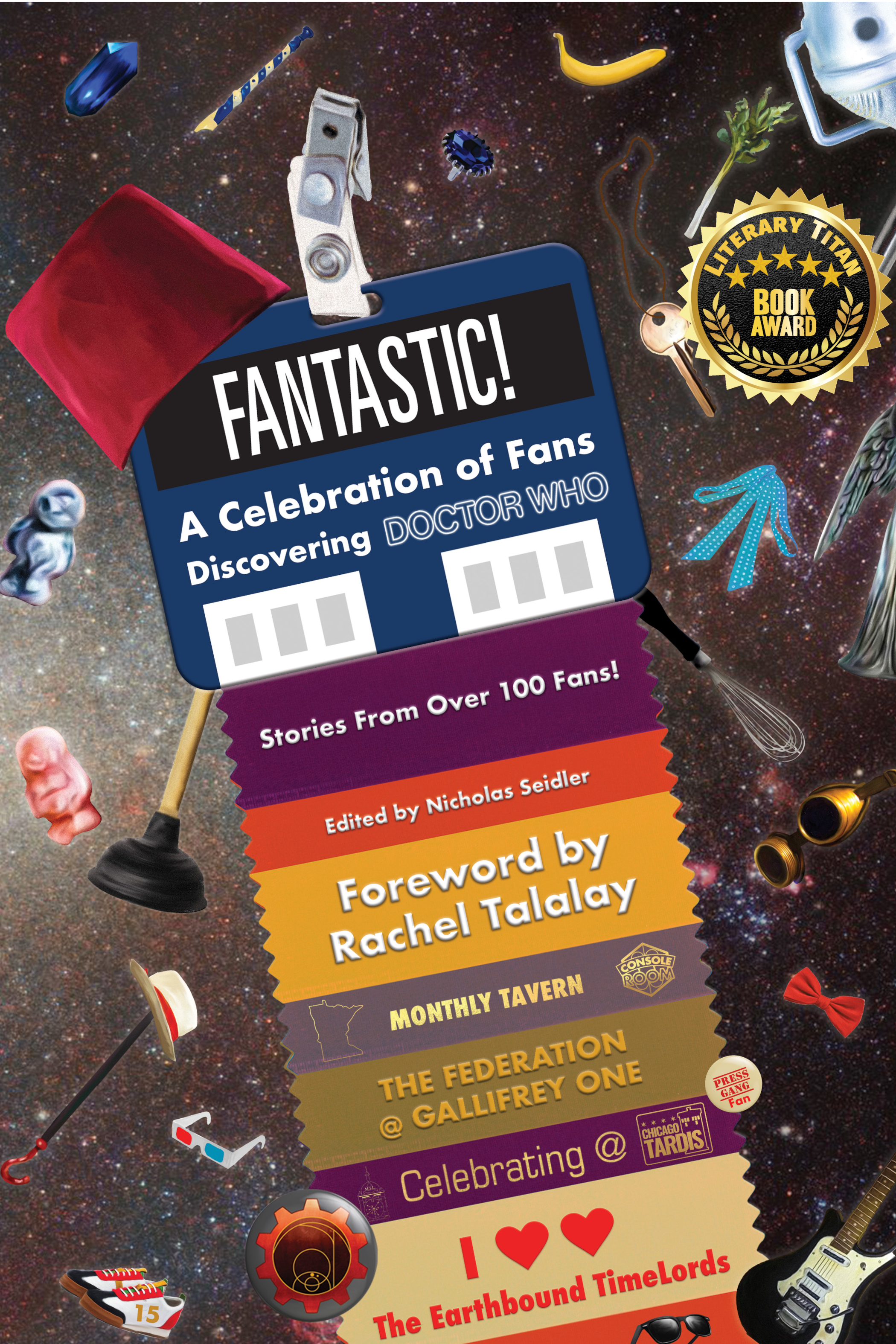
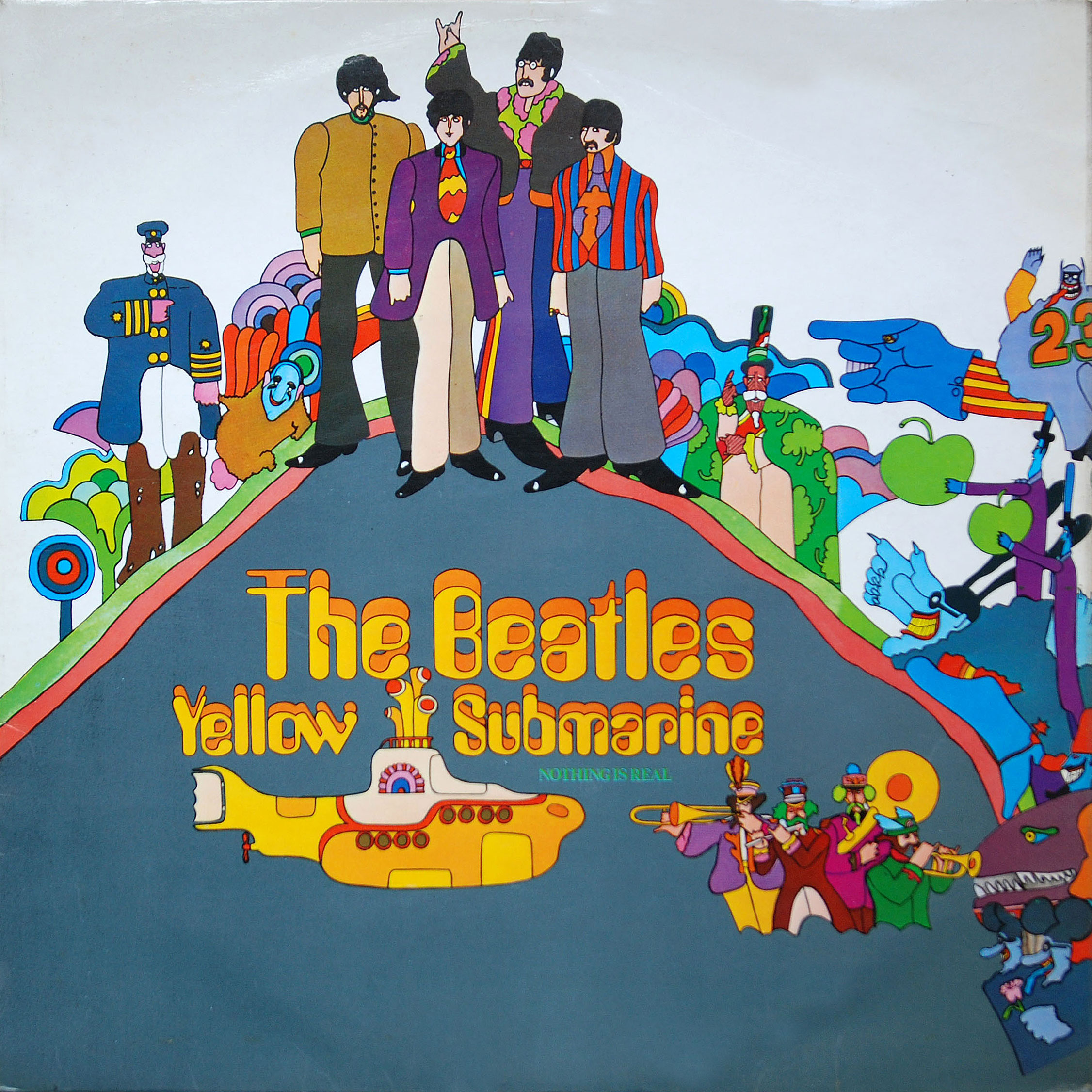


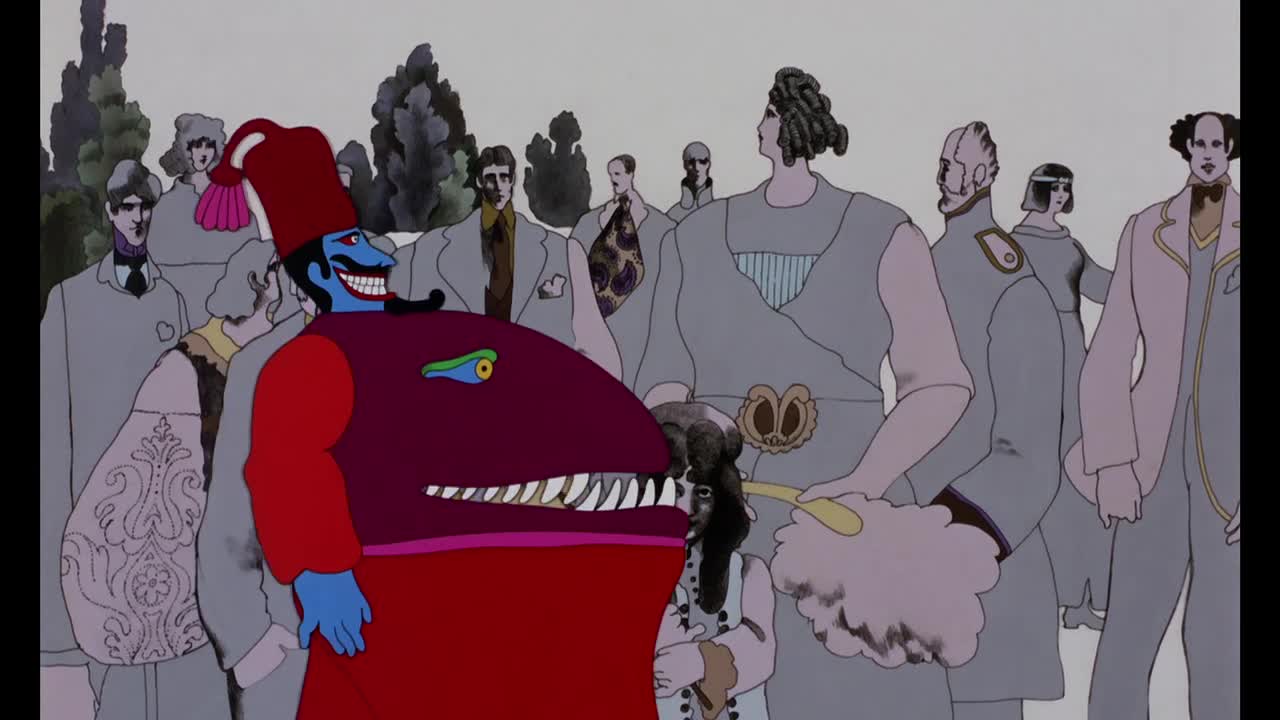


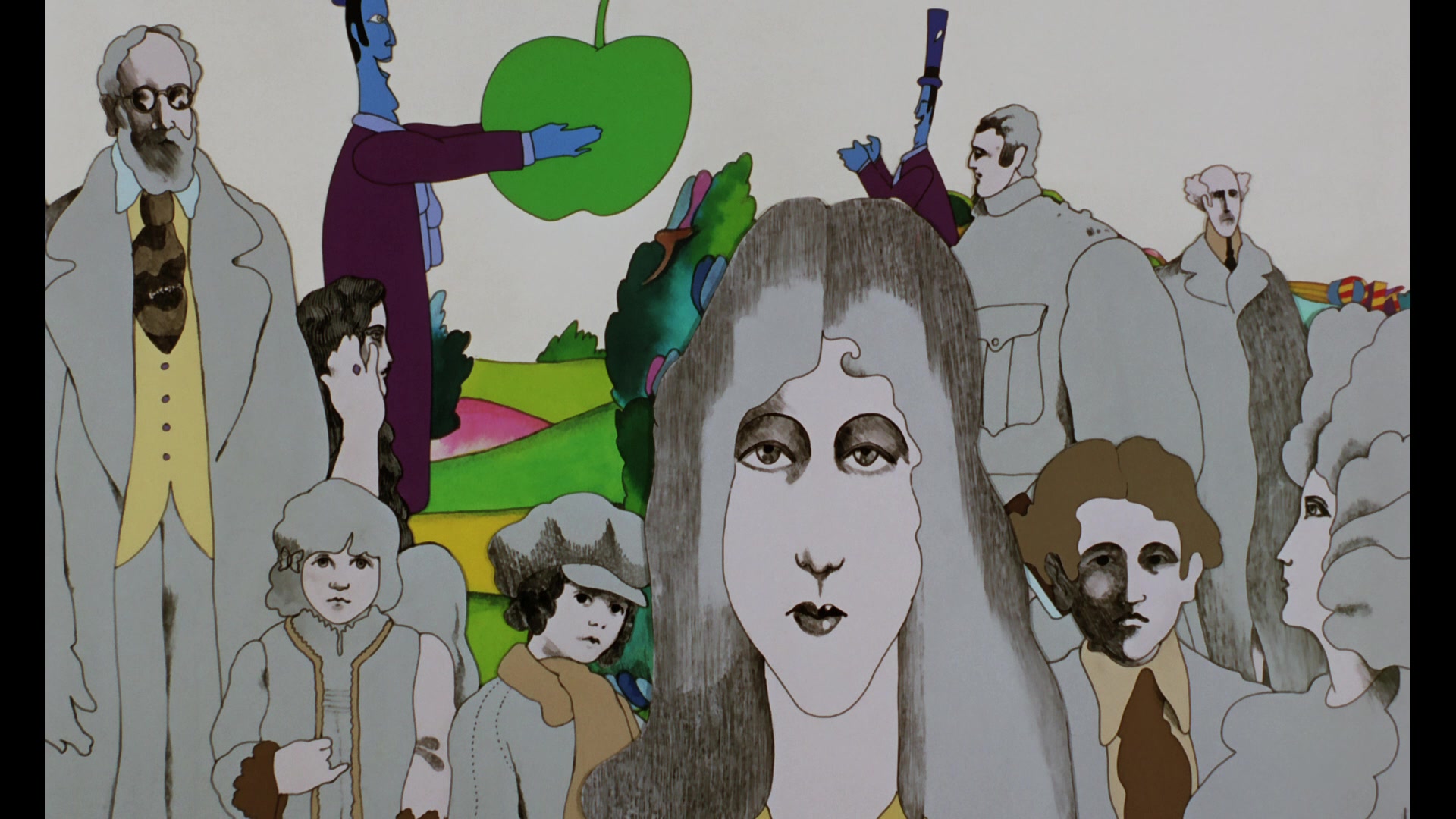

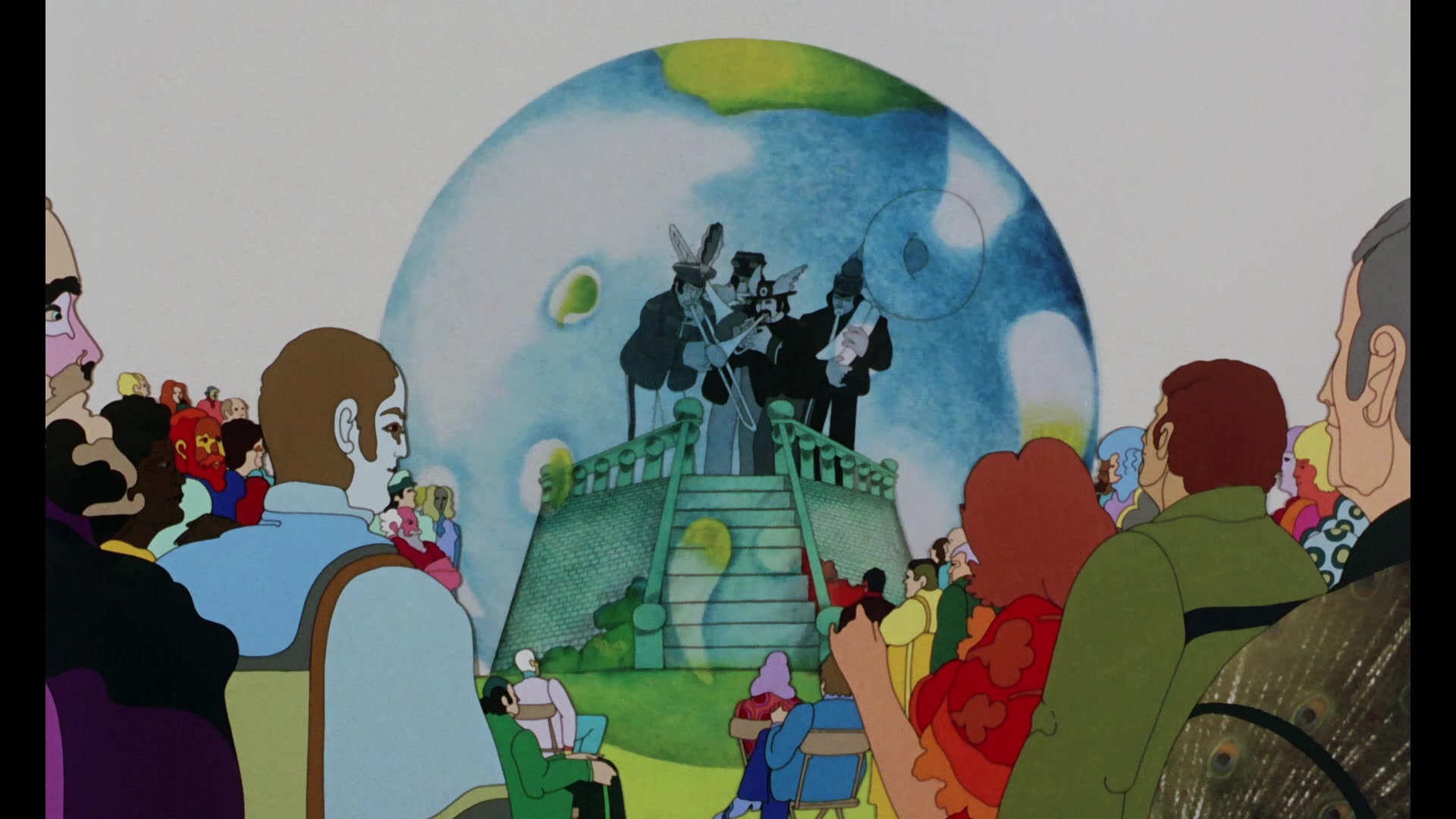


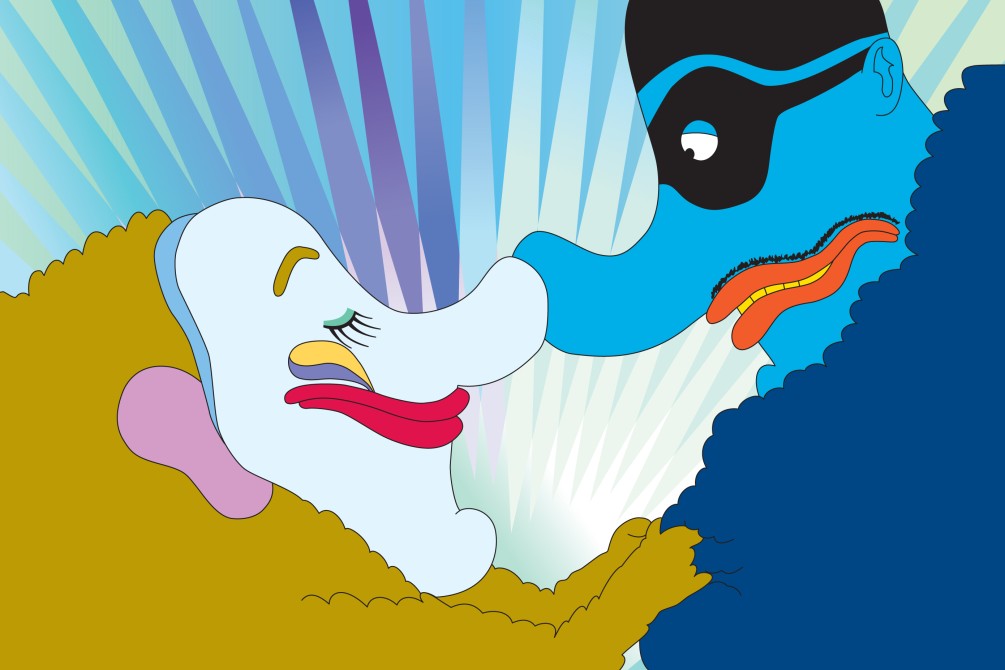


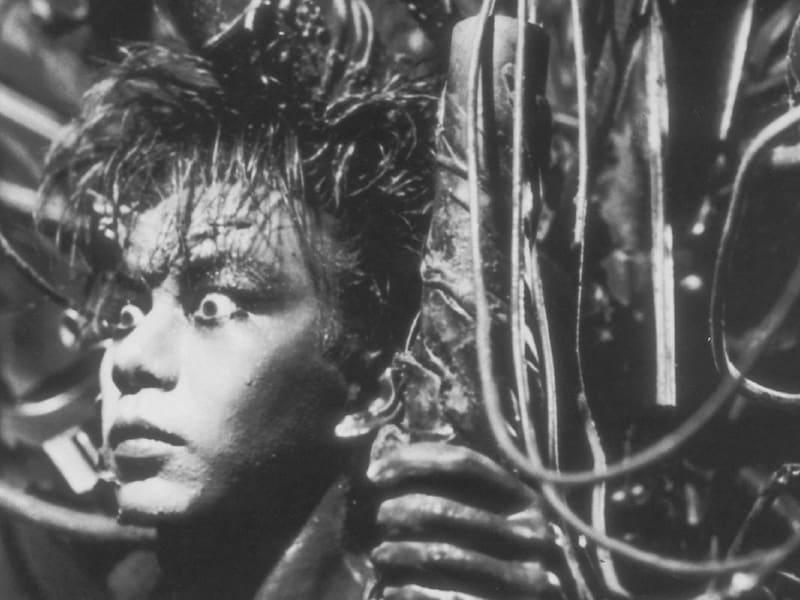


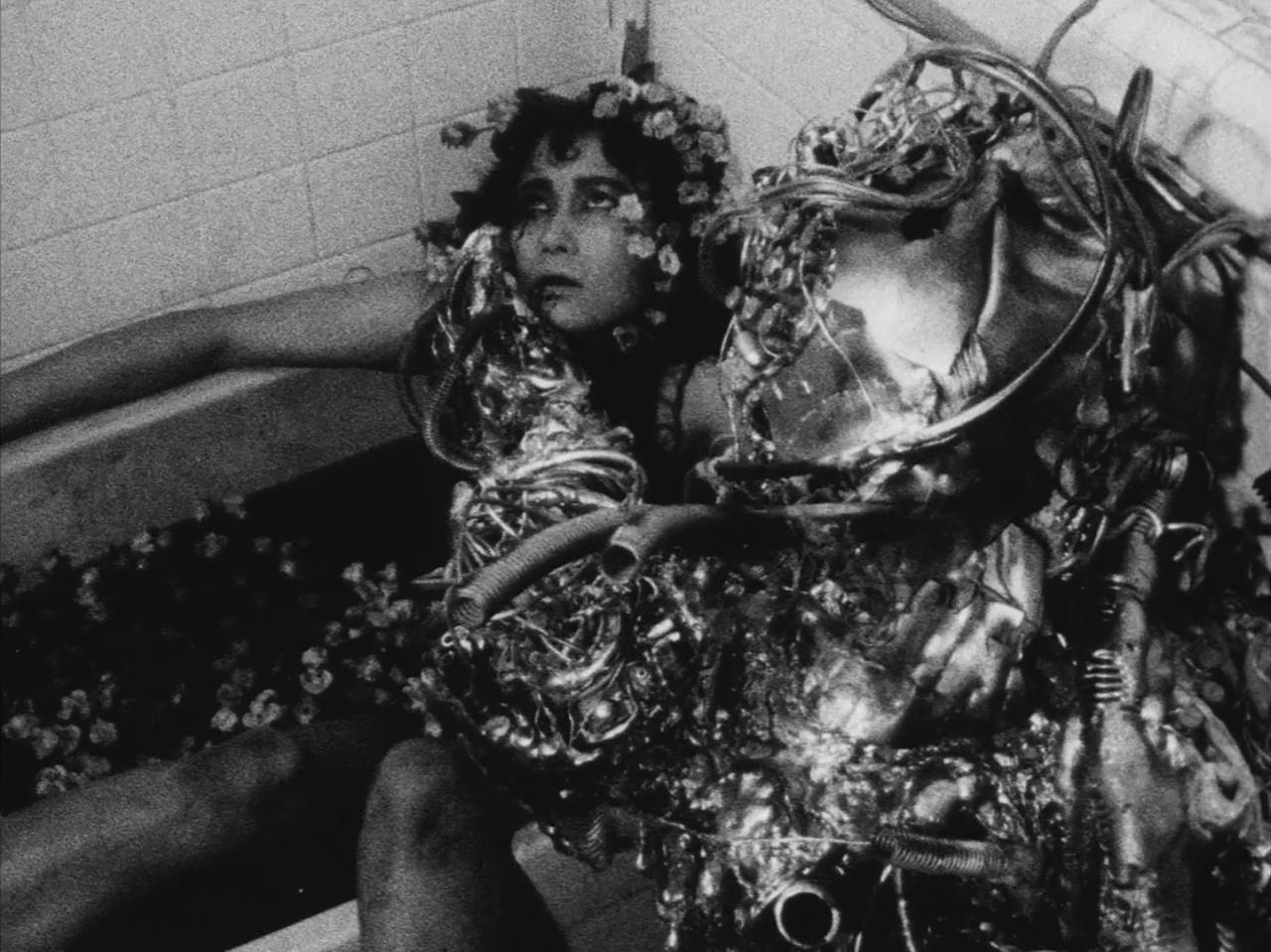


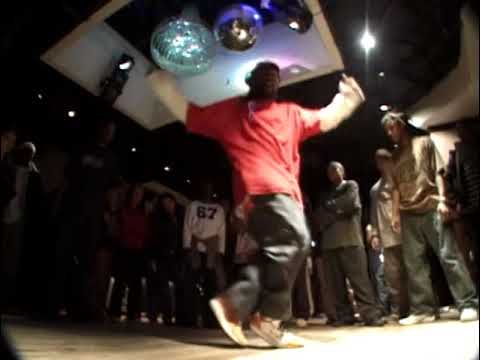
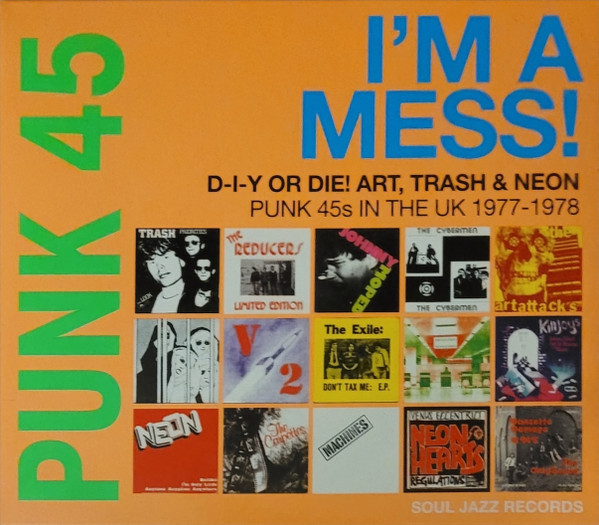
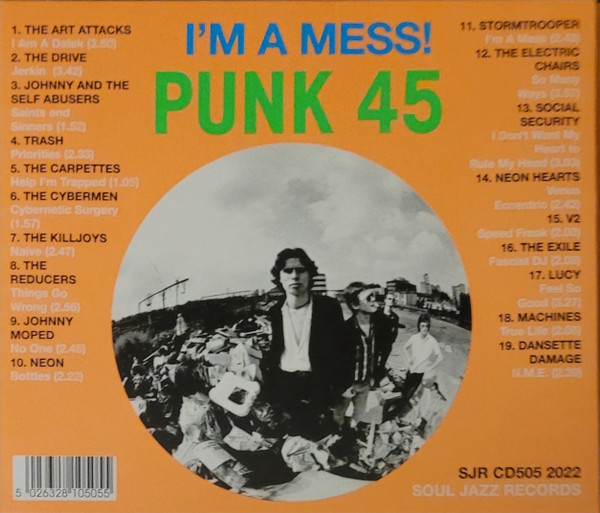


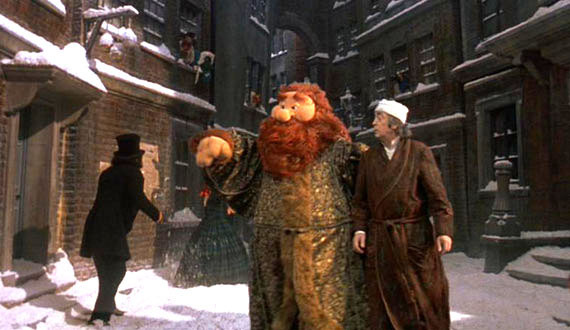
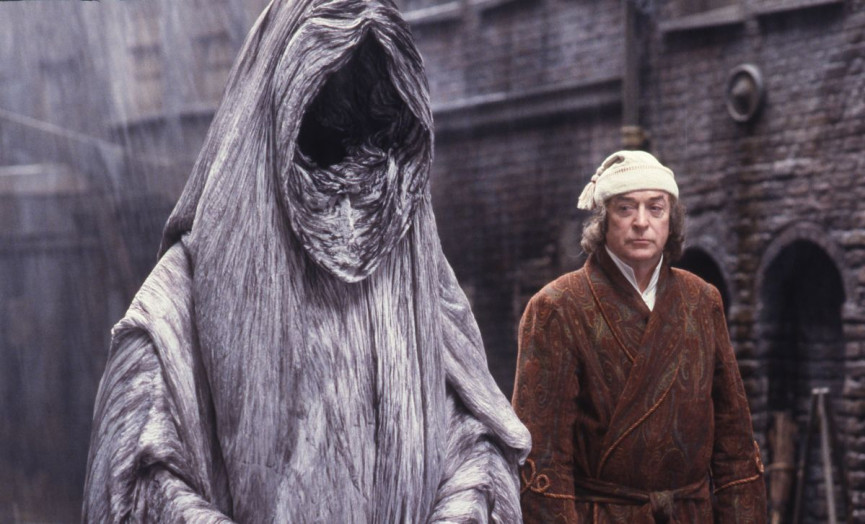

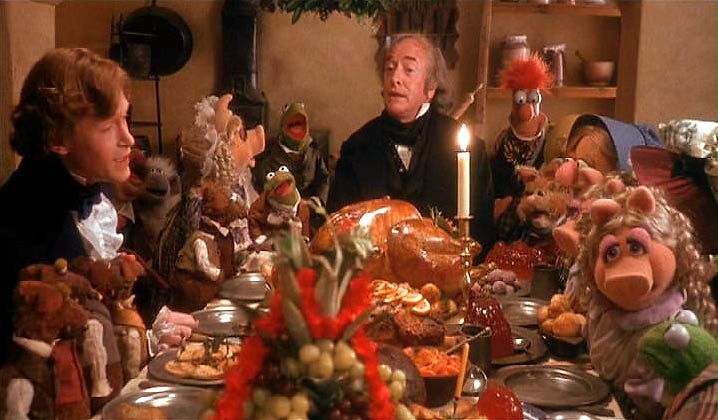
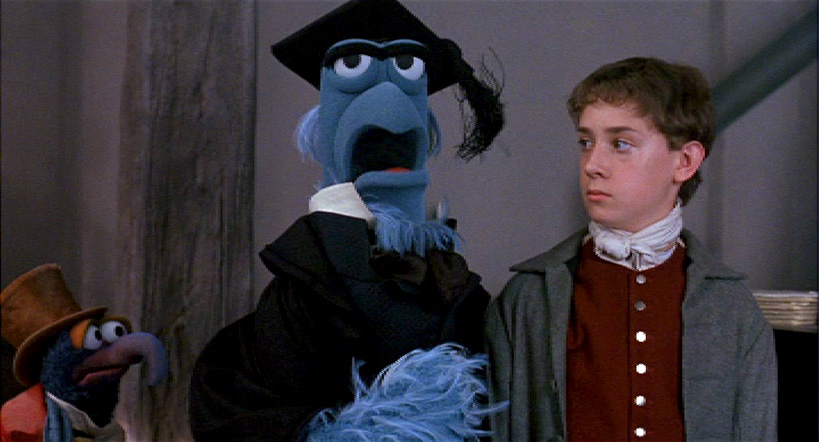


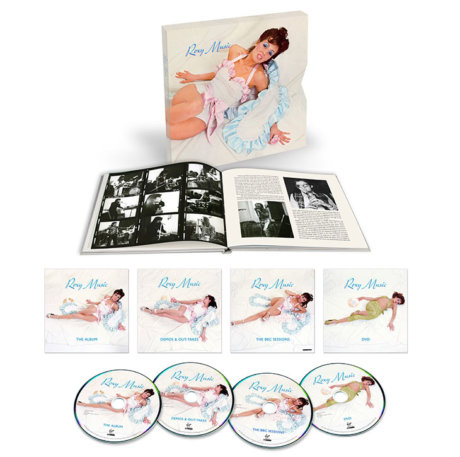


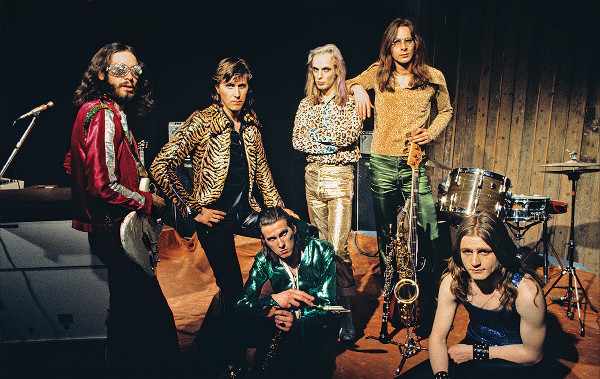
 The Chasbah