Writer/Editor, Comic Performer, Doctor Who fan, radio DJ, Punk/New Wave/Ska fiend, podcaster, audio editor, film buff, actor, producer, leftie (literally and figuratively), comedian, blogger, teacher, smartarse, and motormouth. Not necessarily in that order.
Lene’s second album is, in my view, just about as delightful as her first — more strong songs, even more great singing, and more of the great sound and mainstream-friendly yet angular pop music that charmed the listener with the last album. There’s still nothing quite like the formidable combination of Lene and Les and their original band lineup of Nick Plytas, Jeff Smith, Ron François, and Bobby Irwin.
There’s also little bit of further growth in the songwriting, performance and art direction, continuing to define goth before it was cool. Throw in another batch of similarly great tunes, even more professionally produced, and a smattering of big-time commercial success (more on that shortly), and you basically have the perfect sequel record.
THE ALBUM
Flex opens with a low-end sonic hum you could easily imagine Kraftwerk employing on one of their earlier albums, with just a hint of actual birdsong before Lene brings in her incredible birdsong call before launching into the song (called, of course, “Bird Song”) proper for the first verse. This is followed by the signature male chorus’ sonic wall over the lyrics of a spurned lover, and lovely “organ” to add to the Goth atmosphere. “Bird Song” would have been right at home on the first album, and closes with more of her incredible bird vocal.
One thing you notice immediately is the improved sound and more sophisticated production, which I’ll credit to Roger Bechirian and Alan Winstanley, both of whom were names frequently seen on many great New Wave records of the era, especially on Stiff and Sire. The pair really “get” what makes Lene and the band great, and plays up their strengths for maximum possible radio- and headphone-friendliness.
“What Will I Do Without You” continues the heroine-as-victim motif, this time, worrying what might happen if her love ever left her. The song replaces the organ with some piano and more of Lene doing more of her own bv’s, but that Slavic-style male chorus is still present. This is another contribution by Chris Judge Smith, and it has “single” written all over it. It really focuses on Lene’s performance, and throws in some strangely underrated (synth) horns here and there that probably should have been played up a bit more.
The first hit single for this album was “Angels,” and it keeps that Goth-y Eastern European vibe going but not focused on a specific lost love and yet still fixated on potential death. This of course contrasts with the uptempo, upbeat and generally danceable groove. This is where the band starts to branch out (a little, and I mean just a little). The contrast between Lene’s swooping vocals and softer, more vulnerable verse singing is quite seductive and effective.
“The Night” was a cover from other songwriters and a sleeper hit for Lene, not really coming into its full appreciation until years after release, with some help from a Marc Almond cover of the song, which refocused some attention on the original. There is also “US mix” of “The Night,” but we’ll come back to that later as it is included here as a bonus track. This one features a really great, short chorus that contrasts so well with the dark and eerie mood of the verses and sub-chorus.
In the hands of any other artist, the first four songs being about a love falling apart would have been repetitive. Lene manages to find different viewpoints to cover such similar topics, and with Les carefully giving each song a different feel with the same players really pays off. This one has some bells and sax to throw into the band’s bass-leading, synth-augmented sound.
That said, the fatalistic theme does start to wear a little on the fifth song, “You Can’t Kill Me,” again by Judge Smith, but it is buoyed by some funny lyrics and a more novel arrangement. The vocals and bv’s are really front and center on this one, and it also has a little nod to Japan — a second gesture to that country after the Japanese version of “I Think We’re Alone Now.”
The mortality subtext doesn’t let up on “Egghead,” with its very sing-song style, but the enthusiasm of the vocal style and upbeat music, as with many of the songs we’ve heard thus far, keep the listener entertained and holding despondency at bay.
Finally, on track 7, “Wonderful One” breaks the mold and finds Lene in a happy mood, sort of. This one features a more jaunty riffs, nice organ fills, and more birdsong-like Lene bv’s. It’s a close as Lene gets to a straightforward love song.
“Monkey Talk” follows in its official recorded version, which the live takes elsewhere in the box set follow closely. I’m still not sure what the song is actually about, except that she seems to be comparing mankind and monkeykind as closer cousins than even the Leakeys would have it. There’s plenty of “monkey chittering” from Lene, and a great Soviet-style “worker’s playtime” chorus.
This takes us to “Joan,” which keeps up the relentlessly catchy dance-tempo music even as Lene sings of the obsession and sacrifice of the historical subject of the song. “Like Joan of Arc, you must be brave/and listen to your heart/Imagination is essential to creative art” is a great twist on persuing your vision at all costs, though of course it didn’t pan out so well for Ms. d’Arc …
The album closes with “The Freeze,” which uses a sonic moonscape, and rather different two-tracked vocals from Lene in what is the spookiest and slowest song on the album. My joke about this when the album originally came out was that this could easily be the Soviet Union’s national anthem.
That said, if you’re old enough to remember the Soviet Union — and the threat of nuclear war that hung over the world in the closing decades of the last century (and now trying to stage a comeback …), you’ll get the vibe the band was going for on this one.
BONUS TRACKS — FLEX
“The Night (US mix)” — in addition to a slightly different mix, the record company (or someone) added ska horns to the sub-chorus, which works well.
“What Will I Do Without You (single version)” — the name implies that this is just a different mix of the album version. It’s not — it’s the demo (generally referred by this box set as the “original version,” but not in this case). Among the many differences is Lene’s singing (a half-octave lower!), very restrained bv’s, more reliance on synth, bass and drums, and generally a far more basic version.
“Bird Song (edit)” — by contrast, this single version of “Bird Song” is identical to the album track except it’s 30 seconds shorter. They cut the vocal birdsong intro and went straight into the song proper. It also fades out quicker then the album version, but keeps some of Lene’s haunting angry birdsong at the end.
“Details (Original Version)” — Having these demos scattered around the set is interesting, since they are usually located close to the finished versions, but two things come across very well in these cruder, less polished version: that Lene is an incredible vocal talent even without much in the way of polished production, and that Les and her bandmates can put together extremely good demos that communicate the design of the song very well. I love their use of occasional bits of stopping cold as a musical punctuation mark.
As for the song itself, its a jaunty number that misses out (in this version) on the trademark Slavic male supporting vocals. It features a dreamy lyric where Lene laments her fate and demands the “details” of the plan for her life.
“New Toy” — this was another song, this time from new (but sadly temporary) band member Thomas Dolby that was a popular (irresistible more like) single on original release, and the extended version we’ll get to in a minute was a solid club hit, and once again found a second life later when US retailer Target licensed it for a massive ad campaign and millions of people said “What is that song and how can I get a copy?!”.
This one is solid gold from the first note, focusing on a mostly-straightforward but perfectly-put vocal from Lene and incredibly solid bv’s from the boys (though less Slavic in style) and music from the band, including more excellent piano and synth work brought more to the fore by Dolby, who had joined up with the band for a brief time.
Flawlessly mimed version for UK TV (with Dolby on keyboards)
“Cats Away” — another energetic instrumental, but this time with some snazzy (synth) horn sounds to jazz it up.
“New Toy (Extended Version)” — The intro, first verse and chorus (sans vocal) serve as the “extension” before the vocals get underway. Thankfully they kept the saucy sound effects of the first lines (Les’ purr, and the whip sounds). The middle-eight gets and “breakdown” type selection of isolated instruments and bv’s are added before Dolby’s keys come back into play. An even longer version of the first and best song about conspicuous consumption and consumer capitalism run amok
NEW TOY (US MINI LP)
It’s quite peculiar that for this box set, the New Toy “Mini-LP” as they call it took the title track and put it among the Flex bonus tracks, leaving us without the title track to this EP here, where it belongs. Instead, we only get the second side of the original record, and slightly out of order to boot.
“Cats Away” — a gentler intro that ramps up to speed real quick and a punchier sound with real horns (played by Lene!), it’s still a heckuva swinging number, but an instrumental is a strange choice for the first track on this altered version of the US “mini-LP,” which Stiff/Epic issued to play for time while Les and Lene took a rest (losing the band in the process, regrettably). Lene writes in the booklet that they felt under pressure from Stiff, like some of the other artists, to come up with more “hit singles.” Lene says that they then did a lot of short sessions with different producers.
The lack of a regular band did result in Lene’s work getting some fresh new sounds, but sadly a lot of eclectism that characterized her previous work was reduced, though of course you can’t eliminate it entirely.
“Details” — The polished version of “Details” gets a glow-up from the demo, and makes for a nice change of subject matter. This is a far more polished production as you might expect, but still sticks pretty close to the original.
Boring video, but you get the song as it appeared on the EP
“Never Never Land” — a song from Jimmie O’Neill, but certainly Lene makes it her own (as she generally does with all her covers). It’s a lovely song, not single material but a well-chosen addition that also features stronger vocal contributions from Les.
Because the final two tracks of the five-track “New Toy (US mini-LP)” were just demos that got revamped later on, only the three songs from Side Two of the record were included on this disc, with the two “Side One” tracks saved for accompanying Disc 4, the No Man’s Land album, as bonus tracks.
Next time: The Wrap Up, and the breakdown of the Stiff relationship
Having directly compared the albums, let’s move on to the bonus tracks, which are different for each version of the album.
BONUS TRACKS(DISC 1)
“Lucky Number (Early Version)” — three things leap out at you immediately from the beginning notes of this: a) holy crap these drums are terrible! Actually, the whole thing is pretty crudely done. b) Lene’s performance is still great, but far more straightforward. Still, this has “hit” written all over it. c) definitely cruder in most respects, with lots more background “humming.”
“I Think We’re Alone Now (Japanese Version)” — I’ve always loved this version, identical to the single version except for the vocal. I doubt it’s a direct translation, but I can’t imagine that this wasn’t a rare treat for Japanese fans of UK music, even if the title (only) is still spoken in English.
“Monkey Talk (Early Version)” — Compared to the demo of “Lucky Number,” here we start to get closer to “the full Lene” in terms of her unique vocal styling, including lots of “bird call” she would put to better use later. This being the demo version of this song, it’s heavier musically but similar to the studio version that appears on the Lucky Number/The Best Of album that came from Oval in 2005. One interesting difference — the bv’s are almost all Lene on the version here, which lays down a marker we’ll come back to later.
“Be Stiff” — The A and B side of this single are back-to-back here, with the A side being Lene’s version of the song, originally written by Devo. Practically everyone who was on Stiff Records at the time recorded a version, but in my opinion Lene’s is one of the truest and best. The B-side version includes “the entire ensemble” (ie every Stiff artist they could get in the room) live at Leeds University. This remastered version of the supergroup beats the crap out of the original single version, even if its from the exact same tapes. Hats off, Scott.
“Lene Lovich Speaks (1)” — part of an interview record sent out to radio stations where the live DJ was supposed to ask the question and then play the track with Lene’s answer. As I discovered when I acquired the interview disc, it’s disarming to hear Ms. Lovich speak in her original midwestern American accent. It’s a very short piece where she explains how to pronounce her name.
“Lucky Number (Instrumental)” — perfect for your next karaoke party, this includes some of the vocal “effects” from Lene, but no lead singing (well, a trace here and there — they didn’t do a perfect job removing her vocal, oddly enough). It’s also a great chance to study the construction of the song and it’s various components.
“One Lonely Heart/Big Bird” — a pair of non-LP songs where “One Lonely Heart” feels like an entry to the Eurovision Song Contest, while “Big Bird” is just a synth-based instrumental — perhaps originally intended as the music bed for a future full song. This feels like a bit of a “contractual obligation” release to meet a deadline, since it’s pretty obvious that it was just her and Les in the studio mucking about.
“Lene Lovich Speaks (2)” — Lene tells the story of creating “Lucky Number.”
“Lucky Number (Slavic Dance Version)” — It’s the same version of the song as the single version, except it has a new 1’20” instrumental section in the middle.
BONUS TRACKS (DISC 2)
“Trixi” — This is quite the oddity. Roger Bechirian’s sole producer credit with Lene during this period, it’s a lovely Victorian-era type instrumental with Lene doing various odd vocal muttering and other sounds that seem like singing along, but are indecipherable.
“The Fly” — A more interesting effort in the department of “lyric-less music with vocals,” in part due to the presence of both Lene and (presumably multi-tracked) Les — it’s another catchy mostly-instrumental with another great sax solo from Lene. This time, the word “yummy” can be deciphered, and some convincing “fly” noises as well, reminding us that Lene is incredibly varied in her vocal use.
Most of the live tracks that make up the rest of the bonus tracks are taken from a live promotional EP called 1980 Global Assault — Recorded Live in London and Boston, with the exception of “The Fall.”
“The Fall (live)” — this performance is from the Live at the Lyceum gig, which took place exactly 44 years ago as I write this on 02-March-2024. I mention this song specifically for three reasons: first, it was not included in the 1980 Global Assault album, most likely some kind of rights issue.
Secondly, it’s the first of at least three cover songs written by Judge Smith, an interesting artist in his own right, that Lene has committed to record over time (the other two are on the album Flex). “The Fall” first appeared on a three-song single taken from the Stateless album, but wasn’t included on the album or anywhere else until the German CD reissue of Stateless in 1991 as a bonus track, and of course Stateless … Plus, the European reissue from 1993.
Stateless … Plus was, quite possibly, the first CD I purchased that I got specifically because of unheard “bonus tracks.” The song was also included as a b-side from the extended “Angels” 12-inch single, which of course is taken from Flex.
And finally, because unlike the other tracks, they Lyceum performance of “The Fall” really doesn’t sound like a live recording at all — there’s no hint of audience noise throughout.
As for the song itself, it’s easy to see why Lene wanted to record it: it’s definitely not as upbeat and poppy as her own material, but does give her a chance to do something really dramatic in song. The tale told, of a battle raging and city falling in some bygone war, is rendered with the appropriate amount of agony and woe from Lene’s stunning vocal performance, which includes a dog barking near the end. It’s something different from her, and darker than she’s gone thus far.
Turning to the three tracks that make up the EP version’s A-side/Lyceum performances — “Monkey Talk,” “The Night,” and “Too Tender to Touch,” the audience sound is very limited to mostly just applause at the end of the songs. except for the clap-along at the start of the (bonus bonus!) “You Can’t Kill Me,” which wasn’t included on the vinyl version of Global Assault. As with the previous tracks, it certainly does show off how tight the band has gotten by this point. Live, Lene, Les and the band were a pop music machine that were clearly firing on all fronts.
The three songs from the Paradise Theatre in Boston (“Angels,” “Lucky Number,” and “Home”) also included here are considerably extended “jam” versions with long instrumental breaks. This may just be me, but that sort of practice is rarely exciting in my view, though I acknowledge it gives the singers a chance to relax a bit, and it sure sounds like everyone involved was having a great time.
Toy Box: The Stiff Years is a four-CD box set covering everything (or nearly so) Lene and her band recorded for Stiff Records, which amounts to three albums, two “mini-LPs,” and some odds and sods, all of which have been gathered up together. For me, who has collected Lene faithfully for decades (and once did a lovely interview with her and Les in Atlanta), there’s not a lot here I hadn’t already heard or own, except for one pretty significant thing (which we’ll get to shortly).
From her 70s and 80s peak years, most everything is here apart from the brilliant 1989 album March, but of course it wouldn’t be — it didn’t come out on Stiff. Each of the albums are supplanted with bonus tracks, including a lot of “early versions” (home studio demos), instrumental versions, variations, remixes, live versions, and promo or b-side type stuff.
As with these sorts of “everything boxes,” as I like to call them, it’s really great having this all in one place (super handy when storage is tight, eh, fellow collectors?), and while I’m sure there’s a few oddities missing — for example I have the full Lene “Interview Disc” on vinyl where the DJ would ask questions and “Lene” (on the included record) would respond — but this is as complete a catalog of the Stiff music from her as we’re likely to get. Plus, it’s Cherry Red — there’s a fabulous booklet that includes Lene’s own memories and comments, plus some supplemental information from Scott Davies (of Rubellan Remasters, who handled the audio remastering for this project) and Michael Robson (who sheparded the project and designed the booklet and box).
One last thing before we dive in: It wasn’t originally my intention to do another artist who rose to full prominance in 1979 this soon, I had actually picked out another quite different artist boxset to do; but I was joking to some friends one day last month that it would be ironic if I covered three of Lene’s four 70s/80s albums in … wait for it … March, and so here we are.
STATELESS — BACKGROUND
A two-CD version of Lene’s debut album, you ask? How can this be, even with bonus tracks? The original album was barely longer than 30 minutes! This is the “pretty significant thing” I alluded to earlier — both the US and UK versions of Stateless are present here, and as I’m embarrassed to admit (having owned a vinyl UK copy of the album for decades but never actually listened to it because I also had the US version) — I was unaware of just how different the two versions were/are until now. So, for me at least, there’s a brand-new record in here.
Consequently, this calls for a side-by-side comparison of each album track. We’ll also review the non-album bonus tracks — all 21 of them! — and pick out the gems.
The short story on the two versions is that after the record originally came out in the UK (with the pre-release hit single of “I Think We’re Alone Now”) in October of ’78, the US label felt it needed some further cooking, and had Roger Bechirian (well known among New Wave et al album collectors) remix and re-record some parts for the US release, which made “Lucky Number” a minor hit in the States as well.
The US version used a different — and frankly better — cover shot as well, though I like the way Lene (in the booklet) refers to the UK cover as “like ‘The Scream’ by Edvard Munch.” When the album was re-issued in the UK in ’79, some (but not all) of the Bechirian versions were included, so getting to hear the original mix is a treat.
The Bechirian version of most of the songs was then used for the subsequent rest of world versions, which along with the US version came out in April of ’79. The full story on this is a bit more complicated (variations on how many Bechirian remixes were used on different countries’ album version, plus a couple of mis-stamped pressings), but to consolidate matters Cherry Red has Disc 1 as the original LP mix (only a little Bechirian) and Disc 2 as the “US/UK remix” version (tracks 1-8 and 11 were “Bechirian’d”). For the bonus tracks it is not spelled out, but our Roger is also credited with production as well as backing vocals (for “Trixi,” meaning that song was likely created during the re-record sessions).
The album did pretty well: while it didn’t chart in the US, it went Silver in the UK (250,000 sold) and did well all over Europe, Australia, and New Zealand. The first single, a remake of Tommy James and the Shondells’ “I Think We’re Alone Now,” reached #3 in the UK. It had the “early version” of “Lucky Number” as the b-side.
The subsequent single, the revamped “Lucky Number,” went to #2 in Australia and #3 in New Zealand, and also charted elsewhere. In the US, the song was a sleeper success, never hitting the Top 40 but it was an early video and club hit.
Before we get to the UK vs US compare, I do want to mention my general feelings for this album: obviously I liked it at the time, but this revisit has reminded me of how much I adore this record. It’s a rare album where 100 percent of the songs are strong, polished, and timelessly enjoyable, and of course Les and Lene’s talents mesh so beautifully here that the whole thing — UK or US version — is just a joy. It’s one of the very best albums Stiff ever put out, and was by no means a one-shot wonder.
STATELESS — SONGS SIDE-BY-SIDE
These will be comparisons of the “UK original” and “US/remixed” versions of each song, acknowledging that having an experienced engineer remix/redo some stuff is bound to sound better a lot of the time. We’ll use the original UK running order for the album.
Lucky Number Winner: US/remixed Bechirian knows what he’s doing when it comes to mixing: this has a brighter tone and a more swinging tempo; beefier drum fills; more manly background vocals; a slightly more “quirky” lead vocal, and the brilliant addition of the monk-like “number” chant for the outro.
A slightly different, live (?) version from Top O’ the Pops
Sleeping Beauty Winner: US/remixed The US version has a new vocal (this will be a theme in many of the US/remix wins), but the UK original is clearer and more natural — Lene doesn’t fight the instruments to be heard as much. That said, the US version is better mixed throughout, and adds more bv’s and stronger bell sounds. It also has a new guitar solo, and the song cuts to the ending much quicker, losing 30 seconds of repetitive vamping from the original version, which gives it the win.
Home Winner: UK original Some may disagree, but I think the UK original mix retains more of that surfer/psychedelic feel. This seems like the first song were Lene’s vocal wasn’t re-recorded in the US version, but then again, the US mix adds some new guitar twang and louder FX during the middle eight.
Lip synced version from Dutch TV
Too Tender (to Touch) Winner: UK original The US version features the bells much more prominently, which is an improvement on the UK version, but oddly tries to bury Lene’s vocal under a significantly louder piano (excellent work by Don Snow) and some organ bits. Again, it’s the same vocal on both versions, but Lene never really comes to the fore in the US version until the bridge, and even then a new and different piano solo gets thrown in for no clear reason.
Say When Winner: US/remixed Conversely, on this one it’s not even close: Bechirian’s significantly re-mixed and re-recorded version is just vastly superior. It’s a fun song either way, but Lene’s terrific new vocal contrasted with more male bv humming, and a far more prominent organ, some nicely-placed reverb and other touches just make this one the definitive version (plus an extra count-up!).
Lip synced for Dutch TV
Tonight Winner: tie Nick Lowe’s “Tonight” gets a really nice 1950s treatment in both versions, but each one drops the ball in one way or another. The UK version puts Lene front and center vocally throughout, as it should, but it criminally dwells on the sax (which is very good, don’t get me wrong) at the expense of not bringing in the crucial supporting background “echo” bv’s until the song is more than half over. While the US version corrects that mistake, Bechirian piles on all the instruments too much, frequently drowning out Lene’s climatic vocals in the choruses.
Writing on the Wall Winner: US/remixed Another 50’s influenced number, this time the tragic story-song that skirts doo-wop territory at times. The US version brings in sax, better mixing for the organ, and adds more male bv’s to give the song more atmosphere.
Telepathy Winner: US/remixed A very funny song, which backs off the 50s influence somewhat but still has an echo of it. Once again, the US version brings in the background vocals right away and keeps them around throughout, and Lene’s re-recorded vocal actually improves on the UK original. The better mixing and more vocal power wins the day.
Momentary Breakdown Winner: UK original We’ve now moved firmly (with “Telepathy” and now this one) into early 60’s (fake) girl group sound. This time it’s the UK version that gives the “girls” plenty of spotlight, and Lene’s incredible, four-octave finale is just … (chef’s kiss). The US version mostly buries the bv’s until the middle eight, but does offer better separation for the instruments, and the end of Lene’s octave stunt isn’t the end of the song this time, she just descends and starts over (briefly).
One in a 1.000.000 Winner: UK original This song always reminds me of “Say When” in its franticness, strong vocal, and playful arrangement — you could image a chorus line of western burlesque dancers high-stepping this number at an old west saloon. The US version again puts Lene back a little in the mix (with bv’s more prominent, but to be fair they’re very good), but the two versions are by far the most similar between the two releases, with only a slight change to the sonic staging on this one.
I Think We’re Alone Now Winner: tie Bewilderingly, the US version on this song flips the typical script on the way it’s mixed, with the instruments nicely separated from Lene’s vocal, with the bv’s a little less prominent and her own background sounds getting some of that spotlight also. The difference between the US version and UK version is still a little subtle and for me, either one is the best version of this song I’ve ever heard.
The final disc in this three-CD set feels a lot like someone spent a lot of time on the first two, then realised “oh crap, there’s a mountain of stuff I haven’t even gotten to yet!” and tried to cram as much of it in at the last minute — which reminds me of me and my suitcase packing. There is a marathon 27 tracks here (literally hitting the 80-minute CD limit), and as with the other two discs, the “hits” are in the minority and the also-rans are in the majority.
Much of the fun of this set is discovering some lost gold, but also this whole set paints a picture of both the fall (but lasting influence) of punk and the rise of post-punk, which dominated ’79 until fashion (and better/more affordable synthesizers) entered the picture, whereupon it evolved again into New Wave. Some acts were more forward-looking (XTC, Human League, The Monochrome Set, The Vapors, The Wall), some weren’t (Swell Maps, Disco Zombies, The Regents, Notsensibles) but most were just taking advantage of the spirit of the times to either play at being a rock star (The Zipps, The Monks, The Freshies), or seriously explore their own creative path (The Mekons, PiL, Scritti Politti).
What I like about these sorts of “specific year, period, or genre” comps, at least the way Cherry Red does them, is that they make you a true Whitman’s Sampler of the subject, rather than focusing on the most memorable hits like most labels would — thus grossly misusing the term “Best of.” Instead, we get a marbled slice of the whole cake — nothing truly terrible, but the gamut of acts that got to the record-cutting stage who ended up being run-of-the-mill at worst, and gloriously daring and original at best.
One thing I noticed about the third CD was that the famous/infamous “two minutes-ish” standard was really starting to slip – most of the songs here are over two minutes, many are over three minutes, and a handful sail right past a scandalous four minutes!
At a total of 76 tracks, “Revolt Into Style” is probably best suited as the soundtrack for a 1979-themed party, with prizes for those who can name the more obscure tracks, but … as a snapshot of a moment in music, it is far better and more representative of a time where the “next big thing” wasn’t yet clear, and popular music was open to more possibilities than had been there for a while.
THE MUSIC
Disc 3 starts off with a strong set of four songs — one from the quixotic XTC, who managed to become a minor but mainstream success with a number of charting hits; two from bands that are beloved by their fans (which include me), but all but unknown to everyone else (The Revillos aka Rezillos and The Monochrome Set); and a oddly attracting but utterly obscure song about driving habits (!) from a band that sank without a trace (Passage).
★“Making Plans for Nigel” is one of Colin Moulding’s unlikely hits, which must have confused the heck out of main songwriter Andy Partridge (who had to wait quite some time for one of his to climb the charts. It is, as is a theme throughout the entire boxset, not a love song — and showcased their angular soundscape and unconventional vocals, yet still managed to become their first Top Twenty single and bring more attention to the band. Happily, they kept following up with strong choices for single and album material for quite a while.
★“Where’s the Boy for Me?” is a brilliant mod-ish parody of teenbeat songs (like those of Lesley Gore, whom I adore) and those boy-crazy beach movies. It features the best damn fake Farisa sound around, plus the requisite twangy guitar solo, great garbage-can-lid drums, and starts frantic and builds up to a sudden hard stop. Not the first band to create a warped image of the 1950s, but one of the best.
★“The Monochrome Set” by The Monochrome Set is, surprisingly, not the only self-named single on this disc (!), but in this case it’s a manifesto of wit and whimsy from the point of view of the bored, cynical offspring of the rich — one of those things Noel Coward might have tossed off if he’d been a pop star. The single version included here was reworked a bit for the album version (found on Strange Boutique), but its the blueprint for Bid’s entire ouevre of smart, humourous songwriting.
★Passage were the first band on the disc that were utterly new to me, and the song “Taking My Time” is … odd … in its subject matter, but it has lodged itself firmly in my head for some reason. I mean, who writes a song about bad driving? It really makes me curious to explore whatever other music they put out. Perhaps the fact that it was produced by David Cunningham of the Flying Lizards gives it a touch of commerciality (with surprise cello at the end), coupled with a simplistic chorus and odd subject.
THE BEST OF THE REST …
★Other winners on this disc for me included “Empire State Human,” which is technically the very first Human League single (the one before, “I Don’t Depend On You,” was done under the name The Men). Of course Human League were one of the bands that took their very forward-looking sound and made commercial hay with it, but this one stands out even on this disc the way Gary Numan did on Disc 1. It’s a story-song, which I always like, plus its really funny.
It didn’t actually do well on initial release, what with being a song about a man who is deteremined to become the tallest person in the world (and succeeds), but was re-released later and became a hit. The segue out of the song features the lyrics “fetch more water, fetch more sand/biggest person in the land,” which somehow works with the whole bizarre thing. I love it.
★“Kiss the Mirror” by The Wall is an early dark-rock song that predates the big obsession with that genre as we suffer through the Thatcher reign of austerity in the UK, followed by the election of war-happy Ronnie Ray-Gun in the US. While this particular track suffers from some poor production or mastering, it can’t hide the band’s talent — and made me go look up some more of their scattered discography, all of which I sampled was in much the same solid vein.
Their first single, “New Way,” was another John Peel favourite (as you may have gathered, his opinion was very important to the compilers of this set, as it was to most young people in the UK at the time). “New Way” borrowed a chorus from the Sex Pistols, but they’re forgiven because the song was produced by former Pistols Paul Cook and Steve Jones. Beset by personnel changes, the band split up in 1982, but have had at least one reunion (in 2007), and their two studio albums have been augmented by a live album in 2009 and a compilation of the Ian Lowry material that came out in 2021.
★Public Image Ltd’s lesser-heard single “Memories” is an other example of a band that doesn’t sound like everyone else (often a problem for the also-ran bands, on this disc in particular). Long-forgotten but brought to my attention in this track is the repeated use of the phrase “I could be wrong” — which he used again to even greater affect on the band’s biggest hit, “Rise.” Feeling nostalgic after hearing this, I went to look up their latest album (End of World) and sampled the song “Car Chase” — yep, still Johnny, still unique, still great.
The very next track on the disc is the compilers sneaking in a musical joke. “Johnny B. Rotten” by The Monks, who have no aspirations of imitating either the Sex Pistols or the former Mr. Rotten; it’s just a fun pop song taking the piss — or maybe it’s meant as the flip side of “Johnny B. Goode.”
★Then we come to a breath of fresh air with The Vapors’ first single, “Prisoners.” In many ways, it’s the same old “three chords and a cloud of dust” approach so many of the other bands use, but smart backup vocals and the stylish interplay between David Fenton and Ed Bazelgette really shows off their talent. It can’t have hurt that Fenton borrowed a musical phrase from Bruce Springsteen’s 1975 hit “Born to Run,” but I love how he used it here.
★Finally, we get to a ska song (sort of), and it’s Madness’ “Bed and Breakfast Man,” a very mainstream hit from the Nutty Boys, again in the tradition of a Kinks-ian story-song but with that ska influence. This was the one that proved the band wouldn’t be a one-hit wonder, and that they could grow and embrace other styles as well.
★There’s also a single by the emerging Dexy’s Midnight Runners called “Dance Stance” (originally called “Burn It Down” when they were still a punk band, and that titled returned for the album version). Singer Kevin Rowland and guitarist Al Archer had soured on punk, rethought their goals, and came up with Dexy’s style of northern soul.
This was the first indicator of their new direction, and it’s thus rougher than what they would become, but it still captures that rebellious spirit the fuelled punk, addresses an anti-Irish sentiment that was prevalent during “The Troubles,” and takes it in a different direction (including a litany of Irish literature legends name-checked in the song). Thankfully we get the demo version here, rather than the official single (which stripped out the remaining punk element and just wasn’t as good).
★Another keeper was The Lurkers with “New Guitar in Town,” which does a lovely job with what would later be called “jangle pop.” It closely follows the style of drum-and-guitar driven fast pop that dominates the sound of ’79, but good vocals and agile play make it work.
★The last of the highlights for me was the inclusion of the perennial post-punk novelty number, “Where’s Captain Kirk?” by Spizzenergi. You gotta love a man (Kenneth Spiers) who has made an entire career (still going!) out of a single song (okay, that’s not quite true … have you heard his cover of “The Model” by Kraftwerk?), and ever-changing band names on the theme of “Spizz.” Fast, fun, whacky, excellent guitars and gratuitous vocal effects (plus a human farisa organ!) … what’s not to love?
… AND THE REST OF THE REST
Another wrinkle that occasionally gets into the music here (and throughout the collection) is the introduction of sax and occasionally other horns to add some soul and punch to the guitar-heavy sound. In the earlier discs, bands would often lead with the bass and drums, but by Disc 3 bass has been mostly pushed into the background in favour of more guitar. We’re also sloooowwwwlllyyy getting back to love songs, which isn’t a bad thing — but we were enjoying the break and the variety of other subjects that dominate this compilation.
As we’ve noted across these discs, there was (and still is) a tradition of the occasional single (that sometimes does rather well) of a bunch of lads on a musical lark (see also “Zip Nolan” by the Cult Figures on Disc 2). These days its mostly the realm of novelty Xmas singles or forcing the tournament football team to make a loutish charity record, but a … let’s call it “project” … called Swell Maps managed to make a career out of it for a while.
The example given here, “Real Shocks,” will remind listeners of the Cult Figures, but to be fair one can detect more musicianship than is immediately evident in this basement-studio type sound of young men having a good time, semi-melodically. Having sampled them a bit more (going back to 1972!), I acknowledge that they didn’t always sound like this — in their early days they were more acolytes of Can and Faust — but I doubt any of their output will ever make it into my collection except by means of a compilation like this.
That said, it is similarly paired well with the next track, “Friends” by The Zipps, who really were a group of students from Belfast who recorded exactly two songs and then went back to school and the rest of their lives. Even though there was only this one single from them, it actually ended up as a pretty good effort — but lead singer Mel Power just wasn’t lead-singer material (though I think it could be a hit if some more-talented group covered it).
Next up is “Disco Zombies” by the Disco Zombies. Now, I’m kind of a sucker for bands that write songs about themselves (see also “The Monochrome Set” and “Hey Hey We’re the Monkees”), but this one is a bit on the meh side, relying like many of the songs here on a limited set of guitar chords. As with The Zipps’s effort, the song isn’t actually bad, just poorly produced — and without the spark of much talent.
“Number 12” by The Pack is, as you’d expect from a Rough Trade release at this point in its history, pretty “yelly” and punky. It’s actually the b-side from the “King of Kings” single, but ultimately The Pack went nowhere. The lead vocalist Kirk Brandon and Simon and Jon Werner (guitar and bass, respectively) got together years later as Theatre of Hate, which was a more successful effort.
The Mekons, who are still active (but slowing down) to this day, are represented by “Work All Week,” a pre-album single not included on the album until a 1990 reissue. Given that they came from the same group of students that formed Gang of Four and Delta 5, and that the band used Gang of Four’s instruments to record it, as you can imagine it sounds a lot like them.
The musical style is still gelling on this one, but the lyrics make a good comment on the price of love under capitalism. This really should have been paired with “You Got to Pay” by The Only Ones from Disc 1.
Following this we have a deliberate attempt to be “commercial” by punk band 999 after various singles and a couple of albums failed to interest the public — they did better later — and this didn’t move the needle for the band. It’s pretty meh, to be honest, but astonishingly they are still together, playing and releasing albums as recently as 2020.
The Outcasts were an interesting story: a decent band, you might like them if you only listen to the music, but apparently the members were all hooligans who constantly got in fights and other such shenanigans. The song included here is called “Self Conscious Over You,” and it’s not bad at all, and it’s one of the few songs about love on this disc. It’s a pity they self-sabotaged themselves out of a potential career.
“Children of the World” by The Freshies changed up the mood as a middle-of-the-road pop band with a nice sound but un-followable lyrics. Chris Sievy had (and still has) a propensity for silly titles, and indeed in 1981 he had a hit with this band with a cute song called “I’m in Love with the Girl on the Virgin Manchester Megastore Checkout Desk,” which a glorious title for a single. These days, he’s better known as Frank Sidebottom, another odd but enjoyable cult thing.
Secret Affair, a “mod” revival band with punkish leanings, are also still around — having taken a long break after the third album — and this song, “Glory Boys” was indicative of the direction they would take for the rest of their recording career.
“7 Teen” by The Regents shows up on a lot of post-punk compilations, and is the only song on this disc explicitly about sex. Cleverly put together with a female backup crew that gave them a strong faux-50s vocal sound, the single version used here includes the lyric “a permanent reaction” rather than the original “a permanent erection.” It hit #11, but The Regents never had a successful follow-up.
The Boys (formerly the Choirboys) are up next with “Kamikaze” — a hard-rocker story-song that has a low opinion of Japanese-made motorbikes. It would be seen today as a bit racist, but I can testify that this was “a thing” back in those days, with Harley fans spitting on Honda and Kawasaki bikes for being small and fuel efficient.
“Easy Way Out” by the Carpettes is an enjoyable but kind of a fatalistic punk number. They eventually went full-on New Wave (with Mod influence) later on in their career and for me were more interesting in that period.
This brings us to an early Scritti Politti single “Messthetics,” of which the clever title is the best thing about it, apart from Green Gartside’s fine (and slightly lower register) vocal. The song itself is a bit of a mish-mash, but you know — refer back to the title!
This brings us to the very last track and that feeling you get where you’ve completed a very long, somewhat grueling yet pleasant journey. The Notsensibles (who might well be Swell Maps collaborating with Cult Figures, they’re that similar) bring us “I’m in Love with Margaret Thatcher.” Have I mentioned the influence she had on most of this music? That said, I suppose we do have to “thank” her for a lot of the protest content that came out in these years.
She was a very hated woman in many quarters, and remains so to this day — as is only right and proper. Sadly, the Tories learned nothing from this, then or now. Even worse than that, it’s no longer too fashionable to craft protest songs about bad government policies on either side of the Atlantic, and that’s a damn shame. As Johnnie B. Rotten himself once said, “Anger is an energy.”
THE WRAP UP
Even though this set covers a tremendous pivoting year in music, it’s frankly not for everyone — or even most people. They’ll want “the hits” or at least more familiar songs from 1979 from bands they recognise, and that’s fine … but it’s not this box set’s purpose.
As I mentioned previously, it’s more like a candy box — there’s (almost) nothing here that isn’t sweet and nice, but if you’ve ever gotten a box that has no “map” of what’s inside the chocolates … there’s a few you’re sure you will like, but the others are a little bit of a gamble.
Thanks to the thoughtful curation, a wide gamut of power-pop tastes are catered to, and for those who like a bit of adventure and are open-minded, this is a fun journey. It’s augmented nicely by some brief but informative notes about each release that occasionally shine a new light on the music you’re hearing.
1978 through the early 80s was a period where record companies really had no idea what was going to “hit” with the public, and with the birth of the indie label, almost anyone with a interesting sound or look had a shot. Those days seem long gone now, and music is likely to be done by “AI” in the near future with minimal human involvement (or emotion), so enjoy some passionately hand-crafted <s>pottery</s> music that may or may not be very good, or is good but not to your taste, or is familiar and fun, or is utterly fantastic and right up my alley and why have I never heard this before?
If you’re up for a little musical spelunking, you’ll hit the highs and (relatively soft) lows with this set, and maybe open up your tastes a little bit more. Can’t ask for much better than that.
Moving on to disc 2, we find a higher ratio of commercially-successful singles, but still a fair selection of “who?” bands and also-rans. For me, at least, the ratio of obscure bands dropped considerably, and the number of tracks that actually charted went up.
Sadly, this disc also features a couple of tracks I’m not inclined to listen to again. I didn’t hate anything here — the tunefulness of this collection, along with the humour evident in even some of the “bad” songs is one of the hallmarks of 1979 (the year we could make fun of punk, apparently), but we’ll come back to some of those later.
That said, it also has a higher ratio of “add to playlist” songs (11 out of 24 tracks) and a bit more variety. The brash, angry influence of punk is starting to fade, but thankfully not the sense of urgency: most of these songs hover around three minutes, with some closer to two minutes (and one that’s even less than that!).
THE MUSIC
The disc kicks off with “Up the Junction,” a really clever composition by Squeeze from their second album that pulls off an entire UK kitchen-sink drama told within a song of love won and lost without using any repeated lyrics or offering a chorus. As I listened beyond this story-song, I kept coming back to it to check that it really did sound as muddy from a production standpoint as I initially thought it did, and indeed its true; very muffled drums and bass, and the vocal was a bit understated but at least properly recorded.
After a few re-listens to be sure, I decided to check my copy of the album — only to find that the entire Cool for Cats sounds pretty bad, even by then-contemporary standards. Producer John Wood (and the band), for shame!
Just for the record (heh), Squeeze’s first album (titled U.K. Squeeze outside the UK) did not have this problem, even though the band itself produced two of the tracks, with John Cale producing the rest of the album. Although the band didn’t like working with Cale too much (he wanted “tougher” songs than they had been doing), I think the debut album holds up pretty well, and the two tracks the band produced themselves slot nicely into their general ouevre.
The very next track on Disc 2 is also by a band that went on to bigger and better, so let’s take a look at all the best-known tracks here first. “Groovy Times” by The Clash was an interestingly off-beat choice for this comp, as it comes from an EP released after the second of their influential “punk” albums.
It’s an alarmingly relaxed and amiable single, with Joe trying to croon as best he can, but the lyrics are a bit snarky still. Hard to believe this is on the same EP as their blistering cover of “I Fought the Law,” which for me is the definitive version of that song.
Track 3 is a rougher single than you might expect from The Records, who hit it big right out of the gate with their first single, “Starry Eyes.” Good to hear them doing something a bit harder, but this track reminded me that I haven’t listened to the band’s non-singles output in years, and that I should rectify that. “Girls That Don’t Exist” is a song that grows on you, though it is less than their best.
Other notable tracks I enjoyed on the disc from the “name brand” bands include Skids’ “Masquerade” (very anthemic, but I’m still not quite sure what it’s about); Gang of Four’s “At Home He’s a Tourist” because it’s still brilliant; “Disorder” by Joy Division (for being the most New Order-ish of the JD songs); the Jags’ best-known song “Back of My Hand” because it’s a damn-near-perfect pop single; “Kid” by The Pretenders because “first and best” lineup doing a different sort of ballad; and The Jam’s energetic “When You’re Young” for its less-chosen single status and teen-life subject. There’s also the Echo & the Bunnymen version of “Read It in Books” as an alternative to Julian Cope’s version — long story short, McCullogh and Cope (and Pete Wylie) were once in a band together, and they wrote this back then.
Having just mentioned Julian Cope, I should add that the “original” (aka demo) version of “Bouncing Babies” is here, and like the Squeeze song the sound quality pretty bad compared to the tracks around it — Cope (whose vocal is nicely clear) is pushed back in the mix like he’s singing from inside a wardrobe. The drum sound is akin to someone beating on carpet rolls with an exhaust pipe, and the bass isn’t much better — and yet you still can’t hide what a good song it is.
The Undertones may be a band you’ve not heard before, but I’ve been a fan from the debut of their first album from the moment it was available as an import. It showed some fresh-faced Irish lads on the cover, it was a Sire record, and their logo had an arrow pointing forward in it. I was sold, and even more delighted to hear its light, happy pop-punk sound (remembering that “The Troubles” were still going on when this came out), complete with the most Irish vocalist you could hope to hear this side of the Rovers in Feargal Sharkey (also a very Irish name, to be sure!).
“Here Comes the Summer” isn’t their best song, but it’s very representative of that early-era sound they had, and is just naturally infectious. Happy, cheerful Irish people? Don’t breathe a word of this to James Joyce!
The first real clanger you come across is track five, by Clive Langer (and the Boxes). “The Whole World” features some nice guitar work by Clive, but is otherwise pretty undercooked and unmemorable, and we’re back to “working class” accents with not much to say. Thankfully he became a producer (along with Alan Winstanley), and was responsible for a lot of great stuff from other artists.
As for the other “lesser” tunes on this disc, “Burning Bridges” by The Cravats wasn’t a bad song per se, but it had a really bad vocalist. Spat-out and snarled spoken lyrics work well in punk songs, but less so in hooky, sax-driven, upbeat frantic rock. It’s short (2’27”), which musically is a shame … but vocally, it’s a relief.
Speaking of bad singers, “Citinite” by Fashion is represented here, featuring short-lived original vocalist Al James. The rest of the band are pretty good, but oh my gosh he’s terrible. I’m so glad they dropped him, and the promise you can hear musically on this song is more fulfilled by the time we get around to their best-known album, Fabrique.
Rounding out the “crap singer” trilogy, we have the Teenbeats with “I Can’t Control Myself,” that pairs a really catchy riff with a singer who only occasionally delivers a smooth vocal — the rest is pretty rough, and sounds put-on, like someone told them to sound “edgier.”
“Alternative Suicide” by The Numbers isn’t actually bad, but it just doesn’t gel. It’s a dark rocker with an amusing viewpoint, but if I’m being kind I’ll say that it’s ahead of its time with its Mopey Goth Kid style.
It does pair well with Adam and the Ants’ “Whip in My Valise,” though … a slow-burn ode to the “pleasures” of BDSM with very arch, darkly campy vocals from Mr Goddard. It’s really more notable for featuring the original Ants — guitarist Andy Warren went on to the Monochrome Set (where he resides to this day), and the bassist and drummer were stolen away by Malcolm McLaren to form Bow Wow Wow.
A special mention of badness has to be given to The Stranglers, and it’s astonishing to think that their song “(Don’t Bring) Harry” was ever considered a single, when in fact it may well be the worst thing they ever recorded (and certainly the worst song on this disc). As a big fan of the original lineup and early albums, the slow pace of the song doesn’t throw me off nearly as much as Hugh Cornwall’s attempt at a whispery “dreamy” vocal featuring a lot of low notes he doesn’t quite hit, in a song about heroin that has some fine musicianship but a vocal that sounds like Cornwall was on heroin when it was recorded.
The remaining songs on this disc range from “meh” to “good, but not quite there,” and there’s only a handful of them, thankfully. Ruts’ “Something That I Said” is a fully competent rock song that moves along well but repeats its title way too many times, covering up for a lack of lyrical meaning. Plenty of tasty guitar work for you to pump your fist to, though.
Likewise, “There Must Be Thousands” by The Quads was a nice find, a working-class club-friendly band pouring out the earnest rock with above average subject matter, with feeling. “Radio-Active” by The Cheetahs is a pretty pleasant slice of power-pop, but its anti-radiation theme (admittedly a significant topic of the times) wears a bit thin now, and this one is a forerunner of the many songs of the 80s that were also had that (less obvious) fretting about the potential for nuclear attack.
Cult Figures’ “Zip Nolan” is kind of funny if you’re drunk (as the band seems to have been); it comes across as an improvised theme song for a fictional action hero put together at the pub that’s barely coherent and sounds like frat boys having a laugh at karaoke.
Another dumb/funny song is the final track on the disc, “I Want My Woody Back,” by The Barracudas. It starts off as a lament, but like it’s a double-entendre for … something … so the band feel the need to explain in the song that a “Woody” is a wood-paneled car you take your surfboards and girlfriends to the beach in for a day doing beach stuff. Unlike “Zip Nolan,” though, this one is well performed and might make a cute girl blush, and thus it brings the disc to a gentler, lighter-hearted end.
If you were a young person in the very late 70s, but old enough to be really into music, then you’ll be aware that 1979 was a pivotal year in the aftermath of the punk revolution in the UK. Where 1977 saw punk “die” (not) and fall off radio’s radar, it diversified and injected fresh excitement into ska and mod music, and 1978 was where punk-influenced music began to chart again, becoming a lasting influence in popular music.
Witness for the prosecution, exhibit 1: Cherry Red’s “1979: Revolt Into Style,” a three-disc buffet of singles both famous and completely obscure that collectively represent what I would call the DIY-versification of rock and pop after the kick in the nads the corporate-label acts got from punk. The youth of the late-70s, who saw little to no future and what might be coming under Thatcher looked pretty bleak, protested in the form of their own contributions to sound and culture.
Importantly, punk (and let’s not forget The Velvet Underground) taught a LOT of artists across genres that it was okay to write political songs, angry songs, message songs, and really just anything that was on their minds more so than just love songs. It also took from punk rock the idea that your message should be important, so get to it quick and don’t hang about — plus it wore Lou Reed’s “not a trained singer” influence as a badge of honour for quite a number of the vocalists.
Punk’s most direct musical mutation was collectively known as New Wave, but a fair amount of it was just pop and rock underneath a studied anti-style — or as Bowie would phrase it just a year later, “same old thing in brand new drag/comes sweeping into view.” Following the punk explosion of musical rage, David seemed to be signaling that being too political and serious all the time might make Jack a dull boy before too long, and Scary Monsters was the proof.
Bowie needn’t have worried. As a new decade containing a fearful future foretold by Orwell loomed, the forces of traditional pop put up a brave fight to hold on to their power and popularity. As Bill Nelson puts it in the lead-off track, “Though I know the time is nearly 1984, it feels like 1965.” The song in which he sings that takes its title from a poem about Elvis (Presley, not Costello) that includes the line “he turns revolt into a style.”
And that’s exactly what was happening by the time 1979 rolled around. The songs in this compilation — which showcase that half-way point between wanting to change the world and the more traditional rock-band path of wanting to get rich & famous & groupies — range from deadly serious to clearly taking the piss, using whatever sound and vision they had to hand.
The accompanying booklet for the set contains bits of background info about each song, which provides for a list of interesting tidbits. The journey through the sets themselves provide all the variety of a musical rollercoaster, and even the hit-and-miss parade of songs do succeed in painting a picture of the emerging “new normal” for bands and artists.
Though still bound musically by the traditional rules of rock music, the new “wave” here comes to the fore in singing styles, subject matter, arrangements, and a sense of urgency that gives a lot of the music its power. In a few cases, the mastering for these records sounds as though it came from the 45s themselves, as undoubtedly the master tapes in some cases couldn’t be located.
As with all samplers, whether music or chocolates, it’s all basically good — and half the fun is finding new gems. We’ll highlight our previously-unknown best cuts, and what we thought was the worst songs on each given disc.
DISC 1 – THE MUSIC
As mentioned, every disc in this set has a mixture for familiar and “new to my ears” material, which keeps things interesting (another key rule for the post-punk set: don’t get too formulaic). While there were only a handful of tines on Disc 1 that I’d keep on rotation (nine or 10 songs out of the 24 on this disc), not a single song rated a no-star or one-star rating from me, and you gotta love a disc with a packed 77 minutes of runtime and little filler.
Among my favourites on Disc 1 was the lead was the lead off, “Revolt Into Style,” by Bill Nelson’s Red Noise — very much ahead of its time and probably would have been a bigger hit if Nelson’s vocals were more prominent in the mix. Other four- or five-star efforts in my opinion included:
★ “I Feel Flat” (Andy Arthurs and the Rock-Along Combo), which showcased the adenoidal style singing that was briefly in fashion, paired with a very catchy tune and “not a love song” lyrics about loneliness.
★ “Rhythm of Cruelty” by Magazine, which — alongside “The Staircase” by Siouxsie and The Banshees, “Rebellious Jukebox” by The Fall, and “Sink Your Boats” by Ian Dury and the Blockheads on this disc — showcased bands that emerged into the public consciousness fully formed, like Zeus’ children, and already sure in their trademark sound.
★ “Stop Being a Boy” (the Squares), which may or may not be an ahead-of-its-time song about gender identity but with a hefty dose of irony in the way it is sung versus its lyrics. I don’t want to spoil it, but I could imagine the late Tiny Tim having a go at a song like this (!).
★ “Me I Disconnect From You” by Gary Numan is far and away the most original song, both musically and lyrically, on this disc — and as anyone who knows Numan’s second album (as Tubeway Army) can attest, this single served as a powerful advance scout for the synthesizer armies already assembling, that would come into their own with the 80s. Young Mr. Webb had some money and skills behind him, and it really stands out in the context of this mostly bass/drum/guitar driven disc.
★ “Highly Inflammable” by X-Ray Spex, by contrast, shows off more range that they had previously been known for — hinting at a future new direction — but became their farewell single when singer/songwriter Poly Styrene (Marianne Elliot-Said) left.
There were a few ties for two-star rated tracks, but for me the single worst song on this disc was by Toyah (the band, starring Toyah Willcox) with the “why on earth is this here” prog-rock track “Victims of the Riddle (Part 1),” which the influential New Musical Express (NME) accurately dubbed “theatrical froth.” She’s a strong singer in the Kate Bush mold, but let’s just say I’m in no rush to hear Part 2.
Another noteworthy “odd man out” is Eddie & the Hot Rods’ song “Media Messiahs.” They were a traditional power-rock band (hence the name) that got the memo and tried gamely to go with the flow, reasonably successfully.
This was an unsubtle but relevant “message” song about the existing mainstream media of the time. The band never quite cut it with me, but at least they were reading the tea leaves of the times and trying to become (stay?) relevent as the world temporarily moved on from crotch-rock, and as a result they have managed to wangle their way onto quite a number of “New Wave” samplers, and even made the soundtrack album to Rock n Roll High School.
The other tracks here range from “Not bad, not great” to “amiably forgettable,” and quite a few of the artists not singled out in the list above still went on to bigger and better — but again the important thing is not just the songs you find you like and/or are familiar to you from way back then. It’s the journey of hearing these artists working with their new insights, new rules, and new sounds is itself a revistation to a time, place, and political reality that had a profound effect on what had been, to this point, a more easily-defined decade of mainstream entertainment.
I like to think I’ve seen most or all of the “key” early/silent movies, and I’m sure I’ve covered a fair few of the essentials, but every now and again I come across one I somehow missed. The Black Pirate is a masterpiece I somehow overlooked — a Douglas Fairbanks movie, no less! — and it is magnificent.
This was a very early film done in “two strip” Technicolour, so it was probably pretty shocking to audiences in its day for a number of reasons, and a recent remastering means we have a lovely, clear print of it to enjoy now. Although Fairbanks had previously done swashbuckler films, I think The Black Pirate is the primary seed of all future pirate movies.
Comin’ at ya with both barrels!
This is the one they all draw from in one way or another, because its so well done, and while I only have one real criticism of it, so much of what we think of when we think of a “pirate movie” or “high seas adventure film” is all present and accounted for, right here. When it comes to cinematography, music, stunt work, performances, and pacing, this movie is pretty much without flaw.
The main focus, as with Thief of Bagdad and other Douglas Fairbanks adventure films is of course Fairbanks and his enthusiastically physical stunt work, including swinging from ropes, climbing up things with incredible vigour, lowering himself from high up in the mast by sticking a knife in a sail and “riding” it down, and — needless to say — swashing his buckles impressively.
Avast ye swabs! We be a silent movie in colour! Shiver me timbers!
Lest this degenerate into a Fairbanks fan fest, I should mention that the noted actor and director Donald Crisp plays McTavish, who assists our hero even in his darkest hours. Crisp had directed Fairbanks in Don Q, Son of Zorro a year earlier, and their chemistry is very obvious here.
McTavish (left), a shipload o’ scalawags, and The Black Piraten (right)
The story is credited to Fairbanks, who used a pseudonym and essentially cobbled a Cliff Notes version of Howard Pyle’s The Book of Pirates and their archetypal illustrations. The plot moves along surprisingly speedily for a film from the 1920s, and the film’s 94 minutes go by very easily thanks to minimal plot breaks between action scenes.
The film opens immediately to one of those action scenes, where pirates have already taken over a ship and are plundering it before setting fire to the gunpowder in a manner that gives them time to get away before the ship blows up. Two survivors wash ashore on a deserted island, a father and son. As the father dies, the son (Fairbanks) vows revenge on the pirates.
When the pirates park their own ship on the opposite side of the island, Fairbanks appears as the boastful “Black Pirate” and demands to join their crew, setting himself two challenges that he completes that impresses everyone but the second-in-command Pirate Lieutenant, which sets up the conflict.
The soon-to-be-dead Pirate Captain and his first mate, the Pirate Lieutenant.
The pirates tie up the crew and use a gunpowder trail to give them time to get off the ship before it blows up — ingenious and cruel all at once.
When the Black Pirate leads the ship to another successful raid (but cleverly prevents them from blowing up the ship), the crew are pretty much ready to make him Captain but for the Lieutenant. When a woman (Billie Dove) is discovered on board the raided ship, the Lieutenant claims her as his prize, but the Black Pirate — who has fallen in love with her on first sight — claims she is a princess they can hold for hostage as long as she remains “spotless and unharmed,” i.e. no raping!
After a few twists, Fairbanks saves the day and the dame, of course, with the help of troops who successfully rout the pirates. Luckily for him, the “princess” has fallen for him as well, and it turns out he’s actually a Duke, and she a noblewoman! How incredibly convenient (nobody cares, it’s the action scenes that are important).
One amusing note of trivia: apparently Fairbanks’ wife Mary Pickford insisted on doubling for Dove for the scene were the Black Pirate kisses the Princess. Jealous much, ma’am?
The one criticism I have is that, although the pirates do get busted, the Black Pirate does in fact lead a raid on another ship, allowing the pirates to steal all the passengers’ valuables (but preventing their mass murder) and takes a hostage who really has no choice but to fall in love with him because otherwise she’ll be raped by the Lieutenant and likely the rest of the crew. I must also point out that the TV show “Mythbusters” also tested the “riding down a split sail” trick and declared it implausible — this hasn’t stopped it being used repeatedly in pirate movies since 1926, though.
Yes, the one woman in the film is completely treated as an object and under threat of rape, but Fairbanks’ altruistic love and protection saves the dayand of course causes her to fall in love with him.
Add The Black Pirate to your list of enjoyable popcorn action movies. The sort-of colour helps, but this is really a stunt movie that sets the tone for the genre of seafaring adventure, and so even if the plot is a bit lightweight, it remains a great film.
Picking up this deep dive into Bowie’s inadvertent audio diary of 1970 after two years (!) away, it is finally time to examine the second disc. As mentioned, not many artists can claim to have a single year of artistic development so thoroughly documented in CD form as young Master Bowie did here, but thanks in large part to a new band member — Mick Ronson — alongside bassist and collaborator Tony Visconti, we get the rough with the smooth of that year as Bowie evolved through it.
This first disc showcased that growth, with an eclectic but intimate radio concert, sampling from across Bowie’s two-album career thus far (minus his hit single). In a way, it also illustrated the progression he was making from Newley-influenced story-songs from the first record to the better songwriting and more “hippie” influence of his time at the Beckinham Arts Lab.
The second disc of The Width of a Circle is more the “odds and ends” one. It features a set of tunes accompanying a Lindsey Kemp mime performance (one of them soon to be recycled), the singles from this period, including some alternate and/or stereo mixes are used — and in one case, the lead-up to the next album, and a (shorter this time) radio performance for DJ Andy Ferris, wrapping up with some 50th anniversary remixes by Tony Visconti.
The Andy Ferris show appearance, just six weeks after the one that makes up Disc 1, shows Ronson settling in nicely. It more strongly hints at Bowie’s latest change of direction under Mick’s guidance — including a telling cover song.
There’s a little overlap from the concert on Disc 1 to the March 1970 Ferris show, but the feel is quite different musically — and continues to help paint the picture of how Bowie got from his first two albums to his third LP, The Man Who Sold the World. Bowie and band were preparing to go into the studio the following month to record it, and the resulting album came out in the US in November of ’70 — capping off this extraordinarily transformative year.
Although the UK release had to wait until April of 1971, it was already clear by then that this new album was also to be a sales flop — but this time, the critical reviews were much better on both sides of the Atlantic. But let’s not get ahead of ourselves, and let’s instead check out this second disc of 1970’s activity, section by section.
Songs that turn on a mime
A still from the TV version of “Pierrot in Turquoise.” David is on the right.
Disc 2 starts off four songs from “The Looking Glass Murders (or Pierrot in Turquoise),” which was a filmed version for Scottish Television of a mime show Kemp staged from late December of 1967 into the spring of the following year under the Pierrot in Turquoise title — the colour being suggested by Bowie, who was studying Buddhist lore at the time, where the colour is associated with the quality of “everlasting.”
In the original stage show, David sang three songs from his first album, accompanied on piano, and performed the role of “Cloud,” a kind of a minstrel narrator who helps bedevil Pierrot. In July of 1970, Kemp got in touch with Bowie to ask him to reprise his role and write some new songs for the now-reworked show, as it was being filmed.
The TV version starred Kemp as Pierrot, Annie Stainer as “Columbine” (Pierrot’s love interest), and Jack Birkitt as Harlequin (the threat to Pierrot’s romance), along with Bowie and pianist Michael Garrett. The new songs included “Threepenny Pierrot” — using the music of “London Bye Ta-Ta” — and two others, “Columbine” (which borrowed bits of “Unwashed and Somewhat Slightly Dazed”), and “The Mirror,” a fully original number.
The first song in the STV version was “When I Live My Dream,” a holdover from the first Bowie album. While the melody shows off an above-average musical skill, the lyrics are a really mixed bag — combining a schoolboy-like fantasy romance with some dark underpinnings of bitterness as the hero laments the loss (but hopeful return) of his “princess.” The reprise is just as wincing to listen to as the first time round.
In between is “Columbine,” written to establish the object of Pierrot’s desire and featuring equally theatrical lyrics, the more eloquent “Harlequin” (originally called “The Mirror”), and “Threepenny Pierrot,” performed in a music-hall style with simplistic lyrics. These songs should be considered a side-alley in Bowie’s career, as he was already starting to work on The Man Who Sold the World at the time, and had moved on in every artistic sense by this point.
The Singles of 1970
Tony Visconti, left, and Marc Bolan, right.
From here we move into the singles from this year, and the first is of course “The Prettiest Star,” one of Bowie’s rare flat-out love songs, created to flatter Angela ahead of their marriage. In all honesty, though, Biff Rose should have gotten a co-writing credit, as his influence is all over it (go listen to Rose’s “Angel Tension” if you disbelieve me).
That said, it features Bowie’s first recorded collaboration with Marc Bolan, who played electric guitar, Rick Wakeman on organ and celeste, and of course Bowie on acoustic and vocal. It got great reviews in the UK music press, but was ignored by the record-buying public in the UK, US, and everywhere else it was released.
The singles at this time came out in mono rather than stereo, because AM radio was so dominant. The version here is an alternative mix (still in mono) created back in the day by Visconti for US market promotion, but apparently (and audibly) wasn’t different enough, so it was forgotten about until now.
The “stereo” mix of the original version didn’t appear until The Best of David Bowie 1969-1974 album came along in 1997, and the artificial separation is very obvious. David re-did the song with a doo-wop/50s styling and Ronson rather than Bolan (but at least it was in stereo finally) for Aladdin Sane in ’73.
For my part, I’m delighted “The Prettiest Star” didn’t initially do that well. Yeah, it’s a lovely song — but if it had been another chart success like “Space Oddity,” he might have decided to work in the more conventional vein of love-song writing, because at this point he was still laser-focused on becoming a star. The fact that the song flopped so hard meant he had to find another way to become a rock god, and — thank heavens — he soon did.
“London Bye Ta-Ta” had been originally recorded as a potential single for Space Oddity back in ‘68, but was rejected (Deram dropped Bowie from the label after this). It was re-recorded in January of 1970 at the same time as “Prettiest Star” and with the same all-star guest cast, and was again supposed to have been a single, but got bumped by “The Prettiest Star,” which ended up having “Conversation Piece” as its b-side.
Consequently, this mono version of LBTT too was thrown into the vaults, and didn’t turn up again until Sound + Vision came out in 1989. The 2003 reissue of S+V included a previously-unreleased stereo mix of the song from 1970, which also turned up on the 2009 reissue of Space Oddity, and now appears here next to the mono version. There’s also a 2020 mix later on in the disc.
The final single from Space Oddity was a re-recorded electric version of “Memory of a Free Festival, Part 1” with the b-side being Part 2 of the same song, and they are both here in the 2015 remastered versions made for the Five Years Bowie box set. As the liner notes in the accompanying book for The Width of a Circle point out, this single not only featured Mick Ronson’s recording debut, but also the first use of a proper synthesizer on a Bowie record — no, the Stylophone on “Space Oddity” doesn’t count.
This electric version is also the first hint of Bowie’s stronger and more exuberant voice, hinting he will soon be leaving behind his more boyish and folkier tendencies that dominated the first two albums. This improved vocal style will serve him well on the harder Man Who Sold the World. This, though, is where he starts sounding like a real rock star.
The Hype, L-R: Bowie, unidentified man in stripes, Tony Visconti, Woody Woodmansey, Mick Ronson
Even though that single didn’t do well either, the new growth in David was spotted, and while Mercury had pretty much given up on Space Oddity at last, they seemed to be more impressed by his demo of a new song, “Holy Holy.” The first studio version of it was recorded by Bowie’s former bassist Herbie Flowers rather than Visconti, and released in January of ‘71 but went nowhere — as usual with Bowie singles up to this point.
The song was important, though, as the first indication that Bowie had taken on some influence from Bolan, and was starting to read a lot of Alastair Crowley, which greatly coloured The Man Who Sold the World and, eventually Ziggy Stardust. The first version heard on Width is the original version, produced and played on by Herbie Flowers (but remastered in 2015). You’ll immediately notice how oddly prominent Flowers’ bass is in his production of it …
We’ll be coming back to these records — plus “All the Madmen” — when we get to the all-new 2020 mixes of these singles by Visconti done for this project, and found at the end of this disc. All I’ll say for now is that technology — like Visconti — has come a long way in the interim.
Four singles (almost a fifth, even!) and all were flops. I believe it was The Curse of the Perm.
The Sounds of the 70s: Andy Ferris
Short version: what a difference not-quite-three months makes. Recorded on March 25th of 1970, from the very opening notes it is clear that Mick Ronson has taken over all electric guitar duties, and the band (Tony on bass, John Cambridge on drums) have really gelled — freeing David to be a true R’n’R frontman, pushing his voice and only playing acoustic guitar as needed.
Going back to Disc 1’s live performance for John Peel, you’ll recall that it started with a lengthy solo performance from “troubadour” David before slowly bringing on Cambridge and Visconti for another two numbers, finally adding the just-met guitarist Ronson on for the second and more rocking half — slowing moving from acoustic, to soft-rock trio, and finally to a rock band.
This time, the very first notes we hear are those of Ronson, teasing out the intro to a muscular cover of Lou Reed’s “Waiting for the Man.” As Bowie struts his now completely fey-free vocals, Ronson plays over, under, and all around the band’s music bed like a kid at a new playground. Taking a short break for some noodling, the band pulls it all back together for a hell of a showy finish that only sounds odd because of the lack of 10,000 screaming fans cheering in the stadium that the band are all playing for in their minds.
The session was produced by a man named Bernie Andrews, who had previously helmed a couple of Radio One sessions for what was now (and only briefly) being called David Bowie’s Hype. The next number, “The Width of a Circle,” is one of the overlaps between this radio session and Peel’s live session from January, and the comparison is pretty jolting, even though the same lineup played on both.
To be fair, the previous version was when Ronson had just joined, still dominated by acoustic guitar, and Bowie’s definitely struggling a bit to sing over the band. For this Andy Ferris performance, the songs were recorded ahead of the show’s airing on April 6th, and treated like a studio recording, with overdubs and tracked vocals.
This time, Ronson leads the way, seconding himself on guitar. Bowie’s using copious echo, and this time has no trouble at all with his range and sustains. Following the first voice, we get multiple-overdubs of Bowie accompanying himself, for a better finish — though we’ll have to wait for the album version on the forthcoming Man Who Sold the World to hear the complete, eight-minute version, which was recorded just a few weeks after this.
Next up was a very restrained but definitely electric take on “The Wild-Eyed Boy from Freecloud,” where Ronson and the boys play it pretty safe and let Bowie take the lead. Ronson does take some time near the end to borrow a hook or two from Visconti’s symphonic album version of the song, which appeared on the Space Oddity album.
As the book notes, the song was one of Bowie’s favourites for a long time, and also appeared (in an acoustic version) as the b-side for that album’s title track, which of course became Bowie’s first hit. But the really interesting track here is what I think might be the world debut of “The Supermen,” which as it turns out was a brave thing to do.
Just two days earlier, the book tells us, the band attempted to record the song in studio, but weren’t happy with it. The version we hear on this performance is a re-do of that failed version, and although it is carried off successfully this time it does have some distinct differences to the slightly-rewritten version that made it onto MWStW.
Ronson’s guitar growls angrily on the rhythm track, allowing him to overdub the occasional leads, Bowie also doubles himself on the wailing “So softly, a supergod cries!” refrain, and the whole thing is Very Serious and Nietzchian. “The Supermen,” more than the other tracks in this performance, previews where Bowie’s head was at for the forthcoming third album.
Still images from the Sounds of the 70s sessions.
The 2020 Mixes
For this box set and the 50th anniversary of The Man Who Sold the World, Parlophone went back to Tony Visconti in 2020 and asked him to create new mixes of the singles of 1970 detailed earlier, as well as “All the Madmen” which was almost … but then not … issued as a single in that year in advance of the forthcoming MWStW album. As it turns out, “Holy Holy” came out in its stead, but we’ll get to that.
Naturally, Visconti took full advantage of the masters as well as the latest in technology to create these new mixes. For this portion of the essay, I’ve opted to compare these new mixes to the original single version only. How do they compare?
Starting with “The Prettiest Star,” the immediately noticeable thing is the natural-sounding stereo, again drawn from the original mono recording. Listening to that original single, Bolan’s guitar is also more balanced and less pronounced, but still prominent.
Bowie’s vocal is right in the center as it should be, and echoed slightly in the run up to the title refrain. Everything sounds smoother, more polished, and in particular the synth, background vocal and strings get to move and sway around the channels, giving it the dreamlike effect that was clearly intended.
Ronson’s guitar, which replaces Bowie’s vocal for the break, also stays in the center — but unlike the original single, doesn’t play through to the end. Instead, Visconti gently fades Ronson’s last notes and extends the synth and strings combo to give the finale the same dreamlike quality they’ve had throughout the song — a really nice touch, in my opinion, and of course a huge improvement.
And speaking of huge improvements, the 1970 stereo mix of “London Bye Ta Ta” gets a massive makeover here, starting right with the opening. In the original, you opened with the acoustic in your left ear, followed by a blast of the rest of the band coming in a bar later on the right.
The 2020 mix offers a softer acoustic intro, followed by the band coming in more naturally on both channels. Bowie’s vocal is a little less pronounced, but smoother with just a slight reverb added, and broadly this version is much less “dynamic” and separated than the original single, but it’s also less “busy” — for example, the entire first verse and bridge loses the background singers, known as Sunny and Sue.
You can actually hear the piano work more clearly thanks to their omission on the bridge, but don’t worry — they show up fully on the second verse and bridge. Visconti has added strings, which feels added, but second time around they don’t diminish the BVs and other sounds.
There are some strings in the original, but only near the end, and for the 2020 version they’ve been balanced in nicely. Visconti adds a small bit of studio chat to the very end of the new version that wasn’t present on the single, but it’s contemporary from the original recording. On balance, I have to say I slightly prefer the original 1970 stereo single version, ham-fisted channel separation and all.
Now by contrast, Visconti’s 2020 mix of “Memory of a Free Festival” is a bloody masterpiece compared to the original single. The version of it presented here is the “single version,” running 5’23”, compared to the original single from 1970 which split the longer, 7.5-minute album version into two parts, with part 2 being the b-side.
As with the original, the lovely memory-song of the festival shifts gears halfway through, and becomes the “Sun Machine” jam mantra. But in this new version, every element is so sharp and gorgeous, with Bowie’s vocal so astonishingly clear. Every instrument, every note is so beautifully present and 100 percent mud-free, even with all the overdubbing of vocals in the second part.
On the original version, Bowie and the organ were mostly on the left, other elements mainly on the right until certain points, where both channels are used to full effect, and it was a very effective audio “special effect.” In the 2020 mix, Visconti creates a new version of the same trick: this time, everything is in full stereo, but the moments between the verses (and at other strategic points) are double-tracked and more separated at a higher level. It is a magical effect on headphones, maaaaan.
If you love this song like I do, this version feels like Bowie’s vision for it has finally been realised at long last, and it may even bring a tear to your eye. It makes the original single version sound like an 8-track tape that’s been left out in the rain.
Penultimately, we get to “All the Madmen,” which was intended as an advance promotional single (with the same song on the b-side) from the forthcoming MWStW album, but it never actually got released. The single (in mono) was supposed to be released on 4 November 1970 — the same date as the US album release — but visa problems meant that Bowie couldn’t “work” (perform) on a three-week tour of US radio stations, which didn’t help matters.
Some copies of this truncated version of “All the Madmen” were pressed, and a few still exist — they’re now rare collector’s items. The single edit runs just 3’15” compared to the album version’s more leisurely 5’43”, and really suffers for it.
It misses the eerie spoken word intro, for a start, and skips the first sub-chorus outright, leaving us with a sudden change in vocal mid-song to the “darker” styling more in line with his recent “rock star” singing ahead of the chorus. The intro starts off rather gently — with its intricate arrangement of acoustic guitar, gentle voice, and discant recorder duet (by Visconti and, surprisingly, Ronson).
Pay attention to that opening, because it’s important; it’s Hippie Bowie with a Perm leaving the building for good, even when David revisits his softer side on future albums. Just compare the sing-song ending of “Memory of a Free Festival” from Bowie’s second album with “Madmen’s” chant of “Zain, Zain, Zain, ouvre la chien.”
It’s just mind-boggling how different this same artist has become in under a year. More books, more sex, and maybe some drugs are about the only explanation for such a sea change that I can come up with.
As for the ending chant on “Madmen,” yes it’s willfully obtuse, but definitely sounds secret and potentially sinister. The first part of the chant on “Madmen” may refer to the Sword of Zain from the Qabalah, while the second part literally translates to “open the dog,” or more poetically, “release the hound.”
Bowie had been reading a lot of spiritual works around this time, including Thus Spake Zarathustra, which leads me to believe it’s a reference to Nietzshe’s idea of acknowledging and dealing with the dark side of one’s mind — which Bowie appears to now be embarking on.
This interpretation is reinforced by Bowie’s own experience with mental illness in his family, especially on his mother’s side. “All the Madmen” is, according to the man himself, about David’s brother Terry Burns — who spent most of his adult life in an insane asylum until his suicide in 1985.
According to a contemporaneous interview Bowie gave in ‘71, the song reflects Terry’s attitude that he preferred living in Cane Hill Hospital because the other patients there were “on his wavelength,” as he put it. The reason this unreleased single appears on Disc 2 is because it was created in 1970 and therefore should be included, and because Visconti has gone back and updated it here with a 50th anniversary mix.
The new version does a nice job of creating an excellent new stereo mix of the elements, starting with the open-string acoustic guitar (which seems like it’s been EQ’d for more bass). The second verse, with the recorders coming in and Woodmansey’s cymbal bell, are considerably clearer here than they were on the single, and the transition to electric with Ronson’s guitar and Visconti’s bass right on the phrase “such a long way down,” comes over much more smoothly in the new mix.
After the sub-chorus, Ronson bridges with dual harmonized guitar alongside Woody’s urgent drums, and the atmosphere change of the original is really “amped up” now. When we finally arrive at the chorus, Ron Mace’s strings-like Moog comes in to add the finishing touch, finally fusing with Ronson’s guitars exceptionally well.
Again, Visconti makes you feel like you’re listening to the master tape, rather than some nth-gen repressing. The handclaps, background vocals, and “secret message”-style refrain are truly present even as they slowly fade away, and overall it’s a big improvement to even the remastered version that appeared on the Five Years compilation.
Disc 2 ends with one last single in November of 1970, a non-album A-side of “Holy Holy,” backed with “Black Country Rock” from MWStW for the b-side, both in mono, again for the US market — since the new album was already out there, but wouldn’t be released in the UK until April of ‘71.
This is one of Bowie’s lowest-quality singles, given the repetition of the one-and-a-quarter verses he bothered to write (which are then repeated to fill the time, though less often as the album version), and the rather overwrought Nietzchian “Sex Magick” subject. That said, the chorus and Bowie’s vocal are pretty good, and the “Jaws” opening (predating that movie by a few years!) always brings me a smile.
But the big problem with the original single is the band Herbie Flowers put together for it (not Bowie’s band at all). They are just way too heavy-handed and, as is typical with Flower’s production, bass dominant. But that’s not to say there’s nothing interesting going on: there’s some vocal doubling with Bowie’s vocal, but it cuts out on the sub-chorus.
Naturally, Tony’s first job is to make this into stereo and clean things up, so naturally even just that makes it sound much better. Cheekily, he reprises the “Jaws” opener after the first verse, rather than the original’s guitar rise. Bowie’s doubled vocals are way clearer here, and are swapped for an all-new echo effect on the run-up to the chorus.
On the original, there is a single guitar “pluck” in between the line “I feel a devil in meeee” and the chorus, but in the new mix there’s a portion of a guitar slide that abruptly cuts off — not sure what Visconti was going for there. The first chorus downplays the original’s background vocals (but they are still there), and instead brings out a little bit of guitar noodling that had been buried in the original single.
The repeat of the half-verse just outright removes the (uncredited) background vocalist and instead doubles Bowie again, right through the chorus, throwing some echo on the guitars on the bridge before we go into a now-third repeat of the half-verse. Following that, Visconti moves Bowie singing “lie” a dozen times into an echoey background while more guitar fill, previously buried, is now clearly over the repetition.
As with the original single, the “lie, lie, lie (etc)” repetition simply alternates with the “to be a lie, high, high, high … oh my” to fill the remaining time till the fade out. One gets the feeling that this isn’t Tony’s favourite single then or now, and both the original and the new mix come over as very slight and full of filler … a sub-par production from a different producer then, and nothing Visconti really wants to reimagine now.
The “Digibook” and final thoughts
Despite the lacklustre final track on the second disc, The Width for a Circle as an overall project is both an excellent excavation of everything that was going on with Bowie and company in a particular year, an excellent “appetizer” before one dives into The Man Who Sold the World, and an attempt to document the transition from pop performer to (eventually, but not quite yet) rock god. Only in the pages of Nicholas Pegg’s outstanding “The Complete David Bowie” will you find more minutia and tracking of each and every appearance, song, and other public effort the man and his band put in to trying to make it big.
The book portion of the box set features a few rediscovered photos from the Haddon Hall sessions that produced the “Man Dress” cover of TMWStW for the UK version. In the US, Mercury’s cover was a nonsensical comic-book style cartoon with a cowboy holding a (holstered) rifle walking past what to Americans would look like some kind of mansion, but was in fact the insane asylum where Terry resided. Interestingly, the cowboy has a word ballon coming out of his mouth, but it’s blank … make of that what you will.
Famously, not only was the cover changed for the US market, the title of the album was changed for both the US and UK editions. Bowie wanted it called Metrobolist originally — some kind of play on the title of the 1927 film Metropolis — but Mercury changed it without consultation. In protest, Bowie hired photographer Keith Macmillan to do the “Man Dress” session for the later UK release.
Original UK coverOriginal US cover
In addition to mostly-unseen photos from that period, we also get pictures of the original handwritten lyrics to some of the songs, a bit of correspondence around the single releases, a couple of contemporaneous DB quotes from interviews about the songs, the various covers for the singles, and (best part) extensive liner notes and backstory for the radio shows and singles. Although the text is spare compared to the volume of music on the discs, it’s micro-focused on relevant details about the radio shows and singles, and very informative.
My one and only complaint about the book (called a “digi-book” because it’s part of the “digi-pack” packaging of the discs) is that that type is damn small and hard to read. As I said when summarising the first half of this package — if you love pre-Ziggy Bowie, then you might need this. Plus, it’s very highly-rated by buyers, and damn cheap, and you almost never see those two things together anymore.
(dir. Dome Karukoski) ⭐️⭐️⭐️ 52-week challenge, film 52
When looking this film up and reading the description, I was led to believe that this would be a documentary of the artist Touko Laaksonen (portrayed by the similar-looking Pekka Strang), better known in the gay community (at least previous generations thereof) as “Tom of Finland.” Disappointingly, it isn’t … but it is a biographical drama of the man, which gives us a lot of background information on his adult years both in finding inspiration for his art, and his rise to fame-slash-notoriety.
The film itself was made in Finland, which really marks an acceptance of the artist the country shunned for decades. Learning more about this time as a Finnish soldier in World War II is worthwhile, and about his remaining family (we only see Touko from about the age 23-onwards) — his sister Kaija (Jessica Grabowski), with whom he lives. As the film begins, Touko has returned from the war with some mental scars, but also an obsession … men, especially men in leather or more traditional kinds of uniform.
He makes his living by day as a commercial artist for an ad agency, but begins frequenting parks after dark where other gay men meet for anonymous sex. One amusing scene where he first meets Veli (Lauri Tilkanen).
Their sex is interrupted by police, but instead of running, Touko composes himself and walks casually through the park — running into the police and asking them what’s going on, thus allying any suspicion that he might be one of the homosexuals. There aren’t many laughs in this film, but there are few more to be had in the final third.
Kaija doesn’t accept Touko’s homosexuality, and is mostly unaware of his predilection for explicit fetish erotic drawings. They are both talented artists, so Touko takes to hiding his “gay” portfolio in the attic. As so many gay men in the 1940s to 80s did, he skated a very fine line between looking for love (or something a bit quicker) and avoiding the police and society’s rejection.
The film shows Touko getting older, getting beaten by straight men he mistook for gay, and the other realities of life for gay men in a sexually-repressive society. He finally does meet up with Veli again (ironically when Veli begins dating Kaija), and the trio pal around for a while until Veli finally ends up with Touko, which forces Kaija to accept the situation.
The final third of the film, where Touko’s drawings begin to been seen in the US and bring his pen name great fame, is where the viewer feels things are finally coming together for Touko. He is flown to LA and sees the fetish scene he has created among the gay men there, and is hailed as a hero.
Finally getting up the courage to publish his own book of his work, he runs into a roadblock … nobody in Finland will publish him. In one of the most amusing scenes in the film, Touko and Veli finally locate a religious Jewish printer who is willing to take on the work, but is too small a shop to print and bind 10,000-plus copies. An ingenious solution ensues, and “Tom’s” lasting fame is ensured.
Now in a stable relationship and his own place back in Finland, and celebrated as a gay icon in the US and elsewhere, “Tom” has found his place in the world at last … until Veli gets sick (of throat cancer), and other gay men are being stricken with what become known as AIDS. Touko feels partially responsible for this “gay” disease, but is quickly dissuaded as the epidemic grows.
The last scene in the film is an elderly Touko, having lost Veli some years before, appearing at a fetish convention as the guest of honour, walking on stage to an army of Leatherman. As he gazes across this army of men his works inspired, his opening words are “Hello, boys …”
As with the man himself, the film’s first half is very straightforward and mostly strait-laced, at least as much as a biographical drama of a gay man can be. As with Touko’s art finding its audience, the film finally starts to loosen up and celebrate its subject in the final third, and while the first half can seem stilted and slow at times, the last act makes the journey all worth it.
Author’s note:Well, I did it. An average of one movie every week for a year, with a few days to spare, even — documented with what I hope readers will find as informative and helpful reviews. The point of this exercise was to select a bunch of films randomly, some I’d seen before but most I hadn’t, and appraise or re-appraise them to help others decide if they wanted to delve into a particular film, as well as encourage readers to take a chance on some films they wouldn’t normally make the effort to see. If you look over the whole set, I found a bunch of new gems over the course of the year.
What’s great about movies is the way they can bring you into worlds outside your own, especially in a visual way that books cannot fully compete with. Like travel, film broadens the mind, and sometimes profoundly changes some aspect of your own worldview — or just takes you out of your own reality for a couple of hours, which can be good for your own mental and emotional health.
I’ll continue to post the occasional movie review here, but for 2024 I’ve decided to take up a new reviewing challenge — I’ll be sharing with you my discoveries, delights, and disappointments (if any) once a month over a given box set of music CDs — sometimes a career compendium, sometimes a greatly-expanded album, sometimes just a curated collection of music related to a given theme. The CD format is said to be commercially dying, ironically giving way to its predecessor, vinyl — which, as you may have guessed, I find a very odd consumer choice.
Hopefully we’ll see you over at Bargain Boxset Bin Bonanza — a new page coming soon to this same website — in the near future, and we much appreciate those of you who have visited to read the film reviews.
dirs. Curt Siodmak and Herbert L. Strock ⭐️⭐️⭐️ 52-week film challenge, film 51
Despite some laughably bad science in much of it, no actual monster in the traditional sense of the term, and an effects-heavy climactic scene borrowed from another movie entirely, this Atomic Age film ends up being better (and surprisingly suspenseful) than you’d expect.
The investigation begins.
In 1953, America’s veterans had returned home, and the country had collectively forged a new direction: confident, industrious, lots of new inexpensive housing, the GI bill to get college-educated or trade-skilled, and basically hope for a bright future for nearly everyone. That said, there was the shadow of the coming nuclear arms race, and an understanding that scientific exploration isn’t always for the betterment of mankind.
There’s a lot of magnetism in this flick, but sadly none between Drs Stewart (center left) and Forbes (center right)
That’s the mindset needed to better understand this picture, the first of a trilogy (!) of adventures involving the Office of Scientific Investigation (OSI), a group of scientists who investigate possible irresponsible uses of … SCIENCE! (Cue Thomas Dolby music here). Richard Carlson, also seen in It Came From Outer Space and many other cult pictures, stars as Dr Jeff Stewart.
His partner in this one is Dr Dan Forbes (King Donovan, another fantasty-film actor), and the first half of this film is basically a more-scientific police procedural — there’s a business in town that suddenly has all kinds of weird things happening, specifically things getting magnetised (as we quickly find out). The effect appears to be coming from a flat above the magnetised store, but by the time they work this out, the “culprit” has fled the scene, taking whatever it was that was causing this with them.
Oh yeah, we should remember to wear these protective suits from time to time!
The sub-plot, such as it is, is that Stewart’s wife is pregnant but not showing (a constant source of conversation between them — “why aren’t you fat yet?” for example), and Stewart is inspired to buy a house for what he is sure will be a baby boy, but can barely afford it because apparently OSI officials are in it for the love of … SCIENCE! Bonus points for a now-hilarious breakdown of what it will take to buy a house in the early 50s on their basic budget.
“Why aren’t you fat yet?” patronizes Dr. Stewart.
Drawn-out story short, Stewart and Forbes track down an irresponsible scientist, Dr Howard Denker (Leonard Mudie) who was fooling around with making unstable elements and accidentally created a whopper — a radioactive isotope that, every 11 hours, uses magnetism to create energy from every available source in order to double its mass. While the problematic element is still small enough to fit in a briefcase, its exponential needs and growth means it will very quickly become a huge problem that threatens to destroy Earth, aka uncontained nuclear fusion.
Stewart and Forbes confront Dr Denker, who has brought this element on board a commercial plane (!) to try and get it to a university in California to make it their problem to solve, as he is dying from radiation poisoning. Literally in his dying breaths, Denker absolves himself from any responsibility for creating this world-eating thing, saying that he wasn’t responsible for the consequences of his experimentation.
Amoral dying scientist is also irresponsible at handling dangerous materials!
Thus, the second half of the movie is a race against time. Even though the element is still of a size that is portable, it will continue to cause havoc every 11 hours when it needs to be “fed” — and its appetite is also exponetionally growing. The OSI convinces the town to undergo a blackout so that all available electricity can be diverted to the next “feeding” of the element so as to minimize the consequences — but now they have 11 hours until this thing is going to need 600 million watts of power for its next “meal.”
Stewart consults with various other scientists (more doctors per square inch in this movie than any other I can think of!) and eventually comes up with a theory: if he “over feeds” the element, it should split up into two stable elements, ending the threat to earth. But where to get that kind of power?
Stewart and Forbes witness the element drawing energy out of thin air (above), creating micro-explosions and growth.
A US general blabs about a top-secret energy facility deep underground off the coast of Nova Scotia in Canada, and can provide the 600 million watts, but may not be able to be pushed much beyond that. Stewart and Forbes take the risk, fly as quickly as possible to the base, and make it just in time for the start of the magnetisation cycle that starts the “feeding” frenzy of energy collection.
The underground base and its magnetron/cycletron (not sure) are huge and impressive — and come from another movie, the 1934 silent German film Gold, very much in the mold of Metropolis’ special effects. Nearly-seamless editing puts Stewart at the controls of the machine as he pushes it well beyond its tolerances to “overfeed” the element, eventually causing the machine’s destruction — and a few tense moments of magnetisation where Stewart — who has barely escaped with his life — thinks he may have failed, and the world is doomed.
Happily, the magnetised things suddenly fall off the walls, and Earth is saved. The taxpayers of Canada are on the hook for replacing a now-dead power station, but let’s not talk about that! Quick, back to domestic bliss, patronising sexism, and house-buying!
Dr Stewart saves the world … but not this power station … by pushing it into the Danger Zone.
Despite the all-over-the-place levels of scientific credibility, The Magnetic Monster is actually a surprisingly gripping film that holds audience suspense, still. It’s that 1950s earnestness of “we can do anything” spirit that foreshadows the space program and other great accomplishments of the following decades, I think, but it still works.
The OSI’s own computer (seen here) is called “M.A.N.I.A.C,” and it’s dancing like it never danced before.
dir. Brian Desmond Hurst (US title: A Christmas Carol) ⭐️⭐️⭐️⭐️⭐️ 52-week film challenge, film 50
Naturally we have to do at least one Christmas movie in the 52-week challenge, and for me of course it would be this one. I watch this movie every year, and never get bored of it — always admiring something new, like the lighting of certain shots, the long shadows Scrooge casts, details of Bob Cratchit’s family and so on endlessly.
There are many decent-to-excellent film versions of “A Christmas Carol,” but this one is far and away my favourite, in large part because of its marvelous casting, superb performances (particularly from Alastair Sim as Scrooge), and striking B&W cinematography. Every single member of the cast is on point, camera angles are uniformally well-chosen, the musical score is quite striking (more about that later), the supporting characters are also very memorable, and in short this film is perfect in all the ways — even the additions to Dickens’ story are so well-done you’d hardly believe, for example, that there’s no Mr. Jorkin (Jack Warner) in the original novella.
Mr Jorkin (Jack Warner, middle) introduces Young Scrooge (George Cole, right) to his future partner, Jacob Marley (the film acting debut of Patrick McNee, left).
I sincerely believe that if Dickens could be brought forward in time to watch his story on film, this one would be the one most likely to meet with his approval. Certainly he’d like it better than either of the two best-known previous attempts, the comical short silent version from 1910 or the mediocre full-length version starring Reginald Owen from 1938.
Everyone thinks they know the story of “A Christmas Carol,” but relatively few have ever actually read the original work. Changes required to make the story more visual in the various film versions have added elements to the original story, and so does Scrooge, but it is a testament to the skill of screenplay writer Noel Langley that the joins are largely seamless to anyone this side of a Dickens scholar.
Scrooge wasn’t always a jerk: he was always kind and tender to his sister Fanny (Carol Marsh)
In particular, Dickens’ original social commentary is strongly intact in this version, and resonated deeply in postwar Britain of the early 1950s, when the country struggled with crushing debt from the war, and continuing rationing and austerity. Also preserved is traces of Dickens’ Christian faith, and while explicit in some moments it doesn’t overshadow the message of social justice and the responsibility of the the well-off to alleviate the suffering of the poor.
Marley’s ghost (Michael Hordern) tries to show Scrooge the suffering of the poor, but it’s not (yet) effective.
Aside from the radiant performance of Alastair Sim, who set a bar of believability in both pre- and post-reformation Scrooge that no other actor has equaled, special mention should be made of Mervyn Johns as Bob Cratchit, Hermione Baddeley as Mrs. Cratchit, Michael Hordern as Jacob Marley, the incredible Ernest Thesinger as the mortician, Miles Malleson as Old Joe, and of course Kathleen Harrison as Mrs. Dilber, another performance that will never be bettered. There are a wealth of character actors in this, all doing their British Character Actor thing to an absolutely flawless standard.
Special mention too must go to Richard Addinsell, who gave the film a very booming, menacing score that softens all the way to down to music box-like Victorian lullaby in places, and throws in a traditional ballad (“Barbara Allen”) for the film’s climax. Finally, the combination of Ralph W. Brinton (the art director) and C. M. Pennington-Richards (the cinematographer) produce a detailed but very dark style where the shadows are long, the lighting is sparse (until Scrooge’s reformation), and the harshness of life in Dickens’ fable is not shied away from — it is simply gorgeous to look at, and downright spectacular if you have a OLED high-definition television.
Glyn Dearman as Tiny Tim, enjoying a splendid display of Victorian toys.
In these current days of increasing western poverty and misery, with inflation making the working class ever poorer and more angry, the film again becomes more relevant to complement its timeless moral. To quote Bob Cratchit, “it is a perfect pudding!”
dir. Rachel Talalay ⭐️⭐️⭐️⭐️ 52-week film challenge, film 49
This review has to come with three disclaimers:
I have never read the “Tank Girl” comic (though it looks like something I’d enjoy). I am reviewing the film strictly as a movie.
I have met and chatted with the director, Rachael Talalay, about her career, US-Canadian immigration issues, and more recently I was present in Chicago for the debut of her latest bit of TV work (for Doctor Who, as it happens), but this doesn’t influence the review too much.
I am aware that the film was, in parts, heavily re-edited by the studio.
With that out of the way, let’s dive in.
Hoo boy, has Tank Girl ever aged well. On its original release, it didn’t do well financially, though it later earned cult status on the strength of its strong “feminist futurism” and humour. It is almost, but not quite, a mirror-universe version of 1984’s The Adventures of Buckaroo Bonzai Across the Eighth Dimension, only with far fewer goatees and more mutants, who eventually form an alliance to take down the mad big bad (Malcolm McDowell, in this case).
Like the earlier film, it has a definite aesthetic that reflects the decade in which it was made, is funny but not meant as a parody, and does some excellent world-building that pays homage to its influences. In the case of Tank Girl, the world of 2033 looks increasingly likely to come to pass — only instead of a comet directly hitting earth causing the climate to change, we just have man-made climate change. I can see this “future” from my house, so to speak.
A hasty voiceover from yet-to-be Tank Girl herself (Lori Petty) sets up the story: since the comet hit (presumably with enough force to push the earth closer to the sun), it hasn’t rained in 11 years, and the world has mostly turned to desert. The (male) elites have taken control of the enormous reservoirs of water underneath the sands in the only livable area left (the former Australia), thus controlling nearly all of the remaining population.
Director Talalay with star Lori Petty.
Some Mad-Maxian-type rebels live “free” in the outback in a commune, relying on finding and tapping into parts of the reservoir to survive. Although the head of the monopolistic Water & Power Corporation, Kesslee (McDowell), is trying to find and destroy these water pirates, the rebels fear another enemy much more: The Rippers, who are kind of armored super-soldiers operating from a secret base.
Buck is quickly established as a sarcastic rebel even before the commune is attacked.
The Rippers attack both W&P and occasionally the rebels under cover of darkness. Insert your own analogy to the aboriginal native populations of various countries (and of course capitalism) right here.
W&P discover the last well the commune has tapped, and attack the commune (which is decorated like every 90s teen’s dream) with corporation troops, killing many of the rebels. The body count includes Rebecca Buck’s (Petty) boyfriend Richard (Brian Wimmer) and, after a brave fight, capturing Buck and a young girl from the commune named Sam (Stacy Linn Ramsower).
Sam (L) and Rebecca
In a classic trope, Kesslee is fascinated by Buck’s spunk and sarcasm — and instead of just killing her, instead enslaves her. When she continues to rebel, he subjects her to various tortures.
Buck meets a fellow prisoner, who Buck nicknames Jet Girl (Naomi Watts) because she is being used as a jet mechanic by the cruel (read: rape-minded) troops. Jet Girl urges Buck not to fight back, but Buck is having none of it — and saves Jet Girl from a stalker trooper by pretending to be Jet Girl’s jealous girlfriend.
Kesslee decides to use the rebellious Buck to lure the Rippers out into the open, but the plan backfires, and Kesslee is gravely injured. Buck gets a tank (and is now Tank Girl), Jet Girl steals a jet, and they seek shelter and spend time modifying their weapons and plotting to break W&P’s control of the world’s water.
Their success prompts Kesslee to use the little girl Sam as both a hostage and bait, and puts the child in serious danger at one point — I don’t want to say more than that, but Iggy Pop is involved, and not in a good way. The Girls (Tank, Jet, and the little-seen Sub) get wind of this, and redouble their efforts.
Iggy Pop as a (thankfully unsuccessful) pedophile.
The ladies form an alliance with the Rippers, who we discover are mutated men (and the occasional dog that was first mutated into a man) who have been fused with kangaroo DNA (because Australia!) into a funny-looking mercenary force originally created by W&P before being largely wiped out for rebelling. Kesslee hopes their united force will attack so that his army can crush them all, but things don’t quite go according to plan.
That’s Ice-T on the left there, as T-Saint — one of the smarter and more poetic Rippers.
The film might possibly err a little too much on the comic side, but the look and set pieces are aesthetically pleasing throughout. As mentioned, looking at this almost 30 years after its initial release, it seems prescient and less unrealistic than it probably did in 1995. Indeed, “Kesslee” rhymes with “Nestle,” and if you don’t think that evil corporation isn’t trying to buy up as much of the fresh water supply as it can, you might want to read up on that topic.
In the meantime, the rise of women as role models, heroes, rebels, and the leads of non-drama films over the last three decades makes Tank Girl ever more relevant as the years go by. When it was first released, some critics and most audiences didn’t quite “get it,” but the tween/teen girls who got to see it took it into their hearts, and built a cult following around it.
The film turns out to have had enormous staying power as an influence, both outside and inside Hollywood. Although the film flopped in its theatrical run, it did okay with critics — and I think it has since garnered enough respect that a Blu-ray release beyond just the US would be justified.
The “Girls” together — (L-R) Jet, Tank, and Sub
If said Blu-ray could also include a ”restored” version that undid the watering-down cuts and edits the studio insisted on (among many other things, reducing Jet Girl and the blink-and-you’ll-miss-her Sub Girl’s roles, not to mention changing the ending), I think it could even be a hit on the revival circuit as well. As Ms. Talalay has gone on to a strong career in TV and film since then, I look forward to asking her about the “Kesslee” name, and the possibility of a “Director’s Cut,“ when next our paths cross.

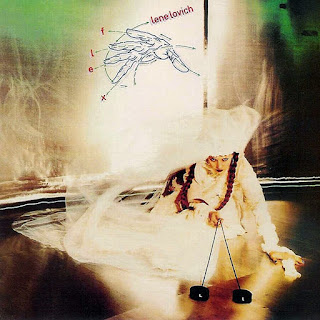


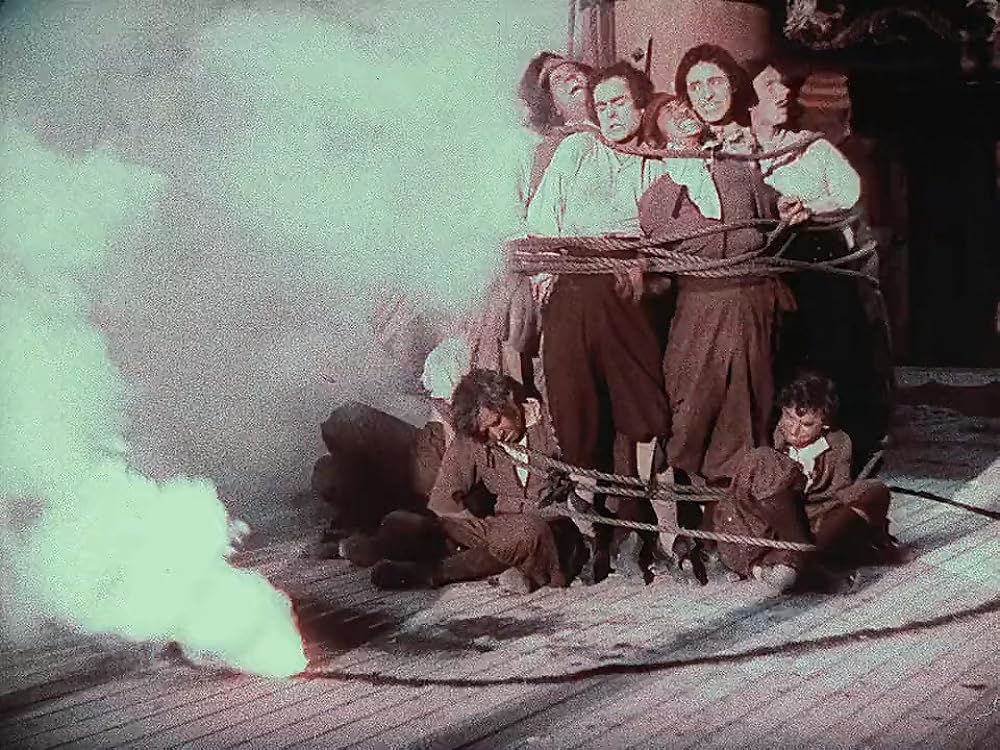

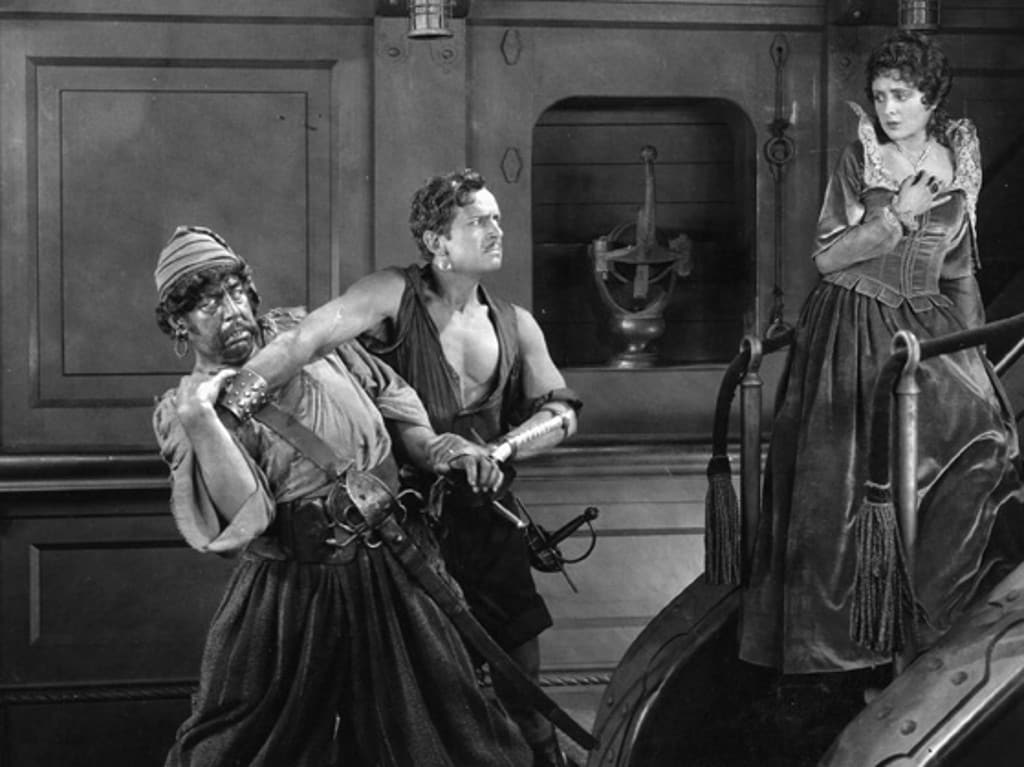
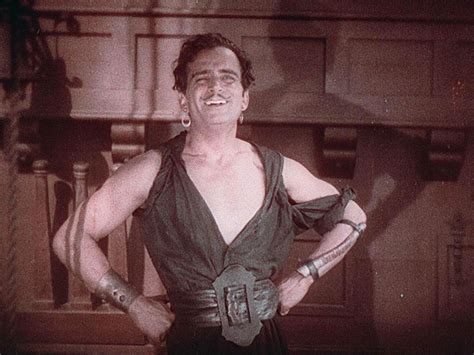

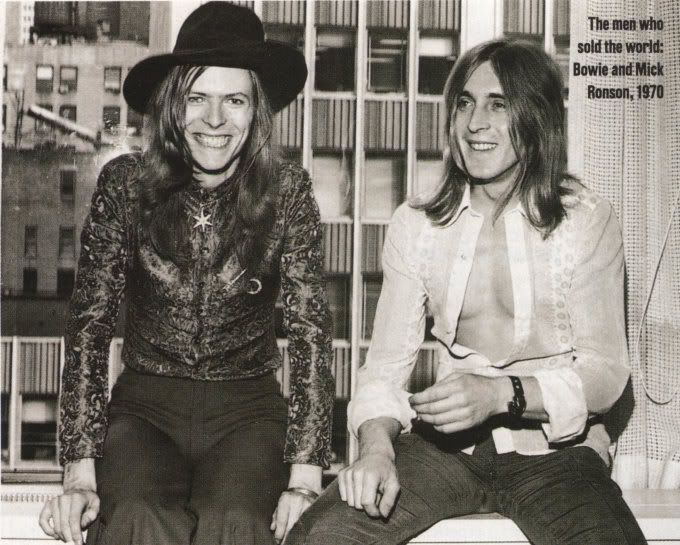
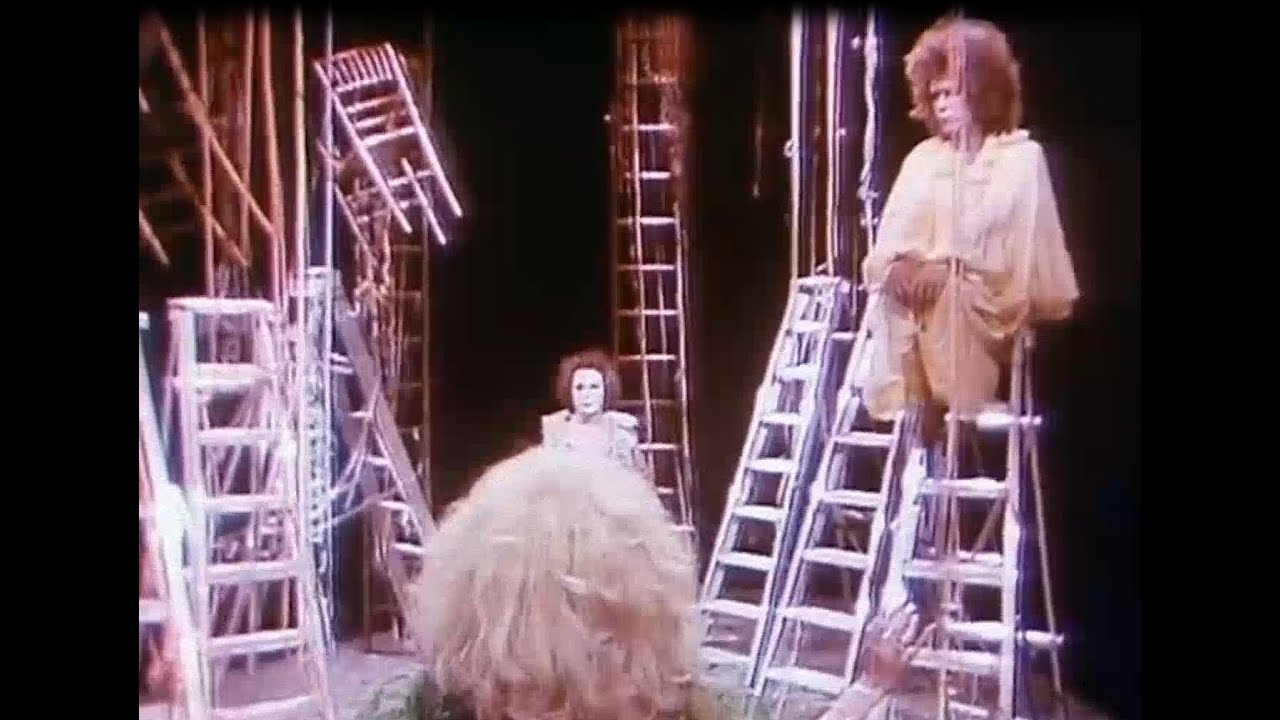









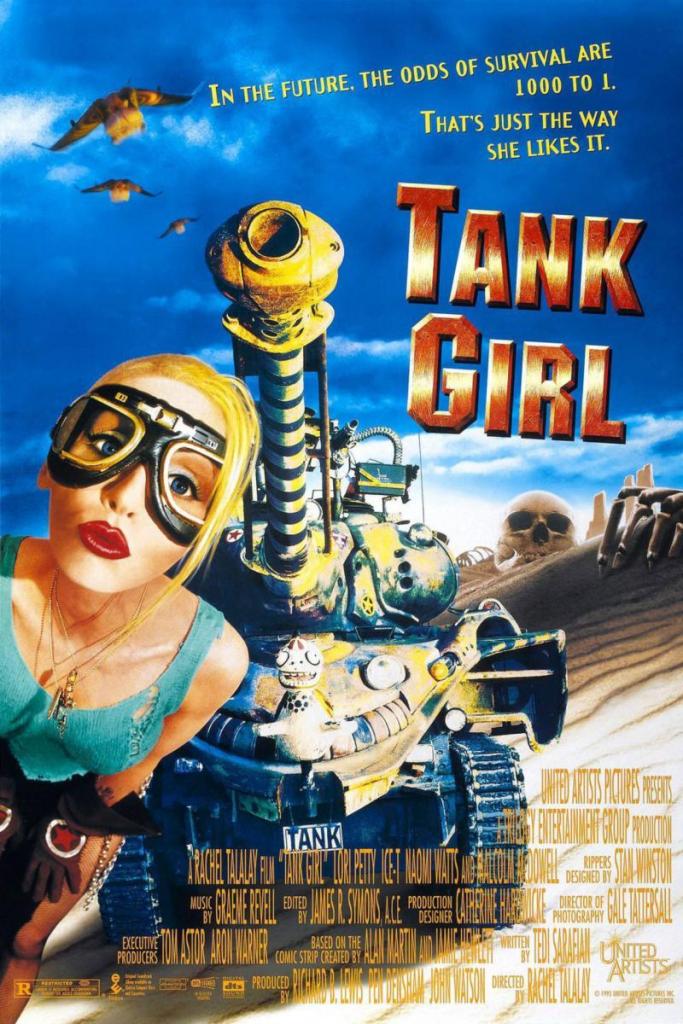







 The Chasbah