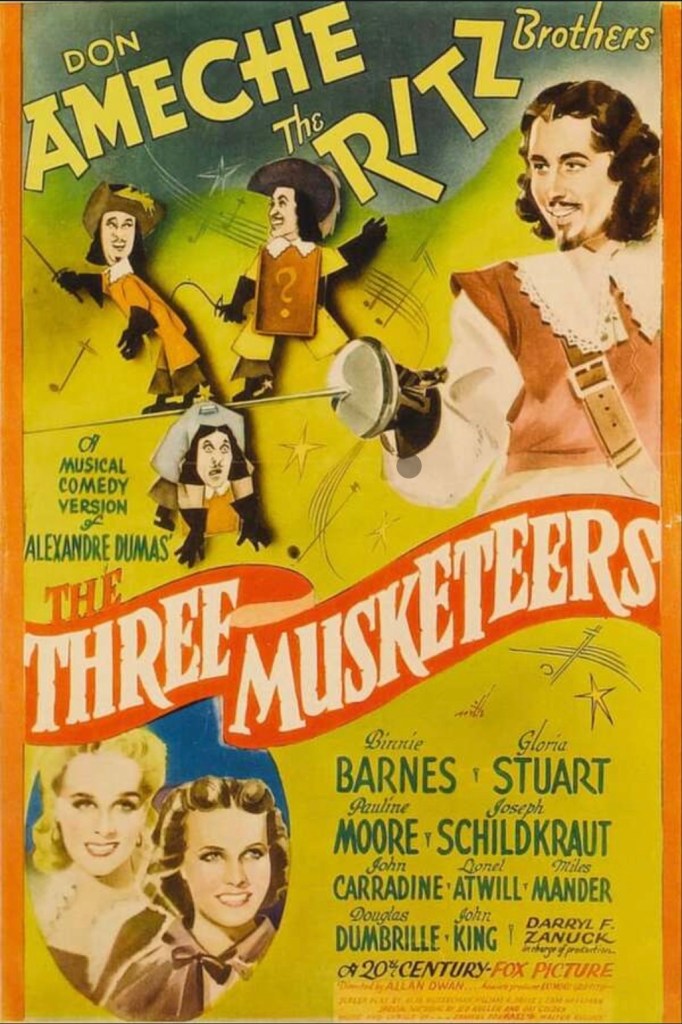
The Three Musketeers (1939, dir. Allan Dwan)

⭐️⭐️
52-week film challenge, film 19

I had a vague memory of seeing a film version of The Three Musketeers from my youth, and went looking around to see if I could find it either in my library or on one of the streaming services. My memory was that the version I saw so long ago was in B&W, but I now think I just watched it on a B&W TV (yep, I’m old). I’m still not sure what version I was thinking of, but I came across one that ticked the boxes, so I watched it. This movie … was not the one I sort of half-remembered.

This 1939 version was a musical comedy version that, despite that terrible idea, actually sticks pretty close to the book for as far as it goes — which really surprised me. I have a lot of time for Don Ameche, the star of this version, and he is one of the best things in it, taking the role seriously while never wiping the smile from his face as he plays the headstrong but skilled D’Artagnon, who hopes to join the King’s Musketeers.

Yes, that’s Don Ameche. Handsome, isn’t he?

In this telling of the tale, D’Artagnon mostly misses the actual Three Musketeers, who appear only briefly. The trio gets passed-out drunk drinking toasts at an inn to the various King Louises, because there are so damn many of them, and the scullery cooks (played by the all-mugging, all-singing, all-pratfalling Ritz Brothers) try on the Muskateers’ outfits and then get mistaken by D’Artagnon for the real Musketeers, and of course from there mischief ensues from all parties.

The success of this film depends very, very, very, very heavily on your tolerance of The Ritz Brothers, who were a vaudeville act that transitioned pretty successfully to film on the strength of being a mix between The Three Stooges and three Chicos from The Marx Brothers. They’re not in any way witty, but they can mug and clown (and also comedically sing and dance) with the best of ‘em.

The Ritz Brothers as the faux Musketeers

Their schtick, in my opinion, hasn’t aged well — but I cannot argue with the fact that they enjoyed a successful career in various forms of show business (though the fact that they got forgotten pretty quickly afterwards may prove me right about them). The film also relies way too heavily on D’Artagnon somehow not seeing the Ritz Brothers’ utter incompetence as pretend Musketeers, which of course he doesn’t since they only end up in his view by accident throughout the film at points where they have been (accidentally-comedically) useful to him.

Ameche handles a sword well, sings in a pleasing tenor, and is handsome enough to pull off the romantic scenes. The Ritz “Musketeers” keep getting pulled in by D’Artagnon’s delusion that they are real Musketeers, but they do aid in his success in the complicated (yet truncated) plot of this brief 73-minute film.

Buckles were most certainly swashed!

If you don’t know the story, read the book, or watch one of the later, more dramatic film or TV versions. Suffice to say Cardinal Richelieu was a very bad man who manipulated royalty both in France and England, and was foiled (ha!) by the Musketeers. The plot works well in this film, it’s just the comedy and the musical bits that fall flat.

First of all, there are only four songs in this “musical,” none of them that good, and the two for Don Ameche sound pretty similar to these ears, though he turns his “on the road” song into a love song later on pretty well. The two Ritz Brothers songs (one of which extols the virtues of chicken soup) are meant to be comedic but seem quite laboured to me.

Near the end of the film, the brothers contribute their best bit: a pie-plate dance that’s actually well-done and quite clever, meant to cover any sound D’Artagnon makes while freeing Lady Constance from the dungeon below the aristocrats they are working against. I should mention that the chase scenes, while regrettably sped up as was the custom of the time, are really well-done and focus on the hardworking horses.

The whole film is well-shot but still somehow kind of cheap-looking (just like The Ritz Brothers, insert rimshot here). I did recognise Lionel Atwill as de Rochefort, but only realized the near-immortal John Carradine was in this (as Naveau) when the credits rolled. I’m giving this a star for the cinematography, a half-star for Don Ameche, and another half-star for the pie-plate dance, and still looking for whatever version I thought was great when I was like nine or so.

Some fantastic matte work in the film that shouldn’t go unmentioned

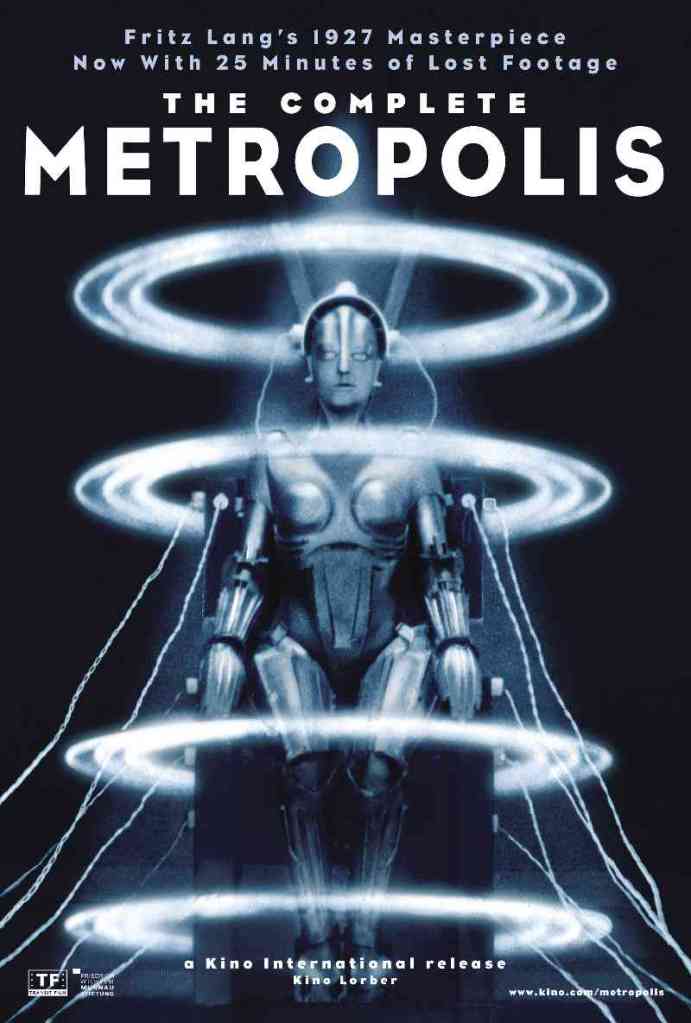
Metropolis (1927/2010, dir. Fritz Lang)

⭐️⭐️⭐️⭐️⭐️
“Complete” version, 4K with restored scenes

52-week film challenge, film 18

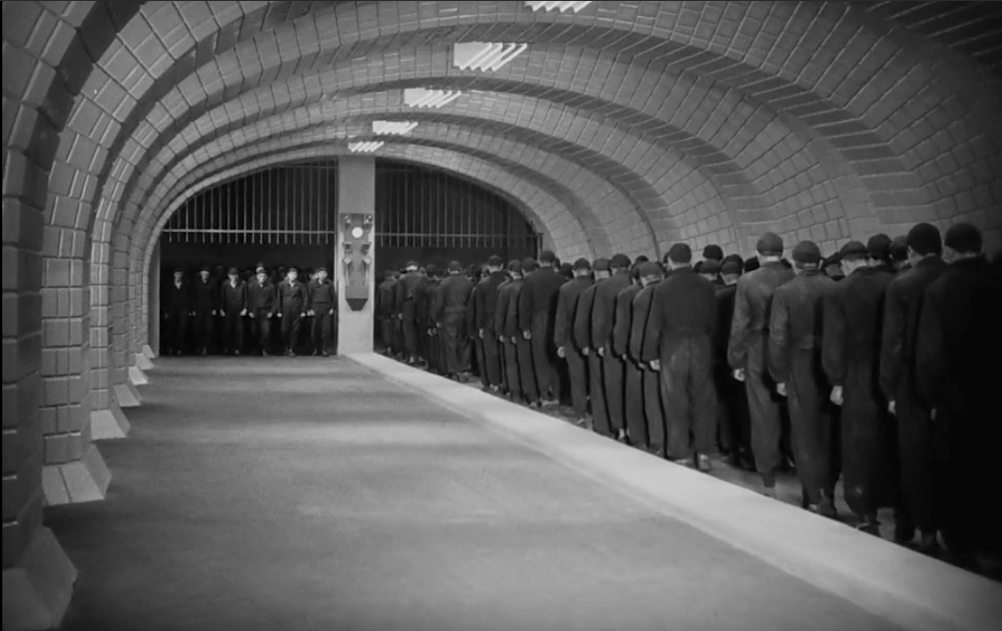
Quite possibly the most visually compelling film ever made, even after nearly a century. Certainly the most beautiful silent movie ever made. I recently noticed that Criterion had a 4K copy of the 2010 “Complete” restoration, so I watched it to see what had been added since the 2001 version. It turns out that the answer is “about 24 minutes more story, and a new version of the original score,” but there’s more to it than that, of course.

Lest we get too far ahead of ourselves, and for those who’ve never watched the whole thing, Metropolis is an incredibly futuristic-looking silent movie that absolutely everyone on Earth should at some point see. The reason I say this is that it is truly one of the most incredible film productions ever made from a visual standpoint, and on top of that the storyline is (sadly) still very relevant today.

The effects may be primitive by comparison to today’s films, but Lang brought a style and credibility to them — complemented by the design and art direction of the non-FX scenes — that not only hasn’t dated it, but in fact plays a huge role in the film’s immortality. Parts of his vision are the sort of future we all hoped we’d grow up in, but the underside (literally and metaphorically) of this future projection are indeed the world most of us ended up in.

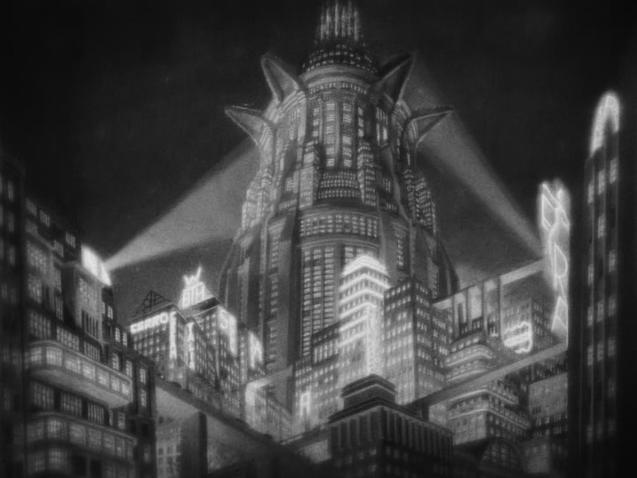
As the film opens, we gaze upon an incredibly modernism-influenced style cityscape dominated by an exceptionally tall, large, and distinctly Art Deco Tower of Babel, with trains and cars on elevated railways bustling along at various levels on and above the ground, with airplanes (well, biplanes — a rare example of a visual that didn’t age well) buzzing around. The top of the tower is where the Master of the City (a sort of architect/chief executive) Joh Frederson and his adult son, Freder, live and enjoy the hedonistic lifestyle of the city’s elites. Lang said the look was inspired by his first trip to New York City.

Although there is no direct reference in either Thea von Harbou’s original 1925 novel-as-film-treatment nor in Lang’s film as to the exact time period, a 60s reprint of the novel placed it firmly as set in the year 2026. Whichever editor came up with that pretty much nailed it, as we are currently living in world alarmingly similar to the one described in the source material.

(L-R) Joh Freder, Rotwang, the Man-Machine

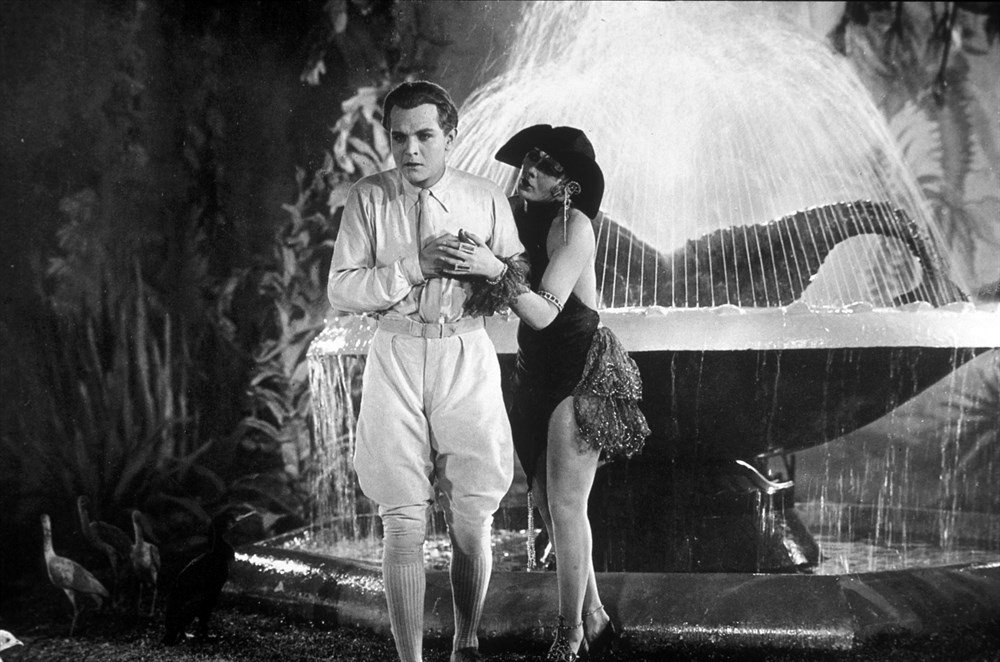
Freder, as a member of the elite, spends his days in gardens and playing sport and other such idle leisure — hobnobbing with the business magnates and politically-powerful and blissfully ignorant of how it all works. Meanwhile, the working class who actually make the city what it is live and work underground in a very functionalist, expressionistic Worker’s City, and toil on keeping the machines that power the metropolis of the elites in scenes that “influenced” Charlie Chaplin for his 1936 film Modern Times.

One day, a a radical woman teacher dates to bring some of the workers’ children up to the gardens to see how their “brothers” live. Freder is struck by the woman, Maria, and follows her down into the Worker’s City, where Freder sees firsthand the impoverished working class and the soul-shattering labour required to provide the elites with their lifestyle.

Maria brings the workers’ children up to see what they will forever be shut out from …
… and Freder is “shook” by what he sees and determines to investigate what lies beneath the city.

Though it was meant to be a parable on the danger of power imbalances, regrettably the problems shown in Metropolis have reared their ugly heads once again in a number of countries that have recently seen class-based unrest and abuses of power by those in charge. Anywhere you find that the elites live a lifestyle completely removed from the majority (who are of course taken for granted as an endless cheap labour supply), you will find strong echoes of this film, which regrettably still feels relevant and relatable nearly 96 years after its release.

Freder catches up with Maria, who he discovers is a symbol of hope for the workers, and she predicts that a “mediator”-cum-saviour will someday appear to resolve the growing chasm between the workers and the elites. Having been traumatized by this disparity himself, Freder sees himself, as the son of the city’s Master, as someone who could fulfill that mediator role, and falls in love with Maria.

Trials and tribulations ensue, and in the secondary plot it is revealed that there is a “mad” scientist in the city, Rotwang, who seeks revenge on Joh Frederson because Rotwang’s love — a woman named Hel — left him to marry the rich/powerful Joh, giving Joh his son Freder before dying. Rotwang has built a mechanical “man” — an iconic and insanely Futurist (but unmistakably female) robot design that he has plans for.

Joh, upon learning of the robot, orders Rotwang to remodel the robot to look and act like Maria — the heroine of the workers — but to have it incite the workers into violence against him. Joh wants this so he can crack down and destroy this attempt at workers gaining negotiating power, but while pretending to follow the order, Rotwang schemes to use the Maria-bot to fulfill his own plans, which are to resurrect Hel and take his revenge upon Joh.

Rotwang kidnaps the real Maria to make a doppelganger. This scene undoubtedly inspired James Whale for 1931’s Frankenstein.

Skipping a lot of exposition, Rotwang’s plan works only too well — Maria-bot incites the workers into a rabid state and commands them to destroy the machines, which will in turn destroy the Metropolis and its elite class. This isn’t what Joh intended, and it has the side effect of destroying the Worker’s City through flooding. While the workers are revolting, the real Maria escapes and tries to save the workers’ children, left behind in the fever of revolt, before they all drown.

Freder finds Maria, and along with his close friend Josaphat manage (barely) to rescue the worker’s children, and eventually get word of this to the workers, who by now have thought they accidentally drowned their own children and were so wracked with grief that they capture the Maria-bot and burn her at the stake. Rotwang gets his comeuppance, Freder gets Maria, and Joh learns the error of his ways.

What’s great about this new version is that the extra footage — which sadly could not be fully restored and is quite distinct from the previously-upscaled footage — adds depth and nuance to the story. In particular, this “complete” version really fleshes out some of the seconddary plot and in particular the supporting characters, from Josaphat to the unnamed Thin Man to Georgy, a worker that Freder befriends and learns from, temporarily trading places with him so that Freder can experience the worker’s life, and Georgy gets to briefly be experience the elite life.

The wickedness of the Thin Man, Joh’s enforcer so he doesn’t have to get his hands dirty, is made much clearer in this version, as is the affectionate relationship of Josephat and Freder, though there is of course no hint of beyond a close friendship. It was nice to see that level of male bonding without sexual overtones for a change.

The film is now almost to the full running time Lang intended (two short scenes are still wholly missing, and captions are used to cover this), and while yes, its now even longer, it is still so fascinating that the 2.4 hour runtime just flies by. Barring some significant new discovery of a better print or those missing scenes, this is the most complete version we’re likely to ever get.

This movie is just goddam incredible.

One can only hope that that perhaps the current “AI” fad will enable further restoration on the damaged but intact extra 24 minutes, making the switch between those scenes and the rest of the film less jarring. I could easily see how, at a minimum, the backgrounds could be extended to give those scenes the same 16:9 ratio as the rest of the film, and that would definitely be worth doing.

As I mentioned earlier, this is one of the incredibly few films that really should be seen by pretty much everyone everywhere. It is more than just a visually-captivating classic with a timeless message about the evils of exploitation; it is a plea to the future not to remake the mistakes of the past, which sadly has been ignored time and time again.

Songs for Drella (1990, dir. Ed Lachman)

⭐️⭐️⭐️⭐️⭐️
52-week film challenge, film 17

It’s a concert movie, but it’s not a concert movie. There’s no audience, no applause, no between-song banter. It’s two hugely influential musicians who were once in a band together reuniting to pay tribute to the man who helped them launch their careers: Andy Warhol. It’s a requiem and remembrance, entirely in song.

Cale, whose music I have enjoyed enormously, had a complicated relationship with Warhol, while Reed’s feelings

after Warhol’s unexpected death seemed to turn to a softer, more sympathetic side. Reed and Cale themselves, as the songwriting half of the Velvet Underground, also had a complicated relationship, but decided to work together on a song-cycle about Warhol for an album project, which became Songs for Drella. Both men were apparently caught off-guard by Warhol’s sudden death in 1987, and met up at the funeral and spoke to each other for the first time in years. From the suggestion of a mutual friend, they decided to write songs about their memories and perspectives on Warhol.

Some of the songs are based on their own memories and perspectives on Warhol, some are based on direct quotes or recollections from Warhol (either witnessed or drawn from his diary), and some are third-person narratives. As someone who grew up during Warhol’s biggest period of influence and art-world exposure, each and every song provides some fascinating insight.

The film, directed by Edward Lachman, is stark: a simple stage, some visuals on the screen above them, their instruments and microphones. There’s no audience, and it’s mostly harsh cuts between songs.

Lou sits for the whole thing, while Cale stands. Cale stares at Lou nearly continuously when he isn’t himself singing — sometimes quite sinisterly, always very intently — while Lou mostly looks at Cale near the end of songs to signal when to stop. There were public performance prior to the filming, but only a handful.

Following the filmed performance, Cale and Reed worked on the material further, and eventually recorded the album, which came out the following year. Most of the material is by Reed, but Cale’s contributions are, with one exception, my favourites: wistful and delicate, featuring clever piano and synth (complemented nicely by Reed’s guitar), sung in Cale’s trademark artfully-detached style.

Likewise, Reed’s songs are seriously enhanced by Cale’s stalwart keyboard and viola sophistication. Which is not to say Reed’s songs are weaker; they are performed in his own spoken/sung New York street poet style, full of emotion and observation, and he varies up the guitar work and structure of the numbers very nicely.

“Work” is by far my favourite Reed song from the project, and tells the tale of how Warhol pushed Reed to work hard to become a musical success. While Warhol himself fostered a public perception of kind of floating through the “scenes” and “happenings” he fostered, he was in fact a remarkably productive filmmaker, painter, and talent Svengali. We would likely not know of Reed and Cale (and may others) without him.

It’s fascinating watching both men express their complex feelings about “Drella” (the nickname a contraction of Cinderella and Dracula, which should kind of say it all) through their songwriting and style. That said, I’ll admit that I still think the best song about Warhol is Bowie’s whimsical tribute on Hunky Dory, simply named after the man himself.

If you have any interest in Warhol, or how he affected and helped shape these two deeply important but very different musical artists, you should absolutely watch this filmed performance. These two guys were the leaders of one of the most influential bands in the history of rock, came back together to pay tribute to their mentor, after which they vowed never to work together again.

However, they did anyway. In a great metaphor for their own complicated relationship, they did a one-off live show with songs from the Drella album, and then encored with their old VU bandmates Moe Tucker and Sterling Holloway on the song “Heroin.” This lead to a brief VU reunion, after which Cale and Reed vowed never to work together again (again). So far, this time, they’ve stuck to that vow.

Ancient Caves (IMAX, 2020, dir. Jonathan Bird)


⭐️⭐️⭐️⭐️
52-week film challenge, film 15

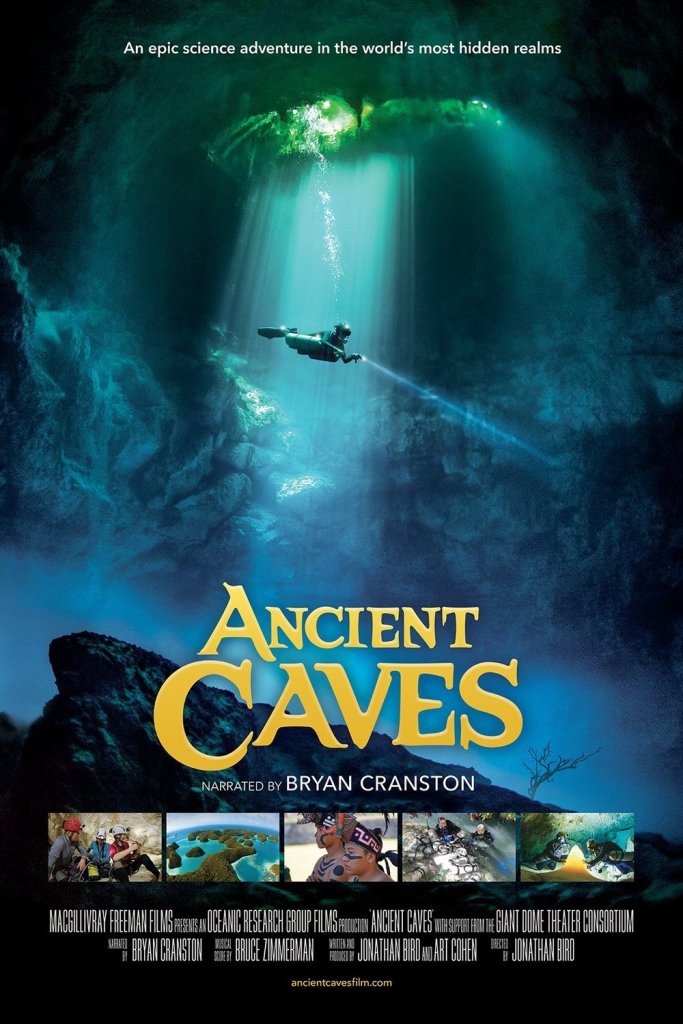
I’ve been staying out of actual cinemas for a long time due to the pandemic, but with the end of the global emergency (and with the option to mask up if the auditorium gets too crowded), I opted to take in an IMAX movie, as I generally love them and my local IMAX theatre is a museum right by my residence. My choice was Ancient Caves, a film about (mostly) underwater caves and what they can tell us about the most recent Ice Ages … and how man-made climate change may affect the natural cycle of the Earth’s cooling and warming.

As is generally the case with IMAX, the cinematography is stunning, and for once a film shot in 3D utilised that to good effect without getting cheesy about it, a la SCTV’S Doctor Tongue. There’s no brandishing a stalagmite repeatedly straight to the camera here, and indeed I doubt the divers and geologists in the film were even told it was going to be in 3D — but boy does it add depth and presence to spaces such as caves.

And what caves they are! The film starts off with some above-ground and underground (but not underwater) caves and introduces us to Dr. Gina Moseley, who really really loves caves and lowering herself into them on ropes. She serves as the narrator of the journeys into the caves, while Bryan Cranston serves as the narrator of the film overall.

It is of course a documentary, and the real purpose of the film is to use the caves and their stalagmites to study the previous Ice Ages — which happens about every 100,000 years. We’re not due for another one for a good long while (probably), but what happens during an Ice Age is interesting, and the way to get that information involves diving waaaay down into underwater caves to get core samples.

The film dwells a bit on the diving sequences, but the payoff is fantastic — eye-popping vaults of mineral and crystal stalagtites and stalagmites (and in the some of the less-deep caves, skulls and pottery), undisturbed and indeed untouched until this film in some cases for tens of thousands and up to a million years. I felt grateful to be able to witness these astounding scenarios in 3D without having to endure the diving and genuine risks taken to access these locations.

In short, Ancient Caves is educational but very interesting, particularly to anyone with the slightest interest in geology, cave exploring (above or below water), and the information scientists can extract from mineral deposits and such. The film does take a little time to discuss the impact of climate change currently, as it may have an affect on our future environment, and there was a brief but very interesting bit about the impact of human activity on the carbon dioxide count compared to the pre-mankind earth.

The film isn’t, however, focused on this point — it’s more a pure celebration of discovery, and the 3D and the diversity of locations really adds to the impact of the film. It’s playing on the IMAX circuit, so if it comes to your town and you could use a nice little escape from your day-to-day life — or just keep a pre-teen interested for an hour or so — this one might be second only to a dinosaur movie for edu-tainment value, and will definitely add value to your next trip to any local caverns.

Safety Last! (1923, dirs. Fred Newmeyer & Sam Taylor)

⭐️⭐️⭐️⭐️

52-week film challenge, film 14

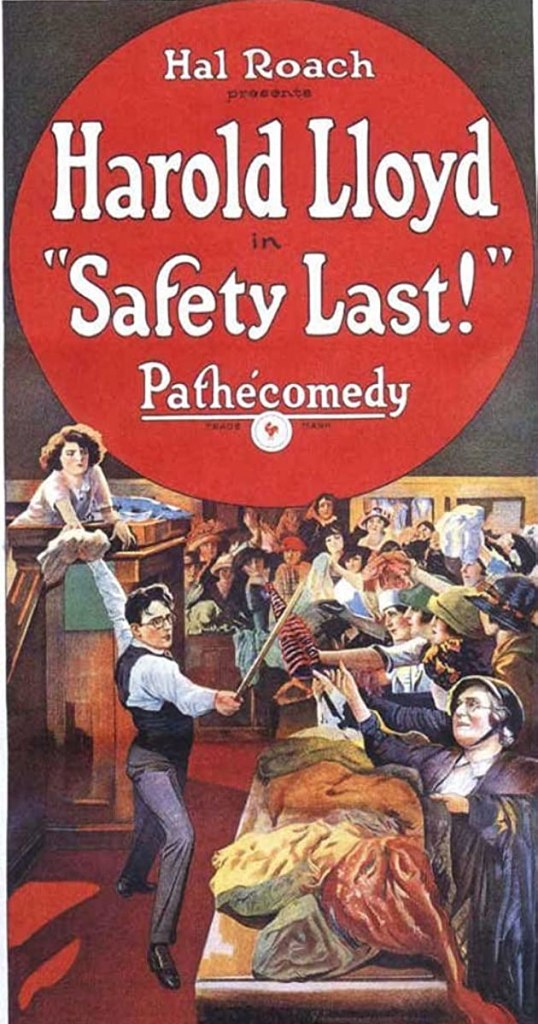
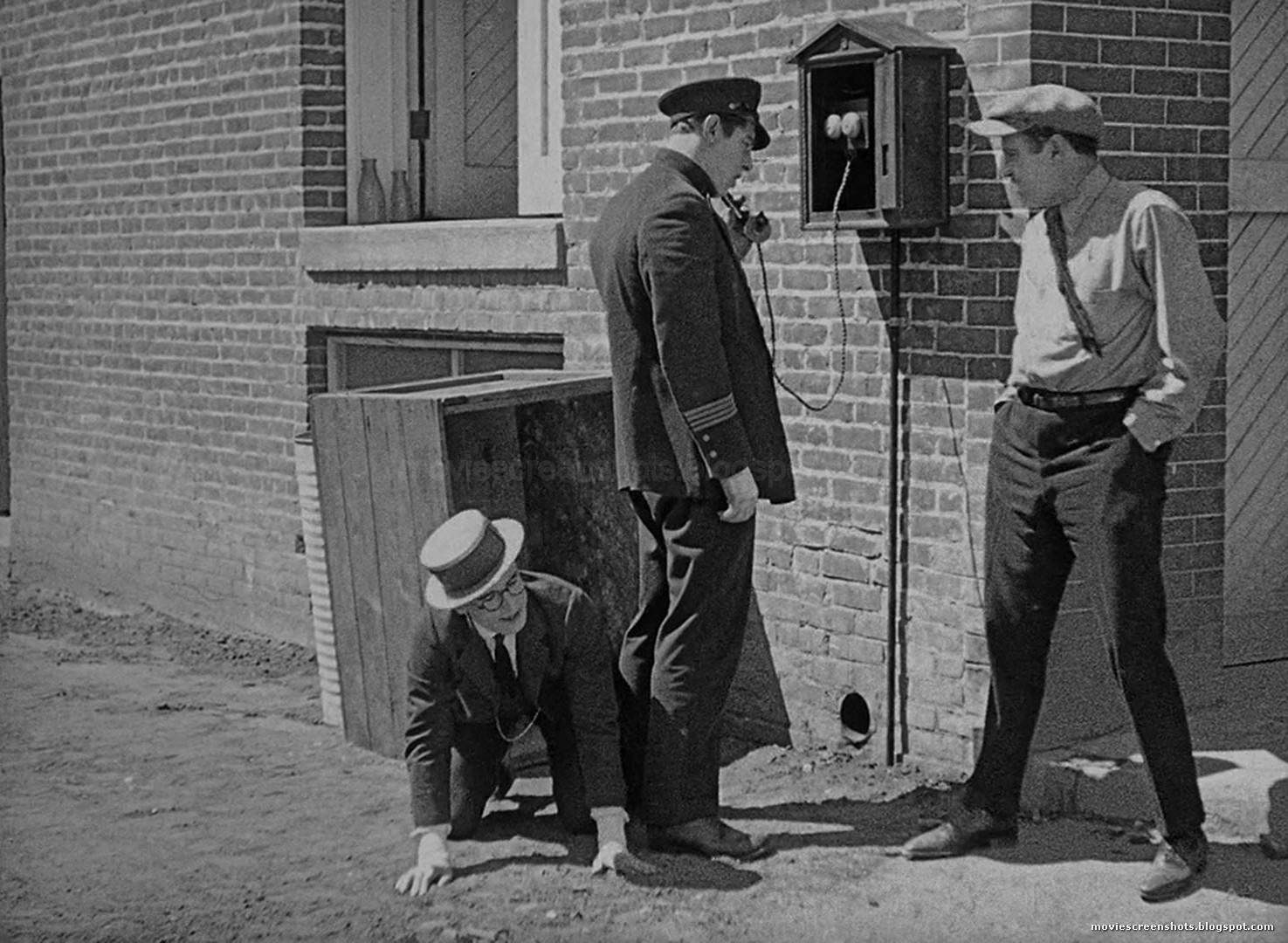
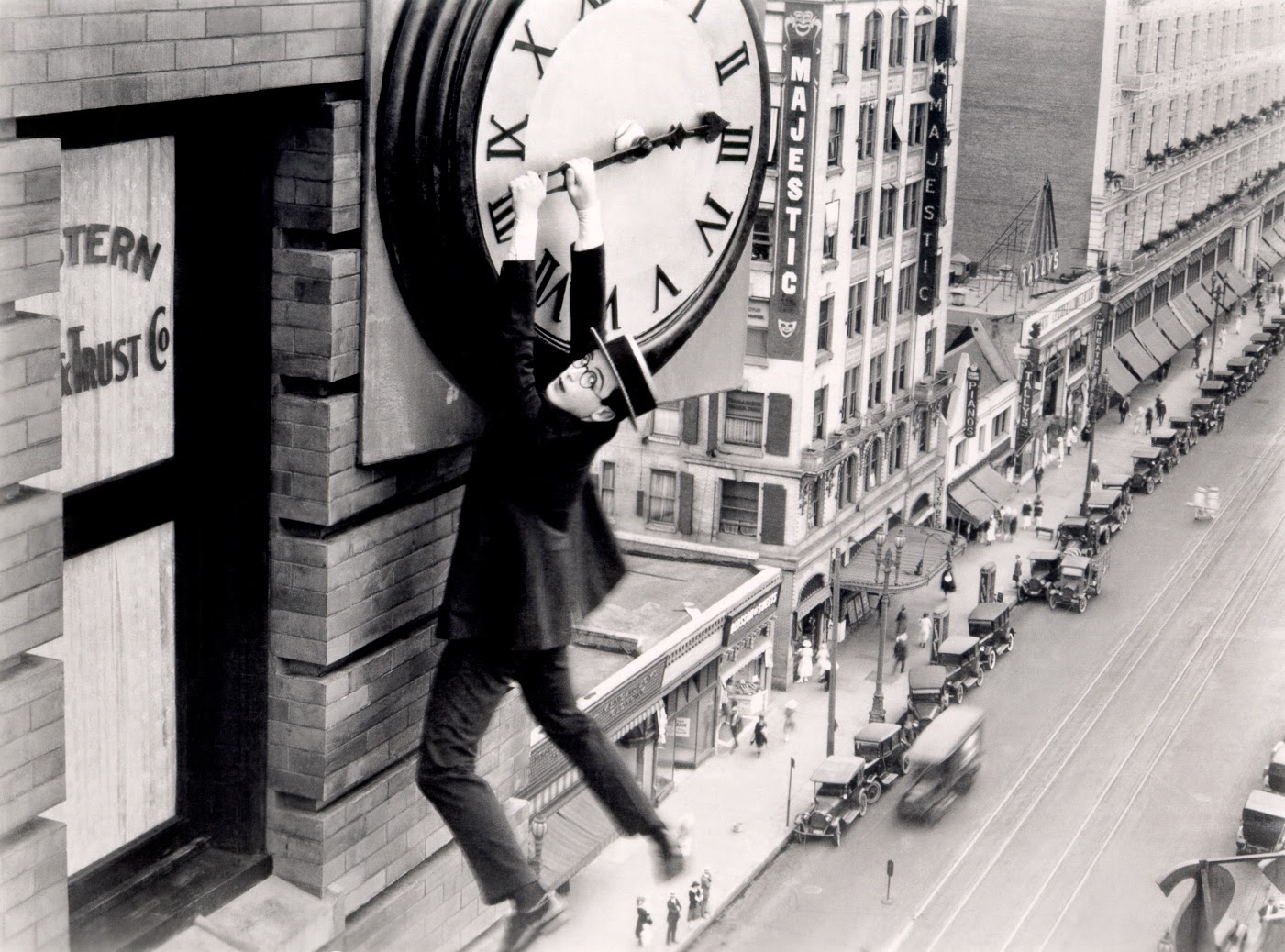
Anyone who’s paid any attention at all to the silent era of movies will have seen at least one of the most famous silent-movie stunts — Harold Lloyd, seemingly halfway up climbing the side of a building, hanging on for dear life as he grabs hold of a giant clock after putting a foot wrong. Suddenly, the clock face comes partially undone, leaving him hanging high over a busy street. This is of course from one of Lloyd’s full-length features, Safety Last!, and it is a gem — but only one of the amazing stunts in the film, which is also quite funny.

Lloyd is often thought of last when one tries to name the giants of silent-era comedy, behind Chaplin and Keaton, but for my money he’s actually the most versatile of the bunch. While Chaplin almost always played a tramp in his silents, and Keaton forever plays a stone-faced version of the unluckiest man alive, Lloyd is often the sunny embodiement of American Exceptionalism, resiliently cheerful and sure that everything is going to work out despite the craziest things happened to him, and indeed that blind faith carries him through.

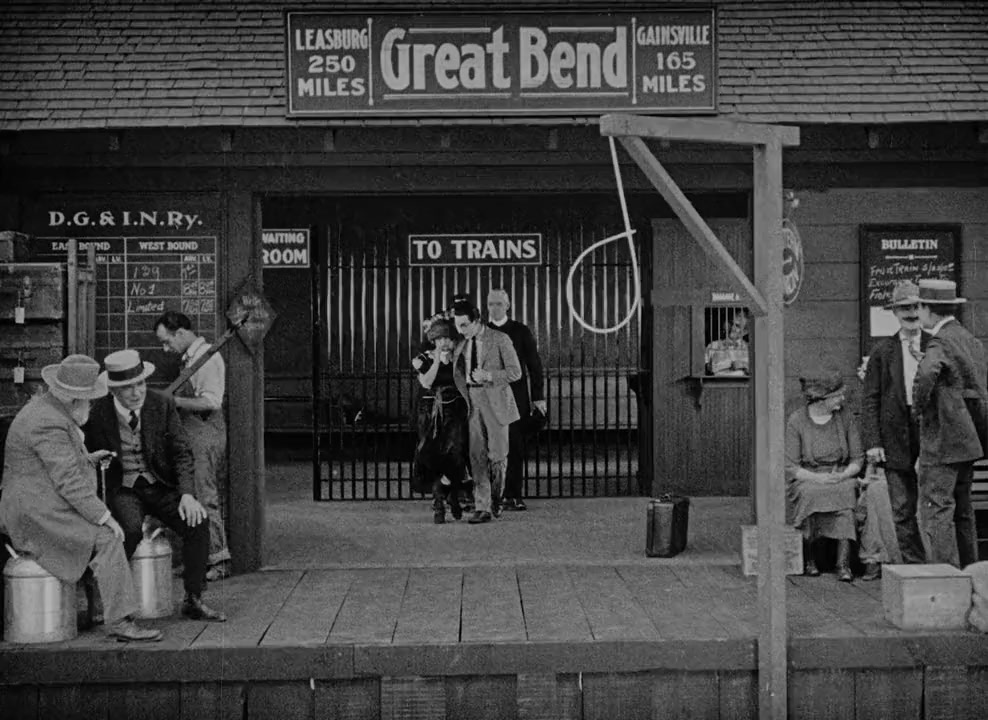
In Safety Last!, Lloyd opens the film looking like he’s in potentially fatal trouble — in jail and perhaps saying his goodbyes to his loved ones, with a hangman’s noose in the foreground. The set changes slightly, and we see in fact that noose was on a mail peg designed to allow the train to deliver a bag of parcels without stopping, and Lloyd was just a small-town young man on his way to the big city to make his mark.

He was doing this to secure his relationship to his intended bride (played by real-life wife Mildred Davis), by ensuring he has a career that can support a household and eventual family. The earnestness just radiates off Lloyd’s can-do attitude and beaming, positive face, but in fact like any such fellow he has to start small — sharing a room with a friend, working hard, and not quite catching the American Dream somehow … this film was only a few years prior to the start of the Great Depression, but somehow foreshadowed that all was not well with the game of “work your way to success.”

In another tell-tale America-of-the-20s trait, he puffs up his level of success to impress his girl, which in turn means he ends up spending most of his meagre paycheque on gifts he sends to her … skipping meals, hiding from the landlady, and making other sacrifices. In one scene, he ponders the cost of another gift while also staring at an advert for a “businessman’s lunch” (which costs 50¢ … you should see this film just to marvel at the prices of things!), and as he pushes himself to sacrifice for his bride-to-be, his minds “disappears” each of the five plates that were included in that luncheon. You can feel Lloyd’s hunger pangs.

As you might expect, the girl gets the idea to come visit and surprise him, and on very short notice he has to come up with ways to convince her he is as successful as he has boasted, hiding his lowly “real life.” While to modern audiences this thin plot moves along fairly slowly, there are always impressive stunts and action sequences (just him getting to the office is a great section of pratfalls and dangerous gambles) to fill the time until the next plot point.

Lloyd pays off a colleague not to reveal that he’s not the manager and this isn’t his office.

Mostly, Lloyd’s character (who was known as the “glasses man” in his earlier work, but he finally identifies the character as being himself — Harold Lloyd — on a business card, suggesting some real-life incidents are incorporated into the tale) just combines his incredible physicality with on-screen great luck in avoiding being killed or decapitated as would happen to the rest of us if we tried these stunts. Yes, there were stuntmen used and some clever camera trickery for the finale, but Lloyd is visibly on-screen for a number of these feats and it adds richly to the action.

In a panic over being found out as not the success he portrayed to his girl, he overhears the owner of the store wishing for a big publicity stunt and, thinking of his friend “Limpy” (the incredible Bill Strother, both a supporting character and sometimes Lloyd’s double for steeplejack and stunt sequences) who loves climbing buildings, offers a sure-fire plan to draw a crowd: he’ll climb to the top of the very tall department store building!

In an earlier sequence that sets up the climax of the film, Lloyd recognises a policeman in town as being an old buddy from their youth, and goads Limpy into helping him play a knock-down gag on the copper. But he doesn’t see his friend go inside and be replaced with a different cop, so when the prank is successful the furious flatfoot swears revenge on Limpy (Lloyd having quickly escaped). This sets up the dilemma that sees Limpy unable to scale the building in Lloyd’s stead (he was going to just take Lloyd’s glasses, hat and coat to fool the bosses), and Lloyd having to be coached into doing the climbing himself as the cop continues to chase Limpy around the store.

The sub-plot that sets up the finale

Of course, Lloyd doesn’t think he can do it, but Limpy reassures him that he’ll ditch the mad cop and take his place if he just climbs up a couple of floors. Well, the cop doesn’t give up that easily, and Limpy swings by a window every floor to encourage Lloyd to climb just another floor or two … until finally Lloyd has barely survived climbing up the entire building, reaping the entire $1,000 reward* for himself into the bargain, thus securing his forthcoming marriage.

*Lloyd is shown to be netting $15 every two weeks — remember this is 1923 — so a grand is like three years of wages in a single day, and of course it is implied he’ll be promoted as well.

Before the big climb and during it, there are numerous funny moments and smaller-scale stunts to keep things moving along, but the film — as ingenious and humourous as it is — still feels like the kind of plot that would sustain a film only half its one hour 13 minute runtime, and just throws in a lot of sequences that feel like (clever) padding.

Lloyd’s Not-Of-London … his actual position at the store.

That said, it’s very worth seeing. The incredibly clever way they did the climatic climbing sequences really make it easy to believe he’s hanging by a thread incredibly high up, but it wasn’t quite like that (you’ll have to guess how they did it in the silent era without the modern safety constraints and optical techniques such things would have today, I’m not telling).

I will however say that there’s a short Criterion Channel documentary made much later that reveals the secrets of Safety Last called Safety Last: Location and Effects that will spill the beans if you can’t figure it out yourself.

Throw in some incredibly well-trained pigeons (yes, really), a truly hilarious one-line cameo by a little old lady, and Lloyd’s amazing physical comedy, and you end up splitting your time between chuckling and staring wide-eyed at how he’s going to get out of this new bit of trouble.

If you’ve only seen sequences or still images from the film, I’d encourage you to watch the whole thing. Of course it was a big hit with audiences in its day, but in some ways it still embodies some uniquely American ideas about work-life balance, exploitative capitalism, and risk-reward philosophies that stand up today. Despite these subtle but weighty themes, it’s a feel-good film that everyone in the family will enjoy. Still!

The Testament of Orpheus (Le Testament d’Orphée)


1960, Dir. Jean Cocteau
⭐️⭐️⭐️½

52-week film challenge, film 13

Now this here is perhaps the ultimate example of what most “normal” people think of when they think of “art-house cinema snob” highbrow movies: a B&W (mostly) film made by some furriner where you have to read subtitles, starring some old dude who says things that sound weighty but are incomprehensible to “normal” people; long, slow-paced shots of people walking around things in odd ways; very little action; obvious erotic overtones without any of “the good stuff”; obscure back-references to other films or Greek tragedies nobody saw; self-directed and pretentious, and of course no attempt at a linear, relatable plot. 🙂

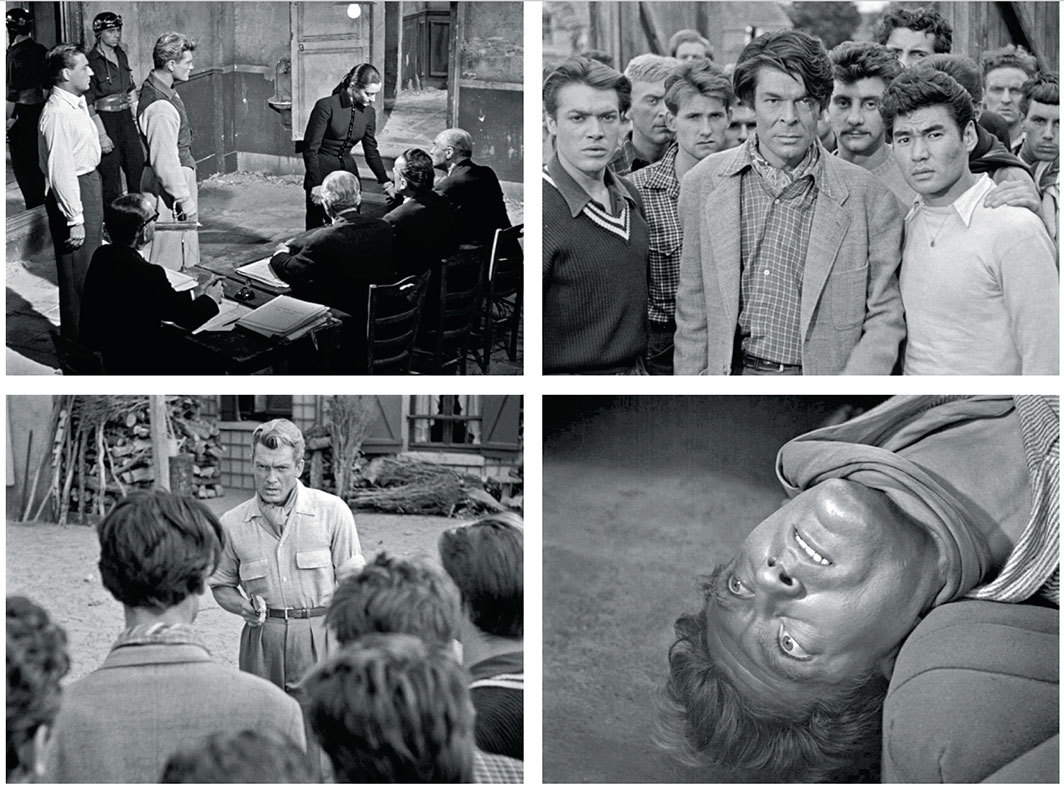
Cocteau’s final film (and almost his final anything: he would die just three years later) seems — at least to me — like an attempt to fuse the ideas of The Blood of a Poet and Orpheus into one final statement, weighted by the additional weight of mortality that increases as we grow older. It is 100 percent guilty of everything I mentioned in the paragraph above, but as I watched it for the first time Cocteau still managed to work his ingenious magic on me: couldn’t take my eyes off the thing because I literally could not guess what was going to happen next.

Even though the film does indeed strike a self-assessing tone, there is playful humour sprinked throughout — some of Cocteau’s answers to questions or dialogue from his characters to him are quite witty. As usual, the film puts layers on layers, and slathers on the symbolism. This time around, though, Cocteau himself is the star, though viewers of his 1950 film Orpheus may be surprised and certainly delighted to see several cast members not that classic in key roles in this one — though Cocteau did not credit any of the players for fear of misleading his audience.

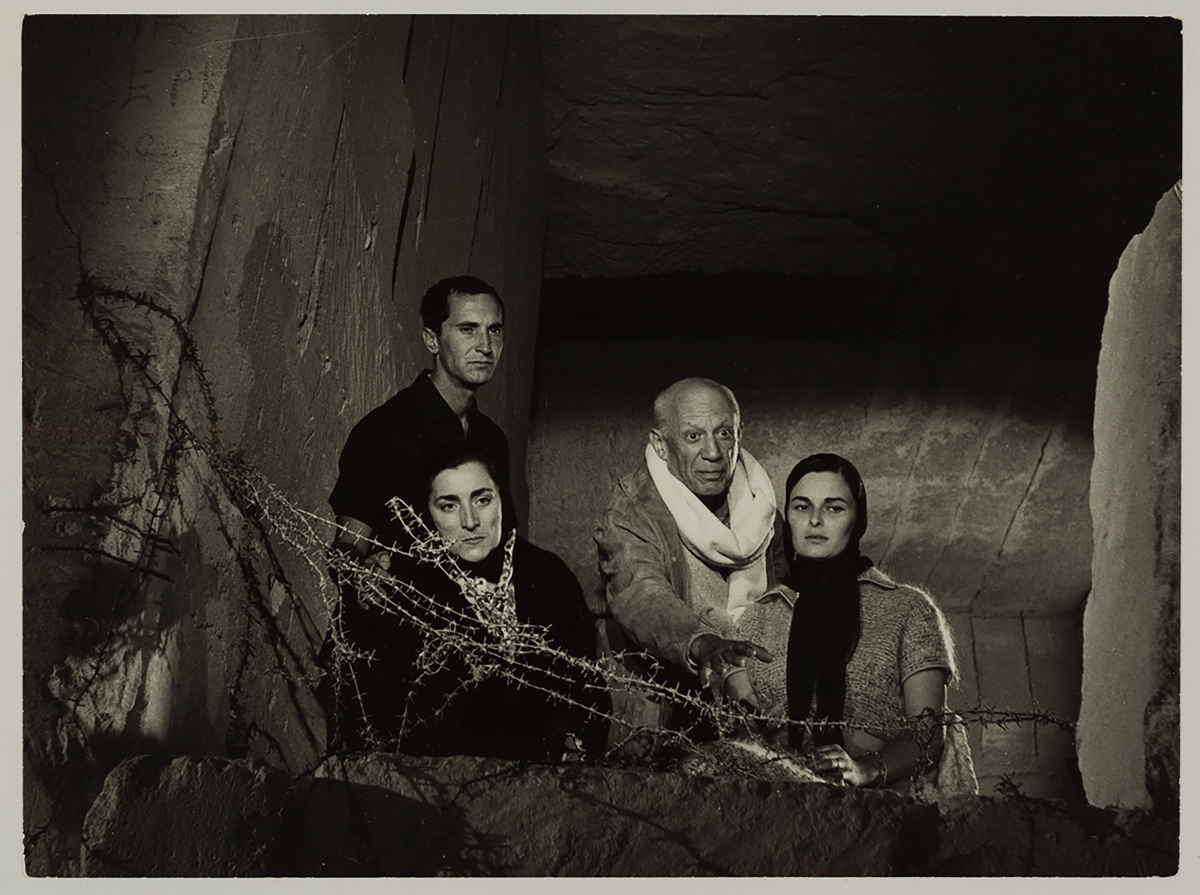
This is also your chance to see cameos from Pablo Picasso and Charles Aznevore, and a small but important role for Yul Brynner, who helped finance the film, among other notable names of the time. This one is also in black and white, which by 1960 was all but gone from cinema screens, but like Orpheus is utterly gorgeous.

Cocteau plays … well, at some points he is clearly playing himself (billed as The Poet), and at some points (particularly early on), he is playing a character … a mysterious poet and scientist dressed as a 17th-century dandy who appears like a ghost to a colleague (Henri Crémieux, the first of many from Orpheus to be in this, albeit in a slightly different role) to release him from the error of his time-travel experiment by shooting him, whereupon he “snaps back” to the present day and becomes “himself,” i.e. the “real” Cocteau — though he does occasionally catch a glimpse of doppelgängers of himself still moving through this faux-dreamscape, like reflections in a mirror.

I found it particularly interesting that these scenes (and others later) are obviously filmed in a small portion of a bare, empty film studio … no sets or any form of artifice to set the scene, just basic walls and plain tables and chairs, and no attempt to “fool” the viewer as to where they are, or even to create a “void” space. This is a film, we’re in a small studio with minimal resources, and you can see all of that. As the film progresses, it relies more heavily on location filming, which is (as always with Cocteau) mostly ruins or symbolic sets placed in the ruins, symbols for the messiness of life but also for those moments where something meaningful is achieved.

As for what it all means, Cocteau later wrote about this in the most art-y way possible: “The Testament of Orpheus is simply a machine for creating meanings. The film offers the viewer hieroglyphics that he can interpret as he pleases so as to quench his inquisitive thirst for Cartesianism.” There, that clears it up!

Cocteau plays extensively with the “mythology” he created for Orpheus, and in effect some of this is a — kind of? — sequel to that film, in that Cégeste (his real-life adopted son, Edouard Dermit) , The Princess of Death (María Casares), and Huertebise (François Périer) have substantive roles to show what happened to them. Cégeste, sometimes reminding Cocteau that that’s only his character name, is his guide to the underworld; and true to the ending of Orpheus, The Princess and Huertebise have indeed been “sentenced” to become judges of the newly-dead, and now they are subjecting their creator, Cocteau, to an inquisition.

Cocteau mounts a “defense” by defending his need to create, to review his life, and to put his inner discoveries into visual language on screen or in writing for others to hopefully gain some enlightenment. After an inconclusive end to the “court” case, Cocteau wanders through mysterious ruins, occasionally running into men dressed as horses, until finally a Greek warrior of some sort kills him again. His friends rally to resurrect him yet again — the sort of immortality Cocteau hoped for — and he resumes his wanderings.

And in case you are wondering, as a sort of joke, Jean Marais (who played Orpheus in that film) briefly appears here — as another classic Greek figure, Oedipus (post eye-gouging). Eurydice (although played by a different actor, Alice Heyliger) is also seen briefly. Some others from Orpheus are likely in there too, but those are the ones I spotted.

A lengthy section of the film, with the motif repeated a few times, is that of Cocteau destroying a flower and then rebuilding it. In the decade between Orpheus and this final film, the French New Wave of cinema has bloomed, in no small part thanks to Cocteau’s influence — just as surrealist filmmaking became a thing after his first film (and the first film in this “trilogy”), The Blood of a Poet (1930).

Cocteau made a number of other films between that first one and this last one, but he clearly intended this one to be his last statement to the general public. I have to borrow a bit from Ken Phipps’ review of Testament for the AV Club, since he has summed up the film’s meaning about as well as it can be: “In the end, Cocteau takes comfort in the immortality of art, and therefore his own immortality, a sentiment that would seem far less moving and far more egotistical if it weren’t true.”

You’ll laugh, you’ll cry, Yul Brynner.

Orpheus (Orphée), (1950, dir. Jean Cocteau)

52-week film challenge, film 12
⭐️⭐️⭐️⭐️

As I watched Cocteau’s previous take on the idea of chaining the mythological tale of Orpheus to the struggle artists go through to create and realise their art, The Blood of a Poet, I kept getting flashbacks of some other film I had seen decades ago that featured some of the same inventive visual effect and angst-y performances, but I couldn’t quite place it. I’ve seen more than my fair share of arty and experimental films, so I imagined that it was simply some film that had been influenced by Cocteau, as many have been.

I turned out to be right — it was Orpheus, Cocteau’s own second attempt at some of the visual ideas and concepts he expressed in Blood of a Poet. I had seen the second part of this prolonged trilogy many years ago, and remembered more the story and contemporary setting than the effects and other bits he borrowed and polished up from his earlier film. My scholastic impression of Orpheus was that I liked the urgent, modern (at the time), beatnik tone of the first half, and was less impressed with the slower-paced second half.

Now that I’ve rewatched it after all these years, I’m even more impressed with it (though I still think the second half could have used better editing). Cocteau was a pioneer of shorthand storytelling, and of deliberately leaving a lot of elements unresolved — I’m still working out the full meaning of the character Cégeste (Édouard Dermit), though I think he may represent the image of a writer at his peak, and be sort of a representation of Orpheus’ (Jean Marais) image of himself.

Poor Cégeste spends nearly all of the movie either dead or as a zombie servant.

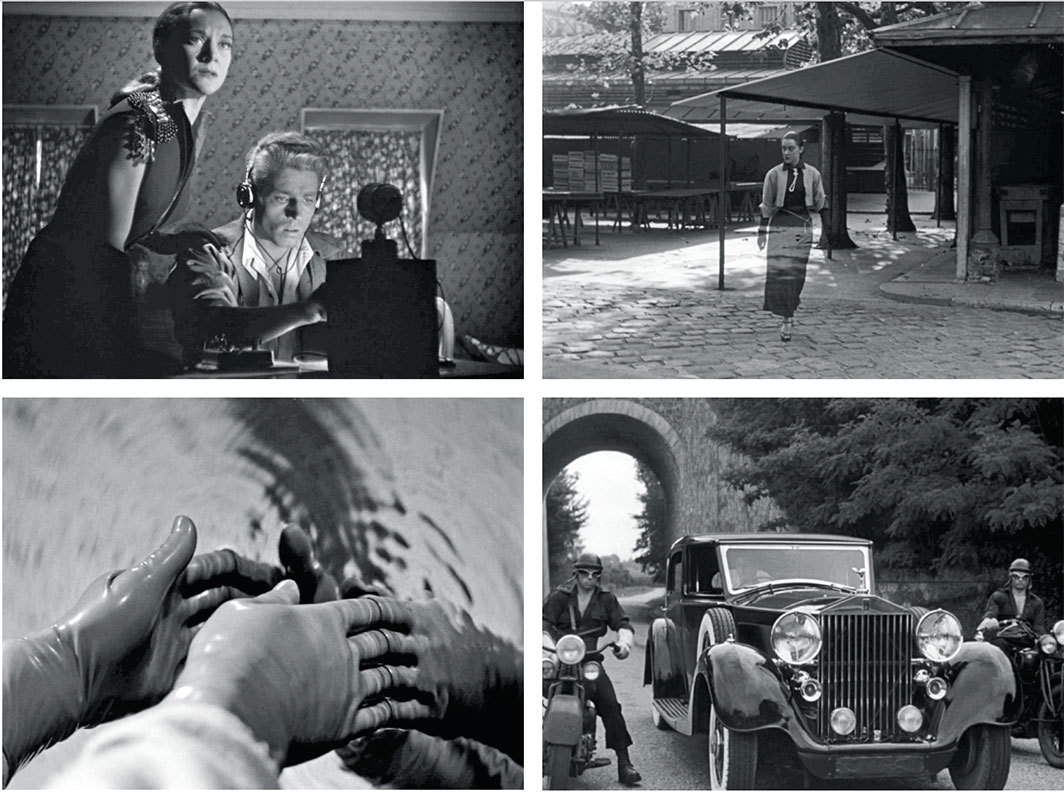
In the film, Orpheus is a famous poet, hanging out in a bar for poets, being kind of an ass until a Princess (a memorable performance by Maria Casares) and her boy toy Cégeste arrive. Orpheus is mesmerised by the Princess, while Cégeste starts a brawl, dropping some of his own poetry in the fracas. Cégeste starts to flee, but is run over by two mysterious motorcycle riders.

The Princess persuades the arriving police that she will take Cégeste to hospital, and drags a willing Orpheus along into her limo “as a witness.” Along the way, Orpheus discovers that Cégeste is actually dead, and the Princess is some otherworldly creature. His instincts make him fall in love with her as they ride to her ruined chateau, accompanied by the motorcylists who killed Cégeste. Abstract poetry begins to play on the radio (which is later revealed to be Cégeste’s own poetry, read by him: time is meaningless in the underworld).

Cégeste is resurrected by the Princess, and the riders exit the chateau through a mirror (a direct steal from The Blood of a Poet, and only one of several in this movie). Orpheus, who is isolated in another room, eventually wakes up the next morning far from home, with the Princess’ limo driver Heurtebise (François Périer) waiting for him to take him home. Orpheus offers Heurtebise room and board in his home and space in the garage to hide the limo, which everyone in the village would recognise and alert police.

Heurtebise (l) and Orpheus (r) receive a threat from the underworld.

Orpheus refuses to discuss his all-night disappearance or what happened to Cégeste with his wife Eurydice (Marie Déa), and really behaves in a self-centered, brutish manner — even as she tries to tell him she is pregnant. As Heurtebise starts to fall in love with Eurydice, all Orpheus wants to do is sit in the limo and transcribe some strange poetry mixed with meaningless other oration — that mysteriously only comes through on the limo’s car radio.

The Princess visits Orpheus while he is asleep, and influences his dreaming. She eventually has Eurydice killed in the same fashion as Cégeste, as she is in love with Orpheus. We learn that both the Princess and Heurtebise are themselves spirits, and servants of Death (who is not personified in the film).

The Princess in her Death uniform as she watches Orpheus sleep.

Orpheus is shocked out of his defensive state by the news, and Heurtebise reveals himself as an agent of Death, noting that the Princess accidentally left a pair of gloves behind. He offers to lead Orpheus into the underworld to retrieve the unjustly killed Eurydice. Orpheus confesses his secret to Heurtebise: he is in love with the Princess, but agrees to travel with Heurtebise to undo Eurydice’s murder.

Orpheus is able to enter the underworld through the mirror by donning the Princess’ gloves, and Heurtebise and Orpheus move through a ruined city until arriving at a barren room where other agents conduct an investigation of Eurydice’s murder, questioning the Princess, Cégeste, Orpheus, and Heurtebise before concluding that the Princess overstepped her authority.

They agree to return Orpheus and Eurydice to the land of the living, on one impossible condition: Orpheus may never look upon her again, or Eurydice will disappear from this world and return to being dead. Forced to agree, Heurtebise, Orpheus, and Eurydice return to the living world, but find the restriction very difficult to avoid. Ultimately, Orpheus errs, and Eurydice disappears.

At that moment, a gang from the poet’s cafe arrives, angry that Orpheus has refused to reveal what happened to Cégeste and his missing body. In a violent confrontation, Orpheus takes a pistol but is quickly disarmed and himself shot dead. This of course causes Orpheus to reappear in the underworld, where he finds the Princess and declares his undying love for her.

The Princess seems to know that this affair was her own doing, and regretfully decides to sacrifice herself to Death so that Orpheus might be returned to life and become “an immortal poet.” After another tribunal hearing, the decision is made to return Eurydice and Orpheus to life with no memory of previous events. With no recollection of his love for the Princess, Orpheus returns to his true nature and loves Eurydice again, excited for his forthcoming child.

The Princess and Heurtebise, having caused this mess, are sentenced to a fate worse than death: they must replace the tribunal members who judge the dead. The sadness in the Princess’ eyes at the end is a powerful image, and the audience is left wondering if the crowd at the poet’s cafe has also had their memories wiped of these events.

Taken as a whole, my initial impressions on first viewing were not wrong, but very incomplete: having known the story of Orpheus already — thank you, Edith Hamilton — I mostly ignored that part of the film (while enjoying the visuals, some of which return to the same locations as in The Blood of a Poet). Now, I see more of what Cocteau was going for — again comparing the difficulty of true artistic creation of going to hell and back and forcing one’s self to confront one’s angels and demons.

It’s true the second half is slower-paced, at times becoming a cosmic version of a police procedural — but the performances, the passionate flow of emotions, and the gorgeous filming — particularly of the ruins of the underworld — kept me more attentive to the mystical aspects of the story this time around.

Orpheus is not quite as good as Cocteau’s earlier Beauty and the Beast, but it is a classic and it is a stunning accomplishment that still feels fresh in many ways. The influence of the film in later works by others is now obvious, though somehow Cocteau’s films remain singular in style and vision.

There have been many variations on the Orpheus & Eurydice story, and I haven’t seen all of them, but I’m confident that this remains one of the most original and interesting versions. The conclusion of his “trilogy” around this tale — The Testament of Orpheus, in which the director himself is the star — is next on my list, and I encourage anyone with an interest in classic French cinema to investigate this incredible artistic achievement.

Princess Iron Fan 鐵扇公主 (1941, dirs. Wan Guchan, Wan Laiming)

⭐️⭐️⭐️

52-week film challenge 2023, week 10

This 1941 B&W fully-animated movie is considered the first Asian full-length animated film, and is certainly the first full-length Chinese animated film. While some western influence (particularly the early Looney Tunes of the 1930s and the early Disney movies like Snow White) can be seen, it is drawn from folk fables themselves inspired by a portion of a novel called Journey to the West, published in 1592.

The folk tales based on the book, we are told at the beginning of the movie, often focus on the supernatural creatures rather than the travelers and the moral of their journey — which is that life is full of trials and suffering. The filmmakers, however, wanted to emphasise the lesson of the story: that working together as a community, faith, and using everyone’s talents in harmony can overcome great obstacles, and make life better for all.

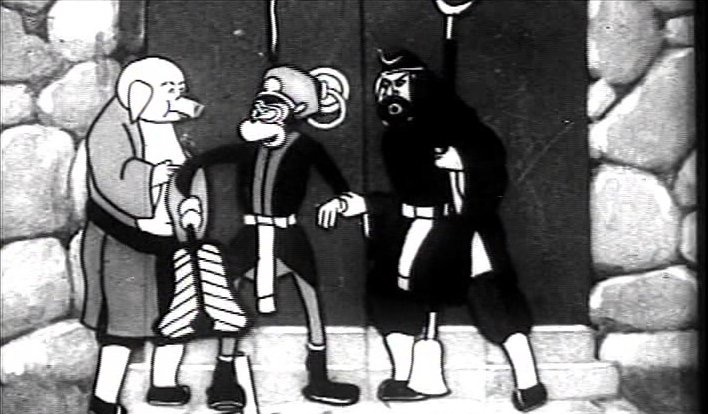
The tale is a fairly simple one: a monk trying to get to “the west” (meaning Central Asia and India) to obtain some Buddhist sacred texts (sutras), but is stopped by a mountain range full of fire. His three servants — a monkey prince, a pig-faced monk, and a stuttering but strong worker — each try to use their various magic powers to solve the problem. Specifically, they need to get a magic palm-leaf fan from an unhelpful princess in order to put out the fires, but their individual ruses and even brute force all fail.

Our three “heroes,” sort of.

The servants all regroup back at the town where the monk helps them brainstorm, suggesting that the three pool their abilities with the assistance of the townspeople to overcome the trickery of the princess and her husband. This they finally do, ultimately winning the day and clearly the mountains of the fire demon that tortures them, so that they and the monk can proceed on their journey of enlightenment.

Despite the handicap of no really good print of the film being available (it is desperately in need of a major restoration), the quality of the B&W animation shines through, with many impressive moments including extensive use of rotoscoping to make some scenes much more realistic, along with smoke effects and excellent character design. The various shape-shifting and disguising powers of the three servants are well done, and the quality of the existing film print picks up a bit in the last third.

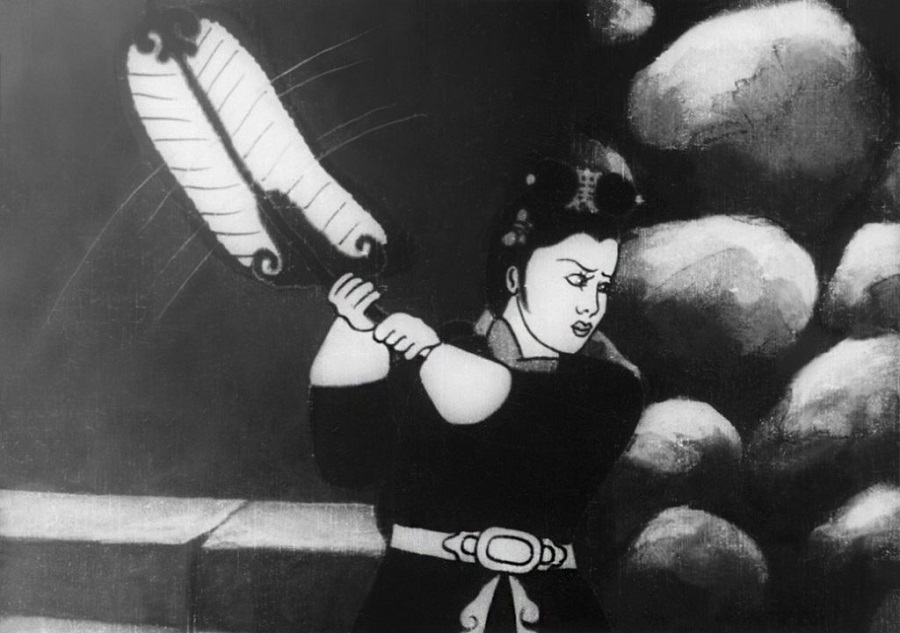
The “evil” princess, who actually has a pretty small but pivotal part in the film.

This is primarily a film that would now mainly appeal to fans of early animation, film historians, and students of Chinese history, but it is a very impressive feat of filmmaking that is only marred by the lack of a pristine print. A special mention should go to the musical score, which starts off a bit overwrought in my opinion but soon settles down when needed to accompany the story. I enjoyed it enough that I would certainly revisit it if it were ever restored.

An example of the beautiful backgrounds in the film.

Black Panther (2018, dir. Ryan Coogler)

⭐️⭐️⭐️½

52-week challenge, week 9

I’ll be blunt — I’ve seen a fair number of superhero films, including a good sampling (though nowhere near all) of the MCU and DC superhero movies. They can certainly be fun, but I usually find myself taken out of the story by the effects and stunts (regardless of how good they are, they routinely disrespect basic physics), especially as time goes on. Black Panther is certainly the best MCU movie I’ve seen to date, but that’s because it plays to my liking of Afro-futurism as a deeply underrated movie genre.

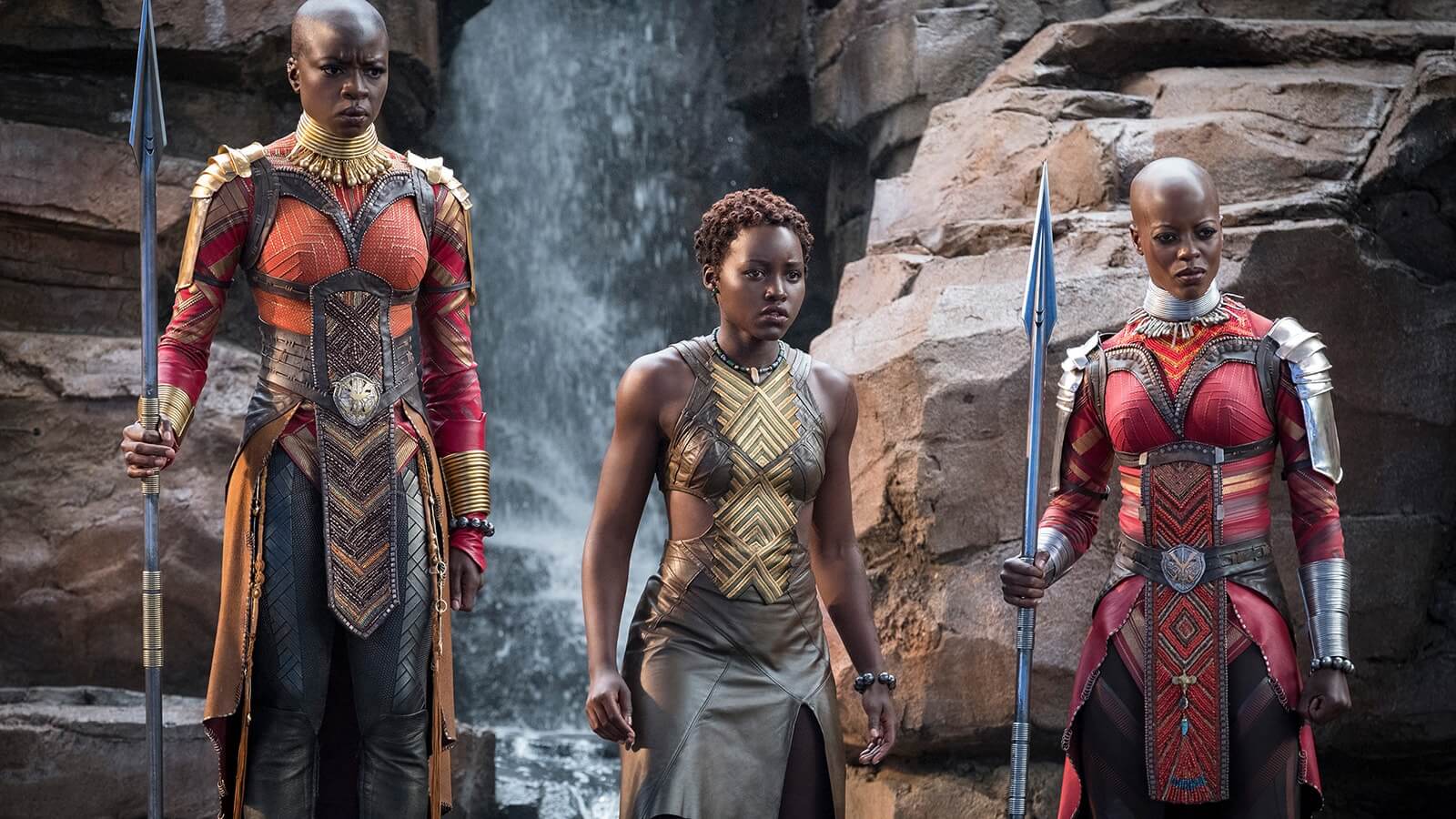
I was very impressed that Marvel went for a movie that was a deeply and topically the African and African-American experience as they did, adding in the futuristic secret of Wakanda, and one which dealt actually quite little with the typical superhero antics, though those boxes are certainly ticked — but there is relatively little of Black Panther the action man and mostly a focus on characters. A lot of the credit has to go to the note-perfect casting throughout.

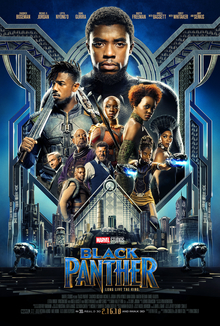
Even the established stars like Andy Serkis and Michael B. Jordan turn in solid performances, and of course Lupita Nyong’o and Danai Gurira alongside Letitia Wright and Angela Bassett get plenty of non-romantic, meaningful screen time (makes a nice change in the male-dominated superhero genre). I would be deeply remiss if I didn’t mention Chaswick Boseman’s star turn, aided by great supporting characters played by Daniel Kaluuya, John Kani, Forest Whittaker, Sterling K. Brown, and Winston Duke. Some of the most believable and fleshed-out characters in the whole of the MCU are to be found here — and even though he wasn’t quite as great as the rest of the cast, it was great fun to see Martin Freeman as the token white ally.

For a fantasy movie, this had a lot of hard truths within it — starting with the guise that has kept Wakanda’s secret: of course the rest of the world is comfortable seeing Wakanda as a poor country not worth making into a tourist destination, since it pretends to have no practical resources to exploit. The central theme of the film is actually the debate going on both internally and externally about whether Wakanda can reveal its power source, wealth, and technology to the wider world without risking colonization.

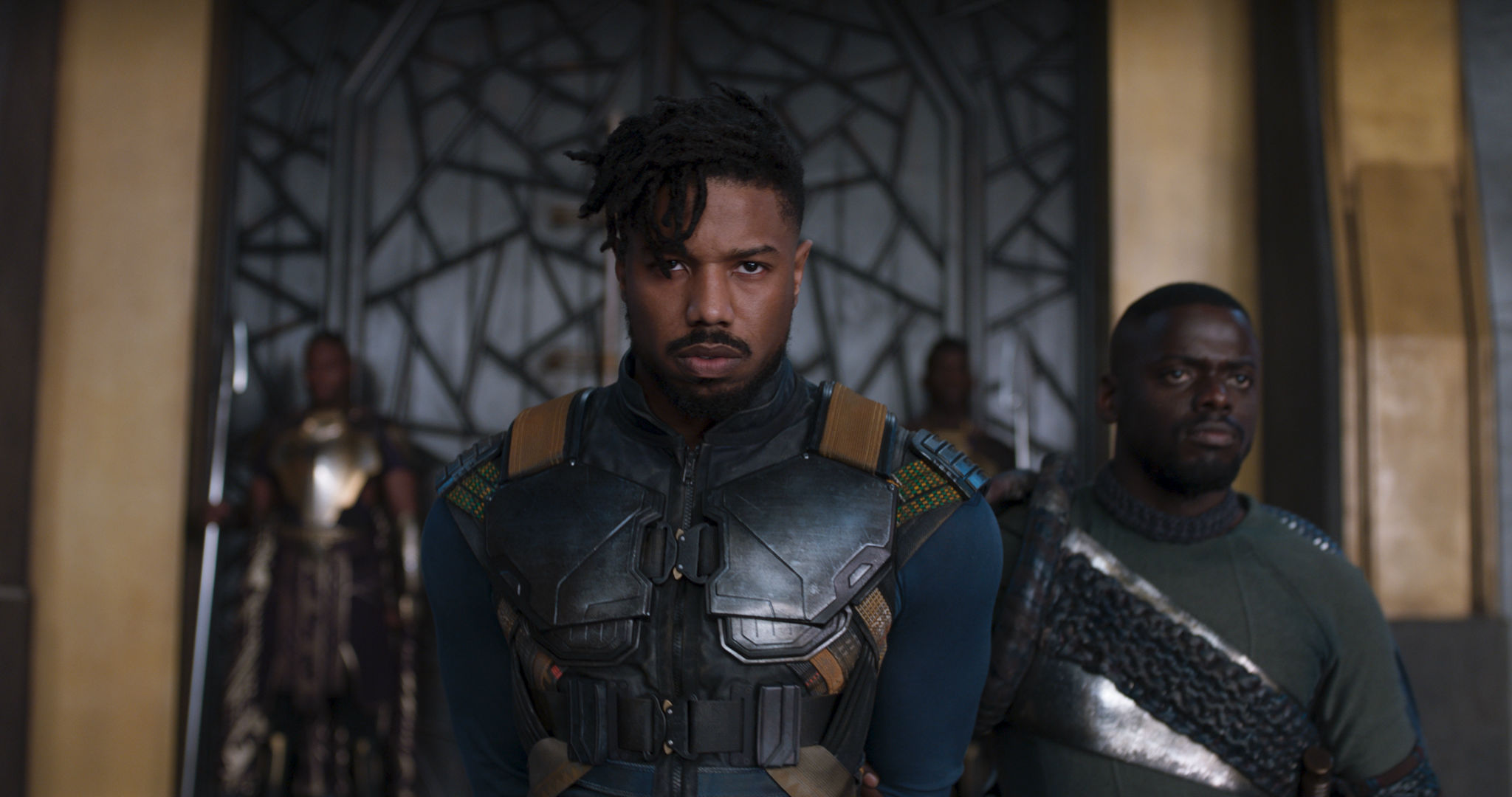
The villain of the piece, N’Jadaka/Killmonger, turns out to be T’Challa’s nephew. T’Challa’s father T’Chaka murdered his own brother, N’Jadaka’s father N’Jobu, for stealing and selling Vibranium — which some disreputable people (like Ulysses Klaue, played by Serkis) have come to understand is Wakanda’s secret.

This injustice, which T’Chaka later covered up and kept secret, causes the boy N’Jadaka to become a mercenary killer known as Killmonger. Now an adult, and having trained as a Black Ops Navy SEAL, he returns to Wakanda to challenge T’Challa for the throne. He appears to win the challenge, and immediately begins implementing the flip side of the Wakanda debate: he wants to position this secretly-superior country as the rightful ruler of all countries, turning its technology and resources into a war machine.

Killmonger finds lots of allies among the Wakandan population, and wins over the military wing. T’Challa, having disappeared and taken time to recover from near-death after the first battle with Killmonger, returns to Wakanda to reclaim his throne and must resume his battle — now with much of Wakandan might allied against him, and Killmonger now has powers and the suit the equal of the Black Panther.

As with all such movies, good eventually prevails against wrong, but unlike most other MCU films, things are not fully reset at the end. T’Challa takes on enough of the “Wakanda should be open” argument to bring his defectors back around, and starts making carefully-considered moves to let the world know about his country. It reminds me of some of the more recent, more mature Bond movies in its handling of issues, but the effects are strictly standard-issue, with a mix of fighting/action enhanced stunt work, and Sci-Fi type holo-effects abounding.

I’m reluctantly giving Black Panther three and a half stars because of the issues it raises and the focus on Afri-centric style and solid characterization, which means less time for (but still plenty of) fight/stunt/SF sequences, though certainly less stuff blows up in this one than any MCU film I’d seen thus far. I’m hoping — but not expecting — the sequel, Wakanda Forever, to keep this balancing act going. Sadly, Boseman’s premature death from cancer meant that much of what we would have expected from the sequel had to be changed.

A Hard Day’s Night (1964, dir. Richard Lester)

★★★★
52-week challenge, week 7

On the very day that the Beatles performed their first US concert back in 1964, I sat down to finally watch in full a movie I had seen clips of all my life: A Hard Day’s Night, the movie debut of The Beatles that further cemented their new fan base in the USA. Somehow, I had never gotten around to watching the entire film, and seeing it in full really surprised me in how vital, innovative, and enjoyable it was as a complete work.


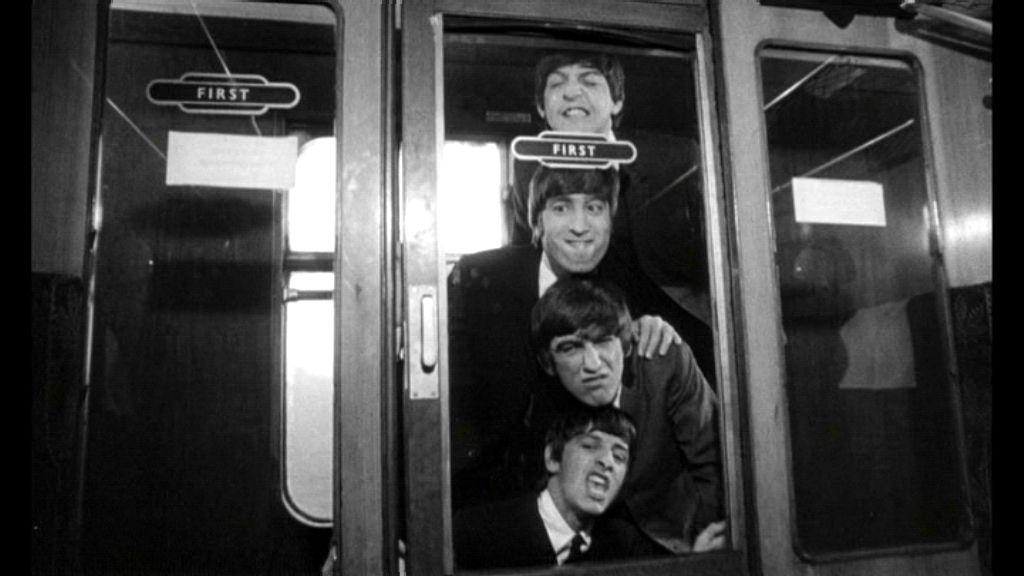
The film features more running than The Running Man and almost as much as Run Lola Run, mostly of the band trying to escape their shrieking fans. The film, which starts in black with the twanging opening guitar chord of the title track, features George Harrison taking a tumble almost immediately in the first chase sequence, but of course with the energy of youth and adrenaline picks himself up immediately and — like the rest of the group — has a big grin on his face as he resumes his sprint.


Director Richard Lester was determined to capture that level of youthful vigour by employing what at the time were dubbed cinema verité — innovative interminglings of hand-held, moving, and quick-intercut shots to represent the chaos of the chases. While the movie has a lot of these, there are times when the boys find respite and start to unfurl their humourous personalities and even advance a tiny bit of story — and for this, Lester reverts to somewhat more traditional camera styles, but still relies on being able to get his 16mm cameras into tight spaces for a more intimate feel.

The decision to make the film in black and white was likely a budgetary move, but it reminds me of why I like old movies (and in particular B&W films) so much: they are a window into a world that no longer exists, not just on a societal level but also presented in a way that was par for the course at the time but was nonetheless an abstract and dreamlike layer over reality. This film, even more so than usual: not only is it The Beatles as they originally presented themselves, but it’s been credited with having thrown off, once and for all, the societal straitjacket of the 1950s.

As much praise as Lester deserves for directing and editing the film, a lot of credit should also go to Alun Owen, the screenwriter. He hung out with the band for some time, and got two things absolutely right in his script: an ear for the funny banter the band effortlessly delivers, and an eye for what a rigmarole their lives were becoming as their fame exploded.

The story, such as it is, covers a period of about two days in the band’s life at the time, with some events being driven by their own harried schedule, with some being driven by the subplot: Paul’s scheming “grandfather” (Wilfred Brambell, best known for “Steptoe and Son”), who runs cons and generally complicates their already-chaotic lives.

Wilfred Brambell tries hard to steal the picture as the troublesome “John McCartney.” Isn’t he clean, though?

Thanks in part to the delightfully witty banter, frequently broken up by silent scenes of (again) mostly running about to the accompaniment of the band’s singles from their third album, and the contrivance of more songs for one of the boys’ TV appearances, the focus never lingers too long on any one scene or story element. All four of the lads convincingly look like they’re having a great time being in the film.

This film likely contributed to the “Swinging London” scene in the later 1960s as those teen Beatles fans — and the Beatles themselves — matured. Without a doubt, A Hard Day’s Nightwas a direct influence in the creation of The Monkees, and the freewheeling style of their popular US television show.

Lester is careful to give each Beatle some spotlight time, but two particular scenes stand out: a brief interlude where a woman seems to recognize John as “you’re him,” but he gently introduces doubt into both their minds until she puts on glasses and is then sure that John isn’t John, with John walking off agreeing that “she looks more like him than I do.” Another scene has Ringo escaping the chaos for a bit and having his own adventure by a river, where he meets a young boy (David Jason) and has a nice conversational scene.

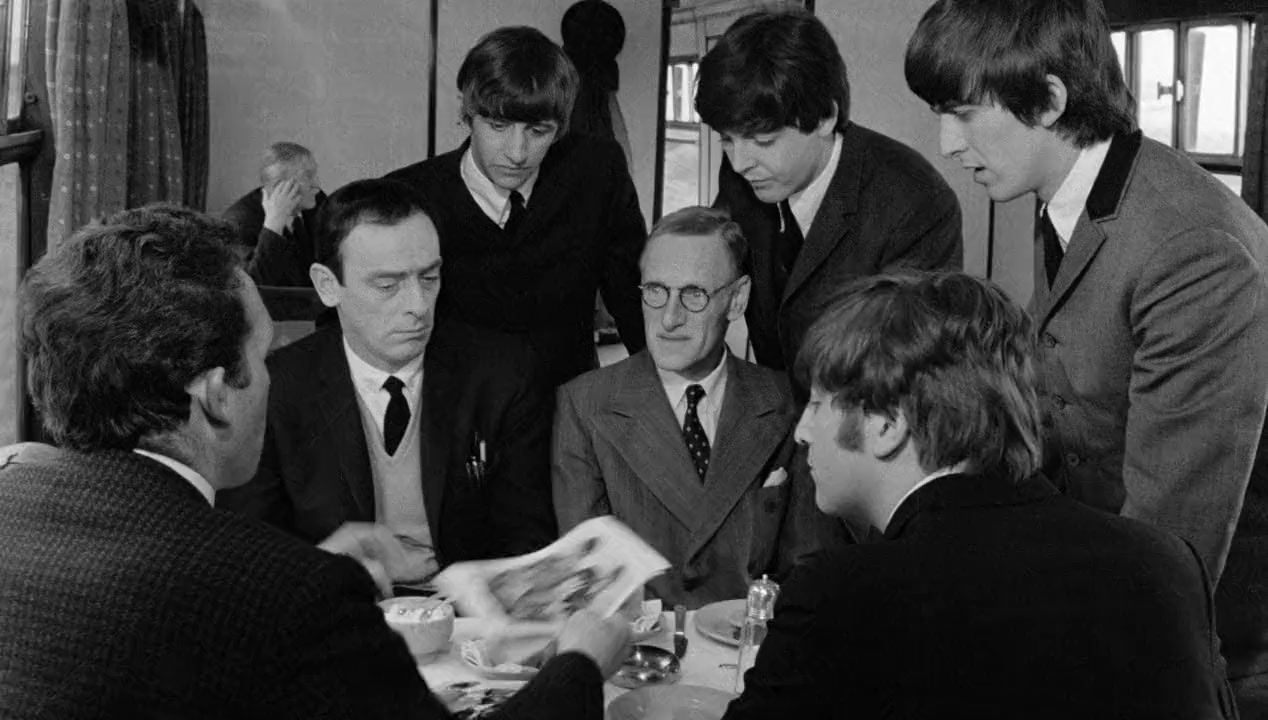
Interestingly, every teenager in the film — with an emphasis on girls, but there are plenty of boys running after them also — knows very well who each Beatle is, but the majority of adults in the picture have no idea at all. Another fun scene finds the lads in a train when a middle-aged businessman comes into their coach, creating some light tension.

Actor Richard Vernon (of a very long career, though for me he will always be Slartibartfast in “The Hitchhiker’s Guide to the Galaxy” TV series) harrumphs his way into bullying the boys, who use their free-spirited impudence to intimidate him right back. Talk about a movie that caters to its audience.

The boys tease a stuffy British businessman who tried to bully them.

After some very mild “drama” about whether Ringo will get back to the rest of the band in time to do the live television concert and avoid giving the director of same (Victor Spinetti) a nervous breakdown, and what mischief is Paul’s grandfather up to now, everything comes back together just in time, and after playing to a screaming teen audience, they run yet again to catch a helicopter and off to whatever the next thing is.

I counted eight full Beatles songs (and several more reprises) in the film, not including some George Martin Orchestra instrumental versions near the end. The movie was a big hit on both sides of the Atlantic, and has continued to be very highly rated among critics and various “best of” lists for the past 59 years.

Prior to this, Lester had done a film with Spike Milligan and Peter Sellers called The Running, Jumping, and Standing Still Film, and it was that absurdist short that both got Lester the Beatles job as well as established the style for A Hard Day’s Night. It’s a good time and some great music spread across 90 fast-paced minutes, and gives us a loving moment in time just after the Beatles hit it big. If you aren’t tired of their early hits — and how could you be — the film still holds up really well viewed by more modern standards.

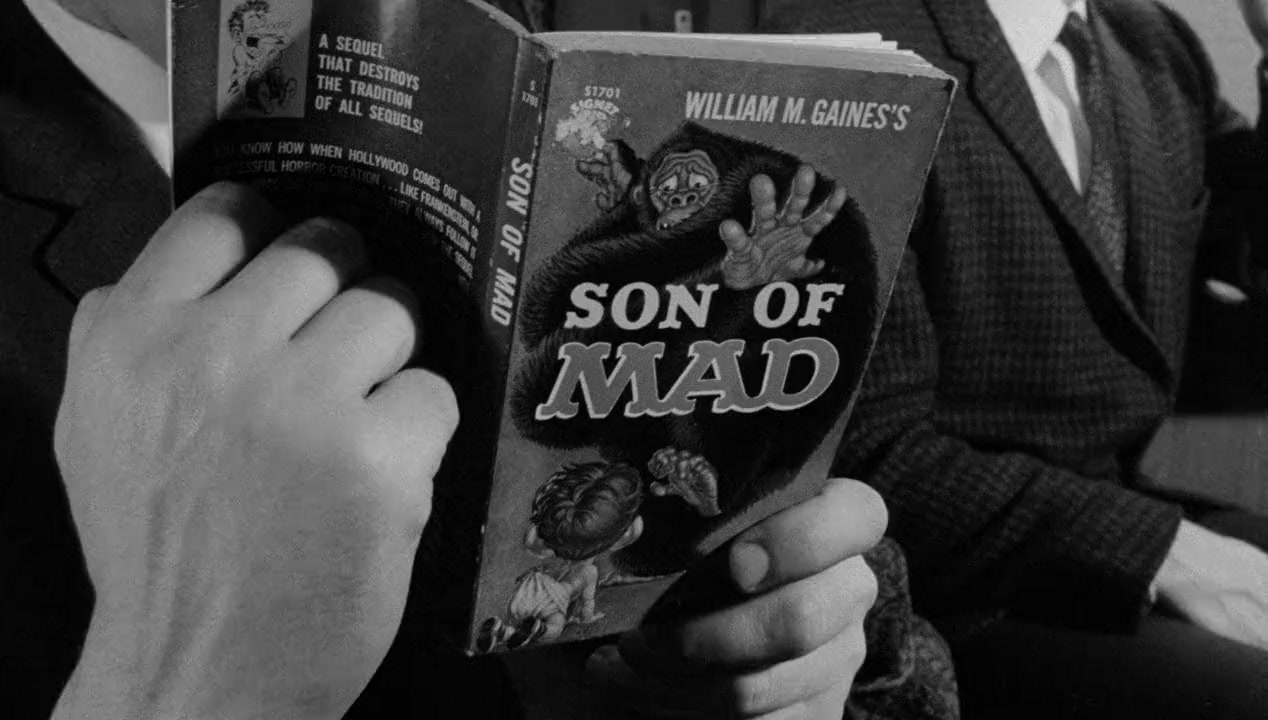
A favourite moment of mine in the film: the band’s road manager is reading a Mad Magazine anthology book.

The Daughter of Dawn (1920, dir. Norbert Myles)

52 film challenge (week 4)
⭐️⭐️⭐️

This is one of the films that film-history majors watch, and pretty much nobody else (at least not anymore), but it’s actually a little bit fascinating.

This silent film is a non-patronizing look at life among the Kiowa and Comanche tribes — set in a time before they were herded into reservations and their previous way of life forcibly taken away from them, but acted by people this had happened to some 50 years earlier.

The story is a pretty straightforward “love triangle” story, but what’s amazing about this silent film is that the entire cast, without exception, is portrayed by Native Americans (some 300 all together), and featuring authentic outfits, props, and tepees provided by the tribes.

The acting is of course variable, but convincing enough to impart the story of one brave who feels he “deserves” the chief’s daughter and attempts to force her into marriage, while the young girl has already fallen for another brave. True love wins out, which itself is something of a radical idea given the time when the film came out.

The portrayal of the women of the tribes is surprisingly much less patronising than expected; the villain of the piece Black Wolf does have another who pines for him (Red Wing), but he callously ignores her in favor of the Daughter of Dawn (yes, that’s her name). He spends most of the movie creeping around and observing from a distance in the standard silent-movie way, helping us uncover developments, whereupon he discovers his rival While Eagle and plots his downfall.

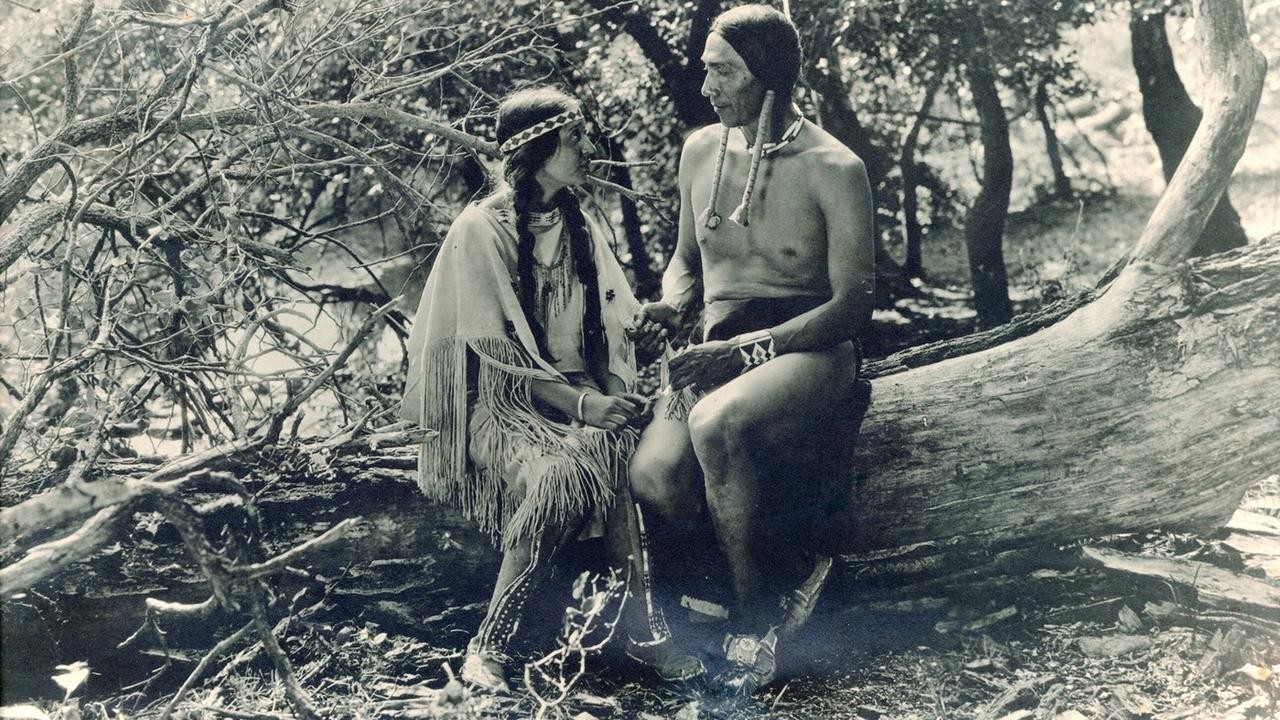
The Daughter of Dawn and her true love, White Eagle.

The simple story is kind of excuse to recreate something like pre-reservation life among two tribes, including great landscape shots of the plains (the film was made in Oklahoma), hunting scenes featuring actual wild buffalo, daring stunts, and some time spent on the day-to-day life of the people. Director Norbert Myles seems to have wanted to a documentary-style drama rather than stigmatize the “savages” as was more the style for the time.

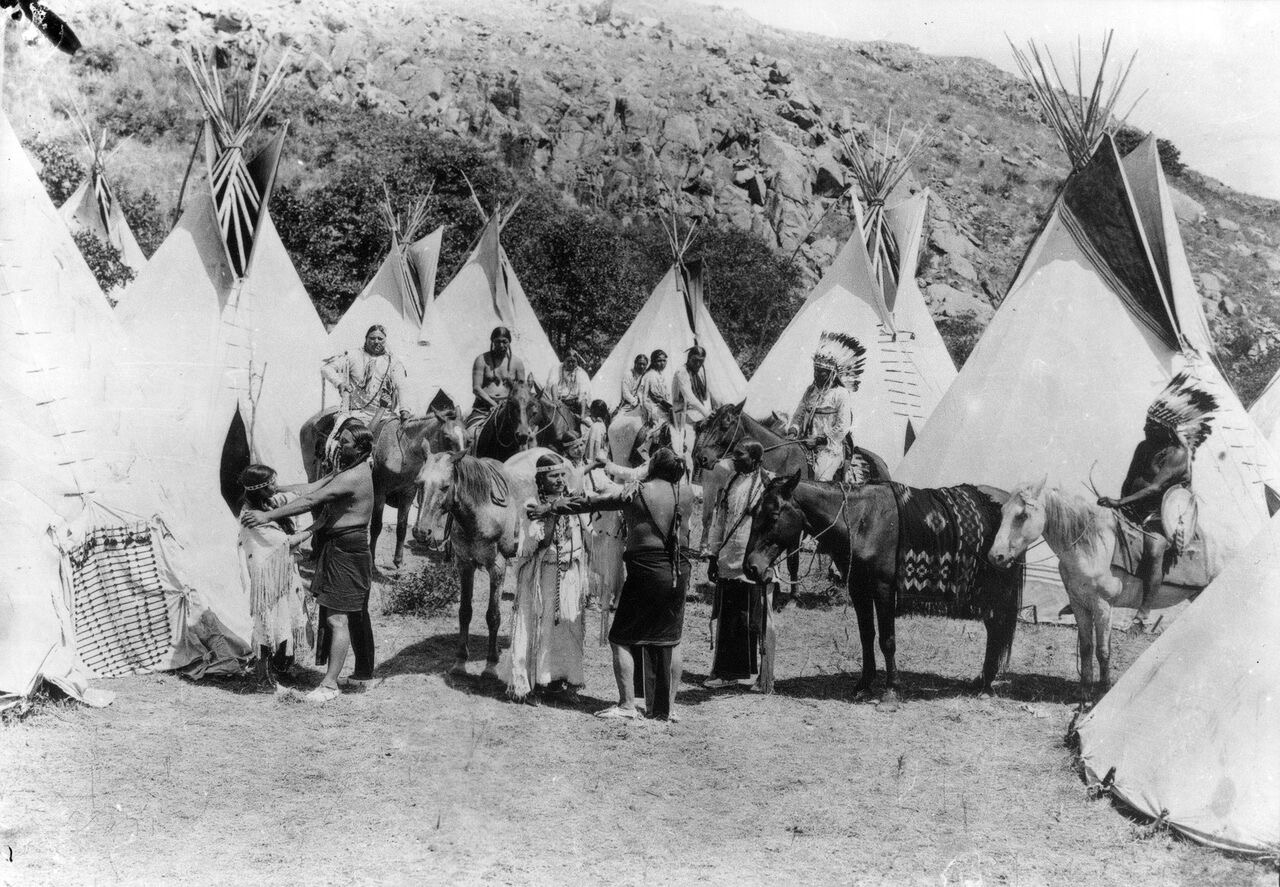
Actual First Nation peoples! Actual outfits, props, and tepees provided by the tribes themselves!

On a story level, this wasn’t that far removed from The Searchers (1954), but apart from the interesting historical context and backstory of the film itself — it was presumed lost for almost 90 years before mysteriously resurfacing in 2012 — it’s not a film most non-native people would seek out.

It’s pretty well-made and sympathetic for a 1920 silent film, and benefits strongly from an authentic Native American cast. The plot is very well-worn nowadays, but I would imagine it captured audiences’ imaginations — and maybe won over a few “paleface” hearts and minds — in its day.

The Grinch who stole Star Wars

Or, why The Force Awakens is fun but will ultimately make you angry

I want you to see the new film Star Wars: The Force Awakens (also known as Episode VII). I want everyone to see it. If you’re looking for a light, fun, space-adventure movie to see on the big screen, you’re not going to find anything better. It is a visual treat on many levels, it brings some great new elements into the larger story, and of course it is wonderful to see some of the characters from the first Star Wars movie back again. I’m sure you’ll enjoy it, so go see it, particularly in IMAX if you can.

Just don’t think about it too much afterwards.
NEAgkrY1damxDC_1_b

Obviously, from here on in we will be mentioning all kinds of spoilers (both plot developments and insights that will ruin some of the film for you). So please, I’m asking you nicely and seriously, stop reading this if you haven’t seen the film. This analysis is for people who have seen it and would like more insight into where the story does and doesn’t work: it will annoy the crap out of you if you read this first and watch the film afterwards. So don’t.

The TL;DR version of the critique is that although the film is executed very well and the new elements are welcome, the story is almost a play-for-play remake of A New Hope (the first of the Star Wars films, also known as Episode IV), only with some light twists (nothing wrong with that) that depend greatly on utterly ridiculous coincidences, character decisions, and filmmaker choices. So in short, it’s very much like Star Trek: Into Darkness in its interior badness. Because the film is very fast-paced, visually exciting, and has lots of explosions and fights, even serious fans will probably not notice this on first viewing, because the film is genuinely fun and cleverly made — and we also said this exact same thing about Into Darkness: it’s eye candy and then it grows increasingly silly until you’re finally angry at how completely empty the movie actually is.

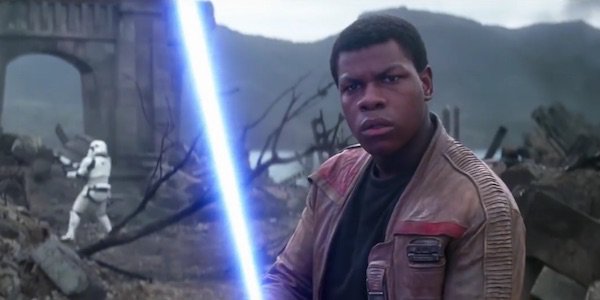
Let us start, however, with those things that rightly deserve praise, because they do, and because nobody likes a wet blanket who can only talk about the problems with something and not acknowledge the good things. It was great to see some interesting new characters, major and minor, and while there are some questions lingering over Rey that hopefully will get answers in the future films (like “if she’s supposedly Luke’s kid, why has she got a British accent?”), but I have nothing but praise for her performance. Likewise, I thought the idea of showing that Stormtroopers are real people and can have changes of heart was an intriguing idea (yes, I know this was explored in other media, but I’m limiting myself to someone who mainly knows the Star Wars saga through the movies), and I thought John Boyega’s casting was fresh and good.
CWgak9oWoAACoSw

I’m unsure how to judge the characters Poe Dameron (Oscar Issac) and Kylo Ren (Adam Driver) just yet, since their characters are clearly going to be developed further, but my initial impression is that Poe is (sorry) kind of a two-dimensional and all-good mix of Luke and Han, Finn is a mix of pre-A New Hope Han Solo and A New Hope-era Luke, Rey is a mix of Luke and Leia and Chewbacca (yes, you heard me), while Kylo is a remix of Prequels Anakin and Empire Strikes Back-era moral-quandry Luke. I’ve rarely had an issue with the casting in JJ Abrams’ movies, apart from Chris Pine, so his continuing the tradition of adding some unknowns was a great move (as it was when Lucas did it the first time around), and they’re all interesting choices and a good mix. Simon Pegg’s disguised cameo as Unkar Plutt was delightful — I often wish we got a bit more time and story on these interesting minor characters.

Since it is heavily stolen from A New Hope with elements of The Empire Strikes Back and Return of the Jedi (and even a bit of the Prequels) thrown in, the story is naturally fun and exciting — a lot of older fans have said “it made me feel like I was 10 years old again,” or however old they were in 1977, which isn’t surprising since it is little more than a remix of that movie. That said, of course we’re thrilled to see the original characters, major and minor, and of course we’re pleased to see the effects updated to modern standards but otherwise left un-messed with. I thought the effects throughout were just great, including the mix of physical and CGI effects, the nice use of 3D in the 3D version (present, but not overused, and for once not dimming of the film overall), the expansiveness of the IMAX version, and the effectiveness of the music.

You can even get the film in a “D-box” version that rattles your seat when explosions happen, and jerk you around in the battle scenes, or the whole triple-play (3D/IMAX/D-box) if you shell out enough. I haven’t seen the “ordinary” non-IMAX 2D version yet, so I can’t judge on that, but I’d bet it loses none of the emotional or visual thrills for it. As I said at the top, if you’re just going to this movie for fun and thrills, it’s great. You won’t be disappointed — unless you wanted something substantive, because there isn’t that much here for people who care deeply about the entire saga, but there’s a lot of resonance for people who only remember Episode IV from their youth. A ton of it, and it’s not unwelcome at all.
star-wars-the-force-awakens-han-solo-3-156687

It’s only when you start to think about it — like the recent Star Trek, or Star Trek: Into Darkness — that it starts to fall apart, and you realize the Emperor — sorry, Supreme Leader — barely has a stitch on. I’ve seen some other criticisms of the film harsher than this one will be, such as “40 Unforgivable Plot Holes in The Force Awakens (which was followed up with another 20 additional problems, by the way!) — but about half of these are either subtle stuff he missed, or will probably (I say “probably” because you can’t trust JJ Abrams on this at all) be addressed later, or weren’t really either plot holes or unforgivable.

Still, most of the critics of the film I’ve read are more right than wrong — there’s nothing wrong with some homage to what came before, particularly at this point, but Abrams just went waaaay beyond that point into cribbing A New Hope wholesale, which ultimately makes The Force Awakens not fit in the saga at all. Say whatever you like about the three Prequel films, and believe me I did not enjoy them, but they did in fact add to the unfolding story. You can summarize the first six films by saying “there was a boy who was strong in the force and was eventually turned to the dark side, and as a man became the face of the Empire, but his son and daughter, led by a former mentor of the boy and a friendly but rogue stranger, teamed up to defeat the evil Empire and stop the mass slaughter of billions of freedom-loving people … and then, in Episode VII, they did that again.”

The Force Awakens doesn’t really advance the plot: it rehashes Episode IV in a sort of re-telling that appears, at the end of the day, only to exist to hand off the lead roles to some new people and bring casual people up to speed on where we are (which, this being a sequel to a 1983 movie, was important — but it’s all that’s here, with precious little actual new content).

Here’s what happened in the (let’s say) 25 years since Episode VI, since Episode VII is supposed to follow it: following a presumed period of peace, the New Republic (which is good, mostly, but seems ambiguous in the new film) have been running things, and the Republicans (sorry, the Empire — no, ’scuse me, the First Order) have sprung up and are fighting the New Republic (why? No reason given, sorry). For reasons also not mentioned or even hinted at, the New Republic has decided to fund a group of rebels (sorry, Resistance) within the systems controlled by the First Order to fight against them, and the First Order’s reaction is — in a stunning lack of imagination — to yet again (third time!) build a new Death Star (sorry, Death Planet — it’s bigger!) to destroy the Resistance and New Republic, and murder billions of apolitical innocents. Cuz righteousness, or … well, as I say, don’t think about it too much.

Han and Leia have split up because their son, Ben Solo, turned to the Dark Side of the Force, having previously been “the strongest in the Force we’ve ever seen,” at least since the last “strongest in the Force we’ve ever seen,” Anakin Skywalker — Ben’s grandfather, and of course the former Darth Vader. Luke, who was training Ben, was so devastated when he went bad and murdered the other students that he has spent several years (let’s say five?) years in hiding, doing absolutely nothing, it would seem. When we finally see him, he is literally doing nothing at all.

Ben has taken the name Kylo Ren and is now a slave of the Emperor, sorry Supreme Leader Snoke, and is a very high-up in the Empire (dammit, sorry, First Order) during this very short period (but let it slide, that’s not an unforgivable plot hole). Luke may have also abandoned his daughter (Rey, perhaps, we don’t know for sure but seems obvious) when she was around four years old to go take off somewhere for some reason, or maybe (likely) to protect her because she was so strong in the Force and he didn’t want the First Order to find her. Seems kinda harsh, but let’s reserve judgement on that, as that’s essentially what Obi-Wan did to Luke and Leia. C-3PO got a red arm and sounds kinda funny now, and R2-D2 has been in low-power mode since Luke left him behind following the massacre of his students, and will only awaken when the plot demands it — since he just happens to have the rest of the map they need to find Luke.

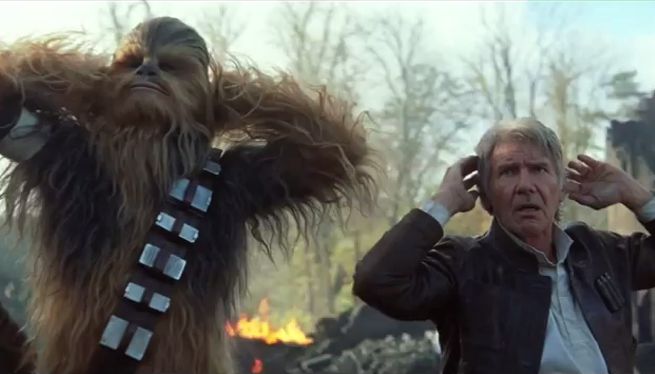
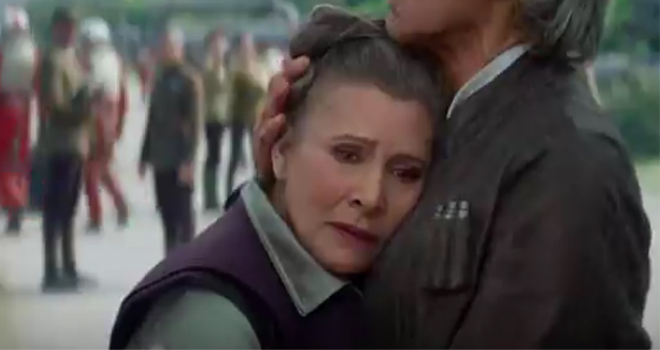
Han reacted to this situation by running away from it, rejoining with Chewbacca to go back to being a dodgy-but-lovable rogue smuggler (violating the laws of … the Republic? The First Order? Not clear) and Chewbacca seems completely unaffected by the passage of time (indeed, he’s gotten spritelier it would seem!). Leia has returned to being a General and leader of the Reb– sorry, Resistance, along with a bunch of old Rebel characters.
Princess+Leia

Interestingly, at least to those of us who found the backstory alluded to in the early Star Wars films, and fleshed out quite a bit in the Prequels about the only interesting thing in those three later films, there’s been a lot of political changes going on in the background that leads up to Episode VII, but sadly we get too little information about it; a clever fellow at Vox has put together a really good summary that actually adds to, rather than detracts from or spoils, the new film, and if you’re interested in that aspect of the story you should read it.

In the actual film, it just ends up being the Empire (sorry, First Order) is again building a Giant Killing Thing to wipe out Mostly Innocent People (because mustache-twirling EVIL, that’s why) and the political establishment (making them, ironically, the rebels!), but a plucky band of Rebels (sorry, Resistance Fighters) manages to destroy it through a combination of one person turning off the shields (sounds … familiar …) and a bombing run where the bombs have to hit a small target by flying low in a suicide run (sounds … really familiar …).

Oh, but wait. Did I mention that the early part of the film covers the political awakening of a young man who was just trying to do his job (and a girl stuck on a desert planet with big dreams and few opportunities to achieve them — like I said, Finn and Rey have a lot of Luke between them) when the evil of the First Order’s machinations drive them to grow up quick and make huge life changes they are surprisingly well-prepared for, all revolving around a droid that contains a hologram of plans that are vital to the Resistance in the struggle to fight the Sith-led villains? Oh, and there’s a Cantina scene with pilots that will take you off-world for a price (though happily, Han shoots nobody in this scene … this time, and a sage old person who has Anakin/Luke’s light saber?

Finn seems to be a crack shot when (and only when) he needs to be, Kylo Ren is strangely bad at using his powers judiciously (you’d think someone would have noticed this after all the damage he apparently does when angry), Rey appears to be an ace pilot for no reason at all, and has huge untapped Force powers that emerge almost the minute she learns that the Force actually exists that allow her to be as world-class Jedi as a fully-trained Luke within a day, Han Solo just happens to be orbiting the very planet where the Millennium Falcon just happens to be sitting undisguised in the largest town (and Han is aware of the person who has it!), and though it hasn’t flown “in years,” it works more-or-less perfectly and somehow wasn’t destroyed by the First Order … oh dear, really I could go on like this for another few thousand words (and I am not kidding at all) on the silly contrivances that take careful observers out of the movie and into eye-rolling territory.

There’s a lot I’ll forgive in the name of fun, but there does come a point where you say OH COME ON!, and I should make clear that this is not the only movie I feel this way about: I’m not one of those people who get angry that we can hear sounds (like explosions) in space (where you actually couldn’t), but I do find that the utterly impossible physics in Peter Jackson’s films that can’t be hand-waved away by saying its a fantasy world (they’re all fantasy worlds, that’s why we call them movies, kids) really hurt the later Lord of the Rings movies, and in particular The Hobbit (as much as the stretched-too-thin storyline in the latter trilogy), the ridiculous stunts in the JJ Star Trek movies (of course you can fall many miles from a starship to a planet without being harmed! Of course you can be shot out of a photon cannon without a scratch!) really get to a point of ridiculousness where it takes me out of the movie, and that’s really annoying — like a fly buzzing around when you are trying to read a really good book.

I was really a lot more fearful for the JJ-led Star Wars going into it, and relieved this wasn’t as awful as Into Darkness, which I’m going to credit, unfairly and entirely, to Lawrence Kasdan. Kasdan’s no Harve Bennett, mind you, but he is generally a force for good story sense. It’s a pity he didn’t write this screenplay outright.

So, at this point let’s agree that The Force Awakens, um, borrows too heavily from A New Hope, and that this means things get awkward if we want to view Star Wars as an (in)complete saga. Unforgiveable? Maybe not, though we are left at the end of this movie with a setup that harkens back to the second chronological Star Wars movie so much that Episode VIII might end up being called The Emp — I mean, First Order Strikes Back: a young person who is strong in the force and has no immediate family we know about has left their old life behind, and arrived on a lush green world to be trained by a long-exiled Jedi Master, meanwhile the leader of the evil forces will plot revenge with his miraculously-saved apprentice, and the weakened Resistance will bravely fight the forces of the Empire (ack, sorry again, First Order), despite feeling the loss of a major character, who was murdered by the film’s chief antagonist.

I hope I’m wrong about Episode VIII, but come on, where else would a remake of A New Hope leave us? I actually love it when later films in a series “call back” to earlier films, but this is just way, too much. I would remind you also that I haven’t even gotten to some of the big, obvious (at least to me) issues or just plain dumb moments in the film: let’s take one just for starters — at the point where Snoke asks Hux to go get Kylo Ren, there is no possible way, even in Convenient Movie Time Stretching, for them to locate him, rescue him, and get him off-world in time. Rey’s rescue was a Lucky Coincidence too, but at least we saw them starting to go after her well before they reach her.

Yet, we know for sure that Kylo Ren will somehow be in the next movie, and now will need that mask he was conveniently wearing for no reason at all for reals. I’m hoping that if they go down this road, we get us some more Lando Calrissian. DO NOT go all Creed on me here, JJ — I demand 100 percent authentic Billy Dee Williams! If you’re going to remake Episode V, then I want Bespin and Lando and a Kylo Ren trap where they have to have an awkward family dinner, god dammit!

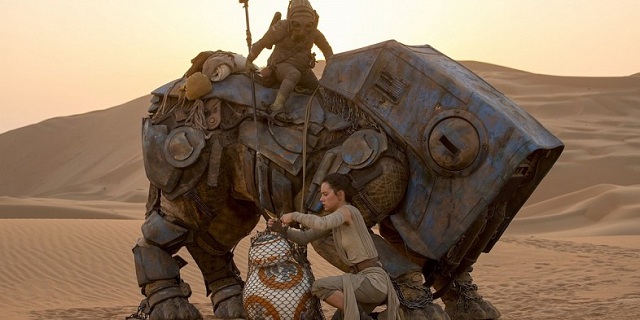
Speaking of Kylo Ren — why does he use the Force against nearly everyone except Finn? He knew something was up with Finn (FN-2187) early on — he noticed the trooper’s change of heart remotely, and knew it was him that helped Po escape. He has a lightsabre battle with Finn, but not only can he not beat him (even though Finn has never used a lightsaber in his life and is not very good with it), he doesn’t even really try to use any of the control tricks he used on Rey. Incidentally, Rey can speak Wookie, and droid, and at least one other language (when she yells at the scavenger who initially captures BB-8). The fact that she can speak droid might be explainable, but Wookie? Which doesn’t surprise anyone, like say Chewbacca or Han Solo, at all?
movie201

Finn, who worked with droids all the time as a Death Planet janitor, can’t speak droid. Nor can a lot of people in this movie, except Rey. If this doesn’t prove she’s Luke’s daughter, I don’t know what to tell you. There’s a number of other subtle and not-so-subtle hints that this may be the case; when we first see her, she’s dressed exactly how George Lucas and original Star Wars concept artist Ralph McQuarrie envisaged Luke looking when they were (briefly) considering making the character female, just as an example. Oh, and also, are there really only three kinds of planets: desert worlds, lush green planets, and permanent-winter hollowed-out Starkillers? How boringly familiar.

When she touches Luke’s lightsaber (get your mind out of the gutter, you pigs!), she hears voices, including a bit of Yoda and more clearly Obi-Wan Kenobi (voiced by Ewan McGregor, in a nice touch). That lightsaber, or lightsabre if you’re British, was unguarded and unprotected in a chest that looks similar to the one seen in A New Hope, and if you remember the films was actually lost when Luke lost his hand near the end of Empire Strikes Back. It fell to the bottom of the cloud city, so who could have retrieved it and brought it back for safekeeping? GEE I WONDER.

Like I said, there are a number of questions the film raises that could be addressed later, so I’m not going to belabor every one of them, but I do have to wonder about what kind of warped comment on solar energy it is when the Starkiller base (which actually kills planets, but never mind) depends on sucking dry the energy of a sun (which the planet could not possibly hold, but again — let it go). Indeed, when you think about it, that’s really all the weapon had to do: without a sun, every planet in that solar system will rapidly die, no PEW PEW PEW missiles of death needed. If our sun went out, Earth would become uninhabited in about a day, at most.

Other than for plot-mystery reasons, why can’t Rey remember her family? She just remembers them leaving, and being placed in Unkar Plutt’s (!) care (shades of Oliver Twist here, really …). She claims she “couldn’t imagine” a world as lush and green as the first one she gets taken to after leaving Jakku, but Kylo Ren noted that she dreams of exactly such a world, so … and while we’re at it, Leia appears to either know or intuitively understand who she really is (she just met Rey, but lets her be the one to go find Luke), but says nothing to her … presumably for only plot-reveal reasons later. That’s fine to a point, but it will look silly later if I’m even half-right about this.

I’m actually being easier on this film than it deserves — there are a lot more oddities/belief-stretching coincidences/“oh come on!” moments that I’m willing to defer since this is the first film of a new trilogy. There will be a lot of people who might read this and say I’m taking it too seriously, that Star Wars is meant to be nothing more than light adventure, and that there’s a lot of boom and wheee and pewpewpew and zoom, whiz, lightsaber sound effect and droid squawk, and that’s all anybody other that dorky nerds want out of it. Fair enough.

The problem is that Lucas and Kasdan and the writers since then have (well, for the most part) infused a rich backstory into what is more obviously shown on screen, one that intrigues and rewards looking deeper into the films, and that it really wouldn’t have hurt The Force Awakens to get that stuff right — almost every issue I’ve raised with the film could have been avoided with a single line of dialogue in the right spot. Another issue is that in trying to pay homage to the classic three films (Episode IV, V, and VI), Abrams is just unbelievably unoriginal and ham-fisted about it.

You want proof? Okay, let’s forget, for a moment, that The Force Awakens is very nearly a remake of A New Hope. Let’s forget that the Millennium Falcon has been lost for a dozen or more years, but gets found roughly five minutes after it is fired up for the first time in “ages.” Let’s forget that BB-8 is just another R2-D2, and that it’s still odd that with all that advanced science around, nobody seems to be able to make small droids speak English. Indeed, let’s doubly forget that at least 25 in-movie years have passed since the events of Episode VI — presuming Rey is Luke’s daughter, and looks to be in her 20s, and Kylo Ren looks to be not much older than that — and yet the technology for ships, blasters, stormtroopers, et cetera does not seem to have changed even a little from 1977. Put that all out of your mind.

There’s a moment where Finn bumps the chess table on board the Falcon, and the chess game turns back on. In the original film, this was a cute moment — and a tip of the hat to stop-motion special effects master Ray Harryhausen, who had just a few years earlier done some masterful work in the Sinbad movies. In the new film, the game picks up exactly where it was left at least 25 in-movie years earlier. Does that seem credible to you, given that the Falcon was acknowledged in the film to have been owned by several different beings, and looks to have been on many different adventures since Episode VI? There — that’s the whole problem with this film in a nutshell. It’s fun, it’s flashy, it’s exciting, but it is really not too credible.

Once again, JJ Abrams delivers enough bangpow to enthrall audiences, but the moment you stop and think it through a bit — you realize you’ve been had. This is a pastiche of the old films, not a new chapter in the story at all. The man doesn’t seem to be able to come up with a sensible original story to save his life, and when he thinks to go the safer route of remaking an old story, he mishandles it.

I’m relieved that someone else will be directing Episode VIII, because I don’t think this franchise could handle another Abrams hack job. I actually do care about this story; that’s why it disappoints me that we didn’t move the needle much forward, particularly with such a great cast and some lovely new ideas. So much more could have been done, but someone — either Abrams, or someone higher up at Disney — felt like a rehash of the one that had the big impact the first time around would be a better approach. This is just plain old lazy storytelling.
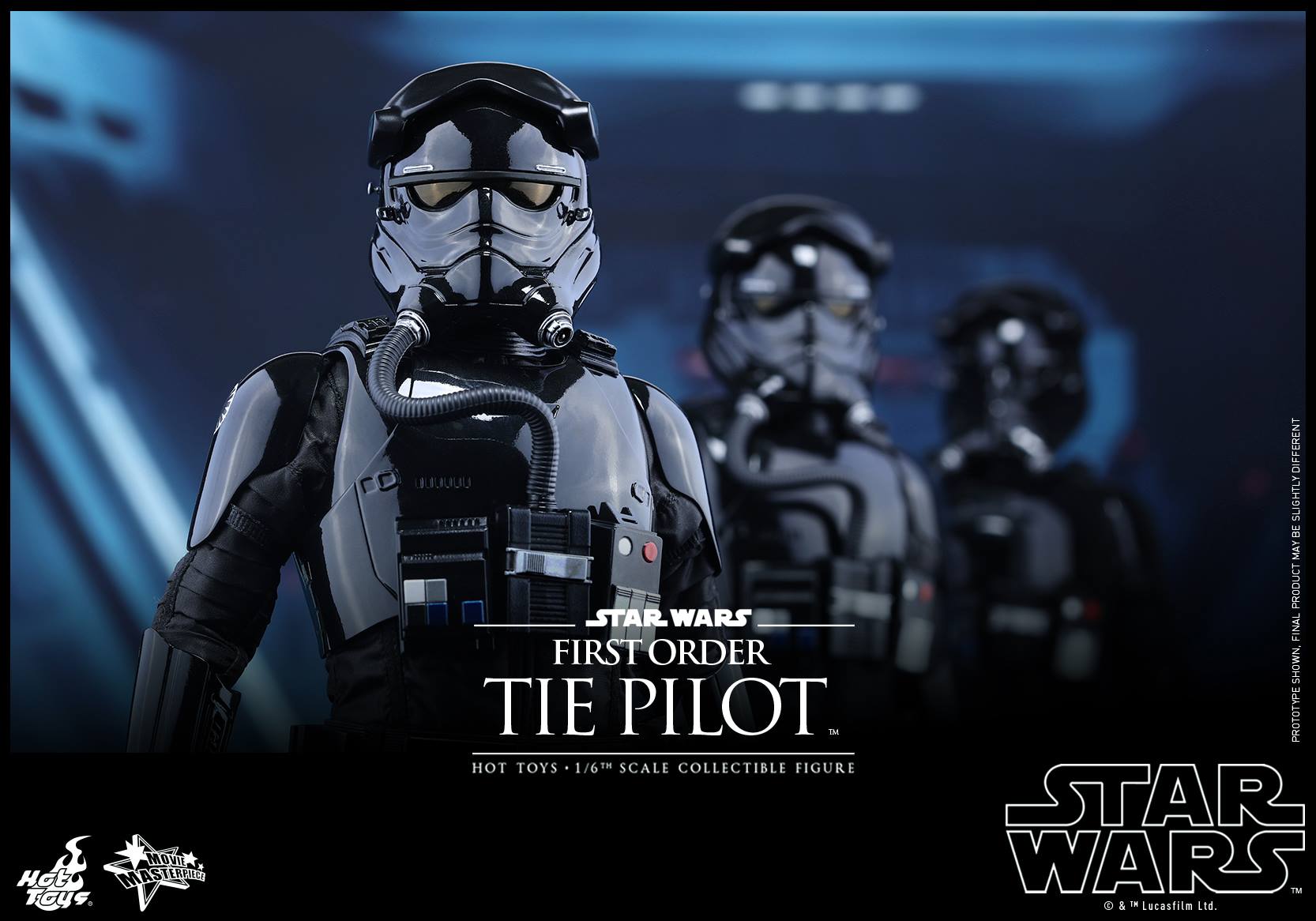
12080182_10153090163447344_1453137111829502736_o

(Above: who is “The Pilot?” Did you see this in the film? Is he important? Nope, just more merch for you suckers to buy! Buy buy buy!)

Sure, they’ll make a gajillion dollars, and maybe that’s all that matters — there are more merchandise characters than actually appear in this movie, and some that do appear as toys would have you believe are far more important to the film than they turn out (at least so far) to be, and maybe that tells you something about where the creative energy in this project was really directed. I’m sorry to have to say it, but The Force Awakens is the movie equivalent of reality TV — visually appealing, popular, and fun — but kind of empty and unsatisfying, and not very good for your brain in the end.

Still, let it be said that the next related movie we’ll see — Rogue One — takes a different approach to working with what’s come before that could be quite interesting, and perhaps Episode VIII will finally take us someplace both new and complementary to the bold, brash, come-from-nowhere experimentation and energy that powered the first, and particularly the second, of the original movies. That’s my “new hope,” if you will.
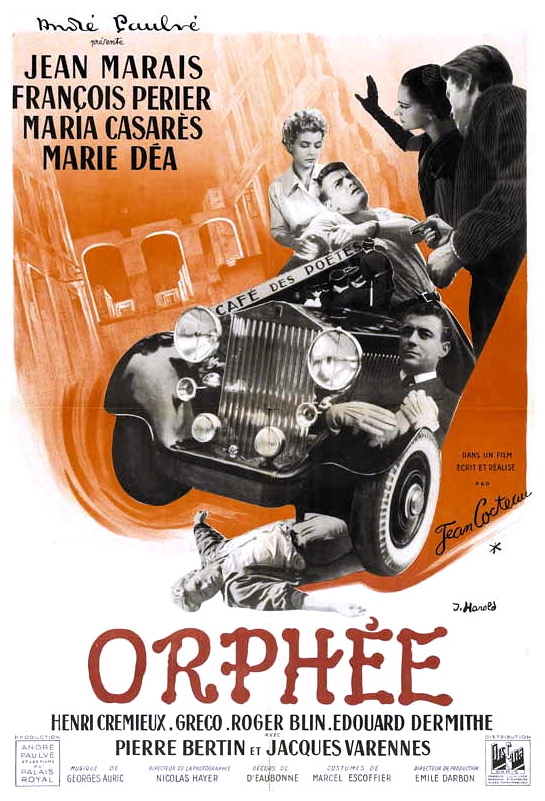
To the extent that The Force Awakens is better-made than the Prequels, I am glad. To the extent that most people will find it thrilling fun that deeper subtext doesn’t matter to them, I am glad. To the extent that we still have a hope of getting a kick-ass chapter the likes of The Empire Strikes Back, I am glad and hopeful. Why, with so many great people working on this film, we couldn’t have gotten a torch-passing film that embraced the big dreams of the original classics instead of a remixed pastiche (that often wandered into parody … “you can always blow these things up!”), I am mystified. Playing it safe is the very last thing you should do with Star Wars.