… by The Onion.
A Small Digression
We don’t normally cover short films on this blog, and are even less inclined to cover or promote web-only films, but for this one — Responsible Relationships and You: Facebook Manners — we’ll gladly make an exception.
First of all, as a parody this short is note-perfect. Not since the days of Night Flight on the USA Network in those bygone early days of cable has their been such a beautifully realised parody of the generic 50s-era “educational” film. Second, enough readers are on Facebook or at least know about it for the concept to carry beyond the confines of the web. Finally, it’s cleverly retro-futurist “steampunk” design recalls both Brazil and the 1939 World’s Fair with equal aplomb, and rich reward for those willing to freeze-frame and read the text flashed on-screen. I predict “Timmy Gordon is uh oh” to join other Net-centric catch-phrases like “I KISS YOU!!” and “All Your Base” in short order. Remember, you read it here first!
The best way to experience this mini-masterpiece is to visit YouTube and enjoy it in its full HD glory, but I give you a bite-sized version here in HD to whet your appetite:
Stone of Destiny (2009)
96 Min.
Writer/Director: Charles Martin Smith
Stars: Charlie Cox, Billy Boyd, Robert Carlyle
Writer/Director: Charles Martin Smith
Stars: Charlie Cox, Billy Boyd, Robert Carlyle
 Here’s a story you don’t see all that often: a true account of a daring raid for national pride and glory that’s set after WWII. Charles Martin Smith (best known for his role in “American Graffiti” but like his co-star Ron Howard more of a writer/director these days) has fashioned a stylish-looking, involving tale of Scotland’s most famous heist (or as they might say “liberation”), the repatriation of the “Stone of Destiny,” a rock with historical ties going back at least seven centuries (and, legend has it, back to Old Testament biblical times — this is the stone which Jacob is thought to have used as a headrest).
“People of Scottish ancestry” is probably not an identifiable target market in demographic terms, but in fact such people are all over the world, and most will walk with a little more swagger in their step after viewing this, particularly if it’s marketed properly. On Christmas Day in 1950, a motley (and yes, rag-tag) group of nationalistic college students led by one Ian Hamilton executed the greatest “student prank” of all time: breaking into Westminster Abbey in London and making off with the “Stone of Scone,” a huge (and heavy) sandstone rock that had been used to crown Scottish monarchs since around 847AD, and was stolen from Scotland by Edward I in 1296. He built a special coronation chair that incorporated the Stone in its base so that all future monarchs would also (by tradition) be crowned Kings of Scotland as well as England.
The movie is based on Ian Hamilton’s memoirs and seems to stick pretty closely to what really happened (or as close as movies with any sense of dramatic tension get, anyway), which is refreshing. As with most true tales, there’s a bit of unresolved business (because life isn’t really all that neat and tidy), some cowardice to go with the bravery, some seemingly-ridiculous or implausible moments (but they did happen!), and more “running about for nothing” than you find in neatly-scripted fictions. I was surprised at how funny much of the heist and its planning was, but hindsight helps such things ring true. As the instigator of a few “adventures” in my own life, I could relate to the missteps and foibles of the plan and its executors, and the youthful fervor of Ian Hamilton (played by Charlie Cox, who is English but does a good job with the Scots accent).
 Genuine Scottish nationalists might bristle at the “gloss” Smith has given the film (loving landscape shots, shorthanded Scottish character types), feeling it a bit superficial — particularly in its lack of any criticism of the English — but particularly for adult moviegoers, “Stone of Destiny” has the right mix of action and detail, nostalgia and laughs. The reaction to the gang’s bold move back in Scotland is particularly well-handled and will likely bring a lump to many a patron’s throat.
Looking back on one’s youth is often a risky business, but though the stunt may have ended up coming for naught (the Stone was quickly recovered and sent back to Westminster, though it is currently “on loan” to Scotland until the next UK coronation), Smith’s affectionate look back at a great slice of modern Scottish history should give audiences young and old a wee grin on their faces.
This review originally appeared on Film Threat.
The Islands Project (2008)
Running Time: 102 Min.
Canada 2008
Director/Writer/Star: Michael Stadtländer
 One of the world’s top chefs decides to take a unique summer vacation — driving from Ontario to the obscure islands of British Columbia in a biodiesel bus-cum-mobile-kitchen, preparing exquisite outdoor dinners using local ingredients, local themes and local farmers. He calls it “The Islands Project.”
From the start, we can see that chef Michael Stadtländer is a happy — but quirky — guy. He lives on Eigensinn Farm where he grows almost all of the ingredients (from livestock to plants) that will go into his occasional, but $300-or-so-per-person, eight-course plein-air dinners for select gourmands. The farm has earned a rep as one of the top dining spots in the entire world thanks to this approach, but Stadtländer (who also wrote and directed this documentary) seems happiest when he is able to share this experience beyond the farm. Once “The Liberator” (his hippie kitchen-on-wheels) arrives in Canada’s west coast, he wastes no time finding and visiting farms and farmer’s markets scattered across Vancouver, Quadra and Cortes Islands, meeting artists and farmers, picking berries, discovering new foods and local delicacies, and consulting with locals (and the occasional celebrity-chef pal) to get ideas for his haute cuisine dinners, which are usually outdoors and always use unusual themes (a “table” made of stacked deadwood, plates made out of wooden starfish, or a dinner on a floating platform in the middle of a lake) that present challenges to him and his assistants.
The meals are, of course, extraordinary, creative and delicious-sounding, and are run not unlike a field military exercise. Stadtländer commands totally, directing not just the cooking but the furniture (helping make it if need be!), lighting, atmosphere and decor as required. The only rules for the variety of fare at these meals is that it must be ecological, sustainable and edible. If the film has a flaw, it’s that there isn’t enough footage of the dinner conversations themselves, or reactions to specific dishes. Also omitted is almost any mention of any “failed experiments” or unexpected surprises. The chef prefers to teach us all (including the locals) what might be called “food respect”; how to cook these incredibly fresh, home-grown items and how best to enjoy them within their natural setting, the outdoors.
 Oddly enough, the highlight of the film are actually cutaway interviews Stadtländer does with farmers, fellow chefs and the occasional oddball. At the beginning of the film, we see him buying a disused console TV (one of those big honking 70s jobs), whereupon he hollows it out leaving just the front face, creating his own “TV show” on the road. These funny bits keep the mood light and break up the “go to an island, gather foods, prepare them, wow the natives” cycle of the dinners.
The final dinner takes place on an uninhabited island, so the entire “set” for the dinner must be constructed from found elements, a perfect complement to the dinner of found ingredients and visiting guests. This “vacation” looks like a hell of a lot of work to us, but Stadtländer seems content when it’s all done and time to go back to his farm. If you’re a “foodie,” you will enjoy this (even vegetarians, though there are scenes of meat being made if you catch my drift); if you’re an environmentalist you will love this; if you are both, this movie is one prolonged orgasm of sheer sensual pleasure.
This review originally appeared on Film Threat.
Squeezebox! (2008)
Running time: 92 Min.
Directors: Zach Shaffer, Steve Saporito
Stars: Michael Schmidt, Mistress Formika, Debbie Harry, Rudy Giuliani
 There was this really great party, it went on every Friday for seven years throughout the 90s, it was very rock-n-roll and very ambi-sexual (with an accent on the sexual), and if you missed it you really missed out.
That’s the premise (strongly supported by the evidence) behind Squeezebox!, a gay event held at an otherwise unassuming bar in a overlooked corner of downtown Manhattan back when Mayor Guiliani was more concerned with shaming graffiti artists and cleaning up Times Square than fixing the really big problems NYC had at the time. Every Friday night for seven years in the middle of the 90s, a mini-revolution was brewing — gay performers (in drag or not) who actually sang (not lip-synched) punk, New Wave and plain ol’ rock-and-roll songs to an audience of hip people of various persuasions who weren’t bothered by misfits and united through their love of really good times. Led by promoter Michael Schmidt and hosted/championed by drag queen Mistress Formika and transsexual punk legend Jayne County, Don Hill’s bar was transformed into a pure, sexy, loud, in-your-face Republican nightmare, like a real live Rocky Horror Picture Show happening in your own basement.
Thanks to hours and hours of videotape from the club’s heyday and interviews with patrons, celebrities and employees, the energy, excitement and love poured into Squeezebox is messily recaptured. It’s not just men in dresses singing “I Wanna Be Your Dog,” it’s people, given permission to be totally free and totally themselves, living those songs. This is where the Toilet Boys and Hedwig and the Angry Inch were born; this was where high fashion designers came to be schooled on what really looked good; this was a club where “normal” was one of the few things never allowed in.
 The performances are generally very good, the interviews are usually hilarious and candid, and the filmmakers do a particularly good job at setting the context for this rebellion against the Guiliani adminstration of the 90s (with a surprising amount of help from Guiliani himself, being quite the douchebag we all found out he was later). By the time I got the Duelling (Tallulah) Bankheads performing A Flock of Seagulls’ “Telecommunication,” I was wishing for a time machine so I could be amongst the squalor and decay of the kool kids too.
There are few flecks of flaws amongst the gold of this documentary: the curious omission of any mention of an earlier gay bar that had attempted the same idea, and an overlong rehashing of the Stonewall Rebellion (the target audience for this film is more than passing familiar with this, guys), but don’t let these nitpicks stop you from having a raucous, raunchy, occasionally gross but always delightful time in the now-immortalized world of Squeezebox!. With this movie, you really can do the Time Warp again.
It’s just a jump to the left …
This article originally appeared on Film Threat .
Before Tomorrow (2008)
Running Time: 93 Min.
Directors: Marie-Hélène Cousineau, Madeline Piujuq Ivalu
Stars: Madeline Ivalu, Paul-Dylan Ivalu
 As the tall man behind the desk at the BBC might say, “and now for something completely different.” Before Tomorrow is not the sort of film you routinely run across, even amongst the cognoscenti of the film-fest circuit. It’s an all-Inuit (“Eskimo” in American) cast, shot in Nunavut, using native language (subtitled in English or French) and a full-on tragedy (which is distressingly rare these days). It’s a historical slice of life that even most Canadians rarely get to see, never mind the rest of the world, yet the tale is told more with emotion than words, and the language barrier melts away like the snow in spring.
The story is set in 1840, when the Inuit were still extremely limited in their contact with the white settlers further south. Their world was incredibly small, from a tiny village off to nearby islands to hunt. The small society works well thanks to the values of shared work and reward; everyone, even the kids, have jobs to do. We join the tribe in summer, at the end of a hunt. They are in a celebratory mood, having recently acquired some needles and cups from white traders they encountered (in exchange for allowing the women to sleep with them) as well as having abundant food for the winter. They decide to dry their catches on a remote island, away from predatory animals. Ningiuq, an old woman in the village, volunteers for the duty, which means being alone for several months. Her dying friend Kutuguk wishes to come along as a last request, knowing she will die there, and her young grandson Maniq also insists on going, hoping to learn from his beloved grandmother more of the skills to become a man, as well as to look out for the two women.
Shortly after their isolation begins, Kutuguk dies, foretelling the tragedies to come. The months pass and Maniq is learning much, but Ningiuq cannot help but wonder on their seriously overdue reunion with the tribe. As the first snows threaten, she decides to make the trip back herself, and discovers a horrible scene: the entire village has been wiped out by disease, brought to them by the white traders. Ningiuq and her grandson are alone in their world. From there, the story turns to the struggle to survive, overcoming the adversity of winter and Ningiuq’s struggle with her own dark thoughts. She can protect the boy for now, but what future is there for them without the support of their community?
 When she senses her own death approaching, she knows she must act boldly to save them in a world where help is never coming. She calls out to her (long dead) husband to guide her in an impossible situation.
The slow pace of the film, reflective of the speed of life in that era, may bore the more cynical in the audience, but if you can get into their world and their mindset, every movement, every facial expression, every story Ningiuq relates to her grandson takes on deep meaning. The acting is so effortlessly authentic, in perfect harmony with the remote locations and passing seasons, that putting yourself in their mukluks is easy if you wish it. If you’ve ever wondered on the survival of people in such remote and inhospitable locations as these, Before Tomorrow brings their struggle to life and reveals the strength in such a fragile society. It’s a remarkable bit of First Nations filmmaking that should be seen far more widely in the world than the mostly-Canadian distribution it will get.
This article originally appeared on Film Threat .
Hotel Gramercy Park (2008)
Running Time: 80 Min.
USA 2008
Director: James Westby
Stars: Ian Schrager, Debbie Harry, Paris Hilton, Julian Schnabel

Hotel Gramercy Park is about the passing of one era and the starting of another in the life of a lesser-known New York institution. Death-and-rebirth is a common theme in films, but less so in documentaries, and with this one’s fixation mostly on the “death” part, it delivers as a historical document of the last vestiges of a particular time and place, and the “passing parade” that carries on after we’ve moved along.
Like the city itself, the hotel (built in 1925 and managed by generations of the same family from 1958 to today) started off grand, kept it up for a long time and slowly rested on its laurels until, truth be told, it was only a satire of its former self. Home to the only private park (!) in the city and favored by rock stars and other celebrities for decades (complete with the requisite introduction of drugs into the culture of the hotel), the place slowly fell apart under the benign neglect of its owners, long-term tenants and celebrity visitors, who as you might expect are all a bunch of wonderfully colourful Noo Yoik-type characters.
We pick up the story of the hotel at the tail end of it’s “first life.” The family who owns it (and lived there, recognising only much later what a mistake it was to raise a family in a hotel) is forced to sell due to tax issues arising from the drift of management and the death of the Weissberg patriarch. Former Studio 54 owner Ian Schrager swoops in and plans a major makeover, disgruntling the long-term tenants (who don’t have to leave, and some refuse to), worrying the neighbors and forcing the remaining Weissbergs to (at least temporarily) give up the only home they’ve ever known. Director Douglas Keeve spends the first half mostly documenting the fascinating but tragedy-filled history of the Weissbergs, the hotel and some its more famous moments through the eyes of the youngest members of the now-forlorn clan, before changing focus to the inadvertently comedic tenants and the renovation. Finally gaining Schrager’s full cooperation in the last act, his delicate balancing act of trying to appease the old guard while reinventing the place finally takes front-and-center in the film.
 What emerges is a metaphor for New York City itself, and a lot of what makes it special; the constant reinvention conflicting with the stubborn, uniquely American war-generation brand of moxie you thought only existed in old movies. Two 90-plus twin sisters sipping martinis in the hotel bar bemoaning the new generation and mourning the way of life they knew, a songwriter who’s been holed up in the hotel for 30 years writes “Everything I Need is in Manhattan” (which is damn catchy!) as his world is literally torn apart around him, Karl Lagerfeld looking back wistfully but facing the future – it’s an obituary to a generation of New Yorkers that are giving way to a new breed. The main disappointment is that the film ends just as the “next chapter” is beginning — opening day of the “new” Gramercy Park (the makeover has generally met with critical and traveller raves since then).
The footage comes from various sources and as such it’s of variable quality, but capturing these un-self-conscious characters in a period of transition reveals a lot about them, the city, the hotel and, ultimately, the audience. Even thousands of miles away from New York, through Hotel Gramercy Park we get a glimpse at just what makes NYC so special; it’s our own stories, but writ larger.
This article originally appeared on Film Threat .
Delta Rising (2007)
Running Time: 79 Min.
Directors: Michael Afendakis, Laura Bernieri
Stars: Morgan Freeman, Willie Nelson, James Johnson
Directors: Michael Afendakis, Laura Bernieri
Stars: Morgan Freeman, Willie Nelson, James Johnson
 There are almost as many “birth of the blues” documentaries as Holocaust movies. By now, I’m beginning to suspect that each and every black man in Mississippi has been interviewed at least once on this topic. That said, “Delta Rising” takes a reasonably fresh approach to this overworked subgenre by making the film as much about the town where it all began (Clarksdale) as the music legends that were born in and around there.
Morgan Freeman (yes, that Morgan Freeman) lives in Clarksdale and owns a club, one of around 10 in this itty-bitty town, which apart from the commercialism of the blues venues doesn’t look much different than the last time Muddy Waters played it. This helps the film’s explanation of how the blues got started here; crushing poverty (working cotton plantations was the main industry until the mid-1950s) and local ingenuity allowed talented performers to escape the hot sun of field work and make a relatively better living in the “juke joints” in the small “circuit” of nearby Mississippi towns. Quite a number of the town’s sons made it to New Orleans, to Memphis and to recording studios, making the blues into a national art form, but you can feel the ghosts of this town and understand better where the blues comes from because the place is still so stuck back in time.
Given the interesting subject matter, colorful local characters, big-name interviews (Willie Nelson, Freeman and Charlie Musselwhite among others), little-seen archival footage (Pinetop Perkins, Ike Turner, John Lee Hooker, Sonny Boy Williamson and many more) and copious live performance footage, you want to like the movie and expect it would come together far better than it does.
The biggest problem is that the interviews are simply terrible. Poorly shot, with horrible sound, most look like the subject was thrown into a photobooth and interviewed with a VHS camcorder. The only time this works to anyone’s advantage is the amusingly intoxicated harmonica whiz James Montgomery, who starts by saying “I don’t normally give drunken interviews …”
The editing is also rather slapshot, breaking “grammar” a few times and sometimes jumping without clear explanation. The filmmakers also overindulge in the amount of local performance footage, “tour stories” and — mainly — Morgan Freeman. It’s great that he agreed to help out this little indie doc, it’s understandable that he dominates the club scene because he’s a big celebrity, but he’s not the star of this particular story, and thus shouldn’t get the bulk of the screen time. More time spent with James “Super Chikan” Johnson (yes, “Chikan”), Squirrel Nut Zippers refugee Chris Cotton, incredible talent Ruby Wilson (what a voice!), and “King Biscuit Time” host Sonny Payne would have painted a better picture of the history and development of the blues in Clarksdale.
If you love the blues, you will appreciate this documentary’s strengths and overlook most of the flaws. If you love documentaries, the technical fubars and missed opportunities will start annoying you before five minutes has passed — but grit your teeth and bear it, because the history and the music make it all worthwhile. What’s a blues movie without a little suffering, anyway?
This article originally appeared on Film Threat .
The Auteur (2008)
Running time: 80 Min.
USA 2008
Director/Writer: James Westby
Stars: Melik Malkasian, John Breen
USA 2008
Director/Writer: James Westby
Stars: Melik Malkasian, John Breen
 Comedy and porn can actually work very well together, provided that the emphasis is on the comedy. Writer/Director James Westby has re-worked a short film he did in 2002 into a full-length feature, and The Auteur has been reborn as a sublime satire on sex and cinema, a Spinal Tap-esque documentary, a love letter to Portland no anthology movie could ever match, and comedy gold for (the adults in) the whole family.
This “mockumentary” finds its subject, the fiercely Italian artisan smut-meister Arturo Domingo, watching his career begin its death spiral. In Portland to appear at a screening of his popular “early” works, Domingo (Melik Malkasian) endures battering reviews of his new stuff, fans demanding he return to his previous style (and partner-in-poon Frank E. Normous) and a personal life still in shambles after the love of his life left him because of his hot-tempered jealousy on the set of his most ambitious work, Full Metal Jackoff.
He is determined to continue tilting at his artistic windmills alone, however, which results in art-house-cum-skin-flick satires like Five Easy Nieces and Children of a Lesser Wad (groaners — and boners — are all over the place in this movie!), but Domingo just can’t reconnect with his muse. As fate would have it, however, Portland is ground zero for the people and attitude adjustments he must bring together to heal his soul and restore his mojo.
The story goes off on occasional tangents that could have been more tightly edited (an all-night hippie-freak-out adventure and a side-trip to a Cyrano-esque sub-plot need to zip along a lot more than they do), but the distractions add flavour, and their indulgence is more than offset by the glue holding the picture together, Malkasian’s masterful performance — which starts off Belushi-esque but quickly rises to effortless perfection. The supporting cast are all excellent, particularly John Breen as the quintessential middle-aged stud, but as in Westby’s last feature (FilmGeek), Malkasian commands the screen just as his alter-ego commands the set. Even scores of nude people and Ron Jeremy’s cameo cannot move the spotlight off Arturo Domingo.

The laughs are frequent, the story unfolds as it should, the location is lovingly adorned with a mostly-Portland-bands soundtrack, and the flashbacks in particular are works of genius (Malkasian gained 40 pounds to play the “current” Domingo, making his “younger years” look startingly convincing) seamlessly blended in. The supporting characters are funny and memorable, the fans are charming and the naughty bits are … well, adorable. As for the climax — well, let’s just leave that one lying there, shall we? Suffice to say it was climaximum!
The Auteur is hands-down the funniest “nudie” movie since Orgazmo, a Fellini-and-Waters-make-Stardust Memories romp that is nothing short of skin-sational.
This article originally appeared on Film Threat .
Inside Hana’s Suitcase (2009)
Running Time: 90 Min.
Ontario, Canada 2009
Director: Larry Weinstein
Writer: Thomas Wallner, based on the book by Karen Levine
Ontario, Canada 2009
Director: Larry Weinstein
Writer: Thomas Wallner, based on the book by Karen Levine
 Once in a great while, a film comes along that is so moving and soul-stirring, so emotionally powerful, so filled with the magic of what makes cinema a living art, that you want to run from the theatre, grab the first stranger you meet by the lapels and yell at them like a deranged Christopher Lloyd “MARTY! You have to come and see this movie with me right now!”
This is one of those movies.
Inside Hana’s Suitcase — based on the CBC radio documentary, then book, then stage play — is about the Holocaust, and yes you will tear up if not outright sob at some point. Yet it is neither Schindler’s List nor The Diary of Anne Frank, neither relentlessly educational nor depressingly triumphant, and a film that charts its own way in a manner that is both historical and modern. For example, how many Holocaust movies have much of their action set in Japan?
Hana Brady, a Czechoslovakian Jew living in a small village, was 13 when she died in Auschwitz, but her suitcase found its way to a Holocaust Resource Center in Toyko, a place where engaging children to learn the lessons of the past is much harder than it is in the West (the Japanese, as a culture, do not like to dwell on the war years and their role in them). A group of curious students and their teacher, Fumiko Ishioka, research the life of Hana and her family, and through them (and children of various nationalities who serve as narrators, an extremely clever idea) we learn a great deal about the family as identifiable, real people. Weinstein’s visual storytelling and the children’s narration cross the 70-year divide and unite the generations superbly.
 Eventually Ishioka discovers that Hana’s brother George survived the war and now lives in Canada. He and some of Hana’s surviving friends and relations take up the story, filling in the heartbreaking details of the slow loss of their entire family and the isolation from their friends. George Brady draws considerable strength from the interest of the Japanese children, and opens up his scrapbooks and his heart to them to complete Hana’s remarkable story. By this time, Hana is both a real person and a metaphor for the many less-sung who died at those camps.
The filmmaking achieves stunningly high quality on a very modest budget ($1.4M), seamlessly blending expertly-directed recreations, special effects, beautiful model photography, family photos, stirring music and small but judiciously-applied amounts of stock footage from WWII to augment the remarkable interviews and visits to the locations where it all took place. The performances of the re-creators and the attention to period detail adds a vividly visual dimension rarely achieved in historical documentaries, most of which are content to rely mainly on oral history and panned photographs.
Inside Hana’s Suitcase travels the world (literally as well as metaphorically) and achieves its aim of imprinting her tragic story and the horrors of war and hatred in our memories. This is — truly — a film you will never forget.
This article originally appeared on Film Threat .
Toronto Stories (2008)
Running Time: 89 Min.
Ontario, Canada 2008
Directors/Writers: Sook-Yin Lee, Sudz Sutherland, David Weaver, Aaron Woodley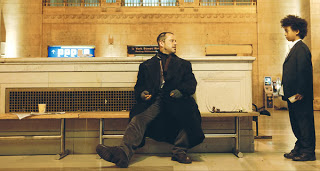
Ontario, Canada 2008
Directors/Writers: Sook-Yin Lee, Sudz Sutherland, David Weaver, Aaron Woodley
 The Victoria Film Festival’s program book description for Toronto Stories ends with this line: Even Toronto-haters are going to have a hard time getting their knives out for this one.
Wanna bet?
I don’t hate Toronto; I’ve never been there. But considering that this anthology film (four stories very loosely linked, yes just like Paris J’taime, New York Stories et al) is intended as a “love letter” to Canada’s largest city, it didn’t exactly inspire me to come visit. Toronto looks great from afar, as the many location shots will attest; but up close it seems a lot like New York in the 80s, when even Woody Allen was having a hard time loving it.
We start with the film-schoolish setup, a lost (African?) boy with no papers or parents who shows up at Pearson Airport. He escapes the clutches of the authorities (again and again and again) and begins a trek that takes him to random places. He doesn’t speak, yet everyone who encounters him befriends him just long enough to launch their own segment, whereupon he is gone like the feeble plot device he is. This makes it incredibly hard to care about him when his “backstory” is finally fleshed out in the movie’s denouement, the final short “Lost Boys.”
The first piece is called “Shoelaces” and starts promisingly, exploring the relationship of two pre-teens who have a strong friendship, dark secrets and perhaps a budding romance. A promising and atmospheric adventure involving a “monster” who lives in the sewers of Cabbagetown is prematurely terminated for no clear reason (time’s up?), leaving us emotionally unsatisfied despite the strong cinematography and good performances of the child actors.
From there we move into “The Brazillian,” helmed by riot grrl and Canadian media darling Sook-Yin Lee (Shortbus) who also stars as a befuddled woman trying (and failing) to coax some romance out of a zombie of a man who appears to have Asberger’s Syndrome. Though the piece is funny and Lee gives an authentic performance, we are again left (this time physically) unsatisfied. Lee’s character encounters the African boy at the library, tries to get him help and then just … forgets about him mere moments later.
Sudz Sutherland’s “Windows,” my favorite short, again features a very interesting storyline: an ex-con who’s gone straight and has what he needs in life (a fun job and a pregnant wife) until he runs into a former jailmate, and a slip of the tongue breaks all hell loose, endangering everyone. This one has action, drama, tension and violence, along with several good laughs. Sutherland could have done with a bigger budget, but it’s still a stylish attention grabber.
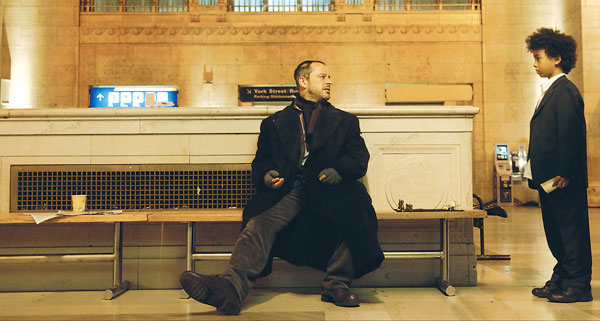
“Lost Boys” by David Weaver (Century Hotel) tries to wrap up the linking story by dragging the mute kid into the rough world of Toronto’s homeless, where his only angel is a man almost too busy wrestling with his own demons to help. Gil Bellows’ “wittiest, smartest homeless guy ever” portrayal is often in danger of suspending our disbelief, rescued by his frequent returns to a more convincing dark side and internal struggle to break free. It’s these moments that provide the most compelling performance among the four films. When we finally turn to the poor kid — who hasn’t said a word so far — to wrap things up, they miraculously find a translator and he gives us … well nothing really. The big “reveal” is a complete wet blanket — which, along with the constant presence of crime, police and/or homeless people in every single segment, adds to the general dissatisfaction and despair that seem to snake through this pretty metropolis like the sewers. Aren’t there any happy, well-adjusted people in Toronto?
Toronto Stories isn’t going to be adopted by the tourism board, with its apparent message that it’s not the city that’s the problem, but (apparently) Torontonians. I can’t help but wonder if the filmmakers intended this anthology to be a truthful mirror, or a warning to others.
(this article originally appeared on Film Threat )
Jump! (2007)
Running time: 87 Min.
USA
Director/Writer: Helen Hood Scheer
 From 2002’s Spellbound, a documentary that followed eight kids from around the US as they worked their way to the ultimate sudden-death playoff of the National Spelling Bee, through 2004’s Word Wars (Scrabble’s dry-witted champions), 2006’s Air Guitar Nation (extreme!) and 2007’s The King of Kong (Donkey Kong players in a life-or-death struggle with perspective), there has been a spate of documentaries profiling oddball and non-traditional “sports,” all of whom dream of becoming an Olympic event someday. The latest is Jump!, showing off the skill, heart and sweat that goes into being the best jump-ropers on the planet.
Director Scheer has caught this world at just the right point in its development: with a history to look back on and real championships (national and world) to look forward to, but before it goes all mainstream and sell-out. Kids of all races, places and economic backgrounds work out relentlessly to perfect not just jumping in place, but bringing dance and gymnastic moves often seen in other sports like tumbling and ice skating into a frenetic routine that requires you leave the ground several times per second. Though the competition is intense and emotional for the youngsters, they’re all still friendly and curious about other teams, other countries and other styles, and interact with their competition quite freely.
The tension builds as we follow five US teams through the regionals, nationals and finally the world competition in Toronto. There’s moments of breathtaking physicality and more moments of heartstopping tension — you’re sure one of these kids is going to spontaneously combust from the sheer intensity of their jumping. We learn a little about the kids, including the pain and stress they deal with (coupled with strong devotion and seemingly boundless joy), the coaches (who are considered family), the “stars” (complete with their egos, but they do in fact “bring it”) and the up-and-comers. This is not a movie edited to only show off only the highlights or to glamourize the sport — we see the stumbles, the blank-outs, the pressure and failures, but the film is tempered throughout with genuine humour and a refreshing lack of pretentiousness or precociousness.
After watching this documentary you’ll be digging around in your closet for your old jump-rope as soon as you get home. Jump! is heartwarming, all-American fun.
(this article originally appeared in Film Threat )
 The Chasbah
