It has been a long time since I last saw this film, but even the first time I saw it I was very impressed with it, and I’m happy to report that the passing decades haven’t diluted my view of it at all. At its core, it is a very cheap but effective horror movie, but with levels and subtlety that raise it far above the rank of “cheap horror movies” into both a social statement of a very divided America at the time (and, sadly, still), and a psychological study of how people react under stress because of circumstances they cannot control.
The new restoration of the movie has given me a chance to view it in the best possible light, and it reminds me again of the conviction and authenticity of the players as well as the extras who play the zombies; this is a very well-directed film from Mr. Romero that has (by necessity) a play-like quality to it. In the wrong hands it could have been stagey and talky, but Romero’s cinematography uses the language of film to give it a tight, nimble sense of movement.
The plot is revealed in a nearly-perfect manner; a couple are attacked by a shambolic man, the woman escapes in a panic and makes her way to a nearby house, where she is nearly a zombie herself as she processes a mind-breaking trauma. She is further traumatized when she discovers the corpse of the long-dead woman who owned the house upstairs. A black man named Ben (Duane Jones) also arrives at the house, who also isn’t sure what’s happening — but has retained his wits and sets about barricading the house, understanding that the outsiders aren’t acting like humans anymore.
They are surprised to discover a small family and a young couple have been hiding in the cellar, also shell-shocked from being attacked by what turns out to be the recently-dead, turned into “ghouls” by some kind of radiation from an exploded space probe. This information is parsed out slowly across the film; at first, nobody really understands what is happening, and the sense of helplessness and confusion is increasingly relatable today, as some formerly-coherent societies break down and decay in seemingly random, disturbing ways.
As a reflection on Romero’s view of American culture at the time, the film both parses out more backstory and information as we go along, but also the ad-hoc structure of the band of survivors begins to break down, collapsing just as help finally arrives. I don’t want to say too much about the ending because it is still so powerful and upsetting, but I will say the climax of the film has lost none of its punch over the last 55 years, and that America doesn’t seem to have learned much since then.
The influence Night of the Living Dead has had on low-budget filmmaking and the horror genre specifically is also hard to summarize, except to say that this film defined what would later be commonly called “zombie movies” and changed the direction of film horror entirely to lean more into capitalizing on troubling elements in the real world.
Romero went on to direct five sequels to the film, though the most memorable one to me remains the original sequel, Dawn of the Dead. I also found his vampire movie, Martin (1977), way more thought-provoking than I expected.
Years later, when I was in college, I met and interviewed Romeo for the college newspaper. He had been invited by the film and drama instructor there to shoot a short film on location, as luck would have it — the first film he shot outside of Pittsburgh. Ironically, I never saw the resulting film, Jacaranda Joe, and I should really track that down.
We had a lively and memorable discussion about his career, waaaay more than I could have ever published in the newspaper, including a frank discussion about the social implications of many of his films. He was very generous with his time, and seemed happy to discuss his films with someone who had actually seen most of them to that point, including Season of the Witch and The Crazies.
Watching the film again after so long, I remain so impressed with the quality of his main cast, especially Jones and the real-life family that played the cellar-dwelling Coopers. Richard Burton and Elizabeth Taylor couldn’t portray a marriage on the rocks any better than Karl Hardman and Marilyn Eastman, and as for Karl’s daughter Kyra — she has a very minor role in the film until she doesn’t, and then … woah.
The “ghouls” also do a great job, really getting that shambolic, mindless walk and creepy milling about thing just right, only lightly augmented with makeup. Ironically, the “help” in the form of police and posses who figure out how to “kill” the zombies for good are the weakest acting link, though the TV presenter who delivers lots of backstory was very natural (as he should be — he was a real-life TV horror-movie show host!).
Many films from the late 1960s are very tied to the culture/style/fashion/issues of the time, and there’s nothing wrong with that, but somehow Night of the Living Dead is far more timeless, especially when it comes to the story. It holds up extraordinarily well and is well worth watching and thinking about, as one of the few horror movies with such a strong social message.
This is the first time in literally decades I’ve seen this film, and yet it left such a mark when I first saw it that most of it was already burned into my memory. This was very much the (accidental) forerunner of Star Wars as well as being part of an array of now-forgotten but excellent Sci-fi movies from the early 70s that included Colussus: the Forbin Project, The Andromeda Strain, Silent Running, Solaris, Fantastic Planet, Soylent Green, Westworld, Sleeper, and even another in the genre of “expanded-version-of-a-student-film” that hardly anyone saw called THX 1138.
I once met Dan O’Bannon shortly after Alien came out at some SF convention in Miami (I think) and a very young me probably fanboy’d his ear off about Dark Star rather than the movie he was presumably there to promote, but he was polite and seemed impressed that I’d seen it. I did also absolutely love Alien, for the record, but I think all I said about it to him was to congratulate him on writing what was in my youthful estimation the scariest alien horror movie everrrrrr before moving on to Dark Star.
If my memory serves me right, my late friend Kelvin Mead, who was collecting 8mm and 16mm versions of cult movies at the time, had a print — and that’s how I saw it, sometime in ‘78 most likely. It was John Carpenter’s first major film as a director (and composer, he also did the soundtrack), and while it’s quite rough compared to the big SF Hollywood films of the day, it really holds up pretty well if you overlook the limitations of the $60,000 budget. Let’s say there weren’t a whole lot of nihilistic sci-fi comedies to compare it to until the TV show “Red Dwarf” came out some 14 years later.
The story, very basically, focuses on four extremely bored starship personnel (there were five, but one died before the film begins), who have been warping around the galaxy for the last 20 years destroying what are deemed to be unstable planets with smart bombs. While they’ve only aged by three years, the monotony of the job (which is the only part of the voyage most of them like) has really caused entropy to set in in myriad ways.
They all have long hair and unkept beards, and sound suspiciously like USC film student (heh). The core three who do most of the work are called Doolittle, Pinback (more about him in a moment), and Boiler. Talbi, on the other hand, has sequestered himself in the ship’s observation dome and just stares out at the heavens all day.
When they are doing their job, they are (almost) a well-oiled machine, especially in a crisis — which is happening more frequently because they do next to no maintenance at all of the aging ship’s issues. The conversations Pinback has with the smart bombs (who talk back occasionally) introduce the comedy element early on. The rest of the time they are either indifferent or spiteful to each other.
Having started life as a student film, the film is woefully padded with “extended remixes” of various scenes, including a very minor subplot about Pinback’s “pet,” a very bored alien he doesn’t pay enough attention to. A loooong sequence of Pinback losing a battle with the “beach ball with feet” alien is really nicely shot, but goes on far too long. The optical effects in the film are surprisingly good, but if you’ve seen George Lucas’ similar “expanded student film” then you get the idea that a little more money got stretched out very thin to turn it into a feature.
The saving grace of Dark Star, though, is the dark comedy and great ensemble acting. Although Doolittle (Brian Narelle) is the replacement “commander,” Pinback (O’Bannon) is the source of most of the comedy, and embodies every annoying office worker everywhere. At one point, Pinback confesses that he isn’t actually Pinback, but a man named Bill Frug who saw the real Pinback go crazy and remove his jumpsuit before killing himself. Frug put the jumpsuit on, was mistaken for Pinback by indifferent superiors, and placed on the ship. The other two argue lightly about how long it’s been since Pinback told this story before.
Meanwhile, the ship continues to deteriorate, at one point causing one of the bombs to exit the hangar early, awaiting commands to arm itself. These are handily the best scenes of the film, where Pinback (mostly) must convince the bomb that the signal to leave the bay was an error (twice). It’s even funnier once you realise that O’Bannon also voiced the smart bombs, so he was literally arguing with himself.
The air of psychological tension and claustrophobia throughout the film, only avoided by Talbi by not really interacting with the others much, is beautifully executed (and O’Bannon freely used that dynamic again in Alien). Speaking of tension, I should mention the soundtrack, which includes a full-on country song of all things, all written/performed/sung by Carpenter.
Most of the soundtrack works subtly to heighten the growing issues both between the crew and between the crew and the ship (and the bomb) to bring us to the finale, which in my view was a huge and very satisfying albeit dark payoff. Up to that point, it is fair to say that Dark Star is an entertaining, but slowly-paced (because of the padding) psychodrama in space, that features effects that mostly work (but, like the ship itself, occasionally doesn’t).
The climax of the film is genuinely inventive and surprising, but the denouement is (chef’s kiss). There are several later films one can point to (like Alien) that were clearly influenced by this, and in particular the dutiful-but-patronising female voice of the ship’s computer (voiced by Barbara Knapp) is now a stock Sci-fi cliché.
If you have the patience to stay with it during the padded-out stuff, you’ll be glad you went on this journey. As a blueprint for some of Carpenter’s later work as well as O’Bannon’s, it offers some real insight into where they (and Lucas, since he was at the same film school a few years earlier, and doing similar things) picked up their style, but is also a clever exploration of the “lonely outpost” scenario with enough original twists to sustain it.
⭐️⭐️⭐️⭐️⭐️ “Complete” version, 4K with restored scenes
52-week film challenge, film 18
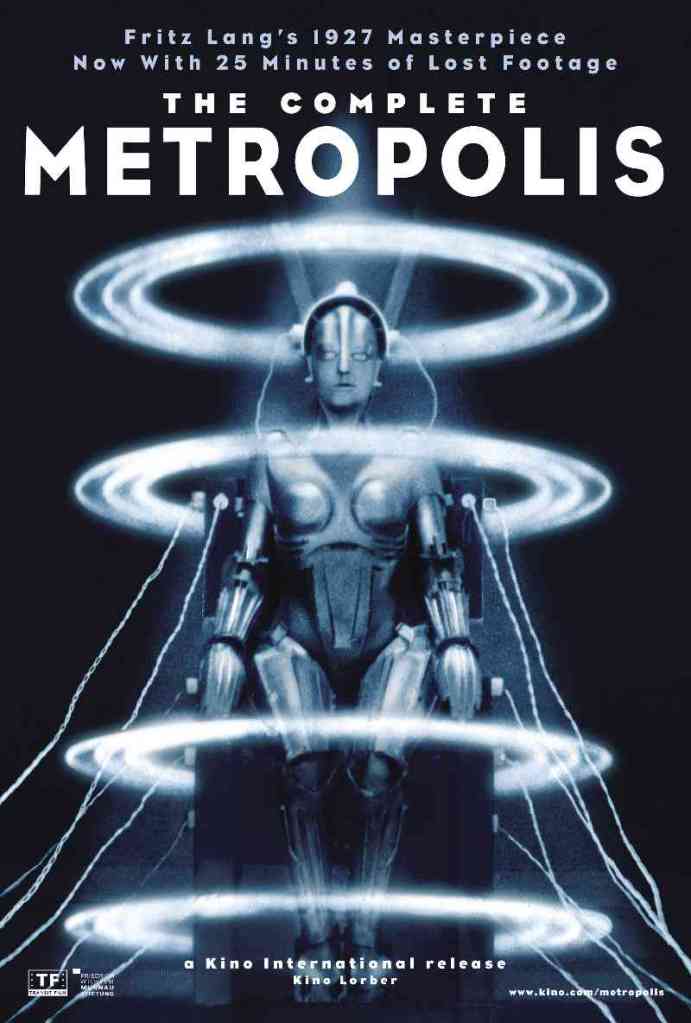
Quite possibly the most visually compelling film ever made, even after nearly a century. Certainly the most beautiful silent movie ever made. I recently noticed that Criterion had a 4K copy of the 2010 “Complete” restoration, so I watched it to see what had been added since the 2001 version. It turns out that the answer is “about 24 minutes more story, and a new version of the original score,” but there’s more to it than that, of course.
Lest we get too far ahead of ourselves, and for those who’ve never watched the whole thing, Metropolis is an incredibly futuristic-looking silent movie that absolutely everyone on Earth should at some point see. The reason I say this is that it is truly one of the most incredible film productions ever made from a visual standpoint, and on top of that the storyline is (sadly) still very relevant today.
The effects may be primitive by comparison to today’s films, but Lang brought a style and credibility to them — complemented by the design and art direction of the non-FX scenes — that not only hasn’t dated it, but in fact plays a huge role in the film’s immortality. Parts of his vision are the sort of future we all hoped we’d grow up in, but the underside (literally and metaphorically) of this future projection are indeed the world most of us ended up in.
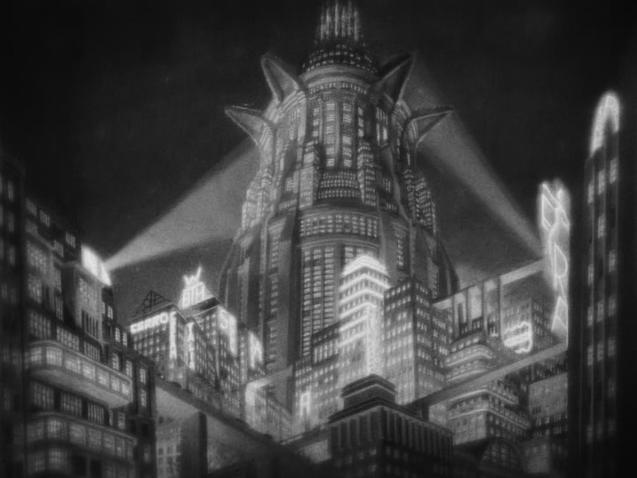
As the film opens, we gaze upon an incredibly modernism-influenced style cityscape dominated by an exceptionally tall, large, and distinctly Art Deco Tower of Babel, with trains and cars on elevated railways bustling along at various levels on and above the ground, with airplanes (well, biplanes — a rare example of a visual that didn’t age well) buzzing around. The top of the tower is where the Master of the City (a sort of architect/chief executive) Joh Frederson and his adult son, Freder, live and enjoy the hedonistic lifestyle of the city’s elites. Lang said the look was inspired by his first trip to New York City.
Although there is no direct reference in either Thea von Harbou’s original 1925 novel-as-film-treatment nor in Lang’s film as to the exact time period, a 60s reprint of the novel placed it firmly as set in the year 2026. Whichever editor came up with that pretty much nailed it, as we are currently living in world alarmingly similar to the one described in the source material.
(L-R) Joh Freder, Rotwang, the Man-Machine
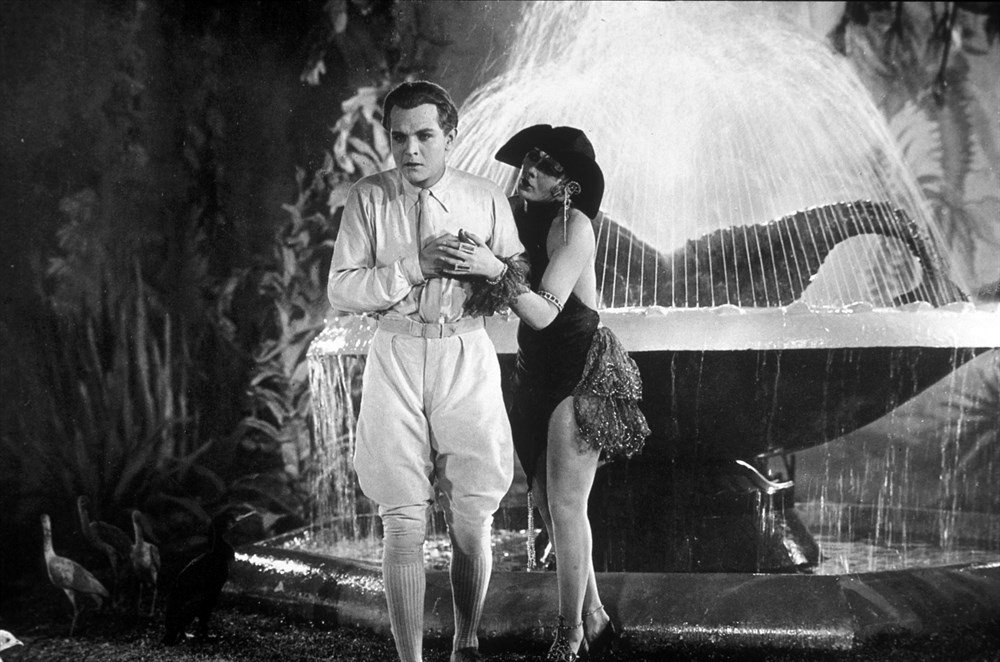
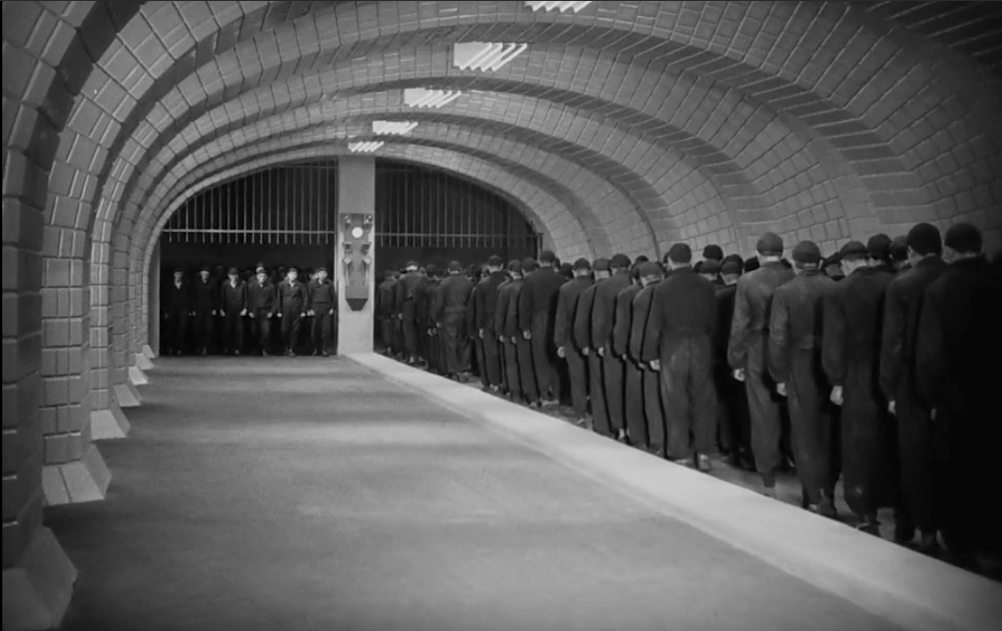
Freder, as a member of the elite, spends his days in gardens and playing sport and other such idle leisure — hobnobbing with the business magnates and politically-powerful and blissfully ignorant of how it all works. Meanwhile, the working class who actually make the city what it is live and work underground in a very functionalist, expressionistic Worker’s City, and toil on keeping the machines that power the metropolis of the elites in scenes that “influenced” Charlie Chaplin for his 1936 film Modern Times.
One day, a a radical woman teacher dates to bring some of the workers’ children up to the gardens to see how their “brothers” live. Freder is struck by the woman, Maria, and follows her down into the Worker’s City, where Freder sees firsthand the impoverished working class and the soul-shattering labour required to provide the elites with their lifestyle.
Maria brings the workers’ children up to see what they will forever be shut out from …
… and Freder is “shook” by what he sees and determines to investigate what lies beneath the city.
Though it was meant to be a parable on the danger of power imbalances, regrettably the problems shown in Metropolis have reared their ugly heads once again in a number of countries that have recently seen class-based unrest and abuses of power by those in charge. Anywhere you find that the elites live a lifestyle completely removed from the majority (who are of course taken for granted as an endless cheap labour supply), you will find strong echoes of this film, which regrettably still feels relevant and relatable nearly 96 years after its release.
Freder catches up with Maria, who he discovers is a symbol of hope for the workers, and she predicts that a “mediator”-cum-saviour will someday appear to resolve the growing chasm between the workers and the elites. Having been traumatized by this disparity himself, Freder sees himself, as the son of the city’s Master, as someone who could fulfill that mediator role, and falls in love with Maria.
Trials and tribulations ensue, and in the secondary plot it is revealed that there is a “mad” scientist in the city, Rotwang, who seeks revenge on Joh Frederson because Rotwang’s love — a woman named Hel — left him to marry the rich/powerful Joh, giving Joh his son Freder before dying. Rotwang has built a mechanical “man” — an iconic and insanely Futurist (but unmistakably female) robot design that he has plans for.
Joh, upon learning of the robot, orders Rotwang to remodel the robot to look and act like Maria — the heroine of the workers — but to have it incite the workers into violence against him. Joh wants this so he can crack down and destroy this attempt at workers gaining negotiating power, but while pretending to follow the order, Rotwang schemes to use the Maria-bot to fulfill his own plans, which are to resurrect Hel and take his revenge upon Joh.
Rotwang kidnaps the real Maria to make a doppelganger. This scene undoubtedly inspired James Whale for 1931’s Frankenstein.
Skipping a lot of exposition, Rotwang’s plan works only too well — Maria-bot incites the workers into a rabid state and commands them to destroy the machines, which will in turn destroy the Metropolis and its elite class. This isn’t what Joh intended, and it has the side effect of destroying the Worker’s City through flooding. While the workers are revolting, the real Maria escapes and tries to save the workers’ children, left behind in the fever of revolt, before they all drown.
Freder finds Maria, and along with his close friend Josaphat manage (barely) to rescue the worker’s children, and eventually get word of this to the workers, who by now have thought they accidentally drowned their own children and were so wracked with grief that they capture the Maria-bot and burn her at the stake. Rotwang gets his comeuppance, Freder gets Maria, and Joh learns the error of his ways.
What’s great about this new version is that the extra footage — which sadly could not be fully restored and is quite distinct from the previously-upscaled footage — adds depth and nuance to the story. In particular, this “complete” version really fleshes out some of the seconddary plot and in particular the supporting characters, from Josaphat to the unnamed Thin Man to Georgy, a worker that Freder befriends and learns from, temporarily trading places with him so that Freder can experience the worker’s life, and Georgy gets to briefly be experience the elite life.
The wickedness of the Thin Man, Joh’s enforcer so he doesn’t have to get his hands dirty, is made much clearer in this version, as is the affectionate relationship of Josephat and Freder, though there is of course no hint of beyond a close friendship. It was nice to see that level of male bonding without sexual overtones for a change.
The film is now almost to the full running time Lang intended (two short scenes are still wholly missing, and captions are used to cover this), and while yes, its now even longer, it is still so fascinating that the 2.4 hour runtime just flies by. Barring some significant new discovery of a better print or those missing scenes, this is the most complete version we’re likely to ever get.
This movie is just goddam incredible.
One can only hope that that perhaps the current “AI” fad will enable further restoration on the damaged but intact extra 24 minutes, making the switch between those scenes and the rest of the film less jarring. I could easily see how, at a minimum, the backgrounds could be extended to give those scenes the same 16:9 ratio as the rest of the film, and that would definitely be worth doing.
As I mentioned earlier, this is one of the incredibly few films that really should be seen by pretty much everyone everywhere. It is more than just a visually-captivating classic with a timeless message about the evils of exploitation; it is a plea to the future not to remake the mistakes of the past, which sadly has been ignored time and time again.
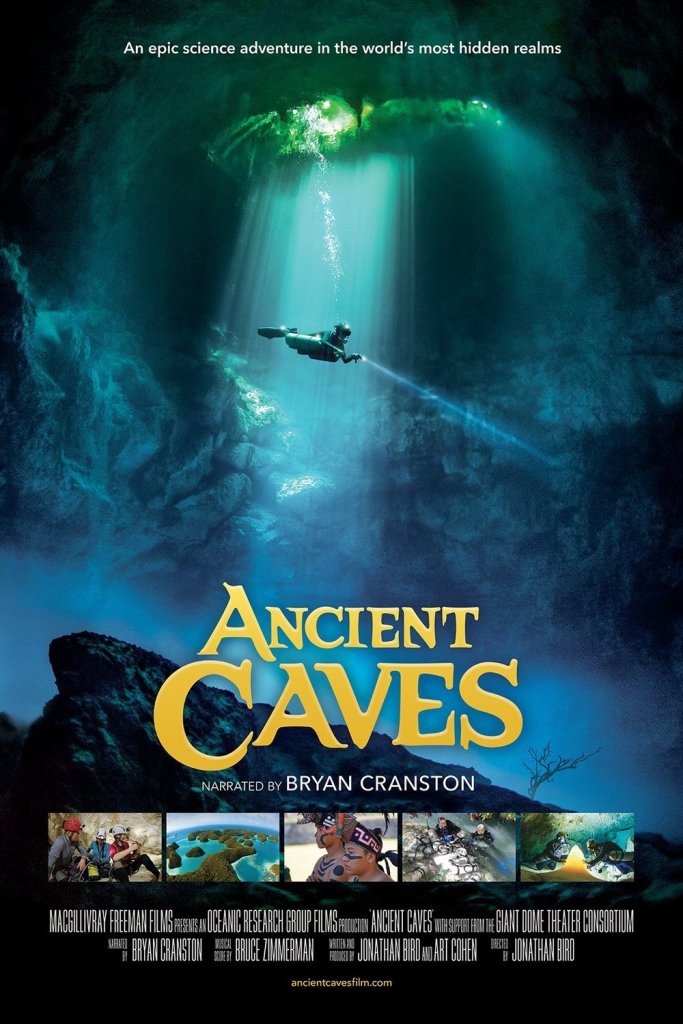
I’ve been staying out of actual cinemas for a long time due to the pandemic, but with the end of the global emergency (and with the option to mask up if the auditorium gets too crowded), I opted to take in an IMAX movie, as I generally love them and my local IMAX theatre is a museum right by my residence. My choice was Ancient Caves, a film about (mostly) underwater caves and what they can tell us about the most recent Ice Ages … and how man-made climate change may affect the natural cycle of the Earth’s cooling and warming.
As is generally the case with IMAX, the cinematography is stunning, and for once a film shot in 3D utilised that to good effect without getting cheesy about it, a la SCTV’S Doctor Tongue. There’s no brandishing a stalagmite repeatedly straight to the camera here, and indeed I doubt the divers and geologists in the film were even told it was going to be in 3D — but boy does it add depth and presence to spaces such as caves.
And what caves they are! The film starts off with some above-ground and underground (but not underwater) caves and introduces us to Dr. Gina Moseley, who really really loves caves and lowering herself into them on ropes. She serves as the narrator of the journeys into the caves, while Bryan Cranston serves as the narrator of the film overall.
It is of course a documentary, and the real purpose of the film is to use the caves and their stalagmites to study the previous Ice Ages — which happens about every 100,000 years. We’re not due for another one for a good long while (probably), but what happens during an Ice Age is interesting, and the way to get that information involves diving waaaay down into underwater caves to get core samples.
The film dwells a bit on the diving sequences, but the payoff is fantastic — eye-popping vaults of mineral and crystal stalagtites and stalagmites (and in the some of the less-deep caves, skulls and pottery), undisturbed and indeed untouched until this film in some cases for tens of thousands and up to a million years. I felt grateful to be able to witness these astounding scenarios in 3D without having to endure the diving and genuine risks taken to access these locations.
In short, Ancient Caves is educational but very interesting, particularly to anyone with the slightest interest in geology, cave exploring (above or below water), and the information scientists can extract from mineral deposits and such. The film does take a little time to discuss the impact of climate change currently, as it may have an affect on our future environment, and there was a brief but very interesting bit about the impact of human activity on the carbon dioxide count compared to the pre-mankind earth.
The film isn’t, however, focused on this point — it’s more a pure celebration of discovery, and the 3D and the diversity of locations really adds to the impact of the film. It’s playing on the IMAX circuit, so if it comes to your town and you could use a nice little escape from your day-to-day life — or just keep a pre-teen interested for an hour or so — this one might be second only to a dinosaur movie for edu-tainment value, and will definitely add value to your next trip to any local caverns.
This 1941 B&W fully-animated movie is considered the first Asian full-length animated film, and is certainly the first full-length Chinese animated film. While some western influence (particularly the early Looney Tunes of the 1930s and the early Disney movies like Snow White) can be seen, it is drawn from folk fables themselves inspired by a portion of a novel called Journey to the West, published in 1592.
The folk tales based on the book, we are told at the beginning of the movie, often focus on the supernatural creatures rather than the travelers and the moral of their journey — which is that life is full of trials and suffering. The filmmakers, however, wanted to emphasise the lesson of the story: that working together as a community, faith, and using everyone’s talents in harmony can overcome great obstacles, and make life better for all.
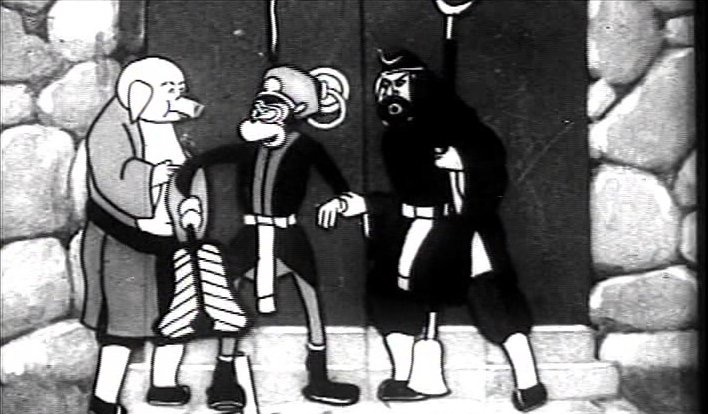
The tale is a fairly simple one: a monk trying to get to “the west” (meaning Central Asia and India) to obtain some Buddhist sacred texts (sutras), but is stopped by a mountain range full of fire. His three servants — a monkey prince, a pig-faced monk, and a stuttering but strong worker — each try to use their various magic powers to solve the problem. Specifically, they need to get a magic palm-leaf fan from an unhelpful princess in order to put out the fires, but their individual ruses and even brute force all fail.
Our three “heroes,” sort of.
The servants all regroup back at the town where the monk helps them brainstorm, suggesting that the three pool their abilities with the assistance of the townspeople to overcome the trickery of the princess and her husband. This they finally do, ultimately winning the day and clearly the mountains of the fire demon that tortures them, so that they and the monk can proceed on their journey of enlightenment.
Despite the handicap of no really good print of the film being available (it is desperately in need of a major restoration), the quality of the B&W animation shines through, with many impressive moments including extensive use of rotoscoping to make some scenes much more realistic, along with smoke effects and excellent character design. The various shape-shifting and disguising powers of the three servants are well done, and the quality of the existing film print picks up a bit in the last third.
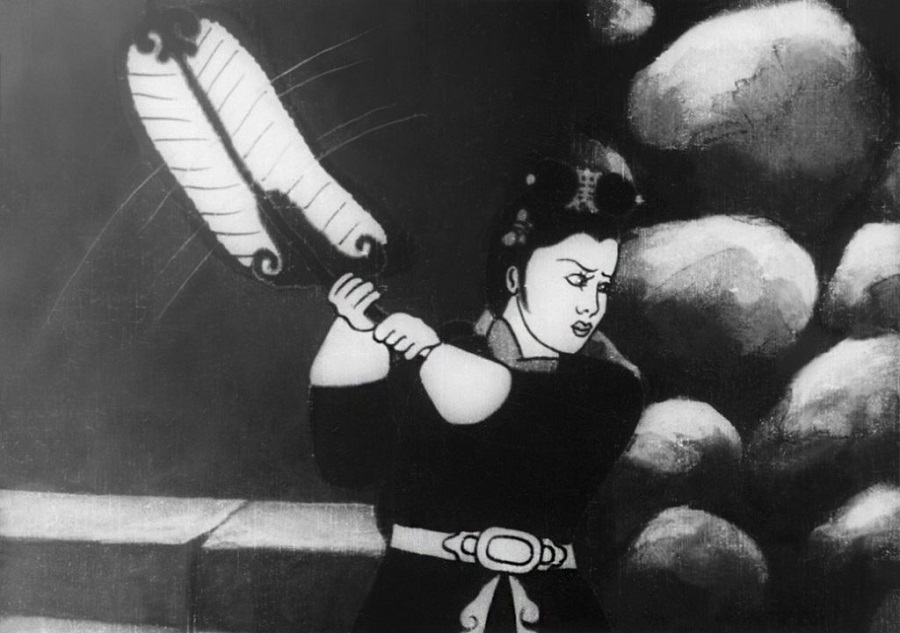
The “evil” princess, who actually has a pretty small but pivotal part in the film.
This is primarily a film that would now mainly appeal to fans of early animation, film historians, and students of Chinese history, but it is a very impressive feat of filmmaking that is only marred by the lack of a pristine print. A special mention should go to the musical score, which starts off a bit overwrought in my opinion but soon settles down when needed to accompany the story. I enjoyed it enough that I would certainly revisit it if it were ever restored.
An example of the beautiful backgrounds in the film.
If you only watch one silent movie from the 1920s in your life … well, you’re really cheating yourself out of some amazing filmmaking. But The Passion of Joan of Arc is one of the most riveting ones, lovingly restored and enhanced to 4K from a nitrite copy found in a Danish archive in 2005. It is — by far — the sharpest and clearest silent movie you’ll ever see, with a deep focus on faces, from its star, Maria Falconetti, and across the entire cast. You can count the pores on everyone’s faces in the close ups — that’s how amazing the restoration has been.
I’ve seen the film twice: once at a screening in Tampa accompanied by a live chorus and chamber orchestra many years ago, and just recently the slightly-abridged 4K version with the Gregory and Utley score from 2010. Both times, the film’s visuals grab you immediately and do not let you go — you scarcely want to blink for fear you will miss another pin-prick sharp facial close-up or tear falling from Falconetti’s face.
The film is based on the actual record of the trial of Jeanne d’Arc from 1431. Being a silent film, Falconetti spends most of her many close-ups portraying her suffering, her passion, her holiness, her hope, and her despair — her performance is often praised as one of the greatest ever. The evocative faces of her judges, prosecutors, pious church officials, and spectators are an astonishing gallery of human emotions, especially the uglier ones.
Eventually, Jeanne is convicted of heresy and nearly put to death before she finally agrees to recant at the last minute, whereupon she is sentenced to life in prison. Very shortly thereafter, she accepts the truth of her fate and takes back her recanting, finally understanding that her mission is to be a martyr and that her promised “release” from her suffering is her death.
Dreyer doesn’t shy away from filming the alarmingly violent and gruesome burning at the stake, with the villagers helplessly trying to revolt in anger at the betrayal of the church, and the murder of a saint. Following an hour of the trial, the change of pace of Jeanne in prison and then executed makes for a horrifying but fulfilling climax to the film.
The clarity of the restored print coupled with the skill of the filmmaking really makes you wonder if other silent-era classics that still have that softer, more cartoonish cast to them might also be able to get this level of restoration and enhancement, as the combination of interstitial titles, heroic music, and the riveting performances really make the silent era more relevant to modern audiences. In Dreyer’s relentless use of close-ups (combined with some surprisingly inventive shots during the final action sequences), his influence on many future filmmakers, particularly Fellini, is keenly felt.
In the most recent poll from Sight & Sound on the greatest movies thus far, La Passion de Jeanne d’Arc ranked 21st (tied with Late Spring). It has always been somewhere on the top 100 list since the first version in 1962. Yes, you really ought to see it — preferably with a live chorus & orchestra, if possible. This is an essential film that should be seen by anyone who prizes film as its own unique art form.
I have seen many (though also not nearly enough) of the films often ranked in the top 100 of the “greatest films of all time” — as though time was over (or making films was over) and a final judgement could be rendered.
Playtime, made by and starring Jacques Tati, is a bona-fide masterpiece and visually one of the greatest films made … thus far. Forget Avatar, this 70mm exploration of humanity versus modernity blends several distinct film genres into one, with both deep philosophical and funny results.
In its way, it is a silent movie. Not literally of course, but dialogue is generally not viewed as that important and often pushed into the background. Actions take center stage and often key “gags” are performed simultaneously, meaning viewers have to keep their eye on virtually everything happening in the (wide) picture frame, and their ears open for any snippets of important “story” detail.
It is a film that demands, and rewards, your full attention.
Mostly, Playtime doesn’t really have a story as such: it is structured more like a “day in the life of” type film. That said, we do more-or-less follow a couple of key characters around a few city blocks over the course of around 18 hours — Tati himself, playing the hapless everyman of Monsieur Hulot (which appeared in some of Tati’s earlier films, most notably Mon Oncle), and the American tourist Barbara, who came to Paris to see the famous sights, but can’t seem to find them except for glimpses and moments.
The theme of the film seems to be that Paris is modernizing, and losing its character — but that humanity (at least as embodied by the Parisians in the film) fight back with chaos against the new, bland, glass-and-steel city they find themselves in.
Anyone who enjoys architecture as a topic of sometimes-appreciation, sometimes-debate — like me — will be positively swimming in the gigantic custom-built set of ultra-modern (and still uncannily relevant, 55 years later) “Tativille,” where traditional Paris is only seen in reflections in the endless glass doors or symbolised by a lonely flower shop on one of the exceptionally-clean street corners.
It doesn’t matter if you already know M. Hulot from the earlier films, his character is a universal silent-film comic archetype: a good person who continually falls into comedic misfortune or unwittingly helps drive events in the film through his difficulty in this unfamiliar environment.
Where nearly everyone wears smart suits or fashionably bland dresses, Hulot primarily wears a mack (overcoat), a traditional hat, ill-fitting clothes, and carries a pipe. He is a person living in the mid-60s, but not at ease with the pace of change and modernisation. The influence this must have had on Rowan Atkinson’s Mr Bean can scarcely be overstated.
Barbara, the tourist, often separates herself from the sheep-like tourist group she is with, determined to see the area on her own terms — but like a lost lamb she is often rounded up again and herded along to wherever the next encounter is supposed to be. When she sees only the reflection of the Eiffel Tower, she turns to gaze at it longingly — but she is miles away, in this concrete jungle.
Hulot stumbles around the film — seen more often than any other single character, but likewise often disappears for a while — bouncing from one hapless round of mostly-visual sight gags to another, all within a jungle of beautiful but sterile steel-and-glass storefronts and offices. One of the early scenes shows M. Hulot attempting to meet with an official of some sort, but the two only rarely intersect in the rat’s maze of a corporate cubicle farm (predicting that trend over 20 years early).
Barbara and M. Hulot do run across each other increasingly as the film goes on, because they are nearly always in what feels like about a four-block radius of each other. Unlike most films that feature strangers meeting, it never threatens to become a romantic comedy, and this is refreshing.
As mentioned, sound (and music) happens in this film to distinguish it from a silent film, but in the early scenes it’s used more like a paintbrush to set tones or support the visual language, and only much later in the film do both sound and human dialogue really come forward as equal elements.
Things build slowly, focusing on sight gags early on (and again, you have to pay nearly as much attention to the background as the foreground to get a feel for everything that is happening), but over time the film slyly shifts from being fascinated by the buildings and settings to focusing on the increasingly-chaotic humans as the action turns to the opening night of a not-quite-ready nightclub opening.
Eventually, full-blown chaos explodes among both the established characters and the myriad newcomers into the tale, but there isn’t really a climax in the traditional sense: things hit a peak, but as the dawn breaks we follow the climb-down and emerging calm that will reset the picture back to nearly the beginning, as the club empties, people find their way home, and Barbara gets back on the bus to go back to the airport — but not without spending just a bit of time with the old-fashioned gentleman that she’s been running into all evening.
At two hours, I’m not sure if modern attention spans will have as much love for Playtime as I do –– but the payoff on this film is enormous, and on multiple levels. It is a masterclass in visual comedy, multi-focus direction, sound as a background rather than foreground tool, societal commentary, and a celebration of messy humanity against a sterile, unfeeling backdrop.
Shot with 65mm film for a 70mm release, Playtime is ideal for HD and 4K TVs because everything, all the way back, is in focus. This gives Tati the opportunity to have lots of “business” happening throughout the entire frame, compared to the usual focusing on the main thing the director wants you to notice. This director wants you to notice it all.
The colour hues and theme of automation uber alles are stunningly gorgeous and, unlike most films of this period, would easily convince some viewers that it was made much closer to the current year than it was. Its contrast of de-humanising and re-humanising themes is endearing and still relevant.
The prolonged pre-production, wildly expensive full-size sets and clever illusions, the perfectionistic direction of almost every actor in shot and much more establish this film as a beautifully synchronised machine with only small moments of anarchy at the beginning, but by the end the wheels have completely come off in joyous defiance of sharp angles, and a smooth-running society.
It is a joyous movie that absolutely bankrupted and ruined Tati’s reputation, but he felt it had to be made at all costs — and he was right. It is an utter masterpiece, and nearly as relevant today as it was in 1967.
I’ll avoid talking about the ending of the film, but after (finally) some actual human moments in the denouement, Tati saves his best and most withering (visual) comment for the final scene. If viewers have tapped into Playtime’s zeitgeist and stayed with it, they are richly rewarded as it fades to black.
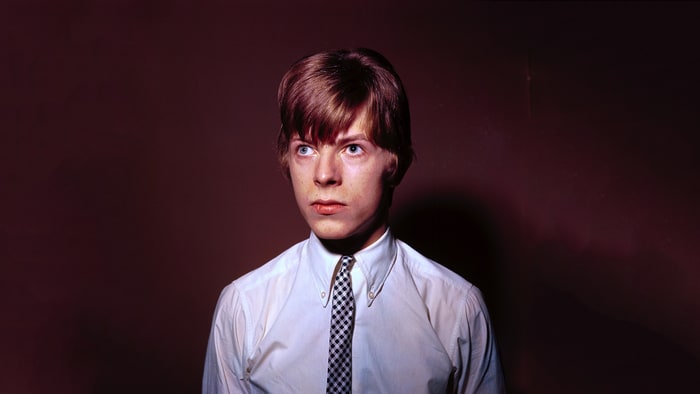
Let’s start with the obvious: even in the context of 1967, this record was rather behind the times — and if you’re unfamiliar with Anthony Newley’s career around this time, but do know what Bowie achieved later, this album may seem borderline unlistenable, though it is not far out of line with what Deram was charged with putting out — what we might now refer to as “high-concept chamber pop.” As with his pre-album singles, Bowie seemed to need a musical motif to glom onto, and for reasons never really clear — but probably his own — for this first long-player the overriding influence (but not the only one) was Newley. This was presumably due to Bowie’s determination to succeed where his unfocused earlier efforts had not (and indeed, the record got some kind reviews that called it “fresh” and a talent worth watching). That said, there is still a growing songwriter with a decidedly bent view and a flair for psychedelia poking out from under all that “cabaret/music hall” styling.
For the purposes of this review, we are using just the first half of the two-CD David Bowie: Deluxe Edition set that includes an entire second disc of material, including single and alternate versions of LP songs, non-LP a- and b-sides, and even a few songs intended for a second Deram album that never ended up happening. The first disc has both the stereo and mono versions of David Bowie as released on 1-June 1967 (indeed, it was one of the first to get both a stereo and mono release in the pop genre) and while there are very minor differences between them, they are essentially equivalent for all but the nit-pickiest of listeners. The deluxe release is highly recommended for its rich supplementary material and the definitive remasterings of the original album mixes. It is truly the alpha and omega of Bowie’s Deram period, and expands what was going on with the still very much developing songwriter and singer beyond what the original album release imparted.
If Newley was the template, Bowie was equally determined to subvert it in various ways, most often lyrically — and so even in this relative step backwards from his progression as a songwriter in the Decca/Parlourphone/Pye period, we see the growth in some areas. You can hear it right off on the lead track, “Uncle Arthur” — a quixotic little Kinks-esque tale of a socially inept man who lives with his mother until he meets a girl, marries her, and makes a break from the oppressive thumb of his parent. As the song unfolds, though, we learn that he quickly returns to the fold, all forgiven and his safe-but-unhappy status restored. There’s a bit of Tony Hancock in Bowie’s story-ish lyric for this, and that influence turns up again on some other songs in this period as well.
This one also, as noted by brilliant Bowie blogger Chris O’Leary of Pushing Ahead of the Dame, is one of the rare tracks on this album told seemingly from a boy’s perspective (rather than a man’s, as most of the other tracks seem determined to prove Bowie to be): Uncle Arthur returns to his domineering mother because his bride can’t cook, and of course is referred to as “Uncle” throughout the song. By contrast, track 2 (“Sell Me a Coat”) is a much more poetic and worldy-wise affair, a sad sonnet of a romance that went south using the age-old summer/happy, winter/sad metaphor you might have heard on a Moody Blues record of the period.
Bowie’s previous producer Tony Hatch was once quoted as saying Bowie was a definite talent, but tended to spend too much time writing about “London dustbins” — that is to say small, ordinary subjects with decoratively vivid but arms-reach details, such as the description of the coat here, or in the Victorian flavour of “Come and Buy My Toys.” The descriptions are certainly more intricate than you would find outside of The Kinks or Van Morrison typically, and the “vision” of many of the songs is narrowly focused: one person, one area, one town, one girl. A later (long thought lost, but rediscovered) 1968 demo which is sadly not included on this expanded release, called “April’s Tooth of Gold,” really shows off how much influence the Kinks had on Bowie’s late-60s songwriting, and perhaps the direction that a second Deram album would have gone in.
More so than on his previous recordings, Bowie’s voice on his debut album is always placed front and center — and also unlike his previous records, the production and arrangements quality is top-notch. Today we’d call this “quirky soft rock,” or the pre-80s definition of “pop” at best, but it features some very high-quality guitar playing (in part from the now-legendary John Renbourne) and other instruments from “Big Jim” Sullivan, among other session musicians added to augment The Buzz.
Still, the youthful fire of his previous singles is all but extinguished in an attempt to make Bowie sound more adult and sophisticated. That’s not to say it’s all vocal-heavy elevator music: “She’s Got Medals” is a ballsy (in-joke, that) number that rocks along nicely and proves that the story-song jokey-narrator motif can really work: the number — about a tomboy who disguised herself as a man to join the army, then deserted just before an enemy attack by reverting to female gear — is just clever and grand from start to finish, not to mention his first-ever hint of the gender-bending/androgyny/bisexuality he would indulge in his near future. It’s one of my favourite songs on the album, and would have worked brilliantly in the hands of Marc Bolan, or Mick Ronson when he was working with Bowie … alas, that wasn’t yet in the cards.
That said, most of it is pretty tame stuff, with holdover folksong and pop-type arrangements you’d have run across more often in the very early 60s, distinguished primarily by Bowie’s oddish lyrics and strong voice. Occasionally, Bowie hit on a great combination of the two: “Love You Till Tuesday” is genuinely witty as well as lovably catchy, and unsurprisingly became the third (and final) single related to the album — and the subject of a surprising long-form promotional film intended to help shop him to another label when Deram declined to do a second album. Interestingly, a remixed version of “Sell Me a Coat” was used in the later “Love You Till Tuesday” promo film, but overdubbed with new backing vocals from Bowie’s then-girlfriend Hermione Farthingale and then-collaborator John Hutchinson that were mixed much too loud, resulting in half of Bowie’s lyric and voice being drowned out.
The Love You Till Tuesday promo film, despite heavily supporting a (mostly) a pretty disjointed album, is chock full of gems — and constitutes Bowie’s first “videos” if you take them as separate pieces. Firstly, this is your only extended look at Bowie’s first great love, Hermione, as well as Hutch in the trio configuration they referred to as Feathers. The movie features four songs hat didn’t appear on the album (“When I’m Five,” about which we’ll chat later, the lovely and grown-up “Let Me Sleep Beside You,” the Feathers version of “Ching-a-Ling,” and the original version of “Space Oddity” — yes, more than a year ahead of its album arrival!). Of the latter, the original version is jazzier and more beatnik than what we got later.
Well.
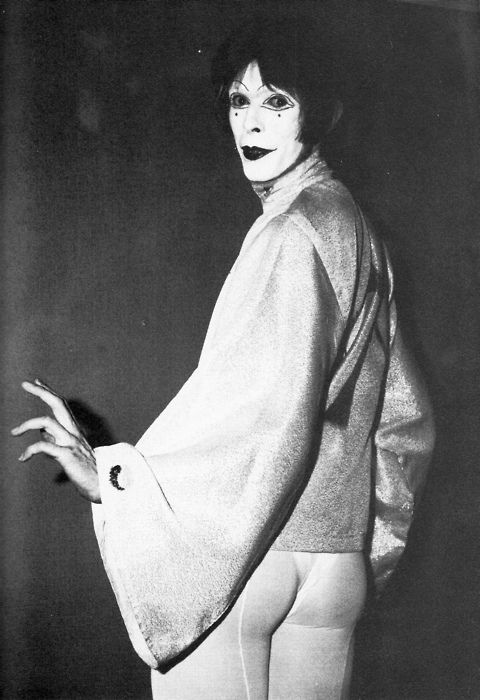
There’s also a Bowie mime (something he was really getting into by the time this was filmed, studying under Lindsey Kemp) with narration smack in the middle of this, which also tackles both the underside of fame (ironically, at this point) and explores his predilection for putting on “characters.” Fans of Bowie’s trousers in the 1980s film Labyrinth will find much to enjoy throughout Love You Till Tuesday, a showcase film best seen as perhaps the prototype for the “Electronic Press Kit” (EPK) which is now the industry standard. The film as a whole makes even the weaker numbers more palatable, in hindsight, being as it is a time capsule of very early Bowie — but like everything else thus far, it was not much help to his career. Worse, Farthingale (later the subject of the songs “Letter to Hermione” and “An Occasional Dream”) gave up on Bowie — who had been philandering, by his own admission — during filming, and ran off with one of the dancers. Ouch.
Back to the album proper, another strong entry is “Silly Boy Blue,” which certainly sounds like it should have been a hit for somebody to these ears. As O’Leary refers to it, this number is “Bowie’s first great song,” a “stately” number that gives voice to Bowie’s ongoing interest in Buddhism. It features an unusually (for this album) passionate vocal performance, a third verse of chanting la-la-las (he uses this fill-in-missing-lyrics trick a lot in his early work), and a beautiful multi-tracked ending. Along with the wildly different and cheeky “Love You Till Tuesday,” these are both the album’s highlights and an illustration of why the album doesn’t work: the subjects and treatments zig-zag between light and dark, straight and odd, serious and whimsical — robbing the album of thematic coherence.
It’s no surprise that Bowie opted to include “Silly Boy Blue” in his 2000-2001 sessions for Toy (with a more appropriate atmospheric arrangement, that offered sitars and chimes along with more upbeat flourishes) — this is the number where you can see that Bowie will not be a one-hit (or, at this point, no-hit) wonder. It has “great artist” and “real songwriter” written all over it. Billy Fury thought so, evidently — he covered it the year after it came out, in a very faithful but frankly better production, though it continued the curse of not being terribly successful for him or Bowie.
The first single with Deram, incidentally, was “Rubber Band,” another story-song about a former soldier who loses his girl to the leader of the titular brass band. This was actually the first song Bowie did in this “Next Newley” style, and part of what got him a very unusual full-album contract on the strength of this and two other pre-contract, post-Pye recordings. “Rubber Band” is claimed in some circles to have been heard by, and influenced, the Beatles and their “Sgt. Pepper’s Lonely Hearts Club Band” song — but while there is eerily similar subject matter, the connection, if any, is a bit tenuous (though the two albums came out on the very same day, bizarrely enough). This was Bowie’s very first recording for Deram, and it fairly shouts out its change of direction: it depends heavily on its orchestrated arrangement with woodwinds aplenty. All that greasy rock-n-soul stuff was right out.
The “Rubber Band” single was backed with Bowie’s first real leap of lyrical sophistication, “The London Boys,” which had started life as a rejected single for Pye. It was turned down due to an explicit reference to drug-taking then, but under Deram it was preserved, albeit relegated to a b-side. Ironically, Deram — the company that finally gave Bowie his big break — was a new subsidiary of Decca, the first label to record (and reject) the young songwriter.
It is, perhaps, poetic justice that Deram didn’t do much better with him this time round, though by all accounts Deram brought its folly upon itself by not promoting the record. Apparently, the executive who had signed Bowie left before his album came out, causing the rest of the company to take less interest in him. As with other failures, Bowie used his time at Deram as a learning experience; part-time manager Ken Pitt’s taking him to West End shows and sharing his own musical tastes with Bowie undoubtedly aided and abetted his decision to go for a more poetic, older approach aimed at more adult buyers than the teen scene he had previously pursued.
“Now is the time on Schprockets ven we DANSE!”
That post-school mentoring, the interests he developed in mime and other artforms, and — in a funny way — the failure of his first album also turned out to be the push into expanded horizons that would lift his songwriting out of the “what I see around me/describe my own life” mold it had been in up to this point. As others have noted, if he’d had a hit with any of the songs on his first record, he might have stayed in the safe, comfortable world of “adult contemporary” and been a Vegas staple by the 1980s.
Oddly enough, the second Deram single for Bowie was a non-LP cut, the notorious “Laughing Gnome” (backed with the far darker and again non-LP cut “The Gospel According to Tony Day”), which was marketed as a novelty record (a popular trend in the mid-60s, even for some bands that were usually more “professional”). While it is best approached as a light-hearted aberration from Bowie’s then-current (and all other) fare, it does show off both his fascination with vari-speed recording (a technique frequently used to more serious effect right up to and including “Blackstar”) and his sense of humour. Beyond the silliness of the song proper, there are various (Tony) Hancockian-like “asides” that rattle off a string of “gnome”-related puns. Listeners can only catch them all with careful and repeated hearing, which is probably why few people are even aware that they’re there, but they are in fact quite amusing, as is the song itself — if one can overcome the jarring effect of such a comedy bit from the earnest fellow who wrote and performed “Please Mr Gravedigger” straight-faced.
That the b-side is a slab of black humour sung in a dour style which couldn’t have been a worse choice to help with the single’s commercial prospects, but does succeed in showing another side to Bowie’s humour, as well as how personal his lyrics could be — this one rattles off a string of presumed friends, as if he’d lost a bet where the penalty was to incorporate them all into a song. Other friends and collaborators have frequently described Bowie as a genuinely witty and funny fellow: seen as an “outtake” not unlike some of the Beatles’ fan-club singles, or the Monkees’ lighter efforts, “The Laughing Gnome” becomes somewhat more charming and marginally less farcical.
Some of the other songs point to future Bowie development: “We are Hungry Men” in particular foretells a recurrent dystopian fascination that runs right the way through his later and more signature work, from “Cygnet Committee” on his second album and “Saviour Machine” on his third, into the 1984 influence on Diamond Dogs and cyberpunk flavours of 1. Outside, as well as the messianic qualities that would later decorate “Oh You Pretty Things” and his periodic revisits to Major Tom, among many other references. “We are Hungry Men” also stands out for breaching a number of “taboo” subjects (as with the b-sided “London Boys”) as he did again in his early 70s work and the Berlin trilogy (and lots of other places), even though it starts off with Bowie’s best Goon Show impersonation of a German newscaster for a darkly silly intro. The song is remarkably ill-suited for the album, except perhaps as the “telegraph” of his next direction Bowie claimed was found in most of his albums.
“Join the Gang” is another mismatched-with-the-album’s-theme effort to cover much of the same lyrical ground as “The London Boys,” and “There is a Happy Land” (again a song sung from a child’s perspective) is not the last time he would revisit child-viewpoint or the idea of children as a better class of human than adults. For what is undoubtedly Bowie’s most cringe-worthy attempt at capturing a child’s perspective, please see the non-LP ditty (accompanied by an equally appalling visualisation in Love You Till Tuesday) “When I’m Five,” found on the bonus disc of the reissue. The song has some value in that it appears to be semi-autobiographical (referencing his grandfather’s name, for example) and funny in spots, but it comes off as cloying, precocious and far more ham-fisted than comedian Lily Tomlin’s not-dissimilar “Edith Ann” character.
Which brings us to “Please Mr. Gravedigger,” a non-musical sung soliloquy told from the point of view of a murderer who has killed a child and is watching the gravedigger dig her grave. This is not just bizarre and dark, it gets positively creepy: at mid-point in the piece, the murderer decides he will need to kill the gravedigger as well (to hide evidence of his crime, possibly). It’s just him and some sound effects.
Bowie would later (very often) claim he usually didn’t know what his own songs were really about, but this one goes right to the heart of his psyche — scarred as it must have been from the tragedy of his mentally-ill half brother Terry — and the history of such problems running through his family tree. Everyone has dark thoughts at times, but most people don’t record and put them on an album, complete with detailed voice and sound effects. This is a singularly-unique diary of some very disturbing ideas, and reminds us that even Bowie’s brightest numbers are often inhabited by oddball and ominous characters — perhaps influenced by Syd Barrett as much as Ray Davies. It’s quite a dark, Edgar Allan Poe-ish ending for a record that, despite its mostly upbeat pop overtones, grapples with a darker side much less gracefully than was seen in Bowie’s later work.







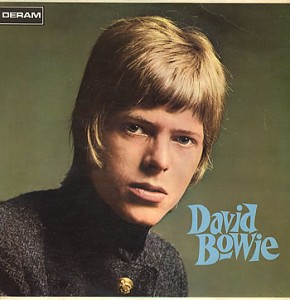 For the purposes of this review, we are using just the first half of the two-CD David Bowie: Deluxe Edition set that includes an entire second disc of material, including single and alternate versions of LP songs, non-LP a- and b-sides, and even a few songs intended for a second Deram album that never ended up happening. The first disc has both the stereo and mono versions of David Bowie as released on 1-June 1967 (indeed, it was one of the first to get both a stereo and mono release in the pop genre) and while there are very minor differences between them, they are essentially equivalent for all but the nit-pickiest of listeners. The deluxe release is highly recommended for its rich supplementary material and the definitive remasterings of the original album mixes. It is truly the alpha and omega of Bowie’s Deram period, and expands what was going on with the still very much developing songwriter and singer beyond what the original album release imparted.

 The Chasbah