The Black Pirate (1926)

Director: Albert Parker
⭐️⭐️⭐️⭐️⭐️

I like to think I’ve seen most or all of the “key” early/silent movies, and I’m sure I’ve covered a fair few of the essentials, but every now and again I come across one I somehow missed. The Black Pirate is a masterpiece I somehow overlooked — a Douglas Fairbanks movie, no less! — and it is magnificent.

This was a very early film done in “two strip” Technicolour, so it was probably pretty shocking to audiences in its day for a number of reasons, and a recent remastering means we have a lovely, clear print of it to enjoy now. Although Fairbanks had previously done swashbuckler films, I think The Black Pirate is the primary seed of all future pirate movies.

Comin’ at ya with both barrels!

This is the one they all draw from in one way or another, because its so well done, and while I only have one real criticism of it, so much of what we think of when we think of a “pirate movie” or “high seas adventure film” is all present and accounted for, right here. When it comes to cinematography, music, stunt work, performances, and pacing, this movie is pretty much without flaw.

The main focus, as with Thief of Bagdad and other Douglas Fairbanks adventure films is of course Fairbanks and his enthusiastically physical stunt work, including swinging from ropes, climbing up things with incredible vigour, lowering himself from high up in the mast by sticking a knife in a sail and “riding” it down, and — needless to say — swashing his buckles impressively.

Avast ye swabs! We be a silent movie in colour! Shiver me timbers!

Lest this degenerate into a Fairbanks fan fest, I should mention that the noted actor and director Donald Crisp plays McTavish, who assists our hero even in his darkest hours. Crisp had directed Fairbanks in Don Q, Son of Zorro a year earlier, and their chemistry is very obvious here.

McTavish (left), a shipload o’ scalawags, and The Black Piraten (right)

The story is credited to Fairbanks, who used a pseudonym and essentially cobbled a Cliff Notes version of Howard Pyle’s The Book of Pirates and their archetypal illustrations. The plot moves along surprisingly speedily for a film from the 1920s, and the film’s 94 minutes go by very easily thanks to minimal plot breaks between action scenes.

The film opens immediately to one of those action scenes, where pirates have already taken over a ship and are plundering it before setting fire to the gunpowder in a manner that gives them time to get away before the ship blows up. Two survivors wash ashore on a deserted island, a father and son. As the father dies, the son (Fairbanks) vows revenge on the pirates.

When the pirates park their own ship on the opposite side of the island, Fairbanks appears as the boastful “Black Pirate” and demands to join their crew, setting himself two challenges that he completes that impresses everyone but the second-in-command Pirate Lieutenant, which sets up the conflict.

The soon-to-be-dead Pirate Captain and his first mate, the Pirate Lieutenant.
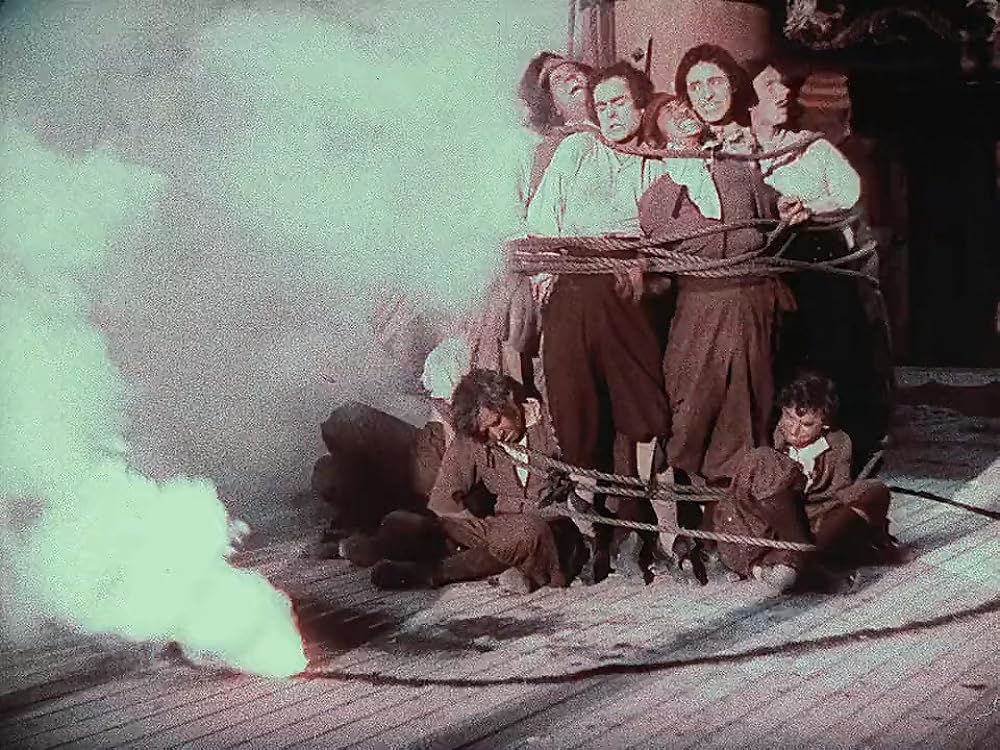
The pirates tie up the crew and use a gunpowder trail to give them time to get off the ship before it blows up — ingenious and cruel all at once.

When the Black Pirate leads the ship to another successful raid (but cleverly prevents them from blowing up the ship), the crew are pretty much ready to make him Captain but for the Lieutenant. When a woman (Billie Dove) is discovered on board the raided ship, the Lieutenant claims her as his prize, but the Black Pirate — who has fallen in love with her on first sight — claims she is a princess they can hold for hostage as long as she remains “spotless and unharmed,” i.e. no raping!

After a few twists, Fairbanks saves the day and the dame, of course, with the help of troops who successfully rout the pirates. Luckily for him, the “princess” has fallen for him as well, and it turns out he’s actually a Duke, and she a noblewoman! How incredibly convenient (nobody cares, it’s the action scenes that are important).

One amusing note of trivia: apparently Fairbanks’ wife Mary Pickford insisted on doubling for Dove for the scene were the Black Pirate kisses the Princess. Jealous much, ma’am?

The one criticism I have is that, although the pirates do get busted, the Black Pirate does in fact lead a raid on another ship, allowing the pirates to steal all the passengers’ valuables (but preventing their mass murder) and takes a hostage who really has no choice but to fall in love with him because otherwise she’ll be raped by the Lieutenant and likely the rest of the crew. I must also point out that the TV show “Mythbusters” also tested the “riding down a split sail” trick and declared it implausible — this hasn’t stopped it being used repeatedly in pirate movies since 1926, though.
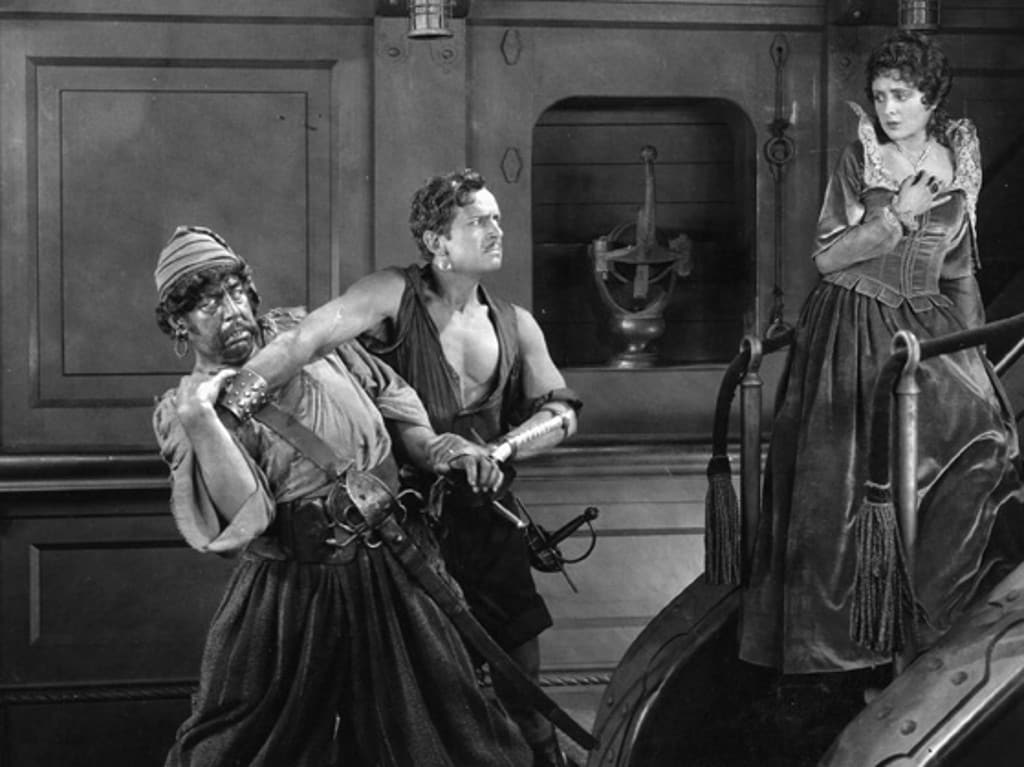
Yes, the one woman in the film is completely treated as an object and under threat of rape, but Fairbanks’ altruistic love and protection saves the day and of course causes her to fall in love with him.

Add The Black Pirate to your list of enjoyable popcorn action movies. The sort-of colour helps, but this is really a stunt movie that sets the tone for the genre of seafaring adventure, and so even if the plot is a bit lightweight, it remains a great film.
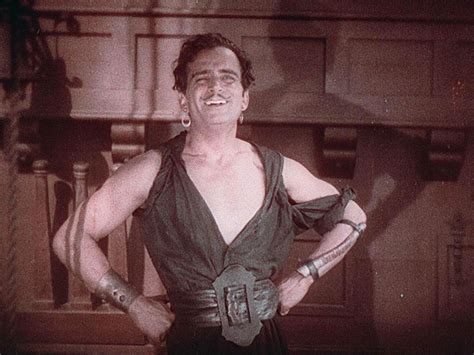
Ha! Ha! I win!

Metropolis (1927/2010, dir. Fritz Lang)

⭐️⭐️⭐️⭐️⭐️
“Complete” version, 4K with restored scenes

52-week film challenge, film 18

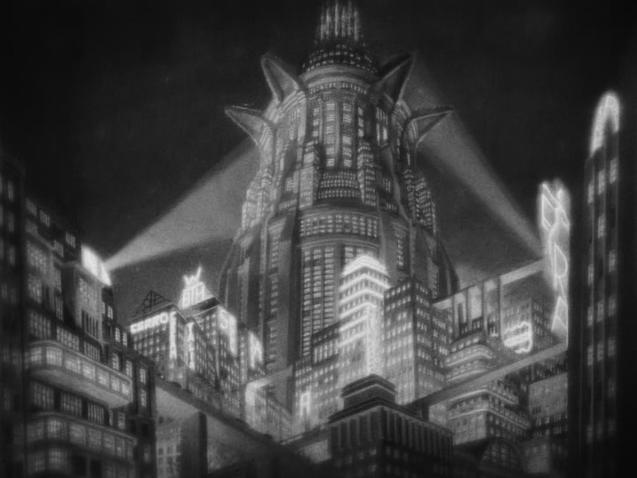
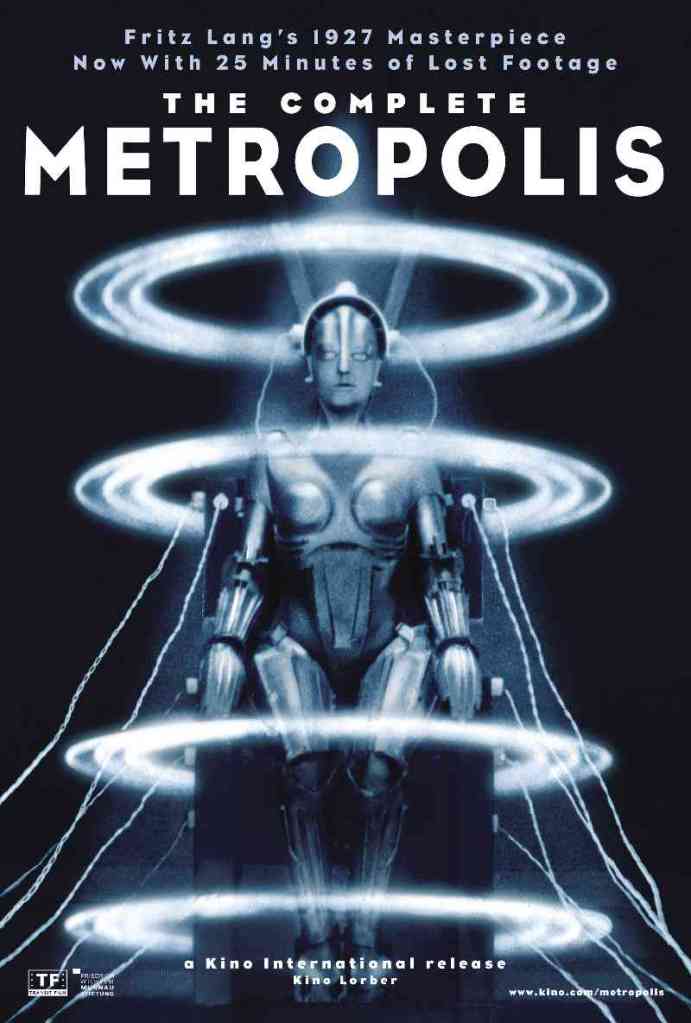
Quite possibly the most visually compelling film ever made, even after nearly a century. Certainly the most beautiful silent movie ever made. I recently noticed that Criterion had a 4K copy of the 2010 “Complete” restoration, so I watched it to see what had been added since the 2001 version. It turns out that the answer is “about 24 minutes more story, and a new version of the original score,” but there’s more to it than that, of course.

Lest we get too far ahead of ourselves, and for those who’ve never watched the whole thing, Metropolis is an incredibly futuristic-looking silent movie that absolutely everyone on Earth should at some point see. The reason I say this is that it is truly one of the most incredible film productions ever made from a visual standpoint, and on top of that the storyline is (sadly) still very relevant today.

The effects may be primitive by comparison to today’s films, but Lang brought a style and credibility to them — complemented by the design and art direction of the non-FX scenes — that not only hasn’t dated it, but in fact plays a huge role in the film’s immortality. Parts of his vision are the sort of future we all hoped we’d grow up in, but the underside (literally and metaphorically) of this future projection are indeed the world most of us ended up in.

As the film opens, we gaze upon an incredibly modernism-influenced style cityscape dominated by an exceptionally tall, large, and distinctly Art Deco Tower of Babel, with trains and cars on elevated railways bustling along at various levels on and above the ground, with airplanes (well, biplanes — a rare example of a visual that didn’t age well) buzzing around. The top of the tower is where the Master of the City (a sort of architect/chief executive) Joh Frederson and his adult son, Freder, live and enjoy the hedonistic lifestyle of the city’s elites. Lang said the look was inspired by his first trip to New York City.

Although there is no direct reference in either Thea von Harbou’s original 1925 novel-as-film-treatment nor in Lang’s film as to the exact time period, a 60s reprint of the novel placed it firmly as set in the year 2026. Whichever editor came up with that pretty much nailed it, as we are currently living in world alarmingly similar to the one described in the source material.

(L-R) Joh Freder, Rotwang, the Man-Machine

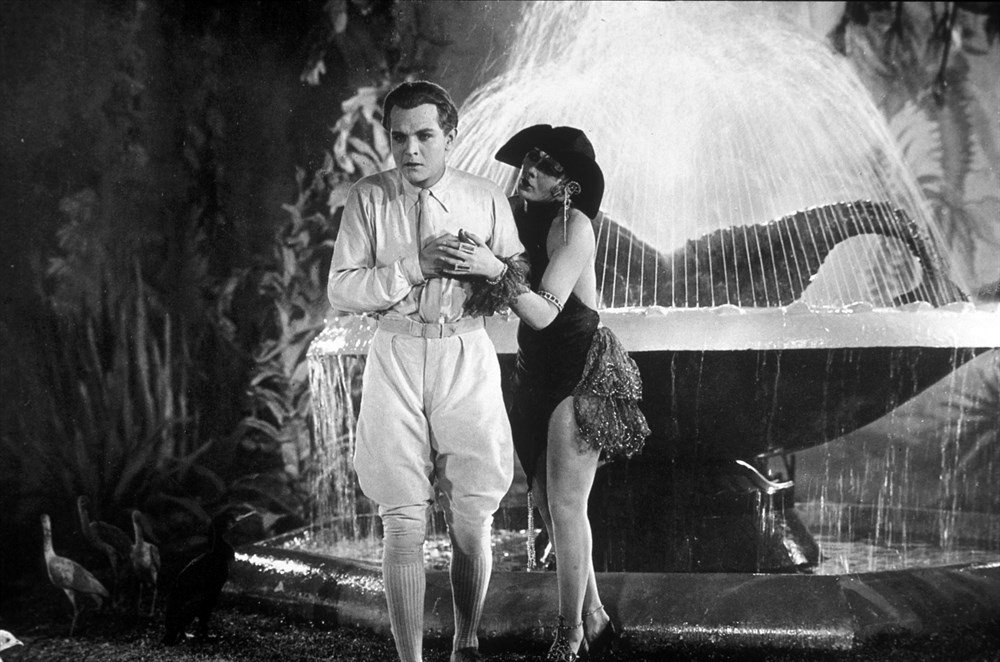
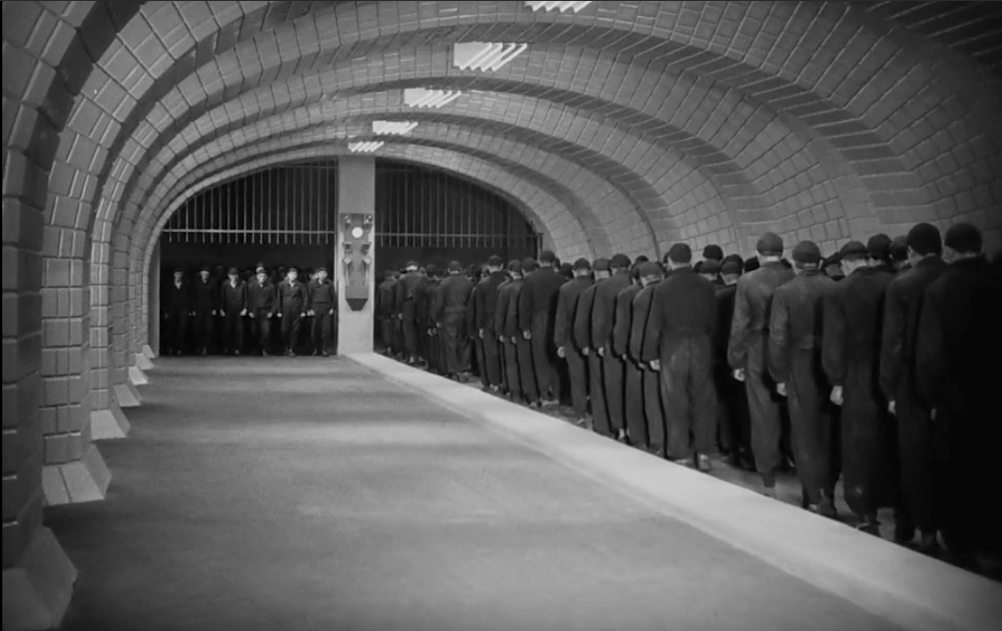
Freder, as a member of the elite, spends his days in gardens and playing sport and other such idle leisure — hobnobbing with the business magnates and politically-powerful and blissfully ignorant of how it all works. Meanwhile, the working class who actually make the city what it is live and work underground in a very functionalist, expressionistic Worker’s City, and toil on keeping the machines that power the metropolis of the elites in scenes that “influenced” Charlie Chaplin for his 1936 film Modern Times.

One day, a a radical woman teacher dates to bring some of the workers’ children up to the gardens to see how their “brothers” live. Freder is struck by the woman, Maria, and follows her down into the Worker’s City, where Freder sees firsthand the impoverished working class and the soul-shattering labour required to provide the elites with their lifestyle.

Maria brings the workers’ children up to see what they will forever be shut out from …
… and Freder is “shook” by what he sees and determines to investigate what lies beneath the city.

Though it was meant to be a parable on the danger of power imbalances, regrettably the problems shown in Metropolis have reared their ugly heads once again in a number of countries that have recently seen class-based unrest and abuses of power by those in charge. Anywhere you find that the elites live a lifestyle completely removed from the majority (who are of course taken for granted as an endless cheap labour supply), you will find strong echoes of this film, which regrettably still feels relevant and relatable nearly 96 years after its release.

Freder catches up with Maria, who he discovers is a symbol of hope for the workers, and she predicts that a “mediator”-cum-saviour will someday appear to resolve the growing chasm between the workers and the elites. Having been traumatized by this disparity himself, Freder sees himself, as the son of the city’s Master, as someone who could fulfill that mediator role, and falls in love with Maria.

Trials and tribulations ensue, and in the secondary plot it is revealed that there is a “mad” scientist in the city, Rotwang, who seeks revenge on Joh Frederson because Rotwang’s love — a woman named Hel — left him to marry the rich/powerful Joh, giving Joh his son Freder before dying. Rotwang has built a mechanical “man” — an iconic and insanely Futurist (but unmistakably female) robot design that he has plans for.

Joh, upon learning of the robot, orders Rotwang to remodel the robot to look and act like Maria — the heroine of the workers — but to have it incite the workers into violence against him. Joh wants this so he can crack down and destroy this attempt at workers gaining negotiating power, but while pretending to follow the order, Rotwang schemes to use the Maria-bot to fulfill his own plans, which are to resurrect Hel and take his revenge upon Joh.

Rotwang kidnaps the real Maria to make a doppelganger. This scene undoubtedly inspired James Whale for 1931’s Frankenstein.

Skipping a lot of exposition, Rotwang’s plan works only too well — Maria-bot incites the workers into a rabid state and commands them to destroy the machines, which will in turn destroy the Metropolis and its elite class. This isn’t what Joh intended, and it has the side effect of destroying the Worker’s City through flooding. While the workers are revolting, the real Maria escapes and tries to save the workers’ children, left behind in the fever of revolt, before they all drown.

Freder finds Maria, and along with his close friend Josaphat manage (barely) to rescue the worker’s children, and eventually get word of this to the workers, who by now have thought they accidentally drowned their own children and were so wracked with grief that they capture the Maria-bot and burn her at the stake. Rotwang gets his comeuppance, Freder gets Maria, and Joh learns the error of his ways.

What’s great about this new version is that the extra footage — which sadly could not be fully restored and is quite distinct from the previously-upscaled footage — adds depth and nuance to the story. In particular, this “complete” version really fleshes out some of the seconddary plot and in particular the supporting characters, from Josaphat to the unnamed Thin Man to Georgy, a worker that Freder befriends and learns from, temporarily trading places with him so that Freder can experience the worker’s life, and Georgy gets to briefly be experience the elite life.

The wickedness of the Thin Man, Joh’s enforcer so he doesn’t have to get his hands dirty, is made much clearer in this version, as is the affectionate relationship of Josephat and Freder, though there is of course no hint of beyond a close friendship. It was nice to see that level of male bonding without sexual overtones for a change.

The film is now almost to the full running time Lang intended (two short scenes are still wholly missing, and captions are used to cover this), and while yes, its now even longer, it is still so fascinating that the 2.4 hour runtime just flies by. Barring some significant new discovery of a better print or those missing scenes, this is the most complete version we’re likely to ever get.

This movie is just goddam incredible.

One can only hope that that perhaps the current “AI” fad will enable further restoration on the damaged but intact extra 24 minutes, making the switch between those scenes and the rest of the film less jarring. I could easily see how, at a minimum, the backgrounds could be extended to give those scenes the same 16:9 ratio as the rest of the film, and that would definitely be worth doing.

As I mentioned earlier, this is one of the incredibly few films that really should be seen by pretty much everyone everywhere. It is more than just a visually-captivating classic with a timeless message about the evils of exploitation; it is a plea to the future not to remake the mistakes of the past, which sadly has been ignored time and time again.

Safety Last! (1923, dirs. Fred Newmeyer & Sam Taylor)

⭐️⭐️⭐️⭐️

52-week film challenge, film 14

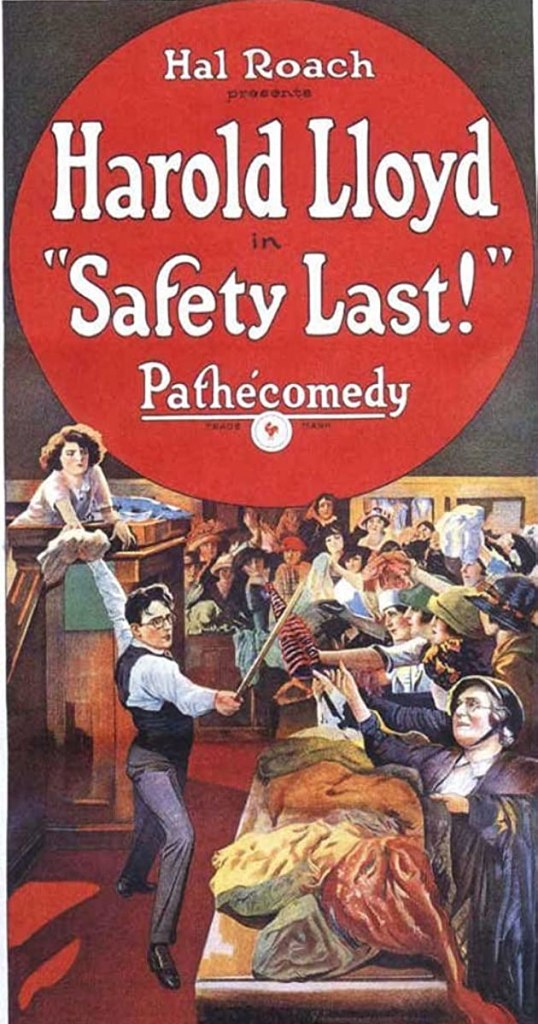
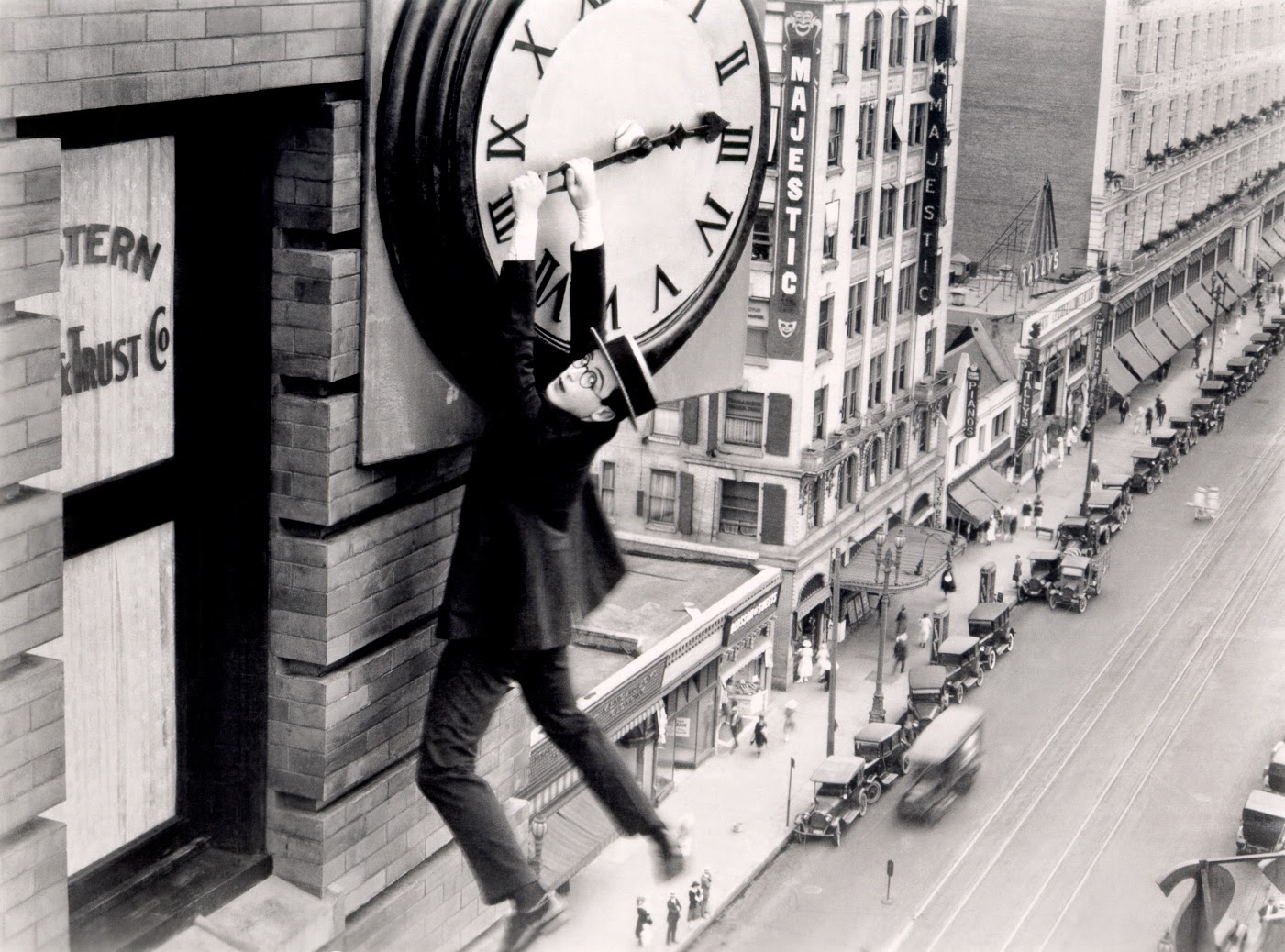
Anyone who’s paid any attention at all to the silent era of movies will have seen at least one of the most famous silent-movie stunts — Harold Lloyd, seemingly halfway up climbing the side of a building, hanging on for dear life as he grabs hold of a giant clock after putting a foot wrong. Suddenly, the clock face comes partially undone, leaving him hanging high over a busy street. This is of course from one of Lloyd’s full-length features, Safety Last!, and it is a gem — but only one of the amazing stunts in the film, which is also quite funny.

Lloyd is often thought of last when one tries to name the giants of silent-era comedy, behind Chaplin and Keaton, but for my money he’s actually the most versatile of the bunch. While Chaplin almost always played a tramp in his silents, and Keaton forever plays a stone-faced version of the unluckiest man alive, Lloyd is often the sunny embodiement of American Exceptionalism, resiliently cheerful and sure that everything is going to work out despite the craziest things happened to him, and indeed that blind faith carries him through.

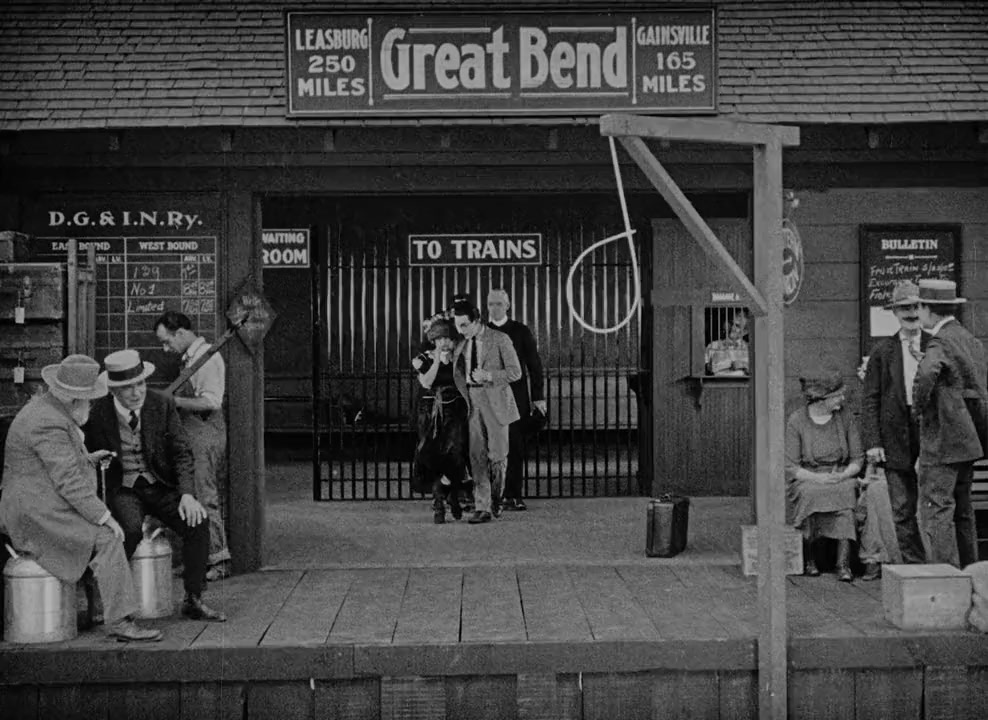
In Safety Last!, Lloyd opens the film looking like he’s in potentially fatal trouble — in jail and perhaps saying his goodbyes to his loved ones, with a hangman’s noose in the foreground. The set changes slightly, and we see in fact that noose was on a mail peg designed to allow the train to deliver a bag of parcels without stopping, and Lloyd was just a small-town young man on his way to the big city to make his mark.

He was doing this to secure his relationship to his intended bride (played by real-life wife Mildred Davis), by ensuring he has a career that can support a household and eventual family. The earnestness just radiates off Lloyd’s can-do attitude and beaming, positive face, but in fact like any such fellow he has to start small — sharing a room with a friend, working hard, and not quite catching the American Dream somehow … this film was only a few years prior to the start of the Great Depression, but somehow foreshadowed that all was not well with the game of “work your way to success.”

In another tell-tale America-of-the-20s trait, he puffs up his level of success to impress his girl, which in turn means he ends up spending most of his meagre paycheque on gifts he sends to her … skipping meals, hiding from the landlady, and making other sacrifices. In one scene, he ponders the cost of another gift while also staring at an advert for a “businessman’s lunch” (which costs 50¢ … you should see this film just to marvel at the prices of things!), and as he pushes himself to sacrifice for his bride-to-be, his minds “disappears” each of the five plates that were included in that luncheon. You can feel Lloyd’s hunger pangs.

As you might expect, the girl gets the idea to come visit and surprise him, and on very short notice he has to come up with ways to convince her he is as successful as he has boasted, hiding his lowly “real life.” While to modern audiences this thin plot moves along fairly slowly, there are always impressive stunts and action sequences (just him getting to the office is a great section of pratfalls and dangerous gambles) to fill the time until the next plot point.

Lloyd pays off a colleague not to reveal that he’s not the manager and this isn’t his office.

Mostly, Lloyd’s character (who was known as the “glasses man” in his earlier work, but he finally identifies the character as being himself — Harold Lloyd — on a business card, suggesting some real-life incidents are incorporated into the tale) just combines his incredible physicality with on-screen great luck in avoiding being killed or decapitated as would happen to the rest of us if we tried these stunts. Yes, there were stuntmen used and some clever camera trickery for the finale, but Lloyd is visibly on-screen for a number of these feats and it adds richly to the action.

In a panic over being found out as not the success he portrayed to his girl, he overhears the owner of the store wishing for a big publicity stunt and, thinking of his friend “Limpy” (the incredible Bill Strother, both a supporting character and sometimes Lloyd’s double for steeplejack and stunt sequences) who loves climbing buildings, offers a sure-fire plan to draw a crowd: he’ll climb to the top of the very tall department store building!

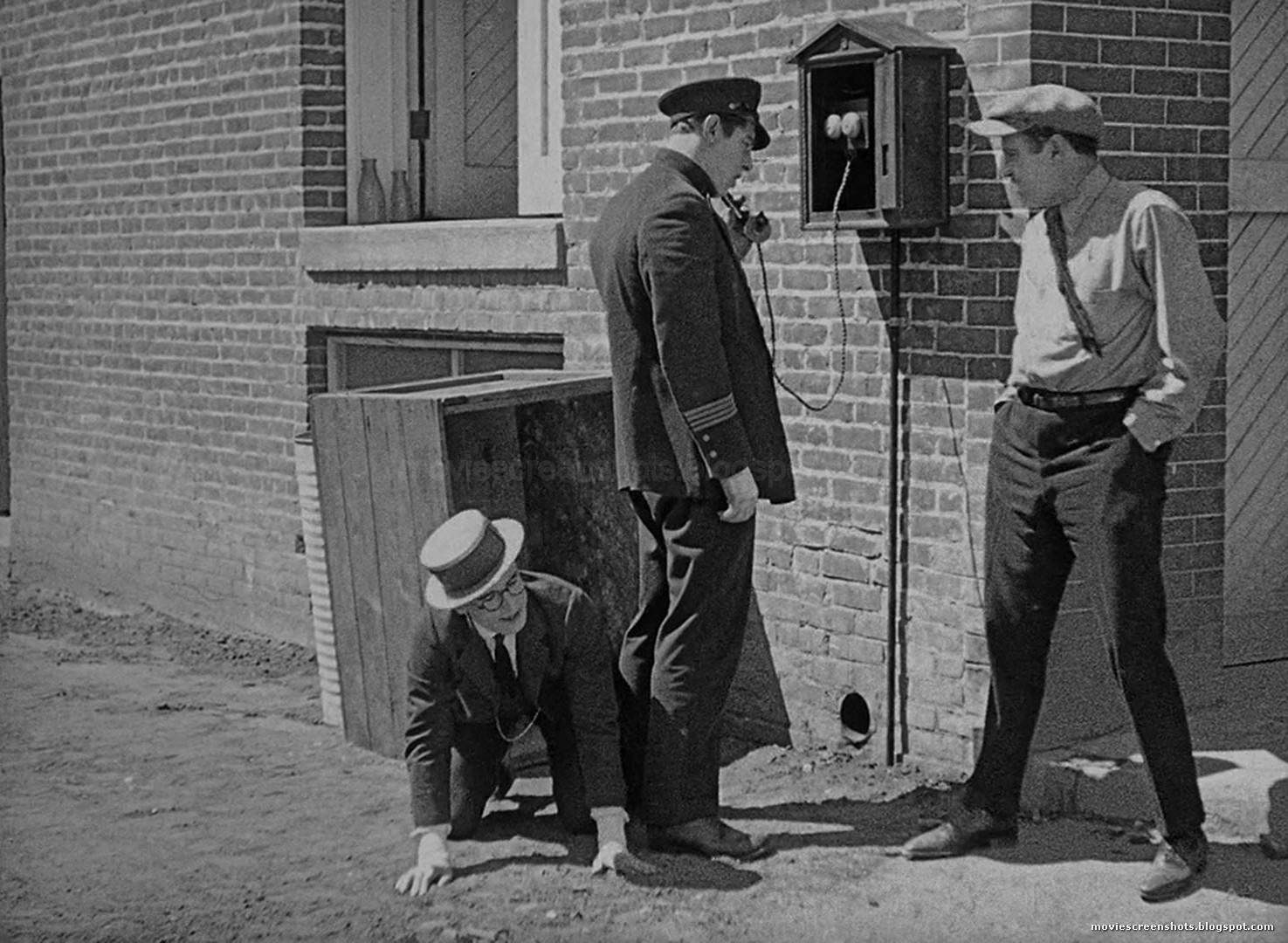
In an earlier sequence that sets up the climax of the film, Lloyd recognises a policeman in town as being an old buddy from their youth, and goads Limpy into helping him play a knock-down gag on the copper. But he doesn’t see his friend go inside and be replaced with a different cop, so when the prank is successful the furious flatfoot swears revenge on Limpy (Lloyd having quickly escaped). This sets up the dilemma that sees Limpy unable to scale the building in Lloyd’s stead (he was going to just take Lloyd’s glasses, hat and coat to fool the bosses), and Lloyd having to be coached into doing the climbing himself as the cop continues to chase Limpy around the store.

The sub-plot that sets up the finale

Of course, Lloyd doesn’t think he can do it, but Limpy reassures him that he’ll ditch the mad cop and take his place if he just climbs up a couple of floors. Well, the cop doesn’t give up that easily, and Limpy swings by a window every floor to encourage Lloyd to climb just another floor or two … until finally Lloyd has barely survived climbing up the entire building, reaping the entire $1,000 reward* for himself into the bargain, thus securing his forthcoming marriage.

*Lloyd is shown to be netting $15 every two weeks — remember this is 1923 — so a grand is like three years of wages in a single day, and of course it is implied he’ll be promoted as well.

Before the big climb and during it, there are numerous funny moments and smaller-scale stunts to keep things moving along, but the film — as ingenious and humourous as it is — still feels like the kind of plot that would sustain a film only half its one hour 13 minute runtime, and just throws in a lot of sequences that feel like (clever) padding.

Lloyd’s Not-Of-London … his actual position at the store.

That said, it’s very worth seeing. The incredibly clever way they did the climatic climbing sequences really make it easy to believe he’s hanging by a thread incredibly high up, but it wasn’t quite like that (you’ll have to guess how they did it in the silent era without the modern safety constraints and optical techniques such things would have today, I’m not telling).

I will however say that there’s a short Criterion Channel documentary made much later that reveals the secrets of Safety Last called Safety Last: Location and Effects that will spill the beans if you can’t figure it out yourself.

Throw in some incredibly well-trained pigeons (yes, really), a truly hilarious one-line cameo by a little old lady, and Lloyd’s amazing physical comedy, and you end up splitting your time between chuckling and staring wide-eyed at how he’s going to get out of this new bit of trouble.

If you’ve only seen sequences or still images from the film, I’d encourage you to watch the whole thing. Of course it was a big hit with audiences in its day, but in some ways it still embodies some uniquely American ideas about work-life balance, exploitative capitalism, and risk-reward philosophies that stand up today. Despite these subtle but weighty themes, it’s a feel-good film that everyone in the family will enjoy. Still!