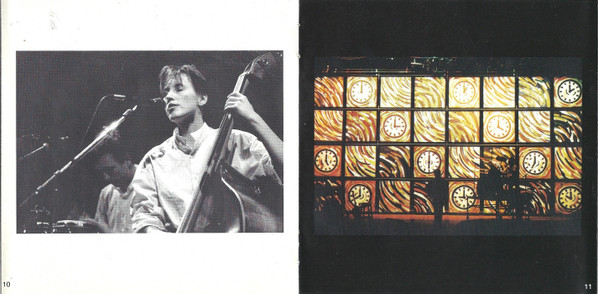
The Primitives – Bloom! The Full Story 1985-1992 (Disc 2)

Lovely, plus bonus tracks (Cherry Red, 2020)
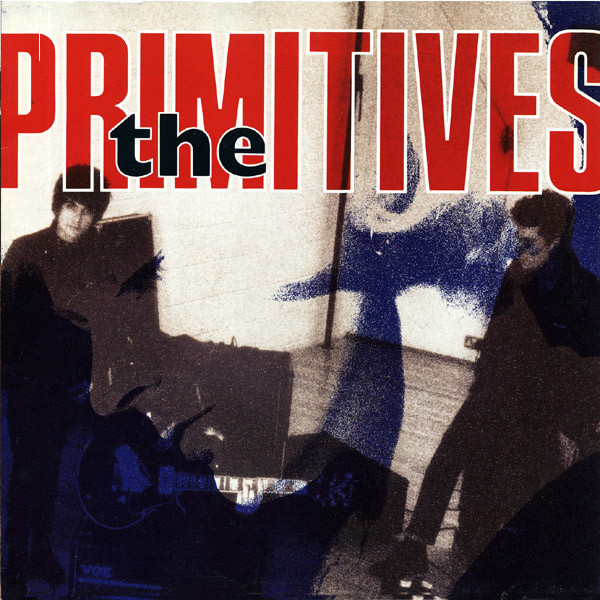
A terrific album with absolutely awful art (front and back).

THE OVERVIEW

Finally, after doing all the right things a band that knows they are good should do, a Real Record Company put them back in the studio to make a proper album and proper singles on a proper label, and the result was its own one-word review: Lovely.

If you are reading this and somehow haven’t heard the band, it’s airy, jangly guitar pop with a 60’s influence, a girl singer, and — if you lean in and listen close — a hint of darkness in the lyrics you’re not really supposed to pay attention to. It’s the sort of stuff radio stations of the commercial variety should’ve played regularly, especially in the summertime, but never did really. Thank heavens for college radio.

You won’t find a full review of Lovely here — if you’re reading this, you very likely already have a copy (at least, you should have a copy). That said, we’ll compare the (many) songs on the official debut album to the various versions that appeared prior to this, and examine the included bonus tracks.

The band’s original, heavier “wall of (guitar)” sound has officially given way to a catchy “indie pop/jangle pop,” vibe, but that C86 influence still creeps in occasionally. The album was oddly overseen with an “executive producer” (their agent, Wayne Morris), but in fact it was produced largely by second guitarist Paul Sampson and engineer/producer Mark Wallis, working together.

Though not a member of The Primitives, Wallis has had an incredible career producing acts across a wide spectrum of 80s and later rock. Oddly, Lovely was his only credit with this band.

THE ALBUM

As you might expect, the gang put their best foot forward and kicked off Lovely with the single “Crash.” It’s fun to compare the original demo to this beautifully perfected single; the first version started off with a very Joy Division emphasis on bass, setting a dark mood for the song, which is (to be fair) about the breakup of a relationship.

By contrast, the lead off track on the album starts with wonderfully 60s-flavoured jangly guitar, with a harsh bass/second guitar note cutting the intro short with a “brake” effect, and getting into the song itself. A growly guitar bed of melody and counter-melody plus a rock-solid bassline marry themselves to an unstoppable beat, and echoed Tracy’s vocals (softly backed with Paul’s presence) hums along in what the a music press article called “the perfect single by the perfect band.”

“Spacehead” gets a big-beat sound on drums this time, and we can finally make out Tracy’s vocals clearly. Both versions have the lovely “sha-la-la-la-la” mantra to keep this psych-influenced number grounded in beach blanket bliss.

“Carry Me Home” is a re-recorded version that still features lead vocals by songwriter Paul Court. Tracy comes in on some backing vocals, but only occasionally (as with the ‘87 Album Sessions version). The album version ups the “pop” quotient and tempo a bit to make it a better number.

This brings us to “Shadow,” which gets a radical revamp on Lovely compared to the “Guitar Version” we got on Disc 1. This time, the band goes all-out on the Indian influence. After a short menacing guitar buzz (probably meant to emulate the hiss of a cobra), the tablas kick right in and instantly give the song a more hypnotic quality, complemented nicely by Tracey’s mysterious vocal. The lead guitar from the original version can be heard way in the background, but this version is just way better and more atmospheric in every way.

Next up is “Thru the Flowers,” which we have heard two previous versions of back on Disc 1. The first version was on a self-produced EP that almost but not quite drowned Tracy behind a waterfall of guitar, the second was the “new version” with considerably more restrained and melodic guitar and better vocals, recorded for a Lazy Records single, and now we get the official album version.

The new version is like a cross between the previous two — bringing back the “crunchy” guitar intro and sporadic reappearance that will remind you of the demo version, but apart from a bit more echo its quite similar to the “New Version,” with an extra guitar instrumental break and still better vocal production. All three versions flirt (to some degree) with psychedelia touches, but never quite get there.

“Dreamwalk Baby” gets a considerably snazzed-up version compared to the “1987 Version” from Disc 1. Both version rollick along, but the album cuts puts the guitars behind Tracy as it should do, but is otherwise quite similar. I do miss the synth touch on the original, however.

Another song redone from the 1987 sessions is “I’ll Stick With You.” The 1987 version still had the crunchier guitar, but thankfully as co-equal with the vocals. What’s interesting to me (at least) in comparing these versions is how little the songs themselves changed; just the arrangement and production is really different for the most part. The band knew they had solid material, even as often as the word “hey” is repeated in a lot of them.

Whoever put the packaging and liner notes together for Bloom! somehow overlooked the next track, the new song “Way Behind Me,” but nonetheless it is in fact there, as it was on the album. It’s a great song, and there’s not much more to say about that. By this point, The Primitives have a signature sound, and most songs are clever variations on that sound.

“Nothing Left” gets a hell of a great intro compared to the original demo, which just jumped right into the lyric. The album version tracks closely with the “1987 Version” (which was informed by the “Sounds Version”), but just lacks the propelling energy of the album version with its ticked-up tempo. Again, it’s fun to hear how the song matures.

Tracey sings the lead of the instrumental break, which was a genius idea, and puts more passion into the chorus. This is the best version of them all, and the slightly-rearranged lyric is the icing on this cake. Like “Crash,” it’s a perfect song, done perfectly.

Likewise, “Out of Reach” gets its energy from a urgent tempo. Paul’s accompaniment of Tracy at key points only adds to the enjoyment. Like most of their best songs, it marries a nihilist lyric with deliriously happy jangle pop. There is more Paul on backing vocals in the “1987 version,” and a different arrangement, but it’s still the same great song.

“Ocean Blue” is a great change of pace at this point in the album, a slower and dreamier number, and features touches of drone and gentle percussion here and there. It follows very closely the “London Astoria single” version, but was re-recorded for the album.

After the new song “Run Baby Run,” we get to the album version of “Don’t Want Anything to Change,” in a more restrained version that offers some piano (!) for the first and only time on the album. I actually prefer the “1987 Version” to the album version, for once.

Lovely closes with the fuzzy surf rocker, “Buzz Buzz Buzz,”which gets a quick snare intro before the buzzsaw guitars take over. As with the two previous versions, Paul Court takes lead with Tracy doubling him. Again, it’s a very close remake of the original album sessions.

THE BONUS TRACKS

We start with some of the b-sides from the “Crash” single. The A-side was of course the album version of “Crash,” but came with three b-sides — the album track of “I’ll Stick With You,” the “Crash” demo version, and an all-new song, “Things Get in Your Way,” which starts off kind of oddly but really grows on you. Only “Stick” and “Things” are here on Disc 2 as bonus tracks, since we’ve already gotten the demo verion of “Crash” on Disc 1.

A (slightly) alternative version, from a John Peel session.

The remainder of the tracks in the bonus section for Lovely consist of an amalgamation of the a- and b-sides of the “Out of Reach” single. The UK 12-inch versions contained the remixed (and sped-up slightly) 1’54” version of “Out of Reach,” the album version of the same song (20 seconds longer), and two live tracks: “Really Stupid” and “Crash.”

The 7” version of the UK single had the shorter version of “Out of Reach” and live versions of “Dreamwalk Baby,” “Really Stupid,” and “Crash.”

Of these, the big treat of the b-sides is to be found here and on the CD-single version: a b-side live cover of Iggy Pop’s “I Wanna Be Your Dog,” which originally appeared nowhere else, but eventually turned up on the previous Primitives anthology CD sets. It sounds a lot like the earlier “wall of guitar” incarnation of the band, and of course if you’ve not heard a woman singing it, that’s kind of novel as well. It’s the final track on Disc 2, and a wrap on Lovely.

Next time: Pure delight!

Nits – Urk (Disc 1)

(1989, Columbia Records)

THE PREFACE

Some nitpickers would proclaim that Urk doesn’t fully qualify as a CD boxset, since it consists of only two CDs. However, I would point out that a) it was originally issued as a three-LP boxset; b) the CD version comes in one of those double-wide plastic CD cases popular at the time that could be made to hold up to four discs; and finally c) at the very least it truly qualifies as a bargain, since I paid only €3 for it (approximately US$3.25).

This particular copy (not my first of this album) was acquired on a recent trip to Amsterdam, and purchased at the 58th Mega Record & CD Fair in Brabanthallen. This image (captured by the promoters) does not really show the scale of this event, because there was a second adjoining “room” of the size seen here, with a sitting area, food vendors and a performance stage in the connecting area.

My friend The Post-Punk Monk (who’s blog is a must-read for postpunk/new wave music enthusiasts) and I spent the better part of the daylight hours going to, traversing, and crawling from this gargantuan show, sadly with surprisingly little for either of us (but a few treasures, Urk among them). The show overall had a higher representation of prog music enjoyed by the generation before us, as well as metal, neither of which are of much interest to the likes of we.

That said, we covered well over 90 percent of the event’s dealers, which was a real challenge. While we regret there wasn’t more for us to buy, our wallets thanked us — and what we did get, we were mighty pleased to have gotten.

This journey was prompted by an opportunity to see Nits in concert for the first time, after (cough) decades of following the band. That too was accomplished, and was the highlight of the Netherlands portion of the trip.

Readers may not be familiar with the band, since they are best-known in Europe. My go-to metaphor for the band’s sound is “imagine if The Beatles had started in 1974 instead of a decade earlier, influenced by the music of the 60s and 70s rather than the music of the 50s, and wrote relatively few outright love songs.”

Please do sample them on Spotify or Apple Music if that explanation intrigued you — by the late 70s you might say they were a full-on New Wave band, but really their sound has always been reflective of intelligent, artful pop songs influenced by culture, infused with truly incredible poetry, and living near the border of Western and Eastern Europe. If China Crisis and Nits ever toured together, I might die of sheer delight.

THE OVERVIEW

Urk consists of 29 songs spread out over two CDs, recorded live in various cities, from Amsterdam to Utrecht to Moscow, during the winter of 1988-89. Many if not all of the songs on Urk were popular or fan-favourite songs from across their most popular albums.

It would be fair to call it a live version of their “greatest hits” to that point, and the album itself ended up in the top 10 charts for The Netherlands. It was, for many years, their all-time best-selling album. Urk was originally released in the summer of ‘89.

By the time of this recording, Henk Hofstede (the lead singer, writer, and guitarist) and Rob Kloet (the drummer/percussionist), the two original members, had been joined by Robert Jan Stips (sometimes producer and full-time keyboard maestro, still with the group to this day) and bassist Joke Geraets. Geraets, shortly after these live recordings, had to quit the band due to her ongoing medical issues.

Nits (who had recently dropped the “The” from their name) were supplemented on the 1988-89 tour by the Amsterdam Saxophone Quartet on the Amsterdam portion of this tour. Seeing the band in Amsterdam this year, their only accompaniment was a trio of excellent background singers. For the bulk of the performances here, it is just the four-piece version of the band, with the members themselves handling backgroud vocals.

In addition to the spacious CD storage case, the package includes a full-colour booklet including tour photographs, credits, and track listings.

THE ALBUM

After a short bit of welcomingly warm audience applause, there is a cross-fade to a lovely classic from the band, “The Train,” which originally debuted on their 1988 album Hat. It’s a gorgeously melancholic song (and yet rather jaunty in tempo) about a lost love and the sadness, vulnerability, and self-examination that often follows such separations.

In the original version, the first set of verses is followed by a longish instrumental break, where the sound of a train arriving in the station comes to dominate all but the never-stopping sound of Kloet’s sharp tapping rhythm. The song then picks up again, repeating the lyrics in full until it ends with the narrator reflecting on himself in the mirror-like windows of the train, asking himself “Hey, whatcha doing with your life?”

The next song segues right in with no audience noise. “Adieu Sweet Bahnhof,” the title track of their 1984 album, starts off with a carnival-like organ opening, Henk describing riding for what seems like hours in a train (making this a clever lyrical transition from the previous song), presumably leaving from Amsterdam and passing through Brussells on his way to Paris.

Listening to this version for this review, the song struck an even deeper note with me, as I took this very same journey on my return from Amsterdam to see the Nits perform — reflecting on this trip, and time spent in Europe from my own past.

In the concert I attended, this song was the final encore of the evening, and as it began the Dutch audience, familiar with the song, again applauded it warmly. “My train of thoughts is leaving … tonight!” is such a great little lyric.

It is very Nits to have a song title that uses words in English, French, and German interchangeably — “bahnhof” meaning “station” in German. Who the heck writes a song wishing a train station a fond farewell?

It should be mentioned for those not familiar with Nits that the band themselves are Dutch but sing almost exclusively in English apart from the occasional non-English word or phrase.

The overall effect of the song is again centered around a person who is sorting out his thoughts around the changes in his life, again making for a fine pairing with the first song. The last verse is another fabulous construction of vivid imagery:

Now like an arrow we’re aimed at Gare du Nord
Between backs of the houses streets like fjords
And the night falls over Paris
So I’ve come back to the Hotel d’Angleterre
I lay down on a double bed and stare
At the ceiling – what a feeling (to be back)

Gare du Nord is the destination train station for Eurostar in Paris, and I also arrived there on my own journey back. As the song ended, the audience applause returned before a final flourish from Stips to enthusiastic applause.

As someone else once said, Hofstede and his bandmates have an unrivaled ability to write songs as “little emotional postcards.” Next, they went straight into one of their biggest hits, “J.O.S. Days,” from the autobiographical 1987 album In the Dutch Mountains, about Henk’s early days of school and athletics. The driving guitar line and some “wailing” synth sounds keeps the “train” motif going a bit longer, though the song has nothing to do with trains.

J.O.S. stands for “Jeugd Organisatie Sportclub,” with “Jeugd” meaning “Youth.” Henk’s grandfather Jakob helped found the group, and it was a “family tradition” for boys in the family to play. Henk’s nephews, “dumb but tall” starting “kicking the ball” in the womb. Henk, however, was cursed with flat feet and “weak knees,” and got booted from the team after his first practice game.

The song also touches on the dark after-effects of the Second World War on young Henk and the club. There was a memorial erected after the war between the football fields, with the names of team members who had died. He notes that “they thought they would win, like in their J.O.S. days.”

This leads to a song about war, 1983’s “Sketches of Spain,” from the Kilo EP. Again, the marriage of the sad lyrics and the superb musicianship makes for a compelling listen about a subject nobody wants to talk about. Accompanying Henk on vocals is an uncredited female vocalist, presumably Joke, adding a nice effect not present in the original version. Stips backs Hofstede on vocals in what passes for the chorus.

And we next swing round to the biggest hit the band ever had, practically a national anthem — “In the Dutch Mountains,” from the album of the same name. Remarkably, the arrangements of the live songs follow the record versions as closely as possible — a feat managed thanks to the band’s frequent habit of recording the songs live-in-studio as much as possible.

The official clip for the song

At the concert I attended, the audience “filled in” with the band on the spoken-word repetition of “Mountains” — clearly a long-time audience favourite.

The song is mostly joyous in nature, and funny — there are very few if any actual mountains in The Netherlands. There is one part, however, that suddenly turns quiet and still, right in the middle of the song:

I lost a button on my shirt today
It fell on the ground and it was rolling away
Like a trail leading me back
To the Dutch mountains

Poetry and visual imagery on this level is rare in pop music, but Nits are the masters of it.

From here we go to “The Dream,” a song very similar in style to “The Train,” and like the former, it’s from Hat — and similarly, it’s a described painting barely within a traditional pop song structure. The main lyrics are contemplative, while the chorus is joyous, and gives the musicians room to play. Stip’s flute-like synth touches are just … (chef’s kiss).

“The Swimmer” comes from In the Dutch Mountains. This one literally describes some other dreams, in shorter bursts and once again with sections where the musicians can throw different motifs in the mix, this time a bit of tango that goes awry before settling back down. Henk is again backed up on vocals by Joke.

Rob Kloet’s understated percussion thus far comes to the fore in the introduction to “The House,” again from Hat, hitting glasses to create the band’s now-trademark “ting” sound. Organ sounds come in as the tinging recedes. The slower, haunting vocal in a lower register (from Stips) is so effective against Henk’s haunting mantra: “Time’s slipping away.”

We revisit the Dutch Mountains album for “Two Skaters,” one of the band’s more surreal dream-inspired songs. A very understated number with shimmering guitars, but it would never in a million years be played on a soft-rock station.

I am always much bemused by the stanza: “Your sister in Canada/She’s sending an LP of the Velvet Underground/We’re steaming the walls of your brother’s old room/Peel slowly and listen.” Gee, I wonder which VU album that was? 🙂

Another big favourite of mine, “Cabins” comes from the 1986 Henk EP, and is a great song to sing from the bow of a boat. The synth-heavy original arrangement is altered and the pace quickened on this version, but the enthusiastic audience claps along, because it’s a happy little number and one of my all-time favourites.

Another hit, “Nescio,” starts off with a barely-accompanied piano and spoken-sung second verse before starting proper. Once the music kicks in, the audience applauds in recognition. Oddly, the song list printe on the CD and booklet list “Nescio,” but the last on the back card of the box mistakenly skips it.

Parts of the song are in Italian, with the title meaning “I don’t know.” So the first verse (pardon my weak grasp of Italian) runs like so:
I don’t know
This paradise
I don’t know
In the wolf’s mouth
I don’t know
The stranger is dead
I don’t know
This paradise

The furious acoustic guitar by Henk alongside the snares of Kloet and madcap piano of Stips is the band at its best. The last line in Italian, by the way, translates to “The painting is beautiful (Questo quadro e bello).”

“Pelican & Penguin,” from Dutch Mountains, features cocks’ crows, accordion, and a horn section, making for a very different sound. Lots of odd sounds and vocalized noises on this one.

The penultimate number on this disc is “Telephone Song,” a real rarity from the earliest days of the band, before even their first album. It’s a very quirky number (Joke is on lead vocal, for starters), and hasn’t appeared on any of their official releases apart from this one, to the best of my knowledge.

Similarly, “Dapperstreet” has only ever appeared on this album. It’s a slow, thoughtful number that wouldn’t have been out of place on Hat that shows off more sophisticated songwriting than “Telephone Song.”

Next time: Disc 2!