Mari Wilson — The Neasden Queen of Soul — Disc 3

(3CD box set, Cherry Red, 2022)

THE PROLOGUE

So if Disc 1 was the Showpeople album and a handful of bonus tracks, and Disc 2 was a lot of the pre-album demos and some live tracks recorded before and around the first album, what could Disc 3 possibly hold for us?

The answer is: the best of the rest. In particular, these 2022 remixes (and in one case, a 2021 remix), remastered from the original tapes by Tot Taylor himself are just the bee’s knees. You think you’ve heard “Baby It’s True” and “Beat the Beat” enough times already, but you my friend are wrong.

Sadly, there aren’t any YouTube versions of any of the 2022 remixes, so instead the videos we include will be some rare items and later appearances (so don’t be alarmed by the change in hairstyle!)

Our first choice was a stop of the 2016 Heaven 17 UK tour (which we got to see two dates of, but sadly not this one in Bury St. Edmonds), where Mari performed two songs you along side Martyn Ware and the band. So enjoy.

So the first half of Disc 3 is just these fabulous new remixes , with the second half being the “odds-n-sods” collection — a US remix here, an alternate take there, a Spanish version found in the rumpus room, and a 7-inch edit balanced precariously on the liquor cabinet.

There’s even an instrumental version in here somewhere. Let’s dive in, shall we?

THE MUSIC

The disc kicks off with sonically wider, cleaner, and “glow-up” 2022 remix versions of Showpeople tracks “Baby It’s True,” “Beat the Beat,” and “Ecstasy.”

There’s also new remixes of “Glamourpuss” (two remixes, in fact, in different years!) “Rave,” “She’s Had Enough of You,” “You Look So Good,” and the US remix of “Just What I Always Wanted.” There’s also the original UK version of “Ecstasy,” just thrown in for good measure.

For the 2022 remixes of the album tracks, the new version beats the original every time — with one exception. The 2022 version of “Ecstasy,” replaces the 80s drums of the album version with traditional ones, but quickens the pace considerably — it might actually be a little too fast. The UK original version elsewhere on this disc keeps that same manic speed, so I have to bow to the wisdom of the US record company that made them re-do the song at a sensible tempo.

The 2022 remix of “Rave” is really a cleaned-up and slightly re-edited version of the “live in the studio” version heard on Disc 2. Oddly, the Wilsations are not co-credited on the Disc 3 version, though of course they are still there.

Likewise, the 2022 remix of “She’s Had Enough of You” is a notable improvement on the original we heard on Disc 2. It seems like it is pitch-shifted a little from the other version, which only benefits the song.

This brings us to the 2021 remix of “Glamourpuss,” here given the subtitle “(Scenario).” The piano intro is completely different, and jazzier, just for starters, and then the sax comes in. Sadly, this version keeps the corny b-side “band introduces the singer” gimmick, and then the original piano comes in and the song gets underway.

Give me the 2022 remix version on this one any day.

The “U.S. Remix” version of “Just What I Always Wanted” starts off with the whispered “Let’s Go,” then proceeds to drag out the intro of the song and ruin the energy of the original until Mari finally shows up and gets the number going properly after the first minute. Of the three versions found on this box set, the original album cut is the best, in my opinion.

Note to Tot Taylor and/or Tony Mansfield: when you have someone say in a song “let’s go,” there needs to be a burst of energy that follows that. I’m not quite sure how you missed that, but them’s the rules.

So now we move into the second half of Disc 3, which offers no remixes but more alternate versions. We start with a song only heard on Disc 1, “One Day is a Lifetime.”

This time, The Wilsations are credited, even though we don’t hear a peep out of them vocally. It’s listed as an “Alternate Version,” and apart from correcting an editing error at the very beginning of the original Showpeople track, the main change is the band’s presence is felt throughout the track rather than only sporadically.

“Tu No Me Llores” is “Cry Me a River” in Spanish, and a classic is a classic in any language. The middle-eight reverts back to English, but the verses have been rewritten slightly to rhyming purposes. After the instrumental break, we come back to Spanish.

This is followed by an instrumental version of “Would You Dance With a Stranger.” A solo sax starts us off for a few bars, then the piano softly comes in behind the sax.

Finally the upright bass arrives, and the disc officially earns its Apple Music and Spotify classification of “Jazz” with no qualifiers. It’s a beauty in either version, but as lovely as it is the lack of Mari is keenly felt.

The 7-inch DJ Edit of “Wonderful (To Be With)” is shorter than the lead-off track on Disc 1, but otherwise unchanged. Again, The Wilsations get credit on this version, where they didn’t on the Showpeople album track.

The last two tracks on Disc 3 should be classified as “curiosities” or perhaps “experiments.” It’s two versions of the song “Let’s Make This Last,” first heard on Disc 2 as the “De Lorean Style Mix,” with squiggly sonic effects at the intro.

The first version on Disc 3 is referred to as “Let’s Make This Last (A Bit Longer),” a clever name for an extended mix, but also has the subtitle “Stereo Shift Mix Loop One” that really makes hay with the synth remix effects.

It takes nearly two minutes for Mari to finally appear and the song to get going properly. I can see where a club DJ would make great use of this, but its an awfully odd duck on an album of faux-60s poppy love songs.

The second version opens with crowd noise (not from a live gig), and is another busy remix, but with no time wasted on extended synth loops (though that’s not to say there aren’t some, just that they get moved to the middle). Like the first mix, this wouldn’t work outside of a club, but at least its much shorter.

On the other hand, the actual song is chopped to ribbons, with the verses removed entirely and replaced with random cheering-crowd snippets. Just my opinion, but this is a pretty awful way to end the disc.

I think if these needed two mixes needed to be included at all, they should have come earlier — maybe right after the 2022 remixes. Move the beautiful “Tu No Me Llores” and “Would You Dance With a Stranger” instrumental to the end, and you’d finish the experience of this box set on a high note.

Next time: “Stiff” competition!

Lene Lovich – Toy Box: The Stiff Years 1978-1983 (Discs 1 & 2, part 1)

Stateless, US & UK versions compared

THE OVERVIEW

Toy Box: The Stiff Years is a four-CD box set covering everything (or nearly so) Lene and her band recorded for Stiff Records, which amounts to three albums, two “mini-LPs,” and some odds and sods, all of which have been gathered up together. For me, who has collected Lene faithfully for decades (and once did a lovely interview with her and Les in Atlanta), there’s not a lot here I hadn’t already heard or own, except for one pretty significant thing (which we’ll get to shortly).

From her 70s and 80s peak years, most everything is here apart from the brilliant 1989 album March, but of course it wouldn’t be — it didn’t come out on Stiff. Each of the albums are supplanted with bonus tracks, including a lot of “early versions” (home studio demos), instrumental versions, variations, remixes, live versions, and promo or b-side type stuff.

As with these sorts of “everything boxes,” as I like to call them, it’s really great having this all in one place (super handy when storage is tight, eh, fellow collectors?), and while I’m sure there’s a few oddities missing — for example I have the full Lene “Interview Disc” on vinyl where the DJ would ask questions and “Lene” (on the included record) would respond — but this is as complete a catalog of the Stiff music from her as we’re likely to get. Plus, it’s Cherry Red — there’s a fabulous booklet that includes Lene’s own memories and comments, plus some supplemental information from Scott Davies (of Rubellan Remasters, who handled the audio remastering for this project) and Michael Robson (who sheparded the project and designed the booklet and box).

One last thing before we dive in: It wasn’t originally my intention to do another artist who rose to full prominance in 1979 this soon, I had actually picked out another quite different artist boxset to do; but I was joking to some friends one day last month that it would be ironic if I covered three of Lene’s four 70s/80s albums in … wait for it … March, and so here we are.

STATELESS — BACKGROUND

A two-CD version of Lene’s debut album, you ask? How can this be, even with bonus tracks? The original album was barely longer than 30 minutes! This is the “pretty significant thing” I alluded to earlier — both the US and UK versions of Stateless are present here, and as I’m embarrassed to admit (having owned a vinyl UK copy of the album for decades but never actually listened to it because I also had the US version) — I was unaware of just how different the two versions were/are until now. So, for me at least, there’s a brand-new record in here.

Consequently, this calls for a side-by-side comparison of each album track. We’ll also review the non-album bonus tracks — all 21 of them! — and pick out the gems.

The short story on the two versions is that after the record originally came out in the UK (with the pre-release hit single of “I Think We’re Alone Now”) in October of ’78, the US label felt it needed some further cooking, and had Roger Bechirian (well known among New Wave et al album collectors) remix and re-record some parts for the US release, which made “Lucky Number” a minor hit in the States as well.

The US version used a different — and frankly better — cover shot as well, though I like the way Lene (in the booklet) refers to the UK cover as “like ‘The Scream’ by Edvard Munch.” When the album was re-issued in the UK in ’79, some (but not all) of the Bechirian versions were included, so getting to hear the original mix is a treat.

The Bechirian version of most of the songs was then used for the subsequent rest of world versions, which along with the US version came out in April of ’79. The full story on this is a bit more complicated (variations on how many Bechirian remixes were used on different countries’ album version, plus a couple of mis-stamped pressings), but to consolidate matters Cherry Red has Disc 1 as the original LP mix (only a little Bechirian) and Disc 2 as the “US/UK remix” version (tracks 1-8 and 11 were “Bechirian’d”). For the bonus tracks it is not spelled out, but our Roger is also credited with production as well as backing vocals (for “Trixi,” meaning that song was likely created during the re-record sessions).

The album did pretty well: while it didn’t chart in the US, it went Silver in the UK (250,000 sold) and did well all over Europe, Australia, and New Zealand. The first single, a remake of Tommy James and the Shondells’ “I Think We’re Alone Now,” reached #3 in the UK. It had the “early version” of “Lucky Number” as the b-side.

The subsequent single, the revamped “Lucky Number,” went to #2 in Australia and #3 in New Zealand, and also charted elsewhere. In the US, the song was a sleeper success, never hitting the Top 40 but it was an early video and club hit.

Before we get to the UK vs US compare, I do want to mention my general feelings for this album: obviously I liked it at the time, but this revisit has reminded me of how much I adore this record. It’s a rare album where 100 percent of the songs are strong, polished, and timelessly enjoyable, and of course Les and Lene’s talents mesh so beautifully here that the whole thing — UK or US version — is just a joy. It’s one of the very best albums Stiff ever put out, and was by no means a one-shot wonder.

STATELESS — SONGS SIDE-BY-SIDE

These will be comparisons of the “UK original” and “US/remixed” versions of each song, acknowledging that having an experienced engineer remix/redo some stuff is bound to sound better a lot of the time. We’ll use the original UK running order for the album.

Lucky Number
Winner: US/remixed
Bechirian knows what he’s doing when it comes to mixing: this has a brighter tone and a more swinging tempo; beefier drum fills; more manly background vocals; a slightly more “quirky” lead vocal, and the brilliant addition of the monk-like “number” chant for the outro.

A slightly different, live (?) version from Top O’ the Pops

Sleeping Beauty
Winner: US/remixed
The US version has a new vocal (this will be a theme in many of the US/remix wins), but the UK original is clearer and more natural — Lene doesn’t fight the instruments to be heard as much. That said, the US version is better mixed throughout, and adds more bv’s and stronger bell sounds. It also has a new guitar solo, and the song cuts to the ending much quicker, losing 30 seconds of repetitive vamping from the original version, which gives it the win.

Home
Winner: UK original
Some may disagree, but I think the UK original mix retains more of that surfer/psychedelic feel. This seems like the first song were Lene’s vocal wasn’t re-recorded in the US version, but then again, the US mix adds some new guitar twang and louder FX during the middle eight.

Lip synced version from Dutch TV

Too Tender (to Touch)
Winner: UK original
The US version features the bells much more prominently, which is an improvement on the UK version, but oddly tries to bury Lene’s vocal under a significantly louder piano (excellent work by Don Snow) and some organ bits. Again, it’s the same vocal on both versions, but Lene never really comes to the fore in the US version until the bridge, and even then a new and different piano solo gets thrown in for no clear reason.

Say When
Winner: US/remixed
Conversely, on this one it’s not even close: Bechirian’s significantly re-mixed and re-recorded version is just vastly superior. It’s a fun song either way, but Lene’s terrific new vocal contrasted with more male bv humming, and a far more prominent organ, some nicely-placed reverb and other touches just make this one the definitive version (plus an extra count-up!).

Lip synced for Dutch TV

Tonight
Winner: tie
Nick Lowe’s “Tonight” gets a really nice 1950s treatment in both versions, but each one drops the ball in one way or another. The UK version puts Lene front and center vocally throughout, as it should, but it criminally dwells on the sax (which is very good, don’t get me wrong) at the expense of not bringing in the crucial supporting background “echo” bv’s until the song is more than half over. While the US version corrects that mistake, Bechirian piles on all the instruments too much, frequently drowning out Lene’s climatic vocals in the choruses.

Writing on the Wall
Winner: US/remixed
Another 50’s influenced number, this time the tragic story-song that skirts doo-wop territory at times. The US version brings in sax, better mixing for the organ, and adds more male bv’s to give the song more atmosphere.

Telepathy
Winner: US/remixed
A very funny song, which backs off the 50s influence somewhat but still has an echo of it. Once again, the US version brings in the background vocals right away and keeps them around throughout, and Lene’s re-recorded vocal actually improves on the UK original. The better mixing and more vocal power wins the day.

Momentary Breakdown
Winner: UK original
We’ve now moved firmly (with “Telepathy” and now this one) into early 60’s (fake) girl group sound. This time it’s the UK version that gives the “girls” plenty of spotlight, and Lene’s incredible, four-octave finale is just … (chef’s kiss). The US version mostly buries the bv’s until the middle eight, but does offer better separation for the instruments, and the end of Lene’s octave stunt isn’t the end of the song this time, she just descends and starts over (briefly).

One in a 1.000.000
Winner: UK original
This song always reminds me of “Say When” in its franticness, strong vocal, and playful arrangement — you could image a chorus line of western burlesque dancers high-stepping this number at an old west saloon. The US version again puts Lene back a little in the mix (with bv’s more prominent, but to be fair they’re very good), but the two versions are by far the most similar between the two releases, with only a slight change to the sonic staging on this one.

I Think We’re Alone Now
Winner: tie
Bewilderingly, the US version on this song flips the typical script on the way it’s mixed, with the instruments nicely separated from Lene’s vocal, with the bv’s a little less prominent and her own background sounds getting some of that spotlight also. The difference between the US version and UK version is still a little subtle and for me, either one is the best version of this song I’ve ever heard.

Lip-synced performance on Spanish TV

Next time: Discs 1 & 2 bonus tracks!

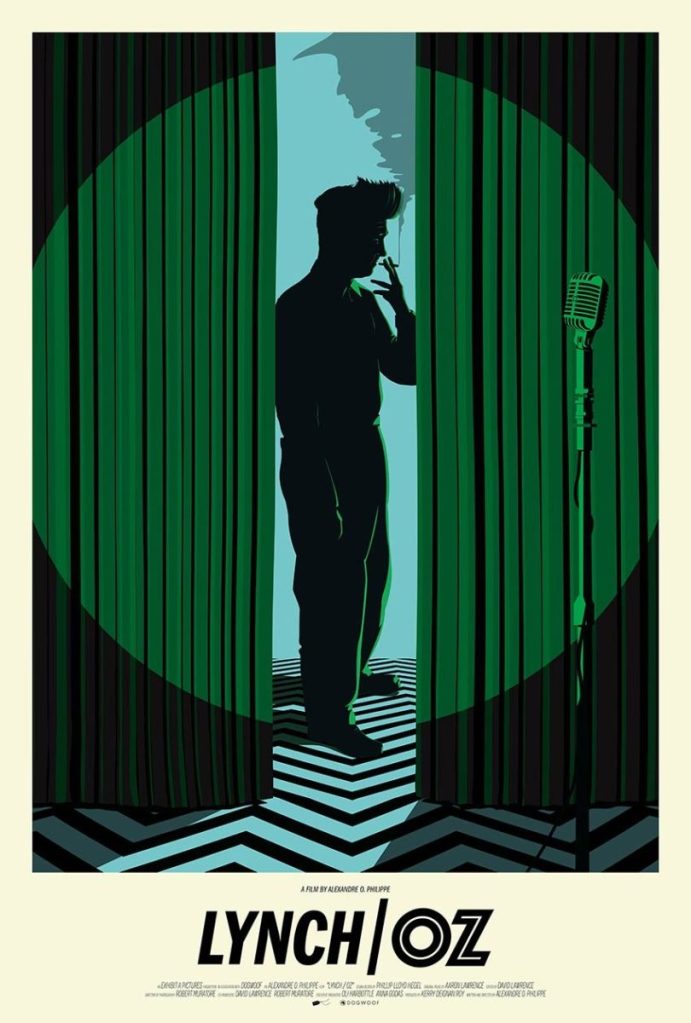
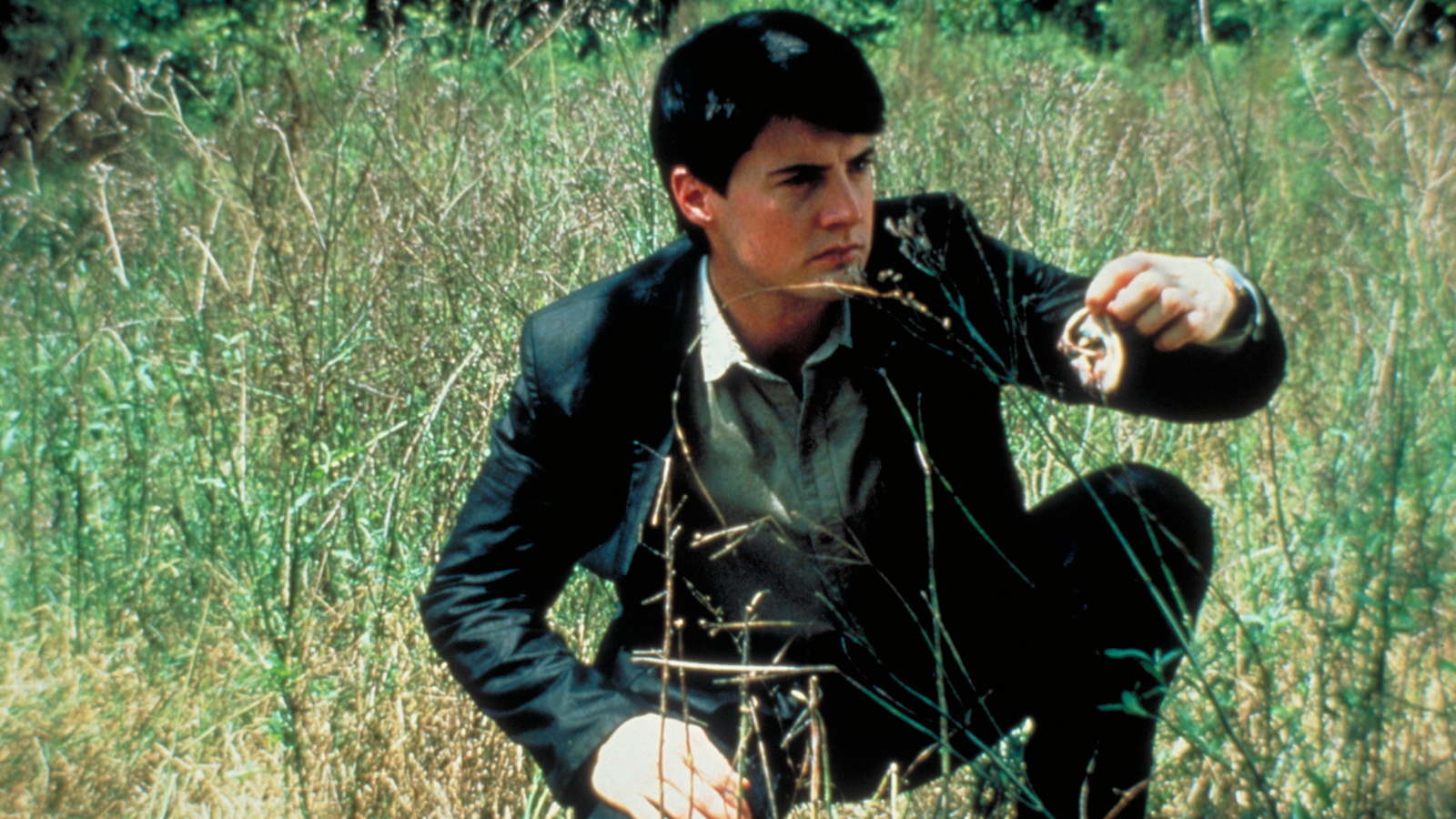
Lynch/Oz (2022, dir. Alexandre O. Philippe)


⭐️⭐️½
52-week film challenge, film 48

The short version: this film-school set of academic essays read aloud with visual accompaniment, which collectively try waaaaaay too hard to connect everything David Lynch has done to the 1939 film The Wizard of Oz is overlong and misguided.

That’s not to say that there aren’t a lot of references and visual cues in Lynch’s work that parallel TWoO; of course there are.

He’s obviously influenced by it, and there’s plenty of examples, either spoken in his films or visual/story metaphors. In answer to one essayist’s question at a Q&A somewhere, Lynch himself says that not a day goes by that he doesn’t think about that film.

Glinda the Good Witch literally makes an appearance in Wild at Heart, FFS.

The problem (one of several) with the central premise behind this is that most artists Lynch’s age or younger can easily be demonstrated to have been influenced by The Wizard of Oz: it was a unique film that embraced Technicolour in a new way, giving new life to L. Frank Baum’s first Oz book (he went on to write another 13 in the Oz series). The film version’s characters, dialogue, and songs have all entered the public consciousness in a huge and enduring way, thanks to the film’s yearly repeats on television and its extravagant, nearly-timeless tale of poverty, fantasy, and the power of friendship and imagination.

Even if you accept that Oz was a major influence on Lynch’s films — and there’s plenty of evidence that it was, in places — the documentary goes on to point out that it was also a significant influence in dozens and dozens of other films that have nothing to do with Lynch at all, thereby diluting Lynch/Oz’s central premise. This adds significant time to the already-thin but interesting premise, with the documentary running a very long-seeming hour and 49 minutes, when it could have been a really tight and more interesting hour.

Lynch/Oz is divided into six chapters, following what director Philippe probably thought was a Lynchian oddball introduction by odd-looking Jason Stoval (as Sid Pink) that falls very flat, as does the reprise at the end of the doc.

Another element that might have helped make this tribute less dull would have been to actually see the six essayists who read their written analyses of Oz’s influence on Lynch. Instead, we get clips from many other movies that also in some way reference The Wizard of Oz, seeming undermining the point of this particular doc — Oz is a very influential picture across all of the last 80 years, we get it.

Amy Nicholson has one of the weakest premises in her section, titled “Wind.” Yes, she talks about the use of strong winds to be transformative agents in both The Wizard of Oz and Lynch movies, of which there are but a handful of examples. Rodney Ascher’s “Membranes,” which posits the dividers between “reality” and the things beyond that (often illustrated with curtains in Lynch’s work, akin to Toto pulling back the curtain to reveal that the Wizard is not who he seems), is much more successful. It’s a very, very, obvious point, but well-explored.

Lynch’s films frequently deal with a character discovering a larger — and more sinister — world than the one they live in, which sparks a journey of discovery.

The third essay is the one that is the most completely worth watching: fellow filmmaker John Waters, who has a delightful personality and distinctive speaking voice that radiates joy, talks about how he and Lynch are of similar age, and so of course are in some ways influenced by the same films they saw as kids — not to mention that, like Lynch, he developed a fixation on the undersides of façades. Waters shares an anecdote of meeting Lynch, talks about their shared influences, and similar — but very distinct — desire to poke around underneath the fantasies we all try so hard to fit into our realities: it’s by far the best of the essays.

That’s not to say Karyn Kusama’s pondering on “Multitudes” in her exploration isn’t good also, but it marks a return to the more dry and academic style of analysis that has dominated this documentary until Waters brought some fun in with him. Thankfully, this is followed by Justin Benson and Aaron Moorhead’s humourous ruminations on the frequent reference to a never-seen “Judy” in Lynch’s TV and film work, which brings in an excuse to explore the influence of Judy Garland’s own life on Lynch — a genuine and, once you see it, obvious musical influence that their essay makes clearer.

I did appreciate the documentary pointing out some examples of red heels (and even clicking them) in Lynch’s work.

This leaves David Lowery to bring up the rear with his essay on the theme of digging — a pretty weak link, and a curious choice for the finale of the documentary. He pokes around at the rather obvious point that Lynch’s characters often try to either bury things they don’t like, or have such things dug up (metaphorically or literally).

As a Lynch fan, I was hoping I’d get more out of this documentary than I did, though I do appreciate both some of the essays and examples they gave to support their point, and of course the archival footage of Lynch interviews, which are sprinkled throughout. Lynch doesn’t talk that much about his own work, so these nuggets are rare and Lynch’s obtuse way of answering questions about his work are mischievous and amusing.

If they’d drop the pretentious opening/closing, the seemingly-endless references to non-Lynch films that have obvious Oz references, and maybe the weakest of the essays (either “Wind” or “Dig”), you’d have a smart, shorter documentary with some real insight. It’s too bad director Philippe didn’t do that, because what he ended up with is a documentary that will have you squirming in your seat — for all the wrong reasons.