It can be said (fairly) that an entire second disc of material very similar to what appeared on the first album proper might end up overstaying its welcome — unless you really enjoy full-band-and-singers 60s style love songs as a genre. In hindsight, this set should have started with this second disc — another great batch of similar material that was mostly made prior to the production of Showpeople, and thus serves better as a primer on what Tot and Mari were going for.
If you heard the material here first and then heard the resulting album, it would make for a more interesting contrast between their initial approach — sure-fire crowd-pleaser songs for concerts, for the most part — and what Showpeople ended up being, which is more of a showcase of all types of genre song styles for Mari.
These are singles (A and B sides), along with some rarities and leftovers. The big mystery with this material is “why didn’t the leftovers here constitute a second album?” These are very solid numbers that stand perfectly aside the songs that made the cut. How on earth she could ever afford such a large band (as this style of music requires) before getting a record deal is an even bigger mystery!
THE MUSIC
The first three tracks are all that kind of bombastic high-energy full-band affair that I enjoy, and all three — “Love Man,” “If That’s What You Want,” and “Dance Card” — could have easily been on the album if there had been room for more of that.
We finally get to something more focused on Mari along with track 4, “She’s Had Enough of You.” Another great track and breakup song, with a nice variation of style from the previous three “rave up” tracks. Track 5 is another winner, the original “Beat the Beat” single that is kind of a calling card for her style, again with a focus on Mari’s singing rather than so much of a group effort.
“Glamourpuss” (track 6) opens exactly like a classic noir crime drama score, and surprisingly the band introduce themselves before bringing “on” Mari. This time, her “real voice” offers both spoken and sung lyrics, and the band sing on the chorus. It’s a delightful “show” number and I can only imagine it was a big hit at the live gigs.
Finally, the original version “Baby It’s True” shows up as Track 7, and as expected it’s a tighter, introduction-less, straight-to-the-point version of the song first heard on Disc 1, without two full minutes of pointless DJ blather. The drums are still oddly leaden, but getting into the song itself is much quicker, and improves the tune a great deal. I still think this could have been a stone-cold classic in the hands of someone like Dr. Robert of the Blow Monkeys.
Wurlizer organ (!) shows up prominently on “Woe, Woe, Woe” (track 9). There’s a cute wanna-be boyfriend banter bit at the end. Mari’s later career — where she focused more on jazz as herself rather than the early-60’s person she originally projected — is foreshadowed in “Beware Boyfriend,” (track 10) a successful fusion of the 60s song style with some jazzier arrangements. Singing in her natural register also stregthens her delivery.
“It’s Happening” (track 11) and “Rave” (track 12) both seem a bit like filler tracks. The former is like another high-energy upbeat song played at 16rpm instead of 45. There’s nothing wrong with the track except that its thin material stretched out s-l-o-w-l-y simply for change-of-pace reasons.
“Rave (with The Wilsations, Live Version)” features Mari mostly speaking rather than singing with the band, showing off the interplay that was a highlight of her concerts of the period. You’d often see numbers exactly like this in 60s movie musicals. It’s a nice homage.
The original version of the cover “Ain’t That Peculiar” (track 13) is exactly what you want from this song — a torchy, bouncy number with playful instrumentation, a sparing amount of background vocals, and a great lead from Mari.
I also enjoyed track 14, “The Maximum Damage” — it’s not what you think it’s about, which I like a lot, and has some limited (but nice) call-and-response.
“Let’s Make This Last (De Lorean Style)” (track 15) is a rare number that completely abandons any pretense of faux-60s style — it’s very much of the early 80s. It “breaks the mood” a bit, but as referees and judges sometimes say about exceptions with strong arguments, “I’ll allow it.” 🙂
Track 16, “Would You Dance With a Stranger,” is a fabulous little 1950s jewel of a ballad featuring Mari’s soft and seductive tones. If the title sounds familiar, it’s because it was a hit in 1952 for Peggy Lee, and Mari’s version is a very faithful cover in terms of both music and vocal styling. It was an Italian song originally, with English lyrics by Ray Miller, and used again (sung by Miranda Richardson) in the 1985 film Dance With a Stranger, which is set in the 1950s.
This is followed by another cover, this time of Marvin Gaye’s “What’s Going On” now oddly done in the swinging girl-group style. It mostly works, but it’s a little discombobulating to follow a 50s-style ballad with a political early-70s anthem. Who did the track sequencing here, a wheel of fortune?
We finally set the TARDIS back to the proper 60s period with track 18, “Stop and Start,” very much something I could hear Diana Ross and the Supremes singing. A lot of this album would convince people the material was all written in the emulated time period, rather than (mostly) by Tot in the 80s.
And speaking of the 60s, track 20 is a cover of The Beatles’ “I’m Happy Just to Dance With You,” originally appearing on 1964’s A Hard Day’s Night soundtrack album. In this case, it’s done as a guitar-and-voice-only ballad, which is a nice take on the idea. Mari makes mention in the liner notes that this was the first time she had recorded without Tot Taylor and her usual coterie, and gave her the vision to go further in her musical career.
The final (21st) track on Disc 2 is called “Let Me Dream,” and is only the second track on the disc credited to “Mari Wilson featuring The Wilsations,” the first of course being the “Live Version” of “Rave” (track 12). It certainly has a “live in the studio” feel, but I can only guess that the reason for the different credits on these two tracks compared to most of the tracks here was because the latter were recorded with session musicians until they got the band together.
Approximately 20 years after the musical and social period that inspired her as a pre-teen, recording artist Mari Wilson hit the UK scene with a pair of 60s-style singles, a beehive hairdo, and a talented backing band. She had actually dipped her perfectly-manicured toe into the water first in 1980 with a pair of non-charting singles (with the Imaginations).
Undeterred, she took another, more successful stab at it with another pair of singles in 1982 that did get into the charts: “Beat the Beat,” which peaked at #59, and “Baby It’s True,” which did better but stalled at #42. The backing band was now called the Wilsations, and the pieces were moving into place.
For those early singles, every song was a mission statement; a declaration of love for a bygone style that had broken a lot of women into the charts back in the day, and established women in rock and pop as a force to be reckoned with – most prominently in the early 1960s and the rise of the girl groups. Like those groups, there’s a svengali behind Mari Wilson — songwriter and producer Tot Taylor.
The backstory on her career, told by Wilson herself in the liner notes, is a good one — starring a struggling artist/backup singer with a vision (and a day job in an office in Perivale). She gets called in to sing lead on a “Motown” type song from a group of three guys, and ends up being so brilliant that Taylor (then going by the name “Teddy Johns”) flips the script and makes them the band and her the star.
Taylor quickly secured a singles deal on the strength of her vocal and the song, and they then re-record “If That’s What You Want” in a real studio. It was a while before the whole act came together (and a few friends like Kirsty McColl and Julia Fordham lending a hand), but eventually they had a commitment from a record company, an advocate in A&R at GTO Records, and a stack of faux-60s tracks, and shortly after the A&R guy formally joined the fold, an official record deal with London Records.
By 1983, most music lovers were focused on emerging artists in rock that had been part of the “New Wave” scene in final years of the 70s and first years of the 80s, now seasoned acts with an album or three under their belts. Chart-toppers in the UK in ’83 included New Romantic act Spandau Ballet, Australia popsters Men at Work, former faux-punkers The Police, ambitious New Wavers Duran Duran, the accurately-named Culture Club, and reggae devotees UB40.
A “throwback/nostaglia” type act like Mari Wilson should have been as “popular” as Sha Na Na in a market focused on a new generation of radio-friendly mainstream acts, but Kinder’s faith was eventually justified — somehow the young adults of the 80s had a soft spot for those smart and stylish 60s sounds.
Combine that influence with some clever production and a killer riff, and “Just What I Always Wanted” became one of the surprise hits of the year, getting into the Top 10 on the first try. Combined with Mari’s beehive and cinched one-piece day dress, the perfect matching of the look and the sound pushed her into the charts and the public consciousness .
THE MUSIC
With her debut album Showpeople, the first disc in this expanded 3CD set, every song is a mission statement. It’s always fun to revisit a long-forgotten genre and give it new life, and Mari has the pipes, sensibility, and style to do so (alongside svengali songwriter Taylor). Her main vocal style is nightclub-singer in nature, but with more (synth) strings.
The record kicks off with “Wonderful to Be With” — a riff on early-60s girlpop that clearly sets forth the rules of this game. Right from the kickoff, it’s a big love song number with layered vocals, (synth) strings, and a perfect composite of the style, even throwing in a few “space” synth sounds for good measure.
We shift gears pretty hard on the second track, “The End of the Affair” with a bolder vocal style and a big change in mood. This is a “I’m gonna win him back” type song that is often the subject fodder for country music, but here it is a classic “begging her man to break up with his side piece” number, with the requisite “band guys” vocal interjections. Even just two songs in, you can tell that Taylor has a masterful grip on this entire genre.
Yet another style is trotted out for “One Day is a Lifetime,” with busy horn work and a sultrier vocal from Mari expressing how she misses her man (presumbably not the same man as from “The End of the Affair”). Bonus: great guitar work from Keith Airey (who was known as Gary Wilsation for concert purposes)
“Dr. Love” brings the distinctly 80s Linn drums to the fore, slightly breaking the illusion of pure early-60s sentiments, but the band-guys vocal interjections redeem it, not to mention having a lot of energy for a “I’ll prove my love” type song.
Likewise, “Remember Me” rocks harder than a tragic song about finding out your love is cheating on you should. Thankfully, this one is made whole by having the smarts to include the title of the song whispered when mentioned, giving it the needed drama.
“Cry Me a River,” the classic Arthur Hamilton torch song, was another charting hit for Mari, reaching #24. Better still, this was a nice ballad-y change of pace after the last three more energetic numbers. This one goes straight-up stings-n-sax, with very little percussion.
And so we come to “Just What I Always Wanted,” a complete stomper of a rave-up the brings back the 60s go-go energy back in force, using the bass to drive the rhythm (not to mention so strong back-up singers). Mari never opts for a truly straight “girl-group” vibe, more of a Diana Ross-oh-and-yes-The-Supremes-back-there-somewhere approach.
It certainly works here, and is difficult to believe this isn’t a cover of an actual 60s single or a track from a period musical. There’s even room for a nice trumpet solo, and I absolutely love the drop-dead stop ending.
“This Time Tomorrow” starts off with violin and piano, a fresh opening for this record so far. It turns into a dramatic ballad with strings, followed by drums finally. It includes a very quizzical line, where Mari sings “I will stay tonight … tomorrow,” which … even as a Doctor Who fan, I’m not sure how you pull off that bit of time-paradox.
Mari returns to the infrequently-used lower register for “Are You There with Another Girl?” for another “man is cheating on me” song, this time by no less that Burt Bacharach and Hal David. There are some nice synth touches here and there, and a flute solo no less! Mari double-tracks her vocals on this and a number of the other songs, which isn’t really necessary as much as its deployed in my view.
We head back to quite a high register (and a Synclavier piano opener) for “I May Be Wrong,” another “I’m making a mistake but I can’t help myself, I want you back” song that doesn’t quite work, in part because the chorus seems overly busy, which undermines the ballad-y verses.
The bass-lead energetic soul love song groove is back for “Ecstasy (US Version),” which is also one of the few numbers where Mari’s vocal isn’t doubled at all. I find it a very catchy albeit busy number (with a nice spoken middle-eight) that could have been a single.
The original UK and European versions of this album ended with “This is It” (the US version didn’t include this song, and ended with “Cry Me a River”). This is another overly-busy number that sabotages itself like “Dr. Love” did, with various “big/busy” musical phrases and vocal styles forcibly joined together.
Taylor’s just not quite got this “big musical” type number style quite down, plus it repeats itself a lot and thus goes on for a minute or two too long. At least there’s a funny (unintentional) ending with a froggy-sounding synth for a few bleeps at the very end.
“Just What I Always Wanted (Extended)” begins the “bonus tracks” section of this version of the album. not to knock on Tot too much, but this is a recipe for how you take a perfect single and ruin it. First, make the instrumental opener so long (almost two minutes!) that the listener thinks its a karaoke version, but just as one starts to sing it, finally they bring in the vocals on … the chorus!
Second, edit the first verse (badly and obviously) down to just two lines, so it goes right back into the chorus. Thankfully after that, the song gets back on track and flows as it did originally for the rest of the number.
“Cry Me a River (Smooth Remix),” by contrast, is a perfection of the original version of the number. The piano-synth bits stay, the other synth parts go, the sax and Mari’s superb vocal (now clearer than the original as well) really bring the spotlight where it belongs.
You can practically smell the cigarette smoke in the nightclub in your mind, and nice little touches of violin and synth strings are thoughtfully and discreetly blended in. Tot, I didn’t know you had it in ya!
Sadly, this short interlude of sheer ballad perfection wasn’t to last too long. It’s followed by a “Discotheque Arrangement” of “Baby It’s True” (this original to be found on Disc 2). A long warm up break includes a wretched “strip club DJ” type intro which is pretty awful and goes on seemingly forever.
Nearly three minutes later (at least including “naming” the band), Mari finally appears. It’s a pity the song is pretty lightweight, with the first verse spoken. The chorus is fine, the music is okay, but this goes on way too long at seven minutes total.
We finish this disc with an “Extended Version” of “Ain’t That Peculiar,” which again features an overlong extended intro and some oddly discordant guitar (not heard elsewhere on this disc, thank goodness). Once the song actually gets going, it’s … okay … but seems awfully stretched out. Thankfully, the “real version” is on Disc 2, so we’ll reserve judgement.
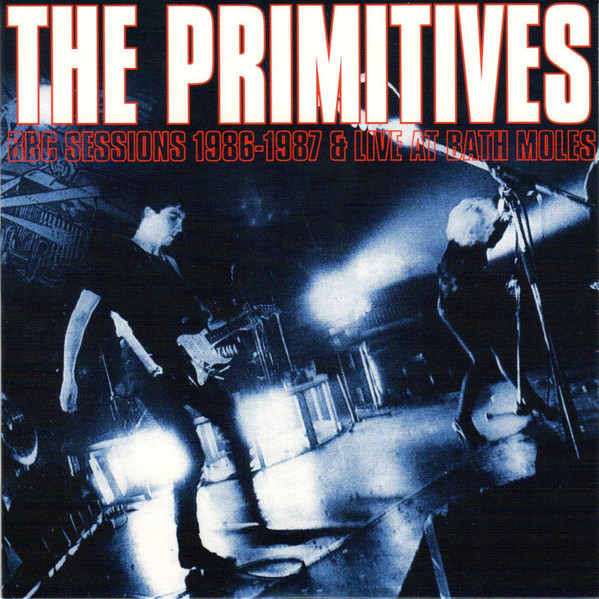
BBC Sessions 1986-1987 and Live at Bath Moles (Cherry Red, 2020)
THE PROLOGUE
We’ve arrived at the “odds and sods” basement of this five-storey structure, having gone pretty chronologically from their earliest self-made recordings and through the course of their first three official albums. While we’ve had a few “live in the studio” songs, what we haven’t had so far is any live recordings.
Owners of Everything’s Shining Bright, the previous compilation of The Primitives’ early days, had what appears to be a full summer of 1987 concert at the Institute of Contemporary Arts in London. Bloom! doesn’t include that particular concert, but replaces it with a different one, recorded live in Bath, England at the famous Moles nightclub, a club that encouraged home-grown talent and helped a shedload of popular bands get their start, from the 80s incarnation of King Crimson, to The Cure, to Eurythmics and many more contemporary acts.
I myself got to see a show there once — not of The Primitives, but another of my beloved underdog bands, Scotland’s Trashcan Sinatras. I have a taste for great indie rock bands that do great things artistically, but go almost nowhere commercially. It’s my background in high school and college radio to blame.
Moles sadly closed after a 45-year run in 2023. It was a more intimate club, with a capacity of just 220. The Primitives show included here takes up the second half of Disc 5, but before that we get various BBC Radio sessions the band did “live in the studio” across 1986 and 1987.
THE MUSIC
If you’ve made your way through these discs along with this review, or were just a fan of the band, you’ll known most of the songs done live for various BBC Radio hosts well. True to form, the group can perform these songs live nearly as well as with the luxury of a studio, with all the pop genius intact and only secondary guitar lines missing.
The set for Janice Long, in mid-June 1986, kicks off with a grunge-y take on “Really Stupid,” a fast number about a loudmouth lout that Tracy has had more than enough of. This is followed with “Nothing Left,” one of their best numbers but I’ll (still) be damned if I can quite figure out what its about — something about the joys of being unsociable is my best guess.
The band not having studio to work with makes the songs’ lyrics easier to hear (if still not always understand), and the hooks more obvious. You really gain an appreciation of the live configuration for drummer Tig Williams and bassist Paul Sampson, not to mention Tracy’s voice.
“Run Baby Run” is another song about someone leaving someone — this is an act that doesn’t want to get into specifics for some reason. “I’ll Stick With You,” by contrast, is about pairing up with someone because it’s getting dark.
A session for host Andy Kershaw exactly one month after the Janice Long get-together kicks off with “Where the Wind Blows” and its bass line, plus some echo on Tracy’s voice (supported by Paul on the sub-chorus). “Across My Shoulder” is another one of the band’s “breakup” songs, but not as catchy as “Really Stupid.”
I’ve enjoyed “Spacehead” many times, though as with most Primitives songs I’m not studying the lyrics very closely. It makes its second appearance on this box set here — a fast, snappy, almost Ramones-esque number about a strange lad that has caught Tracy’s eye.
What I didn’t mention earlier (and is even more obvious in this live version) is one of the more awkward lyrics in the band’s repertoire, with Tracy having to make “What is that boy on?/He’s a strange per-son” — pronounced as “per-sohn” — work somehow (twice!).
But never mind that, we’ve arrived at “Crash,” which is really, really missing its second guitar line when done live, along with the effective echo effect on the “shut” in “shut your mouth.” Yet another breakup song, but still an insanely good showcase of what the band is all about. This is the song you play for someone to get them into The Primitives.
For this particular performance, Tracy seems to be struggling to get the lyrics out as fast as the band wants to play, and I detect some small adjustments in tempo during the performance to accommodate.
The next session — the last for 1986 — was for the very famous DJ John Peel, well known for introducing new acts to the British public. While I have no doubt that he helped the career of The Primitives, it somehow didn’t turn out to be enough in the end. That said, we are in the early days of the band here, before they’d been signed to RCA.
This session kicks off with a very feedback-y and rockin’ version of “Stop Killing Me,” yet another song about leaving someone, that rocks very well thanks to the excellent band backup vocals and harder rock arrangement.
This is followed with “Shadow,” where Tig shifts to the tabla while Paul’s guitar is recreating the drone effect so prominent in traditional Indian music alongside Steve’s bass, fusing raga and pop very effectively with a mystical lyric.
Paul takes lead on “Buzz Buzz Buzz” as he usually does. The live version can’t take advantage of the overdubs and suffers some emphasis on the chorus because of it, but its still a wild 60’s-style number one might have imagined a young Elvis performing in one of his movies about falling head-over-heels for someone upon first meeting.
The last song for this session was a surprise — The Primitives do a Rolling Stones song, “As Tears Go By,” and despite Tracy’s gentle vocal, this version turns out to be far more danceable than the Stones’ original ballad ever imagined it could be.
We then jump to April of ‘87, and the band have been invited back onto Peel’s show for another live round. Happily, they didn’t do any of the same songs as they’d done in the previous session.
The set starts with “Dreamwalk Baby,” which follows the studio version pretty closely, and just as they sing in the chorus, the lyrics “make no sense at all” to me, at least. Something about crawling in there though.
Next up is “Ocean Blue,” and it seems that the band has invested in some fancier effects equipment since their last appearance, allowing for more echo on the drums and light vocal effects for Tracy. It remains a lovely song about (I think) a budding romance.
“Everything’s Shining Bright” is another song about a new love, and we get a chance to really appreciate the lyrics, where Tracy requests that at the end of the evening “why don’t you turn out the light/so everything is shining bright.” It’s good to know she’s not breaking up with someone for a change.
This is followed by a rarely-heard song for the band, “She Don’t Need You,” which we last heard on the “Thru the Flowers” EP and which never actually made it onto any of the albums covered here. After those two previous romantic songs, we’re back to a song about a breakup, this time told in second-person for a change.
And with that, we move seamlessly on to the gig at Moles nightclub in Bath, and the reason why this particular show was picked becomes obvious — it repeats only one song from the selections heard in the radio sessions it shares this disc with.
Not The Primitives, obviously, but a shot that gives you an idea of the size of the room.
The sound quality and mixing on this gig is excellent, and the band is using a Farisa synth to give the songs an even more 60s vibe. This version of “All the Way Down” is a faster, poppier, and much more danceable version than the one Paul sang on Pure, and it really rocks this time around. The catchiest song about chronic depression yet written, with a wild organ solo beefed up by a fuzz tone guitar effect.
We move on to another unhappy-theme-turned-groovy-pop song, “Sick of It.” A new instrumental break, a new arrangement, and the aforementioned Farisa effect keep this party charging ahead at full steam. Cynicism was never this much fun!
Tracy introduces “Give This World to You” as a “very new song,” and even with the supplemental 60’s party vibe included in this show, you can tell that the band is stretching their wings a bit. Of course, the song turns up later on the album Galore. “Ooh, I enjoyed that!” Tracy says at the end of the song.
The inclusion of the synth at this gig really adds a great new feel to the band’s performance, and I kind of wish it had been used a bit more in their album versions on some numbers. It’s mostly not present or in the background on “Outside,” and Tracy clears up a mystery in her introduction of “Slip Away,” which she brightly says is about masturbation. Again, there’s a awkward rhyme in “I’m gonna drive my soul into the setting sun/I’ve got to get away from all this tedi-um.” It’s kind of adorable.
If nothing else, this box set gives us a variety of arrangments for the song “You Are The Way,” and I am here for all of them. The live version again benefits from the low-key but present organ addition. Tracy has to hit some very high notes at the top of her range a couple of times on this one, and she nonetheless nails it.
Next up is “Earth Thing,” which had a Farisa in it in the first place, so thank heavens it’s here. I’m tempted to say this is my favourite Paul-led song, and with the adrenaline-fueled slightly faster tempo here, along with the furious playing by the band, make this a guaranteed party smash, and that’s before the “jam break” that finishes the song out, featuring the bass first, and mad organ solo second. This is the best version of this song, ever.
“See Thru The Dark” is another upbeat song about kind of a downbeat subject, using metaphors for depression to encourage its subject to “see through” the present and look ahead to brighter days.
Introduced as “quite an old one,” the band quickly launches into “Stop Killing Me,” and Tracy has no trouble spitting out the lyrics to this great song. The organ is dispensed with for this number, to try and stick to the original arrangement as much as possible, and it rocks along merrily as a result. Those “bop-bop-be-dop” backing vocals just make this song extra catchy.
The concert comes to an end with the old reliable, “Way Behind Me.” Throughout this show, Paul has mirrored Tracy’s vocal in spots to recreate a “vocal doubling” effect, and at this point he’s very good at it. Listening to this, I much regret never having caught the band in concert, but I have to wonder if the mix from the soundboard we’re getting here is clearer than what the audience experienced.
At the end of the number, the band says goodnight (so we’re not getting the encores). The gaps between songs leads me to believe we’re only getting edited highlights of a longer show — this was only about 30 minutes of music, not counting the BBC sessions, but if it’s at all representative of what they actually sounded like live, then it’s to my shame that I didn’t get a chance to experience them in person.
THE POST-MORTEM
Bloom! pretty thoroughly documents the band’s original period of activity across their own Lazy Records label before moving on to RCA for their first three albums. Although they did do well in the charts on occasion, it must have been very frustrating for a young band to work that hard and not get more recognition.
Right alongside a handful of other bands, The Primitives should have been staples of the summer tour season. Their songs are airy, poppy, and almost relentlessly upbeat, while their lyrics are allegorical enough for fans to give them their own interpretation.
Perhaps their retro-influenced sound just wasn’t in fashion yet, or their lack of “anthemic” songs like what (for example) U2 was cleaning up with was the problem. The record company appears to have given them a fair amount of support, and they got plenty of good press (especially for a band from the midlands!).
The first album made it to #6 in the charts, and “Crash” did one better in the singles ranking. By the time the second album came out a year later, however, the scene had changed — acid house music and heavier bands like My Bloody Valentine had captured the spotlight.
The Primitives still had a loyal fan following, but Pure — which indulged Court’s more psychedelic stylings — didn’t do as well with its singles, though the album itself did reasonably well. By the time 1990 rolled around and the “Madchester” movement had blossomed, The Primitives were being seen as a “throwback” band for their devotion to 1960s and 70s-style grooves.
Now with the band stretching out and exploring their psychedelic side more fully, Galore should have been perceived as a “triumphant comeback” album, but the label delayed its release by a full year, and by then the Blur-Oasis “war” was in full swing, so The Primitives just got ignored, and then dropped from their label.
The booklet included in Bloom! mentions that shortly after being dropped, the band self-released a cover of “Some Velvet Morning” under the pseudonym Starpower — and lo and behold, it got underground buzz and sold well (though it didn’t chart). RCA ironically offered this “new” band recording session money, not knowing it was the act the company had just dropped.
As a result of this, The Primitives decided not to continue. Thankfully, they reversed that decision in 2009, judging the time to be right for a reformation.
The band periodically put out new EPs and albums until 2017, but have continued to tour and are still an active touring act. They tend to play various festivals in summer, and will be touring with Hugh Cornwall and The House of Love during the winter of 2024.
On the very day that the Beatles performed their first US concert back in 1964, I sat down to finally watch in full a movie I had seen clips of all my life: A Hard Day’s Night, the movie debut of The Beatles that further cemented their new fan base in the USA. Somehow, I had never gotten around to watching the entire film, and seeing it in full really surprised me in how vital, innovative, and enjoyable it was as a complete work.
The film features more running than The Running Man and almost as much as Run Lola Run, mostly of the band trying to escape their shrieking fans. The film, which starts in black with the twanging opening guitar chord of the title track, features George Harrison taking a tumble almost immediately in the first chase sequence, but of course with the energy of youth and adrenaline picks himself up immediately and — like the rest of the group — has a big grin on his face as he resumes his sprint.
Director Richard Lester was determined to capture that level of youthful vigour by employing what at the time were dubbed cinema verité — innovative interminglings of hand-held, moving, and quick-intercut shots to represent the chaos of the chases. While the movie has a lot of these, there are times when the boys find respite and start to unfurl their humourous personalities and even advance a tiny bit of story — and for this, Lester reverts to somewhat more traditional camera styles, but still relies on being able to get his 16mm cameras into tight spaces for a more intimate feel.
The decision to make the film in black and white was likely a budgetary move, but it reminds me of why I like old movies (and in particular B&W films) so much: they are a window into a world that no longer exists, not just on a societal level but also presented in a way that was par for the course at the time but was nonetheless an abstract and dreamlike layer over reality. This film, even more so than usual: not only is it The Beatles as they originally presented themselves, but it’s been credited with having thrown off, once and for all, the societal straitjacket of the 1950s.
As much praise as Lester deserves for directing and editing the film, a lot of credit should also go to Alun Owen, the screenwriter. He hung out with the band for some time, and got two things absolutely right in his script: an ear for the funny banter the band effortlessly delivers, and an eye for what a rigmarole their lives were becoming as their fame exploded.
The story, such as it is, covers a period of about two days in the band’s life at the time, with some events being driven by their own harried schedule, with some being driven by the subplot: Paul’s scheming “grandfather” (Wilfred Brambell, best known for “Steptoe and Son”), who runs cons and generally complicates their already-chaotic lives.
Wilfred Brambell tries hard to steal the picture as the troublesome “John McCartney.” Isn’t he clean, though?
Thanks in part to the delightfully witty banter, frequently broken up by silent scenes of (again) mostly running about to the accompaniment of the band’s singles from their third album, and the contrivance of more songs for one of the boys’ TV appearances, the focus never lingers too long on any one scene or story element. All four of the lads convincingly look like they’re having a great time being in the film.
This film likely contributed to the “Swinging London” scene in the later 1960s as those teen Beatles fans — and the Beatles themselves — matured. Without a doubt, A Hard Day’s Nightwas a direct influence in the creation of The Monkees, and the freewheeling style of their popular US television show.
Lester is careful to give each Beatle some spotlight time, but two particular scenes stand out: a brief interlude where a woman seems to recognize John as “you’re him,” but he gently introduces doubt into both their minds until she puts on glasses and is then sure that John isn’t John, with John walking off agreeing that “she looks more like him than I do.” Another scene has Ringo escaping the chaos for a bit and having his own adventure by a river, where he meets a young boy (David Jason) and has a nice conversational scene.
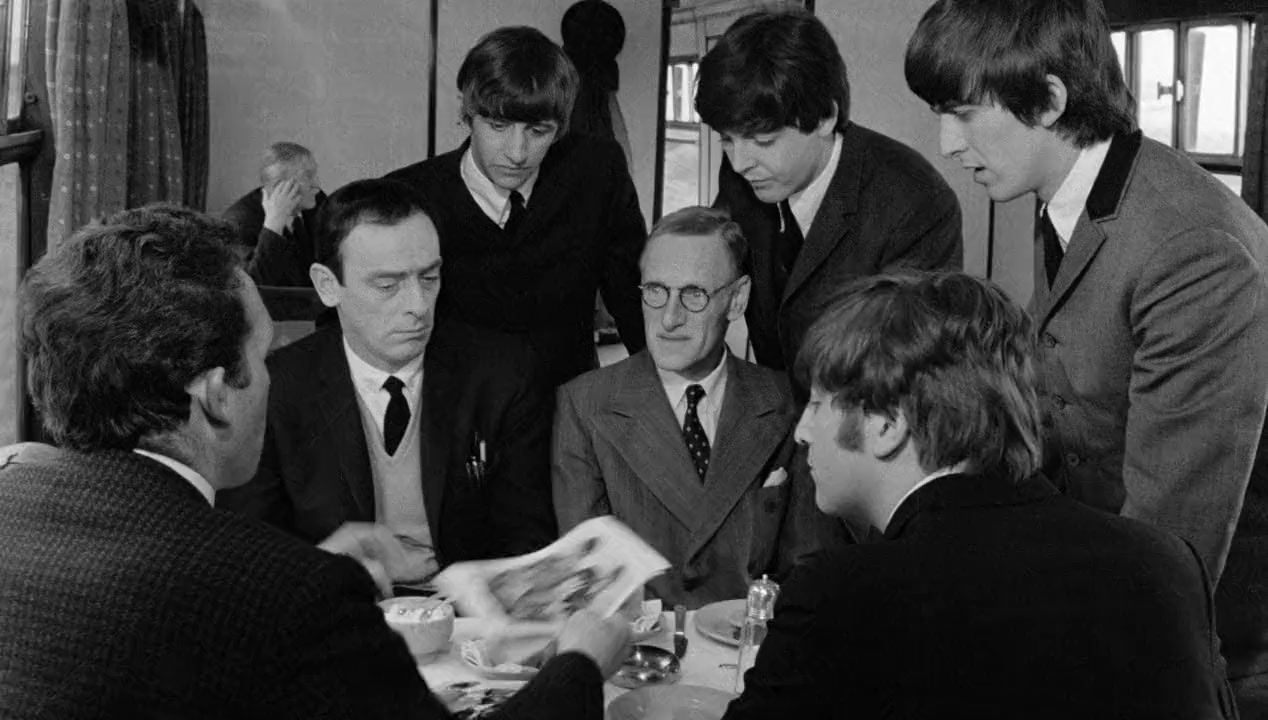
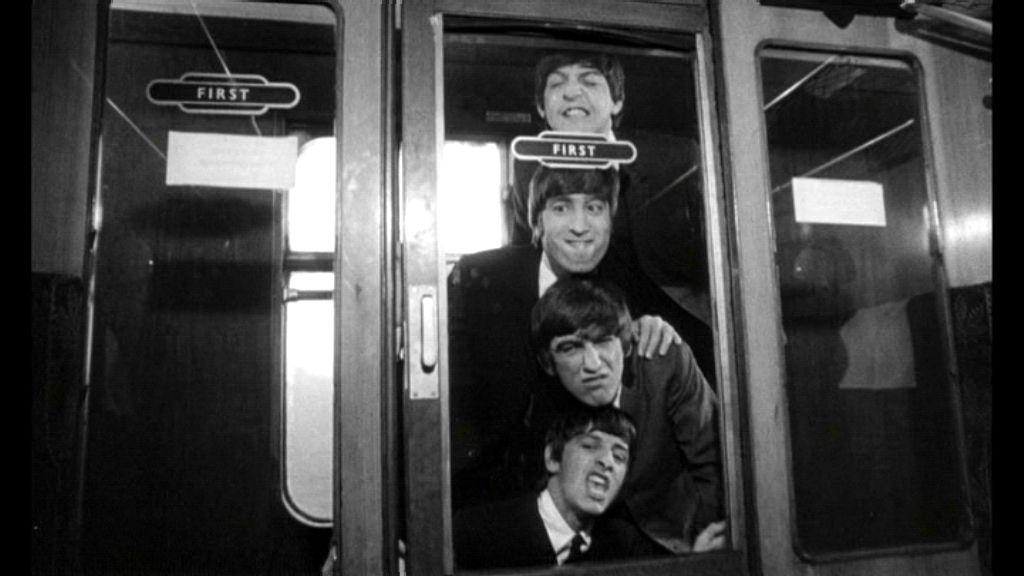
Interestingly, every teenager in the film — with an emphasis on girls, but there are plenty of boys running after them also — knows very well who each Beatle is, but the majority of adults in the picture have no idea at all. Another fun scene finds the lads in a train when a middle-aged businessman comes into their coach, creating some light tension.
Actor Richard Vernon (of a very long career, though for me he will always be Slartibartfast in “The Hitchhiker’s Guide to the Galaxy” TV series) harrumphs his way into bullying the boys, who use their free-spirited impudence to intimidate him right back. Talk about a movie that caters to its audience.
The boys tease a stuffy British businessman who tried to bully them.
After some very mild “drama” about whether Ringo will get back to the rest of the band in time to do the live television concert and avoid giving the director of same (Victor Spinetti) a nervous breakdown, and what mischief is Paul’s grandfather up to now, everything comes back together just in time, and after playing to a screaming teen audience, they run yet again to catch a helicopter and off to whatever the next thing is.
I counted eight full Beatles songs (and several more reprises) in the film, not including some George Martin Orchestra instrumental versions near the end. The movie was a big hit on both sides of the Atlantic, and has continued to be very highly rated among critics and various “best of” lists for the past 59 years.
Prior to this, Lester had done a film with Spike Milligan and Peter Sellers called The Running, Jumping, and Standing Still Film, and it was that absurdist short that both got Lester the Beatles job as well as established the style for A Hard Day’s Night. It’s a good time and some great music spread across 90 fast-paced minutes, and gives us a loving moment in time just after the Beatles hit it big. If you aren’t tired of their early hits — and how could you be — the film still holds up really well viewed by more modern standards.
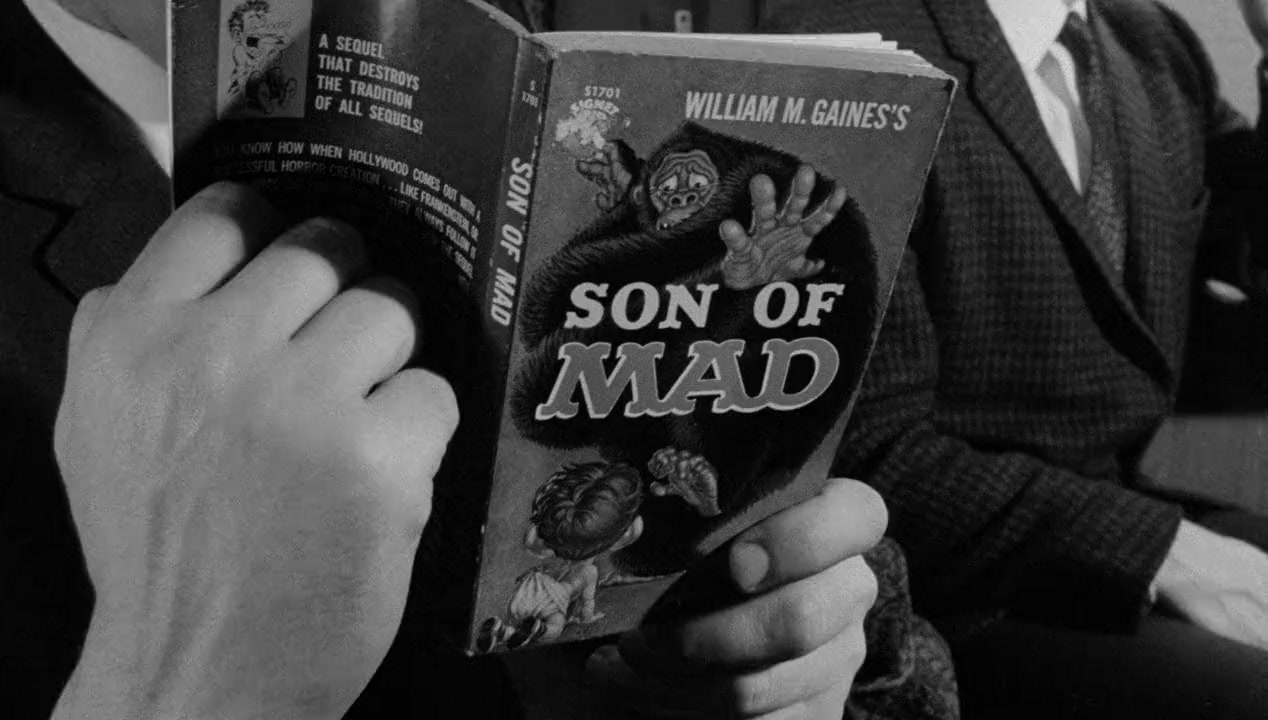
A favourite moment of mine in the film: the band’s road manager is reading a Mad Magazine anthology book.



 The Chasbah