Nits – Urk (Disc 2)

(Columbia Records, 1989)

THE PREFACE

In addition to reviewing this Nits live compendium, I’m also connecting this recorded live experience to my own recent live experience with Nits in Amsterdam, which I attended in April of 2024. Urk contains a total of 28 songs, while the concert I attended featured 25 songs, with nine of them also performed on Urk.

I’d like to think this suggests that the band are in fact still very fond of and proud of the strong repertoire they’ve amassed over the decades, but in truth the similarity of the lineup (four members back then, three members and three backup vocalists now) likely made them easy to recreate on stage, some even with similar arrangements.

It’s amazing to think that Nits songs from the 80s are still so beloved by the hometown audience and still routinely performed by the band. Some, like “Walter & Connie” and “A Touch of Henry Moore” were never singles.

Speaking of singles, the band has had an astonishing 72 singles issued as this is written in mid-2024, with only two of those being collaborations with other bands (and none of them are remixes or re-releases or live versions, to the best of my knowledge). There aren’t many bands — and even fewer still around — that could match that track record.

THE MUSIC

Disc 1 of Urk is mostly comprised of well-known, popular songs from the group, but the “deep cuts” start to surface for the last three songs on that CD. We kick off Disc 2 of Urk with the band exploring some of their most playful and musically adventurous songs.

Continuing with the less well-known numbers, Disc 2 kicks off with “Port of Amsterdam” from 1986’s Henk album — a delightfully oddball song that for me resembles various song fragments cleverly cobbled together. The live performance here relies heavily on live mic effects and a new arrangement compared to original version, which had fewer vocal effects (other than echo) and more instrumentation. Towards the end, it gets much more like the original version.

“Bike in Head” is another song from Henk that really shows off the talents of all four members: Hofsted’s singing and (in this case) gentle guitar, Stips’ synth, Kloet’s inventive and varied percussion (never to be confused with “rock drumming”), and Geraets’ understated but present acoustic bass playing.

Following this was “Mountain Jan” — I’ve always loved this In the Dutch Mountains track for its touch of (synth) orchestral classical whimsy. The audience on the disc clapped along with the the brief bits of semi-classical overture, which was just lovely.

While this concert was turning out to be full of surprises, I don’t think anything surprised me as much as the inclusion of “Walter & Connie,” an instrumental number. It’s got a great “travelin’ music” vibe, with a driving melody that’s really brought to life in the live performance. Not to repeat myself, but you can tell by how enthusiastically the song is performed that the musicians enjoy it, and really enjoy playing together.

What’s interesting (to me, at least) that this song debuted as “Walter and Conny” on the 1983 album Omsk. For the Urk release, the spelling got changed to “Water and Connie” because that was the original name of the show. I suspect Nits first heard of it from German TV, where the hostess’ name might have been spelled Conny as that’s more common there.

Just in case you’ve ever wondered, Omsk the third largest city in Siberia. Its religious buildings and related architecture are a tourist draw, I am told. At the right time of year, this would probably be a very interesting place to visit.

Assumption Cathedral in Omsk.

In any event, “Walter and Connie” was an early 1960s B&W show designed to help non-English speakers learn English. This live version plays around a bit with the original album arrangement of the instrumental.

A different and longer opening starts the next song, another favourite among fans — “A Touch of Henry Moore,” again from Omsk. This version is quite different than the album version — this time, the chorus is skipped entirely, which was surprising, and there’s no double-tracking of Henk’s lead vocal (which isn’t surprising in a live setting). As a result, the Urk version is substantially shorter and somewhat unsatisfying, since the title of the song is never uttered.

Thankfully, the 50th anniversary concert I attended use the three female vocalists, so we got the full version of the song (with Stips doubling Henk’s vocal and the chorus). The truncated “Moore” on Urk is my least favourite version, but the video is nonetheless interesting.

Next up was “The Bauhaus Chair” from Hat — another song based on memories, a song I’ve always loved, and I was thrilled to hear it at the Amsterdam show. The Urk version was sparser than the original version, as you might expect with only four musicians and no overdubbing, but you can’t perform this song poorly no matter what you do to it.

“Under a Canoe,” originally from Henk, is another exercise from the period where two (or sometimes more) musical styles are jammed together. As for the lyrics, abut half the song is a series of non-sequiters starting with “I roll up the sleeves,” while the other half is a gentler recitation of “Shirt’s waving in the meadow.” Not one of my favourites, but the audience seemed pleased that it was included.

The Nits’ formula of forging two song fragments together works better on Omsk’s “Shadow of a Doubt,” the next track, mostly because the main melody and lyric go so well together, and blend better with the “I’m undecided” lyric, which I am unsure counts as a verse, chorus, or just Henk’s mantra.

At long last, one of my favourite songs and one of the earliest one I ever heard from them appears: “Mask,” from Adieu, Sweet Bahnhof. The version on Urk is the usual way it is played live, with a protracted instrumental prologue (from the Amsterdam Saxophone Quartet, when available). It’s an angrier song about having to hide your true feelings, but offset (in the live version) but gentle, stately instrumentation that suggests an orchestral version is dying to be made.

The original single version had a video made for it, and it was that video that Canadian station MuchMusic* played, my friend Ron Kane (a big fan and friend of the band) recorded the video on Betamax (iirc) and sent it to the Post-Punk Monk, which is I think how I came to see it. I was very struck by it at the time, and my impression was that Henk sounded like Elvis Costello — not correct really, but not a million miles off either. It’s still a thrilling number to me, with some forceful emotion bubbling up in the performance.

*MuchMusic was, essentially, Canada’s successful attempt at aping early MTV.

From there, we proceed to “Home Before Dark,” originally from Henk. The lovely arrangement here features Stips on (synth) accordion, which is just perfect to accompany Henk’s gentle guitar, and superior in my opinion to the album version. Once again, he uses the technique of expressive lyrics married to a beautiful chorus, with Joke coming in on backing vocals for that.

The start of “The Panorama Man” gets the audience clapping in time for this In the Dutch Mountains song, and it’s a fun chance for the whole band (and extra vocalists) to move along sharply to a catchy, light-hearted song. Nobody’s doing any deep reflection or confronting their doubts on this one, for a change.

This proceeds straight into another fast-moving song, “Slip of the Tongue,” originally from 1981’s Work album. Reflecting that earlier period, it mixes a really lively, pull-out-the-stops arrangement and upbeat style with lyrics about how dangerous it is to speak your mind in a corporate environment. I have the sneaking suspicion this was based on a job one of the band members had where things didn’t work out, but it’s just as true as ever today.

A crude edit in the recording takes us back to a different concert’s finale, where the band played Dutch Mountains’ “An Eating House,” another swinging number about a man on a road trip with his family and the kids want to eat, so he remembers a restaurant he had been to in years past that was nearby.

The song takes a break to proclaim “I am an eating house” a few times, eliciting laughter from the audience, with a short history of the restaurant before getting back into the crowd-pleasing big beat and joyous performance. This being a Nits song, the fun takes a dark but humourous turn, a play on the term “eating house.”

The audience is very much with them at this point, and the penultimate song for the evening is “Red Tape,” the only other song from Work. It’s a song about the tough life of a working mother, but it is unquestionably the catchiest song on this topic this side of “9 to 5,” and far better as well, come to that.

The finale, with the audience still clapping along, is Omsk’s “Tons of Ink.” Another big-beat song, this time about journalism. What other band could get away with this? No other band. The rapturous applause at the end fades softly away, and two hours of great music is done.

THE BOTTOM LINE

For the record, the nine overlaps at the 50th anniversary concert I attended were: The House, Henry Moore, Nescio, Two Skaters, Walter & Connie, J.O.S. Days, Dutch Mountains, Adieu, and Sketches of Spain. The magnificent composition that is “Cars & Cars,” a deep favourite of mine, was the last song of the regular set.

The first of the two encores was “Ivory Boy,” played live for the first time since 2012, followed by “Dutch Mountains.” After a brief break, they came back to finish off the night with “Adieu” and wrapped up with “Sketches.”

Urk was the first live album from Nits, and for a long time it was the only official one. This changed in 2015 with the release of Hotel Europa, which I haven’t listened to as of this writing. The only real criticisms I can level at Urk are unfair ones: the setlist is too heavily dominated by what were at the time the most recent albums, and didn’t include what I consider to be their most thrilling single, the New Wave-influenced “The Young Reporter” from 1980.

Nits have a remarkable knack for coming up with certain songs that get stuck in my mind and won’t let go. Certainly not everything they do, but their singles and other tracks that resonate with me have been living in my head rent-free for many, many years, and are recalled often. Although Henk is the lead singer and primary songwriter, he knows it just wouldn’t work without the other two, especially at this stage of the game.

They are far too “gentle” a band to ever be rock, but too ingenious and artistic in their music to fit alongside the usual definition of “pop” or “soft rock,” so of course they have trouble finding an audience outside Europe. If you are ever find yourself looking for superbly poetic and well-crafted (and beautifully arranged and played) “art pop” I guess I’ll call it, Nits deliver those goods on a routine basis more than any other band still playing, at least in my view.

Next month: The Primitives!

BONUS TRACK! — a performance from the concert my friends and I attended (actually, the following night, but the performance is the same). “Month of May” is from the 2024 mini-album Tree House Fire.

Nits – Urk (Disc 1)

(1989, Columbia Records)

THE PREFACE

Some nitpickers would proclaim that Urk doesn’t fully qualify as a CD boxset, since it consists of only two CDs. However, I would point out that a) it was originally issued as a three-LP boxset; b) the CD version comes in one of those double-wide plastic CD cases popular at the time that could be made to hold up to four discs; and finally c) at the very least it truly qualifies as a bargain, since I paid only €3 for it (approximately US$3.25).

This particular copy (not my first of this album) was acquired on a recent trip to Amsterdam, and purchased at the 58th Mega Record & CD Fair in Brabanthallen. This image (captured by the promoters) does not really show the scale of this event, because there was a second adjoining “room” of the size seen here, with a sitting area, food vendors and a performance stage in the connecting area.

My friend The Post-Punk Monk (who’s blog is a must-read for postpunk/new wave music enthusiasts) and I spent the better part of the daylight hours going to, traversing, and crawling from this gargantuan show, sadly with surprisingly little for either of us (but a few treasures, Urk among them). The show overall had a higher representation of prog music enjoyed by the generation before us, as well as metal, neither of which are of much interest to the likes of we.

That said, we covered well over 90 percent of the event’s dealers, which was a real challenge. While we regret there wasn’t more for us to buy, our wallets thanked us — and what we did get, we were mighty pleased to have gotten.

This journey was prompted by an opportunity to see Nits in concert for the first time, after (cough) decades of following the band. That too was accomplished, and was the highlight of the Netherlands portion of the trip.

Readers may not be familiar with the band, since they are best-known in Europe. My go-to metaphor for the band’s sound is “imagine if The Beatles had started in 1974 instead of a decade earlier, influenced by the music of the 60s and 70s rather than the music of the 50s, and wrote relatively few outright love songs.”

Please do sample them on Spotify or Apple Music if that explanation intrigued you — by the late 70s you might say they were a full-on New Wave band, but really their sound has always been reflective of intelligent, artful pop songs influenced by culture, infused with truly incredible poetry, and living near the border of Western and Eastern Europe. If China Crisis and Nits ever toured together, I might die of sheer delight.

THE OVERVIEW

Urk consists of 29 songs spread out over two CDs, recorded live in various cities, from Amsterdam to Utrecht to Moscow, during the winter of 1988-89. Many if not all of the songs on Urk were popular or fan-favourite songs from across their most popular albums.

It would be fair to call it a live version of their “greatest hits” to that point, and the album itself ended up in the top 10 charts for The Netherlands. It was, for many years, their all-time best-selling album. Urk was originally released in the summer of ‘89.

By the time of this recording, Henk Hofstede (the lead singer, writer, and guitarist) and Rob Kloet (the drummer/percussionist), the two original members, had been joined by Robert Jan Stips (sometimes producer and full-time keyboard maestro, still with the group to this day) and bassist Joke Geraets. Geraets, shortly after these live recordings, had to quit the band due to her ongoing medical issues.

Nits (who had recently dropped the “The” from their name) were supplemented on the 1988-89 tour by the Amsterdam Saxophone Quartet on the Amsterdam portion of this tour. Seeing the band in Amsterdam this year, their only accompaniment was a trio of excellent background singers. For the bulk of the performances here, it is just the four-piece version of the band, with the members themselves handling backgroud vocals.

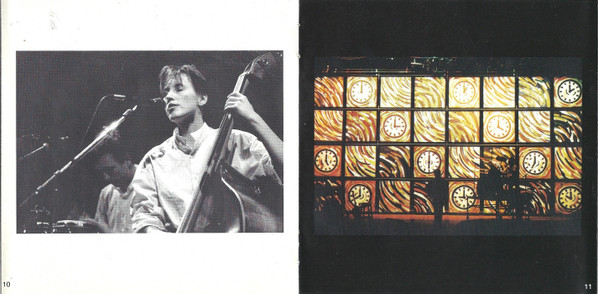
In addition to the spacious CD storage case, the package includes a full-colour booklet including tour photographs, credits, and track listings.

THE ALBUM

After a short bit of welcomingly warm audience applause, there is a cross-fade to a lovely classic from the band, “The Train,” which originally debuted on their 1988 album Hat. It’s a gorgeously melancholic song (and yet rather jaunty in tempo) about a lost love and the sadness, vulnerability, and self-examination that often follows such separations.

In the original version, the first set of verses is followed by a longish instrumental break, where the sound of a train arriving in the station comes to dominate all but the never-stopping sound of Kloet’s sharp tapping rhythm. The song then picks up again, repeating the lyrics in full until it ends with the narrator reflecting on himself in the mirror-like windows of the train, asking himself “Hey, whatcha doing with your life?”

The next song segues right in with no audience noise. “Adieu Sweet Bahnhof,” the title track of their 1984 album, starts off with a carnival-like organ opening, Henk describing riding for what seems like hours in a train (making this a clever lyrical transition from the previous song), presumably leaving from Amsterdam and passing through Brussells on his way to Paris.

Listening to this version for this review, the song struck an even deeper note with me, as I took this very same journey on my return from Amsterdam to see the Nits perform — reflecting on this trip, and time spent in Europe from my own past.

In the concert I attended, this song was the final encore of the evening, and as it began the Dutch audience, familiar with the song, again applauded it warmly. “My train of thoughts is leaving … tonight!” is such a great little lyric.

It is very Nits to have a song title that uses words in English, French, and German interchangeably — “bahnhof” meaning “station” in German. Who the heck writes a song wishing a train station a fond farewell?

It should be mentioned for those not familiar with Nits that the band themselves are Dutch but sing almost exclusively in English apart from the occasional non-English word or phrase.

The overall effect of the song is again centered around a person who is sorting out his thoughts around the changes in his life, again making for a fine pairing with the first song. The last verse is another fabulous construction of vivid imagery:

Now like an arrow we’re aimed at Gare du Nord
Between backs of the houses streets like fjords
And the night falls over Paris
So I’ve come back to the Hotel d’Angleterre
I lay down on a double bed and stare
At the ceiling – what a feeling (to be back)

Gare du Nord is the destination train station for Eurostar in Paris, and I also arrived there on my own journey back. As the song ended, the audience applause returned before a final flourish from Stips to enthusiastic applause.

As someone else once said, Hofstede and his bandmates have an unrivaled ability to write songs as “little emotional postcards.” Next, they went straight into one of their biggest hits, “J.O.S. Days,” from the autobiographical 1987 album In the Dutch Mountains, about Henk’s early days of school and athletics. The driving guitar line and some “wailing” synth sounds keeps the “train” motif going a bit longer, though the song has nothing to do with trains.

J.O.S. stands for “Jeugd Organisatie Sportclub,” with “Jeugd” meaning “Youth.” Henk’s grandfather Jakob helped found the group, and it was a “family tradition” for boys in the family to play. Henk’s nephews, “dumb but tall” starting “kicking the ball” in the womb. Henk, however, was cursed with flat feet and “weak knees,” and got booted from the team after his first practice game.

The song also touches on the dark after-effects of the Second World War on young Henk and the club. There was a memorial erected after the war between the football fields, with the names of team members who had died. He notes that “they thought they would win, like in their J.O.S. days.”

This leads to a song about war, 1983’s “Sketches of Spain,” from the Kilo EP. Again, the marriage of the sad lyrics and the superb musicianship makes for a compelling listen about a subject nobody wants to talk about. Accompanying Henk on vocals is an uncredited female vocalist, presumably Joke, adding a nice effect not present in the original version. Stips backs Hofstede on vocals in what passes for the chorus.

And we next swing round to the biggest hit the band ever had, practically a national anthem — “In the Dutch Mountains,” from the album of the same name. Remarkably, the arrangements of the live songs follow the record versions as closely as possible — a feat managed thanks to the band’s frequent habit of recording the songs live-in-studio as much as possible.

The official clip for the song

At the concert I attended, the audience “filled in” with the band on the spoken-word repetition of “Mountains” — clearly a long-time audience favourite.

The song is mostly joyous in nature, and funny — there are very few if any actual mountains in The Netherlands. There is one part, however, that suddenly turns quiet and still, right in the middle of the song:

I lost a button on my shirt today
It fell on the ground and it was rolling away
Like a trail leading me back
To the Dutch mountains

Poetry and visual imagery on this level is rare in pop music, but Nits are the masters of it.

From here we go to “The Dream,” a song very similar in style to “The Train,” and like the former, it’s from Hat — and similarly, it’s a described painting barely within a traditional pop song structure. The main lyrics are contemplative, while the chorus is joyous, and gives the musicians room to play. Stip’s flute-like synth touches are just … (chef’s kiss).

“The Swimmer” comes from In the Dutch Mountains. This one literally describes some other dreams, in shorter bursts and once again with sections where the musicians can throw different motifs in the mix, this time a bit of tango that goes awry before settling back down. Henk is again backed up on vocals by Joke.

Rob Kloet’s understated percussion thus far comes to the fore in the introduction to “The House,” again from Hat, hitting glasses to create the band’s now-trademark “ting” sound. Organ sounds come in as the tinging recedes. The slower, haunting vocal in a lower register (from Stips) is so effective against Henk’s haunting mantra: “Time’s slipping away.”

We revisit the Dutch Mountains album for “Two Skaters,” one of the band’s more surreal dream-inspired songs. A very understated number with shimmering guitars, but it would never in a million years be played on a soft-rock station.

I am always much bemused by the stanza: “Your sister in Canada/She’s sending an LP of the Velvet Underground/We’re steaming the walls of your brother’s old room/Peel slowly and listen.” Gee, I wonder which VU album that was? 🙂

Another big favourite of mine, “Cabins” comes from the 1986 Henk EP, and is a great song to sing from the bow of a boat. The synth-heavy original arrangement is altered and the pace quickened on this version, but the enthusiastic audience claps along, because it’s a happy little number and one of my all-time favourites.

Another hit, “Nescio,” starts off with a barely-accompanied piano and spoken-sung second verse before starting proper. Once the music kicks in, the audience applauds in recognition. Oddly, the song list printe on the CD and booklet list “Nescio,” but the last on the back card of the box mistakenly skips it.

Parts of the song are in Italian, with the title meaning “I don’t know.” So the first verse (pardon my weak grasp of Italian) runs like so:
I don’t know
This paradise
I don’t know
In the wolf’s mouth
I don’t know
The stranger is dead
I don’t know
This paradise

The furious acoustic guitar by Henk alongside the snares of Kloet and madcap piano of Stips is the band at its best. The last line in Italian, by the way, translates to “The painting is beautiful (Questo quadro e bello).”

“Pelican & Penguin,” from Dutch Mountains, features cocks’ crows, accordion, and a horn section, making for a very different sound. Lots of odd sounds and vocalized noises on this one.

The penultimate number on this disc is “Telephone Song,” a real rarity from the earliest days of the band, before even their first album. It’s a very quirky number (Joke is on lead vocal, for starters), and hasn’t appeared on any of their official releases apart from this one, to the best of my knowledge.

Similarly, “Dapperstreet” has only ever appeared on this album. It’s a slow, thoughtful number that wouldn’t have been out of place on Hat that shows off more sophisticated songwriting than “Telephone Song.”

Next time: Disc 2!

Lene Lovich – Toy Box: The Stiff Years 1978-1983 (Disc 4)

No Man’s Land + Bonus tracks

THE OVERVIEW

Sadly, we’re coming to the end of the Toy Box set with Lene’s final album for Stiff — No Man’s Land from 1982. As usual, it’s a another album choc-a-bloc with catchy tunes, including one of my favourites of hers. Unfortunately, as I wrote many years ago in a review for a newspaper, “it sounds like they didn’t really have enough material for a full album, so they threw in what should have been the b-sides to the five potential singles, and called it day.”

Kind of a brutal assessment, in retrospect, but not wrong. The album is thin on fully-fleshed-out songs and heavy with other tracks that are quite good musically but light on lyrics with much meaning. The “A” material here is pretty strong, particularly the two lead-off tracks — both of which were in fact singles that found some traction — “It’s You, It’s You (Mein Schmerz)” and “Blue Hotel.”

I also very much liked “Special Star,” “Sister Video,” and “Maria,” and I remember all three getting some college/indie radio airplay at the time. Most of the rest of the tracks, while catchy, seem seriously undercooked lyrically. This could have been papered over with more of those great “Slavic male chorus” bits that made the first record so entertaining, but after the original band broke up, we only ever get (double-tracked) Les handling that — and just him is kinda thin and too sparsely used.

Starting with the New Toy EP, most of the background vocals were done by Lene herself — which is not by itself a bad thing because she’s awesome — but the call-and-response you got on Stateless and to a lesser extent on Flex has gone, and the songs sound less varied as a result — even as the production work improves.

Speaking of production, the fact that this album has more engineers/studios listed (eight!!) than it does musicians adds to the inconsistency factor. The truth is that this record was cobbled together from the multiple smaller sessions with various producers and studios by order of Stiff Records’ Dave Robinson, who wanted another “hit” from Lene, which he eventually got in the two lead tracks — at least in the US.

This one also had the most “writers” on any of Lene’s 80s albums, with “It’s Only You” and “Sister Video” both being written by others, and “Blue Hotel” using a co-writer (Maruo Goldsand). While still equal parts hit and miss, No Man’s Land is still a better record than most acts at the time were putting out, but it misses the high bar Lene and Les set for themselves on the two previous albums, and is very symbolic of their deteriorating relationship with Stiff.

Lene writes about Stiff a lot in the booklet, and is generous with her thanks to Dave Robinson and the other people who worked there, but from her perspective Dave was growing increasingly disenchanted with the lack of UK hits (she did better in the US, particularly on this album), and eventually lost interest, making No Man’s Land the last album on Stiff.

It’s still an enjoyable album, make no mistake, but even the bonus tracks are (mostly) extended or remixed versions of the album tracks. Speaking of which, the legend that is Bob Clearmountain did the remixing on the album (with assists from Lene and Les and Dick Wingate), so from a high-fidelity perspective this is the best-sounding album to date.

THE BONUS TRACKS

Just for variety’s sake, we finally get the two “missing” tracks from the “New Toy” EP that was release prior to the album here: the original studio version of “Savages” and the original “Special Star,” which both ended up in extensively reworked (and superior) versions on the album. Likewise, the “Single Version” of Blue Hotel is a pretty different version to what ended up on the album, though it does actually have Les and Lene singing together on the chorus, which is nice.

We then move on to the “Remixed, Extended Version” of “It’s Only You,” which you might be forgiven for thinking is actually the “Instrumental Version” for the first 1:06 before Lene finally comes in. The vocal and Lene’s background vocal are the same, but quite differently mixed from the album version. This bonus version uses more of Lene’s own bv’s and so I kinda like it better, though the album version swings more.

This is followed by a wholly new song, “Blue,” (no hotel involved). It’s rather frantic, and will remind listeners of “old” Lene, even though the vocal is a bit sparse. It probably should have been on the album proper, but its a lightweight effort despite the speedy 50s overtones.

Next up, a very remixed and mostly instrumental “dub” version of “It’s Only You,” with Lene only providing bv’s and sound effects here and there. It’s not really suitable for your own karoke version, since it wanders off from the better-known version of the song, but for anyone who wants to hear Les’s isolated contribution to a given Lene song, this is a good example — and it runs nearly two full minutes longer than the album version, so there’s some great noodling going on here.

Oddly, this is followed by the “US Extended Dance Mix” version, which is nearly as long as the Instrumental Version at 5’39”, but hurrah, we have Lene’s vocal back in. The lengthening comes in the form of a long mid-song instrumental break that gets sparse at the beginning and end, but is very effective and makes you all the more thrilled when the vocals return, and we even get some extra vocals.

From there, we go on to a “US Dance Mix” of “Blue Hotel,” which adds a minute-and-a-half to the song more cleverly than it was with “It’s Only You,” by keeping the instrumental extensions, mostly quite short until the mid-point. These two “US” extended versions are the most successful of the bonus tracks, since they simply give us more of what we love in the respective songs … and by that of course I mean “more Les Chappell croaking like a frog.” Bonus points for the fake-out false ending before the real ending!

The album ends with a genuine B-side: “O Seasons, O Castles.” It’s a slow-moving but another colourful, well-performed theatrical number with a sudden ending.

THE WRAP-UP

If you like Lene Lovich’s work beyond just any singles you might have heard, you should pick this box set up (if you can find it — it has sold out from Cherry Red!). The remastering work really adds spit and polish to the sound of all three albums, and the plethora of bonus tracks get as close as anyone outside hardcore Lene artifact collectors are likely to come to “everything” she recorded for Stiff.

It’s clear that the “project manager” for this box set, Michael Robson, really cared about the material and getting the look of the set and booklet right. Scott Davies of Rubellen Remasters did a fabulous job of remastering, and the previously-unseen (by me, at least) photo taken in Boston in 1983 just perfectly showcases the amazing look and talent of Lene, alongside other rare photos within the booklet. Best of all from a collector perspective, the box is the same size as the CDs, making for easy storage (waves to fellow obsessive-compulsive collectors).

Lene’s written comments, supplemented by Robson and Davies, do a good but brief job of telling the story of the albums from her perspective as well as some historical background. The booklet also touches on some other things Lene did (including “Mata Hari” and her pre-Stiff musical escapades) and places those events into the timeline succinctly. Lene’s post-Stiff career and home life is also mentioned, which is nice.

Cherry Red have been a winning streak of late, and this is another gold star for them for getting this out. I hope they will continue to work with Robson and Davies on other projects that the pair are passionate about, since they love they have for Lene and Les shows through every aspect of the care evident in this package.

The only downside to Toy Box is that I am now hungry — nay, starving — for Super Deluxe Editions (SDEs) of March and Shadows and Dust, but in the meantime, get the single CDs of her later albums — they’re also great!

Lene Lovich – Toy Box: The Stiff Years 1978-1983 (Discs 1 & 2, part 2)

STATELESS – THE EXTRAS

Having directly compared the albums, let’s move on to the bonus tracks, which are different for each version of the album.

BONUS TRACKS (DISC 1)

“Lucky Number (Early Version)” — three things leap out at you immediately from the beginning notes of this:
a) holy crap these drums are terrible! Actually, the whole thing is pretty crudely done.
b) Lene’s performance is still great, but far more straightforward. Still, this has “hit” written all over it.
c) definitely cruder in most respects, with lots more background “humming.”

“I Think We’re Alone Now (Japanese Version)” — I’ve always loved this version, identical to the single version except for the vocal. I doubt it’s a direct translation, but I can’t imagine that this wasn’t a rare treat for Japanese fans of UK music, even if the title (only) is still spoken in English.

“Monkey Talk (Early Version)” — Compared to the demo of “Lucky Number,” here we start to get closer to “the full Lene” in terms of her unique vocal styling, including lots of “bird call” she would put to better use later. This being the demo version of this song, it’s heavier musically but similar to the studio version that appears on the Lucky Number/The Best Of album that came from Oval in 2005. One interesting difference — the bv’s are almost all Lene on the version here, which lays down a marker we’ll come back to later.

“Be Stiff” — The A and B side of this single are back-to-back here, with the A side being Lene’s version of the song, originally written by Devo. Practically everyone who was on Stiff Records at the time recorded a version, but in my opinion Lene’s is one of the truest and best. The B-side version includes “the entire ensemble” (ie every Stiff artist they could get in the room) live at Leeds University. This remastered version of the supergroup beats the crap out of the original single version, even if its from the exact same tapes. Hats off, Scott.

“Lene Lovich Speaks (1)” — part of an interview record sent out to radio stations where the live DJ was supposed to ask the question and then play the track with Lene’s answer. As I discovered when I acquired the interview disc, it’s disarming to hear Ms. Lovich speak in her original midwestern American accent. It’s a very short piece where she explains how to pronounce her name.

“Lucky Number (Instrumental)” — perfect for your next karaoke party, this includes some of the vocal “effects” from Lene, but no lead singing (well, a trace here and there — they didn’t do a perfect job removing her vocal, oddly enough). It’s also a great chance to study the construction of the song and it’s various components.

“One Lonely Heart/Big Bird” — a pair of non-LP songs where “One Lonely Heart” feels like an entry to the Eurovision Song Contest, while “Big Bird” is just a synth-based instrumental — perhaps originally intended as the music bed for a future full song. This feels like a bit of a “contractual obligation” release to meet a deadline, since it’s pretty obvious that it was just her and Les in the studio mucking about.

“Lene Lovich Speaks (2)” — Lene tells the story of creating “Lucky Number.”

“Lucky Number (Slavic Dance Version)” — It’s the same version of the song as the single version, except it has a new 1’20” instrumental section in the middle.

BONUS TRACKS (DISC 2)

“Trixi” — This is quite the oddity. Roger Bechirian’s sole producer credit with Lene during this period, it’s a lovely Victorian-era type instrumental with Lene doing various odd vocal muttering and other sounds that seem like singing along, but are indecipherable.

“The Fly” — A more interesting effort in the department of “lyric-less music with vocals,” in part due to the presence of both Lene and (presumably multi-tracked) Les — it’s another catchy mostly-instrumental with another great sax solo from Lene. This time, the word “yummy” can be deciphered, and some convincing “fly” noises as well, reminding us that Lene is incredibly varied in her vocal use.

Most of the live tracks that make up the rest of the bonus tracks are taken from a live promotional EP called 1980 Global Assault — Recorded Live in London and Boston, with the exception of “The Fall.”

“The Fall (live)” — this performance is from the Live at the Lyceum gig, which took place exactly 44 years ago as I write this on 02-March-2024. I mention this song specifically for three reasons: first, it was not included in the 1980 Global Assault album, most likely some kind of rights issue.

Secondly, it’s the first of at least three cover songs written by Judge Smith, an interesting artist in his own right, that Lene has committed to record over time (the other two are on the album Flex). “The Fall” first appeared on a three-song single taken from the Stateless album, but wasn’t included on the album or anywhere else until the German CD reissue of Stateless in 1991 as a bonus track, and of course Stateless … Plus, the European reissue from 1993.

Stateless … Plus was, quite possibly, the first CD I purchased that I got specifically because of unheard “bonus tracks.” The song was also included as a b-side from the extended “Angels” 12-inch single, which of course is taken from Flex.

And finally, because unlike the other tracks, they Lyceum performance of “The Fall” really doesn’t sound like a live recording at all — there’s no hint of audience noise throughout.

As for the song itself, it’s easy to see why Lene wanted to record it: it’s definitely not as upbeat and poppy as her own material, but does give her a chance to do something really dramatic in song. The tale told, of a battle raging and city falling in some bygone war, is rendered with the appropriate amount of agony and woe from Lene’s stunning vocal performance, which includes a dog barking near the end. It’s something different from her, and darker than she’s gone thus far.

Turning to the three tracks that make up the EP version’s A-side/Lyceum performances — “Monkey Talk,” “The Night,” and “Too Tender to Touch,” the audience sound is very limited to mostly just applause at the end of the songs. except for the clap-along at the start of the (bonus bonus!) “You Can’t Kill Me,” which wasn’t included on the vinyl version of Global Assault. As with the previous tracks, it certainly does show off how tight the band has gotten by this point. Live, Lene, Les and the band were a pop music machine that were clearly firing on all fronts.

The three songs from the Paradise Theatre in Boston (“Angels,” “Lucky Number,” and “Home”) also included here are considerably extended “jam” versions with long instrumental breaks. This may just be me, but that sort of practice is rarely exciting in my view, though I acknowledge it gives the singers a chance to relax a bit, and it sure sounds like everyone involved was having a great time.

1979 – Revolt Into Style (Disc 2)

OVERVIEW

Moving on to disc 2, we find a higher ratio of commercially-successful singles, but still a fair selection of “who?” bands and also-rans. For me, at least, the ratio of obscure bands dropped considerably, and the number of tracks that actually charted went up.

Sadly, this disc also features a couple of tracks I’m not inclined to listen to again. I didn’t hate anything here — the tunefulness of this collection, along with the humour evident in even some of the “bad” songs is one of the hallmarks of 1979 (the year we could make fun of punk, apparently), but we’ll come back to some of those later.

That said, it also has a higher ratio of “add to playlist” songs (11 out of 24 tracks) and a bit more variety. The brash, angry influence of punk is starting to fade, but thankfully not the sense of urgency: most of these songs hover around three minutes, with some closer to two minutes (and one that’s even less than that!).

THE MUSIC

The disc kicks off with “Up the Junction,” a really clever composition by Squeeze from their second album that pulls off an entire UK kitchen-sink drama told within a song of love won and lost without using any repeated lyrics or offering a chorus. As I listened beyond this story-song, I kept coming back to it to check that it really did sound as muddy from a production standpoint as I initially thought it did, and indeed its true; very muffled drums and bass, and the vocal was a bit understated but at least properly recorded.

After a few re-listens to be sure, I decided to check my copy of the album — only to find that the entire Cool for Cats sounds pretty bad, even by then-contemporary standards. Producer John Wood (and the band), for shame!

Just for the record (heh), Squeeze’s first album (titled U.K. Squeeze outside the UK) did not have this problem, even though the band itself produced two of the tracks, with John Cale producing the rest of the album. Although the band didn’t like working with Cale too much (he wanted “tougher” songs than they had been doing), I think the debut album holds up pretty well, and the two tracks the band produced themselves slot nicely into their general ouevre.

The very next track on Disc 2 is also by a band that went on to bigger and better, so let’s take a look at all the best-known tracks here first. “Groovy Times” by The Clash was an interestingly off-beat choice for this comp, as it comes from an EP released after the second of their influential “punk” albums.

It’s an alarmingly relaxed and amiable single, with Joe trying to croon as best he can, but the lyrics are a bit snarky still. Hard to believe this is on the same EP as their blistering cover of “I Fought the Law,” which for me is the definitive version of that song.

Track 3 is a rougher single than you might expect from The Records, who hit it big right out of the gate with their first single, “Starry Eyes.” Good to hear them doing something a bit harder, but this track reminded me that I haven’t listened to the band’s non-singles output in years, and that I should rectify that. “Girls That Don’t Exist” is a song that grows on you, though it is less than their best.

Other notable tracks I enjoyed on the disc from the “name brand” bands include Skids’ “Masquerade” (very anthemic, but I’m still not quite sure what it’s about); Gang of Four’s “At Home He’s a Tourist” because it’s still brilliant; “Disorder” by Joy Division (for being the most New Order-ish of the JD songs); the Jags’ best-known song “Back of My Hand” because it’s a damn-near-perfect pop single; “Kid” by The Pretenders because “first and best” lineup doing a different sort of ballad; and The Jam’s energetic “When You’re Young” for its less-chosen single status and teen-life subject. There’s also the Echo & the Bunnymen version of “Read It in Books” as an alternative to Julian Cope’s version — long story short, McCullogh and Cope (and Pete Wylie) were once in a band together, and they wrote this back then.

Having just mentioned Julian Cope, I should add that the “original” (aka demo) version of “Bouncing Babies” is here, and like the Squeeze song the sound quality pretty bad compared to the tracks around it — Cope (whose vocal is nicely clear) is pushed back in the mix like he’s singing from inside a wardrobe. The drum sound is akin to someone beating on carpet rolls with an exhaust pipe, and the bass isn’t much better — and yet you still can’t hide what a good song it is.

The Undertones may be a band you’ve not heard before, but I’ve been a fan from the debut of their first album from the moment it was available as an import. It showed some fresh-faced Irish lads on the cover, it was a Sire record, and their logo had an arrow pointing forward in it. I was sold, and even more delighted to hear its light, happy pop-punk sound (remembering that “The Troubles” were still going on when this came out), complete with the most Irish vocalist you could hope to hear this side of the Rovers in Feargal Sharkey (also a very Irish name, to be sure!).

“Here Comes the Summer” isn’t their best song, but it’s very representative of that early-era sound they had, and is just naturally infectious. Happy, cheerful Irish people? Don’t breathe a word of this to James Joyce!

The first real clanger you come across is track five, by Clive Langer (and the Boxes). “The Whole World” features some nice guitar work by Clive, but is otherwise pretty undercooked and unmemorable, and we’re back to “working class” accents with not much to say. Thankfully he became a producer (along with Alan Winstanley), and was responsible for a lot of great stuff from other artists.

As for the other “lesser” tunes on this disc, “Burning Bridges” by The Cravats wasn’t a bad song per se, but it had a really bad vocalist. Spat-out and snarled spoken lyrics work well in punk songs, but less so in hooky, sax-driven, upbeat frantic rock. It’s short (2’27”), which musically is a shame … but vocally, it’s a relief.

Speaking of bad singers, “Citinite” by Fashion is represented here, featuring short-lived original vocalist Al James. The rest of the band are pretty good, but oh my gosh he’s terrible. I’m so glad they dropped him, and the promise you can hear musically on this song is more fulfilled by the time we get around to their best-known album, Fabrique.

Rounding out the “crap singer” trilogy, we have the Teenbeats with “I Can’t Control Myself,” that pairs a really catchy riff with a singer who only occasionally delivers a smooth vocal — the rest is pretty rough, and sounds put-on, like someone told them to sound “edgier.”

“Alternative Suicide” by The Numbers isn’t actually bad, but it just doesn’t gel. It’s a dark rocker with an amusing viewpoint, but if I’m being kind I’ll say that it’s ahead of its time with its Mopey Goth Kid style.

It does pair well with Adam and the Ants’ “Whip in My Valise,” though … a slow-burn ode to the “pleasures” of BDSM with very arch, darkly campy vocals from Mr Goddard. It’s really more notable for featuring the original Ants — guitarist Andy Warren went on to the Monochrome Set (where he resides to this day), and the bassist and drummer were stolen away by Malcolm McLaren to form Bow Wow Wow.

A special mention of badness has to be given to The Stranglers, and it’s astonishing to think that their song “(Don’t Bring) Harry” was ever considered a single, when in fact it may well be the worst thing they ever recorded (and certainly the worst song on this disc). As a big fan of the original lineup and early albums, the slow pace of the song doesn’t throw me off nearly as much as Hugh Cornwall’s attempt at a whispery “dreamy” vocal featuring a lot of low notes he doesn’t quite hit, in a song about heroin that has some fine musicianship but a vocal that sounds like Cornwall was on heroin when it was recorded.

The remaining songs on this disc range from “meh” to “good, but not quite there,” and there’s only a handful of them, thankfully. Ruts’ “Something That I Said” is a fully competent rock song that moves along well but repeats its title way too many times, covering up for a lack of lyrical meaning. Plenty of tasty guitar work for you to pump your fist to, though.

Likewise, “There Must Be Thousands” by The Quads was a nice find, a working-class club-friendly band pouring out the earnest rock with above average subject matter, with feeling. “Radio-Active” by The Cheetahs is a pretty pleasant slice of power-pop, but its anti-radiation theme (admittedly a significant topic of the times) wears a bit thin now, and this one is a forerunner of the many songs of the 80s that were also had that (less obvious) fretting about the potential for nuclear attack.

Cult Figures’ “Zip Nolan” is kind of funny if you’re drunk (as the band seems to have been); it comes across as an improvised theme song for a fictional action hero put together at the pub that’s barely coherent and sounds like frat boys having a laugh at karaoke.

Another dumb/funny song is the final track on the disc, “I Want My Woody Back,” by The Barracudas. It starts off as a lament, but like it’s a double-entendre for … something … so the band feel the need to explain in the song that a “Woody” is a wood-paneled car you take your surfboards and girlfriends to the beach in for a day doing beach stuff. Unlike “Zip Nolan,” though, this one is well performed and might make a cute girl blush, and thus it brings the disc to a gentler, lighter-hearted end.

Blitzed! The 80s Blitz Kids Story (2020)

(Dirs. Bruce Ashley and Michael Donald)

⭐️⭐️⭐️⭐️

52-week film challenge, film 33

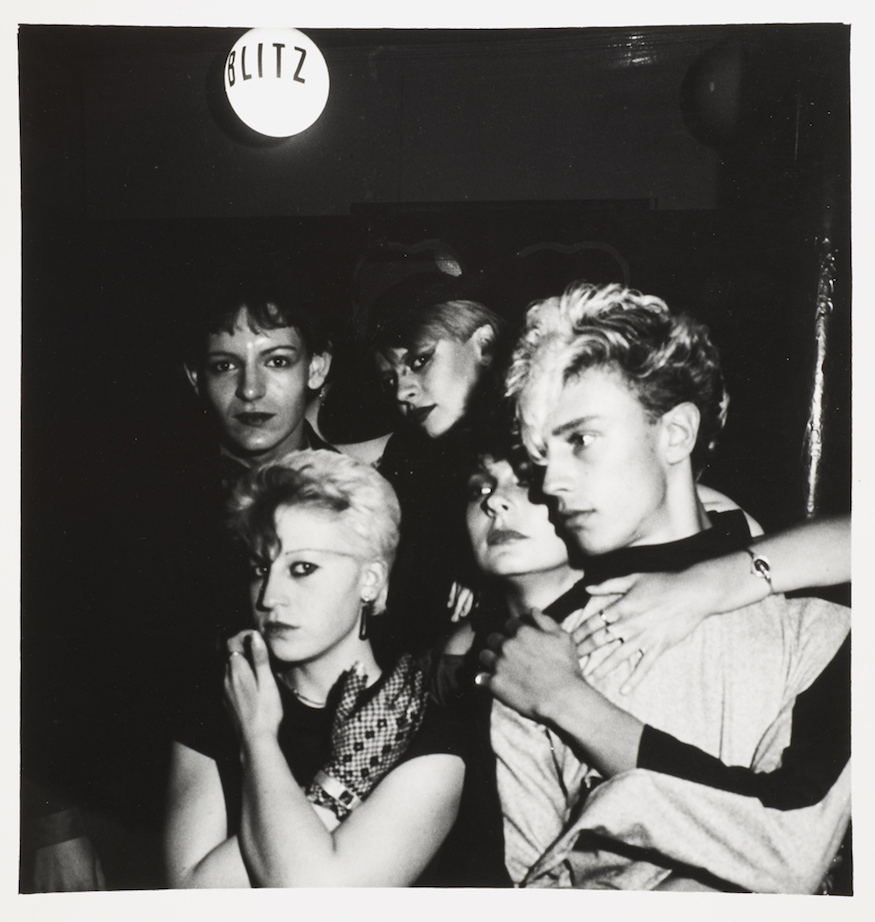
I love documentaries, but not many of them get a theatrical release (this one didn’t either, apart from a debut screening in London) so I haven’t included them thus far in the Film Challenge, but this one touches on a topic near and dear to me. The New Romantic movement was not the first musical statement of my generation — that would of course be Punk — but it was the one that resonated more deeply than any other before or since.

Blitzed! is a reflective look back on the key movers and prominent regulars who came together in 1979 originally in celebration of the glam-rock period and then-current resurrection of David Bowie, creating a much-needed escape from the UK’s Winter of Discontent the same year. The doc spends its first 10 minutes talking about the nadir (now coming around again, ironically) of England under the heartless Tories and austerity programs of Margaret Thatcher.

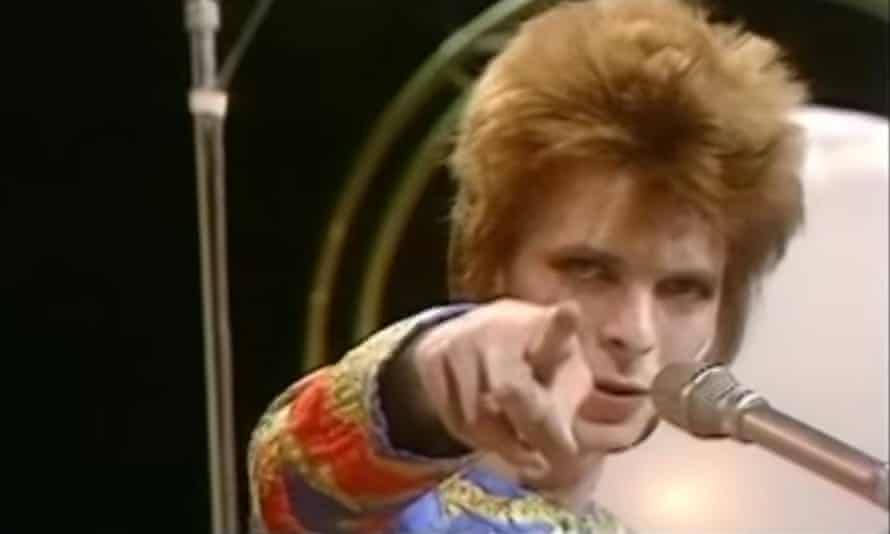
Strikes and decay against her and her parties’ cruelty, particularly affecting young people who saw “No Future” and “Anarchy in the UK” going from being songs to being ways of life, created a bleak reality of poverty and hopelessness. And then, there was A Moment: on a BBC performance of “Starman,” the now-androgynous Bowie turned to the camera and sang the line “I had to call someone so I picked on you-oo-oo” and pointed directly into the hearts and minds of his pre-teen and teen fans.

It hit like a divine mission sent from above, and inspired everyone who was watching who felt out-of-place and not like the masses to dedicate their lives to becoming Bowie acolytes in thought, word, and deed. Just five years later — now young adults and with no future in sight — the kids made their move, inspired by Bowie’s radical changes in his music in the intervening years to follow his lead, and break out of their desperate lives and redefine who they were … and could be.

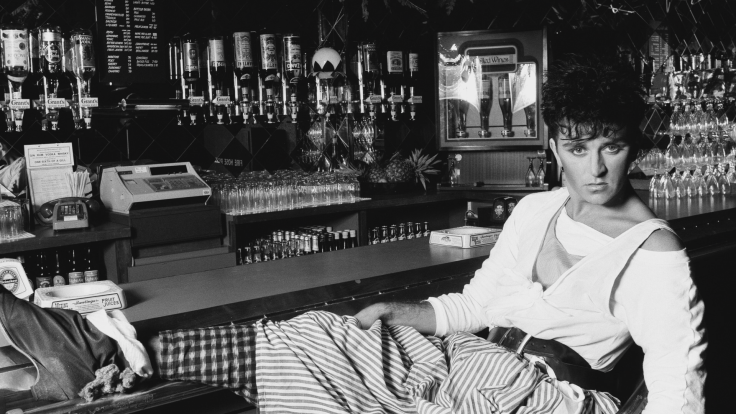
A batch of young creatives around London, led by Steve Strange (best known for the resulting band visage) and Rusty Egan (Rich Kids, Visage, Ultravox, Skids, and many others of that era), created a club where the mantra was anything other than the “desperation fashion” of Punk. It was just a little club in Covent Garden, but it became a safe house, a church, and portal to another world, fueled by both Bowie and the emerging bands he influenced.

The Rich Kids, Midge and Rusty’s first band (with former Sex Pistol Glen Matlock, right)

The documentary consists mostly of photographs and the occasional movie clip of the club and its patrons in their “denying reality” finery and makeup, and interviews with some of the more prominent members of the group (minus Strange, who died in 2015). Starting off with simple “Bowie Nights” in ‘79 at a pub called Billy’s, the movement quickly outgrew the space and moved to an existing wine and cocktail bar already called Blitz.

As the influence of the club’s new direction spread, musicians made up of club regulars created new bands, or existing bands redirected to capture the spirit, inventing a branch of synth-heavy New Wave music that has, like the club goers themselves, never really fallen out of fashion.  It was often framed as the antithesis of Punk, but that was a common misconception: it was more an unconscious political reaction to the bleak reality of the times by escaping into a created world where style and creativity could thrive.

Over and over again, we discover in the film that the Blitz Kids (as they came to be called) have since established careers in the arts (like the band Spandau Ballet, whose first gigs were in Blitz) or complementary and aesthetically-pleasing related fields, such as milliner Steven Jones or costume designer Michelle Clapton. Egan, the club’s founder and DJ, and Strange, the club’s notorious doorman and taste-setter, themselves went on to fame in the band Visage, assisted by Ultravox’s Midge Ure and others to create a kind of declarative musical statement of the mindset of the Blitz Kids.

Ure, along with musicians Andy Polaris, Egan, Gary Kemp, Boy George, Marilyn, and other notable “faces of the 80s” are interviewed, and had careers that lasted long after Blitz closed. Though the club itself was short-lived (though followed by a couple of further attempts, including the Club for Heroes), the aesthetic’s “flambouyancy” and queer-eyed DIY attitude spread far and wide, including hitting the United States and elsewhere throughout the early 80s.

George (left) and Strange (right) on the town

The doc also spends time with the notable but less-famous regulars, like Princess Julia (still a DJ to this day), Jones, Steve Dagger (Spandau Ballet’s manager for the last 40+ years), Robert Elms (writer and broadcaster), and others — all colourful characters with remarkably clear memories of their time at Blitz. Because of its style, the club was also, among other things, a haven for both impoverished straight kids who raided thrift shops for stylish gear while barely-existing in fetid squats and dead-end jobs as well as outcast LGBTQ+ youth — everyone of every race or creed was welcome, as long as you looked good and loved the music.

The club itself eventually fell apart because of drugs, especially heroin, but at its peak the club was a drug — and the best party you’ve ever been to, and I know that firsthand — thanks to a very brief London visit at just the right time, some borrowed clothes from a friend, and sheer dumb luck. I can confirm that pre-fame Boy George was working the coat check at the time, and that if you were 18-21 it was like you died and went to heaven — everyone was stunningly beautiful, the cocktails were deliberately cheap, and the music was fantastic.

Midge Ure of Ultravox

From my few hours there, I returned to my home in Miami a very changed lad (in both good and bad ways). As for the documentary, its only serious fault is the paucity of photos and footage of the club the directors had access to.

More have since been discovered, some quite recently, but over its 90 minute runtime the sharp-eyed will spot re-used pictures and other repeated material. This shortfall is more than made up for by the excellent interviews with what I will jokingly call “the survivors,” who made the most of their early peak youth and, very often, carved out a life from the inspiration of Blitz.

Steve Strange, now the ghost in the (drum) machine

Egan, Kemp, and George provide some of the most insightful interviews, both setting up the historical setting as well as the highlights of their time in this alternate reality they helped create. The absence of any contextual interviews from other sources with the late Steve Strange seems like an huge opportunity missed, given how large his shadow looms over everything.

The women interviewed, particularly Clapton, Darla-Jane Gilroy, and Princess Julia provide incredibly valuable “colour commentary,” if you will, because they were among the most dedicated regulars. They come off as being a driving force in helping create and maintain the philosophy of creative refinement that demanded not just looking good, but experimenting with different looks, that Strange made into a challenge for wanna-be entrants.

Princess Julia and acolytes

The highlight of the interviews is the segment I’ll call “OMG the night Bowie came to Blitz.” As the raison d’etre of the club and its mindset, this was akin to actual Jesus stopping by your local church.

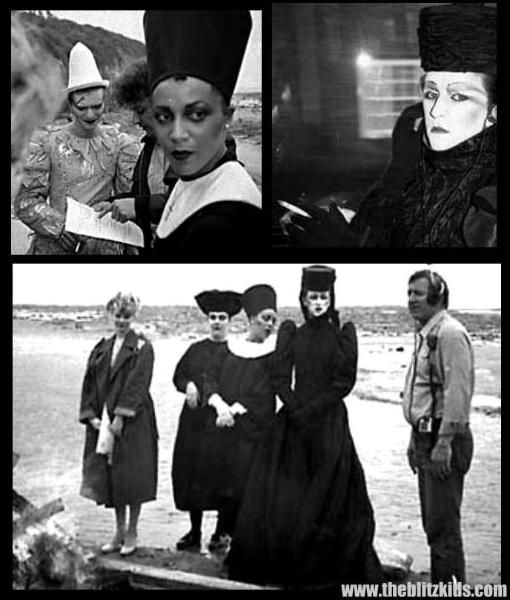
Not only did the great man seem to enjoy himself (Strange tried and failed to keep his presence a secret, as if that was possible), but he recruited four of the regulars (including Gilroy, who’s memories had to help make up for the lack of Strange’s recollections) to be in his very memorable “Ashes to Ashes” music video. You know this was the peak of Gilroy’s, Strange’s and all the Blitz Kids’ lives.

The “Ashes to Ashes” shoot. Top: Darla-Jane Gilroy (left), Steve Strange (right)

Overall, the documentary is an important artifact of a magical two-year-plus moment that really had a huge (and to this day severely underestimated) influence on the world, including music, art, fashion, makeup, the queer community, and so much more. As one of my last acts before I left Miami, I volunteered to help some college students set up a regular gathering of wannabe Blitz Kids, goths, and other teen outcasts at clubs for the same sort of fashion-show/dance hall — only this time it was the bands from Blitz we grooved to.

Suffice to say that if you were part of the New Romantic scene or just loved the bands that came from it, you will appreciate this documentary’s insights, no matter where you lived or who you were (or pretended to be) in 1980. If Steve Strange could have been more involved in this, it would have been flawless — but thankfully Rusty Egan, Gary Kemp, Boy George, and the Blitz Irregulars stood in his stead and paid tribute to Egan and Strange’s beautiful moment.

Inside the Blitz Club, Covent Garden 1981, by Dick Scott-Stewart. That’s Michelle Clapton, top left.

One of Us

Guest post by Jim Kerr

I first met Sinéad O’Connor in the late 80’s, not so long after she had become a mother.

Living in London at the time and she had become friendly with friends of ours, resultantly they all visited together when we were having a kids party one sunny afternoon.

Already an admirer by then, like the rest of the world I had fallen for the brilliance of her debut records. Aside from the music I was also aware of some of the publicity she had generated.

The thing I now recall mostly on meeting her that day, was the beauty of her soft spoken accent and the effect when she broke into what I can only describe as her 1,000 watt smile.
Much later, Charlie Burchill and I were fortunate enough to witness that same smile many times over within the walls of our dressing room, when Simple Minds toured with Sinéad.

Nervous before each show, then utterly relaxed in our company afterwards, the experience of that tour rewarded us with the opportunity to witness up close the magnitude of Sinéad’s exceptional talent, it was beyond colossal.
And as we do with all artists and musicians Simple Minds share a stage with, from then on we have always considered Sinéad as ‘one of us.’

It is for that reason, on the news of Sinéad’s passing, that we feel our hearts ache today.

Jim Kerr

COW 20-May-2013 – “Candy and Records”

This is a super-fantastic new episode (well, recorded on the 20th of May, 2013), and I was back in Orlando as part of a Fringe Show a friend of mine did — he later went on to win Best Comedy! If you’ve heard of “rap battles” or a battle of the bands or even the double-dutch dance-offs between those New York City girls, then this delightful DJ duel is going to be a special treat.

Sometimes when WPRK DJ Phantom Third Channel and I get together, we challenge each other — with music! As Frankie says, when two tribes go to war, the audience is the winner. This show has a tremendous diversity of sound pulled from across several decades of indie and college rock, but with a definite 80s atmosphere. Over the next two hours you’ll hear bands like Wire, XTC, They Might Be Giants, Bruce Wooley, Veronica Falls, Roxy Music, PIL, Galaxie 500, the Stone Roses and John Foxx — and more!

In between songs, we chatter and gush over all the great stuff we play for each other. One of our best sessions, but stay tuned … there’s more new episodes to come!

You can listen to the episode below, download it from the web site or subscribe to it in iTunes for free. Let us know how you like it at crustyoldwave@me.com, and enjoy!

[audio http://www.buzzsprout.com/6230/172646-cow-20-may-2013-candy-and-records.mp3]

COW #173 — 20-March-1995 — “Bryan Ferry Cross the Mersey”

Here’s a treat for those listeners who remember the local band scene in Orlando and all the great concerts we used to have — this episode’s twin focus is on the upcoming Bryan Ferry appearances that were happening that week, as well as both concerts and a new seven-inch, four-track EP put together by a handful of great local bands.

Our pal Jim was on the show, bringing along the latest Bryan Ferry album (which we go all fanboy over) and news of his upcoming appearance, and the two of us cooked up plenty of familiar and obscure New Wave gems, a few rarities and dance mixes as well. We took a little time to spotlight the local band EP and our special guest Aaron of Thee Exotic Aarontones in the middle of the show, and we also have a special all-new “bonus track” at the end from NYC-based Rude Boy George, who do a killer ska cover of the Romantics’ “Talking in Your Sleep” with a guest vocalist from the English Beat!

You can listen to the episode below, download it from the web site or subscribe to it in iTunes for free. Let us know how you like it at crustyoldwave@me.com, and keep an ear out for part two of this shindig, coming soon!

[audio http://www.buzzsprout.com/6230/159724-cow-173-20-march-1995-bryan-ferry-cross-the-mersey.mp3]

The Idol of Idle Youth: COW Episode #86 — 23-April-1993

Well here we are with a completely amazing episode from April of 1993 — its so good in fact that I’m having to split it up into two parts so you get the full glory!

Your old pal Chas had caught the Nash Vegas fever of Webb Wilder’s incredible root-rock-a-tronic southpaw music, and he pops up a couple of times in a show dominated by the great New Wave and Art Rock songs that weren’t the biggest hits but scored a lot of points.

You can listen to the episode below, download it from the web site or subscribe to it in iTunes for free. Let us know what you, the loving public, think at crustyoldwave@me.com, and keep an ear out for part two of this shindig, coming soon!

[audio http://www.buzzsprout.com/6230/120742-cow-episode-86-the-idol-of-idle-youth-23-april-1993.mp3]

Bargain Bin Crusty Old Wave — 13-May-2013

Here’s another all-new episode of Chas’ Crusty Old Wave, this time recorded on the 13th of May, 2013 live at WPRK. With our dear friend Phantom Third Channel behind the board, we once again took to the air to bring out the long-lost and beloved treasures of the New Wave era — but this time we did things a little differently.

Just to change things up, Phantom and I took turn playing the kind of music that normally plays on our show when I’m not taking over the place. Naturally I brought my early 80s-centric songs, and he brought his avant-garde selection of eclectic thrift-store finds, lost gems from bygone decades and enough oddball curveballs to win a baseball game. It made for an interesting mix that saw John Foxx followed by Robert Johnson, Captain Beefheart opening for Lesley Gore and Roky Erikson going head-to-head with Steeleye Span. This episode is a wild one, to be sure.

You can listen to the episode below, download it from the web site or subscribe to it in iTunes for free. Enjoy.

[audio http://www.buzzsprout.com/6230/117021-bargin-bin-crusty-old-wave-13-may-2013.mp3]

COW #038: Girls! Girls! Girls!

Annnnd here we are with another fun-filled episode of Chas’ Crusty Old Wave! This episode (#38) comes to us from the first of May, 1992 is serves not only as a two-hour testament to how great some of the music of the 80s was, but also to showcase a little of the wonderful cast of characters that I was privileged to work with on WPRK at Rollins College in the 90s.

This episode has some unusual selections. You’ll hear obscurities from Noel’s Cowards, Gina X Performance, Jerry Harrison, Landscape, and Seattle group Uncle Bonsai alongside album cuts from XTC, Adrian Belew, Falco, They Might Be Giants, the Rutles, the Pet Shop Boys, Adam Ant and many more. It’s a party in the basement, and you’re invited! Let’s kick it off with a little sauciness from Duran Duran, and listen out for a cut from Sesame Street. Yes, Sesame Street.

You can listen to the episode below, download it from the web site or subscribe to it in iTunes for free. Enjoy.

[audio http://www.buzzsprout.com/6230/103038-cow-episode-038-02-19-35.mp3]