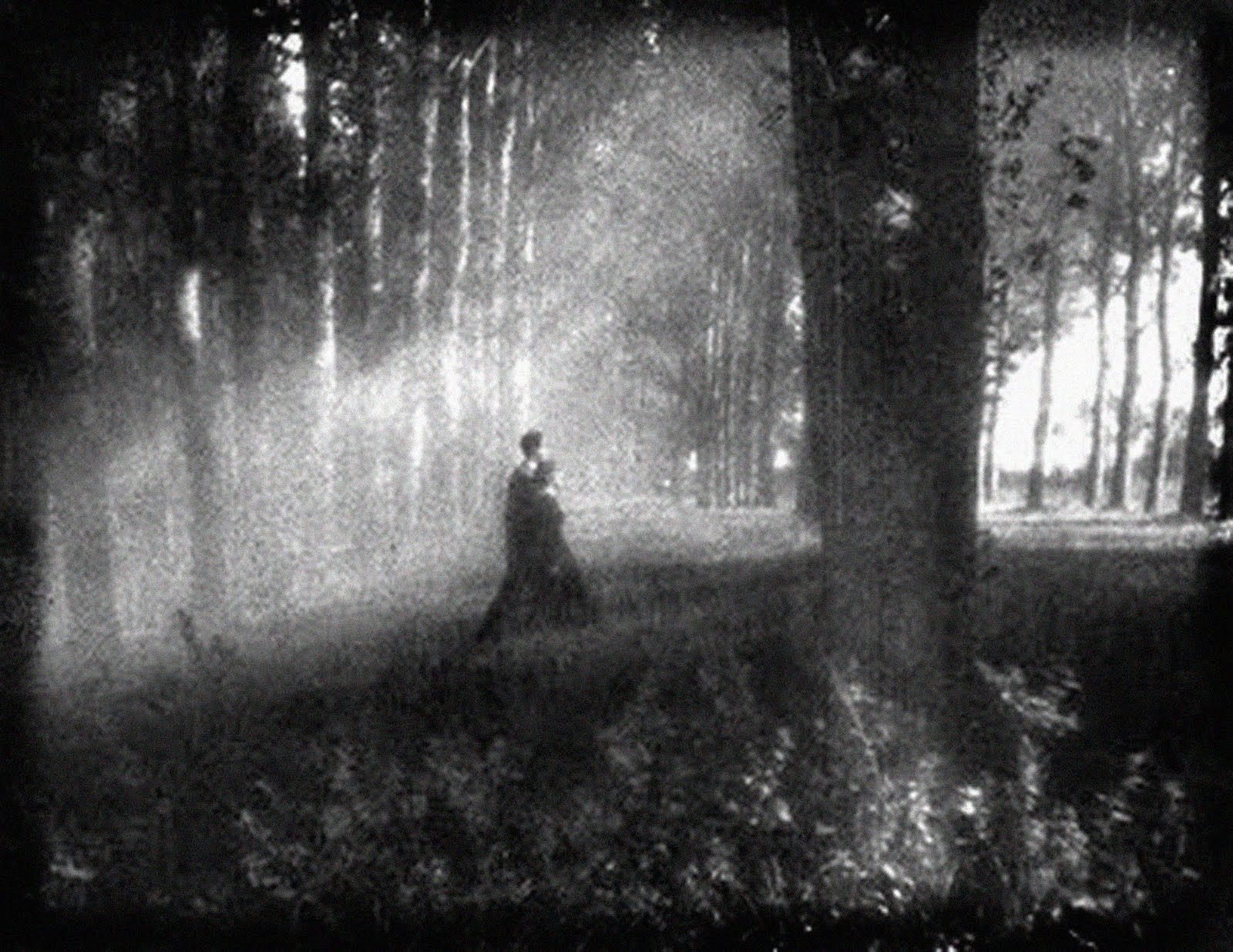
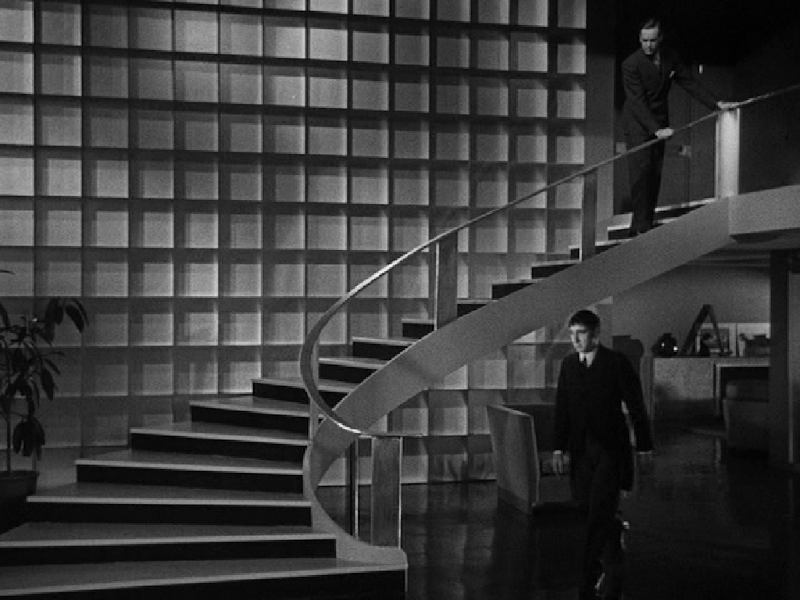
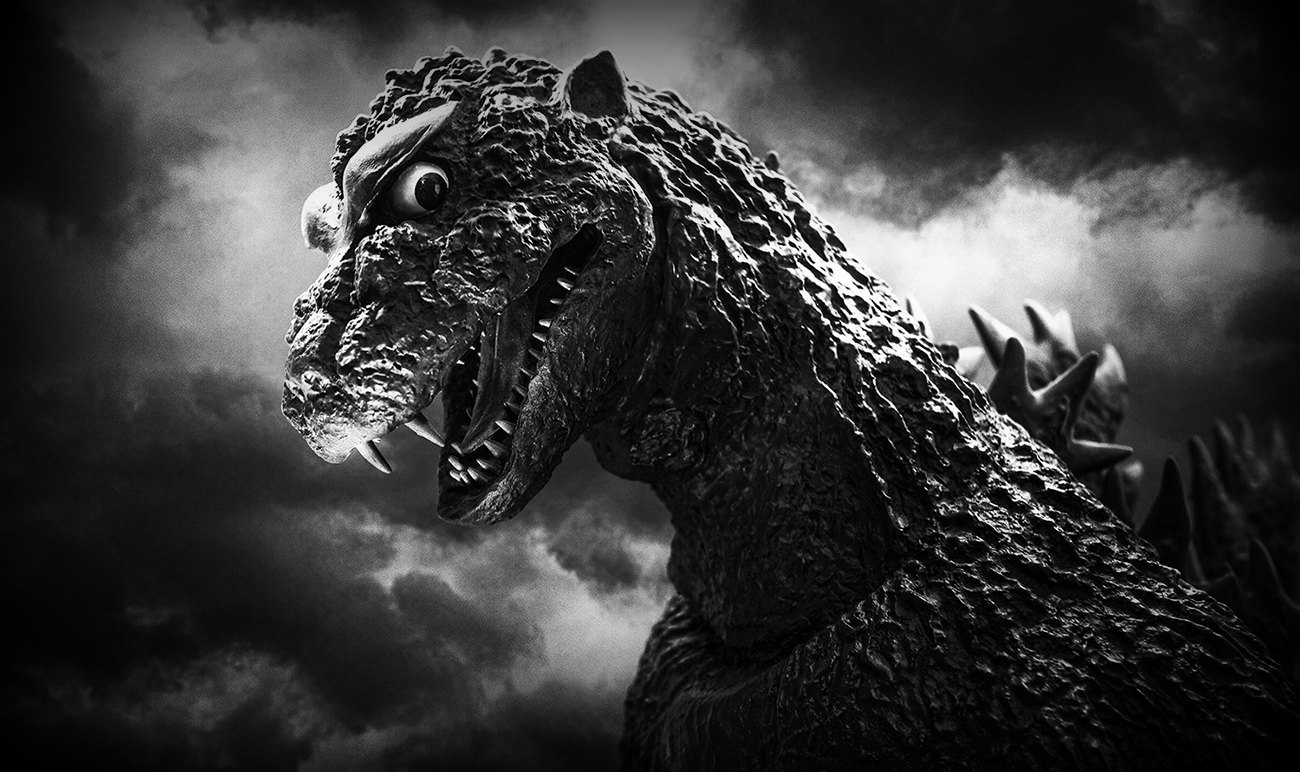
Tetsuo, the Iron Man (1989)

Director: Shinya Tsukamoto
⭐️⭐️⭐️⭐️

If you’ve seen this film, there’s not a lot I can say apart from some small bits of trivia that you might not already know. If you haven’t seen it, this is the first and perhaps the greatest Japanese cyberpunk/body horror/indie metal/sex comedy film of all time. I haven’t seen either of the two sequels, but that’s the only reason I say “perhaps.”

Perfectly timed with a youth-cultural rising tide of nihilism, low-budget renegade filmmaking, steampunk fashion, and the emergence of “industrial” music, Tetsuo combines it all into a movie that was very much of its moment. I first saw the film at and independent cinema in central Florida a few months after it premiered, and I was simply not prepared for the onslaught of sight and sound I witnessed.

It was in some ways traumatic, in other ways compelling — and it haunted me for a while with a mixture of revulsion and wonder at the time. I have finally dared to take a second look, and I squirmed in places — but could still could hardly bear to blink.
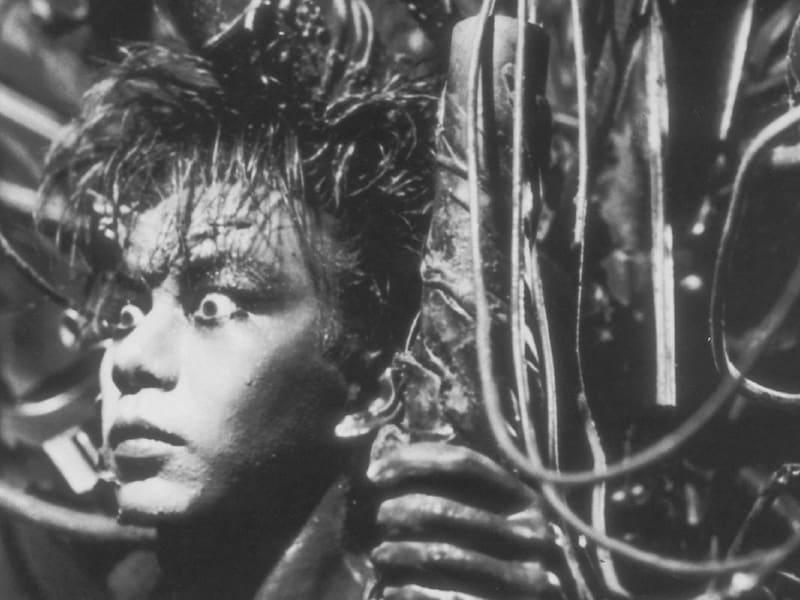
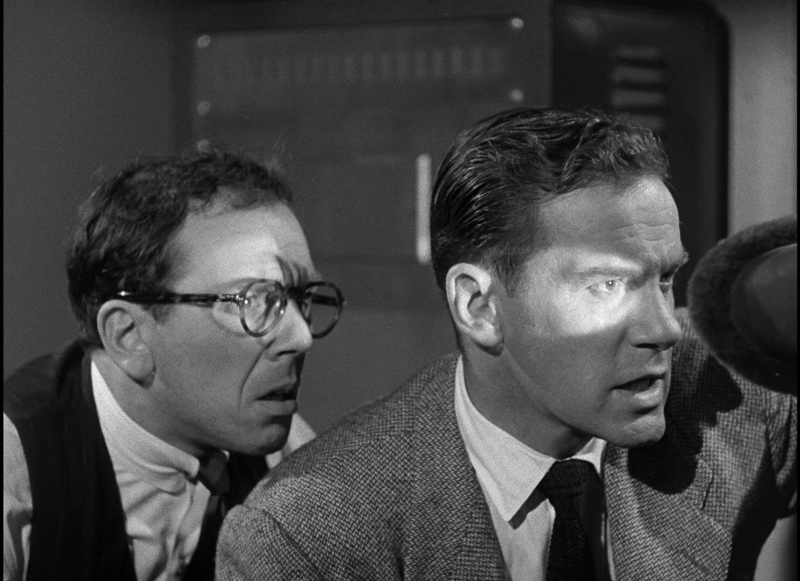
The film is in B&W, and doesn’t look quite as absurdly cheap as it is most of the time thanks to ludicrously frenetic stop-motion effects, brilliant editing, and mesmerizing performances, while still mostly giving its audiences only glimpses of what’s fully happening. The assault of hard music contributes to the urgency and raw emotions on display throughout.

The film went on to be an enormous influence on both musicians and indie directors, and makes those Godzilla movies look like pastoral landscape paintings for children by comparison.

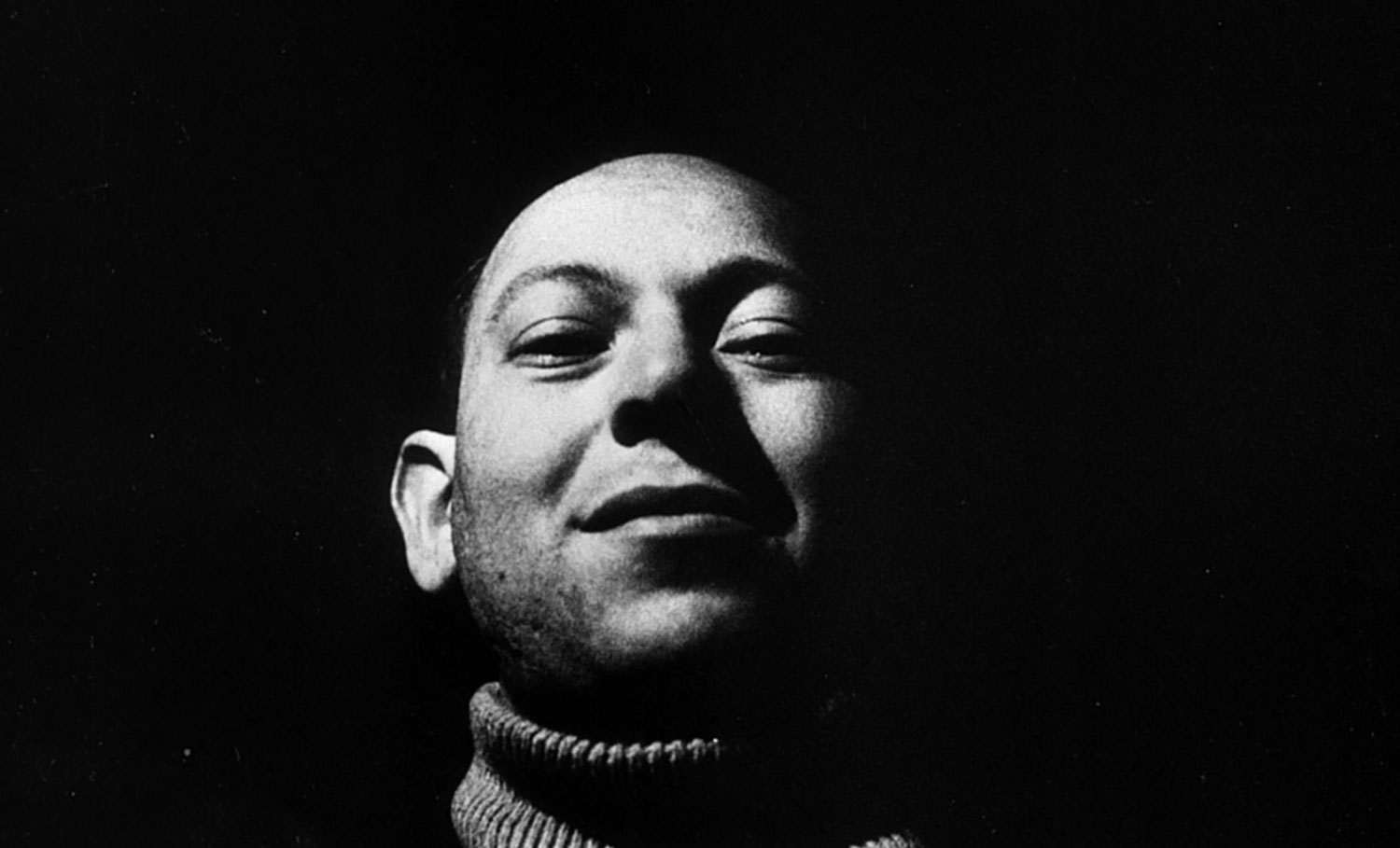
The plot is weird yet simple: we start with meeting a young man (played by director Tsukamoto) who is cutting his thigh open so he can insert some metal into it. His surroundings are composed of lots of scrap metal, and this is a fetish of his apparently.

It goes very wrong, and maggots begin to feed on the wound. Driven mad with disgust, he runs out of his tiny room and into the night, and is soon run down by a “salaryman” (businessman) — played by Tomorowo Taguchi — and his girlfriend (Kei Fujiwara).

The pair investigate the corpse, are revolted, and dispose of the body. Not long after, the businessman notices that he is growing metal out of his body, and soon the girlfriend is transmuting as well.

Slowly but surely the metal is taking over their bodies (mostly done using stop-motion animation), turning them both into metal-human hybrids. This takes a while, and is documented in beautiful detail in the grainy B&W cinema verité style, augmented with the hardened edges of industrial music.

Once it starts, it is a relentless onslaught, and the victims here are bewildered, terrified, and powerless to stop it.

To this point, the film is a hyperactive low-budget body horror escapade, but strangely compelling. We know where this story is going, but it is clever enough to make us want to see it through.

The salaryman’s transformation is much further along by the time the girlfriend turns up, equally starting to transform. They end up being compelled to have what I’ll just call “drillsex,” which at this point provides a much-needed moment of relative levity.

Others have described the film as something of a mash-up between Un Chien Andalou (1925), Videodrome (1983), and Eraserhead (1977) in Japan, and I have to nod and say “yes, but with all these films thrown in a blender while you’re watching them.” Tetsuo vibrates with energy and intensity, never relents from its breakneck pace, and cranks the music up to 11.

Since it’s release, we’ve all started down its path: rare is the moment now where you don’t see someone glued to their smartphone, to the point where we treat it as an extension of “ourselves.” The messages of the film regarding societal sexual repression, industrialized alienation, body dysmorphia, work-life imbalance, and are alternately sublimated and beaten over your head.

Being so hyperkinetic and, well, metal is likely to be overwhelming for any casual viewer, even though the film clocks in at a mere 67 minutes (and thank heavens its not any longer). By the end, you’re not sure if the salaryman and his girl likes what has ultimately become of them or not.

It reminds of a rollercoaster you’ve never been on before: terrifying, exhilarating, and you’re relieved you survived it — and then, knowing that you did, you want to go back and do it again.

Tsukamoto served as writer, director, producer, art director, lighting director cinematographer and editor of the film. A number of the other crew members who worked on the film quit in disgust or in dispute with what Tsukamoto was doing.

It is a visionary, hugely influential and eye-popping film in many ways, but I think most people whose idea of a horror movie is Friday the 13th would probably turn down a second opportunity to see it. That said, a little of that metal fetishism stays with you, in the sense that you can’t unsee it.
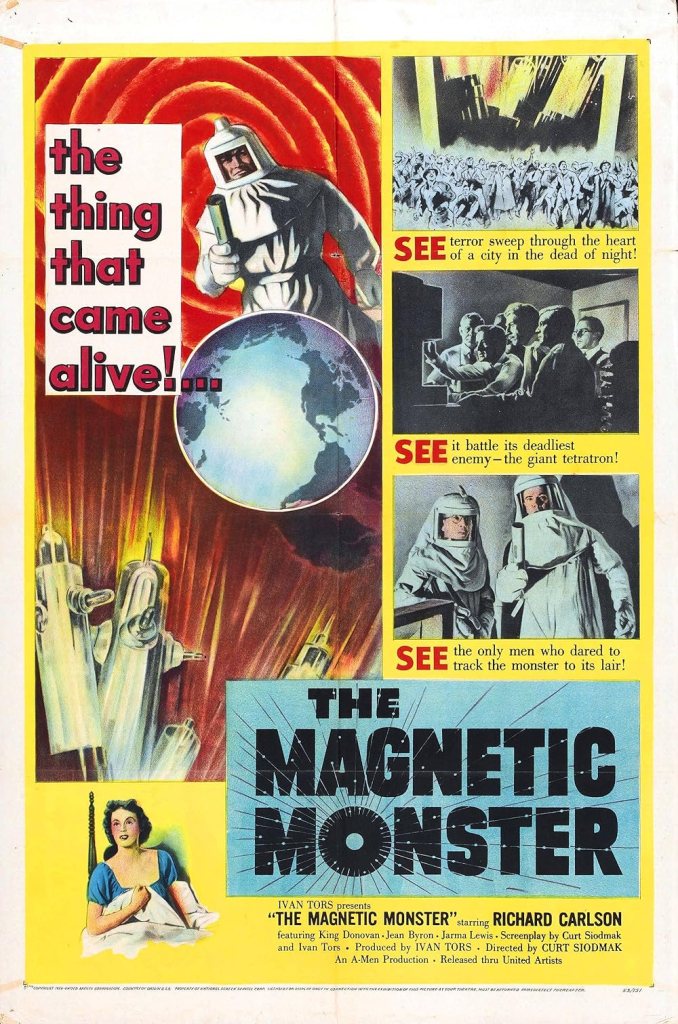
The Magnetic Monster (1953)

dirs. Curt Siodmak and Herbert L. Strock
⭐️⭐️⭐️
52-week film challenge, film 51

Despite some laughably bad science in much of it, no actual monster in the traditional sense of the term, and an effects-heavy climactic scene borrowed from another movie entirely, this Atomic Age film ends up being better (and surprisingly suspenseful) than you’d expect.

The investigation begins.

In 1953, America’s veterans had returned home, and the country had collectively forged a new direction: confident, industrious, lots of new inexpensive housing, the GI bill to get college-educated or trade-skilled, and basically hope for a bright future for nearly everyone. That said, there was the shadow of the coming nuclear arms race, and an understanding that scientific exploration isn’t always for the betterment of mankind.

There’s a lot of magnetism in this flick, but sadly none between Drs Stewart (center left) and Forbes (center right)

That’s the mindset needed to better understand this picture, the first of a trilogy (!) of adventures involving the Office of Scientific Investigation (OSI), a group of scientists who investigate possible irresponsible uses of … SCIENCE! (Cue Thomas Dolby music here). Richard Carlson, also seen in It Came From Outer Space and many other cult pictures, stars as Dr Jeff Stewart.

His partner in this one is Dr Dan Forbes (King Donovan, another fantasty-film actor), and the first half of this film is basically a more-scientific police procedural — there’s a business in town that suddenly has all kinds of weird things happening, specifically things getting magnetised (as we quickly find out). The effect appears to be coming from a flat above the magnetised store, but by the time they work this out, the “culprit” has fled the scene, taking whatever it was that was causing this with them.

Oh yeah, we should remember to wear these protective suits from time to time!

The sub-plot, such as it is, is that Stewart’s wife is pregnant but not showing (a constant source of conversation between them — “why aren’t you fat yet?” for example), and Stewart is inspired to buy a house for what he is sure will be a baby boy, but can barely afford it because apparently OSI officials are in it for the love of … SCIENCE! Bonus points for a now-hilarious breakdown of what it will take to buy a house in the early 50s on their basic budget.

“Why aren’t you fat yet?” patronizes Dr. Stewart.

Drawn-out story short, Stewart and Forbes track down an irresponsible scientist, Dr Howard Denker (Leonard Mudie) who was fooling around with making unstable elements and accidentally created a whopper — a radioactive isotope that, every 11 hours, uses magnetism to create energy from every available source in order to double its mass. While the problematic element is still small enough to fit in a briefcase, its exponential needs and growth means it will very quickly become a huge problem that threatens to destroy Earth, aka uncontained nuclear fusion.

Stewart and Forbes confront Dr Denker, who has brought this element on board a commercial plane (!) to try and get it to a university in California to make it their problem to solve, as he is dying from radiation poisoning. Literally in his dying breaths, Denker absolves himself from any responsibility for creating this world-eating thing, saying that he wasn’t responsible for the consequences of his experimentation.

Amoral dying scientist is also irresponsible at handling dangerous materials!

Thus, the second half of the movie is a race against time. Even though the element is still of a size that is portable, it will continue to cause havoc every 11 hours when it needs to be “fed” — and its appetite is also exponetionally growing. The OSI convinces the town to undergo a blackout so that all available electricity can be diverted to the next “feeding” of the element so as to minimize the consequences — but now they have 11 hours until this thing is going to need 600 million watts of power for its next “meal.”

Stewart consults with various other scientists (more doctors per square inch in this movie than any other I can think of!) and eventually comes up with a theory: if he “over feeds” the element, it should split up into two stable elements, ending the threat to earth. But where to get that kind of power?

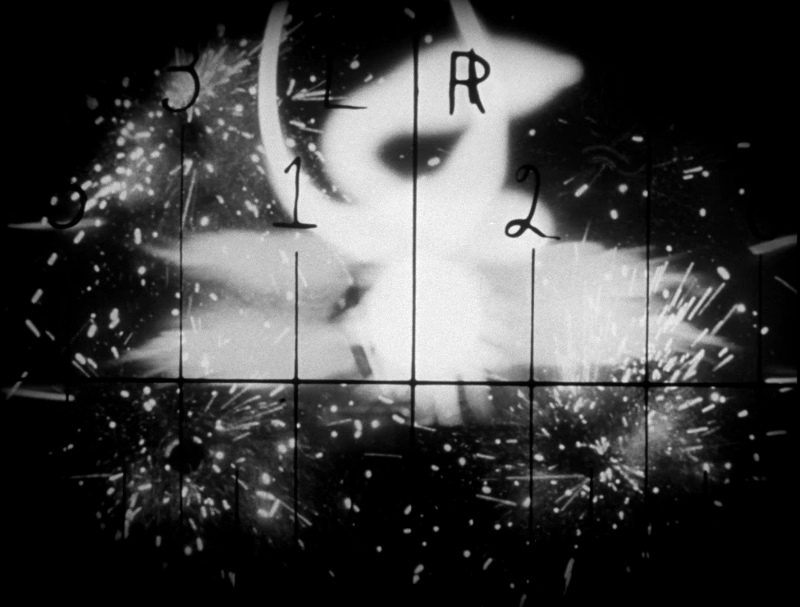
Stewart and Forbes witness the element drawing energy out of thin air (above), creating micro-explosions and growth.

A US general blabs about a top-secret energy facility deep underground off the coast of Nova Scotia in Canada, and can provide the 600 million watts, but may not be able to be pushed much beyond that. Stewart and Forbes take the risk, fly as quickly as possible to the base, and make it just in time for the start of the magnetisation cycle that starts the “feeding” frenzy of energy collection.

The underground base and its magnetron/cycletron (not sure) are huge and impressive — and come from another movie, the 1934 silent German film Gold, very much in the mold of Metropolis’ special effects. Nearly-seamless editing puts Stewart at the controls of the machine as he pushes it well beyond its tolerances to “overfeed” the element, eventually causing the machine’s destruction — and a few tense moments of magnetisation where Stewart — who has barely escaped with his life — thinks he may have failed, and the world is doomed.

Happily, the magnetised things suddenly fall off the walls, and Earth is saved. The taxpayers of Canada are on the hook for replacing a now-dead power station, but let’s not talk about that! Quick, back to domestic bliss, patronising sexism, and house-buying!

Dr Stewart saves the world … but not this power station … by pushing it into the Danger Zone.

Despite the all-over-the-place levels of scientific credibility, The Magnetic Monster is actually a surprisingly gripping film that holds audience suspense, still. It’s that 1950s earnestness of “we can do anything” spirit that foreshadows the space program and other great accomplishments of the following decades, I think, but it still works.

The OSI’s own computer (seen here) is called “M.A.N.I.A.C,” and it’s dancing like it never danced before.

Scrooge (1951)

dir. Brian Desmond Hurst
(US title: A Christmas Carol)
⭐️⭐️⭐️⭐️⭐️
52-week film challenge, film 50

Naturally we have to do at least one Christmas movie in the 52-week challenge, and for me of course it would be this one. I watch this movie every year, and never get bored of it — always admiring something new, like the lighting of certain shots, the long shadows Scrooge casts, details of Bob Cratchit’s family and so on endlessly.

There are many decent-to-excellent film versions of “A Christmas Carol,” but this one is far and away my favourite, in large part because of its marvelous casting, superb performances (particularly from Alastair Sim as Scrooge), and striking B&W cinematography. Every single member of the cast is on point, camera angles are uniformally well-chosen, the musical score is quite striking (more about that later), the supporting characters are also very memorable, and in short this film is perfect in all the ways — even the additions to Dickens’ story are so well-done you’d hardly believe, for example, that there’s no Mr. Jorkin (Jack Warner) in the original novella.

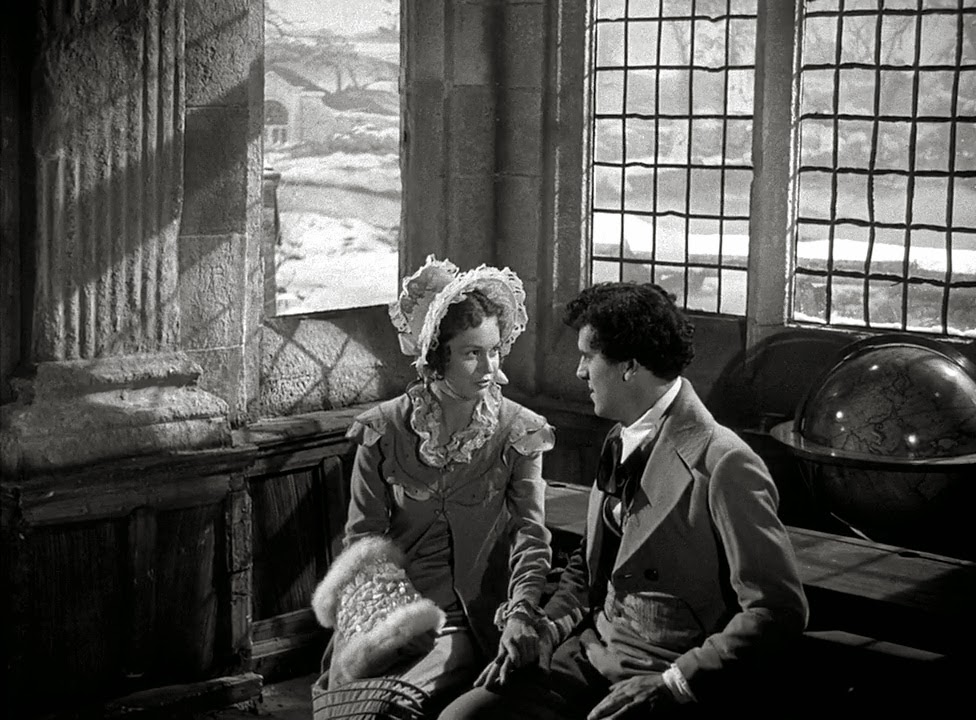
Mr Jorkin (Jack Warner, middle) introduces Young Scrooge (George Cole, right) to his future partner, Jacob Marley (the film acting debut of Patrick McNee, left).

I sincerely believe that if Dickens could be brought forward in time to watch his story on film, this one would be the one most likely to meet with his approval. Certainly he’d like it better than either of the two best-known previous attempts, the comical short silent version from 1910 or the mediocre full-length version starring Reginald Owen from 1938.

Everyone thinks they know the story of “A Christmas Carol,” but relatively few have ever actually read the original work. Changes required to make the story more visual in the various film versions have added elements to the original story, and so does Scrooge, but it is a testament to the skill of screenplay writer Noel Langley that the joins are largely seamless to anyone this side of a Dickens scholar.

Scrooge wasn’t always a jerk: he was always kind and tender to his sister Fanny (Carol Marsh)

In particular, Dickens’ original social commentary is strongly intact in this version, and resonated deeply in postwar Britain of the early 1950s, when the country struggled with crushing debt from the war, and continuing rationing and austerity. Also preserved is traces of Dickens’ Christian faith, and while explicit in some moments it doesn’t overshadow the message of social justice and the responsibility of the the well-off to alleviate the suffering of the poor.

Marley’s ghost (Michael Hordern) tries to show Scrooge the suffering of the poor, but it’s not (yet) effective.

Aside from the radiant performance of Alastair Sim, who set a bar of believability in both pre- and post-reformation Scrooge that no other actor has equaled, special mention should be made of Mervyn Johns as Bob Cratchit, Hermione Baddeley as Mrs. Cratchit, Michael Hordern as Jacob Marley, the incredible Ernest Thesinger as the mortician, Miles Malleson as Old Joe, and of course Kathleen Harrison as Mrs. Dilber, another performance that will never be bettered. There are a wealth of character actors in this, all doing their British Character Actor thing to an absolutely flawless standard.

Special mention too must go to Richard Addinsell, who gave the film a very booming, menacing score that softens all the way to down to music box-like Victorian lullaby in places, and throws in a traditional ballad (“Barbara Allen”) for the film’s climax. Finally, the combination of Ralph W. Brinton (the art director) and C. M. Pennington-Richards (the cinematographer) produce a detailed but very dark style where the shadows are long, the lighting is sparse (until Scrooge’s reformation), and the harshness of life in Dickens’ fable is not shied away from — it is simply gorgeous to look at, and downright spectacular if you have a OLED high-definition television.

Glyn Dearman as Tiny Tim, enjoying a splendid display of Victorian toys.

In these current days of increasing western poverty and misery, with inflation making the working class ever poorer and more angry, the film again becomes more relevant to complement its timeless moral. To quote Bob Cratchit, “it is a perfect pudding!”

La Jetée (1962)

dir. Chris Marker
⭐️⭐️⭐️⭐️⭐️
52-week film challenge, film 46

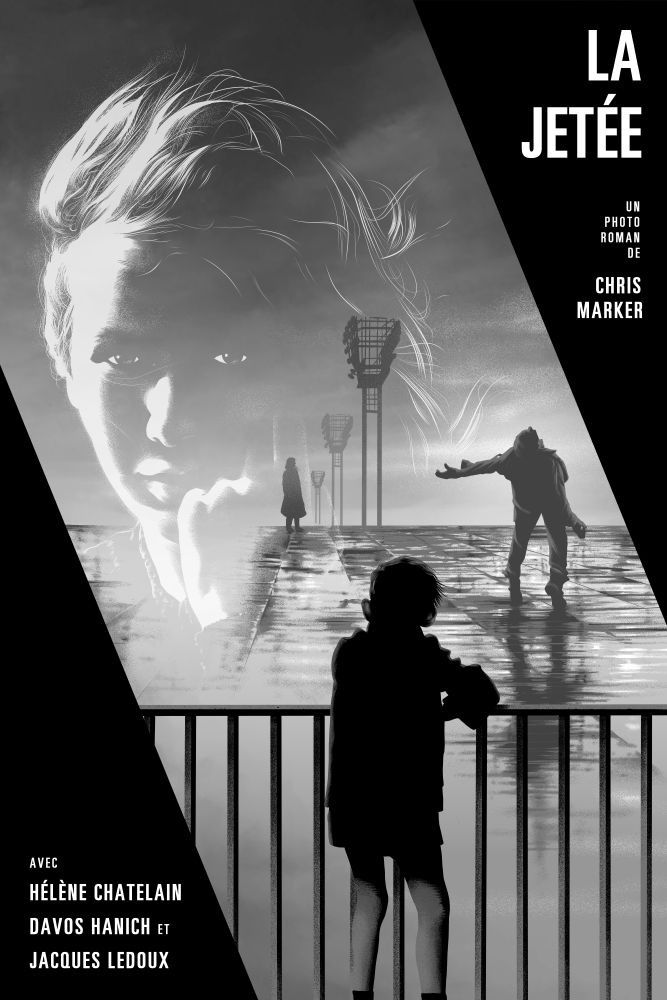
I believe I am correct in saying that La jetée, at only 28 minutes long, is the shortest film in “Sight & Sound” magazine’s listing of the greatest films in history (currently ranked at #67 in the critics’ poll, but #35 in the directors’ poll). Nonetheless, its impact on the medium of film, on storytelling, and on the notion of “science fiction” is significant.

Some wag once called it “a slide show with an IQ of 180,” and they’re … not wrong. Except for a small moment of moving images, the film is composed almost entirely of photographic still images, where the viewer must study what’s briefly on screen carefully to extract as much information as possible, combining the visual information with the audio cues and narration. Of course the medium of film is itself a series of photographed still images, but show quickly enough that the illusion of movement, of synchronised sound, of emotion and performance, is fluid.

Here, director Marker slows down the flow to create an irony, rendering it as a unique method from which we get our information; we infer, rather than see, the passage of time between each image — that interesting process in our minds where our vague memories and our dreams cross each others’ paths.

The “story,” such as it is, is stark and minimal: in a bleak post-nuclear dystopia sometime after World War III, a man is selected by a small group of scientists (German, it seems, given the whispering that occasionally appears behind Jean Négroni’s vital and nearly poetic narration), to engage in an experiment to save the present by calling on the past and the future to provide a solution — induced psychological “time travel”

The man has always held some strong mental images to keep his memories intact, and these scientists can see into people’s minds, so they have picked him. While being held captive, he is injected with something to prompt his (mental) return to the past, before the current situation, where he meets a woman not unlike “The Time Traveller’s Wife” — a figure not part of his memories, who accepts each new visit without question, calls him “her ghost” and builds a bond of trust and friendship with him.

Having successfully sent him into the past, the scientist then attempt to send him into the future, with far more obscure results. The man, seduced by the woman of his “dreams,” appears to “escape” his present and live permanently within his memories with this woman — combining the hazy glow of happy memories with this new dream-like woman, forging his own personal paradise.

Despite the vagueness that is part and parcel of this story, there is a definite ending I won’t spoil. The narration acts as a hypnotic element drawing the viewer in alongside the score — the visuals, the narration, the score, and the still-image juxtaposition of past, present, and future all interplay with each other to create a remarkable journey that is likely to stay with viewers as they reassess their own recollections, dreams, and reality.

Yes, the Terry Gilliam film 12 Monkeys is something of an expanded and re-envisioned remake of La jetée, but I’d encourage anyone who hasn’t seen that (or even if they have) to sit with La jetée and let it mess with your own head a little bit.

Even the title is a bit of a mind-slip: Literally, it refers to the jetway at Orly airport (which we repeatedly come back to), but it’s been pointed out to me that the could be seen as a play on là j’étais, which translates to “there I was.”

Radio On (1979)

dir. Chris Petit
⭐️⭐️
52-week film challenge, film 45

I’ll admit it, the soundtrack of Radio On is what pulled me into watching it. The very late 70s, 1978-79 in particular, were the original “post-punk” years and pivotal to me finding my musical “tribe,” which covered punk, ska, and especially New Wave with its synthpop vibes, calling back to Kraftwerk and other synth pioneers.

On that front, the film ticks many of my musical boxes: early Devo, Kraftwerk, Robert Fripp, Ian Dury, Wreckless Eric, Lene Lovich, The Rumour, and David Bowie all appear in full or (mostly) bits, so the soundtrack would normally get five stars from me — except that you rarely hear the full songs. Still, the aesthetic is there, and it’s the best part of the movie.

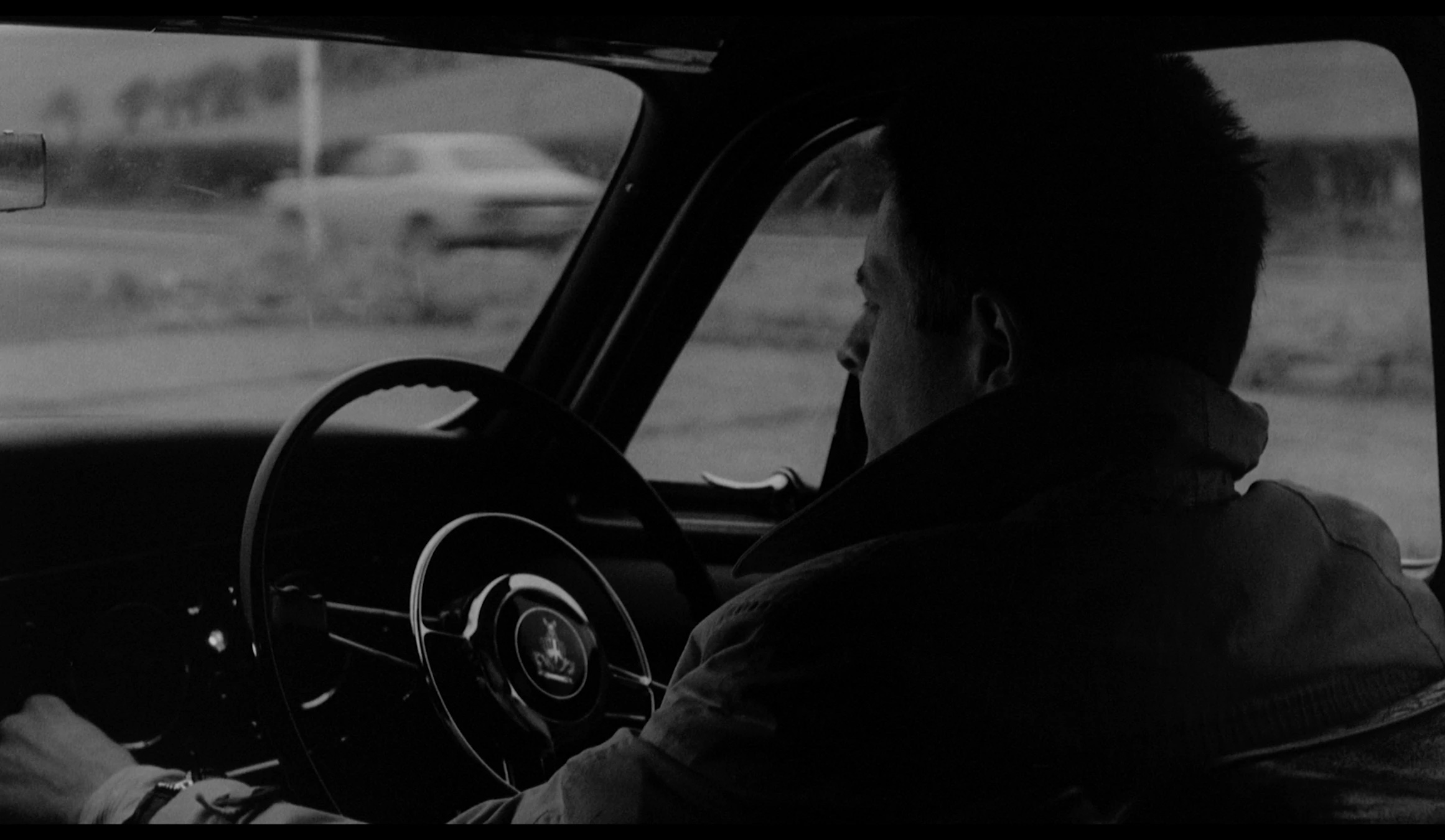
As for the film itself, it has the loosest of possible plots: a man named Robert (David Beames) who works as a DJ for a chain of biscuit (cookie) factories — yes, playing music live to workers — has to leave his empty life in London to drive to Bristol, as his brother there has committed suicide for no discernible reason. Most of the movie is simply Robert driving to — and then back from — Bristol, making this technically a (rare) British road movie.

This is literally about 90 percent of the movie.

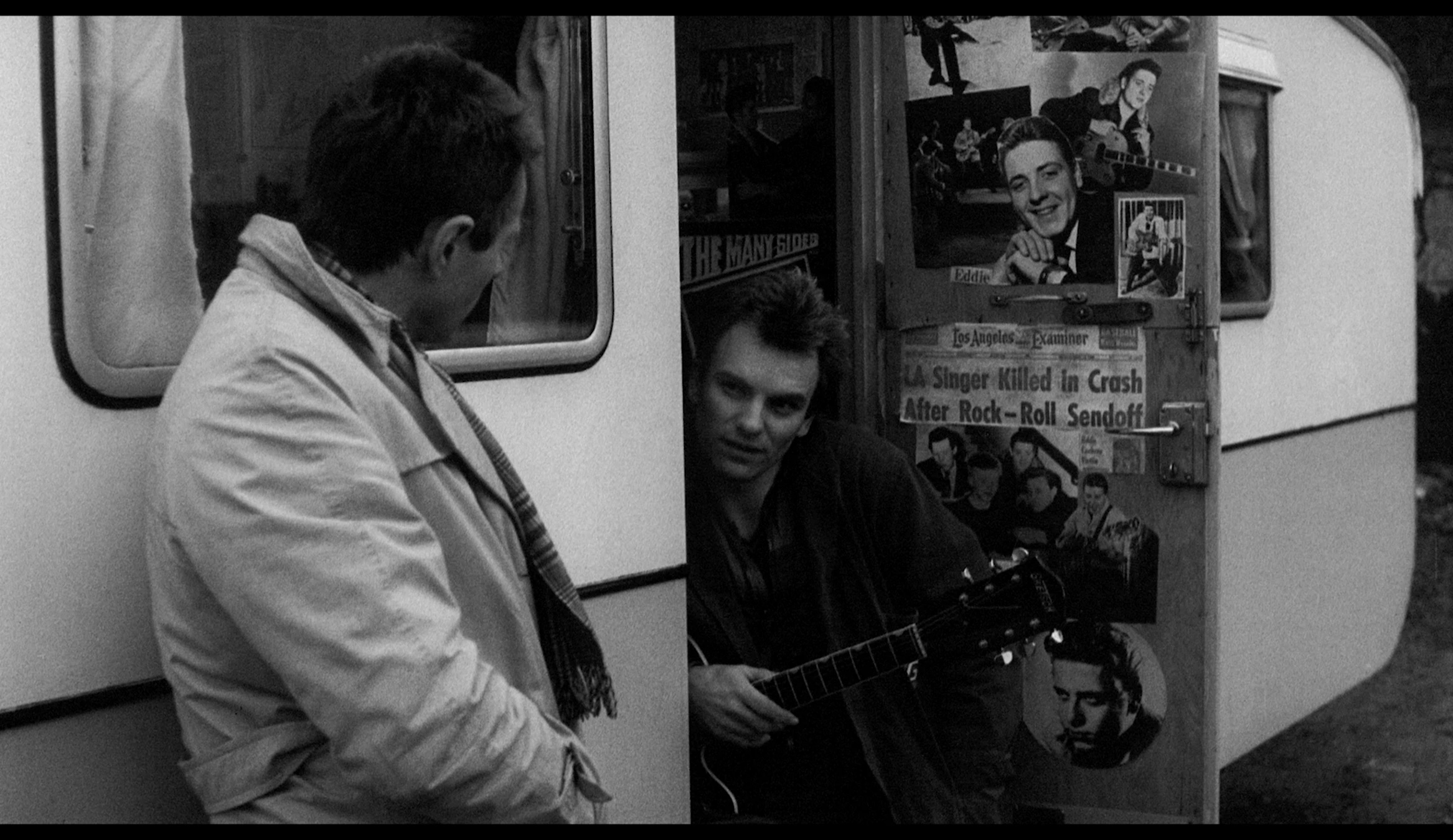
It’s shot in black and white by Martin Schäfer, best known for being Wim Wenders’ assistant cameraman — and indeed, Wenders is also involved in this. Along the journey to Bristol, he meets a few people (including Gordon Sumner, better known as Sting from The Police, who plays a homeless troubadour) and shares a few moments with various people, including a couple of girls, but nothing much actually happens.

This lack of clear story and the litany of drifting, directionless characters is undoubtedly meant to convey the post-punk generations’ alienation from “society” and general ennui and aimlessness in the aftermath of punk, heralding an ongoing emergence of a world where not much gets done, and nobody seems to care much, or commit to anything. The performances, particularly Beames’ Robert, offer moody minimalism and slacker angst, which has been the soundtrack to successive generations ever since.

As symbolism, that angst and purposlessness comes across in the film; 40+ years after Radio On was made, things haven’t changed that much, though some inconsequential music and fashion trends have periodically managed to march through in the meantime. So we get a lot of well-shot but visually-flat driving to “nowhere” and then back again.

Robert finally gets to Bristol, pokes around a bit, talks to his brother’s girlfriend/partner (who has little to say) for a few days, hangs out in Bristol a bit, then begins the journey home, none the wiser. As mentioned, he meets some people going to Bristol and on the way back, and while these encounters inject some interest and really minor amounts of insight, nothing much comes of them.

The “ending” of the film, where Robert finally must abandon his misbehaving car and take the train the rest of the way home is the most interesting point in the film, primarily in contrast to the monotony that came before it.
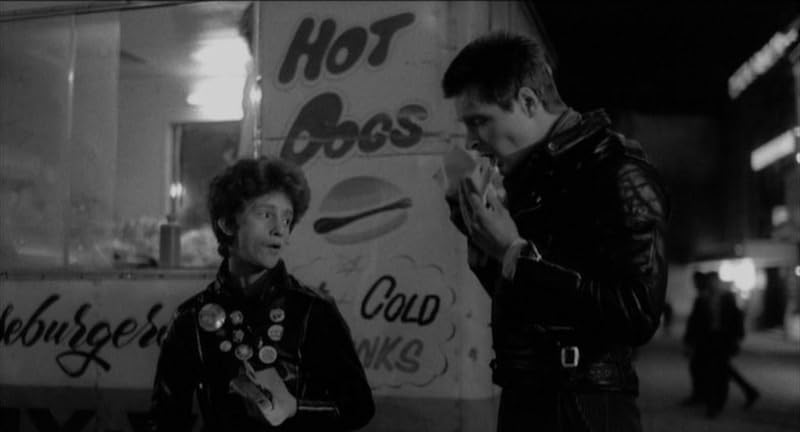
I don’t want to make it sound like I hated this film, I didn’t — a journey is a journey, and some scenes were filmed in specific neighbourhoods I know from my own travels, and did I mention the soundtrack? — but Radio On has little to offer beyond its great musical choices and some kind of vague statement on the desperation of living in the very late 70s as a member of the “lost” generation, which as far as I can tell are still mired in their own entropy.

If you knew this place in 1979, you were a pretty cool kid.

Brighton Rock (1948)

Dir. John Boulting
⭐️⭐️⭐️⭐️
52-week film challenge, film 44

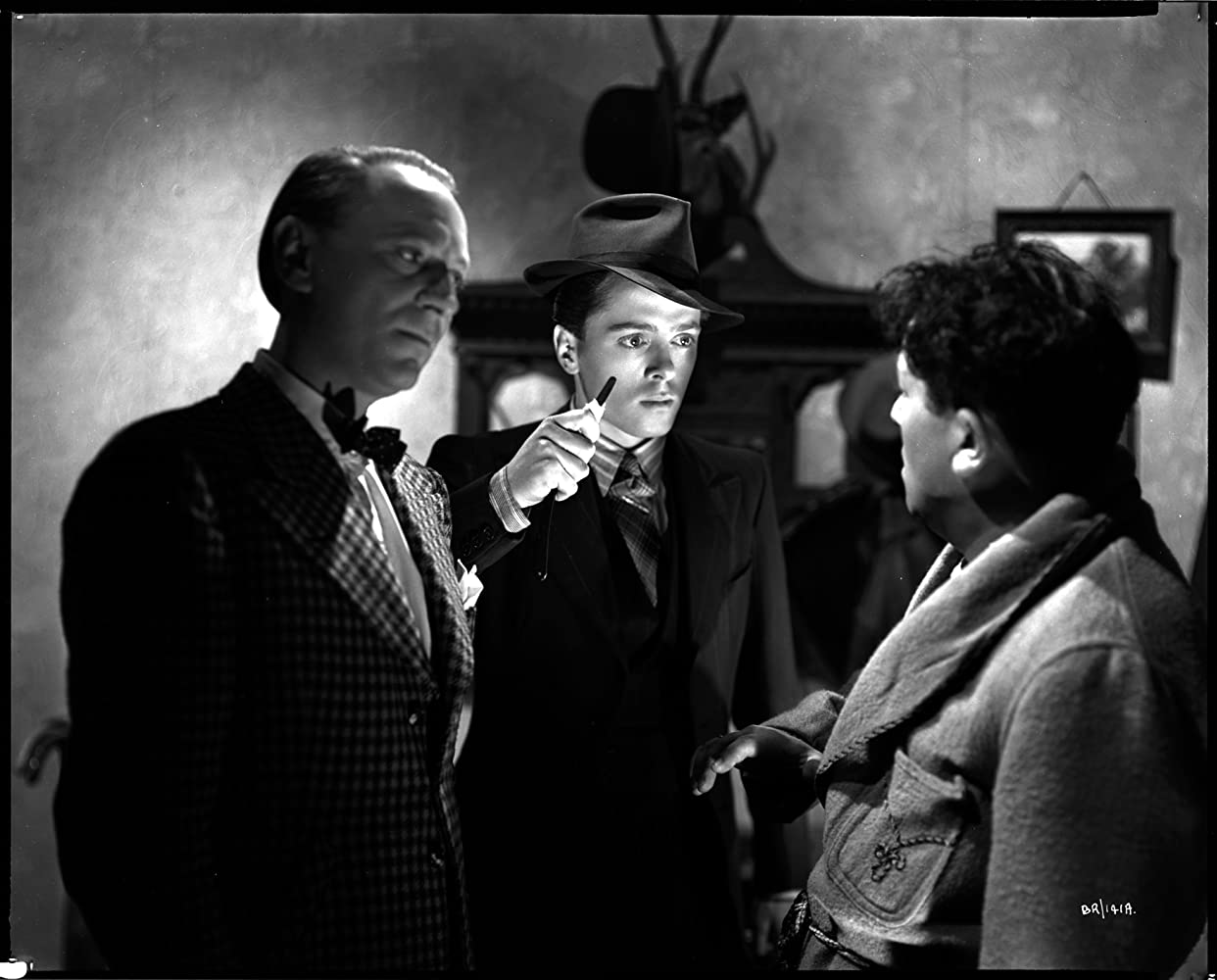
Whilst away on a quick vacation, I had an opportunity to see Brighton Rock, a Graham Greene adaption starring Sir Richard Attenborough and, yes, William Hartnell. Although all of the Doctors are fine actors, the more I see of Hartnell the more I admire the variety he brings to his parts.

I’m beginning to believe that Hartnell did actually say that the only man in England who could replace him as The Doctor would be Patrick Troughton; they both mold themselves into the part instead of (as happens too often these days) the part being effectively written especially for the one character an actor plays especially well. Hartnell is only a featured player in this one, where the lead is Sir Richard Attenborough playing “Pinkie” Brown, a ruthless small-time gangster who leads a small-time gang of crooks, of which Hartnell’s Dallow is the most loyal but least adventurous … at least at first.

They spend their time shaking down some merchants of Brighton, a popular seaside tourist town on the southwest coast of England. Having been there, I can attest that things have only changed superficially there in the decades since this was made.

The story starts after the murder of a gang leader named Kite, that the police suspect was the result of gang wars in Brighton. They couldn’t be more correct: young Pinkie Brown has just taken over Kite’s old gang, and when Brown discovers that a man named Fred Hale is in town for the day doing a newspaper promotion, Brown blames Fred (who clearly had some unshown previous dealings with the gang) for Kite’s death.

The gang confront Fred in a pub, then chase him around the area until Pinkie manages to kill him on an amusement park ride. Before that, Fred meets local busybody and brassy entertainer Ida Arnold (Hermione Baddeley) who picks up on the fact that Fred’s scared. When he is in fact killed, the police think it was a heart attack, but Ida starts trying to reveal the truth.

Pinkie shows Fred the jig is up and leads him to his death in the Haunted House ride.

Following the murder, Pinkie moves to cover up when he died, by having his lieutenant Spicer distribute the remaining contest cards as though Fred was still doing it, but Spicer was seen putting one of the cards in the cafe where Fred was seen. Pinkie decides to put a card under the table at the cafe himself, and meets the same waitress that waited on Fred, a sweet doe-eyed thing named Rose (Carol Marsh). Pinkie alternates between “flirting” with her and trying to find out what she knows.

Ida comes into the cafe, and gets a suspicious vibe off Pinkie that Rose probably sees as dark and exciting and thus attractive. Pinkie asks Rose out, but he’s not truly interested in her; she’s smart and knows he’s somehow involved in the gangs. Pinkie has designs to marry Rose purely so she cannot give evidence against him (as was English law at the time).

This sets the main plot in motion, to see how these scenarios will resolve themselves, and the answer is “not quite as you’d expect,” thanks to a number of well-done additional elements, including Pinkie’s conflict with the older boss of a rival gang; that Pinkie has no loyalty even to his own gang; a phonograph record Pinkie makes in a booth that we eagerly await the result of, which includes a great twist. The various elements really add to the story.

As with other Graham Greene works, the screenplay wrestles with the differences between Catholic morality — which is heavy on themes of damnation and forgiveness — versus individual moralities of mainly non-religious or not strongly so individuals when those moralities conflict. The film was seen as having excessive violence and thus didn’t quite break even on release, but in the US (where it was retitled Young Scarface) the violence wasn’t seen as excessive, and thus didn’t do well there either.

Ida’s got a bad feeling about this …

Brighton Rock (the title actually refers to a popular candy of the time) consistently shows up quite high in lists of the best British films, and I suspect this is mostly due to Attenborough’s incredibly strong performance as the paranoid and borderline-psychotic Pinkie. It certainly does a good job of capturing the unseemly underbelly of a resort town, and is populated with a variety of colourful British characters.

The performances, from the unnerving Pinkie to the fiercely loyal Dallow to the semi-innocent Rose and the caricaturish Ida are all “rock”-solid, and the gang fight was seen as shocking at the time. There are enough unexpected plot turns to keep even those not fond of “gangster movies” interested, and the contrasting themes of dark motives and bright, happy tourists (not extras; the tourist scenes were shot serepticiously) is a wonderful backdrop that breaks up the frequent cruelty.

Not a single person in the crowd scenes knew they were being filmed for this movie.

If you like old movies with a lot of character action but aren’t fond of US-type gangster movies, Brighton Rock might be worth a try. The twist at the end is brilliant — but made Graham Greene angry, and that’s more than enough to go on for me.

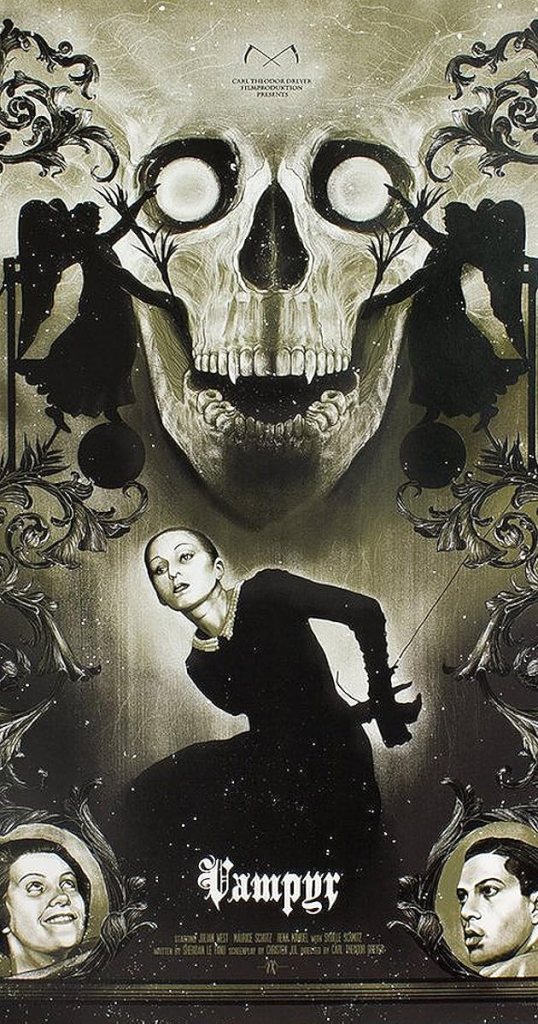
Vampyr (1932, dir. Carl Th. Dreyer)

⭐️⭐️⭐️
52-week film challenge, film 38

This film is a bit bewildering to me, I must confess. Taken as a filmic version of a horror-based dream (its clear intention), a reflection on some of the many tropes surrounding our own fear of our mortality and the ways we might depart this life, Vampyr should be considered a powerful success. If one is watching the film hoping for a coherent plot or definitive statement of meaning, you’re completely out of luck.

Given the utter brilliance of Dreyer’s previous film, 1928’s The Passion of Joan of Arc, his first sound movie — a horror movie about vampires — should have been a massive success.

Instead, it was a huge flop with audiences at first, and even after re-editing only garnered mixed reviews. This appears to be down to two main factors: his comfort in shooting movies in the silent style, along with unexpected struggles with adding sound (beyond music) to his film was the first problem.

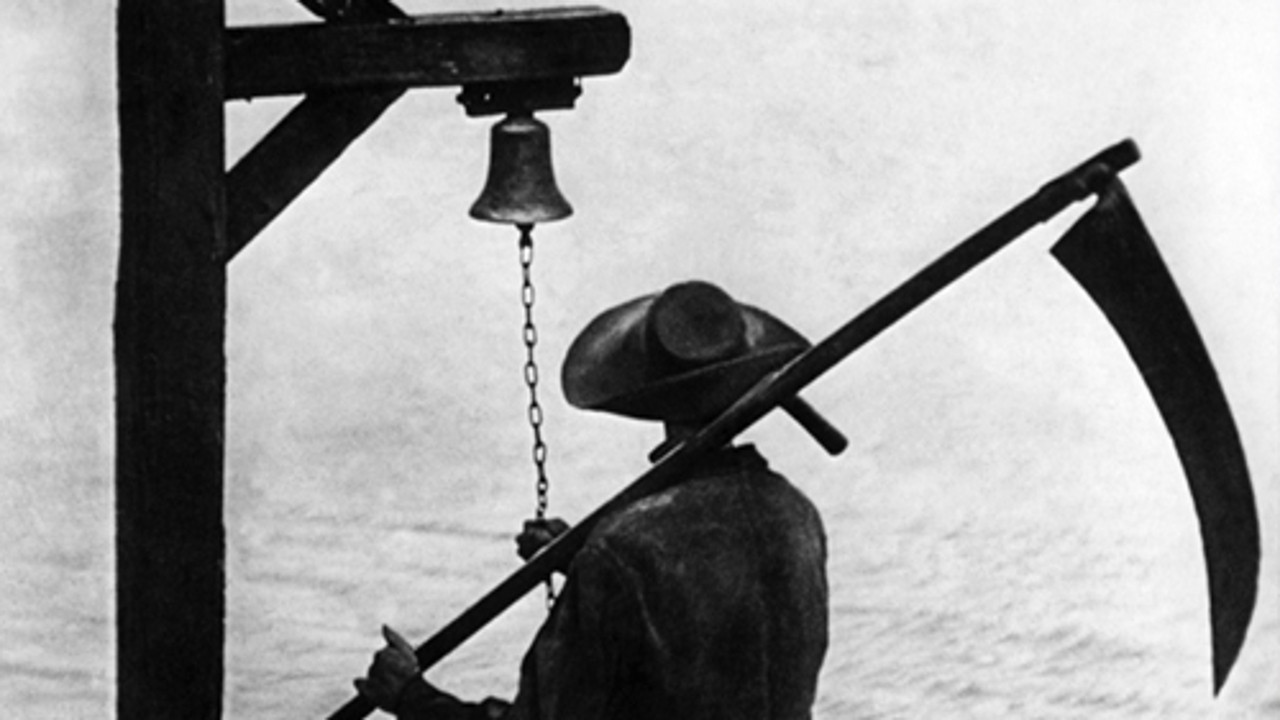
The second “flaw” of a sort was his decision to make a dreamy, soft-focus, motivation-less tale dependent on atmosphere and imagery rather than story. Vampyr is 90 percent a silent movie, shot in that style, complete with title cards to explain things some (not enough) things from time to time.

One of many haunting images in Vampyr.

The acting, likewise, is very silent-movie style, with few characters having much of anything to say on the rare occasions that they do speak. That said, there is some spoken dialogue and sound effects, which kind of gain a Bergman-like weight by their rarity.

The plot, such as it is: a man named Allan Gray, who is introduced as a dreamer who is obsessed with the occult to the point where he lives in a sort of dream state comes to a town, takes a room at the inn, where a man breaks in and leaves him a book “in the event of my death.” Shadows and instinct guide him to the manor of the man, who is murdered by a shadow with a rifle (?) shortly after Gray’s arrival.

He rushes to help, but it is too late. He meets the man’s youngest daughter, Gisèle, who says that her older sister, Léone, is gravely ill. Just then, they see Léone walking outside.

As they rush out to collect her, she is found with fresh bite marks and a briefly-glimpsed older person who quickly disappears. They carry Léone inside, Gray remembers the book, and starts to read it (there’s a lot of reading this book in the film).

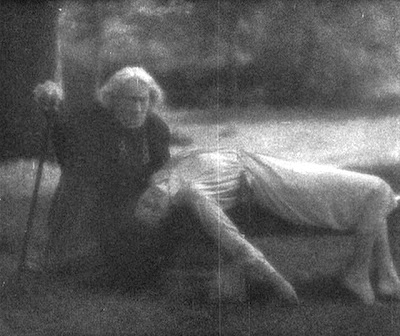
Turns out it’s a book about vampyrs and their powers, which leads Gray to conclude (duh) that Léone is the victim of a vampire. A very odd and suspicious local doctor shows up, looking for all the world like Mark Twain.

The doctor says Léone can only be saved by donated blood, and arranges for Gray to provide some. Tired afterwards, he falls asleep.

You’re never quite sure who’s side Mark Twain is on in this movie.

One of the servants of the house reads Gray’s book, figures out what is going on, and knows who the Vampyr must be. Gray wakes up, senses danger, and saves Léone from being poisoned by the doctor, who may or may not have been trying to prevent her becoming a Vampyr.

Gray tries to catch the fleeing doctor, who may be a servant of the Vampyr, but stops to rest and has an out-of-body experience where he has died and is about to be buried by Marguerite Chopin (the Vampyr he saw earlier) and the doctor, confirming their alliance (maybe). As he returns to his body, he sees the old servant heading to the graveyard, and accompanies him.

The incredible out-of-body effect is stunningly good and far ahead of its time.

They open the grave of Marguerite Chopin, finding her perfectly preserved. They drive an iron bar through her heart, and she dies a true death, instantly becoming a skeleton.

Léone is released from the curse, the doctor suddenly sees the face of the late lord of the manor, chasing him away from the house and killing the soldier who was helping him (?). Gray rescues the tied up Gisèle (?), while the doctor hides in the old mill, somehow becoming trapped in a grain bin.

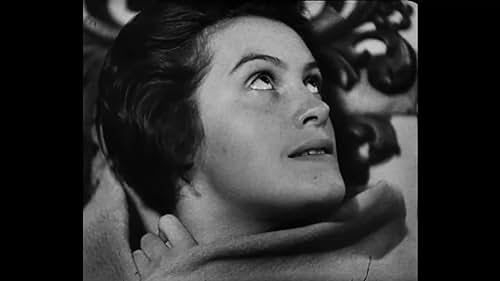
Léone under the control of the Vampyr

The old servant shows up and turns on the mill, eventually burying the doctor in grain. Gisèle, who is apparently now in love with the nearly-silent Gray, leaves with him on a boat across the river and they find a bright clearing. The end.

For a sound movie, very little is said, and the interstitial titles give us a little background but avoid explaining much of anything as the story progresses. As mentioned, Dreyer opted to film this like a dream — complete with putting gauze near the lens of the camera for all the outdoor shots.

Gisèle under threat

It’s very clear that he intended this to be a silent film, and was coerced to adding sound and really struggled with that. Thankfully, his next film, Day of Wrath (1943), received better reviews and largely found him back on course.

If you want a film that will weird you out, this might be a good candidate. Lots of gorgeous shots and symbolism give it a very disconnected dream-like effect, and I’m of little doubt that this film had a profound effect on David Lynch.

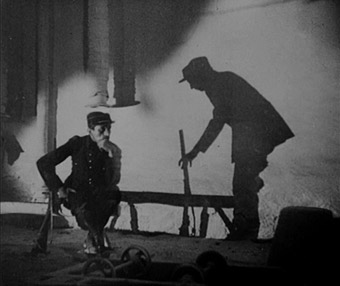
The shadows in this movie are another force of evil

That said, the overall impression is that it’s half a movie: the visuals are there, but the storytelling is severely lacking. Even worse, the “hero” (or maybe more accurately, the “subject”) of the film, Allan Gray, is a nondescript nobody who spends the entire first half silently reacting to things, and leaving little impression on anyone but Gisèle, inexplicably.

He’s not even the hero; the old servant, who we don’t even meet until halfway through the film, is the one who actually resolves things — almost as though he was waiting for Allan to do it, gave up, and decided to end the movie as quickly as possible.

I’ve given it three stars because the visuals are ahead of their time, artistically interesting, and communicate the dream-like intention extremely well. Once people stop reading books and actually start doing things, the film really picks up — but even though the film is just 73 minutes long, the first half is an awful slog of odd things happening for no reason and an ineffective subject.

To put this another way: you’d never guess this was directed by the genius that gave us The Passion and the smaller masterpiece Gertrud, his final film. Vampyr feels more like an ambitious art-college experimental film.

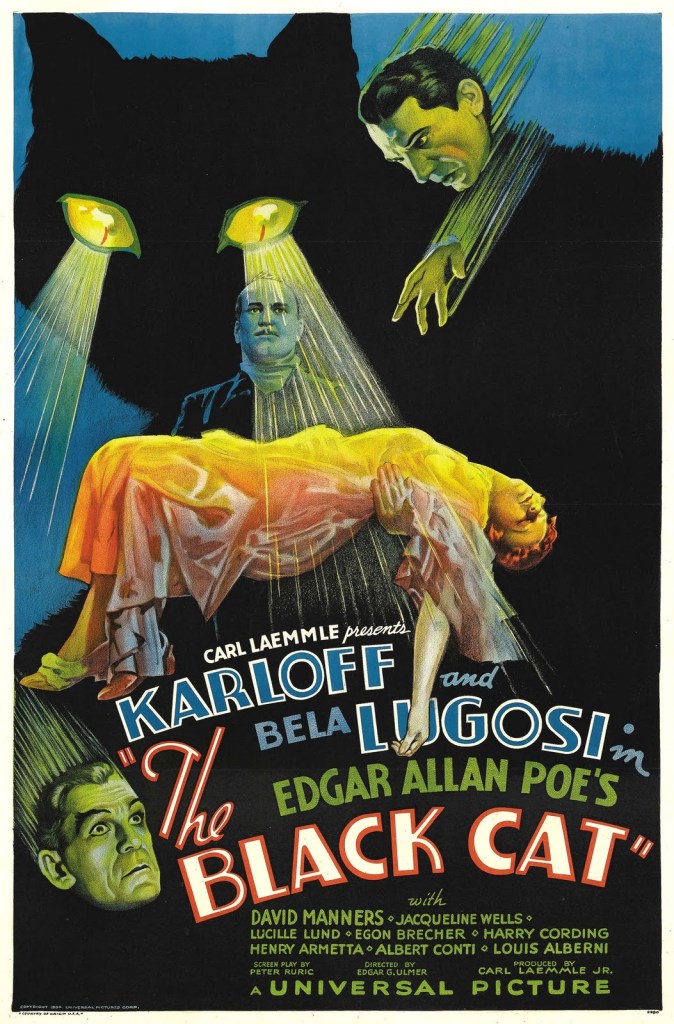
The Black Cat (1934, dir. Edgar G. Ulmer

⭐️⭐️⭐️⭐️½

52-week film challenge, film 34

Note: this is a 20-anniversary, “remastered” version of a review I initially did for my film blog back in 2003, but I did indeed watch the film again on October 2nd, 2023 to refresh my memories for this new version.

As I publish this, it is the beginning of October and the season of the witch, so if you are seeking a slow-burn horror film absolutely brimming with style — this may well be the most Neo-Expressionistic/Art Deco horror movie ever made — starring two absolute legends of horror in unconventional roles, have I got a great movie for you.

I think I first saw The Black Cat when I was about 12, and I’m sure it was one of those that played a role in my lifelong interest in highly-styled architechture and design in films.

At that age, parts of the film were indeed scary, but it was all too weird and mesmerising for me to take my eyes off of it. When I reviewed it again from my own film blog in 2003, the exterior model and interior sets of Dr. Hjalmar Poelzig’s house was the second greatest thing about it, the first of course being the first time I’d seen Karloff and Lugosi acting together without monster makeup.

The third thing about this movie is its incredible time compression. Despite some glacial pacing in some scenes between the two leads, there is plenty of action, especially near the end, and the film packs in necrophilia, satanism, murder, double-crosses, torture, the horrors of war, an undead black cat, secret vaults, and so much more into a film that astonishingly runs only one hour and four minutes.

The film makes numerous references to World War I, but the set design and intentional cruelty (not to mention its unusual setting of Hungary) also act as a prescient forerunner to World War II in some ways. The (black) cat-and-mouse game Lugosi’s Vitus Werdegast and Karloff’s Poelzig play might be seen by some as slow, but the tension between them is delicious.

The basic plot is, at its core, Standard Horror Plot #17: two “perfectly ordinary” strangers meet mysterious character on a train, who happens to be going to the same place they are; incident ensues, so mysterious character offers his new friends shelter at nearby house of arch-enemy; sufficient weirdness starts right from that moment and gets darker and weirder until “happy?” ending.

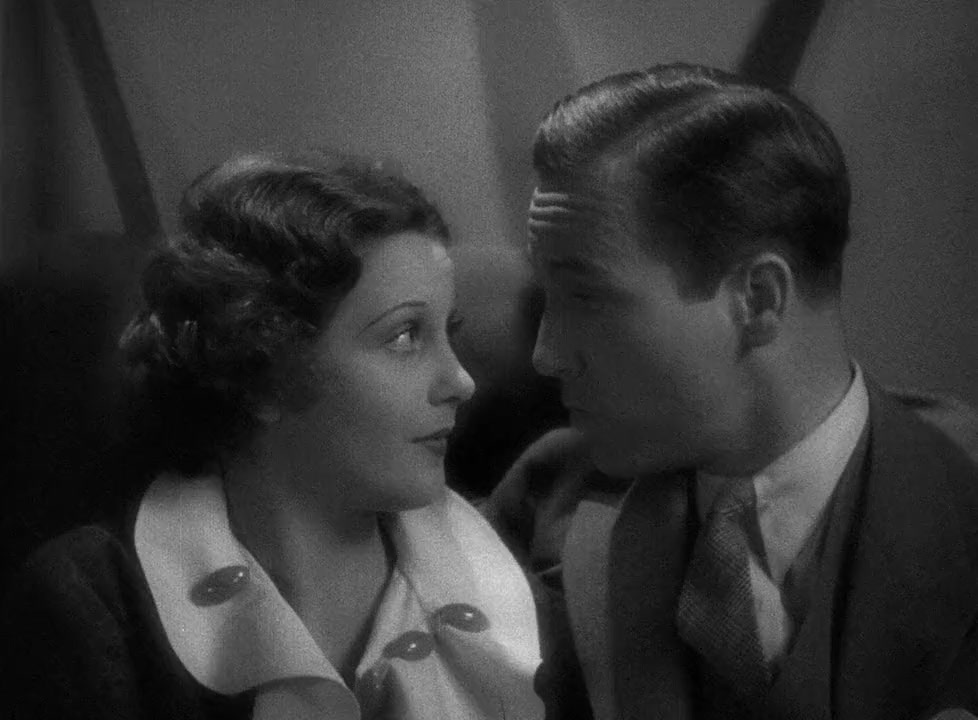
In this case, the couple is Peter (David Manners) and Joan Allison (Julie Bishop under the stage name of “Jacqueline Wells”), the mysterious (and intense) stranger is the kindly but creepy Bela Lugosi (Werdegast), and the mysterious mansion is the home of Karloff (Poelzig). I should mention that Werdegast has a hulking manservent named Thamal (Henry Cording), who pretends to be Poelzig’s servant.

Joan, who has been injured when their bus (from the train) goes off a cliff, is attended to by Werdegast, but from the moment Karloff (and his geometric hair) appears, the tension and complexity of Werdegast and Poelzig’s relationship just builds and builds. They talk a lot, but don’t say much — their eyes, wardrobe, and silences say a lot more.

And the house!! For an architecture fan like me, the exterior model shot, taken straight out of Frank Lloyd Wright’s dreams, was a thrill. Then, to see the perfectly art-deco 30s interior sets, looking as minimalist and futuristic as 1934 can manage, still astounds and impresses. Poelzig looks completely at home, which is not to say that he ever looks relaxed or comfortable but rather to say that his appearance and wardrobe complement the rooms perfectly.

An important element I missed on earlier viewings of the film is that the house is built on the ruins of a World War I battlefield they both participated in. Werdegast was taken prisoner and spent 15 years in jail, while Poelzig spent the time seducing first Werdegast’s wife and then, when she died, his daughter (yeah, the creep-o-meter just went to 11).

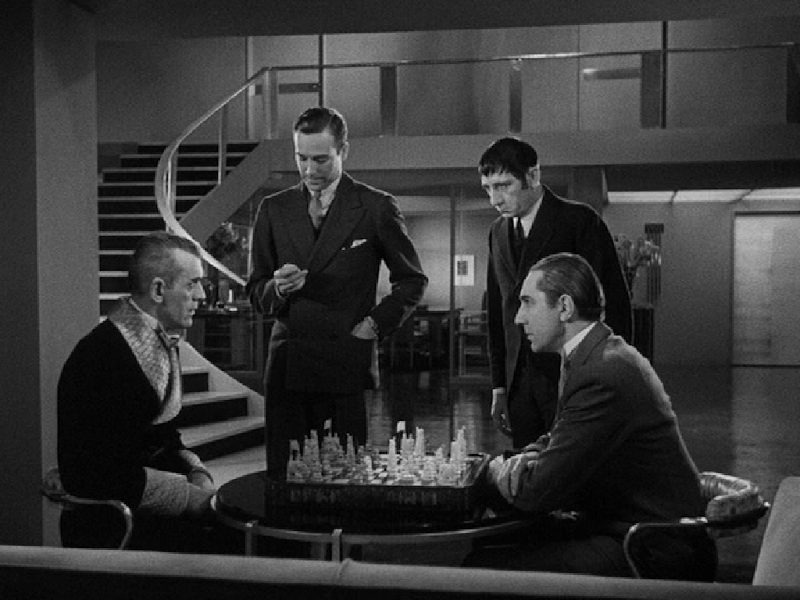
Like the chess game the two men play for control of Joan (Werdegast wants to set them both free, Poelzig has other unnamed and probably unspeakable plans), every interaction between the two is the clash of two opposing forces who both like and hate each other. Incredibly, Werdegast is the hero of The Black Cat, but his fatal flaw is revealed early on: he has a nearly psychotic fear of cats.

When one appears in Poelzig’s house, Werdegast grabs a knife and throws it to expertly kill it. Other black cats (or maybe the same one, as Poelzig makes reference to a cat’s many lives) appear in the film, but the amazing thing is that Werdegast kills a cat right in front of everyone, but nobody seems to think anything of it. This is the only real link to Poe’s work in this movie.
What makes this movie stand out from the thick river of horror movies produced around the same time is that so much of the actual horror is understated or imagined rather than actually seen by the viewer. If it weren’t for the gorgous costumes and sets, this film would be as close to a radio play as a horror movie could get!

My god, this house!

Stripped of their usual arsenal of makeup, Karloff and Lugosi rely on their great chemistry to light up the set, in this — the first of eight films where they appear together. The architecture of the house and interior sets are so stunning (have I mentioned this already?) that it should get third billing, behind Karloff and Lugosi but ahead of Manners and Bishop. As another reviewer noted, “architectural nuts probably rent this movie as architecture porn. The house is that cool.” She’s absolutely right.

Once Poelzig is revealed as a Satanist who has designs on Joan for a sacrifice, the film’s action finally kicks into high gear. Unlike the stage-y verbal jousting of earlier, Werdegast — who every so often says he is “biding his time” for his revenge” — now has to make good on that threat, and quickly.

Well hello, pre-Code 1930s creep-a-thon!

The climax, in which Werdegast “wins” in the sense of triumping over Poelzig is really quite stylish and stunning, but even in shadow, Werdegast’s delight at inflicting torture on Poelzig is a little tough to watch, even 90 years later. The newlyweds, which everyone stopped caring about 30 minutes ago, escape with their lives — which any viewer of The Rocky Horror Picture Show will have seen coming a mile off (and that’s is not the only influence The Black Cat had on Richard O’Brien’s little moneyspinner).

While this movie has some issues of its own — I’m still trying to figure out what an all-American couple like Peter and Joan are even doing in postwar Hungary, the delicious slow-burn and the stars’ chemistry make this pre-code horror movie a time capsule of incredibly beautiful horror like nobody has made since. If you’re ready for something off-beat, classic yet wonderfully dated, comic in spots and scary in a psychological way, you are ready to cross paths with The Black Cat.

The “floating women” effect of Poelzig’s victims is just mesmerising.

Godzilla ゴジラ (1954, dir. Ishiro Hōnda)

⭐️⭐️⭐️⭐️½
52-week film challenge, film 32

I don’t think I’ve ever seen the full Japanese version of Godzilla before, certainly not as an adult, but of course I’ve seen the Americanised “Raymond Burr” version — Godzilla: King of the Monsters! — a time or 10. Like many people, I climbed aboard the kaiju train as a kid, when all these great monster movies started showing up on TV on the weekends, so I caught most of them back then. TV stations at the time of course tended to show the later colour films which were more aimed at kids, so I don’t think I’ve even gotten around to seeing Godzilla Raids Again (1955) either, a grievous mistake that should be corrected soon.

The first Godzilla is most definitely not a kid’s movie: it is a lightly-abstracted but still powerful statement on the horrors of nuclear weapons, and a philosophical exercise pondering where Japan (and the world) goes from here. In this film, Godzilla is the spawn of the atomic bomb — and wreaks similar terror on Tokyo as the bombs dropped on Hiroshima and Nagasaki did, with incredible loss of life and property.

When the film was made, postwar Japan was still wrestling with the consequences of its own actions in WWII, just eight years earlier, as well as the devastating and overwhelming American response, which was to destroy entire cities full of innocent civilians (about a quarter million in total) — the greatest act of deliberate mass-murder had seen at the time, until the full horror of the Holocaust was revealed. The Godzilla creature in this first movie was intended to be seen as an utterly terrifying and unstoppable force, even though even I have to admit the face they gave it is … unintentionally kind of cute.

Hi kids! It’s your old pal, Godzilla! Don’t do drugs, and stay in school! See ya later!

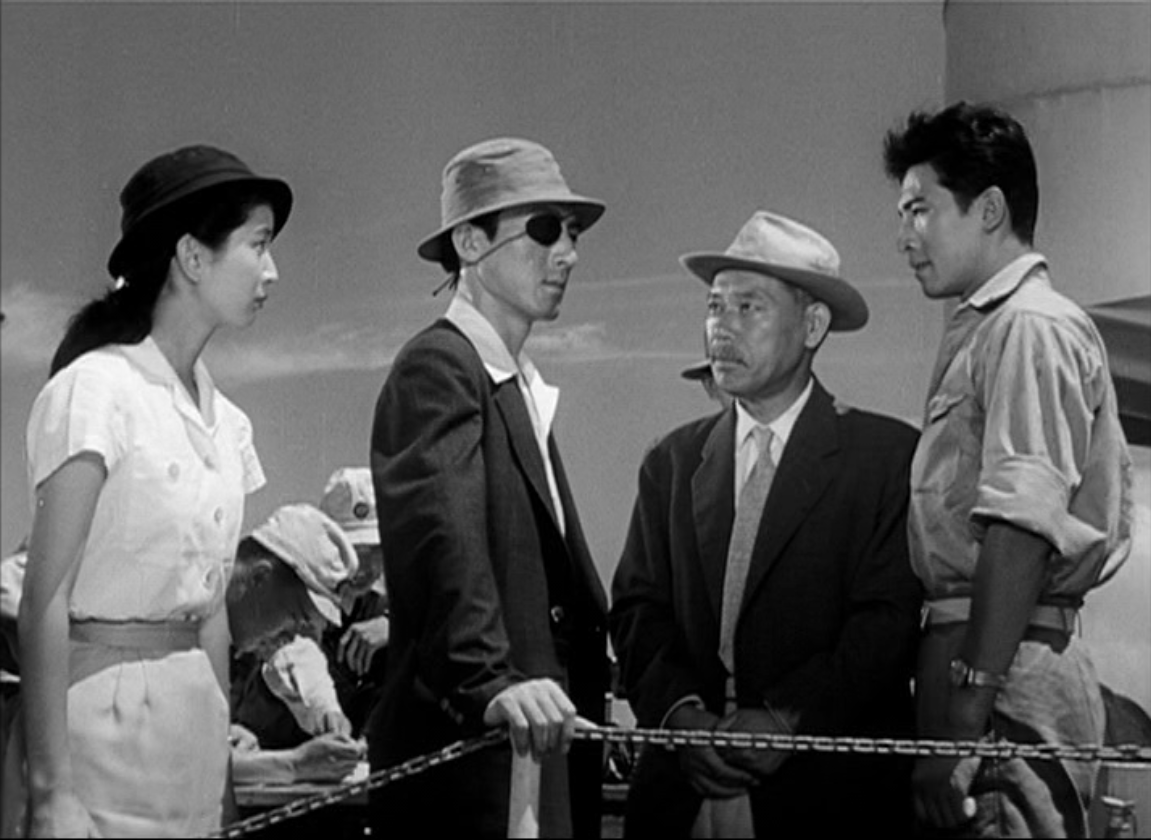
The B&W cinematography of Godzilla is terrific, and the cast are first-rate: from venerated actor Takashi Shimura (best known as the leader of The Seven Samurai, but also featured in Roshomon, Ikiru, Yojimbo, The Hidden Fortress and many more classic films, here playing the pacifist scientist Kyohei Yamane) to relative newcomer Akira Takarada (playing the hero role of Ogata), Akihiko Hirata as the anti-hero scientist Serizawa, and the radiant Momoko Kôchi as Emiko Yamane, Kyohei’s daughter — a role she reprised in her last film, 1995’s Godzilla vs. Destroyah. All the players, from the greatest to the smallest roles, are played with deep conviction and seriousness.

I will take an indulgent moment here to note my deep fondness for the fashion of the 1950s — everyone in the film looks fantastic, with the men in suits or lab coats, police and military in sharp uniforms, and Emiko in fashionable garments of the time, with everyone looking smart and well-groomed. It’s a reminder of one element of the world gone by I wish would make a comeback, even as I myself fail to adhere to it.

(L-R) Emiko, Dr Serazawa, Dr Yamane, Ogata

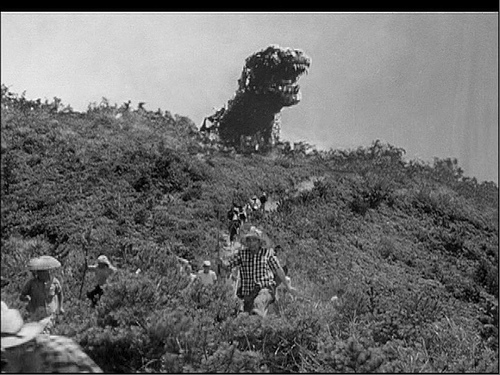
The compositing in the film should also be noted, as it is considerably above-average for the time. I caught only one moment in the film where the effect wobbled a bit — some power-line fortifications meant to stop Godzilla — but was otherwise nearly flawless. The moment when Godzilla’s head pops up over a mountain being approached by scientists is a perfect example: though it might be seen as amusing now, it was undoubtedly surprising and convincing in showing Godzilla’s scale early on in the film.

The analogy of the war that had recently devastated Japan couldn’t be more clear: while the authorities work feverishly to stop this new threat (also featuring lots of scenes of how Japan has rebuilt its civil defenses), nothing is effective against Godzilla. Dr Yamane is the lone voice calling for a less militaristic approach and for studying the creature, but doesn’t really have an answer on how to balance his wishes against the safety of the population. Emiko discovers that her other admirer, Serizawa, may have a way to stop Godzilla — but is too scared to use it, lest the secret of his super-destructive weapon fall into the wrong (or anyone else’s) hands.

This film has a lot of tension and conflict in it, with no comedic elements at all, and a lovely slow buildup of the conflict. Godzilla first attacks some ships at sea while remaining hidden underwater, eventually emerges to wreak havoc on land, and with no effective defense, the country is helpless as many are killed or injured (the scenes of attack survivors in hospital are pretty heart-rending), unveiling not only huge size and strength, but also “atomic breath” that incinerates everything on contact (oh wait, now I get it — Godzilla is the US!).

Emiko and her true love interest Ogata eventually convince the very conflicted Serizawa to use his “Oxygen Destroyer” technology to attack Godzilla underwater (also killing all sea life in the area), but you can see where the film is going from here — there is no solution without great tragedy and wasted opportunities. In the end (in real life, not the film), the point of view of Dr Yamane won out — Japan today strongly embraces nuclear power for its energy needs, but has shunned becoming a nuclear (weapon) power as you might expect, despite being surrounded by countries that do have nukes.

This film, thought of today as the start of the “giant monster movie” genre, was so powerful and effective in its analogy that it may well have helped convince the west to avoid using atomic weapons thereafter. The original Japanese version of Godzilla is a much darker, more thoughtful, and overall deeper film than the lighter, more entertaining genre it spawned, and was undoubtedly effective on both sides of the Pacific in its day. It was a serious attempt to illustrate the terror of atomic weapons — which thankfully haven’t been used since, though the world is still plagued with senseless wars.

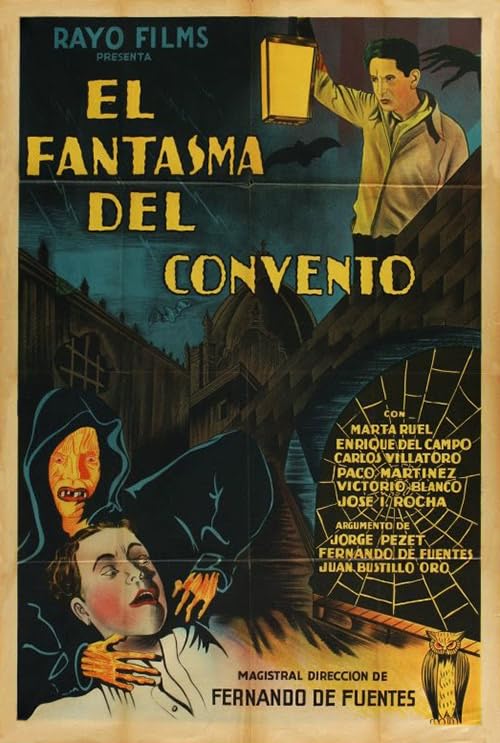
El Fantasma de Convento/The Phantom of the Convent (1934)

dir. Fernando de Fuentes
⭐️⭐️⭐️½
52-week film challenge, film 29

This film, often retitled in the US as Phantom of the Monestary because sexism, is a good old-fashioned ghost story for adults, made in Mexico in the mid-1930s, that’s nice and creepy. By today’s standards, it moves a bit slowly, but it lays on the atmosphere nice and thick, just like I like it.
It was largely forgotten for decades because of its paucity of “jump scares” or relatively little body horror, or maybe because it’s not dumb, nor does it have El Santo anywhere in it (he was a teenager when this came out, perhaps he saw it and thought to himself “I could do that … wearing a mask!”). Happily, it was rediscovered thanks to a Blu-ray release in 2022, and has taken its place as a well-regarded classic of early Mexican horror.

It’s just a good creepy morality tale, perhaps a touch too heavy-handed, but the surprises are spaced out just right to keep you roped into the story, and the use of lighting, cinematography, and non-music sound are superb (more about the music later). There’s also a lot of silence in this, as befits a movie that mostly takes place in the Convent of Silence.

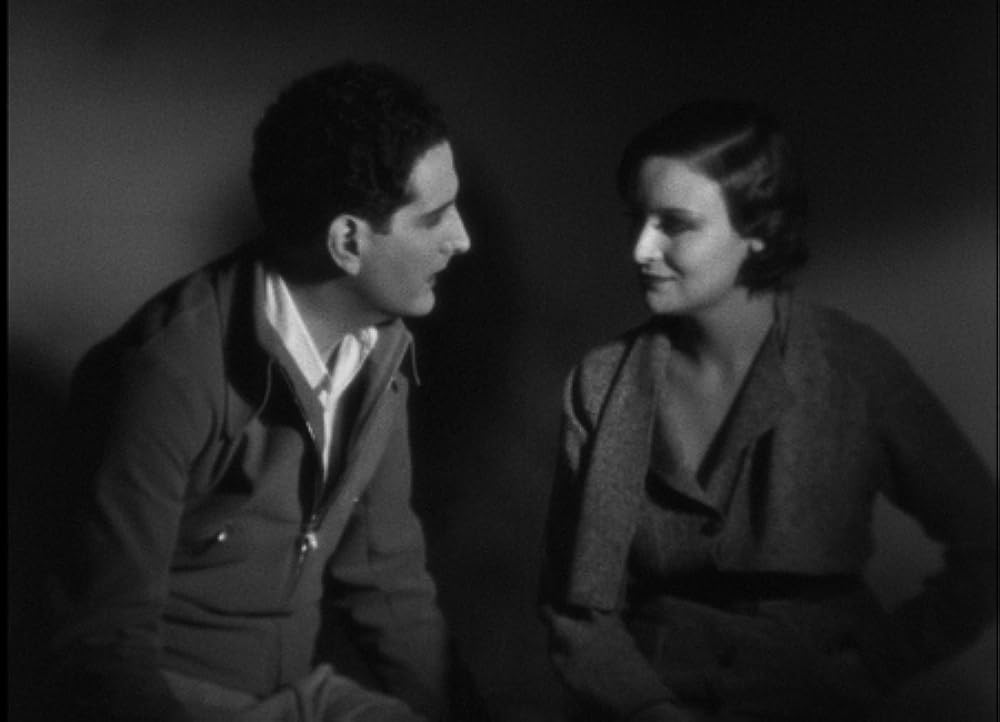
Our three leads: (L-R) Eduardo, Alphonso, and Cristina.

A married couple, Eduardo (Carlos Villatoro) and Cristina (Marta Roel), and Eduardo’s best friend Alphonso (Enrique del Campo), find themselves lost in the woods and, as the film opens, Eduardo has slipped off a ravine edge and is hanging on for dear life as Christina and Alphonso rescue him in a nice bit of foreshadowing. It’s obvious right from the get-go that Eduardo is kind of a wimp in the eyes of Cristina, who has the hots for Alphonso, and the feeling appears to be mutual — though they try to behave honourably, even though Eduardo is obviously aware of the flirting.

Once he’s back up and on his feet, they hope to find shelter in a nearby convent, only to run into a mysterious monk-like figure and his large dog Shadow (although the stranger is not named, it is Brother Rodrigo, returning to the convent). He leads them to the convent, then (of course) disappears inexplicably.

The lights are on in the convent, but at first there appears to be nobody home. Eventually the Prior (a wonderfully wizened Paco Martinez) appears, explaining that the other monks have taken vows of silence, and welcoming the trio to stay the night and find their way back in the morning. Walking through the convent, our heroes notice various oddities, such as how old-fashioned the monks appear to be, including a self-flagellating monk (in shadow), and a tumbled cabinet near a room that Alphonso attempts to straighten, but which reverts the moment his back is turned.

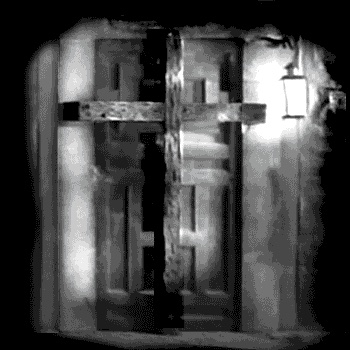
The “wandering around” part is reprised a few times, including once where our heroes come across a room with a dozen or so open – and empty – coffins. They also come across a door to one of the cells that is blocked, and has a huge crucifix nailed to it – to keep something out, or to lock something in?

Before they can ask any questions, they are invited to share a meal with the monks. The atmosphere is thick with tension, which only ratchets up when the convent is attacked by unseen forces, which moves the monks into action. Our trio follows along discreetly, as the monks reassemble in a “battle station” of sorts to try and fend off the unseen horror through vigorous prayer. The threat passes, and the trio quickly return to the dining room — only to find that all the bowls of soup they were eating before are full of ash now — until the monks return to the room.

The one monk who is allowed to speak but previously didn’t want to talk much returns to the dining hall and speaks mysteriously (of course) about the brothers and the threat they face. He relates a story about Brother Rodrigo that has a direct parallel to the adulterous triangle of our hapless heroes. Rodrigo lusted for his best friend’s wife, eventually murdering his friend and subsequently was consumed with guilt, returning to the convent to unsuccessfully atone for his sins. The blocked cell with the giant crucifix is, you guessed it, Rodrigo’s cell.

The door to Brother Rodrigo’s cell.

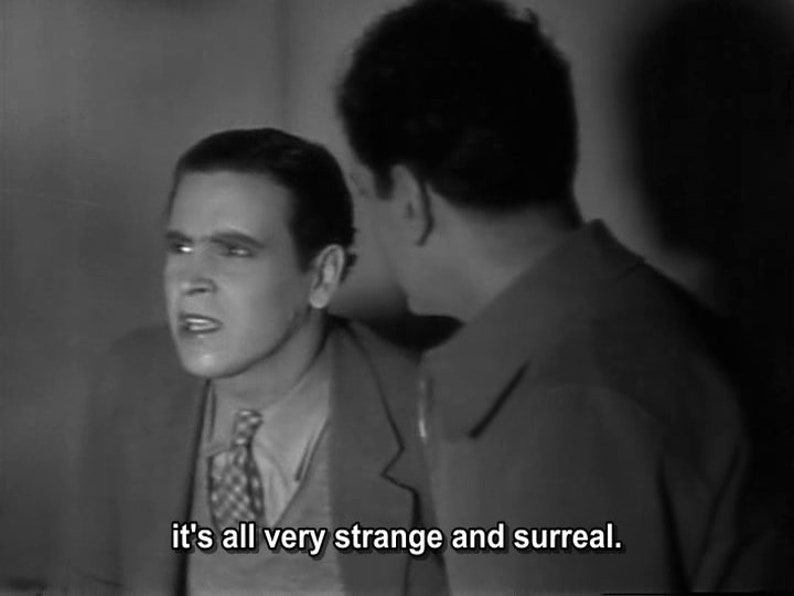
All three of our protagonists seem enraptured with the story and feel that they are under a spell of some kind, but in particular Cristina appears to (and even articulates) be most influenced by the events in a strange way – seemingly getting more and more aroused by the events they are witnessing. When the three are escorted to their three separate cells (it is a convent, after all), she goes immediately to Alphonso and makes allusions that she is as ready as she’ll ever be to consummate their relationship (it is the 1930s, after all). Alphonso is also ready, but finds the willpower to resist her under the spooky circumstances, which angers Cristina.

The mystery deepens, weirder things happen, and the film slowly builds to a deliciously scary climax (not involving Cristina, har har) in which Alphonso wrestles with his guilt, and his temptation, and works his way into Rodrigo’s cell, where the mummified body of the monk still resides, and he encounters an undead version of Eduardo and a book that drips blood, and is tortured by visions before collapsing.

Cristina and Alphonso confront their adulterous hearts

He awakes in the morning, gathers his friends (who are all okay), and they hurriedly try to leave. There’s a great denouement where they discover a caretaker (Jose I. Rocha), who doesn’t believe a word of their adventure and shows them the reality of the place, which has been abandoned for centuries. Was it all a shared hallucination, time travel, or what?

If you are in the mood for an old-fashioned ghost story, if you enjoyed the Mexican version of Dracula, or if you just appreciate well-shot, moodily-lit horror films like Frankenstein, you’re likely to enjoy The Phantom of the Convent as well. The biggest flaw in the film, in my view, is the sometimes-histrionic and mostly-stock soundtrack, which tries far too hard and too often to built tension or suggest a climactic moment that, until the film’s actual pinnacle arrives, is ill-suited to this gentler horror movie. Thankfully, it’s not there all the time, and when a genuinely climactic scene does finally appear, the music is finally ready for it.

The mummified body of Rodrigo points to a book dripping with blood, in the wonderfully creepy climax.

I think the film holds up very well, particularly given that it was made in the 1930s, though viewers should be aware that the influence of Catholicism in Mexico was strongly dominant at the time. Even better, it’s left hanging as to the ultimate fates of the three friends, though it would appear the lust factor has been forgive me – exorcised from Alphonso and Cristina.

Hell Drivers (1957, dir. Cy Endridge)

⭐️⭐️⭐️½
52-week film challenge, film 26

Is this a movie you need to see? Maybe, if you like star-gazing. There are an astonishing number of people in this otherwise slightly-above-average late 50’s Pinewood Studios kitchen-sink drama who would go on to greater fame both internationally and/or just in the UK film industry. Here’s a partial list:

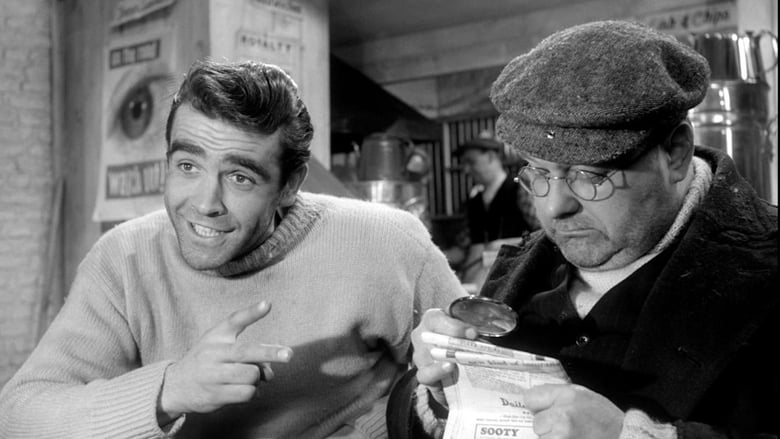
  • This was only Sean Connery’s second credited film role, and its a minor but distinctive one. Five years after this film, he would be the first and most memorable James Bond.
  • Stanley Baker, who played the lead role of Tom, also found worldwide fame a few years later with 1961’s The Guns of Navaronne.
  • William Hartnell, who plays the truck company manager Cartley awfully smartly, would be the original “Doctor Who” six years later.
  • Patrick McGoohan, well known for “The Prisoner” and many film roles now, was one of the leads in this film. Again, just six years later, he would star in Dr.Syn, or The Scarecrow.
  • David McCallum had an early part as Tom’s handicapped brother and the reason he went to jail, and was a well-established film actor by this point, but seven years later he would co-star in “The Man From U.N.C.L.E” on US TV and become a household name with a long (and continuing) illustrious career.
  • Jill Ireland is unrecognizable as the waitress at the Pull In Diner. She married McCallum as a result of them meeting on this film, divorced him 10 years later, and famously married Charles Bronson a year after that following her meeting him on a film he and McCallum worked on together (The Great Escape).
  • Marianne Stone was never a huge star, but holds a Guinness Book of World Records title for “Actress with the Most (Film) Screen Credits,” with over 200 movies on her resume.
  • John Kruse, who wrote the original short story, went on to write for “The Avengers” and more famously “The Saint,” among other shows of that genre.
  • Cy Endfield was forced to relocate his career to the UK thanks to the McCarthy hearings in the early 50s, but was nominated for a BAFTA for Hell Drivers and went on to later acclaim for exotic war movies like Zulu (1964).
Hallo! Ish me, Sean Connery! Check out my “aye” brows!

The rest of the cast also contains many other names familiar to 1950s and 60s UK film fans. Nearly everyone who had a speaking part in this film (not to mention a couple of the background artists) can also be found in literally dozens of other movies.

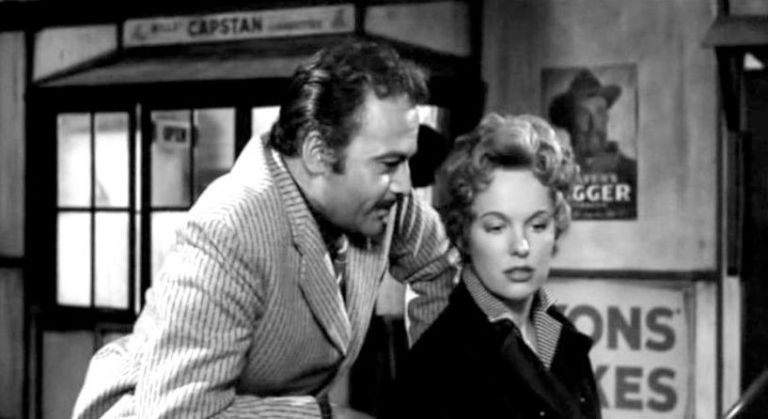
But anyway, what about this movie? It’s a well-shot and well-directed tale of a shady trucking company that hires a motley set of drifters, hobos, and ex-cons as ballast haulers who must drive big trucks like crazy people in order to meet the nearly-impossible schedule set out by the management. Ruggedly handsome ex-con Tom Yately (Baker), in desperate need of a job, gets drawn in to this rabbit hole and decides to take on the borderline-psychotic Red (McGoohan), befriends the only decent person among the drivers, Gino (Lom), and attracts the ladies with his rugged good looks and reluctance to share too much information (Cummings and Ireland).

Red (L) threatens Tom and Gino.

As the title suggests, Hell Drivers is a very macho film with a whole crew of manly men who do man things, mannishly. The work is hard and dangerous, and the company knows full well that anyone they lose to an accident or death is easily replaced.

This is a lovely scene as Tom learns the ropes from the mechanic, Ed (Wilfred Lawson)

The drivers are attracted by the good money, but responsible for the cost of any mechanical faults, accidents, speeding tickets (which oddly never happens to any of them in the course of the film), or absences. As mentioned, in order to meet even bare-minimum 12-run quota they pretty much have to drive like maniacs, and attract much honking of horns and a load of near-misses. Red, the “pace setter” does 18 runs a day and holds a solid-gold cigarette case as a prize for anyone brave enough to beat him.

The film isn’t all crazy truck-racing sequences shot on overcranked film, though, and the story is nicely balanced between the job and what the drivers do off the job, which is mostly limited to eating at the Pull In Diner, sleeping in their rented rooms at a boarding house, and occasionally disrupting the local church social. We also spend quality time with Tom and Gino getting to know each other, the love triangle that ensues with Peggy, and Tom’s increasingly-hostile social time with Red and the other drivers.

Gino loves Lucy, but Lucy loves Tom (for no clear reason other than she finds him hot).

Matters of the heart and of the fists as well as of the reckless driving come to a simultaneous head in the lead up to the climax and subsequent denouement, executed even better than I expected from such a workmanlike film. While Baker gruffs his way through most of the film, there is a surprising off-shoot of the plot where he returns home to his family, only to be cruelly rejected by his own mother.

Beatrice Varley as Tom’s mother, who has let the bitterness of her son’s folly consume her.

While the entire backstory of that scene is never fully explained, we gather that the reason Tom is an ex-con is that he served a year in jail for reckless driving, which resulted in the crippling of his young brother Jimmy (McCallum). Beatrice Varley as Tom’s mother is pure, unforgiving ice water, with a perfect delivery of a chilling line: “For you it was a year, for me and Jimmy it is a life sentence!”

A very young David McCallum as Jimmy, Tom’s crippled brother.

Speaking of that, the film does have its moments of sparkling dialogue, and the friendship between Gino and Tom is a touching and multi-layered sub-plot with some nice twists. I don’t think it will be giving anything away by saying that of course one of the drivers dies in the film, but there’s a nice twist even in that.

I should also mention the solid music score by Hubert Clifford, which comes to prominance in the racing sequences and is far more subtle elsewhere. Jim Groom as sound designer offers some nice touches with notes of nature sounds amongst all the engine noise. If you’ve seen the 1953 film The Wages of Fear, this has a similarly macho character-driven story of desperate men driving, but the two are distinctly different nonetheless.

William Hartnell’s scenes, though brief, really show off his acting chops.

So, in the end, it worth a watch? If you like gritty realism in your late-50s domestic-drama UK films, this one will likely win you over. The overcranked speed shots of the trucks get annoying, but there is still some genuinely hair-raising moments in them, and just seeing McGoohan at his most unhinged, along with a jokey yet already distinct Sean Connery and a young David McCallum (among others), is just as entertaining as the story.

There is a hell of a lot of crazy-ass truck driving in this thing. Take that, Convoy!

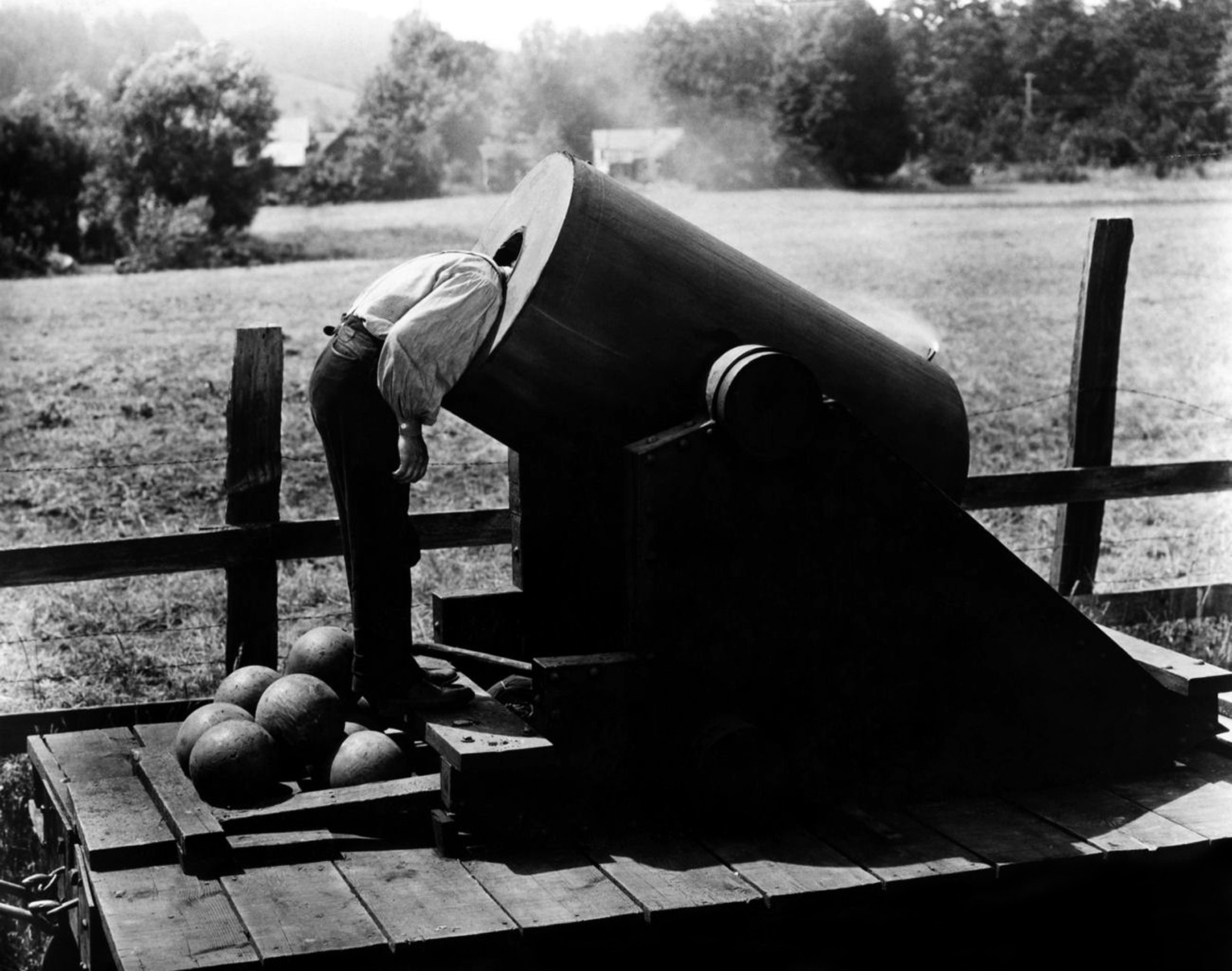
The General (1926, dirs. Buster Keaton, Clyde Bruckman)

⭐️⭐️⭐️⭐️⭐️
52-week film challenge, film 23

Blah blah blah Tom Cruise blah blah stunts blah blah Mission Impossible blah blah blah. You want stunts? You want life-threatening risks? You want thrills? Buster Keaton had Tom Cruise beat, handily, nearly 100 years ago with The General. Not only that, but you’ll learn at least a dozen new ways to stop a train you probably never thought of before.

Some of what he accomplishes in this 79-minute film seriously could have killed or severely injured him, and in fact he was knocked unconscious on one occasion during the filming. Several of the spike-pulling moments in the film would have put his life in severe danger if he had mistimed his actions, and there’s a lot of cow-catcher stunt work performed with the train and boxcars moving at speeds that added a great deal of risk to the shots.

The plot is pretty typical Keaton: there’s a girl he wants, but there’s an obstacle or set of obstacles in the way, and by a combination of dumb luck and reckless foolhardiness he blunders his way into overcoming the obstacles and gets the girl. The film is based on a true story of a Civil War locomotive chase, though Keaton for reasons unclear switched the sides, believing the public would be more sympathetic to the Confederate side, thus making the Union soldiers the villains.

Perhaps this contributed to the film’s poor performance at the box office at the time, despite having an exceedingly high budget (much to the studio’s consternation). But, to be fair, every dollar of it is on screen).

In The General, Keaton is Johnnie Gray, the engineer of his beloved locomotive, and is wooing a girl from the Lee family of Marietta, Georgia (having spent a fair amount of time in Marietta, this has always been an added bonus in the film for me). When the Civil War breaks out, the father and brother of Annabelle Lee rush to enlist, as does Keaton.

When he tells the clerk he is a railroad engineer, he is deemed too valuable in that role and turned away, though he is not told why. He comes across the Lee men after being rejected, but turns down their offer to join the line, branding him a coward in their minds.

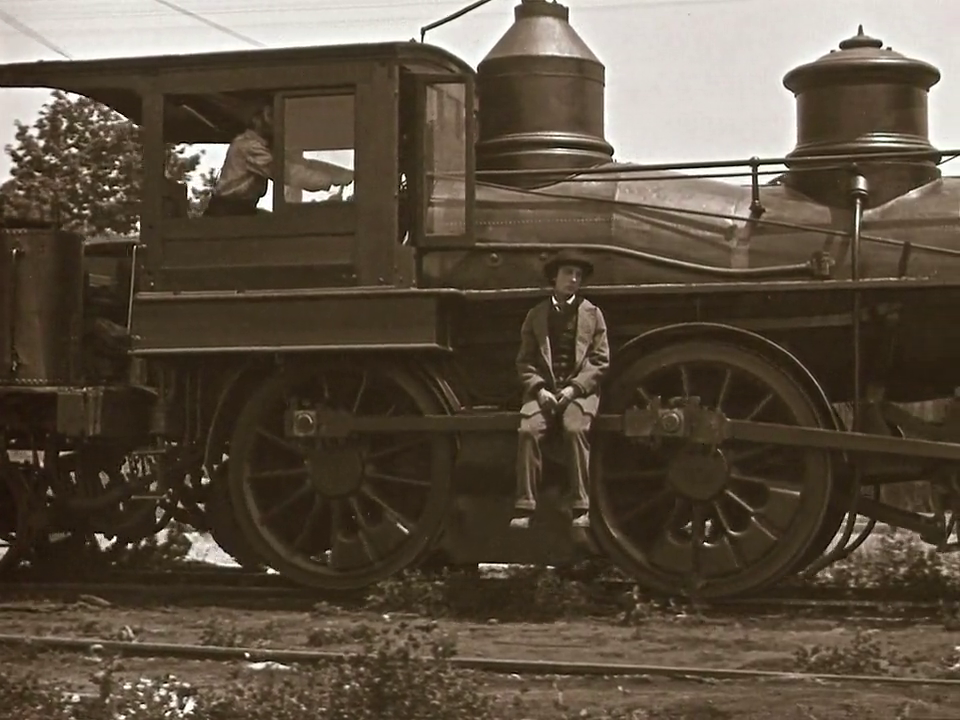
Despondent Johnnie rides the literal rail after being rejected by his girl and her family.

They tell Annabella of his cowardice, and she rejects him “until I see you in uniform.” A year later — a time lapse not made explicitly clear in the film — a gang of disguised Union operatives plan to hijack a Confederate train (guess which one) and use it to destroy bridges behind them as the travel north, cutting off the Confederate supply lines.

The ruse succeeds and strands Keaton, but he quickly finds both another locomotive and a group of Confederate soldiers to give chase — but as he pulls out, he fails to realise that the locomotive was not attached to the rail cars full of soldiers, so now it is just him chasing The General and its carful of Union saboteurs to get his train back.

And now, the plot wrinkle: Annabella was on the train being hijacked to go see her wounded-in-battle father, and unlike her fellow passengers, did not disembark the train during the dinner break, instead heading to the luggage car to retrieve something. She is thus captured by the Union hijackers, and held prisoner aboard The General.

After losing his second locomotive, he continues the chase anyway he can.

Once Johnnie discovers this some time later, he becomes determined not just to get his own locomotive back, but to rescue his girl and stop their dastardly plan. Before and up to that point, the film engages in a series of incredible stunts as the rogues engage in a series of gambits to slow or stop Keaton’s chase, believing Keaton’s train is full — once they discover it’s just the engine and him, the stunts get even more impressive, and occasionally some malarkey goes on in other locations besides the two trains.

Checking to see if the canon he was towing in his earlier attempt to catch The General was working.

Keaton’s physical stunt-work is just mind-blowing to watch, especially considering that films in those days didn’t have the luxuries of safety considerations (though they did have stunt people for some long shots, those are much fewer than you’d expect — it’s mostly all Keaton). He climbs all over that locomotive like a spider, all while the train is in motion. If you’ve seen any of his films, you know he is the undisputed master of the thrilling-comedy-stunt moment, and there’s nothing Tom Cruise or anyone else can do about it.

The rail-thin Johnnie follows the raiders to a dinner where they reveal their plan.

I don’t think I’m spoiling anything by saying it all resolves in the end, Johnnie goes from civilian engineer to decorated leiutenant thanks to a field promotion, changes his occupation to “soldier” and finally enlists properly. Of course, the Lee family witness the finale and are deeply impressed, none more so than Annabelle.

Johnnie and Annabelle after he frees her from captivity by pretending to be a Union soldier.

Although it didn’t do well at its initial box-office debut, the film has risen steadily in the minds of both critics and cinephiles, and is now widely regarded as a true classic — and still routinely places very highly in lists of the all-time greatest movies, and still boasts the single most-expensive stunt shot in silent-movie history, which forms the spectacular climax of the film. While I’m still confused as to why Keaton reversed the sides to make it a peculiarly pro-Confederate film, the stellar filmmaking and Keaton’s performance overcome that one lapse in judgement.

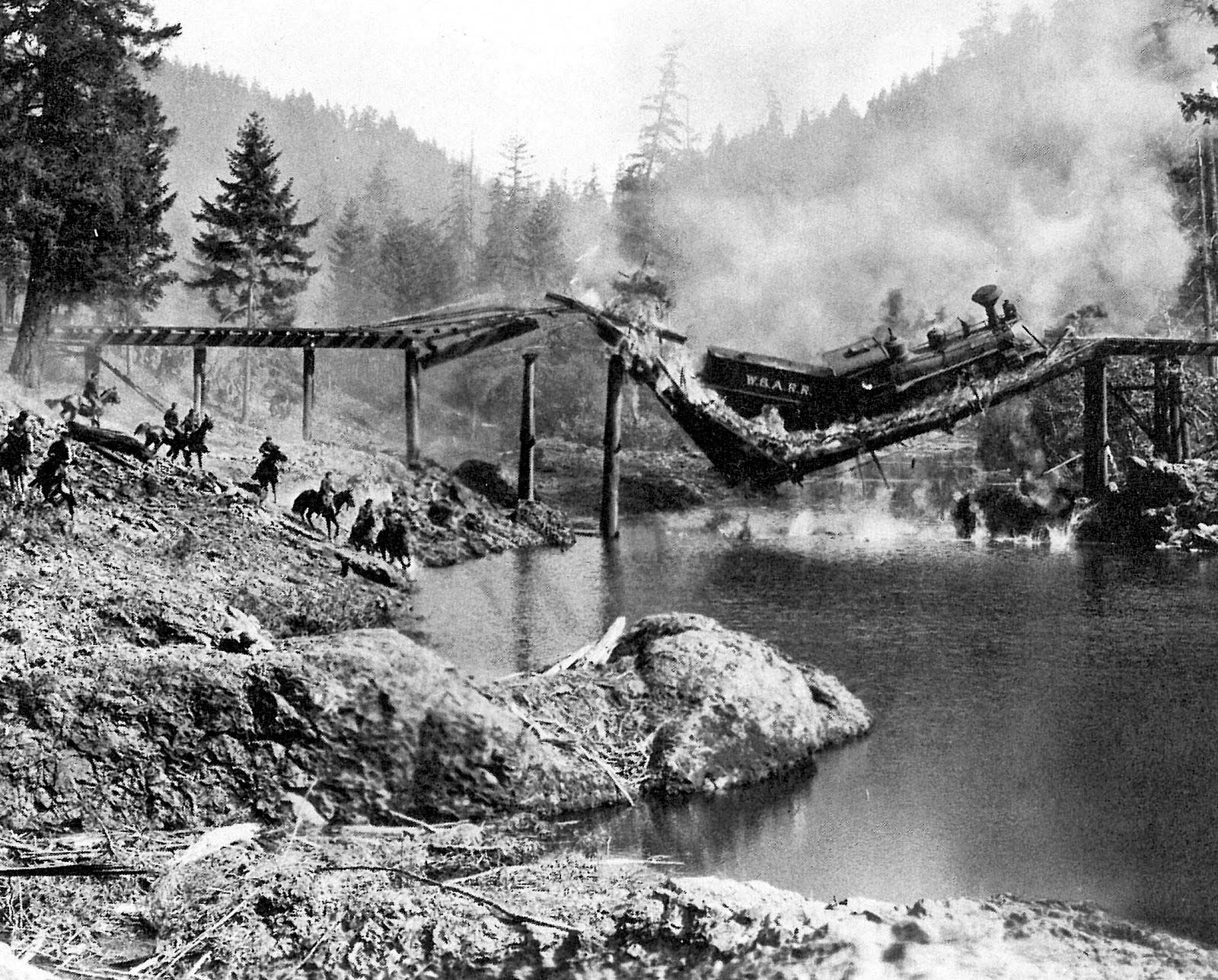
You will hardly believe your eyes as a full-on steam locomotive (in real life, the “Texas”) crosses a burning bridge and crashes into the river below; this is not a model shot, nor were any special effects used or needed — director Clyde Bruckman just left the wreckage there in the river bed until it was finally salvaged for scrap during WWII.

They really did build a bridge, set it on fire, then drive a train across it and plunge it into the river. For realz! No wonder it went over budget!

Apart from crowd scenes where a lot of running or marching is required, the film is mostly speed-corrected to show the actors in natural motion, and this really brings the sophisticated nature of late-silent era filmmaking to the fore. The recreated original score is also a treat, though alternative and more modern scores exist for the 4K Blu-ray release (the first silent movie released on Blu-ray, and a wise choice among many good options).

Apart from being in B&W, I believe you could show this to modern audiences and they would still find the pacing to be attention-holding, the story layered enough for today’s audiences, the humour still funny, and the stunt-work disbelieved to be as real as it actually was. It’s a mystery to me why the film isn’t a regular visitor to revival-house cinemas, or better known to this generation’s cinephiles.

I’m just glad nobody’s been dumb or reckless enough to try and remake it, because The General is truly a unique example of the best the reckless early days of American filmmaking has to offer that really holds up across its nearly 100-year history. Plus it’s a better movie than any of the Mission: Impossible series. There, I said it.