Tank Girl (1995)

dir. Rachel Talalay
⭐️⭐️⭐️⭐️
52-week film challenge, film 49

This review has to come with three disclaimers:

  1. I have never read the “Tank Girl” comic (though it looks like something I’d enjoy). I am reviewing the film strictly as a movie.
  2. I have met and chatted with the director, Rachael Talalay, about her career, US-Canadian immigration issues, and more recently I was present in Chicago for the debut of her latest bit of TV work (for Doctor Who, as it happens), but this doesn’t influence the review too much.
  3. I am aware that the film was, in parts, heavily re-edited by the studio.

With that out of the way, let’s dive in.
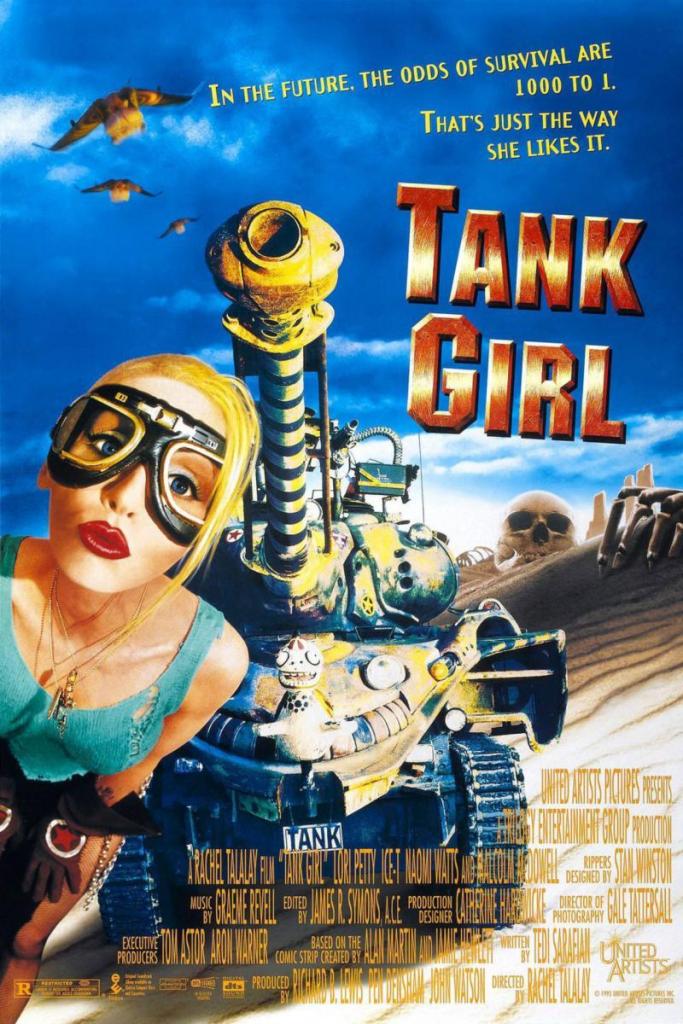
Hoo boy, has Tank Girl ever aged well. On its original release, it didn’t do well financially, though it later earned cult status on the strength of its strong “feminist futurism” and humour. It is almost, but not quite, a mirror-universe version of 1984’s The Adventures of Buckaroo Bonzai Across the Eighth Dimension, only with far fewer goatees and more mutants, who eventually form an alliance to take down the mad big bad (Malcolm McDowell, in this case).

Like the earlier film, it has a definite aesthetic that reflects the decade in which it was made, is funny but not meant as a parody, and does some excellent world-building that pays homage to its influences. In the case of Tank Girl, the world of 2033 looks increasingly likely to come to pass — only instead of a comet directly hitting earth causing the climate to change, we just have man-made climate change. I can see this “future” from my house, so to speak.

A hasty voiceover from yet-to-be Tank Girl herself (Lori Petty) sets up the story: since the comet hit (presumably with enough force to push the earth closer to the sun), it hasn’t rained in 11 years, and the world has mostly turned to desert. The (male) elites have taken control of the enormous reservoirs of water underneath the sands in the only livable area left (the former Australia), thus controlling nearly all of the remaining population.

Director Talalay with star Lori Petty.

Some Mad-Maxian-type rebels live “free” in the outback in a commune, relying on finding and tapping into parts of the reservoir to survive. Although the head of the monopolistic Water & Power Corporation, Kesslee (McDowell), is trying to find and destroy these water pirates, the rebels fear another enemy much more: The Rippers, who are kind of armored super-soldiers operating from a secret base.

Buck is quickly established as a sarcastic rebel even before the commune is attacked.

The Rippers attack both W&P and occasionally the rebels under cover of darkness. Insert your own analogy to the aboriginal native populations of various countries (and of course capitalism) right here.

W&P discover the last well the commune has tapped, and attack the commune (which is decorated like every 90s teen’s dream) with corporation troops, killing many of the rebels. The body count includes Rebecca Buck’s (Petty) boyfriend Richard (Brian Wimmer) and, after a brave fight, capturing Buck and a young girl from the commune named Sam (Stacy Linn Ramsower).

Sam (L) and Rebecca

In a classic trope, Kesslee is fascinated by Buck’s spunk and sarcasm — and instead of just killing her, instead enslaves her. When she continues to rebel, he subjects her to various tortures.

Buck meets a fellow prisoner, who Buck nicknames Jet Girl (Naomi Watts) because she is being used as a jet mechanic by the cruel (read: rape-minded) troops. Jet Girl urges Buck not to fight back, but Buck is having none of it — and saves Jet Girl from a stalker trooper by pretending to be Jet Girl’s jealous girlfriend.

Kesslee decides to use the rebellious Buck to lure the Rippers out into the open, but the plan backfires, and Kesslee is gravely injured. Buck gets a tank (and is now Tank Girl), Jet Girl steals a jet, and they seek shelter and spend time modifying their weapons and plotting to break W&P’s control of the world’s water.

Their success prompts Kesslee to use the little girl Sam as both a hostage and bait, and puts the child in serious danger at one point — I don’t want to say more than that, but Iggy Pop is involved, and not in a good way. The Girls (Tank, Jet, and the little-seen Sub) get wind of this, and redouble their efforts.

Iggy Pop as a (thankfully unsuccessful) pedophile.

The ladies form an alliance with the Rippers, who we discover are mutated men (and the occasional dog that was first mutated into a man) who have been fused with kangaroo DNA (because Australia!) into a funny-looking mercenary force originally created by W&P before being largely wiped out for rebelling. Kesslee hopes their united force will attack so that his army can crush them all, but things don’t quite go according to plan.

That’s Ice-T on the left there, as T-Saint — one of the smarter and more poetic Rippers.

The film might possibly err a little too much on the comic side, but the look and set pieces are aesthetically pleasing throughout. As mentioned, looking at this almost 30 years after its initial release, it seems prescient and less unrealistic than it probably did in 1995. Indeed, “Kesslee” rhymes with “Nestle,” and if you don’t think that evil corporation isn’t trying to buy up as much of the fresh water supply as it can, you might want to read up on that topic.

In the meantime, the rise of women as role models, heroes, rebels, and the leads of non-drama films over the last three decades makes Tank Girl ever more relevant as the years go by. When it was first released, some critics and most audiences didn’t quite “get it,” but the tween/teen girls who got to see it took it into their hearts, and built a cult following around it.

The film turns out to have had enormous staying power as an influence, both outside and inside Hollywood. Although the film flopped in its theatrical run, it did okay with critics — and I think it has since garnered enough respect that a Blu-ray release beyond just the US would be justified.
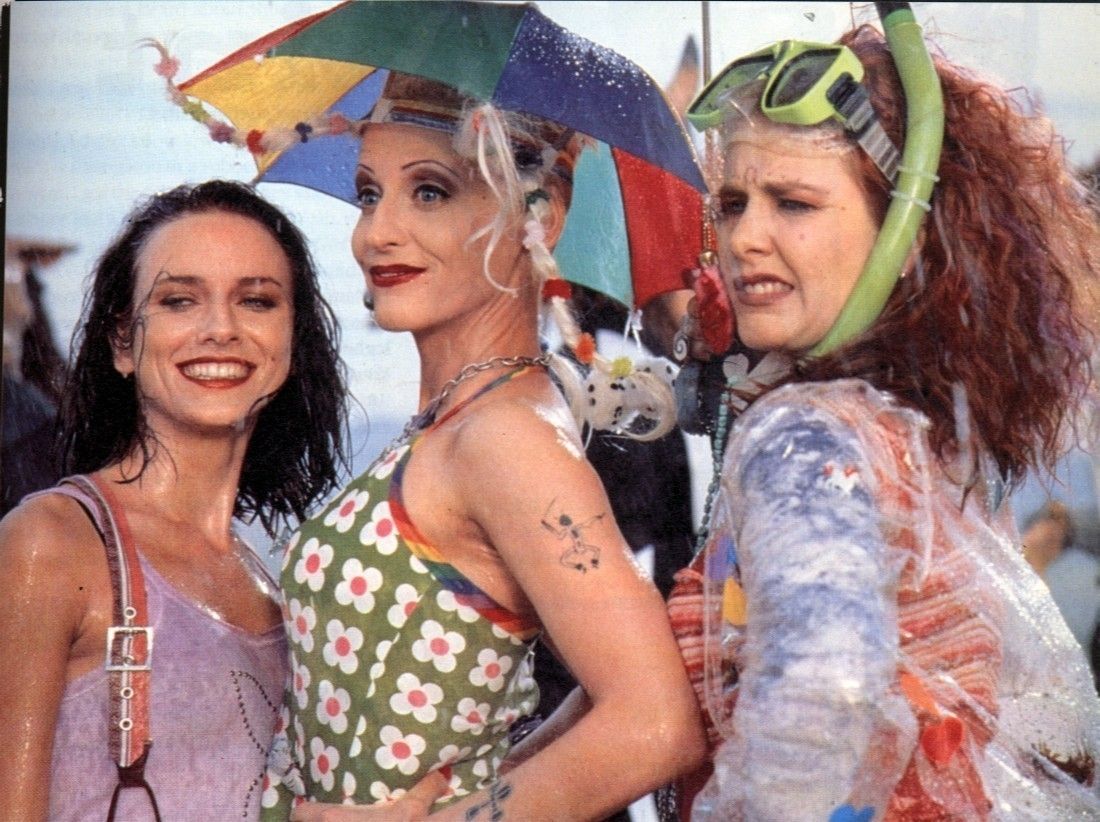
The “Girls” together — (L-R) Jet, Tank, and Sub

If said Blu-ray could also include a ”restored” version that undid the watering-down cuts and edits the studio insisted on (among many other things, reducing Jet Girl and the blink-and-you’ll-miss-her Sub Girl’s roles, not to mention changing the ending), I think it could even be a hit on the revival circuit as well. As Ms. Talalay has gone on to a strong career in TV and film since then, I look forward to asking her about the “Kesslee” name, and the possibility of a “Director’s Cut,“ when next our paths cross.

Godzilla ゴジラ (1954, dir. Ishiro Hōnda)

⭐️⭐️⭐️⭐️½
52-week film challenge, film 32

I don’t think I’ve ever seen the full Japanese version of Godzilla before, certainly not as an adult, but of course I’ve seen the Americanised “Raymond Burr” version — Godzilla: King of the Monsters! — a time or 10. Like many people, I climbed aboard the kaiju train as a kid, when all these great monster movies started showing up on TV on the weekends, so I caught most of them back then. TV stations at the time of course tended to show the later colour films which were more aimed at kids, so I don’t think I’ve even gotten around to seeing Godzilla Raids Again (1955) either, a grievous mistake that should be corrected soon.

The first Godzilla is most definitely not a kid’s movie: it is a lightly-abstracted but still powerful statement on the horrors of nuclear weapons, and a philosophical exercise pondering where Japan (and the world) goes from here. In this film, Godzilla is the spawn of the atomic bomb — and wreaks similar terror on Tokyo as the bombs dropped on Hiroshima and Nagasaki did, with incredible loss of life and property.

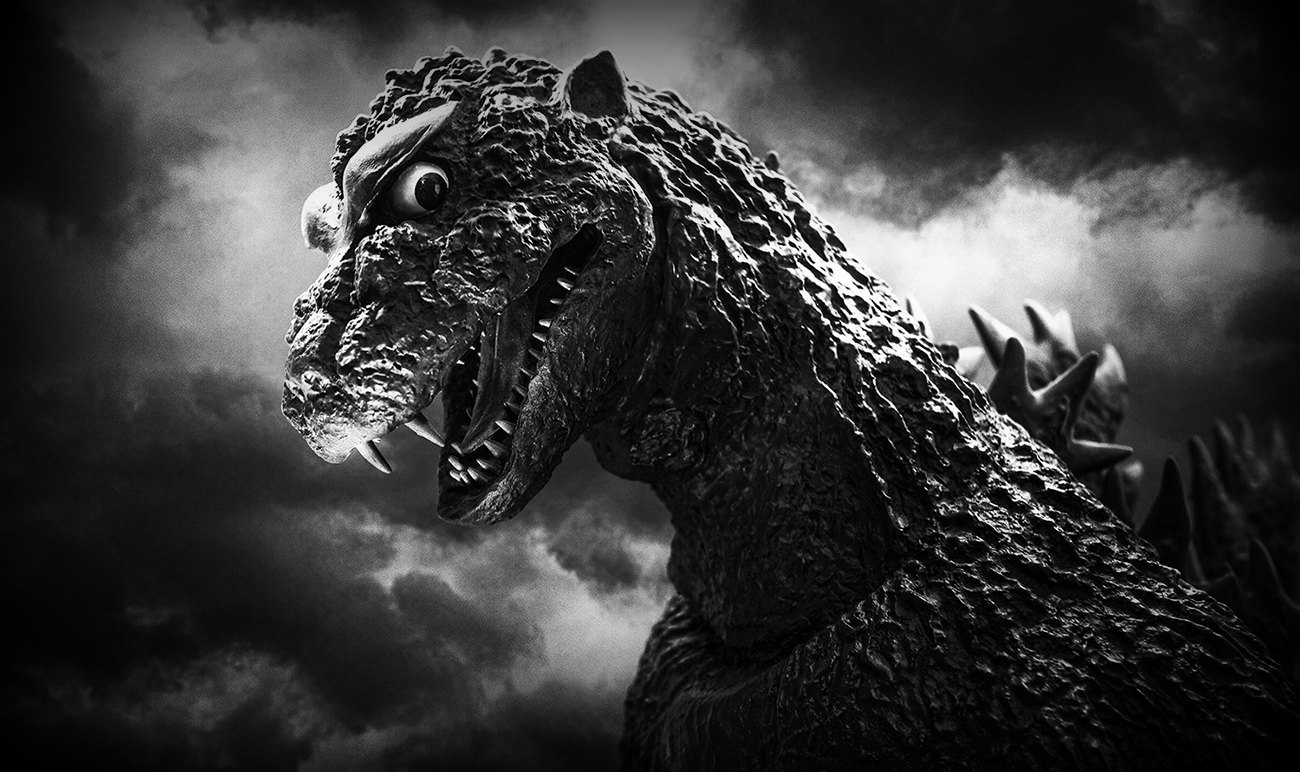
When the film was made, postwar Japan was still wrestling with the consequences of its own actions in WWII, just eight years earlier, as well as the devastating and overwhelming American response, which was to destroy entire cities full of innocent civilians (about a quarter million in total) — the greatest act of deliberate mass-murder had seen at the time, until the full horror of the Holocaust was revealed. The Godzilla creature in this first movie was intended to be seen as an utterly terrifying and unstoppable force, even though even I have to admit the face they gave it is … unintentionally kind of cute.

Hi kids! It’s your old pal, Godzilla! Don’t do drugs, and stay in school! See ya later!

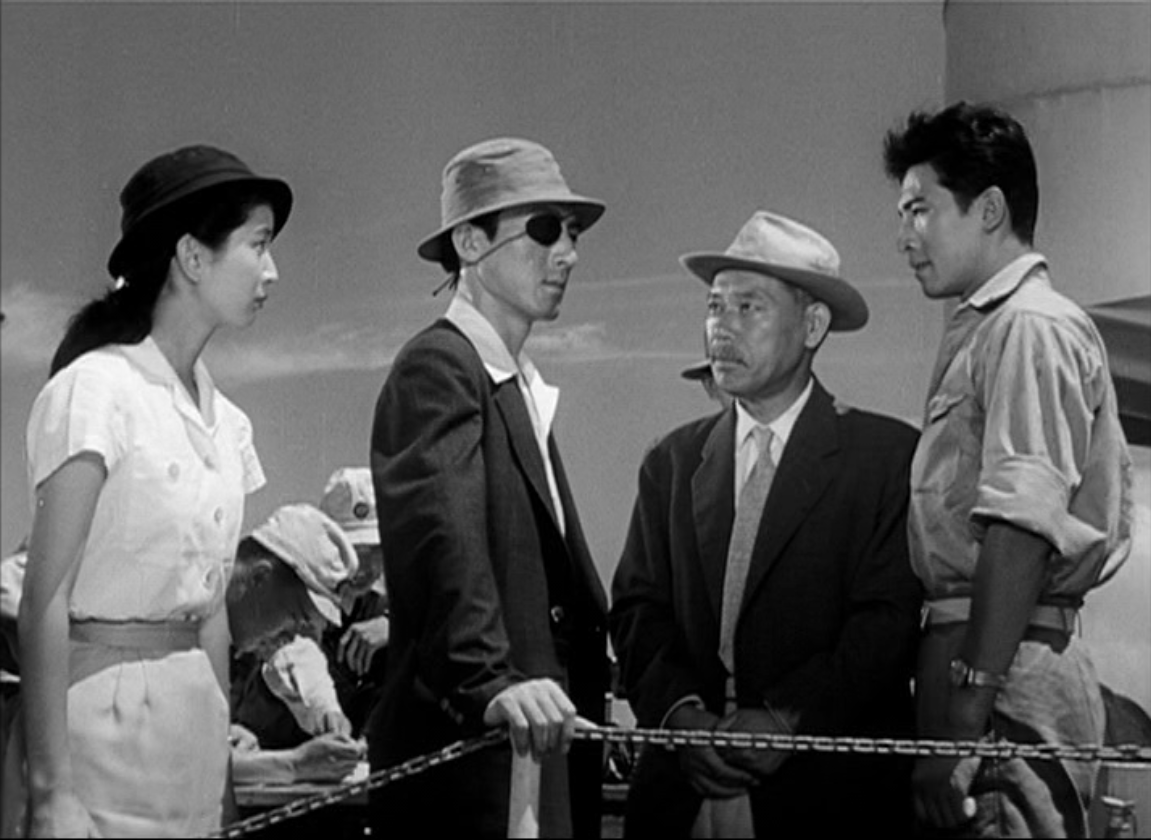
The B&W cinematography of Godzilla is terrific, and the cast are first-rate: from venerated actor Takashi Shimura (best known as the leader of The Seven Samurai, but also featured in Roshomon, Ikiru, Yojimbo, The Hidden Fortress and many more classic films, here playing the pacifist scientist Kyohei Yamane) to relative newcomer Akira Takarada (playing the hero role of Ogata), Akihiko Hirata as the anti-hero scientist Serizawa, and the radiant Momoko Kôchi as Emiko Yamane, Kyohei’s daughter — a role she reprised in her last film, 1995’s Godzilla vs. Destroyah. All the players, from the greatest to the smallest roles, are played with deep conviction and seriousness.

I will take an indulgent moment here to note my deep fondness for the fashion of the 1950s — everyone in the film looks fantastic, with the men in suits or lab coats, police and military in sharp uniforms, and Emiko in fashionable garments of the time, with everyone looking smart and well-groomed. It’s a reminder of one element of the world gone by I wish would make a comeback, even as I myself fail to adhere to it.

(L-R) Emiko, Dr Serazawa, Dr Yamane, Ogata

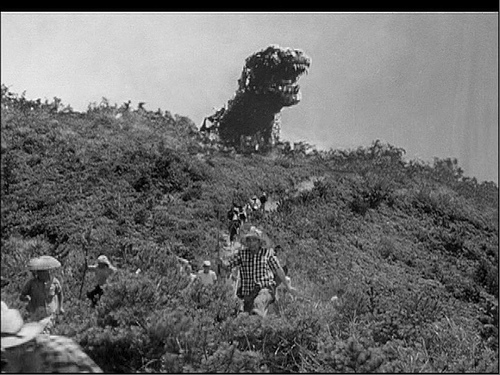
The compositing in the film should also be noted, as it is considerably above-average for the time. I caught only one moment in the film where the effect wobbled a bit — some power-line fortifications meant to stop Godzilla — but was otherwise nearly flawless. The moment when Godzilla’s head pops up over a mountain being approached by scientists is a perfect example: though it might be seen as amusing now, it was undoubtedly surprising and convincing in showing Godzilla’s scale early on in the film.

The analogy of the war that had recently devastated Japan couldn’t be more clear: while the authorities work feverishly to stop this new threat (also featuring lots of scenes of how Japan has rebuilt its civil defenses), nothing is effective against Godzilla. Dr Yamane is the lone voice calling for a less militaristic approach and for studying the creature, but doesn’t really have an answer on how to balance his wishes against the safety of the population. Emiko discovers that her other admirer, Serizawa, may have a way to stop Godzilla — but is too scared to use it, lest the secret of his super-destructive weapon fall into the wrong (or anyone else’s) hands.

This film has a lot of tension and conflict in it, with no comedic elements at all, and a lovely slow buildup of the conflict. Godzilla first attacks some ships at sea while remaining hidden underwater, eventually emerges to wreak havoc on land, and with no effective defense, the country is helpless as many are killed or injured (the scenes of attack survivors in hospital are pretty heart-rending), unveiling not only huge size and strength, but also “atomic breath” that incinerates everything on contact (oh wait, now I get it — Godzilla is the US!).

Emiko and her true love interest Ogata eventually convince the very conflicted Serizawa to use his “Oxygen Destroyer” technology to attack Godzilla underwater (also killing all sea life in the area), but you can see where the film is going from here — there is no solution without great tragedy and wasted opportunities. In the end (in real life, not the film), the point of view of Dr Yamane won out — Japan today strongly embraces nuclear power for its energy needs, but has shunned becoming a nuclear (weapon) power as you might expect, despite being surrounded by countries that do have nukes.

This film, thought of today as the start of the “giant monster movie” genre, was so powerful and effective in its analogy that it may well have helped convince the west to avoid using atomic weapons thereafter. The original Japanese version of Godzilla is a much darker, more thoughtful, and overall deeper film than the lighter, more entertaining genre it spawned, and was undoubtedly effective on both sides of the Pacific in its day. It was a serious attempt to illustrate the terror of atomic weapons — which thankfully haven’t been used since, though the world is still plagued with senseless wars.