⭐️⭐️½
52-week film challenge, film 48
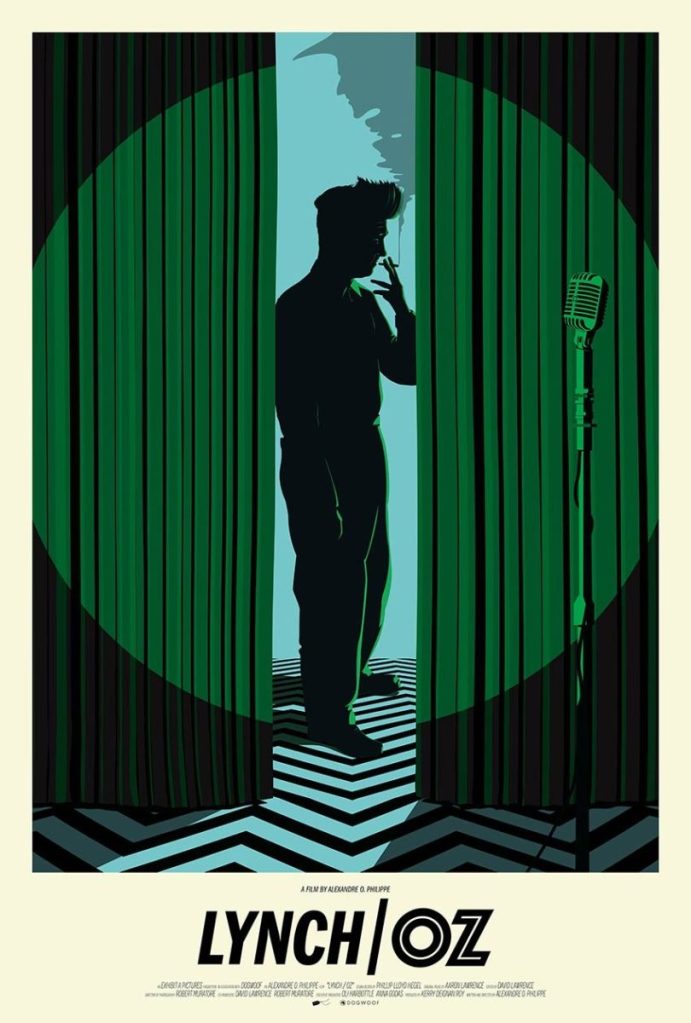
The short version: this film-school set of academic essays read aloud with visual accompaniment, which collectively try waaaaaay too hard to connect everything David Lynch has done to the 1939 film The Wizard of Oz is overlong and misguided.
That’s not to say that there aren’t a lot of references and visual cues in Lynch’s work that parallel TWoO; of course there are.
He’s obviously influenced by it, and there’s plenty of examples, either spoken in his films or visual/story metaphors. In answer to one essayist’s question at a Q&A somewhere, Lynch himself says that not a day goes by that he doesn’t think about that film.

The problem (one of several) with the central premise behind this is that most artists Lynch’s age or younger can easily be demonstrated to have been influenced by The Wizard of Oz: it was a unique film that embraced Technicolour in a new way, giving new life to L. Frank Baum’s first Oz book (he went on to write another 13 in the Oz series). The film version’s characters, dialogue, and songs have all entered the public consciousness in a huge and enduring way, thanks to the film’s yearly repeats on television and its extravagant, nearly-timeless tale of poverty, fantasy, and the power of friendship and imagination.
Even if you accept that Oz was a major influence on Lynch’s films — and there’s plenty of evidence that it was, in places — the documentary goes on to point out that it was also a significant influence in dozens and dozens of other films that have nothing to do with Lynch at all, thereby diluting Lynch/Oz’s central premise. This adds significant time to the already-thin but interesting premise, with the documentary running a very long-seeming hour and 49 minutes, when it could have been a really tight and more interesting hour.

Lynch/Oz is divided into six chapters, following what director Philippe probably thought was a Lynchian oddball introduction by odd-looking Jason Stoval (as Sid Pink) that falls very flat, as does the reprise at the end of the doc.
Another element that might have helped make this tribute less dull would have been to actually see the six essayists who read their written analyses of Oz’s influence on Lynch. Instead, we get clips from many other movies that also in some way reference The Wizard of Oz, seeming undermining the point of this particular doc — Oz is a very influential picture across all of the last 80 years, we get it.
Amy Nicholson has one of the weakest premises in her section, titled “Wind.” Yes, she talks about the use of strong winds to be transformative agents in both The Wizard of Oz and Lynch movies, of which there are but a handful of examples. Rodney Ascher’s “Membranes,” which posits the dividers between “reality” and the things beyond that (often illustrated with curtains in Lynch’s work, akin to Toto pulling back the curtain to reveal that the Wizard is not who he seems), is much more successful. It’s a very, very, obvious point, but well-explored.
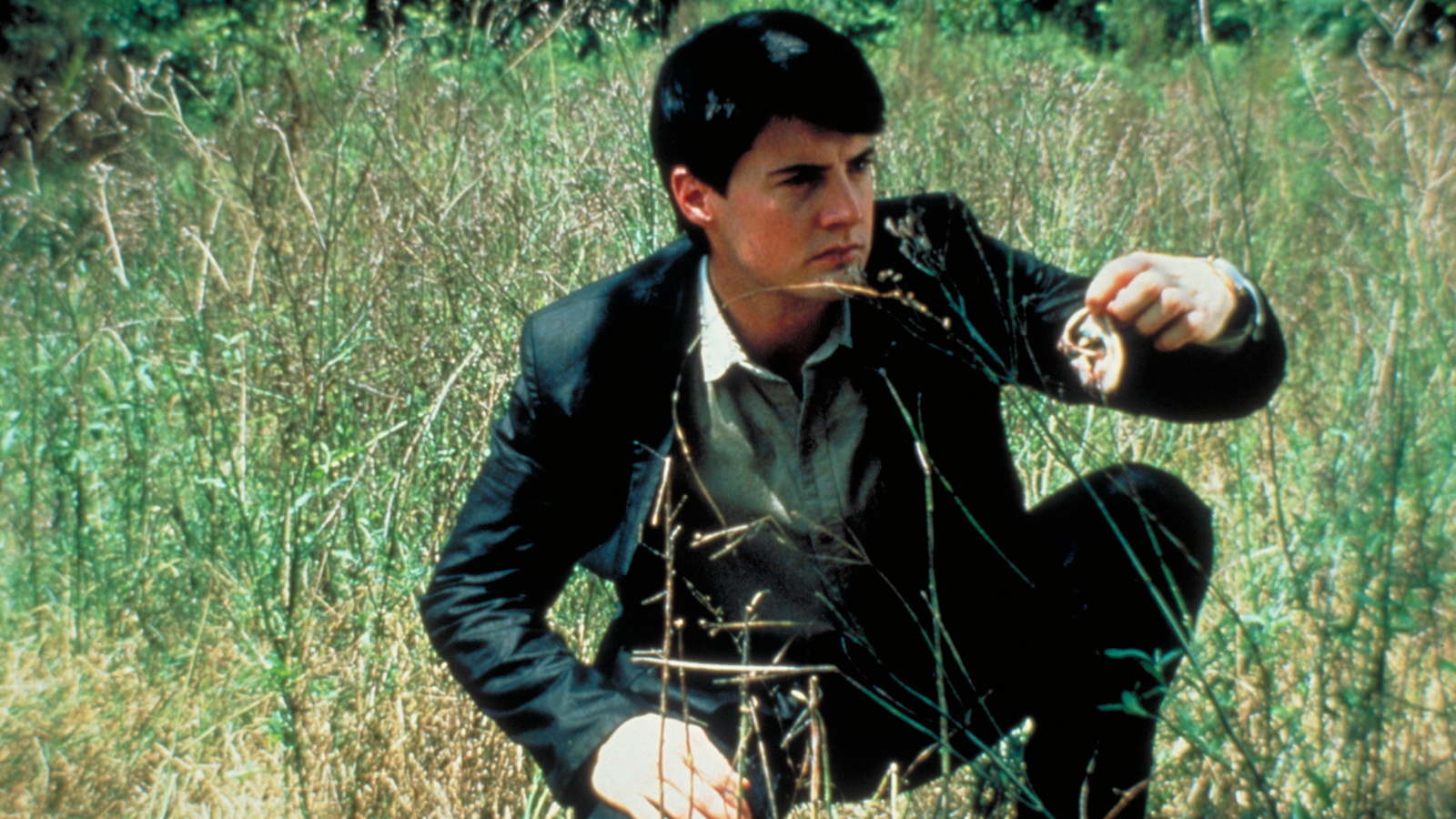
The third essay is the one that is the most completely worth watching: fellow filmmaker John Waters, who has a delightful personality and distinctive speaking voice that radiates joy, talks about how he and Lynch are of similar age, and so of course are in some ways influenced by the same films they saw as kids — not to mention that, like Lynch, he developed a fixation on the undersides of façades. Waters shares an anecdote of meeting Lynch, talks about their shared influences, and similar — but very distinct — desire to poke around underneath the fantasies we all try so hard to fit into our realities: it’s by far the best of the essays.
That’s not to say Karyn Kusama’s pondering on “Multitudes” in her exploration isn’t good also, but it marks a return to the more dry and academic style of analysis that has dominated this documentary until Waters brought some fun in with him. Thankfully, this is followed by Justin Benson and Aaron Moorhead’s humourous ruminations on the frequent reference to a never-seen “Judy” in Lynch’s TV and film work, which brings in an excuse to explore the influence of Judy Garland’s own life on Lynch — a genuine and, once you see it, obvious musical influence that their essay makes clearer.

This leaves David Lowery to bring up the rear with his essay on the theme of digging — a pretty weak link, and a curious choice for the finale of the documentary. He pokes around at the rather obvious point that Lynch’s characters often try to either bury things they don’t like, or have such things dug up (metaphorically or literally).
As a Lynch fan, I was hoping I’d get more out of this documentary than I did, though I do appreciate both some of the essays and examples they gave to support their point, and of course the archival footage of Lynch interviews, which are sprinkled throughout. Lynch doesn’t talk that much about his own work, so these nuggets are rare and Lynch’s obtuse way of answering questions about his work are mischievous and amusing.
If they’d drop the pretentious opening/closing, the seemingly-endless references to non-Lynch films that have obvious Oz references, and maybe the weakest of the essays (either “Wind” or “Dig”), you’d have a smart, shorter documentary with some real insight. It’s too bad director Philippe didn’t do that, because what he ended up with is a documentary that will have you squirming in your seat — for all the wrong reasons.






 The Chasbah