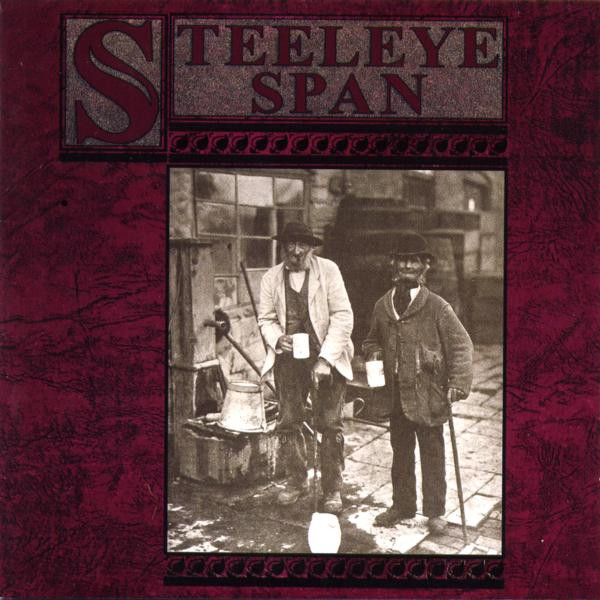
Steeleye Span – All Things Are Quite Silent [Disc 3]

[Cherry Tree, 2019]

Ten Man Mop, or Mr Reservoir Butler Rides Again (1971)

THE OVERVIEW

Following the new lineup’s first album together (recorded in late 1970) and its surprising chart success the following year, the final album of this box set and the third official Steeleye Span album was made in the fall of 1971. As with its predecessor, it continued to draw on the traditional folk music of England (saves a lot of time when you don’t have to write the material, I guess!).

The stability of the lineup was short-lived, however: founding member Ashley Hutchins would leave the band shortly after this was recorded, feeling that the group was relying too much on Irish folk music when his interest was in English folksong. He was also apparently reluctant to travel to the US, where the band had been invited to tour.

Once again, the cover art is pretty terrible, but once again the music is harmonious and well-performed. The band veers a bit more back into “pure” acoustic folk overall, but the electric instruments continue to make their presence felt right from the get-go, along with spoons, a tabor, organ, timpani, mandolin, fiddle, various banjos, and some dulcimer and various guitars for good measure.

Also again, there’s some terminology in the title that requires a bit of explanation. A “mop” in English slang for a job call, where unemployed men would gather to see if they could gain a day’s work — you might see the modern equivalent of a “mop” outside temp agencies, or construction sites, to this day. Some things never change.

As for the origin of Mr. Reservoir Butler, he was a real person, though unknown to the band — apparently he was the original performer of one of the songs on the record (it’s not mentioned which one, even in the extensive liner notes of the original gatefold vinyl album).

The version of the album on this box set copies the 2006 Castle Music CD reissue, including a smattering of bonus tracks (which we’ll get to), but sadly this collection omits the bonus live show that was included on that reissue’s bonus disc: a September 1971 performance on DJ John Peel’s “Sunday Concert” radio programme. It included a selection of tracks from across their career thus far, including a few songs not yet captured on the proper albums. I really must hunt that one down at some point.

THE ALBUM

The very first sounds one hears are electric, on the Christmas traditional “Gower Wassail,” with Tim on lead and the rest of the band contributing a splendid chorus. Tim Hart gives anything he sings a traditional, old-timey feel, but his vocal “instrument” is best used a bit more sparingly, rather than taking sole lead — at least in my view. It’s not clear when this particular wassail was written, but the standard (sung) version comes from the tradition of wassails from the 12th century, which have come to mean a type of song often accompanied by drinking, rather than “wassail”’s original meaning akin to a farewell greeting.

The band did well with a Chrismassy song on the last album, so why not do one again? And while we’re at it, the pair of jigs on the last album went down well, let’s do that again also! This time it’s Paddy Clancy’s Jig and Willie Clancey’s Fancy, a natural pairing if ever there was one. Dueling acoustic guitars and fiddle with a bit of spoon work is always a delightful thing, but here’s that Irish bent that got Ashley all “bent” out of shape.

The third cut features the funny, clever “Four Nights Drunk,” sung by Martin Carthy. It’s a song about a man who comes home so drunk he sees things that may or may not be there, questions his wife about them (who denies his vision), and begins to suspect that he is actually seeing his wife’s lover as her explanations become increasingly implausible.

Following a straight singing of the lyrics, the band breaks out the song into an instrumental for the last minute or so, and again they are very good at it.

We finally get Maddy Prior back on lead vocal, with “When I Was on Horseback.” It’s a traditional Irish folk song-cum-lament about a soldier and his unfortunate end, even though he brags “wasn’t I pretty/wasn’t I gay” (not like that 😜). Already, a pattern that has brought some criticism of this album is emerging — start a song, sing the lyrics, spotlight the instruments for a minute or so after the lyrics are done, and out.

Side 2 of the original vinyl version kicked off with “Marrowbones,” is a delightful traditional English/Irish song about a woman who loves her old husband, but “loves another man twice as well.” She decides to find a way to blind him so he can’t see she’s having an affair.

A local doctor tells her to feed him eggs and 16 marrowbones, which she does, but the old man knows of her plan and pretends to be blind. When walking near a river, the unfaithful wife decides to push her “blind” husband in, but he hears her running towards him and steps aside, and it is she who falls into the river.

As she cries for help, the husband reminds her that he “cannot see.” She eventually drowns, and the moral of the story is “if you want to murder your husband, make sure you poison him properly.” That’s the Irish for you …

This is followed by “Captain Coulson,” a tale of the war-hero title character and his passengers on a six-week sail across the Atlantic to “Amerikay.” One night, he spies a pirate ship in pursuit, and wants the sailors and men on board that it will soon catch up to them.

This story-song, sung by Maddy, is a nice change of pace from the tales of treacherous/cheating spouses, describes the battle as the pirates board the vessel and demand “your gold and precious loading.” A pitched battle ensues, with the captain and his passengers eventually successful in defeating the pirates, capturing their ship and bringing it with them as bounty with them to the New World.

The odd choice of having nearly every song end with an instrumental break, rather than putting it in the middle, becomes almost comically predictable and borderline annoying.

As with side one, a given song early on the given side of the vinyl is then followed by an instrumental track — either a group of jigs or a group of reels, and this case its the latter: a trio of them, “Dowd’s Favourite/£10 Float/The Morning Dew.” Only carefully listening to the chord changes would reveal to a listener when one part ends and other begins, as the instruments are seamlessly strung together.

This strange habit seems to be intended to showcase Peter Knight’s fiddle playing, and he’s excellent at it — but the repetition factor of the album is starting to really kick in.

Maddy returns to sing “Wee Weaver,” for once a song that has a happy ending rather than, you know, death. It’s a tale of of a weaver who loves a beautiful girl named Mary, much admired around the village. Willie proposes marriage, Mary accepts, and they lived happily ever after.

The Norfolk folk music index calls this song “a rarity,” allegedly written by home weavers … in Ireland. This puts Irish songs firmly in the lead compared to the English entries.

Tim sings the lead on the next track, “Skewball,” which also is an unconventional track for the band to do. This is a song about a horse race, and a fast horse (which can “talk”) named Skewball against another horse named Griselda. It’s an exciting tale, told well.

These two unconventional (for this band) songs would have done better being spaced further apart, but they nonetheless make a welcome change from the fairly repetitious choices presented to this point. That said, it closes the original album on a strong note.

We move on to the first of the “bonus tracks” presented here, “General Taylor (Studio Outtake).” This one also has Tim on lead, but duetting with the other band sings, which really makes Tim’s lead even more effective. The song, also known as “Carry Him to His Burying Ground,” is a fairly recent number for this group, hailing from the mid-19th century.

It’s done here in a “pump shanty” style, though technically it should be considered a “halyard” or perhaps a “capstan” style shanty. The subject concerns the defeat of Mexican general Santa Aña by the American general (and future president) Zachary Taylor in 1847.

The song was likely written by one of the surviving British soldiers who jumped ship to aid Aña in the West Indies. Traditionally, the victor of the battle is reversed to be Aña (as it is in this performance), likely due to British sailors serving with Mexicans at the time and not wanting to cause offense, but indeed it was Taylor who “won the day.”

This first bonus track, along with the start off track “Gower Wassail,” are the high points of the album as presented here. While the original album had fine playing and some strong group vocals, the song choices and arrangements were more repetitious than the previous album, and nothing other than “Gower” really stood out.

The rest of the “bonus” tracks here are various versions of “Rave On” — the original single version with a deliberate “Scratch” sound, which is my favourite of the versions because it must have really messed with the original listeners’ minds — and a “proper” two-verse and three-verse version.

The song is really out of step with the traditionals that accompany the album, as it’s a Buddy Holly song — and its presence “breaks the spell” of the band as wandering minstrels. It was originally recorded as a joke for Ashley’s benefit, and he liked it, but then it ended up as a “novelty” single for the band (and flopped).

To be fair, if you take it for what it is — a modern song done a capella, forgetting about the band’s regular motif — it’s very nice, including their strong harmonies. It’s just a bad choice to include on their Olde Tyme folk albums (and of course it originally wasn’t).

The “Peel Session” version, just for variety’s sake.

THE BOTTOM LINE

This third effort touches on a lot of what makes Steeleye Span interesting, but it’s less imaginative and varied than the previous two albums, with the song choices being more repetitive — though when they do break the pattern, they generally shine.

For me, Ten Man Mop leans too heavily on the lead singers, with the band’s strong group vocals too sparingly used. The arrangements seem less imaginative as well, with a few exceptions.

Knowing that Hutchins left the band after this was recorded, it would be interesting to revisit the fourth album to compare how that affected the group (spoiler: a lot), but that’s outside the scope of this box set review, so we’ll have to leave it there. (Second spoiler: the lineup changes very significantly yet again with the fourth album.)

Ten Man Mop is by no means a bad album, but the feeling that it’s a weaker offering than the two before it is hard to shake. The inclusion of very sparse “bonus tracks” is a mild disappointment, but as an opportunity to study more deeply the albums where I first became acquainted with the band, All Things are Quite Silent is an intriguing box set that I’m glad to have, as it does offer some absolutely stellar gems from the band’s early years.

Next time: Nits! (the Dutch band, not the other kind)
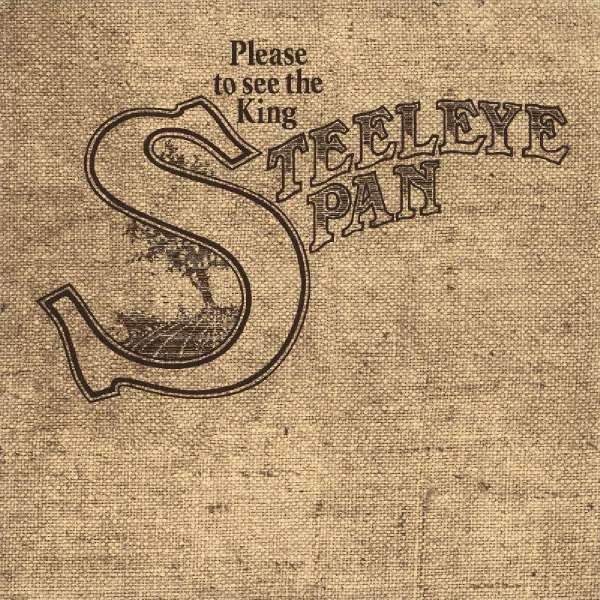
Steeleye Span – All Things Are Quite Silent (Disc 2)

[Cherry Tree, 2019]

Please to see the King

THE OVERVIEW

The second album from Steeleye Span is very much “more of the same,” and yet wildly different at the same time. Having found an audience that embraced their mix of modern, classic, and ancient instruments combined with mostly traditional English folk songs, they stuck to their unique “formula” of “traditional folk songs with some electric guitar and bass” doggedly.

So much so, in fact, that the first track on Please to see the King is a re-recorded version of “The Blacksmith” from their previous album! It’s hard to guess at the reasons why, but the new arrangement sets a tone of syncopation and other percussion in place of drums, and involves the reformulated band to a bigger degree vocally.

To the casual listener, this sounds very much like the previous album, with familiar vocalists Maddy Prior and Tim Hart and a similar musical mix of acoustic and electric instruments. The Woods, Gay and Terry, left the band before the group had even played its first live gig, and Gay’s presence in particular is missed.

However, this new lineup (adding friend of the band Martin Carthy, who had originally suggested the band’s name, and fiddler Peter Knight to replace the Woods) is widely considered the “definitive” early Steeleye lineup, with the first album personnel considered an excellent but “false start,” since the band would move into a heavier space with more male voices, percussion but no drums, and more group singing.

The cumulative effect is that this is something of a different band doing things a bit differently, but the additional backing harmonies and similar material helps cushion the changes. It helps that this same lineup stuck around long enough to record the follow-up album, Ten Man Mop, and even tour!

This album did pretty well, reaching #45 on the UK album charts, but died a death in the US on initial release. A later re-release of the album following the band signing to Chrysalis Records the following year sold far better in the US.

THE ALBUM

The title of the album refers to a tradition carried out on St. Stephen’s Day (December 26th), the “Cutty Wren” ceremony. A caged wren is paraded around in towns and villages as if it were the king.

This is directly referred to in the album by the penultimate song on the album, “The King.” The lads who would parade the Cutty Wren were referred to as “wren boys.”

“The King” is often sung around Christmastime, and the band sings it a cappella, which will remind listeners of the “Calling-On Song” from the first album and is every bit as charming as that one.

This album starts with notes from electric guitar and bass that begins with the new version of “The Blacksmith,” with another lovely lead vocal from Prior. The middle eight is an a capella la-la chorus from the whole band, an instrumental break, and then Prior returns accompanied by some backing vocals. Organ can be heard in the background, and another instrumental break finally debuts Knight’s fiddle before wrapping up with another a capella section.

“Cold Haily, Windy Night” is, to be blunt, a song about a soldier begging his lover to let him in to the house on the aforementioned night. After some persuading and the possible detection by her mother, the maiden does let him in and they end up making love.

The soldier turns out to be a cad who, having gotten what he wanted, exits stage left — leaving a angry girl and her furious mum. It’s sung by Tim Hart in his stylised “folk song” manner.

Next up: two instrumental jigs combined into one piece. “Bryan O’Lynn” was a character from Irish folk song who was quite the dandy, though none of the lyrics are sung here. “The Hag with the Money” (Cailleach An Airgid) is another traditional song with lyrics, sadly not sung (as the original song is rather amusing).

We get back to lyrics and Maddy on lead with “Princess Charlie Stuart,” a song about good old Bonnie Prince Charlie. It covers the rebellion led by Charlie to restore the House of Stuart to the throne at the Battle of Culloden in 1745. It was ultimately unsuccessful, and Stuart was exiled first to France, then to Spain, the latter of which is mentioned in the song.

It’s a typically beautiful and haunting Scottish ballad, sung from his love’s perspective and hailing both his physical stature as well as the willingness of 700 highlanders to die in battle for him.

“Boys of Bedlam” is a song that dates from 1618, and is one of the earliest folk songs that deals with mental illness and insanity. “Bedlam” is shorthand for St. Mary Bethlehem hospital in London, now known as Bethlem Royal Hospital, which was an insane asylum. The hospital funded itself, in part, by charging townsfolk a penny to come and gawk at the antics of the unsupervised inmates.

The song starts off as a minimalist duet with Maddy and Martin, with just the simplest percussion. This expands slowly with electric bass imitating a bell tolling, then the pace picks up with guitar, mandolin, and organ and the song becomes a bit more … jolly? Both the object of the song and the narrator describe visions that are fairly described as bonkers.

The song shifts again into its last verse with somber, wailing backing vocals, with the faster pace now seeming more … sinister. A touch of banjo rounds out the finale.

“False Knight on the Road” is another traditional, which might be considered the “original version” of the more well-known song, “The Devil Went Down to Georgia.” Both songs document a confrontation between a mortal and the Devil (the false knight), but in this case its a brave boy who stands his ground during the quizzing and riddles from Satan. Ultimately, the Devil gives up and concedes the contest.

This moves us back to Maddy singing, with “The Lark in the Morning,” which always reminds me of the “argument” about whether it is night or day that Romeo & Juliet have in their bed in the wee hours. The fiddle on this track enhances the sweetness of the melody.

“Female Drummer” also features Prior, singing about a young lass who disguises herself and becomes a drummer soldier in disguise. She maintains the ruse until another girl falls in love with her and “finds” that her soldier boy is a girl, reports the drummer to her superior, who “unbuttoned my red tunic and he found that it was true/‘It’s a shame,’ he says, ‘to lose a pretty drummer boy like you.”

We finally arrive to the finale of the album, consisting of the outstanding a capella song “The King,” and the climax of the entire album, “Lovely on the Water.” The blending of the band’s voices on “The King” is just fabulous.

Finally, the song that truly embodies the best of this incarnation of the band, a serpentine guitar line with rock-solid bass, and Prior’s story-song rendition of “Lovely on the Water.” It is yet another naval-wartime ballad, tells the tale of a couple where the man must leave, and their sad parting dialog.

The middle eight takes a forewarning turn, cleverly using the instruments to recreate the troubles and perils ahead, before he may someday return. Unlike most other songs of this nature, the lyrics do not foretell or reveal a tragic ending, leaving their fate open-ended.

THE BOTTOM LINE

If you’re in for a penny with this band, then you’re in for a pound. While putting more emphasis on the electric side of their musical equation, these remain traditional English folk tunes in both style and subject matter, and are lovingly resurrected for a new generation and a wider audience here.

If you enjoyed the first album, you’ll almost certainly like this one as well, despite the shift towards more male voices; Martin and Tim shoulder most of that burden, and are distinct enough in their styles to add flavour to the stew, and clever overdubbing of Maddy doing background vocals to accompany her leads makes Gay Woods’ departure a little easier to overlook. Martin and fiddler Peter Knight add new sounds to the repertoire, nicely making up for Terry Woods’ departure as well.

The selection of material is also very strong, with one new version of an old favourite to start things off and ending on a tremendously strong wartime ballad, with a variety of tunes and subjects interspersed as they were on the previous album, with only the instrument jig break seeming a little out of step. Now that the Mk II Steeleye has gotten off the ground, we’ll see if they can keep it going for another record before the lineup evolves yet again.

Next time … Mr Reservoir Butler Rides Again!

Steeleye Span – All Things are Quite Silent (Disc 1)

[Cherry Tree, 2019]
Hark! The Village Wait

As John Cleese has famously said, “and now for something completely different …”

THE OVERVIEW

I’m more of a dedicated Punk/New Wave/Ska type fan when it comes to rock music, but thanks to good exposure to other forms of music and music analysis, there are other genres of music I also appreciate. One of the oddest (to most people) is my fancy for groups that seek to emulate and put their own spin on other styles once popular in centuries past. Peter Schickele in his persona as PDQ Bach and others who poked fun at oh-so-serious classical, Chuck Jones and his operatic Bugs Buggy films, and for reasons I can’t quite articulate, folk music bands who explored traditional tunes, styles, and instruments.

Two prominent examples of the latter sub-genre I have actively enjoyed and collected include the traditionalist Amazing Blondel, and the more modernist Steeleye Span.

There’s a lot of backstory behind the formation of Steeleye Span, and it is nicely summarised in the accompanying booklet to this collection of their first three albums, completed over the course of just two years, 1970 and 1971.

If you’re not familiar with the band, you’re probably not reading this, but on the off chance someone wants to know more before diving in, Steeleye Span were and are a group that added electric guitar and bass, along and contemporary rock-style drumming to otherwise mostly-traditional songs as pastiches of traditional songs of English folk music, arranged for contemporary (70s) instruments including the banjo, but largely sung in traditional stylings.

Apart from this novel approach, they were also known for periodically having two female vocalists in the band (Maddy Prior and Gay Woods), something of a rarity at the time. A form of the group carries on touring to this day, with only Maddy Prior from the original grouping still involved.

THE ALBUM

Unlike the previous box sets I’ve recently reviewed, two of the three discs in this CD-sized set contain just the straight album with no bonus tracks. A handful of previously-unreleased material exists on the third disc, but we’ll discuss those when we get to that album.

This one was their 1970 debut, Hark! The Village Wait, a title I’ve pondered the meaning of for decades until now. It turns out that a “wait” in Ye Olde Englishe is a group of musicians, usually woodwind players, who would play in the village commons in Tudor times, especially around Christmas.

Most, but not all of the songs are traditionals, with the arrangements by the band themselves. The tone is set on the very first song, even though it’s the only a cappella track on this record. The lyrics for “A Calling-On Song” were written by founder Ashley Hutchings (formerly of Fairport Convention), based on a captain’s song of the Earsdon Sword Dance Team.

From the first notes, you know you are being transported back to the roots of English folk music with a song that acts as an invitation and calling-card to the rest of the album. It would in no way be out-of-place at a Renaissance Fair or SCA gathering. The two women and their respective partners, Tim Hart and Terry Woods’ voices blend well.

Traditional acapella songs of a similar nature were often used to attract an audience to a village-green performance, and the lyrics reflect this: I’ve included the first and last verse here:

Good people, pray heed our petition,
Your attention we beg and we crave.
And if you are inclined for to listen
An abundance of pastime we’ll have.

There’s one thing more needing mention:
The dances we’ve danced all in fun.
So now that you’ve heard our intention,
We’ll play on to the beat of the drum.

And that last verse leads directly into the drum into of track 2, “The Blacksmith,” a traditional song that brings in the musical instruments of guitar, bass, mandola, harmonium, and lovely singing from Maddy Prior. It’s a tale of a love betrayed, of course, but with a bit of a twist. Backing vocals from Gay Woods and choruses with Tim Hart and Terry Woods really take you back in time as much as the first song did, but with enough modern sounds (blended with lesser-heard instruments) to keep the hippies listening.

The next cut, “Fisherman’s Wife,” is as Scottish a traditional as ‘ere we’ll get, with lyrics written by the great Ewan MacColl (father of Kristy) in 1959, and sung by Gay Woods this time. An autoharp and 5-string banjo “enter the chat,” as the kids say these days, atop the electric bass and guitar and drums.

It’s about the hardship of life for a fisherman’s wife, but with a hint of pride in herself and her hardworking husband. The variety of the two female vocalist adds a great tonal quality to the singing. But speaking of variety …

“The Blackleg Miner” gives us a styled nasal and northern voice of Tim Hart on lead vocal. His performance here is tuneful, but absolutely not in harmony with modern rock vocal stylings, and indeed his career-long musical interest lay with old folk songs. Despite his voice being a bit of a jarring break from the previous women-led tracks, his acapella singing really captures the old-timey feel of a song about a scab “blackleg” coal miner. It was strangely relevant in the face of the UK miner strikes going on around that time.

With the next track, we’re back to the ladies, with Gay on lead, singing a beautiful traditional, “Dark-Eyed Sailor.” On my first hearing many years ago I was captivated by this story-song of the pains of loving a sailor who may or may not ever return from the sea, and years later the dusky-voiced June Tabor (who once formed a group with Prior) did a more rockin’ version of the song, and I fell in love with it once again.

A lovely 2000 performance featuring both Maddy Prior and Gay Woods

And not just me: the song was one of the standout tracks off this album, and though there were no singles from the record that I know of, it became a popular part of the repertoire as the band played live. It became more popular once this album finally made its way to the US, five years after its initial release.

Terry Woods also plays the concertina with Hart on electric dulcimer, and the instrumentation just couldn’t be more perfect for this type of folk ballad. It’s a marvel how this weird mix of old and newer instruments somehow makes for such a distinct and original sound.

Side one of the original vinyl closes with “Copshawholme Fair,” with Prior on lead vocals, and includes some mandolin and the sound of the bodhrán (an Irish frame drum), along with some recorded sounds of step dancing by Maddy and Gay, giving the song a even older and more acoustic feel.

Side two opens with a twist: Maddy and Gay singing an original short sea-based ballad of a couple separated by enforced service by one’s “true love” in the Navy, “All Things Are Quite Silent,” which lends its name to the boxset. Songs of sailors separated from their true loves are, as one quickly learns, a really common theme of these traditional songs, so Ashley, Terry, and Tim knocked one of their own up.

This is followed by “The Hills of Greenmore,” featuring Tim Woods on vocals, which is pleasant but unremarkable. The next track, “The Lowlands of Holland,” is a quintessential staple of the band’s repertoire, starting with some guitar noodling before getting into yet another naval press gang tale of separated lovers, this time from Scotland.

What distinguishes this one from the others is Gay Woods’ beautiful vocal, a wistfully beautiful melody, and a splendid arrangement that really works with this “rock style added to traditional songs” angle the band has adopted. Like “The Blacksmith” and “Dark Eyed Sailor,” this one easily rises above its roots and is given new life in this treatment, in part thanks to the addition of traditional fiddle.

Gay in particular sells the lyric of a heartbroken widow telling her daughter she will someday find a man, but “alas there’s none for me/I never had a love but one/and he’s drowned in the sea.”

This takes us to “Twa Corbies” (a Scottish variation on the English folk song “The Three Ravens”), a rare one where Hart joins Gay and Maddie for a nice change of sound. This English folk ballad from approximately 1611, or possibly earlier, takes a delightfully dark turn as the song is an imagined conversation between two ravens about where and what they will eat.

In the Scottish version, the ravens chance upon a newly-slain knight, and talk in detail about how they will make a meal of him, using his hair to feather their nests, and how his mistress has already taken another lover. This is the version the band have chosen here.

Other versions have softened the lyric, having the ravens be unable to get at the corpse because it is guarded by his loyal hawks and hounds. In this version, the knight’s lover comes to get the body, and buries him — so the ravens must move on.

The final song is “One Night as I Lay on My Bed,” with Prior handling the lead vocal accompanied by Gay Woods. It’s a simple song about a young man who has a dream of his lover, so he gets up and goes to her house to speak to her.

She worries that her parents will hear them speak, but the man reassures her they are asleep, and she lets him in. If you’ve ever dated someone whose parents might not approve of you, or tried to have a lover in the home of your parents, you can relate to this.

THE BOTTOM LINE

The novelty of these centuries-old folk songs redone, mixing traditional and electric instruments is the big selling point of the album. It caught the fancy of music fans to a sufficient degree that further albums were made with an ever-shifting lineup, and we’ll get to explore the band’s development in the next two of their albums.

As for me, some of these songs are much-beloved, as I had the good fortune to be exposed to some traditional English folk songs early in my life, so this album was a new take on a few old favourites and a chance to explore the style further. It is no accident that I came to Steeleye via my fandom for The Amazing Blondel. Speaking of them, now there’s a box set that’s begging to be made for this same select but enthusiastic audience.

Next time: Please to See the King