A terrific album with absolutely awful art (front and back).
THE OVERVIEW
Finally, after doing all the right things a band that knows they are good should do, a Real Record Company put them back in the studio to make a proper album and proper singles on a proper label, and the result was its own one-word review: Lovely.
If you are reading this and somehow haven’t heard the band, it’s airy, jangly guitar pop with a 60’s influence, a girl singer, and — if you lean in and listen close — a hint of darkness in the lyrics you’re not really supposed to pay attention to. It’s the sort of stuff radio stations of the commercial variety should’ve played regularly, especially in the summertime, but never did really. Thank heavens for college radio.
You won’t find a full review of Lovely here — if you’re reading this, you very likely already have a copy (at least, you should have a copy). That said, we’ll compare the (many) songs on the official debut album to the various versions that appeared prior to this, and examine the included bonus tracks.
The band’s original, heavier “wall of (guitar)” sound has officially given way to a catchy “indie pop/jangle pop,” vibe, but that C86 influence still creeps in occasionally. The album was oddly overseen with an “executive producer” (their agent, Wayne Morris), but in fact it was produced largely by second guitarist Paul Sampson and engineer/producer Mark Wallis, working together.
Though not a member of The Primitives, Wallis has had an incredible career producing acts across a wide spectrum of 80s and later rock. Oddly, Lovely was his only credit with this band.
THE ALBUM
As you might expect, the gang put their best foot forward and kicked off Lovely with the single “Crash.” It’s fun to compare the original demo to this beautifully perfected single; the first version started off with a very Joy Division emphasis on bass, setting a dark mood for the song, which is (to be fair) about the breakup of a relationship.
By contrast, the lead off track on the album starts with wonderfully 60s-flavoured jangly guitar, with a harsh bass/second guitar note cutting the intro short with a “brake” effect, and getting into the song itself. A growly guitar bed of melody and counter-melody plus a rock-solid bassline marry themselves to an unstoppable beat, and echoed Tracy’s vocals (softly backed with Paul’s presence) hums along in what the a music press article called “the perfect single by the perfect band.”
“Spacehead” gets a big-beat sound on drums this time, and we can finally make out Tracy’s vocals clearly. Both versions have the lovely “sha-la-la-la-la” mantra to keep this psych-influenced number grounded in beach blanket bliss.
“Carry Me Home” is a re-recorded version that still features lead vocals by songwriter Paul Court. Tracy comes in on some backing vocals, but only occasionally (as with the ‘87 Album Sessions version). The album version ups the “pop” quotient and tempo a bit to make it a better number.
This brings us to “Shadow,” which gets a radical revamp on Lovely compared to the “Guitar Version” we got on Disc 1. This time, the band goes all-out on the Indian influence. After a short menacing guitar buzz (probably meant to emulate the hiss of a cobra), the tablas kick right in and instantly give the song a more hypnotic quality, complemented nicely by Tracey’s mysterious vocal. The lead guitar from the original version can be heard way in the background, but this version is just way better and more atmospheric in every way.
Next up is “Thru the Flowers,” which we have heard two previous versions of back on Disc 1. The first version was on a self-produced EP that almost but not quite drowned Tracy behind a waterfall of guitar, the second was the “new version” with considerably more restrained and melodic guitar and better vocals, recorded for a Lazy Records single, and now we get the official album version.
The new version is like a cross between the previous two — bringing back the “crunchy” guitar intro and sporadic reappearance that will remind you of the demo version, but apart from a bit more echo its quite similar to the “New Version,” with an extra guitar instrumental break and still better vocal production. All three versions flirt (to some degree) with psychedelia touches, but never quite get there.
“Dreamwalk Baby” gets a considerably snazzed-up version compared to the “1987 Version” from Disc 1. Both version rollick along, but the album cuts puts the guitars behind Tracy as it should do, but is otherwise quite similar. I do miss the synth touch on the original, however.
Another song redone from the 1987 sessions is “I’ll Stick With You.” The 1987 version still had the crunchier guitar, but thankfully as co-equal with the vocals. What’s interesting to me (at least) in comparing these versions is how little the songs themselves changed; just the arrangement and production is really different for the most part. The band knew they had solid material, even as often as the word “hey” is repeated in a lot of them.
Whoever put the packaging and liner notes together for Bloom! somehow overlooked the next track, the new song “Way Behind Me,” but nonetheless it is in fact there, as it was on the album. It’s a great song, and there’s not much more to say about that. By this point, The Primitives have a signature sound, and most songs are clever variations on that sound.
“Nothing Left” gets a hell of a great intro compared to the original demo, which just jumped right into the lyric. The album version tracks closely with the “1987 Version” (which was informed by the “Sounds Version”), but just lacks the propelling energy of the album version with its ticked-up tempo. Again, it’s fun to hear how the song matures.
Tracey sings the lead of the instrumental break, which was a genius idea, and puts more passion into the chorus. This is the best version of them all, and the slightly-rearranged lyric is the icing on this cake. Like “Crash,” it’s a perfect song, done perfectly.
Likewise, “Out of Reach” gets its energy from a urgent tempo. Paul’s accompaniment of Tracy at key points only adds to the enjoyment. Like most of their best songs, it marries a nihilist lyric with deliriously happy jangle pop. There is more Paul on backing vocals in the “1987 version,” and a different arrangement, but it’s still the same great song.
“Ocean Blue” is a great change of pace at this point in the album, a slower and dreamier number, and features touches of drone and gentle percussion here and there. It follows very closely the “London Astoria single” version, but was re-recorded for the album.
After the new song “Run Baby Run,” we get to the album version of “Don’t Want Anything to Change,” in a more restrained version that offers some piano (!) for the first and only time on the album. I actually prefer the “1987 Version” to the album version, for once.
Lovely closes with the fuzzy surf rocker, “Buzz Buzz Buzz,”which gets a quick snare intro before the buzzsaw guitars take over. As with the two previous versions, Paul Court takes lead with Tracy doubling him. Again, it’s a very close remake of the original album sessions.
THE BONUS TRACKS
We start with some of the b-sides from the “Crash” single. The A-side was of course the album version of “Crash,” but came with three b-sides — the album track of “I’ll Stick With You,” the “Crash” demo version, and an all-new song, “Things Get in Your Way,” which starts off kind of oddly but really grows on you. Only “Stick” and “Things” are here on Disc 2 as bonus tracks, since we’ve already gotten the demo verion of “Crash” on Disc 1.
A (slightly) alternative version, from a John Peel session.
The remainder of the tracks in the bonus section for Lovely consist of an amalgamation of the a- and b-sides of the “Out of Reach” single. The UK 12-inch versions contained the remixed (and sped-up slightly) 1’54” version of “Out of Reach,” the album version of the same song (20 seconds longer), and two live tracks: “Really Stupid” and “Crash.”
The 7” version of the UK single had the shorter version of “Out of Reach” and live versions of “Dreamwalk Baby,” “Really Stupid,” and “Crash.”
Of these, the big treat of the b-sides is to be found here and on the CD-single version: a b-side live cover of Iggy Pop’s “I Wanna Be Your Dog,” which originally appeared nowhere else, but eventually turned up on the previous Primitives anthology CD sets. It sounds a lot like the earlier “wall of guitar” incarnation of the band, and of course if you’ve not heard a woman singing it, that’s kind of novel as well. It’s the final track on Disc 2, and a wrap on Lovely.
In addition to reviewing this Nits live compendium, I’m also connecting this recorded live experience to my own recent live experience with Nits in Amsterdam, which I attended in April of 2024. Urk contains a total of 28 songs, while the concert I attended featured 25 songs, with nine of them also performed on Urk.
I’d like to think this suggests that the band are in fact still very fond of and proud of the strong repertoire they’ve amassed over the decades, but in truth the similarity of the lineup (four members back then, three members and three backup vocalists now) likely made them easy to recreate on stage, some even with similar arrangements.
It’s amazing to think that Nits songs from the 80s are still so beloved by the hometown audience and still routinely performed by the band. Some, like “Walter & Connie” and “A Touch of Henry Moore” were never singles.
Speaking of singles, the band has had an astonishing 72 singles issued as this is written in mid-2024, with only two of those being collaborations with other bands (and none of them are remixes or re-releases or live versions, to the best of my knowledge). There aren’t many bands — and even fewer still around — that could match that track record.
THE MUSIC
Disc 1 of Urk is mostly comprised of well-known, popular songs from the group, but the “deep cuts” start to surface for the last three songs on that CD. We kick off Disc 2 of Urk with the band exploring some of their most playful and musically adventurous songs.
Continuing with the less well-known numbers, Disc 2 kicks off with “Port of Amsterdam” from 1986’s Henk album — a delightfully oddball song that for me resembles various song fragments cleverly cobbled together. The live performance here relies heavily on live mic effects and a new arrangement compared to original version, which had fewer vocal effects (other than echo) and more instrumentation. Towards the end, it gets much more like the original version.
“Bike in Head” is another song from Henk that really shows off the talents of all four members: Hofsted’s singing and (in this case) gentle guitar, Stips’ synth, Kloet’s inventive and varied percussion (never to be confused with “rock drumming”), and Geraets’ understated but present acoustic bass playing.
Following this was “Mountain Jan” — I’ve always loved this In the Dutch Mountains track for its touch of (synth) orchestral classical whimsy. The audience on the disc clapped along with the the brief bits of semi-classical overture, which was just lovely.
While this concert was turning out to be full of surprises, I don’t think anything surprised me as much as the inclusion of “Walter & Connie,” an instrumental number. It’s got a great “travelin’ music” vibe, with a driving melody that’s really brought to life in the live performance. Not to repeat myself, but you can tell by how enthusiastically the song is performed that the musicians enjoy it, and really enjoy playing together.
What’s interesting (to me, at least) that this song debuted as “Walter and Conny” on the 1983 album Omsk. For the Urk release, the spelling got changed to “Water and Connie” because that was the original name of the show. I suspect Nits first heard of it from German TV, where the hostess’ name might have been spelled Conny as that’s more common there.
Just in case you’ve ever wondered, Omsk the third largest city in Siberia. Its religious buildings and related architecture are a tourist draw, I am told. At the right time of year, this would probably be a very interesting place to visit.
Assumption Cathedral in Omsk.
In any event, “Walter and Connie” was an early 1960s B&W show designed to help non-English speakers learn English. This live version plays around a bit with the original album arrangement of the instrumental.
A different and longer opening starts the next song, another favourite among fans — “A Touch of Henry Moore,” again from Omsk. This version is quite different than the album version — this time, the chorus is skipped entirely, which was surprising, and there’s no double-tracking of Henk’s lead vocal (which isn’t surprising in a live setting). As a result, the Urk version is substantially shorter and somewhat unsatisfying, since the title of the song is never uttered.
Thankfully, the 50th anniversary concert I attended use the three female vocalists, so we got the full version of the song (with Stips doubling Henk’s vocal and the chorus). The truncated “Moore” on Urk is my least favourite version, but the video is nonetheless interesting.
Next up was “The Bauhaus Chair” from Hat — another song based on memories, a song I’ve always loved, and I was thrilled to hear it at the Amsterdam show. The Urk version was sparser than the original version, as you might expect with only four musicians and no overdubbing, but you can’t perform this song poorly no matter what you do to it.
“Under a Canoe,” originally from Henk, is another exercise from the period where two (or sometimes more) musical styles are jammed together. As for the lyrics, abut half the song is a series of non-sequiters starting with “I roll up the sleeves,” while the other half is a gentler recitation of “Shirt’s waving in the meadow.” Not one of my favourites, but the audience seemed pleased that it was included.
The Nits’ formula of forging two song fragments together works better on Omsk’s “Shadow of a Doubt,” the next track, mostly because the main melody and lyric go so well together, and blend better with the “I’m undecided” lyric, which I am unsure counts as a verse, chorus, or just Henk’s mantra.
At long last, one of my favourite songs and one of the earliest one I ever heard from them appears: “Mask,” from Adieu, Sweet Bahnhof. The version on Urk is the usual way it is played live, with a protracted instrumental prologue (from the Amsterdam Saxophone Quartet, when available). It’s an angrier song about having to hide your true feelings, but offset (in the live version) but gentle, stately instrumentation that suggests an orchestral version is dying to be made.
The original single version had a video made for it, and it was that video that Canadian station MuchMusic* played, my friend Ron Kane (a big fan and friend of the band) recorded the video on Betamax (iirc) and sent it to the Post-Punk Monk, which is I think how I came to see it. I was very struck by it at the time, and my impression was that Henk sounded like Elvis Costello — not correct really, but not a million miles off either. It’s still a thrilling number to me, with some forceful emotion bubbling up in the performance.
*MuchMusic was, essentially, Canada’s successful attempt at aping early MTV.
From there, we proceed to “Home Before Dark,” originally from Henk. The lovely arrangement here features Stips on (synth) accordion, which is just perfect to accompany Henk’s gentle guitar, and superior in my opinion to the album version. Once again, he uses the technique of expressive lyrics married to a beautiful chorus, with Joke coming in on backing vocals for that.
The start of “The Panorama Man” gets the audience clapping in time for this In the Dutch Mountains song, and it’s a fun chance for the whole band (and extra vocalists) to move along sharply to a catchy, light-hearted song. Nobody’s doing any deep reflection or confronting their doubts on this one, for a change.
This proceeds straight into another fast-moving song, “Slip of the Tongue,” originally from 1981’s Work album. Reflecting that earlier period, it mixes a really lively, pull-out-the-stops arrangement and upbeat style with lyrics about how dangerous it is to speak your mind in a corporate environment. I have the sneaking suspicion this was based on a job one of the band members had where things didn’t work out, but it’s just as true as ever today.
A crude edit in the recording takes us back to a different concert’s finale, where the band played Dutch Mountains’ “An Eating House,” another swinging number about a man on a road trip with his family and the kids want to eat, so he remembers a restaurant he had been to in years past that was nearby.
The song takes a break to proclaim “I am an eating house” a few times, eliciting laughter from the audience, with a short history of the restaurant before getting back into the crowd-pleasing big beat and joyous performance. This being a Nits song, the fun takes a dark but humourous turn, a play on the term “eating house.”
The audience is very much with them at this point, and the penultimate song for the evening is “Red Tape,” the only other song from Work. It’s a song about the tough life of a working mother, but it is unquestionably the catchiest song on this topic this side of “9 to 5,” and far better as well, come to that.
The finale, with the audience still clapping along, is Omsk’s “Tons of Ink.” Another big-beat song, this time about journalism. What other band could get away with this? No other band. The rapturous applause at the end fades softly away, and two hours of great music is done.
THE BOTTOM LINE
For the record, the nine overlaps at the 50th anniversary concert I attended were: The House, Henry Moore, Nescio, Two Skaters, Walter & Connie, J.O.S. Days, Dutch Mountains, Adieu, and Sketches of Spain. The magnificent composition that is “Cars & Cars,” a deep favourite of mine, was the last song of the regular set.
The first of the two encores was “Ivory Boy,” played live for the first time since 2012, followed by “Dutch Mountains.” After a brief break, they came back to finish off the night with “Adieu” and wrapped up with “Sketches.”
Urk was the first live album from Nits, and for a long time it was the only official one. This changed in 2015 with the release of Hotel Europa, which I haven’t listened to as of this writing. The only real criticisms I can level at Urk are unfair ones: the setlist is too heavily dominated by what were at the time the most recent albums, and didn’t include what I consider to be their most thrilling single, the New Wave-influenced “The Young Reporter” from 1980.
Nits have a remarkable knack for coming up with certain songs that get stuck in my mind and won’t let go. Certainly not everything they do, but their singles and other tracks that resonate with me have been living in my head rent-free for many, many years, and are recalled often. Although Henk is the lead singer and primary songwriter, he knows it just wouldn’t work without the other two, especially at this stage of the game.
They are far too “gentle” a band to ever be rock, but too ingenious and artistic in their music to fit alongside the usual definition of “pop” or “soft rock,” so of course they have trouble finding an audience outside Europe. If you are ever find yourself looking for superbly poetic and well-crafted (and beautifully arranged and played) “art pop” I guess I’ll call it, Nits deliver those goods on a routine basis more than any other band still playing, at least in my view.
Next month: The Primitives!
BONUS TRACK! — a performance from the concert my friends and I attended (actually, the following night, but the performance is the same). “Month of May” is from the 2024 mini-album Tree House Fire.
Some nitpickers would proclaim that Urk doesn’t fully qualify as a CD boxset, since it consists of only two CDs. However, I would point out that a) it was originally issued as a three-LP boxset; b) the CD version comes in one of those double-wide plastic CD cases popular at the time that could be made to hold up to four discs; and finally c) at the very least it truly qualifies as a bargain, since I paid only €3 for it (approximately US$3.25).
This particular copy (not my first of this album) was acquired on a recent trip to Amsterdam, and purchased at the 58th Mega Record & CD Fair in Brabanthallen. This image (captured by the promoters) does not really show the scale of this event, because there was a second adjoining “room” of the size seen here, with a sitting area, food vendors and a performance stage in the connecting area.
My friend The Post-Punk Monk (who’s blog is a must-read for postpunk/new wave music enthusiasts) and I spent the better part of the daylight hours going to, traversing, and crawling from this gargantuan show, sadly with surprisingly little for either of us (but a few treasures, Urk among them). The show overall had a higher representation of prog music enjoyed by the generation before us, as well as metal, neither of which are of much interest to the likes of we.
That said, we covered well over 90 percent of the event’s dealers, which was a real challenge. While we regret there wasn’t more for us to buy, our wallets thanked us — and what we did get, we were mighty pleased to have gotten.
This journey was prompted by an opportunity to see Nits in concert for the first time, after (cough) decades of following the band. That too was accomplished, and was the highlight of the Netherlands portion of the trip.
Readers may not be familiar with the band, since they are best-known in Europe. My go-to metaphor for the band’s sound is “imagine if The Beatles had started in 1974 instead of a decade earlier, influenced by the music of the 60s and 70s rather than the music of the 50s, and wrote relatively few outright love songs.”
Please do sample them on Spotify or Apple Music if that explanation intrigued you — by the late 70s you might say they were a full-on New Wave band, but really their sound has always been reflective of intelligent, artful pop songs influenced by culture, infused with truly incredible poetry, and living near the border of Western and Eastern Europe. If China Crisis and Nits ever toured together, I might die of sheer delight.
THE OVERVIEW
Urk consists of 29 songs spread out over two CDs, recorded live in various cities, from Amsterdam to Utrecht to Moscow, during the winter of 1988-89. Many if not all of the songs on Urk were popular or fan-favourite songs from across their most popular albums.
It would be fair to call it a live version of their “greatest hits” to that point, and the album itself ended up in the top 10 charts for The Netherlands. It was, for many years, their all-time best-selling album. Urk was originally released in the summer of ‘89.
By the time of this recording, Henk Hofstede (the lead singer, writer, and guitarist) and Rob Kloet (the drummer/percussionist), the two original members, had been joined by Robert Jan Stips (sometimes producer and full-time keyboard maestro, still with the group to this day) and bassist Joke Geraets. Geraets, shortly after these live recordings, had to quit the band due to her ongoing medical issues.
Nits (who had recently dropped the “The” from their name) were supplemented on the 1988-89 tour by the Amsterdam Saxophone Quartet on the Amsterdam portion of this tour. Seeing the band in Amsterdam this year, their only accompaniment was a trio of excellent background singers. For the bulk of the performances here, it is just the four-piece version of the band, with the members themselves handling backgroud vocals.
In addition to the spacious CD storage case, the package includes a full-colour booklet including tour photographs, credits, and track listings.
THE ALBUM
After a short bit of welcomingly warm audience applause, there is a cross-fade to a lovely classic from the band, “The Train,” which originally debuted on their 1988 album Hat. It’s a gorgeously melancholic song (and yet rather jaunty in tempo) about a lost love and the sadness, vulnerability, and self-examination that often follows such separations.
In the original version, the first set of verses is followed by a longish instrumental break, where the sound of a train arriving in the station comes to dominate all but the never-stopping sound of Kloet’s sharp tapping rhythm. The song then picks up again, repeating the lyrics in full until it ends with the narrator reflecting on himself in the mirror-like windows of the train, asking himself “Hey, whatcha doing with your life?”
The next song segues right in with no audience noise. “Adieu Sweet Bahnhof,” the title track of their 1984 album, starts off with a carnival-like organ opening, Henk describing riding for what seems like hours in a train (making this a clever lyrical transition from the previous song), presumably leaving from Amsterdam and passing through Brussells on his way to Paris.
Listening to this version for this review, the song struck an even deeper note with me, as I took this very same journey on my return from Amsterdam to see the Nits perform — reflecting on this trip, and time spent in Europe from my own past.
In the concert I attended, this song was the final encore of the evening, and as it began the Dutch audience, familiar with the song, again applauded it warmly. “My train of thoughts is leaving … tonight!” is such a great little lyric.
It is very Nits to have a song title that uses words in English, French, and German interchangeably — “bahnhof” meaning “station” in German. Who the heck writes a song wishing a train station a fond farewell?
It should be mentioned for those not familiar with Nits that the band themselves are Dutch but sing almost exclusively in English apart from the occasional non-English word or phrase.
The overall effect of the song is again centered around a person who is sorting out his thoughts around the changes in his life, again making for a fine pairing with the first song. The last verse is another fabulous construction of vivid imagery:
Now like an arrow we’re aimed at Gare du Nord Between backs of the houses streets like fjords And the night falls over Paris So I’ve come back to the Hotel d’Angleterre I lay down on a double bed and stare At the ceiling – what a feeling (to be back)
Gare du Nord is the destination train station for Eurostar in Paris, and I also arrived there on my own journey back. As the song ended, the audience applause returned before a final flourish from Stips to enthusiastic applause.
As someone else once said, Hofstede and his bandmates have an unrivaled ability to write songs as “little emotional postcards.” Next, they went straight into one of their biggest hits, “J.O.S. Days,” from the autobiographical 1987 album In the Dutch Mountains, about Henk’s early days of school and athletics. The driving guitar line and some “wailing” synth sounds keeps the “train” motif going a bit longer, though the song has nothing to do with trains.
J.O.S. stands for “Jeugd Organisatie Sportclub,” with “Jeugd” meaning “Youth.” Henk’s grandfather Jakob helped found the group, and it was a “family tradition” for boys in the family to play. Henk’s nephews, “dumb but tall” starting “kicking the ball” in the womb. Henk, however, was cursed with flat feet and “weak knees,” and got booted from the team after his first practice game.
The song also touches on the dark after-effects of the Second World War on young Henk and the club. There was a memorial erected after the war between the football fields, with the names of team members who had died. He notes that “they thought they would win, like in their J.O.S. days.”
This leads to a song about war, 1983’s “Sketches of Spain,” from the Kilo EP. Again, the marriage of the sad lyrics and the superb musicianship makes for a compelling listen about a subject nobody wants to talk about. Accompanying Henk on vocals is an uncredited female vocalist, presumably Joke, adding a nice effect not present in the original version. Stips backs Hofstede on vocals in what passes for the chorus.
And we next swing round to the biggest hit the band ever had, practically a national anthem — “In the Dutch Mountains,” from the album of the same name. Remarkably, the arrangements of the live songs follow the record versions as closely as possible — a feat managed thanks to the band’s frequent habit of recording the songs live-in-studio as much as possible.
The official clip for the song
At the concert I attended, the audience “filled in” with the band on the spoken-word repetition of “Mountains” — clearly a long-time audience favourite.
The song is mostly joyous in nature, and funny — there are very few if any actual mountains in The Netherlands. There is one part, however, that suddenly turns quiet and still, right in the middle of the song:
I lost a button on my shirt today It fell on the ground and it was rolling away Like a trail leading me back To the Dutch mountains
Poetry and visual imagery on this level is rare in pop music, but Nits are the masters of it.
From here we go to “The Dream,” a song very similar in style to “The Train,” and like the former, it’s from Hat — and similarly, it’s a described painting barely within a traditional pop song structure. The main lyrics are contemplative, while the chorus is joyous, and gives the musicians room to play. Stip’s flute-like synth touches are just … (chef’s kiss).
“The Swimmer” comes from In the Dutch Mountains. This one literally describes some other dreams, in shorter bursts and once again with sections where the musicians can throw different motifs in the mix, this time a bit of tango that goes awry before settling back down. Henk is again backed up on vocals by Joke.
Rob Kloet’s understated percussion thus far comes to the fore in the introduction to “The House,” again from Hat, hitting glasses to create the band’s now-trademark “ting” sound. Organ sounds come in as the tinging recedes. The slower, haunting vocal in a lower register (from Stips) is so effective against Henk’s haunting mantra: “Time’s slipping away.”
We revisit the Dutch Mountains album for “Two Skaters,” one of the band’s more surreal dream-inspired songs. A very understated number with shimmering guitars, but it would never in a million years be played on a soft-rock station.
I am always much bemused by the stanza: “Your sister in Canada/She’s sending an LP of the Velvet Underground/We’re steaming the walls of your brother’s old room/Peel slowly and listen.” Gee, I wonder which VU album that was? 🙂
Another big favourite of mine, “Cabins” comes from the 1986 Henk EP, and is a great song to sing from the bow of a boat. The synth-heavy original arrangement is altered and the pace quickened on this version, but the enthusiastic audience claps along, because it’s a happy little number and one of my all-time favourites.
Another hit, “Nescio,” starts off with a barely-accompanied piano and spoken-sung second verse before starting proper. Once the music kicks in, the audience applauds in recognition. Oddly, the song list printe on the CD and booklet list “Nescio,” but the last on the back card of the box mistakenly skips it.
Parts of the song are in Italian, with the title meaning “I don’t know.” So the first verse (pardon my weak grasp of Italian) runs like so: I don’t know This paradise I don’t know In the wolf’s mouth I don’t know The stranger is dead I don’t know This paradise
The furious acoustic guitar by Henk alongside the snares of Kloet and madcap piano of Stips is the band at its best. The last line in Italian, by the way, translates to “The painting is beautiful (Questo quadro e bello).”
“Pelican & Penguin,” from Dutch Mountains, features cocks’ crows, accordion, and a horn section, making for a very different sound. Lots of odd sounds and vocalized noises on this one.
The penultimate number on this disc is “Telephone Song,” a real rarity from the earliest days of the band, before even their first album. It’s a very quirky number (Joke is on lead vocal, for starters), and hasn’t appeared on any of their official releases apart from this one, to the best of my knowledge.
Similarly, “Dapperstreet” has only ever appeared on this album. It’s a slow, thoughtful number that wouldn’t have been out of place on Hat that shows off more sophisticated songwriting than “Telephone Song.”
Ten Man Mop, or Mr Reservoir Butler Rides Again (1971)
THE OVERVIEW
Following the new lineup’s first album together (recorded in late 1970) and its surprising chart success the following year, the final album of this box set and the third official Steeleye Span album was made in the fall of 1971. As with its predecessor, it continued to draw on the traditional folk music of England (saves a lot of time when you don’t have to write the material, I guess!).
The stability of the lineup was short-lived, however: founding member Ashley Hutchins would leave the band shortly after this was recorded, feeling that the group was relying too much on Irish folk music when his interest was in English folksong. He was also apparently reluctant to travel to the US, where the band had been invited to tour.
Once again, the cover art is pretty terrible, but once again the music is harmonious and well-performed. The band veers a bit more back into “pure” acoustic folk overall, but the electric instruments continue to make their presence felt right from the get-go, along with spoons, a tabor, organ, timpani, mandolin, fiddle, various banjos, and some dulcimer and various guitars for good measure.
Also again, there’s some terminology in the title that requires a bit of explanation. A “mop” in English slang for a job call, where unemployed men would gather to see if they could gain a day’s work — you might see the modern equivalent of a “mop” outside temp agencies, or construction sites, to this day. Some things never change.
As for the origin of Mr. Reservoir Butler, he was a real person, though unknown to the band — apparently he was the original performer of one of the songs on the record (it’s not mentioned which one, even in the extensive liner notes of the original gatefold vinyl album).
The version of the album on this box set copies the 2006 Castle Music CD reissue, including a smattering of bonus tracks (which we’ll get to), but sadly this collection omits the bonus live show that was included on that reissue’s bonus disc: a September 1971 performance on DJ John Peel’s “Sunday Concert” radio programme. It included a selection of tracks from across their career thus far, including a few songs not yet captured on the proper albums. I really must hunt that one down at some point.
THE ALBUM
The very first sounds one hears are electric, on the Christmas traditional “Gower Wassail,” with Tim on lead and the rest of the band contributing a splendid chorus. Tim Hart gives anything he sings a traditional, old-timey feel, but his vocal “instrument” is best used a bit more sparingly, rather than taking sole lead — at least in my view. It’s not clear when this particular wassail was written, but the standard (sung) version comes from the tradition of wassails from the 12th century, which have come to mean a type of song often accompanied by drinking, rather than “wassail”’s original meaning akin to a farewell greeting.
The band did well with a Chrismassy song on the last album, so why not do one again? And while we’re at it, the pair of jigs on the last album went down well, let’s do that again also! This time it’s Paddy Clancy’s Jig and Willie Clancey’s Fancy, a natural pairing if ever there was one. Dueling acoustic guitars and fiddle with a bit of spoon work is always a delightful thing, but here’s that Irish bent that got Ashley all “bent” out of shape.
The third cut features the funny, clever “Four Nights Drunk,” sung by Martin Carthy. It’s a song about a man who comes home so drunk he sees things that may or may not be there, questions his wife about them (who denies his vision), and begins to suspect that he is actually seeing his wife’s lover as her explanations become increasingly implausible.
Following a straight singing of the lyrics, the band breaks out the song into an instrumental for the last minute or so, and again they are very good at it.
We finally get Maddy Prior back on lead vocal, with “When I Was on Horseback.” It’s a traditional Irish folk song-cum-lament about a soldier and his unfortunate end, even though he brags “wasn’t I pretty/wasn’t I gay” (not like that 😜). Already, a pattern that has brought some criticism of this album is emerging — start a song, sing the lyrics, spotlight the instruments for a minute or so after the lyrics are done, and out.
Side 2 of the original vinyl version kicked off with “Marrowbones,” is a delightful traditional English/Irish song about a woman who loves her old husband, but “loves another man twice as well.” She decides to find a way to blind him so he can’t see she’s having an affair.
A local doctor tells her to feed him eggs and 16 marrowbones, which she does, but the old man knows of her plan and pretends to be blind. When walking near a river, the unfaithful wife decides to push her “blind” husband in, but he hears her running towards him and steps aside, and it is she who falls into the river.
As she cries for help, the husband reminds her that he “cannot see.” She eventually drowns, and the moral of the story is “if you want to murder your husband, make sure you poison him properly.” That’s the Irish for you …
This is followed by “Captain Coulson,” a tale of the war-hero title character and his passengers on a six-week sail across the Atlantic to “Amerikay.” One night, he spies a pirate ship in pursuit, and wants the sailors and men on board that it will soon catch up to them.
This story-song, sung by Maddy, is a nice change of pace from the tales of treacherous/cheating spouses, describes the battle as the pirates board the vessel and demand “your gold and precious loading.” A pitched battle ensues, with the captain and his passengers eventually successful in defeating the pirates, capturing their ship and bringing it with them as bounty with them to the New World.
The odd choice of having nearly every song end with an instrumental break, rather than putting it in the middle, becomes almost comically predictable and borderline annoying.
As with side one, a given song early on the given side of the vinyl is then followed by an instrumental track — either a group of jigs or a group of reels, and this case its the latter: a trio of them, “Dowd’s Favourite/£10 Float/The Morning Dew.” Only carefully listening to the chord changes would reveal to a listener when one part ends and other begins, as the instruments are seamlessly strung together.
This strange habit seems to be intended to showcase Peter Knight’s fiddle playing, and he’s excellent at it — but the repetition factor of the album is starting to really kick in.
Maddy returns to sing “Wee Weaver,” for once a song that has a happy ending rather than, you know, death. It’s a tale of of a weaver who loves a beautiful girl named Mary, much admired around the village. Willie proposes marriage, Mary accepts, and they lived happily ever after.
The Norfolk folk music index calls this song “a rarity,” allegedly written by home weavers … in Ireland. This puts Irish songs firmly in the lead compared to the English entries.
Tim sings the lead on the next track, “Skewball,” which also is an unconventional track for the band to do. This is a song about a horse race, and a fast horse (which can “talk”) named Skewball against another horse named Griselda. It’s an exciting tale, told well.
These two unconventional (for this band) songs would have done better being spaced further apart, but they nonetheless make a welcome change from the fairly repetitious choices presented to this point. That said, it closes the original album on a strong note.
We move on to the first of the “bonus tracks” presented here, “General Taylor (Studio Outtake).” This one also has Tim on lead, but duetting with the other band sings, which really makes Tim’s lead even more effective. The song, also known as “Carry Him to His Burying Ground,” is a fairly recent number for this group, hailing from the mid-19th century.
It’s done here in a “pump shanty” style, though technically it should be considered a “halyard” or perhaps a “capstan” style shanty. The subject concerns the defeat of Mexican general Santa Aña by the American general (and future president) Zachary Taylor in 1847.
The song was likely written by one of the surviving British soldiers who jumped ship to aid Aña in the West Indies. Traditionally, the victor of the battle is reversed to be Aña (as it is in this performance), likely due to British sailors serving with Mexicans at the time and not wanting to cause offense, but indeed it was Taylor who “won the day.”
This first bonus track, along with the start off track “Gower Wassail,” are the high points of the album as presented here. While the original album had fine playing and some strong group vocals, the song choices and arrangements were more repetitious than the previous album, and nothing other than “Gower” really stood out.
The rest of the “bonus” tracks here are various versions of “Rave On” — the original single version with a deliberate “Scratch” sound, which is my favourite of the versions because it must have really messed with the original listeners’ minds — and a “proper” two-verse and three-verse version.
The song is really out of step with the traditionals that accompany the album, as it’s a Buddy Holly song — and its presence “breaks the spell” of the band as wandering minstrels. It was originally recorded as a joke for Ashley’s benefit, and he liked it, but then it ended up as a “novelty” single for the band (and flopped).
To be fair, if you take it for what it is — a modern song done a capella, forgetting about the band’s regular motif — it’s very nice, including their strong harmonies. It’s just a bad choice to include on their Olde Tyme folk albums (and of course it originally wasn’t).
The “Peel Session” version, just for variety’s sake.
THE BOTTOM LINE
This third effort touches on a lot of what makes Steeleye Span interesting, but it’s less imaginative and varied than the previous two albums, with the song choices being more repetitive — though when they do break the pattern, they generally shine.
For me, Ten Man Mop leans too heavily on the lead singers, with the band’s strong group vocals too sparingly used. The arrangements seem less imaginative as well, with a few exceptions.
Knowing that Hutchins left the band after this was recorded, it would be interesting to revisit the fourth album to compare how that affected the group (spoiler: a lot), but that’s outside the scope of this box set review, so we’ll have to leave it there. (Second spoiler: the lineup changes very significantly yet again with the fourth album.)
Ten Man Mop is by no means a bad album, but the feeling that it’s a weaker offering than the two before it is hard to shake. The inclusion of very sparse “bonus tracks” is a mild disappointment, but as an opportunity to study more deeply the albums where I first became acquainted with the band, All Things are Quite Silent is an intriguing box set that I’m glad to have, as it does offer some absolutely stellar gems from the band’s early years.
Next time: Nits! (the Dutch band, not the other kind)
The second album from Steeleye Span is very much “more of the same,” and yet wildly different at the same time. Having found an audience that embraced their mix of modern, classic, and ancient instruments combined with mostly traditional English folk songs, they stuck to their unique “formula” of “traditional folk songs with some electric guitar and bass” doggedly.
So much so, in fact, that the first track on Please to see the King is a re-recorded version of “The Blacksmith” from their previous album! It’s hard to guess at the reasons why, but the new arrangement sets a tone of syncopation and other percussion in place of drums, and involves the reformulated band to a bigger degree vocally.
To the casual listener, this sounds very much like the previous album, with familiar vocalists Maddy Prior and Tim Hart and a similar musical mix of acoustic and electric instruments. The Woods, Gay and Terry, left the band before the group had even played its first live gig, and Gay’s presence in particular is missed.
However, this new lineup (adding friend of the band Martin Carthy, who had originally suggested the band’s name, and fiddler Peter Knight to replace the Woods) is widely considered the “definitive” early Steeleye lineup, with the first album personnel considered an excellent but “false start,” since the band would move into a heavier space with more male voices, percussion but no drums, and more group singing.
The cumulative effect is that this is something of a different band doing things a bit differently, but the additional backing harmonies and similar material helps cushion the changes. It helps that this same lineup stuck around long enough to record the follow-up album, Ten Man Mop, and even tour!
This album did pretty well, reaching #45 on the UK album charts, but died a death in the US on initial release. A later re-release of the album following the band signing to Chrysalis Records the following year sold far better in the US.
THE ALBUM
The title of the album refers to a tradition carried out on St. Stephen’s Day (December 26th), the “Cutty Wren” ceremony. A caged wren is paraded around in towns and villages as if it were the king.
This is directly referred to in the album by the penultimate song on the album, “The King.” The lads who would parade the Cutty Wren were referred to as “wren boys.”
“The King” is often sung around Christmastime, and the band sings it a cappella, which will remind listeners of the “Calling-On Song” from the first album and is every bit as charming as that one.
This album starts with notes from electric guitar and bass that begins with the new version of “The Blacksmith,” with another lovely lead vocal from Prior. The middle eight is an a capella la-la chorus from the whole band, an instrumental break, and then Prior returns accompanied by some backing vocals. Organ can be heard in the background, and another instrumental break finally debuts Knight’s fiddle before wrapping up with another a capella section.
“Cold Haily, Windy Night” is, to be blunt, a song about a soldier begging his lover to let him in to the house on the aforementioned night. After some persuading and the possible detection by her mother, the maiden does let him in and they end up making love.
The soldier turns out to be a cad who, having gotten what he wanted, exits stage left — leaving a angry girl and her furious mum. It’s sung by Tim Hart in his stylised “folk song” manner.
Next up: two instrumental jigs combined into one piece. “Bryan O’Lynn” was a character from Irish folk song who was quite the dandy, though none of the lyrics are sung here. “The Hag with the Money” (Cailleach An Airgid) is another traditional song with lyrics, sadly not sung (as the original song is rather amusing).
We get back to lyrics and Maddy on lead with “Princess Charlie Stuart,” a song about good old Bonnie Prince Charlie. It covers the rebellion led by Charlie to restore the House of Stuart to the throne at the Battle of Culloden in 1745. It was ultimately unsuccessful, and Stuart was exiled first to France, then to Spain, the latter of which is mentioned in the song.
It’s a typically beautiful and haunting Scottish ballad, sung from his love’s perspective and hailing both his physical stature as well as the willingness of 700 highlanders to die in battle for him.
“Boys of Bedlam” is a song that dates from 1618, and is one of the earliest folk songs that deals with mental illness and insanity. “Bedlam” is shorthand for St. Mary Bethlehem hospital in London, now known as Bethlem Royal Hospital, which was an insane asylum. The hospital funded itself, in part, by charging townsfolk a penny to come and gawk at the antics of the unsupervised inmates.
The song starts off as a minimalist duet with Maddy and Martin, with just the simplest percussion. This expands slowly with electric bass imitating a bell tolling, then the pace picks up with guitar, mandolin, and organ and the song becomes a bit more … jolly? Both the object of the song and the narrator describe visions that are fairly described as bonkers.
The song shifts again into its last verse with somber, wailing backing vocals, with the faster pace now seeming more … sinister. A touch of banjo rounds out the finale.
“False Knight on the Road” is another traditional, which might be considered the “original version” of the more well-known song, “The Devil Went Down to Georgia.” Both songs document a confrontation between a mortal and the Devil (the false knight), but in this case its a brave boy who stands his ground during the quizzing and riddles from Satan. Ultimately, the Devil gives up and concedes the contest.
This moves us back to Maddy singing, with “The Lark in the Morning,” which always reminds me of the “argument” about whether it is night or day that Romeo & Juliet have in their bed in the wee hours. The fiddle on this track enhances the sweetness of the melody.
“Female Drummer” also features Prior, singing about a young lass who disguises herself and becomes a drummer soldier in disguise. She maintains the ruse until another girl falls in love with her and “finds” that her soldier boy is a girl, reports the drummer to her superior, who “unbuttoned my red tunic and he found that it was true/‘It’s a shame,’ he says, ‘to lose a pretty drummer boy like you.”
We finally arrive to the finale of the album, consisting of the outstanding a capella song “The King,” and the climax of the entire album, “Lovely on the Water.” The blending of the band’s voices on “The King” is just fabulous.
Finally, the song that truly embodies the best of this incarnation of the band, a serpentine guitar line with rock-solid bass, and Prior’s story-song rendition of “Lovely on the Water.” It is yet another naval-wartime ballad, tells the tale of a couple where the man must leave, and their sad parting dialog.
The middle eight takes a forewarning turn, cleverly using the instruments to recreate the troubles and perils ahead, before he may someday return. Unlike most other songs of this nature, the lyrics do not foretell or reveal a tragic ending, leaving their fate open-ended.
THE BOTTOM LINE
If you’re in for a penny with this band, then you’re in for a pound. While putting more emphasis on the electric side of their musical equation, these remain traditional English folk tunes in both style and subject matter, and are lovingly resurrected for a new generation and a wider audience here.
If you enjoyed the first album, you’ll almost certainly like this one as well, despite the shift towards more male voices; Martin and Tim shoulder most of that burden, and are distinct enough in their styles to add flavour to the stew, and clever overdubbing of Maddy doing background vocals to accompany her leads makes Gay Woods’ departure a little easier to overlook. Martin and fiddler Peter Knight add new sounds to the repertoire, nicely making up for Terry Woods’ departure as well.
The selection of material is also very strong, with one new version of an old favourite to start things off and ending on a tremendously strong wartime ballad, with a variety of tunes and subjects interspersed as they were on the previous album, with only the instrument jig break seeming a little out of step. Now that the Mk II Steeleye has gotten off the ground, we’ll see if they can keep it going for another record before the lineup evolves yet again.
As John Cleese has famously said, “and now for something completely different …”
THE OVERVIEW
I’m more of a dedicated Punk/New Wave/Ska type fan when it comes to rock music, but thanks to good exposure to other forms of music and music analysis, there are other genres of music I also appreciate. One of the oddest (to most people) is my fancy for groups that seek to emulate and put their own spin on other styles once popular in centuries past. Peter Schickele in his persona as PDQ Bach and others who poked fun at oh-so-serious classical, Chuck Jones and his operatic Bugs Buggy films, and for reasons I can’t quite articulate, folk music bands who explored traditional tunes, styles, and instruments.
Two prominent examples of the latter sub-genre I have actively enjoyed and collected include the traditionalist Amazing Blondel, and the more modernist Steeleye Span.
There’s a lot of backstory behind the formation of Steeleye Span, and it is nicely summarised in the accompanying booklet to this collection of their first three albums, completed over the course of just two years, 1970 and 1971.
If you’re not familiar with the band, you’re probably not reading this, but on the off chance someone wants to know more before diving in, Steeleye Span were and are a group that added electric guitar and bass, along and contemporary rock-style drumming to otherwise mostly-traditional songs as pastiches of traditional songs of English folk music, arranged for contemporary (70s) instruments including the banjo, but largely sung in traditional stylings.
Apart from this novel approach, they were also known for periodically having two female vocalists in the band (Maddy Prior and Gay Woods), something of a rarity at the time. A form of the group carries on touring to this day, with only Maddy Prior from the original grouping still involved.
THE ALBUM
Unlike the previous box sets I’ve recently reviewed, two of the three discs in this CD-sized set contain just the straight album with no bonus tracks. A handful of previously-unreleased material exists on the third disc, but we’ll discuss those when we get to that album.
This one was their 1970 debut, Hark! The Village Wait, a title I’ve pondered the meaning of for decades until now. It turns out that a “wait” in Ye Olde Englishe is a group of musicians, usually woodwind players, who would play in the village commons in Tudor times, especially around Christmas.
Most, but not all of the songs are traditionals, with the arrangements by the band themselves. The tone is set on the very first song, even though it’s the only a cappella track on this record. The lyrics for “A Calling-On Song” were written by founder Ashley Hutchings (formerly of Fairport Convention), based on a captain’s song of the Earsdon Sword Dance Team.
From the first notes, you know you are being transported back to the roots of English folk music with a song that acts as an invitation and calling-card to the rest of the album. It would in no way be out-of-place at a Renaissance Fair or SCA gathering. The two women and their respective partners, Tim Hart and Terry Woods’ voices blend well.
Traditional acapella songs of a similar nature were often used to attract an audience to a village-green performance, and the lyrics reflect this: I’ve included the first and last verse here:
Good people, pray heed our petition, Your attention we beg and we crave. And if you are inclined for to listen An abundance of pastime we’ll have.
There’s one thing more needing mention: The dances we’ve danced all in fun. So now that you’ve heard our intention, We’ll play on to the beat of the drum.
And that last verse leads directly into the drum into of track 2, “The Blacksmith,” a traditional song that brings in the musical instruments of guitar, bass, mandola, harmonium, and lovely singing from Maddy Prior. It’s a tale of a love betrayed, of course, but with a bit of a twist. Backing vocals from Gay Woods and choruses with Tim Hart and Terry Woods really take you back in time as much as the first song did, but with enough modern sounds (blended with lesser-heard instruments) to keep the hippies listening.
The next cut, “Fisherman’s Wife,” is as Scottish a traditional as ‘ere we’ll get, with lyrics written by the great Ewan MacColl (father of Kristy) in 1959, and sung by Gay Woods this time. An autoharp and 5-string banjo “enter the chat,” as the kids say these days, atop the electric bass and guitar and drums.
It’s about the hardship of life for a fisherman’s wife, but with a hint of pride in herself and her hardworking husband. The variety of the two female vocalist adds a great tonal quality to the singing. But speaking of variety …
“The Blackleg Miner” gives us a styled nasal and northern voice of Tim Hart on lead vocal. His performance here is tuneful, but absolutely not in harmony with modern rock vocal stylings, and indeed his career-long musical interest lay with old folk songs. Despite his voice being a bit of a jarring break from the previous women-led tracks, his acapella singing really captures the old-timey feel of a song about a scab “blackleg” coal miner. It was strangely relevant in the face of the UK miner strikes going on around that time.
With the next track, we’re back to the ladies, with Gay on lead, singing a beautiful traditional, “Dark-Eyed Sailor.” On my first hearing many years ago I was captivated by this story-song of the pains of loving a sailor who may or may not ever return from the sea, and years later the dusky-voiced June Tabor (who once formed a group with Prior) did a more rockin’ version of the song, and I fell in love with it once again.
A lovely 2000 performance featuring both Maddy Prior and Gay Woods
And not just me: the song was one of the standout tracks off this album, and though there were no singles from the record that I know of, it became a popular part of the repertoire as the band played live. It became more popular once this album finally made its way to the US, five years after its initial release.
Terry Woods also plays the concertina with Hart on electric dulcimer, and the instrumentation just couldn’t be more perfect for this type of folk ballad. It’s a marvel how this weird mix of old and newer instruments somehow makes for such a distinct and original sound.
Side one of the original vinyl closes with “Copshawholme Fair,” with Prior on lead vocals, and includes some mandolin and the sound of the bodhrán (an Irish frame drum), along with some recorded sounds of step dancing by Maddy and Gay, giving the song a even older and more acoustic feel.
Side two opens with a twist: Maddy and Gay singing an original short sea-based ballad of a couple separated by enforced service by one’s “true love” in the Navy, “All Things Are Quite Silent,” which lends its name to the boxset. Songs of sailors separated from their true loves are, as one quickly learns, a really common theme of these traditional songs, so Ashley, Terry, and Tim knocked one of their own up.
This is followed by “The Hills of Greenmore,” featuring Tim Woods on vocals, which is pleasant but unremarkable. The next track, “The Lowlands of Holland,” is a quintessential staple of the band’s repertoire, starting with some guitar noodling before getting into yet another naval press gang tale of separated lovers, this time from Scotland.
What distinguishes this one from the others is Gay Woods’ beautiful vocal, a wistfully beautiful melody, and a splendid arrangement that really works with this “rock style added to traditional songs” angle the band has adopted. Like “The Blacksmith” and “Dark Eyed Sailor,” this one easily rises above its roots and is given new life in this treatment, in part thanks to the addition of traditional fiddle.
Gay in particular sells the lyric of a heartbroken widow telling her daughter she will someday find a man, but “alas there’s none for me/I never had a love but one/and he’s drowned in the sea.”
This takes us to “Twa Corbies” (a Scottish variation on the English folk song “The Three Ravens”), a rare one where Hart joins Gay and Maddie for a nice change of sound. This English folk ballad from approximately 1611, or possibly earlier, takes a delightfully dark turn as the song is an imagined conversation between two ravens about where and what they will eat.
In the Scottish version, the ravens chance upon a newly-slain knight, and talk in detail about how they will make a meal of him, using his hair to feather their nests, and how his mistress has already taken another lover. This is the version the band have chosen here.
Other versions have softened the lyric, having the ravens be unable to get at the corpse because it is guarded by his loyal hawks and hounds. In this version, the knight’s lover comes to get the body, and buries him — so the ravens must move on.
The final song is “One Night as I Lay on My Bed,” with Prior handling the lead vocal accompanied by Gay Woods. It’s a simple song about a young man who has a dream of his lover, so he gets up and goes to her house to speak to her.
She worries that her parents will hear them speak, but the man reassures her they are asleep, and she lets him in. If you’ve ever dated someone whose parents might not approve of you, or tried to have a lover in the home of your parents, you can relate to this.
THE BOTTOM LINE
The novelty of these centuries-old folk songs redone, mixing traditional and electric instruments is the big selling point of the album. It caught the fancy of music fans to a sufficient degree that further albums were made with an ever-shifting lineup, and we’ll get to explore the band’s development in the next two of their albums.
As for me, some of these songs are much-beloved, as I had the good fortune to be exposed to some traditional English folk songs early in my life, so this album was a new take on a few old favourites and a chance to explore the style further. It is no accident that I came to Steeleye via my fandom for The Amazing Blondel. Speaking of them, now there’s a box set that’s begging to be made for this same select but enthusiastic audience.
The final disc in this three-CD set feels a lot like someone spent a lot of time on the first two, then realised “oh crap, there’s a mountain of stuff I haven’t even gotten to yet!” and tried to cram as much of it in at the last minute — which reminds me of me and my suitcase packing. There is a marathon 27 tracks here (literally hitting the 80-minute CD limit), and as with the other two discs, the “hits” are in the minority and the also-rans are in the majority.
Much of the fun of this set is discovering some lost gold, but also this whole set paints a picture of both the fall (but lasting influence) of punk and the rise of post-punk, which dominated ’79 until fashion (and better/more affordable synthesizers) entered the picture, whereupon it evolved again into New Wave. Some acts were more forward-looking (XTC, Human League, The Monochrome Set, The Vapors, The Wall), some weren’t (Swell Maps, Disco Zombies, The Regents, Notsensibles) but most were just taking advantage of the spirit of the times to either play at being a rock star (The Zipps, The Monks, The Freshies), or seriously explore their own creative path (The Mekons, PiL, Scritti Politti).
What I like about these sorts of “specific year, period, or genre” comps, at least the way Cherry Red does them, is that they make you a true Whitman’s Sampler of the subject, rather than focusing on the most memorable hits like most labels would — thus grossly misusing the term “Best of.” Instead, we get a marbled slice of the whole cake — nothing truly terrible, but the gamut of acts that got to the record-cutting stage who ended up being run-of-the-mill at worst, and gloriously daring and original at best.
One thing I noticed about the third CD was that the famous/infamous “two minutes-ish” standard was really starting to slip – most of the songs here are over two minutes, many are over three minutes, and a handful sail right past a scandalous four minutes!
At a total of 76 tracks, “Revolt Into Style” is probably best suited as the soundtrack for a 1979-themed party, with prizes for those who can name the more obscure tracks, but … as a snapshot of a moment in music, it is far better and more representative of a time where the “next big thing” wasn’t yet clear, and popular music was open to more possibilities than had been there for a while.
THE MUSIC
Disc 3 starts off with a strong set of four songs — one from the quixotic XTC, who managed to become a minor but mainstream success with a number of charting hits; two from bands that are beloved by their fans (which include me), but all but unknown to everyone else (The Revillos aka Rezillos and The Monochrome Set); and a oddly attracting but utterly obscure song about driving habits (!) from a band that sank without a trace (Passage).
★“Making Plans for Nigel” is one of Colin Moulding’s unlikely hits, which must have confused the heck out of main songwriter Andy Partridge (who had to wait quite some time for one of his to climb the charts. It is, as is a theme throughout the entire boxset, not a love song — and showcased their angular soundscape and unconventional vocals, yet still managed to become their first Top Twenty single and bring more attention to the band. Happily, they kept following up with strong choices for single and album material for quite a while.
★“Where’s the Boy for Me?” is a brilliant mod-ish parody of teenbeat songs (like those of Lesley Gore, whom I adore) and those boy-crazy beach movies. It features the best damn fake Farisa sound around, plus the requisite twangy guitar solo, great garbage-can-lid drums, and starts frantic and builds up to a sudden hard stop. Not the first band to create a warped image of the 1950s, but one of the best.
★“The Monochrome Set” by The Monochrome Set is, surprisingly, not the only self-named single on this disc (!), but in this case it’s a manifesto of wit and whimsy from the point of view of the bored, cynical offspring of the rich — one of those things Noel Coward might have tossed off if he’d been a pop star. The single version included here was reworked a bit for the album version (found on Strange Boutique), but its the blueprint for Bid’s entire ouevre of smart, humourous songwriting.
★Passage were the first band on the disc that were utterly new to me, and the song “Taking My Time” is … odd … in its subject matter, but it has lodged itself firmly in my head for some reason. I mean, who writes a song about bad driving? It really makes me curious to explore whatever other music they put out. Perhaps the fact that it was produced by David Cunningham of the Flying Lizards gives it a touch of commerciality (with surprise cello at the end), coupled with a simplistic chorus and odd subject.
THE BEST OF THE REST …
★Other winners on this disc for me included “Empire State Human,” which is technically the very first Human League single (the one before, “I Don’t Depend On You,” was done under the name The Men). Of course Human League were one of the bands that took their very forward-looking sound and made commercial hay with it, but this one stands out even on this disc the way Gary Numan did on Disc 1. It’s a story-song, which I always like, plus its really funny.
It didn’t actually do well on initial release, what with being a song about a man who is deteremined to become the tallest person in the world (and succeeds), but was re-released later and became a hit. The segue out of the song features the lyrics “fetch more water, fetch more sand/biggest person in the land,” which somehow works with the whole bizarre thing. I love it.
★“Kiss the Mirror” by The Wall is an early dark-rock song that predates the big obsession with that genre as we suffer through the Thatcher reign of austerity in the UK, followed by the election of war-happy Ronnie Ray-Gun in the US. While this particular track suffers from some poor production or mastering, it can’t hide the band’s talent — and made me go look up some more of their scattered discography, all of which I sampled was in much the same solid vein.
Their first single, “New Way,” was another John Peel favourite (as you may have gathered, his opinion was very important to the compilers of this set, as it was to most young people in the UK at the time). “New Way” borrowed a chorus from the Sex Pistols, but they’re forgiven because the song was produced by former Pistols Paul Cook and Steve Jones. Beset by personnel changes, the band split up in 1982, but have had at least one reunion (in 2007), and their two studio albums have been augmented by a live album in 2009 and a compilation of the Ian Lowry material that came out in 2021.
★Public Image Ltd’s lesser-heard single “Memories” is an other example of a band that doesn’t sound like everyone else (often a problem for the also-ran bands, on this disc in particular). Long-forgotten but brought to my attention in this track is the repeated use of the phrase “I could be wrong” — which he used again to even greater affect on the band’s biggest hit, “Rise.” Feeling nostalgic after hearing this, I went to look up their latest album (End of World) and sampled the song “Car Chase” — yep, still Johnny, still unique, still great.
The very next track on the disc is the compilers sneaking in a musical joke. “Johnny B. Rotten” by The Monks, who have no aspirations of imitating either the Sex Pistols or the former Mr. Rotten; it’s just a fun pop song taking the piss — or maybe it’s meant as the flip side of “Johnny B. Goode.”
★Then we come to a breath of fresh air with The Vapors’ first single, “Prisoners.” In many ways, it’s the same old “three chords and a cloud of dust” approach so many of the other bands use, but smart backup vocals and the stylish interplay between David Fenton and Ed Bazelgette really shows off their talent. It can’t have hurt that Fenton borrowed a musical phrase from Bruce Springsteen’s 1975 hit “Born to Run,” but I love how he used it here.
★Finally, we get to a ska song (sort of), and it’s Madness’ “Bed and Breakfast Man,” a very mainstream hit from the Nutty Boys, again in the tradition of a Kinks-ian story-song but with that ska influence. This was the one that proved the band wouldn’t be a one-hit wonder, and that they could grow and embrace other styles as well.
★There’s also a single by the emerging Dexy’s Midnight Runners called “Dance Stance” (originally called “Burn It Down” when they were still a punk band, and that titled returned for the album version). Singer Kevin Rowland and guitarist Al Archer had soured on punk, rethought their goals, and came up with Dexy’s style of northern soul.
This was the first indicator of their new direction, and it’s thus rougher than what they would become, but it still captures that rebellious spirit the fuelled punk, addresses an anti-Irish sentiment that was prevalent during “The Troubles,” and takes it in a different direction (including a litany of Irish literature legends name-checked in the song). Thankfully we get the demo version here, rather than the official single (which stripped out the remaining punk element and just wasn’t as good).
★Another keeper was The Lurkers with “New Guitar in Town,” which does a lovely job with what would later be called “jangle pop.” It closely follows the style of drum-and-guitar driven fast pop that dominates the sound of ’79, but good vocals and agile play make it work.
★The last of the highlights for me was the inclusion of the perennial post-punk novelty number, “Where’s Captain Kirk?” by Spizzenergi. You gotta love a man (Kenneth Spiers) who has made an entire career (still going!) out of a single song (okay, that’s not quite true … have you heard his cover of “The Model” by Kraftwerk?), and ever-changing band names on the theme of “Spizz.” Fast, fun, whacky, excellent guitars and gratuitous vocal effects (plus a human farisa organ!) … what’s not to love?
… AND THE REST OF THE REST
Another wrinkle that occasionally gets into the music here (and throughout the collection) is the introduction of sax and occasionally other horns to add some soul and punch to the guitar-heavy sound. In the earlier discs, bands would often lead with the bass and drums, but by Disc 3 bass has been mostly pushed into the background in favour of more guitar. We’re also sloooowwwwlllyyy getting back to love songs, which isn’t a bad thing — but we were enjoying the break and the variety of other subjects that dominate this compilation.
As we’ve noted across these discs, there was (and still is) a tradition of the occasional single (that sometimes does rather well) of a bunch of lads on a musical lark (see also “Zip Nolan” by the Cult Figures on Disc 2). These days its mostly the realm of novelty Xmas singles or forcing the tournament football team to make a loutish charity record, but a … let’s call it “project” … called Swell Maps managed to make a career out of it for a while.
The example given here, “Real Shocks,” will remind listeners of the Cult Figures, but to be fair one can detect more musicianship than is immediately evident in this basement-studio type sound of young men having a good time, semi-melodically. Having sampled them a bit more (going back to 1972!), I acknowledge that they didn’t always sound like this — in their early days they were more acolytes of Can and Faust — but I doubt any of their output will ever make it into my collection except by means of a compilation like this.
That said, it is similarly paired well with the next track, “Friends” by The Zipps, who really were a group of students from Belfast who recorded exactly two songs and then went back to school and the rest of their lives. Even though there was only this one single from them, it actually ended up as a pretty good effort — but lead singer Mel Power just wasn’t lead-singer material (though I think it could be a hit if some more-talented group covered it).
Next up is “Disco Zombies” by the Disco Zombies. Now, I’m kind of a sucker for bands that write songs about themselves (see also “The Monochrome Set” and “Hey Hey We’re the Monkees”), but this one is a bit on the meh side, relying like many of the songs here on a limited set of guitar chords. As with The Zipps’s effort, the song isn’t actually bad, just poorly produced — and without the spark of much talent.
“Number 12” by The Pack is, as you’d expect from a Rough Trade release at this point in its history, pretty “yelly” and punky. It’s actually the b-side from the “King of Kings” single, but ultimately The Pack went nowhere. The lead vocalist Kirk Brandon and Simon and Jon Werner (guitar and bass, respectively) got together years later as Theatre of Hate, which was a more successful effort.
The Mekons, who are still active (but slowing down) to this day, are represented by “Work All Week,” a pre-album single not included on the album until a 1990 reissue. Given that they came from the same group of students that formed Gang of Four and Delta 5, and that the band used Gang of Four’s instruments to record it, as you can imagine it sounds a lot like them.
The musical style is still gelling on this one, but the lyrics make a good comment on the price of love under capitalism. This really should have been paired with “You Got to Pay” by The Only Ones from Disc 1.
Following this we have a deliberate attempt to be “commercial” by punk band 999 after various singles and a couple of albums failed to interest the public — they did better later — and this didn’t move the needle for the band. It’s pretty meh, to be honest, but astonishingly they are still together, playing and releasing albums as recently as 2020.
The Outcasts were an interesting story: a decent band, you might like them if you only listen to the music, but apparently the members were all hooligans who constantly got in fights and other such shenanigans. The song included here is called “Self Conscious Over You,” and it’s not bad at all, and it’s one of the few songs about love on this disc. It’s a pity they self-sabotaged themselves out of a potential career.
“Children of the World” by The Freshies changed up the mood as a middle-of-the-road pop band with a nice sound but un-followable lyrics. Chris Sievy had (and still has) a propensity for silly titles, and indeed in 1981 he had a hit with this band with a cute song called “I’m in Love with the Girl on the Virgin Manchester Megastore Checkout Desk,” which a glorious title for a single. These days, he’s better known as Frank Sidebottom, another odd but enjoyable cult thing.
Secret Affair, a “mod” revival band with punkish leanings, are also still around — having taken a long break after the third album — and this song, “Glory Boys” was indicative of the direction they would take for the rest of their recording career.
“7 Teen” by The Regents shows up on a lot of post-punk compilations, and is the only song on this disc explicitly about sex. Cleverly put together with a female backup crew that gave them a strong faux-50s vocal sound, the single version used here includes the lyric “a permanent reaction” rather than the original “a permanent erection.” It hit #11, but The Regents never had a successful follow-up.
The Boys (formerly the Choirboys) are up next with “Kamikaze” — a hard-rocker story-song that has a low opinion of Japanese-made motorbikes. It would be seen today as a bit racist, but I can testify that this was “a thing” back in those days, with Harley fans spitting on Honda and Kawasaki bikes for being small and fuel efficient.
“Easy Way Out” by the Carpettes is an enjoyable but kind of a fatalistic punk number. They eventually went full-on New Wave (with Mod influence) later on in their career and for me were more interesting in that period.
This brings us to an early Scritti Politti single “Messthetics,” of which the clever title is the best thing about it, apart from Green Gartside’s fine (and slightly lower register) vocal. The song itself is a bit of a mish-mash, but you know — refer back to the title!
This brings us to the very last track and that feeling you get where you’ve completed a very long, somewhat grueling yet pleasant journey. The Notsensibles (who might well be Swell Maps collaborating with Cult Figures, they’re that similar) bring us “I’m in Love with Margaret Thatcher.” Have I mentioned the influence she had on most of this music? That said, I suppose we do have to “thank” her for a lot of the protest content that came out in these years.
She was a very hated woman in many quarters, and remains so to this day — as is only right and proper. Sadly, the Tories learned nothing from this, then or now. Even worse than that, it’s no longer too fashionable to craft protest songs about bad government policies on either side of the Atlantic, and that’s a damn shame. As Johnnie B. Rotten himself once said, “Anger is an energy.”
THE WRAP UP
Even though this set covers a tremendous pivoting year in music, it’s frankly not for everyone — or even most people. They’ll want “the hits” or at least more familiar songs from 1979 from bands they recognise, and that’s fine … but it’s not this box set’s purpose.
As I mentioned previously, it’s more like a candy box — there’s (almost) nothing here that isn’t sweet and nice, but if you’ve ever gotten a box that has no “map” of what’s inside the chocolates … there’s a few you’re sure you will like, but the others are a little bit of a gamble.
Thanks to the thoughtful curation, a wide gamut of power-pop tastes are catered to, and for those who like a bit of adventure and are open-minded, this is a fun journey. It’s augmented nicely by some brief but informative notes about each release that occasionally shine a new light on the music you’re hearing.
1978 through the early 80s was a period where record companies really had no idea what was going to “hit” with the public, and with the birth of the indie label, almost anyone with a interesting sound or look had a shot. Those days seem long gone now, and music is likely to be done by “AI” in the near future with minimal human involvement (or emotion), so enjoy some passionately hand-crafted <s>pottery</s> music that may or may not be very good, or is good but not to your taste, or is familiar and fun, or is utterly fantastic and right up my alley and why have I never heard this before?
If you’re up for a little musical spelunking, you’ll hit the highs and (relatively soft) lows with this set, and maybe open up your tastes a little bit more. Can’t ask for much better than that.
Moving on to disc 2, we find a higher ratio of commercially-successful singles, but still a fair selection of “who?” bands and also-rans. For me, at least, the ratio of obscure bands dropped considerably, and the number of tracks that actually charted went up.
Sadly, this disc also features a couple of tracks I’m not inclined to listen to again. I didn’t hate anything here — the tunefulness of this collection, along with the humour evident in even some of the “bad” songs is one of the hallmarks of 1979 (the year we could make fun of punk, apparently), but we’ll come back to some of those later.
That said, it also has a higher ratio of “add to playlist” songs (11 out of 24 tracks) and a bit more variety. The brash, angry influence of punk is starting to fade, but thankfully not the sense of urgency: most of these songs hover around three minutes, with some closer to two minutes (and one that’s even less than that!).
THE MUSIC
The disc kicks off with “Up the Junction,” a really clever composition by Squeeze from their second album that pulls off an entire UK kitchen-sink drama told within a song of love won and lost without using any repeated lyrics or offering a chorus. As I listened beyond this story-song, I kept coming back to it to check that it really did sound as muddy from a production standpoint as I initially thought it did, and indeed its true; very muffled drums and bass, and the vocal was a bit understated but at least properly recorded.
After a few re-listens to be sure, I decided to check my copy of the album — only to find that the entire Cool for Cats sounds pretty bad, even by then-contemporary standards. Producer John Wood (and the band), for shame!
Just for the record (heh), Squeeze’s first album (titled U.K. Squeeze outside the UK) did not have this problem, even though the band itself produced two of the tracks, with John Cale producing the rest of the album. Although the band didn’t like working with Cale too much (he wanted “tougher” songs than they had been doing), I think the debut album holds up pretty well, and the two tracks the band produced themselves slot nicely into their general ouevre.
The very next track on Disc 2 is also by a band that went on to bigger and better, so let’s take a look at all the best-known tracks here first. “Groovy Times” by The Clash was an interestingly off-beat choice for this comp, as it comes from an EP released after the second of their influential “punk” albums.
It’s an alarmingly relaxed and amiable single, with Joe trying to croon as best he can, but the lyrics are a bit snarky still. Hard to believe this is on the same EP as their blistering cover of “I Fought the Law,” which for me is the definitive version of that song.
Track 3 is a rougher single than you might expect from The Records, who hit it big right out of the gate with their first single, “Starry Eyes.” Good to hear them doing something a bit harder, but this track reminded me that I haven’t listened to the band’s non-singles output in years, and that I should rectify that. “Girls That Don’t Exist” is a song that grows on you, though it is less than their best.
Other notable tracks I enjoyed on the disc from the “name brand” bands include Skids’ “Masquerade” (very anthemic, but I’m still not quite sure what it’s about); Gang of Four’s “At Home He’s a Tourist” because it’s still brilliant; “Disorder” by Joy Division (for being the most New Order-ish of the JD songs); the Jags’ best-known song “Back of My Hand” because it’s a damn-near-perfect pop single; “Kid” by The Pretenders because “first and best” lineup doing a different sort of ballad; and The Jam’s energetic “When You’re Young” for its less-chosen single status and teen-life subject. There’s also the Echo & the Bunnymen version of “Read It in Books” as an alternative to Julian Cope’s version — long story short, McCullogh and Cope (and Pete Wylie) were once in a band together, and they wrote this back then.
Having just mentioned Julian Cope, I should add that the “original” (aka demo) version of “Bouncing Babies” is here, and like the Squeeze song the sound quality pretty bad compared to the tracks around it — Cope (whose vocal is nicely clear) is pushed back in the mix like he’s singing from inside a wardrobe. The drum sound is akin to someone beating on carpet rolls with an exhaust pipe, and the bass isn’t much better — and yet you still can’t hide what a good song it is.
The Undertones may be a band you’ve not heard before, but I’ve been a fan from the debut of their first album from the moment it was available as an import. It showed some fresh-faced Irish lads on the cover, it was a Sire record, and their logo had an arrow pointing forward in it. I was sold, and even more delighted to hear its light, happy pop-punk sound (remembering that “The Troubles” were still going on when this came out), complete with the most Irish vocalist you could hope to hear this side of the Rovers in Feargal Sharkey (also a very Irish name, to be sure!).
“Here Comes the Summer” isn’t their best song, but it’s very representative of that early-era sound they had, and is just naturally infectious. Happy, cheerful Irish people? Don’t breathe a word of this to James Joyce!
The first real clanger you come across is track five, by Clive Langer (and the Boxes). “The Whole World” features some nice guitar work by Clive, but is otherwise pretty undercooked and unmemorable, and we’re back to “working class” accents with not much to say. Thankfully he became a producer (along with Alan Winstanley), and was responsible for a lot of great stuff from other artists.
As for the other “lesser” tunes on this disc, “Burning Bridges” by The Cravats wasn’t a bad song per se, but it had a really bad vocalist. Spat-out and snarled spoken lyrics work well in punk songs, but less so in hooky, sax-driven, upbeat frantic rock. It’s short (2’27”), which musically is a shame … but vocally, it’s a relief.
Speaking of bad singers, “Citinite” by Fashion is represented here, featuring short-lived original vocalist Al James. The rest of the band are pretty good, but oh my gosh he’s terrible. I’m so glad they dropped him, and the promise you can hear musically on this song is more fulfilled by the time we get around to their best-known album, Fabrique.
Rounding out the “crap singer” trilogy, we have the Teenbeats with “I Can’t Control Myself,” that pairs a really catchy riff with a singer who only occasionally delivers a smooth vocal — the rest is pretty rough, and sounds put-on, like someone told them to sound “edgier.”
“Alternative Suicide” by The Numbers isn’t actually bad, but it just doesn’t gel. It’s a dark rocker with an amusing viewpoint, but if I’m being kind I’ll say that it’s ahead of its time with its Mopey Goth Kid style.
It does pair well with Adam and the Ants’ “Whip in My Valise,” though … a slow-burn ode to the “pleasures” of BDSM with very arch, darkly campy vocals from Mr Goddard. It’s really more notable for featuring the original Ants — guitarist Andy Warren went on to the Monochrome Set (where he resides to this day), and the bassist and drummer were stolen away by Malcolm McLaren to form Bow Wow Wow.
A special mention of badness has to be given to The Stranglers, and it’s astonishing to think that their song “(Don’t Bring) Harry” was ever considered a single, when in fact it may well be the worst thing they ever recorded (and certainly the worst song on this disc). As a big fan of the original lineup and early albums, the slow pace of the song doesn’t throw me off nearly as much as Hugh Cornwall’s attempt at a whispery “dreamy” vocal featuring a lot of low notes he doesn’t quite hit, in a song about heroin that has some fine musicianship but a vocal that sounds like Cornwall was on heroin when it was recorded.
The remaining songs on this disc range from “meh” to “good, but not quite there,” and there’s only a handful of them, thankfully. Ruts’ “Something That I Said” is a fully competent rock song that moves along well but repeats its title way too many times, covering up for a lack of lyrical meaning. Plenty of tasty guitar work for you to pump your fist to, though.
Likewise, “There Must Be Thousands” by The Quads was a nice find, a working-class club-friendly band pouring out the earnest rock with above average subject matter, with feeling. “Radio-Active” by The Cheetahs is a pretty pleasant slice of power-pop, but its anti-radiation theme (admittedly a significant topic of the times) wears a bit thin now, and this one is a forerunner of the many songs of the 80s that were also had that (less obvious) fretting about the potential for nuclear attack.
Cult Figures’ “Zip Nolan” is kind of funny if you’re drunk (as the band seems to have been); it comes across as an improvised theme song for a fictional action hero put together at the pub that’s barely coherent and sounds like frat boys having a laugh at karaoke.
Another dumb/funny song is the final track on the disc, “I Want My Woody Back,” by The Barracudas. It starts off as a lament, but like it’s a double-entendre for … something … so the band feel the need to explain in the song that a “Woody” is a wood-paneled car you take your surfboards and girlfriends to the beach in for a day doing beach stuff. Unlike “Zip Nolan,” though, this one is well performed and might make a cute girl blush, and thus it brings the disc to a gentler, lighter-hearted end.
Picking up this deep dive into Bowie’s inadvertent audio diary of 1970 after two years (!) away, it is finally time to examine the second disc. As mentioned, not many artists can claim to have a single year of artistic development so thoroughly documented in CD form as young Master Bowie did here, but thanks in large part to a new band member — Mick Ronson — alongside bassist and collaborator Tony Visconti, we get the rough with the smooth of that year as Bowie evolved through it.
This first disc showcased that growth, with an eclectic but intimate radio concert, sampling from across Bowie’s two-album career thus far (minus his hit single). In a way, it also illustrated the progression he was making from Newley-influenced story-songs from the first record to the better songwriting and more “hippie” influence of his time at the Beckinham Arts Lab.
The second disc of The Width of a Circle is more the “odds and ends” one. It features a set of tunes accompanying a Lindsey Kemp mime performance (one of them soon to be recycled), the singles from this period, including some alternate and/or stereo mixes are used — and in one case, the lead-up to the next album, and a (shorter this time) radio performance for DJ Andy Ferris, wrapping up with some 50th anniversary remixes by Tony Visconti.
The Andy Ferris show appearance, just six weeks after the one that makes up Disc 1, shows Ronson settling in nicely. It more strongly hints at Bowie’s latest change of direction under Mick’s guidance — including a telling cover song.
There’s a little overlap from the concert on Disc 1 to the March 1970 Ferris show, but the feel is quite different musically — and continues to help paint the picture of how Bowie got from his first two albums to his third LP, The Man Who Sold the World. Bowie and band were preparing to go into the studio the following month to record it, and the resulting album came out in the US in November of ’70 — capping off this extraordinarily transformative year.
Although the UK release had to wait until April of 1971, it was already clear by then that this new album was also to be a sales flop — but this time, the critical reviews were much better on both sides of the Atlantic. But let’s not get ahead of ourselves, and let’s instead check out this second disc of 1970’s activity, section by section.
Songs that turn on a mime
A still from the TV version of “Pierrot in Turquoise.” David is on the right.
Disc 2 starts off four songs from “The Looking Glass Murders (or Pierrot in Turquoise),” which was a filmed version for Scottish Television of a mime show Kemp staged from late December of 1967 into the spring of the following year under the Pierrot in Turquoise title — the colour being suggested by Bowie, who was studying Buddhist lore at the time, where the colour is associated with the quality of “everlasting.”
In the original stage show, David sang three songs from his first album, accompanied on piano, and performed the role of “Cloud,” a kind of a minstrel narrator who helps bedevil Pierrot. In July of 1970, Kemp got in touch with Bowie to ask him to reprise his role and write some new songs for the now-reworked show, as it was being filmed.
The TV version starred Kemp as Pierrot, Annie Stainer as “Columbine” (Pierrot’s love interest), and Jack Birkitt as Harlequin (the threat to Pierrot’s romance), along with Bowie and pianist Michael Garrett. The new songs included “Threepenny Pierrot” — using the music of “London Bye Ta-Ta” — and two others, “Columbine” (which borrowed bits of “Unwashed and Somewhat Slightly Dazed”), and “The Mirror,” a fully original number.
The first song in the STV version was “When I Live My Dream,” a holdover from the first Bowie album. While the melody shows off an above-average musical skill, the lyrics are a really mixed bag — combining a schoolboy-like fantasy romance with some dark underpinnings of bitterness as the hero laments the loss (but hopeful return) of his “princess.” The reprise is just as wincing to listen to as the first time round.
In between is “Columbine,” written to establish the object of Pierrot’s desire and featuring equally theatrical lyrics, the more eloquent “Harlequin” (originally called “The Mirror”), and “Threepenny Pierrot,” performed in a music-hall style with simplistic lyrics. These songs should be considered a side-alley in Bowie’s career, as he was already starting to work on The Man Who Sold the World at the time, and had moved on in every artistic sense by this point.
The Singles of 1970
Tony Visconti, left, and Marc Bolan, right.
From here we move into the singles from this year, and the first is of course “The Prettiest Star,” one of Bowie’s rare flat-out love songs, created to flatter Angela ahead of their marriage. In all honesty, though, Biff Rose should have gotten a co-writing credit, as his influence is all over it (go listen to Rose’s “Angel Tension” if you disbelieve me).
That said, it features Bowie’s first recorded collaboration with Marc Bolan, who played electric guitar, Rick Wakeman on organ and celeste, and of course Bowie on acoustic and vocal. It got great reviews in the UK music press, but was ignored by the record-buying public in the UK, US, and everywhere else it was released.
The singles at this time came out in mono rather than stereo, because AM radio was so dominant. The version here is an alternative mix (still in mono) created back in the day by Visconti for US market promotion, but apparently (and audibly) wasn’t different enough, so it was forgotten about until now.
The “stereo” mix of the original version didn’t appear until The Best of David Bowie 1969-1974 album came along in 1997, and the artificial separation is very obvious. David re-did the song with a doo-wop/50s styling and Ronson rather than Bolan (but at least it was in stereo finally) for Aladdin Sane in ’73.
For my part, I’m delighted “The Prettiest Star” didn’t initially do that well. Yeah, it’s a lovely song — but if it had been another chart success like “Space Oddity,” he might have decided to work in the more conventional vein of love-song writing, because at this point he was still laser-focused on becoming a star. The fact that the song flopped so hard meant he had to find another way to become a rock god, and — thank heavens — he soon did.
“London Bye Ta-Ta” had been originally recorded as a potential single for Space Oddity back in ‘68, but was rejected (Deram dropped Bowie from the label after this). It was re-recorded in January of 1970 at the same time as “Prettiest Star” and with the same all-star guest cast, and was again supposed to have been a single, but got bumped by “The Prettiest Star,” which ended up having “Conversation Piece” as its b-side.
Consequently, this mono version of LBTT too was thrown into the vaults, and didn’t turn up again until Sound + Vision came out in 1989. The 2003 reissue of S+V included a previously-unreleased stereo mix of the song from 1970, which also turned up on the 2009 reissue of Space Oddity, and now appears here next to the mono version. There’s also a 2020 mix later on in the disc.
The final single from Space Oddity was a re-recorded electric version of “Memory of a Free Festival, Part 1” with the b-side being Part 2 of the same song, and they are both here in the 2015 remastered versions made for the Five Years Bowie box set. As the liner notes in the accompanying book for The Width of a Circle point out, this single not only featured Mick Ronson’s recording debut, but also the first use of a proper synthesizer on a Bowie record — no, the Stylophone on “Space Oddity” doesn’t count.
This electric version is also the first hint of Bowie’s stronger and more exuberant voice, hinting he will soon be leaving behind his more boyish and folkier tendencies that dominated the first two albums. This improved vocal style will serve him well on the harder Man Who Sold the World. This, though, is where he starts sounding like a real rock star.
The Hype, L-R: Bowie, unidentified man in stripes, Tony Visconti, Woody Woodmansey, Mick Ronson
Even though that single didn’t do well either, the new growth in David was spotted, and while Mercury had pretty much given up on Space Oddity at last, they seemed to be more impressed by his demo of a new song, “Holy Holy.” The first studio version of it was recorded by Bowie’s former bassist Herbie Flowers rather than Visconti, and released in January of ‘71 but went nowhere — as usual with Bowie singles up to this point.
The song was important, though, as the first indication that Bowie had taken on some influence from Bolan, and was starting to read a lot of Alastair Crowley, which greatly coloured The Man Who Sold the World and, eventually Ziggy Stardust. The first version heard on Width is the original version, produced and played on by Herbie Flowers (but remastered in 2015). You’ll immediately notice how oddly prominent Flowers’ bass is in his production of it …
We’ll be coming back to these records — plus “All the Madmen” — when we get to the all-new 2020 mixes of these singles by Visconti done for this project, and found at the end of this disc. All I’ll say for now is that technology — like Visconti — has come a long way in the interim.
Four singles (almost a fifth, even!) and all were flops. I believe it was The Curse of the Perm.
The Sounds of the 70s: Andy Ferris
Short version: what a difference not-quite-three months makes. Recorded on March 25th of 1970, from the very opening notes it is clear that Mick Ronson has taken over all electric guitar duties, and the band (Tony on bass, John Cambridge on drums) have really gelled — freeing David to be a true R’n’R frontman, pushing his voice and only playing acoustic guitar as needed.
Going back to Disc 1’s live performance for John Peel, you’ll recall that it started with a lengthy solo performance from “troubadour” David before slowly bringing on Cambridge and Visconti for another two numbers, finally adding the just-met guitarist Ronson on for the second and more rocking half — slowing moving from acoustic, to soft-rock trio, and finally to a rock band.
This time, the very first notes we hear are those of Ronson, teasing out the intro to a muscular cover of Lou Reed’s “Waiting for the Man.” As Bowie struts his now completely fey-free vocals, Ronson plays over, under, and all around the band’s music bed like a kid at a new playground. Taking a short break for some noodling, the band pulls it all back together for a hell of a showy finish that only sounds odd because of the lack of 10,000 screaming fans cheering in the stadium that the band are all playing for in their minds.
The session was produced by a man named Bernie Andrews, who had previously helmed a couple of Radio One sessions for what was now (and only briefly) being called David Bowie’s Hype. The next number, “The Width of a Circle,” is one of the overlaps between this radio session and Peel’s live session from January, and the comparison is pretty jolting, even though the same lineup played on both.
To be fair, the previous version was when Ronson had just joined, still dominated by acoustic guitar, and Bowie’s definitely struggling a bit to sing over the band. For this Andy Ferris performance, the songs were recorded ahead of the show’s airing on April 6th, and treated like a studio recording, with overdubs and tracked vocals.
This time, Ronson leads the way, seconding himself on guitar. Bowie’s using copious echo, and this time has no trouble at all with his range and sustains. Following the first voice, we get multiple-overdubs of Bowie accompanying himself, for a better finish — though we’ll have to wait for the album version on the forthcoming Man Who Sold the World to hear the complete, eight-minute version, which was recorded just a few weeks after this.
Next up was a very restrained but definitely electric take on “The Wild-Eyed Boy from Freecloud,” where Ronson and the boys play it pretty safe and let Bowie take the lead. Ronson does take some time near the end to borrow a hook or two from Visconti’s symphonic album version of the song, which appeared on the Space Oddity album.
As the book notes, the song was one of Bowie’s favourites for a long time, and also appeared (in an acoustic version) as the b-side for that album’s title track, which of course became Bowie’s first hit. But the really interesting track here is what I think might be the world debut of “The Supermen,” which as it turns out was a brave thing to do.
Just two days earlier, the book tells us, the band attempted to record the song in studio, but weren’t happy with it. The version we hear on this performance is a re-do of that failed version, and although it is carried off successfully this time it does have some distinct differences to the slightly-rewritten version that made it onto MWStW.
Ronson’s guitar growls angrily on the rhythm track, allowing him to overdub the occasional leads, Bowie also doubles himself on the wailing “So softly, a supergod cries!” refrain, and the whole thing is Very Serious and Nietzchian. “The Supermen,” more than the other tracks in this performance, previews where Bowie’s head was at for the forthcoming third album.
Still images from the Sounds of the 70s sessions.
The 2020 Mixes
For this box set and the 50th anniversary of The Man Who Sold the World, Parlophone went back to Tony Visconti in 2020 and asked him to create new mixes of the singles of 1970 detailed earlier, as well as “All the Madmen” which was almost … but then not … issued as a single in that year in advance of the forthcoming MWStW album. As it turns out, “Holy Holy” came out in its stead, but we’ll get to that.
Naturally, Visconti took full advantage of the masters as well as the latest in technology to create these new mixes. For this portion of the essay, I’ve opted to compare these new mixes to the original single version only. How do they compare?
Starting with “The Prettiest Star,” the immediately noticeable thing is the natural-sounding stereo, again drawn from the original mono recording. Listening to that original single, Bolan’s guitar is also more balanced and less pronounced, but still prominent.
Bowie’s vocal is right in the center as it should be, and echoed slightly in the run up to the title refrain. Everything sounds smoother, more polished, and in particular the synth, background vocal and strings get to move and sway around the channels, giving it the dreamlike effect that was clearly intended.
Ronson’s guitar, which replaces Bowie’s vocal for the break, also stays in the center — but unlike the original single, doesn’t play through to the end. Instead, Visconti gently fades Ronson’s last notes and extends the synth and strings combo to give the finale the same dreamlike quality they’ve had throughout the song — a really nice touch, in my opinion, and of course a huge improvement.
And speaking of huge improvements, the 1970 stereo mix of “London Bye Ta Ta” gets a massive makeover here, starting right with the opening. In the original, you opened with the acoustic in your left ear, followed by a blast of the rest of the band coming in a bar later on the right.
The 2020 mix offers a softer acoustic intro, followed by the band coming in more naturally on both channels. Bowie’s vocal is a little less pronounced, but smoother with just a slight reverb added, and broadly this version is much less “dynamic” and separated than the original single, but it’s also less “busy” — for example, the entire first verse and bridge loses the background singers, known as Sunny and Sue.
You can actually hear the piano work more clearly thanks to their omission on the bridge, but don’t worry — they show up fully on the second verse and bridge. Visconti has added strings, which feels added, but second time around they don’t diminish the BVs and other sounds.
There are some strings in the original, but only near the end, and for the 2020 version they’ve been balanced in nicely. Visconti adds a small bit of studio chat to the very end of the new version that wasn’t present on the single, but it’s contemporary from the original recording. On balance, I have to say I slightly prefer the original 1970 stereo single version, ham-fisted channel separation and all.
Now by contrast, Visconti’s 2020 mix of “Memory of a Free Festival” is a bloody masterpiece compared to the original single. The version of it presented here is the “single version,” running 5’23”, compared to the original single from 1970 which split the longer, 7.5-minute album version into two parts, with part 2 being the b-side.
As with the original, the lovely memory-song of the festival shifts gears halfway through, and becomes the “Sun Machine” jam mantra. But in this new version, every element is so sharp and gorgeous, with Bowie’s vocal so astonishingly clear. Every instrument, every note is so beautifully present and 100 percent mud-free, even with all the overdubbing of vocals in the second part.
On the original version, Bowie and the organ were mostly on the left, other elements mainly on the right until certain points, where both channels are used to full effect, and it was a very effective audio “special effect.” In the 2020 mix, Visconti creates a new version of the same trick: this time, everything is in full stereo, but the moments between the verses (and at other strategic points) are double-tracked and more separated at a higher level. It is a magical effect on headphones, maaaaan.
If you love this song like I do, this version feels like Bowie’s vision for it has finally been realised at long last, and it may even bring a tear to your eye. It makes the original single version sound like an 8-track tape that’s been left out in the rain.
Penultimately, we get to “All the Madmen,” which was intended as an advance promotional single (with the same song on the b-side) from the forthcoming MWStW album, but it never actually got released. The single (in mono) was supposed to be released on 4 November 1970 — the same date as the US album release — but visa problems meant that Bowie couldn’t “work” (perform) on a three-week tour of US radio stations, which didn’t help matters.
Some copies of this truncated version of “All the Madmen” were pressed, and a few still exist — they’re now rare collector’s items. The single edit runs just 3’15” compared to the album version’s more leisurely 5’43”, and really suffers for it.
It misses the eerie spoken word intro, for a start, and skips the first sub-chorus outright, leaving us with a sudden change in vocal mid-song to the “darker” styling more in line with his recent “rock star” singing ahead of the chorus. The intro starts off rather gently — with its intricate arrangement of acoustic guitar, gentle voice, and discant recorder duet (by Visconti and, surprisingly, Ronson).
Pay attention to that opening, because it’s important; it’s Hippie Bowie with a Perm leaving the building for good, even when David revisits his softer side on future albums. Just compare the sing-song ending of “Memory of a Free Festival” from Bowie’s second album with “Madmen’s” chant of “Zain, Zain, Zain, ouvre la chien.”
It’s just mind-boggling how different this same artist has become in under a year. More books, more sex, and maybe some drugs are about the only explanation for such a sea change that I can come up with.
As for the ending chant on “Madmen,” yes it’s willfully obtuse, but definitely sounds secret and potentially sinister. The first part of the chant on “Madmen” may refer to the Sword of Zain from the Qabalah, while the second part literally translates to “open the dog,” or more poetically, “release the hound.”
Bowie had been reading a lot of spiritual works around this time, including Thus Spake Zarathustra, which leads me to believe it’s a reference to Nietzshe’s idea of acknowledging and dealing with the dark side of one’s mind — which Bowie appears to now be embarking on.
This interpretation is reinforced by Bowie’s own experience with mental illness in his family, especially on his mother’s side. “All the Madmen” is, according to the man himself, about David’s brother Terry Burns — who spent most of his adult life in an insane asylum until his suicide in 1985.
According to a contemporaneous interview Bowie gave in ‘71, the song reflects Terry’s attitude that he preferred living in Cane Hill Hospital because the other patients there were “on his wavelength,” as he put it. The reason this unreleased single appears on Disc 2 is because it was created in 1970 and therefore should be included, and because Visconti has gone back and updated it here with a 50th anniversary mix.
The new version does a nice job of creating an excellent new stereo mix of the elements, starting with the open-string acoustic guitar (which seems like it’s been EQ’d for more bass). The second verse, with the recorders coming in and Woodmansey’s cymbal bell, are considerably clearer here than they were on the single, and the transition to electric with Ronson’s guitar and Visconti’s bass right on the phrase “such a long way down,” comes over much more smoothly in the new mix.
After the sub-chorus, Ronson bridges with dual harmonized guitar alongside Woody’s urgent drums, and the atmosphere change of the original is really “amped up” now. When we finally arrive at the chorus, Ron Mace’s strings-like Moog comes in to add the finishing touch, finally fusing with Ronson’s guitars exceptionally well.
Again, Visconti makes you feel like you’re listening to the master tape, rather than some nth-gen repressing. The handclaps, background vocals, and “secret message”-style refrain are truly present even as they slowly fade away, and overall it’s a big improvement to even the remastered version that appeared on the Five Years compilation.
Disc 2 ends with one last single in November of 1970, a non-album A-side of “Holy Holy,” backed with “Black Country Rock” from MWStW for the b-side, both in mono, again for the US market — since the new album was already out there, but wouldn’t be released in the UK until April of ‘71.
This is one of Bowie’s lowest-quality singles, given the repetition of the one-and-a-quarter verses he bothered to write (which are then repeated to fill the time, though less often as the album version), and the rather overwrought Nietzchian “Sex Magick” subject. That said, the chorus and Bowie’s vocal are pretty good, and the “Jaws” opening (predating that movie by a few years!) always brings me a smile.
But the big problem with the original single is the band Herbie Flowers put together for it (not Bowie’s band at all). They are just way too heavy-handed and, as is typical with Flower’s production, bass dominant. But that’s not to say there’s nothing interesting going on: there’s some vocal doubling with Bowie’s vocal, but it cuts out on the sub-chorus.
Naturally, Tony’s first job is to make this into stereo and clean things up, so naturally even just that makes it sound much better. Cheekily, he reprises the “Jaws” opener after the first verse, rather than the original’s guitar rise. Bowie’s doubled vocals are way clearer here, and are swapped for an all-new echo effect on the run-up to the chorus.
On the original, there is a single guitar “pluck” in between the line “I feel a devil in meeee” and the chorus, but in the new mix there’s a portion of a guitar slide that abruptly cuts off — not sure what Visconti was going for there. The first chorus downplays the original’s background vocals (but they are still there), and instead brings out a little bit of guitar noodling that had been buried in the original single.
The repeat of the half-verse just outright removes the (uncredited) background vocalist and instead doubles Bowie again, right through the chorus, throwing some echo on the guitars on the bridge before we go into a now-third repeat of the half-verse. Following that, Visconti moves Bowie singing “lie” a dozen times into an echoey background while more guitar fill, previously buried, is now clearly over the repetition.
As with the original single, the “lie, lie, lie (etc)” repetition simply alternates with the “to be a lie, high, high, high … oh my” to fill the remaining time till the fade out. One gets the feeling that this isn’t Tony’s favourite single then or now, and both the original and the new mix come over as very slight and full of filler … a sub-par production from a different producer then, and nothing Visconti really wants to reimagine now.
The “Digibook” and final thoughts
Despite the lacklustre final track on the second disc, The Width for a Circle as an overall project is both an excellent excavation of everything that was going on with Bowie and company in a particular year, an excellent “appetizer” before one dives into The Man Who Sold the World, and an attempt to document the transition from pop performer to (eventually, but not quite yet) rock god. Only in the pages of Nicholas Pegg’s outstanding “The Complete David Bowie” will you find more minutia and tracking of each and every appearance, song, and other public effort the man and his band put in to trying to make it big.
The book portion of the box set features a few rediscovered photos from the Haddon Hall sessions that produced the “Man Dress” cover of TMWStW for the UK version. In the US, Mercury’s cover was a nonsensical comic-book style cartoon with a cowboy holding a (holstered) rifle walking past what to Americans would look like some kind of mansion, but was in fact the insane asylum where Terry resided. Interestingly, the cowboy has a word ballon coming out of his mouth, but it’s blank … make of that what you will.
Famously, not only was the cover changed for the US market, the title of the album was changed for both the US and UK editions. Bowie wanted it called Metrobolist originally — some kind of play on the title of the 1927 film Metropolis — but Mercury changed it without consultation. In protest, Bowie hired photographer Keith Macmillan to do the “Man Dress” session for the later UK release.
Original UK coverOriginal US cover
In addition to mostly-unseen photos from that period, we also get pictures of the original handwritten lyrics to some of the songs, a bit of correspondence around the single releases, a couple of contemporaneous DB quotes from interviews about the songs, the various covers for the singles, and (best part) extensive liner notes and backstory for the radio shows and singles. Although the text is spare compared to the volume of music on the discs, it’s micro-focused on relevant details about the radio shows and singles, and very informative.
My one and only complaint about the book (called a “digi-book” because it’s part of the “digi-pack” packaging of the discs) is that that type is damn small and hard to read. As I said when summarising the first half of this package — if you love pre-Ziggy Bowie, then you might need this. Plus, it’s very highly-rated by buyers, and damn cheap, and you almost never see those two things together anymore.
I first met Sinéad O’Connor in the late 80’s, not so long after she had become a mother.
Living in London at the time and she had become friendly with friends of ours, resultantly they all visited together when we were having a kids party one sunny afternoon.
Already an admirer by then, like the rest of the world I had fallen for the brilliance of her debut records. Aside from the music I was also aware of some of the publicity she had generated.
The thing I now recall mostly on meeting her that day, was the beauty of her soft spoken accent and the effect when she broke into what I can only describe as her 1,000 watt smile. Much later, Charlie Burchill and I were fortunate enough to witness that same smile many times over within the walls of our dressing room, when Simple Minds toured with Sinéad.
Nervous before each show, then utterly relaxed in our company afterwards, the experience of that tour rewarded us with the opportunity to witness up close the magnitude of Sinéad’s exceptional talent, it was beyond colossal. And as we do with all artists and musicians Simple Minds share a stage with, from then on we have always considered Sinéad as ‘one of us.’
It is for that reason, on the news of Sinéad’s passing, that we feel our hearts ache today.
It’s a concert movie, but it’s not a concert movie. There’s no audience, no applause, no between-song banter. It’s two hugely influential musicians who were once in a band together reuniting to pay tribute to the man who helped them launch their careers: Andy Warhol. It’s a requiem and remembrance, entirely in song.
Cale, whose music I have enjoyed enormously, had a complicated relationship with Warhol, while Reed’s feelings
after Warhol’s unexpected death seemed to turn to a softer, more sympathetic side. Reed and Cale themselves, as the songwriting half of the Velvet Underground, also had a complicated relationship, but decided to work together on a song-cycle about Warhol for an album project, which became Songs for Drella. Both men were apparently caught off-guard by Warhol’s sudden death in 1987, and met up at the funeral and spoke to each other for the first time in years. From the suggestion of a mutual friend, they decided to write songs about their memories and perspectives on Warhol.
Some of the songs are based on their own memories and perspectives on Warhol, some are based on direct quotes or recollections from Warhol (either witnessed or drawn from his diary), and some are third-person narratives. As someone who grew up during Warhol’s biggest period of influence and art-world exposure, each and every song provides some fascinating insight.
The film, directed by Edward Lachman, is stark: a simple stage, some visuals on the screen above them, their instruments and microphones. There’s no audience, and it’s mostly harsh cuts between songs.
Lou sits for the whole thing, while Cale stands. Cale stares at Lou nearly continuously when he isn’t himself singing — sometimes quite sinisterly, always very intently — while Lou mostly looks at Cale near the end of songs to signal when to stop. There were public performance prior to the filming, but only a handful.
Following the filmed performance, Cale and Reed worked on the material further, and eventually recorded the album, which came out the following year. Most of the material is by Reed, but Cale’s contributions are, with one exception, my favourites: wistful and delicate, featuring clever piano and synth (complemented nicely by Reed’s guitar), sung in Cale’s trademark artfully-detached style.
Likewise, Reed’s songs are seriously enhanced by Cale’s stalwart keyboard and viola sophistication. Which is not to say Reed’s songs are weaker; they are performed in his own spoken/sung New York street poet style, full of emotion and observation, and he varies up the guitar work and structure of the numbers very nicely.
“Work” is by far my favourite Reed song from the project, and tells the tale of how Warhol pushed Reed to work hard to become a musical success. While Warhol himself fostered a public perception of kind of floating through the “scenes” and “happenings” he fostered, he was in fact a remarkably productive filmmaker, painter, and talent Svengali. We would likely not know of Reed and Cale (and may others) without him.
It’s fascinating watching both men express their complex feelings about “Drella” (the nickname a contraction of Cinderella and Dracula, which should kind of say it all) through their songwriting and style. That said, I’ll admit that I still think the best song about Warhol is Bowie’s whimsical tribute on Hunky Dory, simply named after the man himself.
If you have any interest in Warhol, or how he affected and helped shape these two deeply important but very different musical artists, you should absolutely watch this filmed performance. These two guys were the leaders of one of the most influential bands in the history of rock, came back together to pay tribute to their mentor, after which they vowed never to work together again.
However, they did anyway. In a great metaphor for their own complicated relationship, they did a one-off live show with songs from the Drella album, and then encored with their old VU bandmates Moe Tucker and Sterling Holloway on the song “Heroin.” This lead to a brief VU reunion, after which Cale and Reed vowed never to work together again (again). So far, this time, they’ve stuck to that vow.
It’s anniversary time for David Bowie’s Low album. I’ve commented on it before, but certain elements of it are worth repeating.
For me it started with a phone call from Switzerland, where David was living at the time. He said that he and Brian Eno were working on a certain concept for a radically new album idea (and it was about time somebody did that). He briefly described the minimalist approach and plans for instrumental tracks, a first for him, but relying heavily on Brian’s great sonic landscape compositions. He asked me to join them in the ‘Honky Chateau’ in the outskirts of Paris, France, and cautioned that as it was experimental I might be wasting a month of my life for nothing.
I replied that spending a month of my life with you and Eno was worth it!!!
We sequestered ourselves for the first two weeks. I ended up not shaving or wearing shoes as my life consisted of dining room three times a day and studio most of the day, then the ‘haunted’ bedroom at night (but that’s another story).
Amazingly all of the tracking was done in two weeks, first with the band of Carlos Alomar, Dennis Davis and George Murray. In the second week Brian and David laid down the bed of the ‘ambient music’ tracks. My new fangled Eventide Harmonizer 910 had a lot to do with the sonic nature of the tracks, not only the snare drum sound, but in the instrumental compositions too. David and I spent two more weeks with the overdubbing and mixing.
On the day of the final mix David asked for a cassette of all the mixes. He had quite a lot to drink. When I handed the cassette to him he waved it in the air and exclaimed, “We have an album,” considering we were never sure we did have an album until the final days of mixing.
David left the control room very excited, but we quickly heard a rumbling sound immediately afterwards and ran to the staircase. David had fallen down and was lying at the bottom in pain, but holding the cassette over his head. He was fine the next morning.
We never wavered from the decisions to make the album as radical as it sounded, even though critics panned it for the most part. Okay, so it wasn’t Ziggy Stardust II, but the influence it had on musicians, to open up more, gave birth to new genres and Pop music as an Art form.
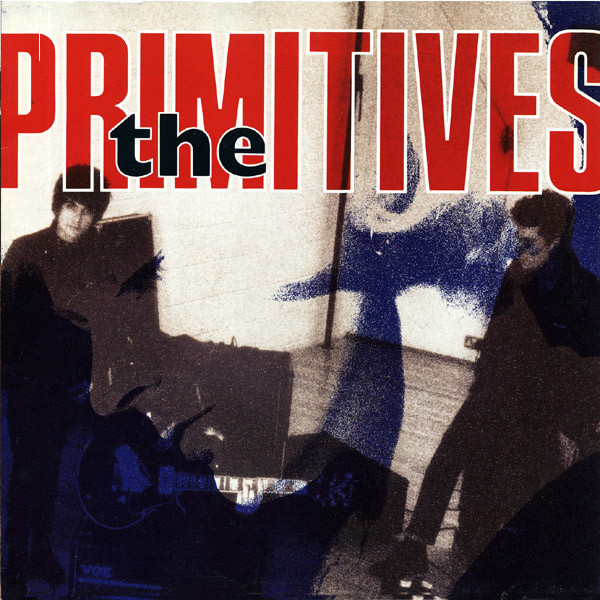


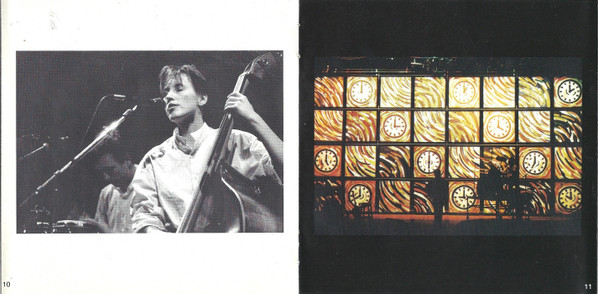

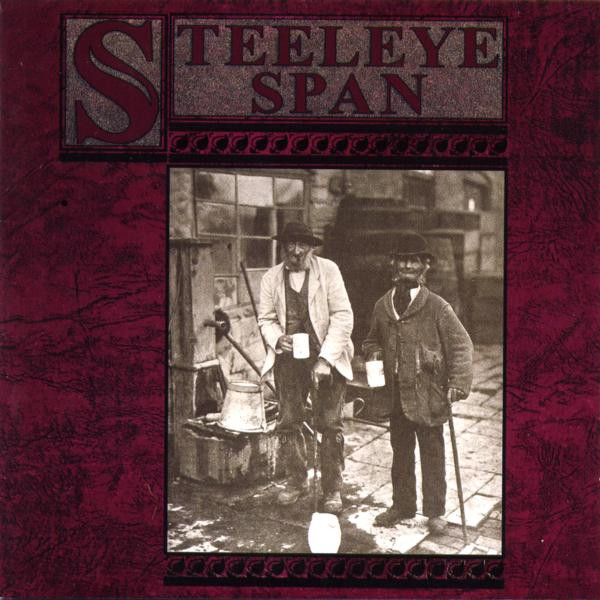
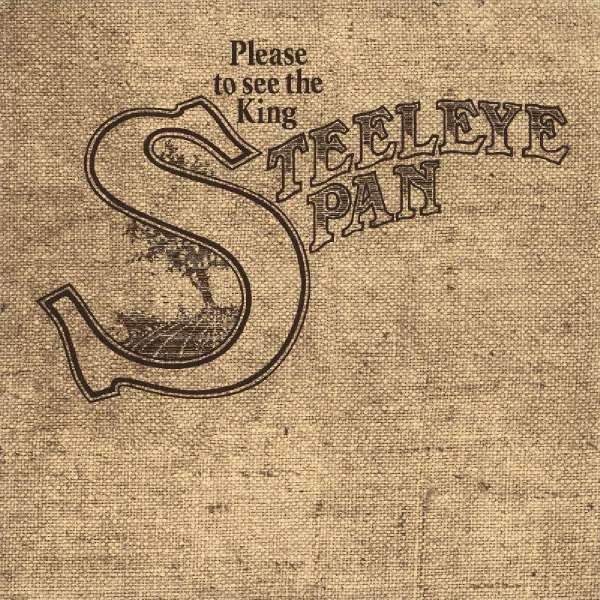


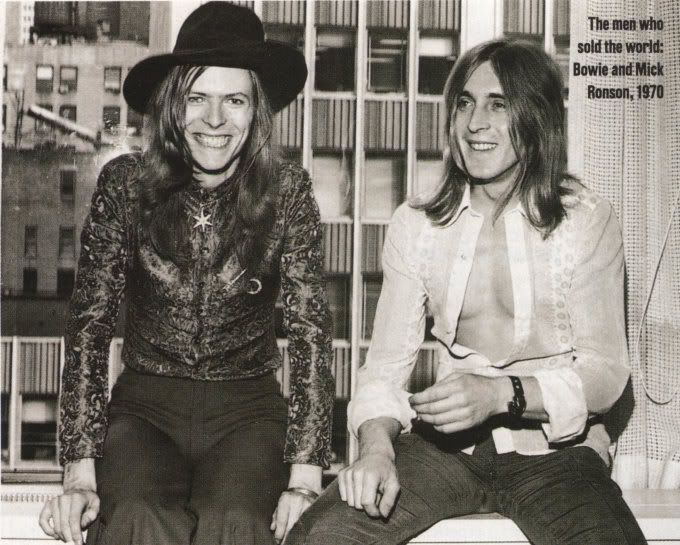
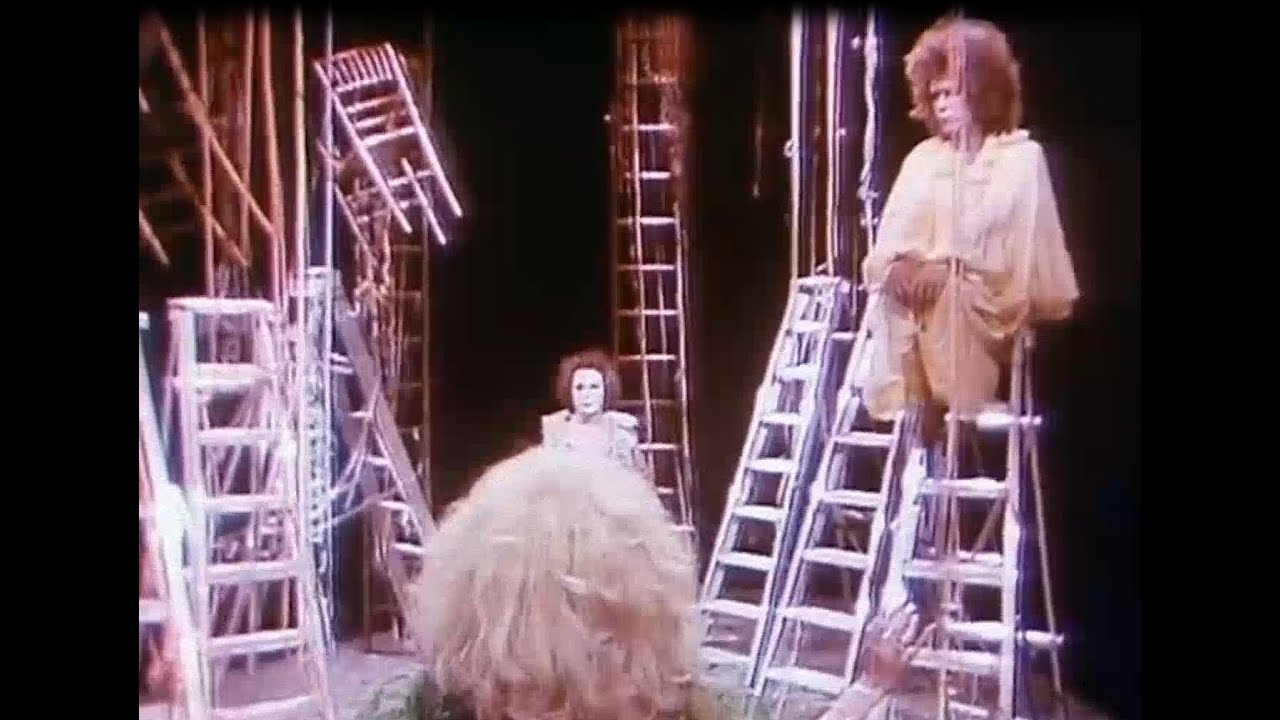


 The Chasbah