Only in New York would you find people who brag about inventing Chicago house music. 🙂
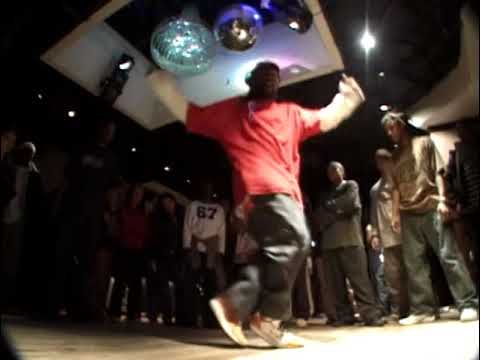
But more seriously, this is a video documentary covering some of the origins of DJ culture that grew out of predominately gay-oriented clubs in New York City in the late 1970s and into the 80s. Ramos talks to the now-legends of that era, the DJs at clubs like The Loft and The Paradise Garage and that sound did indeed make its way to Chicago to blossom in the Windy City.
What’s interesting and important about this documentary is that it brings together people who danced their night away at those clubs and the DJs behind that music, and how the magic of the sound opened the (closet) door of these gay clubs to women, straight people, and 24-hour party people of all races. Aside from the music itself, the diversity was a very special thing in the 70s and 80s, particularly the largely black, white, and Hispanic crowds.
As the world was grower darker as the 80s began with the election of Reagan and the dawn of the AIDS epidemic, people — especially those in the LGBT+ community — went looking for the sound and the fury, and were drawn by word of mouth alone to a trio of clubs across the years that held out the opportunity for escape and ecstasy of all sorts. In hindsight, it is unsurprising that straight people who got told about the scene found it irresistible.
Everybody, Everybody
These were bold DJs who experimented beyond the standard mixing two records with similar tempos together. People like Larry Levan, David Mancuso, Frankie Knuckles, Nicky Siano, and Francis Grasso (Nu Yoik names if ever I’ve heard some) had an open-door and open-mind policy, and dared to mix rhythms and sounds, created a form of manipulating the vinyl that would lead to hip-hop’s “scratching” in the 90s, and would build the music, over the evening, into non-stop ecstatic dancing.
That said, the production/direction is mostly fine but occasionally the camera work is a bit ham-fisted, as one might expect from a first-time director. That said, Ramos has to rely heavily on interviews conducted between 1999 and 2003 with the former DJs and patrons.
This probably couldn’t really be avoided: there isn’t much surviving video from the clubs from that era (though a bit more than you might suspect), and thus the audience is bounced back and forth between footage from the time and 2003-era interviews with the movers (DJs) and shakers (club-goers) who patronised these clubs, and some of them frankly go on too long. I spotted the late artist Keith Haring dancing in some of the footage, and a later section of the doc spotlighted him.
The DJs, now middle-aged guys, recollect their glory days with real fondness, especially Levan, and paint themselves as friends and colleagues using music as a weapon against the mainstream and it’s close-minded attitudes.
The interviews are mostly good (particularly with the DJs) but get a bit more repetitive with the club-goers, though Ramos wisely mixes single-person and group interview comments. If I have to complain about something, I’ll pick two things: first, I really wish this had been shot on film, though I completely understand why it wasn’t.
Second, there are not enough clips of still-famous DJs like Jellybean Benitez, Dimitri from Paris, and UK DJ Pete Tong singing the praises of these innovative pioneers, and I’m not sure there’s a good excuse for that apart from budget.
As a club patron in those days myself, though not of course in NYC, I recognized a song or three from the soundtrack, like Booker T and MG’s “Melting Pot,” Chocolette’s “It’s That Easy Street Beat” and Sylvester’s “Over and Over.” Here, the song “Release Yourself” by Aleems is used very effectively to relate a story about how a DJ can remix the music to build, and then release, tension.
I’m not personally a huge fan of house music, but I know very, very well that the combination of alcohol, certain recreational substances, fabulous light shows, and attractive people overwhelmed by screamingly loud beat music being built to a frenzy and then cooled back down can be the closest thing to sex you can have while (barely) clothed (and sweating like a pig). The video feels a bit long but is only 88 minutes. The “survivors” of those days, the club goers and DJs, seem to have established a friendly bond that comes from knowing you were a part of something special.
Ramos’ focus on the music means that he has left an opportunity to explore the tight-knit gay community that fostered these club on the table, and that’s a bit of a shame (though it’s certainly a subject that has been covered elsewhere). If you remember your clubbing days, particularly if they were in the late 70s into the 90s, you may want to seek this video out — the DVD version includes a second DVD of more material, and a CD of some of the music featured in the film.
So now that we’ve already covered the packaging in detail, we can dig into the album proper — but it’s worth remembering that the packaging singularly used “sex” to sell the record. The complete lack of any information about the band (apart from the name) or what the music might sound like — there was just “the girl” — on the front or back cover ensured that only the most curious and intrigued of parties would buy it, if they wanted — or needed — to learn more.
THE PROLOGUE
Luckily for us all the trick worked: the first single was (wisely) chosen as “Virginia Plain,” which served as a calling-card for their elegant, innovative, and varied rock stylings. It went to number four in the UK singles chart, and that pushed the album (which at the time did not include the single) to number 10 in the charts.
This was something different: neither the swamp-rock of Creedence Clearwater Revival, nor the hippie music of George Harrison, and not the R&B white soul sound of Van Morrison, the funk and soul of Gladys Knight or Aretha or Sly Stone, or the gentle pop of Neil Diamond. It was new and different, borrowing from the 50s but adding in sounds of the future and a decidedly eclectic crooner style — and thankfully it caught on with an eclectic group of buyers who took a chance and were richly rewarded.
I used to call the first album “the first New Wave record,” and while I was basing that assessment on my favourite tracks rather than the album as a complete work, I still stand by that description. It took a nearly decade, and the reactionary mid-70s revolution of punk, to create a movement that followed in Ferry and company’s footsteps.
Before we get started, though, a radical rethink: don’t start here. Go directly to Disc 2, do not pass Go, do not collect $200. You will thank me later.
You see, the packagers of this comp (presumably Ferry and various execs) have made a hideous mistake — we should hear how the album came together (aka Disc 2), warts and all, and <em>then</em> you should go back and listen to Disc 1 with enlightened new ears. As I mentioned earlier, if you bought this box then you’ve heard the first album, maybe a hundred times or more.
The real find here is the demos and outtakes, which haven’t been heard before. While the songs (and especially the lyrics) are still familiar, they are cut short, redone, tooled around with, argued over with the engineer, and generally … <em>fresh</em>. Listen to Disc 2 first, then come back to Disc 1 with completely new ears for this album you know so well.
No? Oh all right then …
THE ALBUM
Disc 1 of this set starts off with some false advertising: it’s billed as the “original” album, but it’s not: the original vinyl release in 1972 contained nine songs. The CD version, first released in 1984, inserted the pre-album hit single “Virginia Plain” between “If There is Something” and another popular song, “2 H.B.”
Don’t get me wrong, I’m glad the first disc here exactly matches the first CD version, but it’s not the “original” release, is it? And yes, there’s more quibbles to come!
On to my second (minor) gripe: the version used on CD1 here is in fact 1999 remastered edition, which was cleaner and brighter than the original 1984 CD issue. I would kind of liked to have had a Stephen Wilson stereo remix instead — which exists, but isn’t present in this box set.
Most people who would buy this deluxe edition likely already have or had the ’99 remastered version, and the technology has moved on considerably in the last 25 years. Using the 2.1 Stephen Wilson version would have given most buyers something “new” there – if you’re not going to give us the 1984 original CD version – and it would been a thoughtful gesture for those lacking the equipment to properly play back the DVD’s 5.1 SW mix.
Still, for those who bought (and still have) the original CD on first issue, the ’99 remaster is clearly the superior version of the CD.
The single sleeve disc’s front cover does, of course, faithfully preserves the original eye-catching outer cover, while the back lists the album’s contents, players, and production personnel. Thankfully, the “art book” portion of the presentation gives us gatefold’s original interior art, with more information about the band and songs — at the same size as the original LP release.
If you’re reading this, you are very likely to have heard Roxy’s debut album already, so we’ll stick mostly to my refreshed impressions, listening to it again after a few years’ gap from my last listen; we’ll get into more detail once we move on to the discs with the previously rare-or-unreleased material.
Re-Make/Re-Model: the short silence (six seconds) before the crowd noise, which we get for another few seconds followed by a sharp cut and Ferry’s piano, then Thompson’s drum start and the band joining fully just two seconds later … what a way to announce “this isn’t your typical band.” While the bass and drum hold down the basic rhytms, guitar and sax go wild in almost jazz-like improv, with short bursts of Ferry’s vocal, and the band backing him by reciting a license plate number between verses.
There’s no chorus (apart from, I suppose, the license plate thing), and the long instrumental section is like nothing else: a bit of the full band, then a suddent stop and breakout spot by each instrument that feels very on-the-spot improvised, as if the direction given was “you get a five-second solo. Go!”
First drums, then a cheeky bass rip-off of The Beatles’ “Day Tripper” riff, then Eno’s sputting screech noise box, then a shot of sax that flows right back into the music stream, ditto with the guitar, and finally some madcap piano, one last drum break, and then all of them at the same time for a bit before it falls apart and winds down. The way the weird synth noises snake through the deteriorating band and finally signals the end.
By this point, the listener in 1972 must have been wondering what planet these guys were from. What an opening number! After all these years, I still say “wow.” This is just as fresh and wild as it was the day it was released … and there’s not a lot of 1972 albums you could possibly say that about.
Ladytron: With barely time to take a breath, we take another short break of seeming silence (about four seconds) before we begin to perceive a soft electronic bed emulating wind, with an oboe softly winding its way around a melody, accompanied by synth sound effects kind of emulating a lonely wind. The oboe part partially repeats, then Ferry comes in with “You’ve got me girl on the runaround, runaround/Got me all around town/You’ve got me girl on the runaround/And it’s gettin’ me down, gettin’ me down,” as the bass moves in ahead of the full band coming in fully.
Naturally, you get absolutely no clue as to why the song is called “Ladytron,” and the song about a ladykiller gent playing cat-and-mouse with his latest target. After the first full verse, we again take a break to highlight a fabulous echo-drenched oboe. Ferry returns, now double-tracked, and we get that first taste of Ferry’s famous warble.
Without changing the tempo, the furious drums return with fast bass, horns and guitars double-tracked guitars, piano trying to keep up, shakers and the kitchen sink thrown in for good measure. Imagine Elton John playing “Saturday Night’s All Right for Fighting” with his full band, and all of them having a nervous breakdown – with Brian Eno aggravating matters – as the instrumental break just floats off into the sunset after a minute, and the song is over.
These first two tracks firmly established that this music was something new to the world of the early 70s, acknowledging influences of jazz, soul, and rock while melding it together into Dali-esque impossible structures and jams, where the singer was not the focus but still riveting when he did appear. Vocals were just another instrument, occasionally contributing something that might sound like a lyric, or words intended more for texture, and then step aside to let the band show off.
If There is Something: The above is what makes the third track all the more confusing: after two incredible tracks, suddenly Roxy Music becomes a country-rock bar band (?!). Something about Ferry wanting to settle down with a young girl and grow potatoes, showing off his vocal quaver — and with nothing for Eno to do until halfway through, then mutating the song into a slow jam?
It’s a little portent of the second half, and while it’s not bad at all, it’s certainly a letdown from the first two killer tracks. Okay, there’s an argument to be made that after two (for the time) bizarre tracks, you might want to give the listener something akin to music they’ve heard before, and I get that.
It’s not until Eno’s synth counter-melody, though, that “Something” reverts to the kind of interesting and non-mainstream sound it has been cultivating so far. Thanks to the sinister undertone of the song after its initial riffs and Eno’s contribution, I can see why Bowie’s Tin Machine wanted to take a stab at it … but frankly, I think Bowie did a better job with it.
Virginia Plain: As “Something” meanders off, the first single pulls up in a new sports car with style and energy to spare, thanks to its playful lyrics: “You’re so sheer, you’re so chic/Teenage rebel of the week” is just a sample of the joy that permeates this song. Wrap it around another fast-tempo’d melody featuring frantic piano and drumming, steady bass with schizophrenic horn, and a motorcycle taking off for good measure. This track is a solid-gold winner, with a brilliantly-framed synth coda before the final lyric, which beautifully brings the song to a flying stop. It was an obvious choice for the first single.
Spoiler! This is the new official music video for “Virginia Plain,” taken from the bonus DVD in the box set.
2 H.B.: This is followed (finally) by a breather, a somewhat-gentler tribute to Humphrey Bogart. Ferry puts on an even thicker Ferry-esque style for this one, which includes a nice long multitracked sax-oboe instrumental break.
The chorus of “Here’s looking at you, kid” ties back to the title so nicely and the repeated line of “failing me never” which fades off as the instruments retreat is a lovely finish. On the original vinyl, that concluded a pretty much all-star Side One.
The Bob (Medley): Now we start off back in ominous synth town for a bit before the band comes in and disrupts whatever mood the opening was going for. It’s like a parody of the indulgent slogs that The Grateful Dead put out, meandering from one musical idea to another with little connective tissue.
We’re clearly in for a rougher ride on the second side, kids. It’s not until the middle of the piece and all the gunfire that you get the idea its about war (specifically, the Battle of Britain). It’s like a notebook of barely-started lyrical and musical ideas, poorly glued together.
Chance Meeting: We transition away from “The Bob”’s car wreck with a slow, beat-less piano-and-guitar first verse, which describes exactly that happening. During the instrumental break, the bass is allowed back in the room for a bit before it quickly fades out.
Would You Believe: Just when you think the second half is going to be the (almost) “all filler” counterpoint to Act I’s “all killer,” this track finally gets us back to the Roxy we thought we were getting based on side A. The soft, falsetto, double tracked Ferry starts off with a ballad verse, then the band breaks out with a 50s-styled main tune, the band shows off their sax-and-piano chops before Ferry returns to his crooning.
It comes off like a real tribute to the kind of music they grew up listening to, and it’s the highlight of the second half.
Sea Breezes: Following that, the next song literally opens with the sound of (synthesized) crashing waves, and then Ferry crosses fully into Tiny Tim territory with his delivery; we’re just missing a ukulele here to complete the effect in this very quiet number. There was so much energy and verve on the first half of the album, listeners might be wondering what the hell happened to the band when they recorded the second side.
Just in the nick of time, however, the second part of “Sea Breezes” sees the return of Ferry’s normal singing voice, far better lyrics, and some lovely contrasting instruments in our left and right ears, which is a fun effect. Sadly, then the finale of the song reverts to the catatonic style that is so inert you want to check the band’s collective pulse, complete with the return of the falsetto. The band seems to have something of a schizophrenic personality.
Bitters End: While maintaining a barely-above-ballad tempo, “Bitters End” returns to the tribute 50-style doo-wop number with a dropped in crowd effect, and works well. Given the lack of pulse present in most of the second side, it was very wise to finish with this number.
It’s Noel Coward as a 50’s ballad, and I do particularly love the occasional background chorus of “Bizarre” to frame Ferry’s amusing lyrics. Once again, a sudden change-up (in this case, Ferry reverting to his lower register) to a sudden stop makes this clever homage into a strong ending for a mostly-disappointing second part.
THE VERDICT
Like Longfellow’s little girl who had a little curl, when this is good it is very, very good, and great respect is earned for continuing to sound so contemporary after more than 50 years since its release … but to rewrite the poet a little bit, when it is bad it is somewhat disappointing.
Few are the albums that can maintain a consistently great standard across 10 tracks, and Ferry’s love of slower ballads will eventually pay off in later albums. But in this case, the flip side just seems laboured and leaden most of the time, or maybe I just don’t have enough of an appreciation for languid love songs. I think it’s fair to say that Roxy Music’s debut is strong, but uneven.
So if Disc 1 was the Showpeople album and a handful of bonus tracks, and Disc 2 was a lot of the pre-album demos and some live tracks recorded before and around the first album, what could Disc 3 possibly hold for us?
The answer is: the best of the rest. In particular, these 2022 remixes (and in one case, a 2021 remix), remastered from the original tapes by Tot Taylor himself are just the bee’s knees. You think you’ve heard “Baby It’s True” and “Beat the Beat” enough times already, but you my friend are wrong.
Sadly, there aren’t any YouTube versions of any of the 2022 remixes, so instead the videos we include will be some rare items and later appearances (so don’t be alarmed by the change in hairstyle!)
Our first choice was a stop of the 2016 Heaven 17 UK tour (which we got to see two dates of, but sadly not this one in Bury St. Edmonds), where Mari performed two songs you along side Martyn Ware and the band. So enjoy.
So the first half of Disc 3 is just these fabulous new remixes , with the second half being the “odds-n-sods” collection — a US remix here, an alternate take there, a Spanish version found in the rumpus room, and a 7-inch edit balanced precariously on the liquor cabinet.
There’s even an instrumental version in here somewhere. Let’s dive in, shall we?
THE MUSIC
The disc kicks off with sonically wider, cleaner, and “glow-up” 2022 remix versions of Showpeople tracks “Baby It’s True,” “Beat the Beat,” and “Ecstasy.”
There’s also new remixes of “Glamourpuss” (two remixes, in fact, in different years!) “Rave,” “She’s Had Enough of You,” “You Look So Good,” and the US remix of “Just What I Always Wanted.” There’s also the original UK version of “Ecstasy,” just thrown in for good measure.
For the 2022 remixes of the album tracks, the new version beats the original every time — with one exception. The 2022 version of “Ecstasy,” replaces the 80s drums of the album version with traditional ones, but quickens the pace considerably — it might actually be a little too fast. The UK original version elsewhere on this disc keeps that same manic speed, so I have to bow to the wisdom of the US record company that made them re-do the song at a sensible tempo.
The 2022 remix of “Rave” is really a cleaned-up and slightly re-edited version of the “live in the studio” version heard on Disc 2. Oddly, the Wilsations are not co-credited on the Disc 3 version, though of course they are still there.
Likewise, the 2022 remix of “She’s Had Enough of You” is a notable improvement on the original we heard on Disc 2. It seems like it is pitch-shifted a little from the other version, which only benefits the song.
This brings us to the 2021 remix of “Glamourpuss,” here given the subtitle “(Scenario).” The piano intro is completely different, and jazzier, just for starters, and then the sax comes in. Sadly, this version keeps the corny b-side “band introduces the singer” gimmick, and then the original piano comes in and the song gets underway.
Give me the 2022 remix version on this one any day.
The “U.S. Remix” version of “Just What I Always Wanted” starts off with the whispered “Let’s Go,” then proceeds to drag out the intro of the song and ruin the energy of the original until Mari finally shows up and gets the number going properly after the first minute. Of the three versions found on this box set, the original album cut is the best, in my opinion.
Note to Tot Taylor and/or Tony Mansfield: when you have someone say in a song “let’s go,” there needs to be a burst of energy that follows that. I’m not quite sure how you missed that, but them’s the rules.
So now we move into the second half of Disc 3, which offers no remixes but more alternate versions. We start with a song only heard on Disc 1, “One Day is a Lifetime.”
This time, The Wilsations are credited, even though we don’t hear a peep out of them vocally. It’s listed as an “Alternate Version,” and apart from correcting an editing error at the very beginning of the original Showpeople track, the main change is the band’s presence is felt throughout the track rather than only sporadically.
“Tu No Me Llores” is “Cry Me a River” in Spanish, and a classic is a classic in any language. The middle-eight reverts back to English, but the verses have been rewritten slightly to rhyming purposes. After the instrumental break, we come back to Spanish.
This is followed by an instrumental version of “Would You Dance With a Stranger.” A solo sax starts us off for a few bars, then the piano softly comes in behind the sax.
Finally the upright bass arrives, and the disc officially earns its Apple Music and Spotify classification of “Jazz” with no qualifiers. It’s a beauty in either version, but as lovely as it is the lack of Mari is keenly felt.
The 7-inch DJ Edit of “Wonderful (To Be With)” is shorter than the lead-off track on Disc 1, but otherwise unchanged. Again, The Wilsations get credit on this version, where they didn’t on the Showpeople album track.
The last two tracks on Disc 3 should be classified as “curiosities” or perhaps “experiments.” It’s two versions of the song “Let’s Make This Last,” first heard on Disc 2 as the “De Lorean Style Mix,” with squiggly sonic effects at the intro.
The first version on Disc 3 is referred to as “Let’s Make This Last (A Bit Longer),” a clever name for an extended mix, but also has the subtitle “Stereo Shift Mix Loop One” that really makes hay with the synth remix effects.
It takes nearly two minutes for Mari to finally appear and the song to get going properly. I can see where a club DJ would make great use of this, but its an awfully odd duck on an album of faux-60s poppy love songs.
The second version opens with crowd noise (not from a live gig), and is another busy remix, but with no time wasted on extended synth loops (though that’s not to say there aren’t some, just that they get moved to the middle). Like the first mix, this wouldn’t work outside of a club, but at least its much shorter.
On the other hand, the actual song is chopped to ribbons, with the verses removed entirely and replaced with random cheering-crowd snippets. Just my opinion, but this is a pretty awful way to end the disc.
I think if these needed two mixes needed to be included at all, they should have come earlier — maybe right after the 2022 remixes. Move the beautiful “Tu No Me Llores” and “Would You Dance With a Stranger” instrumental to the end, and you’d finish the experience of this box set on a high note.
It can be said (fairly) that an entire second disc of material very similar to what appeared on the first album proper might end up overstaying its welcome — unless you really enjoy full-band-and-singers 60s style love songs as a genre. In hindsight, this set should have started with this second disc — another great batch of similar material that was mostly made prior to the production of Showpeople, and thus serves better as a primer on what Tot and Mari were going for.
If you heard the material here first and then heard the resulting album, it would make for a more interesting contrast between their initial approach — sure-fire crowd-pleaser songs for concerts, for the most part — and what Showpeople ended up being, which is more of a showcase of all types of genre song styles for Mari.
These are singles (A and B sides), along with some rarities and leftovers. The big mystery with this material is “why didn’t the leftovers here constitute a second album?” These are very solid numbers that stand perfectly aside the songs that made the cut. How on earth she could ever afford such a large band (as this style of music requires) before getting a record deal is an even bigger mystery!
THE MUSIC
The first three tracks are all that kind of bombastic high-energy full-band affair that I enjoy, and all three — “Love Man,” “If That’s What You Want,” and “Dance Card” — could have easily been on the album if there had been room for more of that.
We finally get to something more focused on Mari along with track 4, “She’s Had Enough of You.” Another great track and breakup song, with a nice variation of style from the previous three “rave up” tracks. Track 5 is another winner, the original “Beat the Beat” single that is kind of a calling card for her style, again with a focus on Mari’s singing rather than so much of a group effort.
“Glamourpuss” (track 6) opens exactly like a classic noir crime drama score, and surprisingly the band introduce themselves before bringing “on” Mari. This time, her “real voice” offers both spoken and sung lyrics, and the band sing on the chorus. It’s a delightful “show” number and I can only imagine it was a big hit at the live gigs.
Finally, the original version “Baby It’s True” shows up as Track 7, and as expected it’s a tighter, introduction-less, straight-to-the-point version of the song first heard on Disc 1, without two full minutes of pointless DJ blather. The drums are still oddly leaden, but getting into the song itself is much quicker, and improves the tune a great deal. I still think this could have been a stone-cold classic in the hands of someone like Dr. Robert of the Blow Monkeys.
Wurlizer organ (!) shows up prominently on “Woe, Woe, Woe” (track 9). There’s a cute wanna-be boyfriend banter bit at the end. Mari’s later career — where she focused more on jazz as herself rather than the early-60’s person she originally projected — is foreshadowed in “Beware Boyfriend,” (track 10) a successful fusion of the 60s song style with some jazzier arrangements. Singing in her natural register also stregthens her delivery.
“It’s Happening” (track 11) and “Rave” (track 12) both seem a bit like filler tracks. The former is like another high-energy upbeat song played at 16rpm instead of 45. There’s nothing wrong with the track except that its thin material stretched out s-l-o-w-l-y simply for change-of-pace reasons.
“Rave (with The Wilsations, Live Version)” features Mari mostly speaking rather than singing with the band, showing off the interplay that was a highlight of her concerts of the period. You’d often see numbers exactly like this in 60s movie musicals. It’s a nice homage.
The original version of the cover “Ain’t That Peculiar” (track 13) is exactly what you want from this song — a torchy, bouncy number with playful instrumentation, a sparing amount of background vocals, and a great lead from Mari.
I also enjoyed track 14, “The Maximum Damage” — it’s not what you think it’s about, which I like a lot, and has some limited (but nice) call-and-response.
“Let’s Make This Last (De Lorean Style)” (track 15) is a rare number that completely abandons any pretense of faux-60s style — it’s very much of the early 80s. It “breaks the mood” a bit, but as referees and judges sometimes say about exceptions with strong arguments, “I’ll allow it.” 🙂
Track 16, “Would You Dance With a Stranger,” is a fabulous little 1950s jewel of a ballad featuring Mari’s soft and seductive tones. If the title sounds familiar, it’s because it was a hit in 1952 for Peggy Lee, and Mari’s version is a very faithful cover in terms of both music and vocal styling. It was an Italian song originally, with English lyrics by Ray Miller, and used again (sung by Miranda Richardson) in the 1985 film Dance With a Stranger, which is set in the 1950s.
This is followed by another cover, this time of Marvin Gaye’s “What’s Going On” now oddly done in the swinging girl-group style. It mostly works, but it’s a little discombobulating to follow a 50s-style ballad with a political early-70s anthem. Who did the track sequencing here, a wheel of fortune?
We finally set the TARDIS back to the proper 60s period with track 18, “Stop and Start,” very much something I could hear Diana Ross and the Supremes singing. A lot of this album would convince people the material was all written in the emulated time period, rather than (mostly) by Tot in the 80s.
And speaking of the 60s, track 20 is a cover of The Beatles’ “I’m Happy Just to Dance With You,” originally appearing on 1964’s A Hard Day’s Night soundtrack album. In this case, it’s done as a guitar-and-voice-only ballad, which is a nice take on the idea. Mari makes mention in the liner notes that this was the first time she had recorded without Tot Taylor and her usual coterie, and gave her the vision to go further in her musical career.
The final (21st) track on Disc 2 is called “Let Me Dream,” and is only the second track on the disc credited to “Mari Wilson featuring The Wilsations,” the first of course being the “Live Version” of “Rave” (track 12). It certainly has a “live in the studio” feel, but I can only guess that the reason for the different credits on these two tracks compared to most of the tracks here was because the latter were recorded with session musicians until they got the band together.
Approximately 20 years after the musical and social period that inspired her as a pre-teen, recording artist Mari Wilson hit the UK scene with a pair of 60s-style singles, a beehive hairdo, and a talented backing band. She had actually dipped her perfectly-manicured toe into the water first in 1980 with a pair of non-charting singles (with the Imaginations).
Undeterred, she took another, more successful stab at it with another pair of singles in 1982 that did get into the charts: “Beat the Beat,” which peaked at #59, and “Baby It’s True,” which did better but stalled at #42. The backing band was now called the Wilsations, and the pieces were moving into place.
For those early singles, every song was a mission statement; a declaration of love for a bygone style that had broken a lot of women into the charts back in the day, and established women in rock and pop as a force to be reckoned with – most prominently in the early 1960s and the rise of the girl groups. Like those groups, there’s a svengali behind Mari Wilson — songwriter and producer Tot Taylor.
The backstory on her career, told by Wilson herself in the liner notes, is a good one — starring a struggling artist/backup singer with a vision (and a day job in an office in Perivale). She gets called in to sing lead on a “Motown” type song from a group of three guys, and ends up being so brilliant that Taylor (then going by the name “Teddy Johns”) flips the script and makes them the band and her the star.
Taylor quickly secured a singles deal on the strength of her vocal and the song, and they then re-record “If That’s What You Want” in a real studio. It was a while before the whole act came together (and a few friends like Kirsty McColl and Julia Fordham lending a hand), but eventually they had a commitment from a record company, an advocate in A&R at GTO Records, and a stack of faux-60s tracks, and shortly after the A&R guy formally joined the fold, an official record deal with London Records.
By 1983, most music lovers were focused on emerging artists in rock that had been part of the “New Wave” scene in final years of the 70s and first years of the 80s, now seasoned acts with an album or three under their belts. Chart-toppers in the UK in ’83 included New Romantic act Spandau Ballet, Australia popsters Men at Work, former faux-punkers The Police, ambitious New Wavers Duran Duran, the accurately-named Culture Club, and reggae devotees UB40.
A “throwback/nostaglia” type act like Mari Wilson should have been as “popular” as Sha Na Na in a market focused on a new generation of radio-friendly mainstream acts, but Kinder’s faith was eventually justified — somehow the young adults of the 80s had a soft spot for those smart and stylish 60s sounds.
Combine that influence with some clever production and a killer riff, and “Just What I Always Wanted” became one of the surprise hits of the year, getting into the Top 10 on the first try. Combined with Mari’s beehive and cinched one-piece day dress, the perfect matching of the look and the sound pushed her into the charts and the public consciousness .
THE MUSIC
With her debut album Showpeople, the first disc in this expanded 3CD set, every song is a mission statement. It’s always fun to revisit a long-forgotten genre and give it new life, and Mari has the pipes, sensibility, and style to do so (alongside svengali songwriter Taylor). Her main vocal style is nightclub-singer in nature, but with more (synth) strings.
The record kicks off with “Wonderful to Be With” — a riff on early-60s girlpop that clearly sets forth the rules of this game. Right from the kickoff, it’s a big love song number with layered vocals, (synth) strings, and a perfect composite of the style, even throwing in a few “space” synth sounds for good measure.
We shift gears pretty hard on the second track, “The End of the Affair” with a bolder vocal style and a big change in mood. This is a “I’m gonna win him back” type song that is often the subject fodder for country music, but here it is a classic “begging her man to break up with his side piece” number, with the requisite “band guys” vocal interjections. Even just two songs in, you can tell that Taylor has a masterful grip on this entire genre.
Yet another style is trotted out for “One Day is a Lifetime,” with busy horn work and a sultrier vocal from Mari expressing how she misses her man (presumbably not the same man as from “The End of the Affair”). Bonus: great guitar work from Keith Airey (who was known as Gary Wilsation for concert purposes)
“Dr. Love” brings the distinctly 80s Linn drums to the fore, slightly breaking the illusion of pure early-60s sentiments, but the band-guys vocal interjections redeem it, not to mention having a lot of energy for a “I’ll prove my love” type song.
Likewise, “Remember Me” rocks harder than a tragic song about finding out your love is cheating on you should. Thankfully, this one is made whole by having the smarts to include the title of the song whispered when mentioned, giving it the needed drama.
“Cry Me a River,” the classic Arthur Hamilton torch song, was another charting hit for Mari, reaching #24. Better still, this was a nice ballad-y change of pace after the last three more energetic numbers. This one goes straight-up stings-n-sax, with very little percussion.
And so we come to “Just What I Always Wanted,” a complete stomper of a rave-up the brings back the 60s go-go energy back in force, using the bass to drive the rhythm (not to mention so strong back-up singers). Mari never opts for a truly straight “girl-group” vibe, more of a Diana Ross-oh-and-yes-The-Supremes-back-there-somewhere approach.
It certainly works here, and is difficult to believe this isn’t a cover of an actual 60s single or a track from a period musical. There’s even room for a nice trumpet solo, and I absolutely love the drop-dead stop ending.
“This Time Tomorrow” starts off with violin and piano, a fresh opening for this record so far. It turns into a dramatic ballad with strings, followed by drums finally. It includes a very quizzical line, where Mari sings “I will stay tonight … tomorrow,” which … even as a Doctor Who fan, I’m not sure how you pull off that bit of time-paradox.
Mari returns to the infrequently-used lower register for “Are You There with Another Girl?” for another “man is cheating on me” song, this time by no less that Burt Bacharach and Hal David. There are some nice synth touches here and there, and a flute solo no less! Mari double-tracks her vocals on this and a number of the other songs, which isn’t really necessary as much as its deployed in my view.
We head back to quite a high register (and a Synclavier piano opener) for “I May Be Wrong,” another “I’m making a mistake but I can’t help myself, I want you back” song that doesn’t quite work, in part because the chorus seems overly busy, which undermines the ballad-y verses.
The bass-lead energetic soul love song groove is back for “Ecstasy (US Version),” which is also one of the few numbers where Mari’s vocal isn’t doubled at all. I find it a very catchy albeit busy number (with a nice spoken middle-eight) that could have been a single.
The original UK and European versions of this album ended with “This is It” (the US version didn’t include this song, and ended with “Cry Me a River”). This is another overly-busy number that sabotages itself like “Dr. Love” did, with various “big/busy” musical phrases and vocal styles forcibly joined together.
Taylor’s just not quite got this “big musical” type number style quite down, plus it repeats itself a lot and thus goes on for a minute or two too long. At least there’s a funny (unintentional) ending with a froggy-sounding synth for a few bleeps at the very end.
“Just What I Always Wanted (Extended)” begins the “bonus tracks” section of this version of the album. not to knock on Tot too much, but this is a recipe for how you take a perfect single and ruin it. First, make the instrumental opener so long (almost two minutes!) that the listener thinks its a karaoke version, but just as one starts to sing it, finally they bring in the vocals on … the chorus!
Second, edit the first verse (badly and obviously) down to just two lines, so it goes right back into the chorus. Thankfully after that, the song gets back on track and flows as it did originally for the rest of the number.
“Cry Me a River (Smooth Remix),” by contrast, is a perfection of the original version of the number. The piano-synth bits stay, the other synth parts go, the sax and Mari’s superb vocal (now clearer than the original as well) really bring the spotlight where it belongs.
You can practically smell the cigarette smoke in the nightclub in your mind, and nice little touches of violin and synth strings are thoughtfully and discreetly blended in. Tot, I didn’t know you had it in ya!
Sadly, this short interlude of sheer ballad perfection wasn’t to last too long. It’s followed by a “Discotheque Arrangement” of “Baby It’s True” (this original to be found on Disc 2). A long warm up break includes a wretched “strip club DJ” type intro which is pretty awful and goes on seemingly forever.
Nearly three minutes later (at least including “naming” the band), Mari finally appears. It’s a pity the song is pretty lightweight, with the first verse spoken. The chorus is fine, the music is okay, but this goes on way too long at seven minutes total.
We finish this disc with an “Extended Version” of “Ain’t That Peculiar,” which again features an overlong extended intro and some oddly discordant guitar (not heard elsewhere on this disc, thank goodness). Once the song actually gets going, it’s … okay … but seems awfully stretched out. Thankfully, the “real version” is on Disc 2, so we’ll reserve judgement.
Some nitpickers would proclaim that Urk doesn’t fully qualify as a CD boxset, since it consists of only two CDs. However, I would point out that a) it was originally issued as a three-LP boxset; b) the CD version comes in one of those double-wide plastic CD cases popular at the time that could be made to hold up to four discs; and finally c) at the very least it truly qualifies as a bargain, since I paid only €3 for it (approximately US$3.25).
This particular copy (not my first of this album) was acquired on a recent trip to Amsterdam, and purchased at the 58th Mega Record & CD Fair in Brabanthallen. This image (captured by the promoters) does not really show the scale of this event, because there was a second adjoining “room” of the size seen here, with a sitting area, food vendors and a performance stage in the connecting area.
My friend The Post-Punk Monk (who’s blog is a must-read for postpunk/new wave music enthusiasts) and I spent the better part of the daylight hours going to, traversing, and crawling from this gargantuan show, sadly with surprisingly little for either of us (but a few treasures, Urk among them). The show overall had a higher representation of prog music enjoyed by the generation before us, as well as metal, neither of which are of much interest to the likes of we.
That said, we covered well over 90 percent of the event’s dealers, which was a real challenge. While we regret there wasn’t more for us to buy, our wallets thanked us — and what we did get, we were mighty pleased to have gotten.
This journey was prompted by an opportunity to see Nits in concert for the first time, after (cough) decades of following the band. That too was accomplished, and was the highlight of the Netherlands portion of the trip.
Readers may not be familiar with the band, since they are best-known in Europe. My go-to metaphor for the band’s sound is “imagine if The Beatles had started in 1974 instead of a decade earlier, influenced by the music of the 60s and 70s rather than the music of the 50s, and wrote relatively few outright love songs.”
Please do sample them on Spotify or Apple Music if that explanation intrigued you — by the late 70s you might say they were a full-on New Wave band, but really their sound has always been reflective of intelligent, artful pop songs influenced by culture, infused with truly incredible poetry, and living near the border of Western and Eastern Europe. If China Crisis and Nits ever toured together, I might die of sheer delight.
THE OVERVIEW
Urk consists of 29 songs spread out over two CDs, recorded live in various cities, from Amsterdam to Utrecht to Moscow, during the winter of 1988-89. Many if not all of the songs on Urk were popular or fan-favourite songs from across their most popular albums.
It would be fair to call it a live version of their “greatest hits” to that point, and the album itself ended up in the top 10 charts for The Netherlands. It was, for many years, their all-time best-selling album. Urk was originally released in the summer of ‘89.
By the time of this recording, Henk Hofstede (the lead singer, writer, and guitarist) and Rob Kloet (the drummer/percussionist), the two original members, had been joined by Robert Jan Stips (sometimes producer and full-time keyboard maestro, still with the group to this day) and bassist Joke Geraets. Geraets, shortly after these live recordings, had to quit the band due to her ongoing medical issues.
Nits (who had recently dropped the “The” from their name) were supplemented on the 1988-89 tour by the Amsterdam Saxophone Quartet on the Amsterdam portion of this tour. Seeing the band in Amsterdam this year, their only accompaniment was a trio of excellent background singers. For the bulk of the performances here, it is just the four-piece version of the band, with the members themselves handling backgroud vocals.
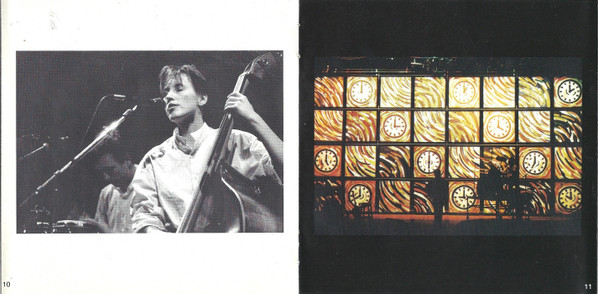
In addition to the spacious CD storage case, the package includes a full-colour booklet including tour photographs, credits, and track listings.
THE ALBUM
After a short bit of welcomingly warm audience applause, there is a cross-fade to a lovely classic from the band, “The Train,” which originally debuted on their 1988 album Hat. It’s a gorgeously melancholic song (and yet rather jaunty in tempo) about a lost love and the sadness, vulnerability, and self-examination that often follows such separations.
In the original version, the first set of verses is followed by a longish instrumental break, where the sound of a train arriving in the station comes to dominate all but the never-stopping sound of Kloet’s sharp tapping rhythm. The song then picks up again, repeating the lyrics in full until it ends with the narrator reflecting on himself in the mirror-like windows of the train, asking himself “Hey, whatcha doing with your life?”
The next song segues right in with no audience noise. “Adieu Sweet Bahnhof,” the title track of their 1984 album, starts off with a carnival-like organ opening, Henk describing riding for what seems like hours in a train (making this a clever lyrical transition from the previous song), presumably leaving from Amsterdam and passing through Brussells on his way to Paris.
Listening to this version for this review, the song struck an even deeper note with me, as I took this very same journey on my return from Amsterdam to see the Nits perform — reflecting on this trip, and time spent in Europe from my own past.
In the concert I attended, this song was the final encore of the evening, and as it began the Dutch audience, familiar with the song, again applauded it warmly. “My train of thoughts is leaving … tonight!” is such a great little lyric.
It is very Nits to have a song title that uses words in English, French, and German interchangeably — “bahnhof” meaning “station” in German. Who the heck writes a song wishing a train station a fond farewell?
It should be mentioned for those not familiar with Nits that the band themselves are Dutch but sing almost exclusively in English apart from the occasional non-English word or phrase.
The overall effect of the song is again centered around a person who is sorting out his thoughts around the changes in his life, again making for a fine pairing with the first song. The last verse is another fabulous construction of vivid imagery:
Now like an arrow we’re aimed at Gare du Nord Between backs of the houses streets like fjords And the night falls over Paris So I’ve come back to the Hotel d’Angleterre I lay down on a double bed and stare At the ceiling – what a feeling (to be back)
Gare du Nord is the destination train station for Eurostar in Paris, and I also arrived there on my own journey back. As the song ended, the audience applause returned before a final flourish from Stips to enthusiastic applause.
As someone else once said, Hofstede and his bandmates have an unrivaled ability to write songs as “little emotional postcards.” Next, they went straight into one of their biggest hits, “J.O.S. Days,” from the autobiographical 1987 album In the Dutch Mountains, about Henk’s early days of school and athletics. The driving guitar line and some “wailing” synth sounds keeps the “train” motif going a bit longer, though the song has nothing to do with trains.
J.O.S. stands for “Jeugd Organisatie Sportclub,” with “Jeugd” meaning “Youth.” Henk’s grandfather Jakob helped found the group, and it was a “family tradition” for boys in the family to play. Henk’s nephews, “dumb but tall” starting “kicking the ball” in the womb. Henk, however, was cursed with flat feet and “weak knees,” and got booted from the team after his first practice game.
The song also touches on the dark after-effects of the Second World War on young Henk and the club. There was a memorial erected after the war between the football fields, with the names of team members who had died. He notes that “they thought they would win, like in their J.O.S. days.”
This leads to a song about war, 1983’s “Sketches of Spain,” from the Kilo EP. Again, the marriage of the sad lyrics and the superb musicianship makes for a compelling listen about a subject nobody wants to talk about. Accompanying Henk on vocals is an uncredited female vocalist, presumably Joke, adding a nice effect not present in the original version. Stips backs Hofstede on vocals in what passes for the chorus.
And we next swing round to the biggest hit the band ever had, practically a national anthem — “In the Dutch Mountains,” from the album of the same name. Remarkably, the arrangements of the live songs follow the record versions as closely as possible — a feat managed thanks to the band’s frequent habit of recording the songs live-in-studio as much as possible.
The official clip for the song
At the concert I attended, the audience “filled in” with the band on the spoken-word repetition of “Mountains” — clearly a long-time audience favourite.
The song is mostly joyous in nature, and funny — there are very few if any actual mountains in The Netherlands. There is one part, however, that suddenly turns quiet and still, right in the middle of the song:
I lost a button on my shirt today It fell on the ground and it was rolling away Like a trail leading me back To the Dutch mountains
Poetry and visual imagery on this level is rare in pop music, but Nits are the masters of it.
From here we go to “The Dream,” a song very similar in style to “The Train,” and like the former, it’s from Hat — and similarly, it’s a described painting barely within a traditional pop song structure. The main lyrics are contemplative, while the chorus is joyous, and gives the musicians room to play. Stip’s flute-like synth touches are just … (chef’s kiss).
“The Swimmer” comes from In the Dutch Mountains. This one literally describes some other dreams, in shorter bursts and once again with sections where the musicians can throw different motifs in the mix, this time a bit of tango that goes awry before settling back down. Henk is again backed up on vocals by Joke.
Rob Kloet’s understated percussion thus far comes to the fore in the introduction to “The House,” again from Hat, hitting glasses to create the band’s now-trademark “ting” sound. Organ sounds come in as the tinging recedes. The slower, haunting vocal in a lower register (from Stips) is so effective against Henk’s haunting mantra: “Time’s slipping away.”
We revisit the Dutch Mountains album for “Two Skaters,” one of the band’s more surreal dream-inspired songs. A very understated number with shimmering guitars, but it would never in a million years be played on a soft-rock station.
I am always much bemused by the stanza: “Your sister in Canada/She’s sending an LP of the Velvet Underground/We’re steaming the walls of your brother’s old room/Peel slowly and listen.” Gee, I wonder which VU album that was? 🙂
Another big favourite of mine, “Cabins” comes from the 1986 Henk EP, and is a great song to sing from the bow of a boat. The synth-heavy original arrangement is altered and the pace quickened on this version, but the enthusiastic audience claps along, because it’s a happy little number and one of my all-time favourites.
Another hit, “Nescio,” starts off with a barely-accompanied piano and spoken-sung second verse before starting proper. Once the music kicks in, the audience applauds in recognition. Oddly, the song list printe on the CD and booklet list “Nescio,” but the last on the back card of the box mistakenly skips it.
Parts of the song are in Italian, with the title meaning “I don’t know.” So the first verse (pardon my weak grasp of Italian) runs like so: I don’t know This paradise I don’t know In the wolf’s mouth I don’t know The stranger is dead I don’t know This paradise
The furious acoustic guitar by Henk alongside the snares of Kloet and madcap piano of Stips is the band at its best. The last line in Italian, by the way, translates to “The painting is beautiful (Questo quadro e bello).”
“Pelican & Penguin,” from Dutch Mountains, features cocks’ crows, accordion, and a horn section, making for a very different sound. Lots of odd sounds and vocalized noises on this one.
The penultimate number on this disc is “Telephone Song,” a real rarity from the earliest days of the band, before even their first album. It’s a very quirky number (Joke is on lead vocal, for starters), and hasn’t appeared on any of their official releases apart from this one, to the best of my knowledge.
Similarly, “Dapperstreet” has only ever appeared on this album. It’s a slow, thoughtful number that wouldn’t have been out of place on Hat that shows off more sophisticated songwriting than “Telephone Song.”




 The Chasbah