No, there isn’t any new or unearthed rare material on this new EP. It’s nothing more than the 1999 remastered versions of five of their early tunes, intended as a quick sampler for anyone intrigued by the title but unfamiliar with the band and in need of an introduction.
It’s a digital-only sampler, available via Apple Music and Spotify (and maybe Tidal if that’s still around). Fans of the band will have this stuff and thus can skip it, but it could be a nice way to introduce others to RM if they’re not familiar with anything beyond (maybe) “More Than This” and “Avalon.”
That said, it’s always fun to hear selections from these two classic albums again (or for the first time, if you’re new to the band), and in particular to remind yourself what a strong start Roxy made when it burst onto the scene in the early 1970s. From the US version of the debut album (which I’ve reviewed the SDLX package of starting here), we get “Virginia Plain” and “Ladytron,” but the rest of this EP skips a lot of good stuff from For Your Pleasure and Stranded in favour of the single “Pyjamarama,” rounding off with “Out of the Blue,” and “Prairie Rose,” which both came off of their fourth album, Country Life (1974).
Yes, that’s right: the first album was released in 1972, and two years later they had another three albums out, two of them in 1973 alone. Those were the days, my musical friends.
For the comparison, I listened to each song three times: once from the album it appeared on (apart from “Pyjamarama”), once from The Best of Roxy Music album (if available), and then the remastered version from the Art Rock EP.
In the case of “Pyjamarama,” I also listened to the live version from Viva!, which needless to say was more “present” and well separated that the flat, lifeless original single. The additional squelchiness brought forth by Eno’s replacement Eddie Jobson and the live performance really breathed some life back into the song.
The remastering of the studio rendition of “Pyjamarama” on Art Rock is a huge improvement over the Best Of version, restoring a sense of separation of instruments and generally updating the sound for, you know, high-fidelity stereo. You can hear the very obvious difference from the first chord, and as the band comes in each instrument has been “placed” and is audibly distinct from each other.
The drums and bass in particular have been placed in separate ears (with some crossover) and Ferry sits in the center, while the guitars play around him. A big improvement on the original single in every respect, though the live version has a certain immediacy that beats even the remastered studio cut.
The opening to “Virginia Plain” on the Best Of starts off way too soft, but the song does arrive properly in short order, and its only flaw is that the bass is too high in the mix, though it doesn’t interfere with the other sounds unduly. Eno’s electronics are just fabulous and don’t overplay the rest of the band except for the mid-8.
The remastered version nicely corrects this, while not preventing the band from raising the volume considerably when they come in. The bass is still prominent, but no longer dominant. The drums are much clearer, and the separation of instruments better defined (with better stereo effects as well). It’s only Ferry’s now-clearer vocals that remind you this is the same take.
Whoever remastered this really has a good sense of when instruments should advance and retreat, and where Ferry needs to be in the mix. This bodes well for the two songs that came from Country Life, the first of which here is “Out of the Blue.”
The original is awash in more sophisticated efforts and some stereo effects, and while the bass is still quite promiment, it doesn’t overwhelm the sonic fireworks that are going on. Ferry sings this like a ballad, but the band is completely opposed to the idea — and rocks out to a great degree, making much use of Jobson’s electric violin and MacKay’s oboe, with some light effects on Ferry’s vocal. This was always one of my favourite tracks off this album due to these contrasting flavours, and it still works really well in my view.
The Best Of version, by contrast, sounds like it’s almost a monophonic mix intended for AM radio play. There’s only the barest hint of separation until after the first verse, and everything seems very compressed. Much of the effects on the original album are minimized, or just gone, with the drums in particular sounding quite leaden.
Which brings us to the Art Rock remastering. It starts off subtle, but cleans up the oboe intro without diminishing the bass. Sadly the remastering seems to have been done on the muddier Best Of version, at least until the short instrumental break and the halfway point. From then on, the stereo effects and clearer sound are back, and Jobson’s violin absolutely soars, and double-tracked for a thrilling finale.
From here, we jump to the not-quite-country rock of “Prairie Rose.” Slide guitar shows up briefly, but gets fought back by MacKay’s whirling dervish of a sax solo. On the album, the band takes a slightly-extended jam-out before Ferry returns (strategically double-tracked in places). It’s a lyrically light number, designed to revel in what a UK band thinks country music sounds like.
Since it’s not on the Best Of album, our direct compare is to the Art Rock remastering, which wins this head-to-head contest handily. The voices here are so much clearer (both Ferry and the backup vocals), and the slide guitar has found a more prominent role where it doesn’t have to fight other instruments — leaving MacKay’s sax solo unmolested and crazed as it should be.
Everything on this number sounds like its on FM radio rather than the Best Of’s AM truck radio mix, especially Ferry’s vocals. It’s still a cheezy attempt at country music, but it sounds ridiculously much better in Art Rock’s remastering.
Finally we get to the big finale song: “Ladytron.” Here we have at least three versions to compare: the original version on the band’s debut album, the remastered debut album’s version, and now the Art Rock 1999 remastering.
The bass is very, very prominent in the original album version, but the other sounds are mostly pretty clear, from Ferry’s own backup of his lead to the soft piano in the background. Eno’s electronics dance round like wood nymphs, playfully complementing the band at the end.
On the Deluxe Edition of the album, the intro starts off much more softly but builds up more smoothly, coming into focus nicely. MacKay’s oboe stays in the background, but is clear and sharp. The mid-song jam seems a bit clearer on this version, but is otherwise very similar. Overall, a somewhat better mix but nothing surprising.
On to the Art Rock version: the opening is very similar (of course), but the double-tracked Ferry vocals are noticeably clearer. The instruments are pushed to the sides during the first verse, but come charging into the center as well as the sides better here, with more separation making it easier to hear what’s going on to your left and right alongside the center.
Overall, Art Rock offers and even more cleaned-up version of the song, but doesn’t mess with it much — as it was damn near perfect to begin with.
So, should you purchase Art Rock? I’d say the EP represents mostly a spring cleanup of some well-remembered songs, dusting off sounds and rearranging the sonic furniture a little, but really it’s “Pyjamarama” and “Virginia Plain” that get the biggest glow-up.
By the time the band were doing Country Life, they’d improved either their studio techniques or just hired better engineers, and the two tracks from that album are dolled up a bit, but not re-made (or re-modeled). Likewise, the EP’s closer “Ladytron” was less tampered with than expected, but just enough to make it noteworthy.
If I’d chosen the running order of the tracks, I think I would have led off with “Virginia Plain” and “Ladytron,” stuck “Pyjamarama” in the middle, and swapped out “Prairie Rose” for “All I Want is You.”
But that’s me. Is this worth buying, even though its a digital-only release? For the big improvements to the older songs, I’d say yes. “Out of the Blue” and “Prairie Rose” don’t benefit as much, so you might choose to just buy the three other songs and save a little money.
D-I-Y or Die! Art, Trash, & Neon
Punk 45s in the UK 1977-78
(2022, CD, Soul Jazz Records)
Recently, I have discovered that this compilation is in fact part of a series of punk compilations from Soul Jazz Records that started in 2013 under the “brand” name of “Punk 45,” with each release given a title borrowed from one of the songs on the disc, a subtitle describing the overall style, and a sub-subtitle covering the specific period.
The one we’re reviewing in this case, for example, is the most recent original compilation, though the label reissued the first disc in the Punk 45 series, “Kill the Hippies! Kill Yourself!” on vinyl only in 2024, which I view as symbolic of society’s general regression but is more honestly probably an attempt to lift the comp series out of obscurity.
Before we dive in, a brief clarification: the track listing on the back of I’m a Mess! might have been the actual running order at one point in the production process, but it’s not the one we actually get — a truly DIY sort of error, you might say. The correct song order is reflected below.
Overall, this is a compilation of indie punk singles released in the UK in 1977 and 1978, a sampler rather than a comprehensive collection. Now that the background is out of the way, let’s dive in.
The Art Attacks – “I am a Dalek” Well you know this title is going to grab my attention, given my lifetime love of the TV show “Doctor Who.” And indeed, what’s more punk than a Dalek? Their entire worldview is that everyone but themselves are unworthy and should either be subjugated or killed. It defines punk rock right from the start with three chords, a cloud of dust from furious playing, barely-tuneful singing and multi-tracked Dalek chanting.
The Drive – “Jerkin’” Rock has a history of songs about masturbation, which is funny because people often join rock bands as much to get hooked up with groupies as they do to make music. This one is far more tuneful than “I am a Dalek” and has a more polished rock sound that betrays their pub rock background.
A lot of bar bands devolved into punk rockers when they observed which way the wind was blowing, and went right back to their usual styles a year or two later, let’s be honest
Jonny & The Self Abusers* – “Saints and Sinners” Speaking of masturbation, this band is the forerunner of Simple Minds, a band you generally don’t think of when the work “punk” is in the conversation. But by damn, they do a nice job of putting the bass up front on their take on fast punk. The song matter is simple, but well sung and with a bit of harmony thrown in. Nice drop-dead ending also, the first on this album but a common exit for many punk songs.
(*this is how the band’s name is spelled on this compilation; I have seen the name spelled a bit differently elsewhere)
Trash – “Priorities” Trash have a pretty good vocalist and (gasp!) backing vocals. Like Jonny and the Self Abusers — the bass is the anchor here, alongside the (talented) drummer. Punk is about very simple song structures and simple messages, and this embodies that principle.
The Carpettes – “Help, I’m Trapped” Speaking of backing vocals, this one is so fast it’s almost punk rapping, with the chorus handled by the rest of the band (with a bit of echo) to give it a distinct sound. A good example of a song that doesn’t outstay the strength of its concept, like a few others here.
Stormtrooper – “I’m a Mess” The title track of the compilation. The backdrop of chords gives us some under-melodies to add a bit of sophistication (just a bit) to the usual wall of guitar, drum, and vocals. This is an example of punk as being reflective of what was going on in Thatcher’s England.
The Electric Chairs – “So Many Ways” Wait, what’s this?? GIRLS?? Well I never! And the guitar isn’t the lead instrument, rather a drum machine is? And is that … a sitar? What the blazes is going on? A hint of synth? Robotic “singing”? Did this band time-travel back four years from 1981?
Clearly this is where DIY ethic mentioned in the title comes in. One has to remember that sounding like robots was a fresh take on a punk vocal at the time. I do actually believe I can detect a hint of melody in here as well. Seven singles in, and punk is already evolving! I’m happy to see some female representation at this early stage.
Social Security – “I Don’t Want My Heart to Rule My Head” Things are just going from bad (as in amateurish) to worse (not very punk, really) with this ahead-of-its-time New Wave-ish anti-love lament. Our narrator really, really wants you to know he’s not interested in a long-term relationship, so his idea here is that this must be anti-rock music, in that he’s not doing this pull groupies — or, apparently, get famous.
Neon Hearts – “Venus Eccentric” Finally, frenetic sax makes its punk debut. The song consists of the singer complaining about what a bad relationship he’s in, but apparently the sex is great, so I have to give him points for broaching what would become a universal theme in rock music. Bonus points for a fast-paced but distinctive guitar solo.
The Cybermen – “Cybernetic Surgery” Some punters with ambition and cultural references to Doctor Who (again) provide us what the punks always said they were like emotionally. There is some early vocoder use to make a sort of “cyber” vocal here and there. Musically quite catchy, with a sax break in the middle. As ruthlessly efficient as the monster they are named after.
The Killjoys – “Naive” Now here’s a real punk song — the singer blaming other people and society in general for his ills. There’s some female vocals supporting the chorus of “I’m bitter” which sadly devolves into various moaning/screaming.
The Reducers – “Things Go Wrong” More women! And another song about blaming others for the world’s ills, or your specific ills. It doesn’t have the frenetic pace of first-wave punk songs, but it certainly has the attitude and “bad relationships with various entities” subject matter down pat.
Johnny Moped – “No One” This song takes the opposite approach — its message is that I am no one, and no one is going to make me feel bad. The lead singer brings a distinct northern accent to the party. Punk failed to get away from the “guitar player needs a solo, however short it might be” mentality of rock pretty early on, but this one finishes with a more typical hard-rock ending.
Neon – “Bottles” Strange sounds in a loop a the beginning, possibly produced by bottles on guitar strings (GET IT?). Vocals pushed back in the mix on the verses, but not on the chorus — hmmm — and they sound like hippies that have been ordered to go punk. It’s not very good, but at least it’s short.
V2 – “Speed Freak” Air raid sirens enter the chat as a song intro .. at last. A fast rap of verses followed by the simple chorus of (mostly) “Speed freak yeah.” Not the first song here that has been poorly mixed, either.
The Exile – “Fascist DJ” A complaint rant about a club DJ who wouldn’t take requests. Literally, that’s it.
Lucy – “Feels So Good” Now here we have a song tailor-made for pogoing, with an urgent beat and a DIY lyric about the DIY ethic. Moves along at a fast clip, which makes the guitar solo more work (and shorter) than it would otherwise be.
Machines – “True Life” Old-school punk/rap with a lyric about facing up to the fact that the world sucks and it won’t get any better. Nihilist, maybe, but not wrong.
Dansette Damage – “N.M.E.” Ah, yes, the old “song starts at one tempo in the intro, then picks up a different tempo when the lyrics start” trick. As you might guess, this song is about a fellow obsessed with the New Musical Express newspaper (I guess you could say it was his “enemy” — thank you, thank you, I’ll be here all week). The title eventually becomes all, and the song devolves from there, as is proper and correct for obsession songs.
Is this compilation worth your time? If you have an interest in unsung OG punk rock, then yes — there are some gems here amongst the mediocrity. It hasn’t aged poorly, I will say that for it, but I’ll also say it is mostly pretty clear why these bands didn’t advance within the movement.
One last note: the vinyl version of this compilation featured a bonus single for Record Store Day 2022 that included a b-side which is not part of the CD version. Both the a- and b-side of the single contained songs by the band Stormtrooper. The a-side was the title song in the compilation, “I’m a Mess.” The extra song on the b-side is “It’s Not Me.”
At last, it is time for a (short) break from the audio tracks, and a lateral move into video clips. The fourth disc of this set is in fact a DVD that includes some UK and French television appearances to promote the album.
It also includes a full 5.1 DTS 96/24 or Dolby AC3 Sound remix of the album for those of you with 5.1 surround sound setups. I lack such a home theatre setup, but that said even listening to it with a “spatial audio” assist via AirPods Pro reveals obvious improvements.
THE VIDEOS
Naturally, video clips from 1972 are sometimes hard to find, as videotape oxidizes over time and the tapes are often buried in archives. Thankfully, the band (or their record company) got copies of the tapes and preserved them well enough for presentation here.
The first “track” is a version of “Re-Make/Re-Model” performed live and filmed at the Royal College of Art in London on 6-June, 1972, intended as a promotional video rather than taken from a live show.
The sound is muddy mono as you’d expect, and the video is “marred” by an excess of 70s-era video effects that are so hokey and old they’ve come around to being cool again. The effects get excessive, but the visual and audio message gets delivered nonetheless.
From there we move to the venerable TV music show “The Old Grey Whistle Test,” a BBC show that ran from 1971 to 1988. This appearance was on 24-August of ’72. The video of this performance opens with an out-of-focus disco ball slowly spinning before dissolving into the quiet intro to “Ladytron” being played by the band.
Sleepy-eyed Bryan is off in the corner. The video of the band performing is beautifully sharp and clear, though the sound is of course still mono. Andy effortlessly shifts from oboe to sax with cover from the rest of the band. Manzenera’s bug-eye specs get a fair amount of focus, as well as his and Eno’s interplay of guitar effects vs. electronic efforts.
An extended guitar-and-electronics jam follows, and ends with some video feedback. If you were watching this while high, I can only imagine the either panicked or euphoric reception you gave this.
Likewise, “Top of the Pops” started off with blurry psychedics before sharpening up and focusing on the band in their full splendor for a version of “Virginia Plain.” Bryan is resplendent in his spangly green dress suit, Paul Thompson has now formally adopted (or perhaps this is the debut of) his “long-haired caveman with one black eye” look. Manzenera still relies on his shiny track suit and bug-eye glasses, while Eno is rocking a black ostrich-feather jacket, and the crowd are not quite sure how to dance to this, but they give it a go anyway.
Another live but more echoey (and very brief) performance of “Re-Make/Re-Model” is done for “Full House” on 25-November, with the band also doing “Ladytron” for the show on the same day. The band are positioned on a circular stage, with the camera slowly swooping in over the audience (who are seated).
The camera pans around behind the stage, and the band stops suddenly after the end of the first verse to applause. Yes, just one minute of the song! I believe this was used at the top of the show as a “teaser” for the bands that would be performing.
The (more complete) performance of “Ladytron” starts off with a close-up angle of one of Eno’s synth knobs. He kicks things off with some ambient noise while MacKay does a slightly-shortened oboe intro. Ferry and the band kick into the song proper, with more echo than normal because of the studio.
Manzenera is shown without his bug-specs. You can actually (gasp) see his eyes! Every instrument is clearly heard, so the sound mix is impressive. After Phil’s guitar solo and Eno’s stylings, the song comes to a quick close.
We then move on to a filmed performance at the Bataclan, in Paris, in front of a very large and enthusiastic audience. The set kicks off with “Would You Believe,” and the band are engaging in a bit of 50s style choreography. The song is unfortunately interrupted by an announcer telling the television audience (in French) about the venue and the band.
Eno is shown among those singing backing vocals, and while the sound mix is muddy and shifting, Bryan’s vocals are, as always, very clear. The 16mm film cuts into the instrumental break and second verse of “If There is Something.” This is clearly from towards the end of the concert, as Bryan is very sweaty but still very into it.
We do get the full “Sea Breezes,” with Manzenera doing his impressive “weeping guitar” style as heard on the album. Again, one is reminded that both Ferry’s vocals and the basic direction of the band are very polished and consistent with the album verison, allowing for only minor variations (mostly due to Eno’s electronic squelchiness).
The film cuts slightly to the opening of “Virgina Plain,” which the audience are clearly familiar with, clapping the count-in. Again, the band engages in a little synchronized movement while Ferry pounds that repeating chord. The song returns in full force for the sudden ending, the band waves goodnight and the crowd goes wild.
THE 5.1 MIX(ES)
Finally we arrive at the album once again, only this time a little different: a newly-created “surround sound” mix done by Stephen Wilson from the master tapes. Right away, you notice the crowd sound is floating around before the piano kicks in.
Even using just conventional headphones, there is stronger stereo separation and clear positioning of the players: Ferry in the center with MacKay’s oboe, Manzenera and Simpson on the left side (probably with Manz in front of Simpson front), Thompson on the center “back,” Eno and MacKay’s sax mostly on the right. Backing vocals are likely positioned in the back center, but on normal headphones they just sound a bit distant, like Thompson’s drums.
At the time of this review, I don’t have access to a full 5.1 surround system where I can listen to this mix in the way it is intended; that said, some headphones and earbuds (such as the AirPods Pro) do their best to simulate the experience, doing a good job at the separation but unconvincing when it comes to sounds that are intended to becoming from behind you.
If I can find a way in the near future to put this on at some stereo boutique or some friend’s home with 5.1, I’ll amend the review to include those impressions.
Naturally, the bass can only be as woofer-y as your headphones allow, and cranking up the bass on your stereo doesn’t really replace a true subwoofer. In my experience, however, owners of home theatres tend to crank the subwoofer up somewhat higher than they should, because of the novelty of truly having room-shaking bass at last.
The conventional headphone experience still rates as a novel and “different” way to experience the record, with the two rather different types of “surround” experiences and the appropriate amount of bass if you keep the levels even. For those who are long familiar with the album already, the 5.1 mixes might also be a good place to start, especially if you actually have the setup needed for it.
There’s probably less difference when experienced on a proper 5.1 setup, but to my ears the DTS option seems to give conventional headphone listeners more distinct separation, while the Dolby AC3 version draws it lines fuzzier, with most of the instruments having a better grouping, if you will. The sounds sometimes travel from one “side” to another, though the transitions are very smooth; some sounds seem further away, while others are perceived as being “closer.”
I’m just sorry I’m not getting the full experience. Yet.
THE CONCLUSION
This box set could be called a lab on how to experience the same album in a few different ways, but for me working my way through it, it was more about rediscovering what a remarkably fresh-sounding and original album it was at the time, not to mention re-appreciating a few songs that once forgets about compared to the singles. As a debut album, this thing is damn hard to top.
On top of that, the entire album sounds like it fell through a time warp from the first wave of post-punk “New Wave” bands that started using synths, and at least some of that obviously goes to Brian Eno’s contribution. Take him out of the picture and the band still rocks, but it wouldn’t have that “futuristic” vibe that makes the band stand so far apart from their 1972 contemporaries.
Roxy Music would certainly be a strong candidate for the honour of being “the first New Wave record.”
As someone who certainly hasn’t listened to every possible debut album from that year to compare but is broadly familiar with stuff came out back then, I’d still say Roxy Music is likely to be one of the absolute best and most innovative records. That Roxy Music emerged this fully-formed gives a lot of credit to Ferry as a superb songwriter, as a bandleader, and as an incredible talent-spotter.
So now that we’ve already covered the packaging in detail, we can dig into the album proper — but it’s worth remembering that the packaging singularly used “sex” to sell the record. The complete lack of any information about the band (apart from the name) or what the music might sound like — there was just “the girl” — on the front or back cover ensured that only the most curious and intrigued of parties would buy it, if they wanted — or needed — to learn more.
THE PROLOGUE
Luckily for us all the trick worked: the first single was (wisely) chosen as “Virginia Plain,” which served as a calling-card for their elegant, innovative, and varied rock stylings. It went to number four in the UK singles chart, and that pushed the album (which at the time did not include the single) to number 10 in the charts.
This was something different: neither the swamp-rock of Creedence Clearwater Revival, nor the hippie music of George Harrison, and not the R&B white soul sound of Van Morrison, the funk and soul of Gladys Knight or Aretha or Sly Stone, or the gentle pop of Neil Diamond. It was new and different, borrowing from the 50s but adding in sounds of the future and a decidedly eclectic crooner style — and thankfully it caught on with an eclectic group of buyers who took a chance and were richly rewarded.
I used to call the first album “the first New Wave record,” and while I was basing that assessment on my favourite tracks rather than the album as a complete work, I still stand by that description. It took a nearly decade, and the reactionary mid-70s revolution of punk, to create a movement that followed in Ferry and company’s footsteps.
Before we get started, though, a radical rethink: don’t start here. Go directly to Disc 2, do not pass Go, do not collect $200. You will thank me later.
You see, the packagers of this comp (presumably Ferry and various execs) have made a hideous mistake — we should hear how the album came together (aka Disc 2), warts and all, and <em>then</em> you should go back and listen to Disc 1 with enlightened new ears. As I mentioned earlier, if you bought this box then you’ve heard the first album, maybe a hundred times or more.
The real find here is the demos and outtakes, which haven’t been heard before. While the songs (and especially the lyrics) are still familiar, they are cut short, redone, tooled around with, argued over with the engineer, and generally … <em>fresh</em>. Listen to Disc 2 first, then come back to Disc 1 with completely new ears for this album you know so well.
No? Oh all right then …
THE ALBUM
Disc 1 of this set starts off with some false advertising: it’s billed as the “original” album, but it’s not: the original vinyl release in 1972 contained nine songs. The CD version, first released in 1984, inserted the pre-album hit single “Virginia Plain” between “If There is Something” and another popular song, “2 H.B.”
Don’t get me wrong, I’m glad the first disc here exactly matches the first CD version, but it’s not the “original” release, is it? And yes, there’s more quibbles to come!
On to my second (minor) gripe: the version used on CD1 here is in fact 1999 remastered edition, which was cleaner and brighter than the original 1984 CD issue. I would kind of liked to have had a Stephen Wilson stereo remix instead — which exists, but isn’t present in this box set.
Most people who would buy this deluxe edition likely already have or had the ’99 remastered version, and the technology has moved on considerably in the last 25 years. Using the 2.1 Stephen Wilson version would have given most buyers something “new” there – if you’re not going to give us the 1984 original CD version – and it would been a thoughtful gesture for those lacking the equipment to properly play back the DVD’s 5.1 SW mix.
Still, for those who bought (and still have) the original CD on first issue, the ’99 remaster is clearly the superior version of the CD.
The single sleeve disc’s front cover does, of course, faithfully preserves the original eye-catching outer cover, while the back lists the album’s contents, players, and production personnel. Thankfully, the “art book” portion of the presentation gives us gatefold’s original interior art, with more information about the band and songs — at the same size as the original LP release.
If you’re reading this, you are very likely to have heard Roxy’s debut album already, so we’ll stick mostly to my refreshed impressions, listening to it again after a few years’ gap from my last listen; we’ll get into more detail once we move on to the discs with the previously rare-or-unreleased material.
Re-Make/Re-Model: the short silence (six seconds) before the crowd noise, which we get for another few seconds followed by a sharp cut and Ferry’s piano, then Thompson’s drum start and the band joining fully just two seconds later … what a way to announce “this isn’t your typical band.” While the bass and drum hold down the basic rhytms, guitar and sax go wild in almost jazz-like improv, with short bursts of Ferry’s vocal, and the band backing him by reciting a license plate number between verses.
There’s no chorus (apart from, I suppose, the license plate thing), and the long instrumental section is like nothing else: a bit of the full band, then a suddent stop and breakout spot by each instrument that feels very on-the-spot improvised, as if the direction given was “you get a five-second solo. Go!”
First drums, then a cheeky bass rip-off of The Beatles’ “Day Tripper” riff, then Eno’s sputting screech noise box, then a shot of sax that flows right back into the music stream, ditto with the guitar, and finally some madcap piano, one last drum break, and then all of them at the same time for a bit before it falls apart and winds down. The way the weird synth noises snake through the deteriorating band and finally signals the end.
By this point, the listener in 1972 must have been wondering what planet these guys were from. What an opening number! After all these years, I still say “wow.” This is just as fresh and wild as it was the day it was released … and there’s not a lot of 1972 albums you could possibly say that about.
Ladytron: With barely time to take a breath, we take another short break of seeming silence (about four seconds) before we begin to perceive a soft electronic bed emulating wind, with an oboe softly winding its way around a melody, accompanied by synth sound effects kind of emulating a lonely wind. The oboe part partially repeats, then Ferry comes in with “You’ve got me girl on the runaround, runaround/Got me all around town/You’ve got me girl on the runaround/And it’s gettin’ me down, gettin’ me down,” as the bass moves in ahead of the full band coming in fully.
Naturally, you get absolutely no clue as to why the song is called “Ladytron,” and the song about a ladykiller gent playing cat-and-mouse with his latest target. After the first full verse, we again take a break to highlight a fabulous echo-drenched oboe. Ferry returns, now double-tracked, and we get that first taste of Ferry’s famous warble.
Without changing the tempo, the furious drums return with fast bass, horns and guitars double-tracked guitars, piano trying to keep up, shakers and the kitchen sink thrown in for good measure. Imagine Elton John playing “Saturday Night’s All Right for Fighting” with his full band, and all of them having a nervous breakdown – with Brian Eno aggravating matters – as the instrumental break just floats off into the sunset after a minute, and the song is over.
These first two tracks firmly established that this music was something new to the world of the early 70s, acknowledging influences of jazz, soul, and rock while melding it together into Dali-esque impossible structures and jams, where the singer was not the focus but still riveting when he did appear. Vocals were just another instrument, occasionally contributing something that might sound like a lyric, or words intended more for texture, and then step aside to let the band show off.
If There is Something: The above is what makes the third track all the more confusing: after two incredible tracks, suddenly Roxy Music becomes a country-rock bar band (?!). Something about Ferry wanting to settle down with a young girl and grow potatoes, showing off his vocal quaver — and with nothing for Eno to do until halfway through, then mutating the song into a slow jam?
It’s a little portent of the second half, and while it’s not bad at all, it’s certainly a letdown from the first two killer tracks. Okay, there’s an argument to be made that after two (for the time) bizarre tracks, you might want to give the listener something akin to music they’ve heard before, and I get that.
It’s not until Eno’s synth counter-melody, though, that “Something” reverts to the kind of interesting and non-mainstream sound it has been cultivating so far. Thanks to the sinister undertone of the song after its initial riffs and Eno’s contribution, I can see why Bowie’s Tin Machine wanted to take a stab at it … but frankly, I think Bowie did a better job with it.
Virginia Plain: As “Something” meanders off, the first single pulls up in a new sports car with style and energy to spare, thanks to its playful lyrics: “You’re so sheer, you’re so chic/Teenage rebel of the week” is just a sample of the joy that permeates this song. Wrap it around another fast-tempo’d melody featuring frantic piano and drumming, steady bass with schizophrenic horn, and a motorcycle taking off for good measure. This track is a solid-gold winner, with a brilliantly-framed synth coda before the final lyric, which beautifully brings the song to a flying stop. It was an obvious choice for the first single.
Spoiler! This is the new official music video for “Virginia Plain,” taken from the bonus DVD in the box set.
2 H.B.: This is followed (finally) by a breather, a somewhat-gentler tribute to Humphrey Bogart. Ferry puts on an even thicker Ferry-esque style for this one, which includes a nice long multitracked sax-oboe instrumental break.
The chorus of “Here’s looking at you, kid” ties back to the title so nicely and the repeated line of “failing me never” which fades off as the instruments retreat is a lovely finish. On the original vinyl, that concluded a pretty much all-star Side One.
The Bob (Medley): Now we start off back in ominous synth town for a bit before the band comes in and disrupts whatever mood the opening was going for. It’s like a parody of the indulgent slogs that The Grateful Dead put out, meandering from one musical idea to another with little connective tissue.
We’re clearly in for a rougher ride on the second side, kids. It’s not until the middle of the piece and all the gunfire that you get the idea its about war (specifically, the Battle of Britain). It’s like a notebook of barely-started lyrical and musical ideas, poorly glued together.
Chance Meeting: We transition away from “The Bob”’s car wreck with a slow, beat-less piano-and-guitar first verse, which describes exactly that happening. During the instrumental break, the bass is allowed back in the room for a bit before it quickly fades out.
Would You Believe: Just when you think the second half is going to be the (almost) “all filler” counterpoint to Act I’s “all killer,” this track finally gets us back to the Roxy we thought we were getting based on side A. The soft, falsetto, double tracked Ferry starts off with a ballad verse, then the band breaks out with a 50s-styled main tune, the band shows off their sax-and-piano chops before Ferry returns to his crooning.
It comes off like a real tribute to the kind of music they grew up listening to, and it’s the highlight of the second half.
Sea Breezes: Following that, the next song literally opens with the sound of (synthesized) crashing waves, and then Ferry crosses fully into Tiny Tim territory with his delivery; we’re just missing a ukulele here to complete the effect in this very quiet number. There was so much energy and verve on the first half of the album, listeners might be wondering what the hell happened to the band when they recorded the second side.
Just in the nick of time, however, the second part of “Sea Breezes” sees the return of Ferry’s normal singing voice, far better lyrics, and some lovely contrasting instruments in our left and right ears, which is a fun effect. Sadly, then the finale of the song reverts to the catatonic style that is so inert you want to check the band’s collective pulse, complete with the return of the falsetto. The band seems to have something of a schizophrenic personality.
Bitters End: While maintaining a barely-above-ballad tempo, “Bitters End” returns to the tribute 50-style doo-wop number with a dropped in crowd effect, and works well. Given the lack of pulse present in most of the second side, it was very wise to finish with this number.
It’s Noel Coward as a 50’s ballad, and I do particularly love the occasional background chorus of “Bizarre” to frame Ferry’s amusing lyrics. Once again, a sudden change-up (in this case, Ferry reverting to his lower register) to a sudden stop makes this clever homage into a strong ending for a mostly-disappointing second part.
THE VERDICT
Like Longfellow’s little girl who had a little curl, when this is good it is very, very good, and great respect is earned for continuing to sound so contemporary after more than 50 years since its release … but to rewrite the poet a little bit, when it is bad it is somewhat disappointing.
Few are the albums that can maintain a consistently great standard across 10 tracks, and Ferry’s love of slower ballads will eventually pay off in later albums. But in this case, the flip side just seems laboured and leaden most of the time, or maybe I just don’t have enough of an appreciation for languid love songs. I think it’s fair to say that Roxy Music’s debut is strong, but uneven.
Although Roxy Music as we know it began in 1970, it was two further years before the concept became a recording act, providing evidence of what they were up to in the form of their debut album. For this super deluxe box set, founder Bryan Ferry emptied his vaults for material well beyond the original album, including the early demos, album out-takes, radio sessions, and a DVD of mostly short television appearances, capped (on the DVD) by a new 5.1 DTS and Dolby AC3 mix of the album by Steven Wilson.
Billed as a 45-anniversary deluxe box set — even though it actually came out a year late, in 2018 — this weighty box includes three CDs and one DVD, the latter of which contains both visual and audio-only information (more on that later).
Where the weight gets put on is in the incorporated 136-page book documenting the band’s formation by The Guardian journalist and author Richard Williams, who first wrote about the group for the music paper Melody Maker in 1971. It features a plethora of previously rare or unpublished photos from those early days, along with a Ferry-approved essay on the founding and early days of the band. Everything is on a heavy stock glossy paper, surrounded by a glossy, high-grade cover.
We’ll begin our examination with the packaging and book before diving into the music. The set’s presentation, from the outside, suggests that you might be buying a five-disc vinyl box set and/or a coffee-table art book of the sort you find in museums, but thankfully this hefty tome devotes itself as much to sound as to vision. While there’s no vinyl to be found here, there are three CDs, 1 DVD, and the book on to very pleasurably work your way through.
THE BOX AND THE BOOK
The box is a three-sided slipcase box for the book, and the discs are tucked away in individual sleeves in the back of the book. The box reproduces the cover of the book, which in turn is a recreation the outside cover of the album. On the back of the box is a “removable” — if one is patient and careful — spot-glued paper outsert that shows the band logo, a brief blurb explaining the contents, the covers of the four discs in miniature, and the contents of each one.
This is the only spot on the outside where you will see all the requisite industry logos for the material inside, including the DVD logo, the all-region logo, and a couple of others. Given how radical a departure this album was from the mainstream in 1972, that “exempt from classification” MPAA “E” logo feels very appropriate.
The sound recording and other copyright logos and text are first seen on the stuck-on paper, as well as discreetly placed on the bottom of the slipcase. If one chooses to remove the paper to appreciate the full cover reproduction, the legally-required info is still there — a classy touch.
As packaged, the book spine is showing on the “open” side of the outer box, reproducing the gatefold spine. This of course means that as you pull the book out, you’ll be seeing Kari-Ann Muller’s lower leg and the gold record side of the cover.
If there’s one thing you can count on from a Bryan Ferry-led project, it’s that it should look, feel, and sound like no expense was spared, and that it is an important release. There’s only so much you can do to make a CD or vinyl album into a luxury item — though in the 70s, making it a gatefold album design was one sure way of transmitting that feel to the buyer, and indeed this debut album got the gatefold treatment in its original release.
The inside front and back cover and first and last endsheets showcase film positives of the many alternate takes and poses of Ms. Muller. There’s a title page with just the band’s logo, of course, and then the essay begins on the following page with yet another reproduction of the iconic cover.
A few of the many, many, many alternate images from the cover photoshoot.
Within the first few paragraphs, we learn that the two-tone Roxy Music logo uses a blue and pink that exactly matches the shade of Muller’s eye shadow and lipstick — again a mark of a premium product and that the carefully-constructed image with Muller’s “sultry” gaze was “an explicit taunt to the new rock establishment” that had come to dominate the form in the late 1960s.
Author Richard Williams notes that Elvis Presley had used a similarly bold two-tone logo and provocative photo for his debut album in 1956, and that eight years later, the Rolling Stones used an “unheard of” at the time stark photo with no text other than the Decca logo on the cover — another daring move for a debut album.
Eight years after that, Roxy Music made used the provocative and daring swimsuit-clad Muller, in a “glamour” type shot in a wraparound style, as their attention-grabbing debut cover. Compared to most the album covers of the time, Roxy’s cover was bold and wildly sexy for the time: “a signpost to a future of exotic promise,” as the essay describes it.
The book is a collaborative effort between Ferry, Wilson, Puxley, and a small army of mostly-uncredited photographers, although Ferry himself is among them (his are likely the photos of the other band members in rehearsal rooms). Without delving much into specifics and glossing over any conflicts, it outlines the history of the band, starting with Ferry’s idea for it, with his friend Graham Simpson providing some musical foundation, and the process of recruiting the others — including some, like Roger Bunn and Dexter Lloyd, who didn’t last past the demo tape.
Andy Mackay was an early addition who made the grade, though, and he was the one who the world must thank for bringing in Brian Eno. Eno was initially brought in to play Andy’s synthesizer and mix the sound, meaning he would be at the mixing desk rather than onstage with the band. The group rehearsed at the home of Ferry’s girlfriend Susie Cussins, to whom the first album is dedicated.
Phil Manzerera had been part of that round of auditions, but had been passed over initially, and then called back when Ferry’s first choice — David O’List — eventually didn’t pan out. O’List went on to a fairly illustrious career playing with a bunch of bands, including The Nice, Jet, Jethro Tull, Pink Floyd and others. He has two solo albums out in the 21st century.
Davy O’List’s prior band, The Attack, from 1966. He’s the curly-haired chap.
By May 1971, “Roxy” was finally deemed ready to cut a demo to shop to record labels. Ironically, the big obstacle with the first round of record companies didn’t turn out to be the band — it was Ferry.
His singing was very out-of-fashion for the rock of the time, with a mannered upper-class style and sort of anguished general tone, as if he is straining to not just say the lines rather than sing them. No hint of blues or soul style could be detected, and he had a rather fey quavering falsetto that was sparingly used.
That first demo tape, which we’ll get to hear on Disc 2, is all pre-Eno, and mostly features the “Mark 1” version of the band, with the early musicians and rougher sketches of the songs they would become, some with different titles.
They had to change the name to “Roxy Music” since there was already a band named “Roxy” in the US. The demo helped solidify the band, specifically helping attract Paul Thompson as the new (and permanent) drummer, replacing Lloyd, and of course eventually adding the mystery ingredient that was Brian Eno and his cutting-edge electronic wizardry.
This lineup, and a dash of glam and glitter and sequins all over the place, got them invited to a lot of events. Eventually, they met the legendary DJ John Peel, who had heard the demo. With the help of John Walters, Peel’s producer, they got a couple of live guest spots on Peel’s popular radio show.
This got them the thing they needed most: some positive press in the mainstream and music papers. From there, everything started to fall into place, and the band we know and love was cemented and offered the chance to make an album.
The essay itself is peppered with early images, and after the words we get many pages of more photos from live gigs and in the studio, some candid shots and a handful of formal pics. Even in these, we see also the band’s visual sense: Ferry’s formality, Eno’s glitter bombing, Mackay’s sequins, Manzanera’s bizarre eyewear. Thompson, who occasionally favored leopard-print and caveman-type clothing when he wasn’t shirtless but for a sequined vest, was the least-photographed member in these as he’s always in the back, of course.
This is followed by pages of lyrics (accompanied by more photos), the typewritten original lyric sheets (with a few scratch-throughs and notes), a page of quotes reflecting on the album by Ferry, a few pages of Puxley’s eccentric descriptions of the songs and key lyrical phrases, a few more pages of Keri-Ann photos including one in a completely different outfit).
This goes on to show images of the master-tape boxes, early press releases and bios, many pictures from the Lincoln Festival in May of ’72 (their first festival show), the UK tour of ’72 program book cover and dates (with a few photos), a brief tour diary, an ad for the album, a montage of small venue notices, want ads the band took out looking for a drummer and guitarist (“for avant-rock group”, single covers and posters from various countries, newspaper notices (mostly positive, but a few not quite complimentary), the US tour listing, and — finally — big colour pictures and stills from TV appearances, and the US and UK shows.
L-R: Mazenera, Ferry, Mackay, Eno, Rik Kenton (who replaced Graham Simpson for the first tour), Thompson
The book wraps with a two-page spread of the CD covers and their contents, a page of credits for the book, the CDs and some of the photos, and another page of Keri-Ann outtakes.
The Stiff Records Box Set — Disc 2 Stiff Records, 1992 4CD box set + booklet
THE PROLOGUE
Settle in, dear readers, it’s another disc and another 25 songs spread out another hour and 17 minutes, or an average runtime per song of 3’08”. As before, there’s a mix of Stiff’s artists that went on to become famous and/or influential, and a smattering of songs and artists that … didn’t.
THE MUSIC
Disc Two kicks off with another pair of songs by Nick Lowe, just as Disc One did. This time, we get the non-album track “I Love My Label,” which is probably why he got more songs on this compilation than anyone other than his protege Elvis Costello (at four songs each).
Nick’s original of it has only ever appeared on a handful of Stiff Records compilations, of which this is of course one of them, but Wilco very faithfully covered the song as a bonus track on their 2011 album The Whole Love.
This is followed by “Marie Prevost” from his first album, Jesus of Cool, released in March of 1978. It tells the tale (inaccurately) of the silent film star’s life and death. A story had gone around that part of Prevost’s dead body was consumed by her two dogs, and this was used by Lowe in the song.
It isn’t true — she died, destitute, at age 40 from alcoholism and malnutrition due to anorexia nervosa, with her body intact. One of her dogs, in fact, caused neighbours to discover that she had died via the animal’s incessant barking.
Next up is Ian Dury & The Blockheads with “What a Waste,” a song about all his squandered opportunities in other occupations, but for that he chose “to play the fool in a six-piece band.” It’s another mildly entertaining and amusing song, as is his forte.
Elvis Costello pops up next with a live track, which he announces is written by Burt Bacharach and Hal David: “I Just Don’t Know What To Do With Myself,” one of the duo’s many pop standards. Elvis is perhaps surprisingly sincere in his performance of the 1962 number, first made famous by Dusty Springfield’s version.
You could be forgiven for thinking that the fifth track, “Whoops-A-Daisy” by Humphrey Ocean and the Hardy Annuals, was just a more twee version of Ian Dury on a lark. In fact, however, Mr. Ocean is a real person, and a noted UK painter.
The uncanny resemblance in this track stems from Ocean’s affiliation with Dury (who was his art teacher, friend, and apparently vocal coach). Ocean had played bass in Dury’s previous band, Kilburn and the High Roads. Following this music-hall type single, Ocean gave up music and returned to painting.
This is followed by a trio of well-known songs from the New Wave era, the first of which is Lene Lovich’s outstanding cover of Tommy James and the Shondell’s 1967 hit “I Think We’re Alone Now,” originally written by Ritchie Cordell and Bo Gentry. The pop hit about two young people desperately trying to find a place to “be alone” (cough) never sounded fresher, and Lovich was rewarded with helping it chart once again.
“Jocko Homo” was DEVO’s first b-side (the a-side was “Mongoloid,”) as well as Mark Mothersbaugh’s first solo writing contribution. The name comes from a 1924 anti-evolution tract called Jocko-Homo Heavenbound, and the memorable time signatures and call-and-response chant is a play on a similar one in the movie Island of Lost Souls. It’s a compelling song because of its two time tempos (from 7/8 to 4/4 for the call-and-response part), and handily established DEVO as a completely unique band and the vanguard of the post-punk landscape called New Wave.
Ian Dury returns with one of his better-known songs, “Hit Me With Your Rhythm Stick,” centered on a brilliant Chas Jankel melody and the spoken (and occasionally multi-language) poetry of Dury, not to mention an insane sax solo. One of the things that so attracts me to the New Wave movement was the incredibly size of that tent — wildly different music fit and blossomed in that tent.
“Semaphore Signals” by Wreckless Eric (one of the acts that had very limited success), is a nondescript number about lovers trying to secretly communicate. He’s a “working class” singer one might charitably say, and this is a song with a cute idea behind it but stretched too thin to support its “drunk karaoke”-style vocal performance.
Speaking of drunk performers, Jona Lewie (who did at least get one big hit out of his time with Stiff), seems like a Depression-era pianist somehow transported to the 1980s, and not sure quite what to do with himself. Thankfully, he’s pretty entertaining even when he sounds … er, relaxed, and “I’ll Get By in Pittsburgh” sounds like a closing-time tune by a pianist who’s quite relaxed about his performance. Generally I quite like Lewie’s first album, but this “Pittsburgh” was the b-side to his novelty hit “In the Kitchen at Parties” for a reason.
From there, we go to “B-A-B-Y” by Rachel Sweet. She has a powerhouse voice that you either find thrilling or its like fingers on a blackboard for you. I’m more in the former camp, though Sweet certainly missed her calling as the leader of a 60s girl group by simply having been born too late (1962).
Today, she’s a successful TV writer and producer, but back then she was Stiff’s jailbait ingenue, a veteran child star who was 16 in 1978, switching from singing country to rock music and releasing her first album, Fool Around, that same year. It’s a well-regarded album that has aged well (the musicians on it would later form the band The Records), but only the single showcased here did terribly well.
By 1982 her career as a solo artist was over, with only four original albums and a live record. That said, she later wrote and sang several songs for John Waters’ films Hairspray and Cry-Baby.
For the halfway mark on this disc, we return to the ever-reliable Lene Lovich and her first and arguably biggest hit, 1978/9’s “Lucky Number,” which managed to get substantial video play on the nascent MTV. It went Top 10 in most countries in Europe and the UK where it was released.
The Members were a group that I personally judged never quite good enough to actively collect, but that said I like what I hear from them. “Solitary Confinement” is a very witty song about how “great” it is to get out of your parents’ house and live on your own for the first time.
Or, as they put it: “You are living in the suburbs/And you have problems with your parents/So you move on up to London town/Where you think everything’s happening, going down/Living in a bedsit/Travelling on a tube train/Working all day long/And you know no one/So you don’t go out/And you eat out of tins/And you watch television/Solitary confinement.” Missle hits its target, dunnit?
This live version really captures how meaningful this song was to so many at the time.
Next up is “Frozen Years” by The Rumour (minus Graham Parker). Not everyone remembers that The Rumour put out three albums on their own. This song is a lightweight and pleasant synth-driven number with clever lyrics, sung by Brinsley Schwartz himself (though you’d be forgiven if you thought it was a very low-key Nick Lowe).
Then we’re back to Wreckless Eric with “Take the Cash.” Sound, practical advice regarding the handling of money and job protocols from our Mr. Eric. He embodies the “three chords and enthusiasm” ethic that embodied a number of Stiff acts, but as with “Semaphone Signals” it’s a very amusing but incredibly basic idea, and again he stretches it to within an inch of its life at 3’44”. If he’d get in and out much more quickly, I’d think him a comedic genius.
Following this is one of the absolute gems of the Stiff lineup with an absolute jewel of a song: Kirsty MacColl, the daughter of the revered folk singer and composer Ewan, absolutely nails her debut with the exquisitely gorgeous “They Don’t Know,” the story of a teenager who has found their true love on a level that their parents and others would just never understand.
The 50s styling, multi-tracked choral backup (learned from intently listening to Beach Boys albums), and the puncturing “BAY-bee” that climaxes the instrumental break are spot-on perfect, and the blend of pre-rock ballad style and nascent 80s instrumentation effortlessly show off both her talent and her musical lineage in three perfect minutes flat.
She and Stiff head Dave Robinson didn’t get on very well at the time, however, so he buried the 1979 single, and she wasn’t able to release her own album until 1985 (!). I’ve been a fan of hers since I first heard this in ’79, and was delighted when Tracey Ullman brought it to a wider audience in 1983, making it the hit it always should have been (Tracey herself became a Stiff artist, and appears later in this comp).
Robinson may have had some regrets about how he treated MacColl later on, or maybe he just finally understood how brilliant she actually was, so thankfully she gets two songs on this box set: we’ll get to the other one when we come to Disc Four.
Mickey Jupp was pushing 40 by the time he recorded for Stiff, having done the music scene in the 60s before leaving it. When “pub rock” became a thing in the UK, he happily signed back up for another hitch, and “You’ll Never Get Me Up in One of Those” is a good example of the good-time but rough-n-ready pub sound that dominates the first side of his album Juppanese (the second half is quite different — a trick more artists should employ).
The A-side was produced by Nick Lowe and features an uncredited Rockpile as the backing band, and sounds like it. The B-side of the album was produced by Procol Harum’s Gary Brooker, and is considerably more polished. After seven more solo albums, he took another break from music — but returned to recording in 2009 and most recently released new music in 2022 at age 78.
Rachel Sweet returns for “Who Does Lisa Like?” a nicely angular single that reinforces her under-age image with a song about high-school gossip. The album, titled Fool Around, gave her two popular singles: “B-A-B-Y” and “Stranger in the House,” the latter of which led her to masterfully cover a number of other classic pop and country songs.
“Drive Friendly” is the next song by a band called Motor Boys Motor. It’s a pretty terrible song about a killer car, and thankfully they do not appear again on this compilation — but hey, it might possibly have inspired Stephen King to write “Christine,” so maybe it has some value after all.
After their one 1982 album, the band reformulated itself and became the Screaming Blue Messiahs, another band I don’t care for.
We then get introduced to Lew Lewis Reformer, another pub-rocker but with a certain … something that makes me like him better than Mickey Jupp or Wreckless Eric. I think he manages to communicate his enthusiasm for the genre better than the others, and has a clearer, somewhat higher tone that stands out better from the instruments.
We move along to Theatre of Hate and their fifth single, “The Hop.” The band members had all been in punk bands earlier, but ToH carved out a sort of “art-punk” that didn’t fit easily into other labels, and indeed exemplified the genre by not fitting into any other existing label at the time, going away from the direction of New Wave right from their first single (“Original Sin” b/w “Legion”) in 1980.
I got and liked their first couple of albums (the live He Who Dares Wins and their first studio album, Westworld), but they didn’t appear to do anything else original beyond that for quite a while so I stopped paying attention. I’ll have to catch up on their 90s output, but after that spurt of activity they went kind of quiet again until 2016, so I have some homework to do on their later evolutions.
And the award for the band with the very best introductory single ever (at least in my view) may well go to … Madness’ “One Step Beyond,” the next track here. The heavy reverb’d voice and Camden Town accent (a place I know well), the playful video, and — for a lot of white boys — the introduction to a form of the Jamacian ska sound just hits us white kids like a tonne of very danceable bricks.
It’s one of those occasional songs that pretty much picks you up by your lapels and makes you move. Even better, it’s utterly timeless and joyful with every play. One of the best tracks on this disc, maybe even this whole compilation (which manages quite a few classics within its 96 offerings).
While we are catching our breath in recovery from the heavy heavy monster sound, The Rumour are here with what I think is their best single, “Emotional Traffic.” On paper, it’s a catchy song about avoiding extreme emotions. On record, it borrows from both traditional pop and nascent New Wave to give us something that’s not quite either one, but very pleasant indeed.
We’re on to the third Ian Dury number on this disc, and by this point you know it’s more of the similar. He’s wonderful at varying up the subject matter of his songs, but not very good at varying up his delivery, or the music. This is quite acceptable when you’re delivering singles, but has always been a point of annoyance for me with his albums.
Lew Lewis Reformer comes back to close out the disc with another slab of his well-produced, well-sung and perfectly-performed good-time rockers, “Lucky Seven.” It’s nothing innovative at all, but so well-done you don’t mind, and might even sing along with the rest of the pub regulars.
THE WRAP-UP
As always, these scores are simply my opinion. Your mileage may vary!
Great songs: 10 Good songs: 8 Meh songs: 7
Overall score: 7 out of 10
25 songs in an hour and 17 minutes continues to be value for money, and carries on representing the great, good, and “save it for the b-side” personality of this eclectic record label. Let’s hope the next two discs, moving into the later days of the label, can keep up their strong average.
I recently took a trip across Europe, spending the majority of my time in the Amsterdam area of The Netherlands, with smaller stops in Brussels, Paris, and Keflavik, Iceland (to see the volcano!). It was a meetup with some old and new friends to see a musical group we all deeply appreciated, Nits.
If you’ve never heard of them, fret not. They are best known in their native Holland, but tour the rest of Europe regularly to great acclaim, and release albums pretty steadily, also to great acclaim. After 50 years as a band (!), their creative well hasn’t run dry.
As for the music, “smartly-written pop with a poetic edge” might cover it, and of course being pretty old now, the tempo has gradually slowed over the decades, though I’m not sure they were ever in danger of being called a “rock-n-roll band.”
***
Anyway, that’s the background behind the trip, though far from the only thing we did. The purpose of this post is to serve as a mental bookmark for me, since I want to file the CDs and DVD I bought while I was there, but I want to remember which discs I bought while I was on that specific trip. I’m vain enough to think that someone out there would be interested in knowing also, maybe, so here it is.
Top of the list, of course, is the Nits’ latest release, Tree House Fire. At only six songs, it could be called an EP or a mini-album, but what’s important about it (besides being bought from the band directly, in Amsterdam), is that it is the group’s artistic response to a tragedy — the band’s Werf Studio, also effectively their storage locker, archive, and clubhouse — burned to the ground.
Many bands would have struggled to overcome the loss, but this group knows one main way to express how they feel, and that is through song. Not every song on it has a direct connection to that event (I think), though most of them do. I was very happy to finally be able to support the band directly, to share in their sorrow and strength to carry on, and to finally see a band I’ve been collecting since 1981 or so (!) in person, performing live on stage to an appreciative hometown audience.
***
Okay, that’s the context, here’s the list with no more commentary, not ranked in any particular order (prices included when known):
— Nits, Tree House Fire (EP), €10 — Cinerama, Quick Before it Melts (CD-single), €1 — Brian Eno, Brian Eno’s Original Score for the Documentary Film about Dieter Rams (Album), €5 — The Monochrome Set, Access All Areas CD+DVD concert, €5 — Nits, Wool, (Album), €5 — David Bowie, A Reality Tour (DVD), €12
The final disc in this three-CD set feels a lot like someone spent a lot of time on the first two, then realised “oh crap, there’s a mountain of stuff I haven’t even gotten to yet!” and tried to cram as much of it in at the last minute — which reminds me of me and my suitcase packing. There is a marathon 27 tracks here (literally hitting the 80-minute CD limit), and as with the other two discs, the “hits” are in the minority and the also-rans are in the majority.
Much of the fun of this set is discovering some lost gold, but also this whole set paints a picture of both the fall (but lasting influence) of punk and the rise of post-punk, which dominated ’79 until fashion (and better/more affordable synthesizers) entered the picture, whereupon it evolved again into New Wave. Some acts were more forward-looking (XTC, Human League, The Monochrome Set, The Vapors, The Wall), some weren’t (Swell Maps, Disco Zombies, The Regents, Notsensibles) but most were just taking advantage of the spirit of the times to either play at being a rock star (The Zipps, The Monks, The Freshies), or seriously explore their own creative path (The Mekons, PiL, Scritti Politti).
What I like about these sorts of “specific year, period, or genre” comps, at least the way Cherry Red does them, is that they make you a true Whitman’s Sampler of the subject, rather than focusing on the most memorable hits like most labels would — thus grossly misusing the term “Best of.” Instead, we get a marbled slice of the whole cake — nothing truly terrible, but the gamut of acts that got to the record-cutting stage who ended up being run-of-the-mill at worst, and gloriously daring and original at best.
One thing I noticed about the third CD was that the famous/infamous “two minutes-ish” standard was really starting to slip – most of the songs here are over two minutes, many are over three minutes, and a handful sail right past a scandalous four minutes!
At a total of 76 tracks, “Revolt Into Style” is probably best suited as the soundtrack for a 1979-themed party, with prizes for those who can name the more obscure tracks, but … as a snapshot of a moment in music, it is far better and more representative of a time where the “next big thing” wasn’t yet clear, and popular music was open to more possibilities than had been there for a while.
THE MUSIC
Disc 3 starts off with a strong set of four songs — one from the quixotic XTC, who managed to become a minor but mainstream success with a number of charting hits; two from bands that are beloved by their fans (which include me), but all but unknown to everyone else (The Revillos aka Rezillos and The Monochrome Set); and a oddly attracting but utterly obscure song about driving habits (!) from a band that sank without a trace (Passage).
★“Making Plans for Nigel” is one of Colin Moulding’s unlikely hits, which must have confused the heck out of main songwriter Andy Partridge (who had to wait quite some time for one of his to climb the charts. It is, as is a theme throughout the entire boxset, not a love song — and showcased their angular soundscape and unconventional vocals, yet still managed to become their first Top Twenty single and bring more attention to the band. Happily, they kept following up with strong choices for single and album material for quite a while.
★“Where’s the Boy for Me?” is a brilliant mod-ish parody of teenbeat songs (like those of Lesley Gore, whom I adore) and those boy-crazy beach movies. It features the best damn fake Farisa sound around, plus the requisite twangy guitar solo, great garbage-can-lid drums, and starts frantic and builds up to a sudden hard stop. Not the first band to create a warped image of the 1950s, but one of the best.
★“The Monochrome Set” by The Monochrome Set is, surprisingly, not the only self-named single on this disc (!), but in this case it’s a manifesto of wit and whimsy from the point of view of the bored, cynical offspring of the rich — one of those things Noel Coward might have tossed off if he’d been a pop star. The single version included here was reworked a bit for the album version (found on Strange Boutique), but its the blueprint for Bid’s entire ouevre of smart, humourous songwriting.
★Passage were the first band on the disc that were utterly new to me, and the song “Taking My Time” is … odd … in its subject matter, but it has lodged itself firmly in my head for some reason. I mean, who writes a song about bad driving? It really makes me curious to explore whatever other music they put out. Perhaps the fact that it was produced by David Cunningham of the Flying Lizards gives it a touch of commerciality (with surprise cello at the end), coupled with a simplistic chorus and odd subject.
THE BEST OF THE REST …
★Other winners on this disc for me included “Empire State Human,” which is technically the very first Human League single (the one before, “I Don’t Depend On You,” was done under the name The Men). Of course Human League were one of the bands that took their very forward-looking sound and made commercial hay with it, but this one stands out even on this disc the way Gary Numan did on Disc 1. It’s a story-song, which I always like, plus its really funny.
It didn’t actually do well on initial release, what with being a song about a man who is deteremined to become the tallest person in the world (and succeeds), but was re-released later and became a hit. The segue out of the song features the lyrics “fetch more water, fetch more sand/biggest person in the land,” which somehow works with the whole bizarre thing. I love it.
★“Kiss the Mirror” by The Wall is an early dark-rock song that predates the big obsession with that genre as we suffer through the Thatcher reign of austerity in the UK, followed by the election of war-happy Ronnie Ray-Gun in the US. While this particular track suffers from some poor production or mastering, it can’t hide the band’s talent — and made me go look up some more of their scattered discography, all of which I sampled was in much the same solid vein.
Their first single, “New Way,” was another John Peel favourite (as you may have gathered, his opinion was very important to the compilers of this set, as it was to most young people in the UK at the time). “New Way” borrowed a chorus from the Sex Pistols, but they’re forgiven because the song was produced by former Pistols Paul Cook and Steve Jones. Beset by personnel changes, the band split up in 1982, but have had at least one reunion (in 2007), and their two studio albums have been augmented by a live album in 2009 and a compilation of the Ian Lowry material that came out in 2021.
★Public Image Ltd’s lesser-heard single “Memories” is an other example of a band that doesn’t sound like everyone else (often a problem for the also-ran bands, on this disc in particular). Long-forgotten but brought to my attention in this track is the repeated use of the phrase “I could be wrong” — which he used again to even greater affect on the band’s biggest hit, “Rise.” Feeling nostalgic after hearing this, I went to look up their latest album (End of World) and sampled the song “Car Chase” — yep, still Johnny, still unique, still great.
The very next track on the disc is the compilers sneaking in a musical joke. “Johnny B. Rotten” by The Monks, who have no aspirations of imitating either the Sex Pistols or the former Mr. Rotten; it’s just a fun pop song taking the piss — or maybe it’s meant as the flip side of “Johnny B. Goode.”
★Then we come to a breath of fresh air with The Vapors’ first single, “Prisoners.” In many ways, it’s the same old “three chords and a cloud of dust” approach so many of the other bands use, but smart backup vocals and the stylish interplay between David Fenton and Ed Bazelgette really shows off their talent. It can’t have hurt that Fenton borrowed a musical phrase from Bruce Springsteen’s 1975 hit “Born to Run,” but I love how he used it here.
★Finally, we get to a ska song (sort of), and it’s Madness’ “Bed and Breakfast Man,” a very mainstream hit from the Nutty Boys, again in the tradition of a Kinks-ian story-song but with that ska influence. This was the one that proved the band wouldn’t be a one-hit wonder, and that they could grow and embrace other styles as well.
★There’s also a single by the emerging Dexy’s Midnight Runners called “Dance Stance” (originally called “Burn It Down” when they were still a punk band, and that titled returned for the album version). Singer Kevin Rowland and guitarist Al Archer had soured on punk, rethought their goals, and came up with Dexy’s style of northern soul.
This was the first indicator of their new direction, and it’s thus rougher than what they would become, but it still captures that rebellious spirit the fuelled punk, addresses an anti-Irish sentiment that was prevalent during “The Troubles,” and takes it in a different direction (including a litany of Irish literature legends name-checked in the song). Thankfully we get the demo version here, rather than the official single (which stripped out the remaining punk element and just wasn’t as good).
★Another keeper was The Lurkers with “New Guitar in Town,” which does a lovely job with what would later be called “jangle pop.” It closely follows the style of drum-and-guitar driven fast pop that dominates the sound of ’79, but good vocals and agile play make it work.
★The last of the highlights for me was the inclusion of the perennial post-punk novelty number, “Where’s Captain Kirk?” by Spizzenergi. You gotta love a man (Kenneth Spiers) who has made an entire career (still going!) out of a single song (okay, that’s not quite true … have you heard his cover of “The Model” by Kraftwerk?), and ever-changing band names on the theme of “Spizz.” Fast, fun, whacky, excellent guitars and gratuitous vocal effects (plus a human farisa organ!) … what’s not to love?
… AND THE REST OF THE REST
Another wrinkle that occasionally gets into the music here (and throughout the collection) is the introduction of sax and occasionally other horns to add some soul and punch to the guitar-heavy sound. In the earlier discs, bands would often lead with the bass and drums, but by Disc 3 bass has been mostly pushed into the background in favour of more guitar. We’re also sloooowwwwlllyyy getting back to love songs, which isn’t a bad thing — but we were enjoying the break and the variety of other subjects that dominate this compilation.
As we’ve noted across these discs, there was (and still is) a tradition of the occasional single (that sometimes does rather well) of a bunch of lads on a musical lark (see also “Zip Nolan” by the Cult Figures on Disc 2). These days its mostly the realm of novelty Xmas singles or forcing the tournament football team to make a loutish charity record, but a … let’s call it “project” … called Swell Maps managed to make a career out of it for a while.
The example given here, “Real Shocks,” will remind listeners of the Cult Figures, but to be fair one can detect more musicianship than is immediately evident in this basement-studio type sound of young men having a good time, semi-melodically. Having sampled them a bit more (going back to 1972!), I acknowledge that they didn’t always sound like this — in their early days they were more acolytes of Can and Faust — but I doubt any of their output will ever make it into my collection except by means of a compilation like this.
That said, it is similarly paired well with the next track, “Friends” by The Zipps, who really were a group of students from Belfast who recorded exactly two songs and then went back to school and the rest of their lives. Even though there was only this one single from them, it actually ended up as a pretty good effort — but lead singer Mel Power just wasn’t lead-singer material (though I think it could be a hit if some more-talented group covered it).
Next up is “Disco Zombies” by the Disco Zombies. Now, I’m kind of a sucker for bands that write songs about themselves (see also “The Monochrome Set” and “Hey Hey We’re the Monkees”), but this one is a bit on the meh side, relying like many of the songs here on a limited set of guitar chords. As with The Zipps’s effort, the song isn’t actually bad, just poorly produced — and without the spark of much talent.
“Number 12” by The Pack is, as you’d expect from a Rough Trade release at this point in its history, pretty “yelly” and punky. It’s actually the b-side from the “King of Kings” single, but ultimately The Pack went nowhere. The lead vocalist Kirk Brandon and Simon and Jon Werner (guitar and bass, respectively) got together years later as Theatre of Hate, which was a more successful effort.
The Mekons, who are still active (but slowing down) to this day, are represented by “Work All Week,” a pre-album single not included on the album until a 1990 reissue. Given that they came from the same group of students that formed Gang of Four and Delta 5, and that the band used Gang of Four’s instruments to record it, as you can imagine it sounds a lot like them.
The musical style is still gelling on this one, but the lyrics make a good comment on the price of love under capitalism. This really should have been paired with “You Got to Pay” by The Only Ones from Disc 1.
Following this we have a deliberate attempt to be “commercial” by punk band 999 after various singles and a couple of albums failed to interest the public — they did better later — and this didn’t move the needle for the band. It’s pretty meh, to be honest, but astonishingly they are still together, playing and releasing albums as recently as 2020.
The Outcasts were an interesting story: a decent band, you might like them if you only listen to the music, but apparently the members were all hooligans who constantly got in fights and other such shenanigans. The song included here is called “Self Conscious Over You,” and it’s not bad at all, and it’s one of the few songs about love on this disc. It’s a pity they self-sabotaged themselves out of a potential career.
“Children of the World” by The Freshies changed up the mood as a middle-of-the-road pop band with a nice sound but un-followable lyrics. Chris Sievy had (and still has) a propensity for silly titles, and indeed in 1981 he had a hit with this band with a cute song called “I’m in Love with the Girl on the Virgin Manchester Megastore Checkout Desk,” which a glorious title for a single. These days, he’s better known as Frank Sidebottom, another odd but enjoyable cult thing.
Secret Affair, a “mod” revival band with punkish leanings, are also still around — having taken a long break after the third album — and this song, “Glory Boys” was indicative of the direction they would take for the rest of their recording career.
“7 Teen” by The Regents shows up on a lot of post-punk compilations, and is the only song on this disc explicitly about sex. Cleverly put together with a female backup crew that gave them a strong faux-50s vocal sound, the single version used here includes the lyric “a permanent reaction” rather than the original “a permanent erection.” It hit #11, but The Regents never had a successful follow-up.
The Boys (formerly the Choirboys) are up next with “Kamikaze” — a hard-rocker story-song that has a low opinion of Japanese-made motorbikes. It would be seen today as a bit racist, but I can testify that this was “a thing” back in those days, with Harley fans spitting on Honda and Kawasaki bikes for being small and fuel efficient.
“Easy Way Out” by the Carpettes is an enjoyable but kind of a fatalistic punk number. They eventually went full-on New Wave (with Mod influence) later on in their career and for me were more interesting in that period.
This brings us to an early Scritti Politti single “Messthetics,” of which the clever title is the best thing about it, apart from Green Gartside’s fine (and slightly lower register) vocal. The song itself is a bit of a mish-mash, but you know — refer back to the title!
This brings us to the very last track and that feeling you get where you’ve completed a very long, somewhat grueling yet pleasant journey. The Notsensibles (who might well be Swell Maps collaborating with Cult Figures, they’re that similar) bring us “I’m in Love with Margaret Thatcher.” Have I mentioned the influence she had on most of this music? That said, I suppose we do have to “thank” her for a lot of the protest content that came out in these years.
She was a very hated woman in many quarters, and remains so to this day — as is only right and proper. Sadly, the Tories learned nothing from this, then or now. Even worse than that, it’s no longer too fashionable to craft protest songs about bad government policies on either side of the Atlantic, and that’s a damn shame. As Johnnie B. Rotten himself once said, “Anger is an energy.”
THE WRAP UP
Even though this set covers a tremendous pivoting year in music, it’s frankly not for everyone — or even most people. They’ll want “the hits” or at least more familiar songs from 1979 from bands they recognise, and that’s fine … but it’s not this box set’s purpose.
As I mentioned previously, it’s more like a candy box — there’s (almost) nothing here that isn’t sweet and nice, but if you’ve ever gotten a box that has no “map” of what’s inside the chocolates … there’s a few you’re sure you will like, but the others are a little bit of a gamble.
Thanks to the thoughtful curation, a wide gamut of power-pop tastes are catered to, and for those who like a bit of adventure and are open-minded, this is a fun journey. It’s augmented nicely by some brief but informative notes about each release that occasionally shine a new light on the music you’re hearing.
1978 through the early 80s was a period where record companies really had no idea what was going to “hit” with the public, and with the birth of the indie label, almost anyone with a interesting sound or look had a shot. Those days seem long gone now, and music is likely to be done by “AI” in the near future with minimal human involvement (or emotion), so enjoy some passionately hand-crafted <s>pottery</s> music that may or may not be very good, or is good but not to your taste, or is familiar and fun, or is utterly fantastic and right up my alley and why have I never heard this before?
If you’re up for a little musical spelunking, you’ll hit the highs and (relatively soft) lows with this set, and maybe open up your tastes a little bit more. Can’t ask for much better than that.
Picking up this deep dive into Bowie’s inadvertent audio diary of 1970 after two years (!) away, it is finally time to examine the second disc. As mentioned, not many artists can claim to have a single year of artistic development so thoroughly documented in CD form as young Master Bowie did here, but thanks in large part to a new band member — Mick Ronson — alongside bassist and collaborator Tony Visconti, we get the rough with the smooth of that year as Bowie evolved through it.
This first disc showcased that growth, with an eclectic but intimate radio concert, sampling from across Bowie’s two-album career thus far (minus his hit single). In a way, it also illustrated the progression he was making from Newley-influenced story-songs from the first record to the better songwriting and more “hippie” influence of his time at the Beckinham Arts Lab.
The second disc of The Width of a Circle is more the “odds and ends” one. It features a set of tunes accompanying a Lindsey Kemp mime performance (one of them soon to be recycled), the singles from this period, including some alternate and/or stereo mixes are used — and in one case, the lead-up to the next album, and a (shorter this time) radio performance for DJ Andy Ferris, wrapping up with some 50th anniversary remixes by Tony Visconti.
The Andy Ferris show appearance, just six weeks after the one that makes up Disc 1, shows Ronson settling in nicely. It more strongly hints at Bowie’s latest change of direction under Mick’s guidance — including a telling cover song.
There’s a little overlap from the concert on Disc 1 to the March 1970 Ferris show, but the feel is quite different musically — and continues to help paint the picture of how Bowie got from his first two albums to his third LP, The Man Who Sold the World. Bowie and band were preparing to go into the studio the following month to record it, and the resulting album came out in the US in November of ’70 — capping off this extraordinarily transformative year.
Although the UK release had to wait until April of 1971, it was already clear by then that this new album was also to be a sales flop — but this time, the critical reviews were much better on both sides of the Atlantic. But let’s not get ahead of ourselves, and let’s instead check out this second disc of 1970’s activity, section by section.
Songs that turn on a mime
A still from the TV version of “Pierrot in Turquoise.” David is on the right.
Disc 2 starts off four songs from “The Looking Glass Murders (or Pierrot in Turquoise),” which was a filmed version for Scottish Television of a mime show Kemp staged from late December of 1967 into the spring of the following year under the Pierrot in Turquoise title — the colour being suggested by Bowie, who was studying Buddhist lore at the time, where the colour is associated with the quality of “everlasting.”
In the original stage show, David sang three songs from his first album, accompanied on piano, and performed the role of “Cloud,” a kind of a minstrel narrator who helps bedevil Pierrot. In July of 1970, Kemp got in touch with Bowie to ask him to reprise his role and write some new songs for the now-reworked show, as it was being filmed.
The TV version starred Kemp as Pierrot, Annie Stainer as “Columbine” (Pierrot’s love interest), and Jack Birkitt as Harlequin (the threat to Pierrot’s romance), along with Bowie and pianist Michael Garrett. The new songs included “Threepenny Pierrot” — using the music of “London Bye Ta-Ta” — and two others, “Columbine” (which borrowed bits of “Unwashed and Somewhat Slightly Dazed”), and “The Mirror,” a fully original number.
The first song in the STV version was “When I Live My Dream,” a holdover from the first Bowie album. While the melody shows off an above-average musical skill, the lyrics are a really mixed bag — combining a schoolboy-like fantasy romance with some dark underpinnings of bitterness as the hero laments the loss (but hopeful return) of his “princess.” The reprise is just as wincing to listen to as the first time round.
In between is “Columbine,” written to establish the object of Pierrot’s desire and featuring equally theatrical lyrics, the more eloquent “Harlequin” (originally called “The Mirror”), and “Threepenny Pierrot,” performed in a music-hall style with simplistic lyrics. These songs should be considered a side-alley in Bowie’s career, as he was already starting to work on The Man Who Sold the World at the time, and had moved on in every artistic sense by this point.
The Singles of 1970
Tony Visconti, left, and Marc Bolan, right.
From here we move into the singles from this year, and the first is of course “The Prettiest Star,” one of Bowie’s rare flat-out love songs, created to flatter Angela ahead of their marriage. In all honesty, though, Biff Rose should have gotten a co-writing credit, as his influence is all over it (go listen to Rose’s “Angel Tension” if you disbelieve me).
That said, it features Bowie’s first recorded collaboration with Marc Bolan, who played electric guitar, Rick Wakeman on organ and celeste, and of course Bowie on acoustic and vocal. It got great reviews in the UK music press, but was ignored by the record-buying public in the UK, US, and everywhere else it was released.
The singles at this time came out in mono rather than stereo, because AM radio was so dominant. The version here is an alternative mix (still in mono) created back in the day by Visconti for US market promotion, but apparently (and audibly) wasn’t different enough, so it was forgotten about until now.
The “stereo” mix of the original version didn’t appear until The Best of David Bowie 1969-1974 album came along in 1997, and the artificial separation is very obvious. David re-did the song with a doo-wop/50s styling and Ronson rather than Bolan (but at least it was in stereo finally) for Aladdin Sane in ’73.
For my part, I’m delighted “The Prettiest Star” didn’t initially do that well. Yeah, it’s a lovely song — but if it had been another chart success like “Space Oddity,” he might have decided to work in the more conventional vein of love-song writing, because at this point he was still laser-focused on becoming a star. The fact that the song flopped so hard meant he had to find another way to become a rock god, and — thank heavens — he soon did.
“London Bye Ta-Ta” had been originally recorded as a potential single for Space Oddity back in ‘68, but was rejected (Deram dropped Bowie from the label after this). It was re-recorded in January of 1970 at the same time as “Prettiest Star” and with the same all-star guest cast, and was again supposed to have been a single, but got bumped by “The Prettiest Star,” which ended up having “Conversation Piece” as its b-side.
Consequently, this mono version of LBTT too was thrown into the vaults, and didn’t turn up again until Sound + Vision came out in 1989. The 2003 reissue of S+V included a previously-unreleased stereo mix of the song from 1970, which also turned up on the 2009 reissue of Space Oddity, and now appears here next to the mono version. There’s also a 2020 mix later on in the disc.
The final single from Space Oddity was a re-recorded electric version of “Memory of a Free Festival, Part 1” with the b-side being Part 2 of the same song, and they are both here in the 2015 remastered versions made for the Five Years Bowie box set. As the liner notes in the accompanying book for The Width of a Circle point out, this single not only featured Mick Ronson’s recording debut, but also the first use of a proper synthesizer on a Bowie record — no, the Stylophone on “Space Oddity” doesn’t count.
This electric version is also the first hint of Bowie’s stronger and more exuberant voice, hinting he will soon be leaving behind his more boyish and folkier tendencies that dominated the first two albums. This improved vocal style will serve him well on the harder Man Who Sold the World. This, though, is where he starts sounding like a real rock star.
The Hype, L-R: Bowie, unidentified man in stripes, Tony Visconti, Woody Woodmansey, Mick Ronson
Even though that single didn’t do well either, the new growth in David was spotted, and while Mercury had pretty much given up on Space Oddity at last, they seemed to be more impressed by his demo of a new song, “Holy Holy.” The first studio version of it was recorded by Bowie’s former bassist Herbie Flowers rather than Visconti, and released in January of ‘71 but went nowhere — as usual with Bowie singles up to this point.
The song was important, though, as the first indication that Bowie had taken on some influence from Bolan, and was starting to read a lot of Alastair Crowley, which greatly coloured The Man Who Sold the World and, eventually Ziggy Stardust. The first version heard on Width is the original version, produced and played on by Herbie Flowers (but remastered in 2015). You’ll immediately notice how oddly prominent Flowers’ bass is in his production of it …
We’ll be coming back to these records — plus “All the Madmen” — when we get to the all-new 2020 mixes of these singles by Visconti done for this project, and found at the end of this disc. All I’ll say for now is that technology — like Visconti — has come a long way in the interim.
Four singles (almost a fifth, even!) and all were flops. I believe it was The Curse of the Perm.
The Sounds of the 70s: Andy Ferris
Short version: what a difference not-quite-three months makes. Recorded on March 25th of 1970, from the very opening notes it is clear that Mick Ronson has taken over all electric guitar duties, and the band (Tony on bass, John Cambridge on drums) have really gelled — freeing David to be a true R’n’R frontman, pushing his voice and only playing acoustic guitar as needed.
Going back to Disc 1’s live performance for John Peel, you’ll recall that it started with a lengthy solo performance from “troubadour” David before slowly bringing on Cambridge and Visconti for another two numbers, finally adding the just-met guitarist Ronson on for the second and more rocking half — slowing moving from acoustic, to soft-rock trio, and finally to a rock band.
This time, the very first notes we hear are those of Ronson, teasing out the intro to a muscular cover of Lou Reed’s “Waiting for the Man.” As Bowie struts his now completely fey-free vocals, Ronson plays over, under, and all around the band’s music bed like a kid at a new playground. Taking a short break for some noodling, the band pulls it all back together for a hell of a showy finish that only sounds odd because of the lack of 10,000 screaming fans cheering in the stadium that the band are all playing for in their minds.
The session was produced by a man named Bernie Andrews, who had previously helmed a couple of Radio One sessions for what was now (and only briefly) being called David Bowie’s Hype. The next number, “The Width of a Circle,” is one of the overlaps between this radio session and Peel’s live session from January, and the comparison is pretty jolting, even though the same lineup played on both.
To be fair, the previous version was when Ronson had just joined, still dominated by acoustic guitar, and Bowie’s definitely struggling a bit to sing over the band. For this Andy Ferris performance, the songs were recorded ahead of the show’s airing on April 6th, and treated like a studio recording, with overdubs and tracked vocals.
This time, Ronson leads the way, seconding himself on guitar. Bowie’s using copious echo, and this time has no trouble at all with his range and sustains. Following the first voice, we get multiple-overdubs of Bowie accompanying himself, for a better finish — though we’ll have to wait for the album version on the forthcoming Man Who Sold the World to hear the complete, eight-minute version, which was recorded just a few weeks after this.
Next up was a very restrained but definitely electric take on “The Wild-Eyed Boy from Freecloud,” where Ronson and the boys play it pretty safe and let Bowie take the lead. Ronson does take some time near the end to borrow a hook or two from Visconti’s symphonic album version of the song, which appeared on the Space Oddity album.
As the book notes, the song was one of Bowie’s favourites for a long time, and also appeared (in an acoustic version) as the b-side for that album’s title track, which of course became Bowie’s first hit. But the really interesting track here is what I think might be the world debut of “The Supermen,” which as it turns out was a brave thing to do.
Just two days earlier, the book tells us, the band attempted to record the song in studio, but weren’t happy with it. The version we hear on this performance is a re-do of that failed version, and although it is carried off successfully this time it does have some distinct differences to the slightly-rewritten version that made it onto MWStW.
Ronson’s guitar growls angrily on the rhythm track, allowing him to overdub the occasional leads, Bowie also doubles himself on the wailing “So softly, a supergod cries!” refrain, and the whole thing is Very Serious and Nietzchian. “The Supermen,” more than the other tracks in this performance, previews where Bowie’s head was at for the forthcoming third album.
Still images from the Sounds of the 70s sessions.
The 2020 Mixes
For this box set and the 50th anniversary of The Man Who Sold the World, Parlophone went back to Tony Visconti in 2020 and asked him to create new mixes of the singles of 1970 detailed earlier, as well as “All the Madmen” which was almost … but then not … issued as a single in that year in advance of the forthcoming MWStW album. As it turns out, “Holy Holy” came out in its stead, but we’ll get to that.
Naturally, Visconti took full advantage of the masters as well as the latest in technology to create these new mixes. For this portion of the essay, I’ve opted to compare these new mixes to the original single version only. How do they compare?
Starting with “The Prettiest Star,” the immediately noticeable thing is the natural-sounding stereo, again drawn from the original mono recording. Listening to that original single, Bolan’s guitar is also more balanced and less pronounced, but still prominent.
Bowie’s vocal is right in the center as it should be, and echoed slightly in the run up to the title refrain. Everything sounds smoother, more polished, and in particular the synth, background vocal and strings get to move and sway around the channels, giving it the dreamlike effect that was clearly intended.
Ronson’s guitar, which replaces Bowie’s vocal for the break, also stays in the center — but unlike the original single, doesn’t play through to the end. Instead, Visconti gently fades Ronson’s last notes and extends the synth and strings combo to give the finale the same dreamlike quality they’ve had throughout the song — a really nice touch, in my opinion, and of course a huge improvement.
And speaking of huge improvements, the 1970 stereo mix of “London Bye Ta Ta” gets a massive makeover here, starting right with the opening. In the original, you opened with the acoustic in your left ear, followed by a blast of the rest of the band coming in a bar later on the right.
The 2020 mix offers a softer acoustic intro, followed by the band coming in more naturally on both channels. Bowie’s vocal is a little less pronounced, but smoother with just a slight reverb added, and broadly this version is much less “dynamic” and separated than the original single, but it’s also less “busy” — for example, the entire first verse and bridge loses the background singers, known as Sunny and Sue.
You can actually hear the piano work more clearly thanks to their omission on the bridge, but don’t worry — they show up fully on the second verse and bridge. Visconti has added strings, which feels added, but second time around they don’t diminish the BVs and other sounds.
There are some strings in the original, but only near the end, and for the 2020 version they’ve been balanced in nicely. Visconti adds a small bit of studio chat to the very end of the new version that wasn’t present on the single, but it’s contemporary from the original recording. On balance, I have to say I slightly prefer the original 1970 stereo single version, ham-fisted channel separation and all.
Now by contrast, Visconti’s 2020 mix of “Memory of a Free Festival” is a bloody masterpiece compared to the original single. The version of it presented here is the “single version,” running 5’23”, compared to the original single from 1970 which split the longer, 7.5-minute album version into two parts, with part 2 being the b-side.
As with the original, the lovely memory-song of the festival shifts gears halfway through, and becomes the “Sun Machine” jam mantra. But in this new version, every element is so sharp and gorgeous, with Bowie’s vocal so astonishingly clear. Every instrument, every note is so beautifully present and 100 percent mud-free, even with all the overdubbing of vocals in the second part.
On the original version, Bowie and the organ were mostly on the left, other elements mainly on the right until certain points, where both channels are used to full effect, and it was a very effective audio “special effect.” In the 2020 mix, Visconti creates a new version of the same trick: this time, everything is in full stereo, but the moments between the verses (and at other strategic points) are double-tracked and more separated at a higher level. It is a magical effect on headphones, maaaaan.
If you love this song like I do, this version feels like Bowie’s vision for it has finally been realised at long last, and it may even bring a tear to your eye. It makes the original single version sound like an 8-track tape that’s been left out in the rain.
Penultimately, we get to “All the Madmen,” which was intended as an advance promotional single (with the same song on the b-side) from the forthcoming MWStW album, but it never actually got released. The single (in mono) was supposed to be released on 4 November 1970 — the same date as the US album release — but visa problems meant that Bowie couldn’t “work” (perform) on a three-week tour of US radio stations, which didn’t help matters.
Some copies of this truncated version of “All the Madmen” were pressed, and a few still exist — they’re now rare collector’s items. The single edit runs just 3’15” compared to the album version’s more leisurely 5’43”, and really suffers for it.
It misses the eerie spoken word intro, for a start, and skips the first sub-chorus outright, leaving us with a sudden change in vocal mid-song to the “darker” styling more in line with his recent “rock star” singing ahead of the chorus. The intro starts off rather gently — with its intricate arrangement of acoustic guitar, gentle voice, and discant recorder duet (by Visconti and, surprisingly, Ronson).
Pay attention to that opening, because it’s important; it’s Hippie Bowie with a Perm leaving the building for good, even when David revisits his softer side on future albums. Just compare the sing-song ending of “Memory of a Free Festival” from Bowie’s second album with “Madmen’s” chant of “Zain, Zain, Zain, ouvre la chien.”
It’s just mind-boggling how different this same artist has become in under a year. More books, more sex, and maybe some drugs are about the only explanation for such a sea change that I can come up with.
As for the ending chant on “Madmen,” yes it’s willfully obtuse, but definitely sounds secret and potentially sinister. The first part of the chant on “Madmen” may refer to the Sword of Zain from the Qabalah, while the second part literally translates to “open the dog,” or more poetically, “release the hound.”
Bowie had been reading a lot of spiritual works around this time, including Thus Spake Zarathustra, which leads me to believe it’s a reference to Nietzshe’s idea of acknowledging and dealing with the dark side of one’s mind — which Bowie appears to now be embarking on.
This interpretation is reinforced by Bowie’s own experience with mental illness in his family, especially on his mother’s side. “All the Madmen” is, according to the man himself, about David’s brother Terry Burns — who spent most of his adult life in an insane asylum until his suicide in 1985.
According to a contemporaneous interview Bowie gave in ‘71, the song reflects Terry’s attitude that he preferred living in Cane Hill Hospital because the other patients there were “on his wavelength,” as he put it. The reason this unreleased single appears on Disc 2 is because it was created in 1970 and therefore should be included, and because Visconti has gone back and updated it here with a 50th anniversary mix.
The new version does a nice job of creating an excellent new stereo mix of the elements, starting with the open-string acoustic guitar (which seems like it’s been EQ’d for more bass). The second verse, with the recorders coming in and Woodmansey’s cymbal bell, are considerably clearer here than they were on the single, and the transition to electric with Ronson’s guitar and Visconti’s bass right on the phrase “such a long way down,” comes over much more smoothly in the new mix.
After the sub-chorus, Ronson bridges with dual harmonized guitar alongside Woody’s urgent drums, and the atmosphere change of the original is really “amped up” now. When we finally arrive at the chorus, Ron Mace’s strings-like Moog comes in to add the finishing touch, finally fusing with Ronson’s guitars exceptionally well.
Again, Visconti makes you feel like you’re listening to the master tape, rather than some nth-gen repressing. The handclaps, background vocals, and “secret message”-style refrain are truly present even as they slowly fade away, and overall it’s a big improvement to even the remastered version that appeared on the Five Years compilation.
Disc 2 ends with one last single in November of 1970, a non-album A-side of “Holy Holy,” backed with “Black Country Rock” from MWStW for the b-side, both in mono, again for the US market — since the new album was already out there, but wouldn’t be released in the UK until April of ‘71.
This is one of Bowie’s lowest-quality singles, given the repetition of the one-and-a-quarter verses he bothered to write (which are then repeated to fill the time, though less often as the album version), and the rather overwrought Nietzchian “Sex Magick” subject. That said, the chorus and Bowie’s vocal are pretty good, and the “Jaws” opening (predating that movie by a few years!) always brings me a smile.
But the big problem with the original single is the band Herbie Flowers put together for it (not Bowie’s band at all). They are just way too heavy-handed and, as is typical with Flower’s production, bass dominant. But that’s not to say there’s nothing interesting going on: there’s some vocal doubling with Bowie’s vocal, but it cuts out on the sub-chorus.
Naturally, Tony’s first job is to make this into stereo and clean things up, so naturally even just that makes it sound much better. Cheekily, he reprises the “Jaws” opener after the first verse, rather than the original’s guitar rise. Bowie’s doubled vocals are way clearer here, and are swapped for an all-new echo effect on the run-up to the chorus.
On the original, there is a single guitar “pluck” in between the line “I feel a devil in meeee” and the chorus, but in the new mix there’s a portion of a guitar slide that abruptly cuts off — not sure what Visconti was going for there. The first chorus downplays the original’s background vocals (but they are still there), and instead brings out a little bit of guitar noodling that had been buried in the original single.
The repeat of the half-verse just outright removes the (uncredited) background vocalist and instead doubles Bowie again, right through the chorus, throwing some echo on the guitars on the bridge before we go into a now-third repeat of the half-verse. Following that, Visconti moves Bowie singing “lie” a dozen times into an echoey background while more guitar fill, previously buried, is now clearly over the repetition.
As with the original single, the “lie, lie, lie (etc)” repetition simply alternates with the “to be a lie, high, high, high … oh my” to fill the remaining time till the fade out. One gets the feeling that this isn’t Tony’s favourite single then or now, and both the original and the new mix come over as very slight and full of filler … a sub-par production from a different producer then, and nothing Visconti really wants to reimagine now.
The “Digibook” and final thoughts
Despite the lacklustre final track on the second disc, The Width for a Circle as an overall project is both an excellent excavation of everything that was going on with Bowie and company in a particular year, an excellent “appetizer” before one dives into The Man Who Sold the World, and an attempt to document the transition from pop performer to (eventually, but not quite yet) rock god. Only in the pages of Nicholas Pegg’s outstanding “The Complete David Bowie” will you find more minutia and tracking of each and every appearance, song, and other public effort the man and his band put in to trying to make it big.
The book portion of the box set features a few rediscovered photos from the Haddon Hall sessions that produced the “Man Dress” cover of TMWStW for the UK version. In the US, Mercury’s cover was a nonsensical comic-book style cartoon with a cowboy holding a (holstered) rifle walking past what to Americans would look like some kind of mansion, but was in fact the insane asylum where Terry resided. Interestingly, the cowboy has a word ballon coming out of his mouth, but it’s blank … make of that what you will.
Famously, not only was the cover changed for the US market, the title of the album was changed for both the US and UK editions. Bowie wanted it called Metrobolist originally — some kind of play on the title of the 1927 film Metropolis — but Mercury changed it without consultation. In protest, Bowie hired photographer Keith Macmillan to do the “Man Dress” session for the later UK release.
Original UK coverOriginal US cover
In addition to mostly-unseen photos from that period, we also get pictures of the original handwritten lyrics to some of the songs, a bit of correspondence around the single releases, a couple of contemporaneous DB quotes from interviews about the songs, the various covers for the singles, and (best part) extensive liner notes and backstory for the radio shows and singles. Although the text is spare compared to the volume of music on the discs, it’s micro-focused on relevant details about the radio shows and singles, and very informative.
My one and only complaint about the book (called a “digi-book” because it’s part of the “digi-pack” packaging of the discs) is that that type is damn small and hard to read. As I said when summarising the first half of this package — if you love pre-Ziggy Bowie, then you might need this. Plus, it’s very highly-rated by buyers, and damn cheap, and you almost never see those two things together anymore.
On the very day that the Beatles performed their first US concert back in 1964, I sat down to finally watch in full a movie I had seen clips of all my life: A Hard Day’s Night, the movie debut of The Beatles that further cemented their new fan base in the USA. Somehow, I had never gotten around to watching the entire film, and seeing it in full really surprised me in how vital, innovative, and enjoyable it was as a complete work.
The film features more running than The Running Man and almost as much as Run Lola Run, mostly of the band trying to escape their shrieking fans. The film, which starts in black with the twanging opening guitar chord of the title track, features George Harrison taking a tumble almost immediately in the first chase sequence, but of course with the energy of youth and adrenaline picks himself up immediately and — like the rest of the group — has a big grin on his face as he resumes his sprint.
Director Richard Lester was determined to capture that level of youthful vigour by employing what at the time were dubbed cinema verité — innovative interminglings of hand-held, moving, and quick-intercut shots to represent the chaos of the chases. While the movie has a lot of these, there are times when the boys find respite and start to unfurl their humourous personalities and even advance a tiny bit of story — and for this, Lester reverts to somewhat more traditional camera styles, but still relies on being able to get his 16mm cameras into tight spaces for a more intimate feel.
The decision to make the film in black and white was likely a budgetary move, but it reminds me of why I like old movies (and in particular B&W films) so much: they are a window into a world that no longer exists, not just on a societal level but also presented in a way that was par for the course at the time but was nonetheless an abstract and dreamlike layer over reality. This film, even more so than usual: not only is it The Beatles as they originally presented themselves, but it’s been credited with having thrown off, once and for all, the societal straitjacket of the 1950s.
As much praise as Lester deserves for directing and editing the film, a lot of credit should also go to Alun Owen, the screenwriter. He hung out with the band for some time, and got two things absolutely right in his script: an ear for the funny banter the band effortlessly delivers, and an eye for what a rigmarole their lives were becoming as their fame exploded.
The story, such as it is, covers a period of about two days in the band’s life at the time, with some events being driven by their own harried schedule, with some being driven by the subplot: Paul’s scheming “grandfather” (Wilfred Brambell, best known for “Steptoe and Son”), who runs cons and generally complicates their already-chaotic lives.
Wilfred Brambell tries hard to steal the picture as the troublesome “John McCartney.” Isn’t he clean, though?
Thanks in part to the delightfully witty banter, frequently broken up by silent scenes of (again) mostly running about to the accompaniment of the band’s singles from their third album, and the contrivance of more songs for one of the boys’ TV appearances, the focus never lingers too long on any one scene or story element. All four of the lads convincingly look like they’re having a great time being in the film.
This film likely contributed to the “Swinging London” scene in the later 1960s as those teen Beatles fans — and the Beatles themselves — matured. Without a doubt, A Hard Day’s Nightwas a direct influence in the creation of The Monkees, and the freewheeling style of their popular US television show.
Lester is careful to give each Beatle some spotlight time, but two particular scenes stand out: a brief interlude where a woman seems to recognize John as “you’re him,” but he gently introduces doubt into both their minds until she puts on glasses and is then sure that John isn’t John, with John walking off agreeing that “she looks more like him than I do.” Another scene has Ringo escaping the chaos for a bit and having his own adventure by a river, where he meets a young boy (David Jason) and has a nice conversational scene.
Interestingly, every teenager in the film — with an emphasis on girls, but there are plenty of boys running after them also — knows very well who each Beatle is, but the majority of adults in the picture have no idea at all. Another fun scene finds the lads in a train when a middle-aged businessman comes into their coach, creating some light tension.
Actor Richard Vernon (of a very long career, though for me he will always be Slartibartfast in “The Hitchhiker’s Guide to the Galaxy” TV series) harrumphs his way into bullying the boys, who use their free-spirited impudence to intimidate him right back. Talk about a movie that caters to its audience.
The boys tease a stuffy British businessman who tried to bully them.
After some very mild “drama” about whether Ringo will get back to the rest of the band in time to do the live television concert and avoid giving the director of same (Victor Spinetti) a nervous breakdown, and what mischief is Paul’s grandfather up to now, everything comes back together just in time, and after playing to a screaming teen audience, they run yet again to catch a helicopter and off to whatever the next thing is.
I counted eight full Beatles songs (and several more reprises) in the film, not including some George Martin Orchestra instrumental versions near the end. The movie was a big hit on both sides of the Atlantic, and has continued to be very highly rated among critics and various “best of” lists for the past 59 years.
Prior to this, Lester had done a film with Spike Milligan and Peter Sellers called The Running, Jumping, and Standing Still Film, and it was that absurdist short that both got Lester the Beatles job as well as established the style for A Hard Day’s Night. It’s a good time and some great music spread across 90 fast-paced minutes, and gives us a loving moment in time just after the Beatles hit it big. If you aren’t tired of their early hits — and how could you be — the film still holds up really well viewed by more modern standards.
A favourite moment of mine in the film: the band’s road manager is reading a Mad Magazine anthology book.

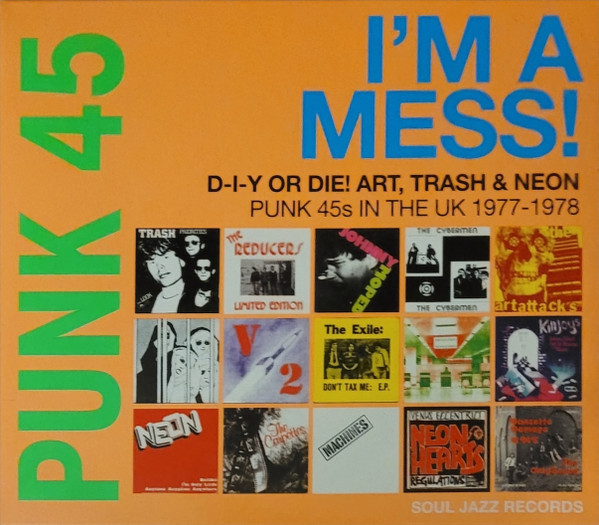
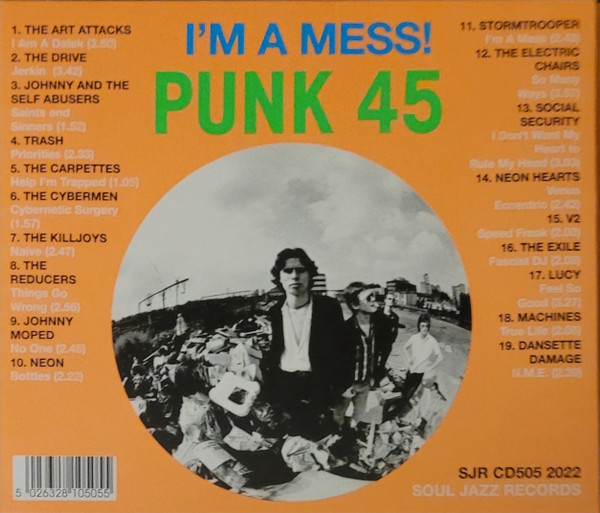


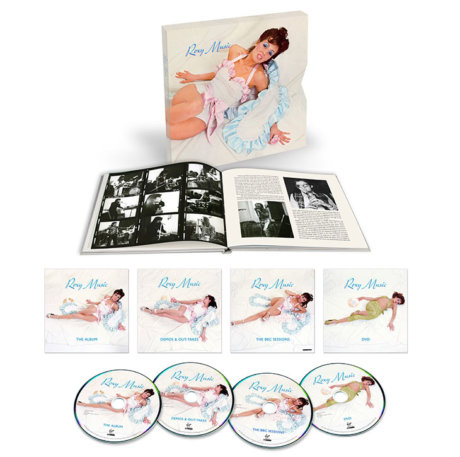


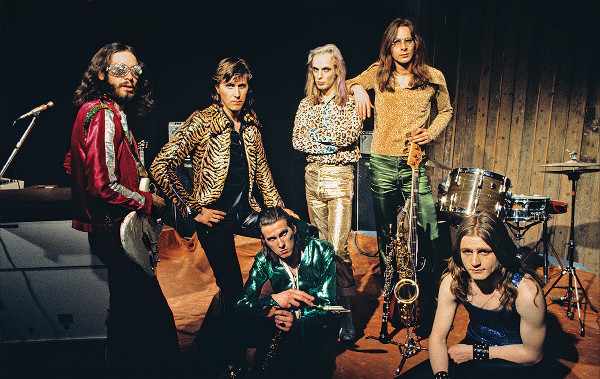

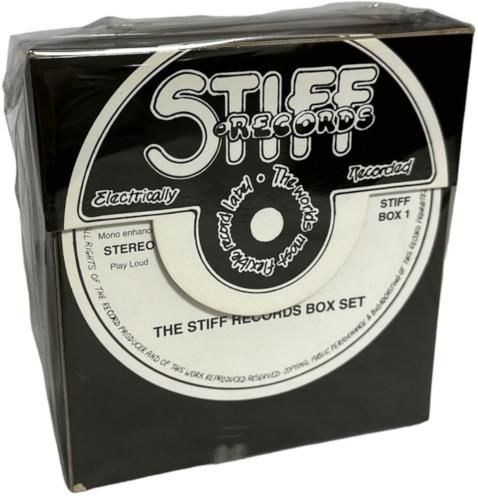


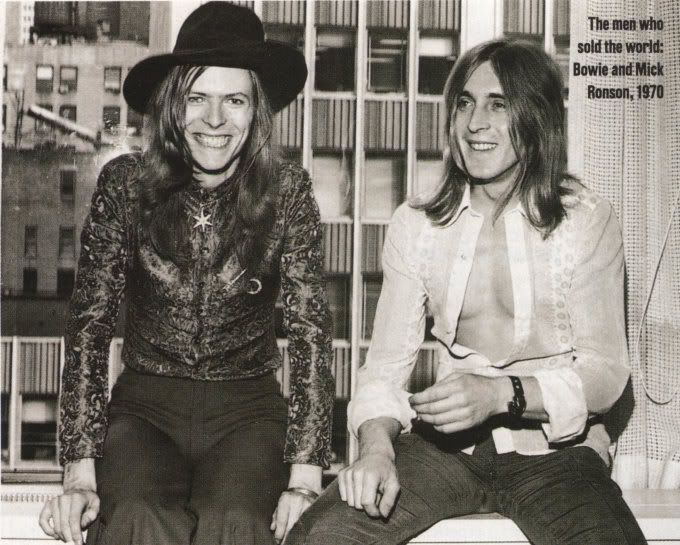
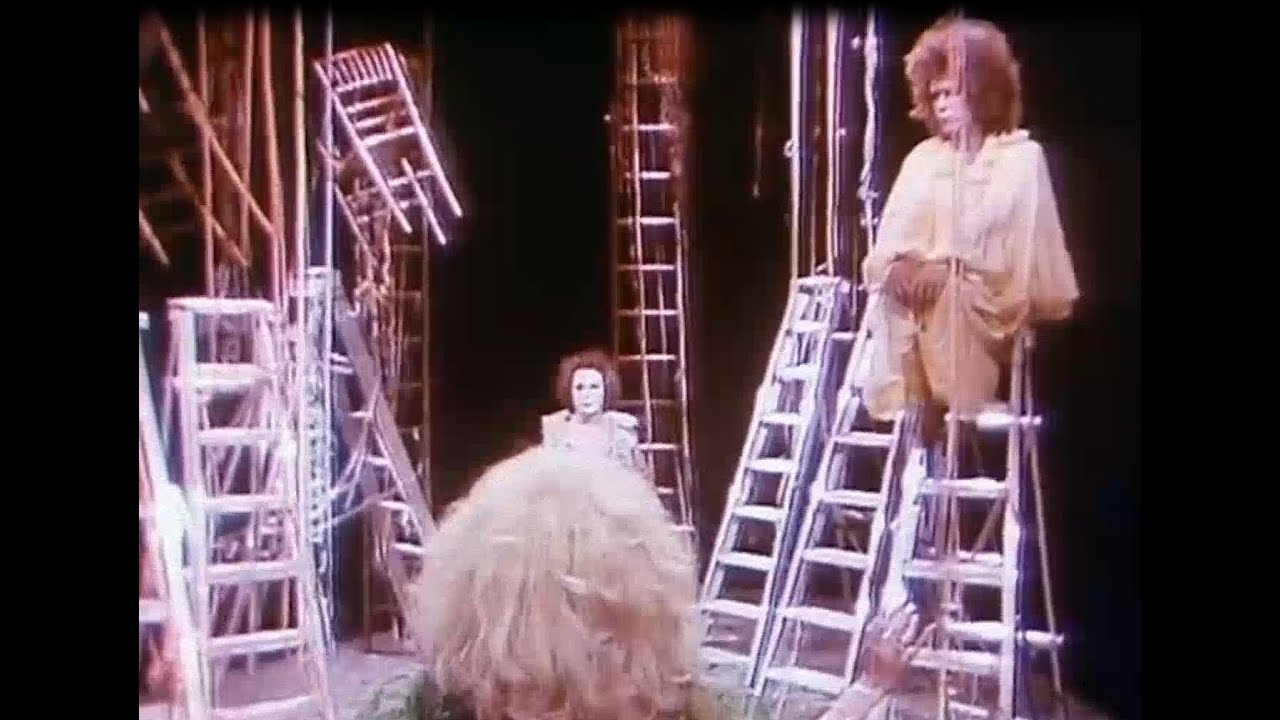


 The Chasbah