Tetsuo, the Iron Man (1989)

Director: Shinya Tsukamoto
⭐️⭐️⭐️⭐️

If you’ve seen this film, there’s not a lot I can say apart from some small bits of trivia that you might not already know. If you haven’t seen it, this is the first and perhaps the greatest Japanese cyberpunk/body horror/indie metal/sex comedy film of all time. I haven’t seen either of the two sequels, but that’s the only reason I say “perhaps.”

Perfectly timed with a youth-cultural rising tide of nihilism, low-budget renegade filmmaking, steampunk fashion, and the emergence of “industrial” music, Tetsuo combines it all into a movie that was very much of its moment. I first saw the film at and independent cinema in central Florida a few months after it premiered, and I was simply not prepared for the onslaught of sight and sound I witnessed.

It was in some ways traumatic, in other ways compelling — and it haunted me for a while with a mixture of revulsion and wonder at the time. I have finally dared to take a second look, and I squirmed in places — but could still could hardly bear to blink.

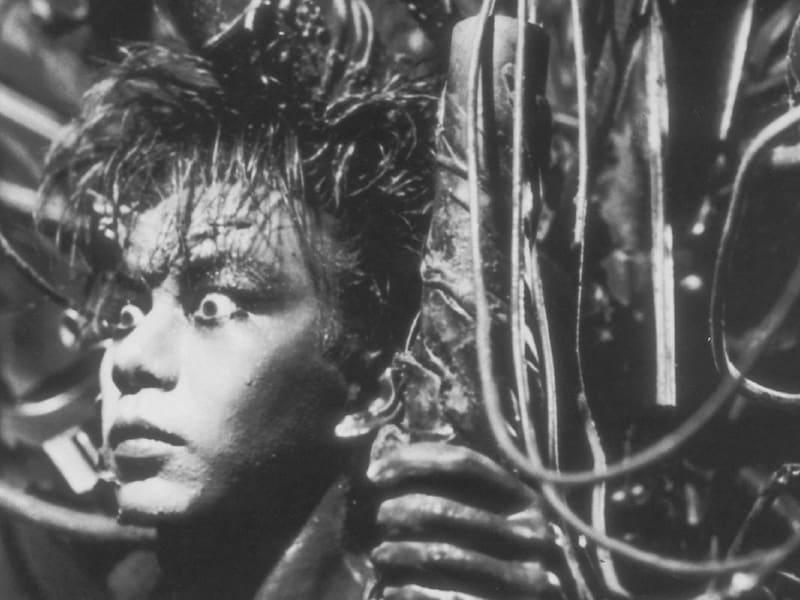
The film is in B&W, and doesn’t look quite as absurdly cheap as it is most of the time thanks to ludicrously frenetic stop-motion effects, brilliant editing, and mesmerizing performances, while still mostly giving its audiences only glimpses of what’s fully happening. The assault of hard music contributes to the urgency and raw emotions on display throughout.

The film went on to be an enormous influence on both musicians and indie directors, and makes those Godzilla movies look like pastoral landscape paintings for children by comparison.

The plot is weird yet simple: we start with meeting a young man (played by director Tsukamoto) who is cutting his thigh open so he can insert some metal into it. His surroundings are composed of lots of scrap metal, and this is a fetish of his apparently.

It goes very wrong, and maggots begin to feed on the wound. Driven mad with disgust, he runs out of his tiny room and into the night, and is soon run down by a “salaryman” (businessman) — played by Tomorowo Taguchi — and his girlfriend (Kei Fujiwara).

The pair investigate the corpse, are revolted, and dispose of the body. Not long after, the businessman notices that he is growing metal out of his body, and soon the girlfriend is transmuting as well.

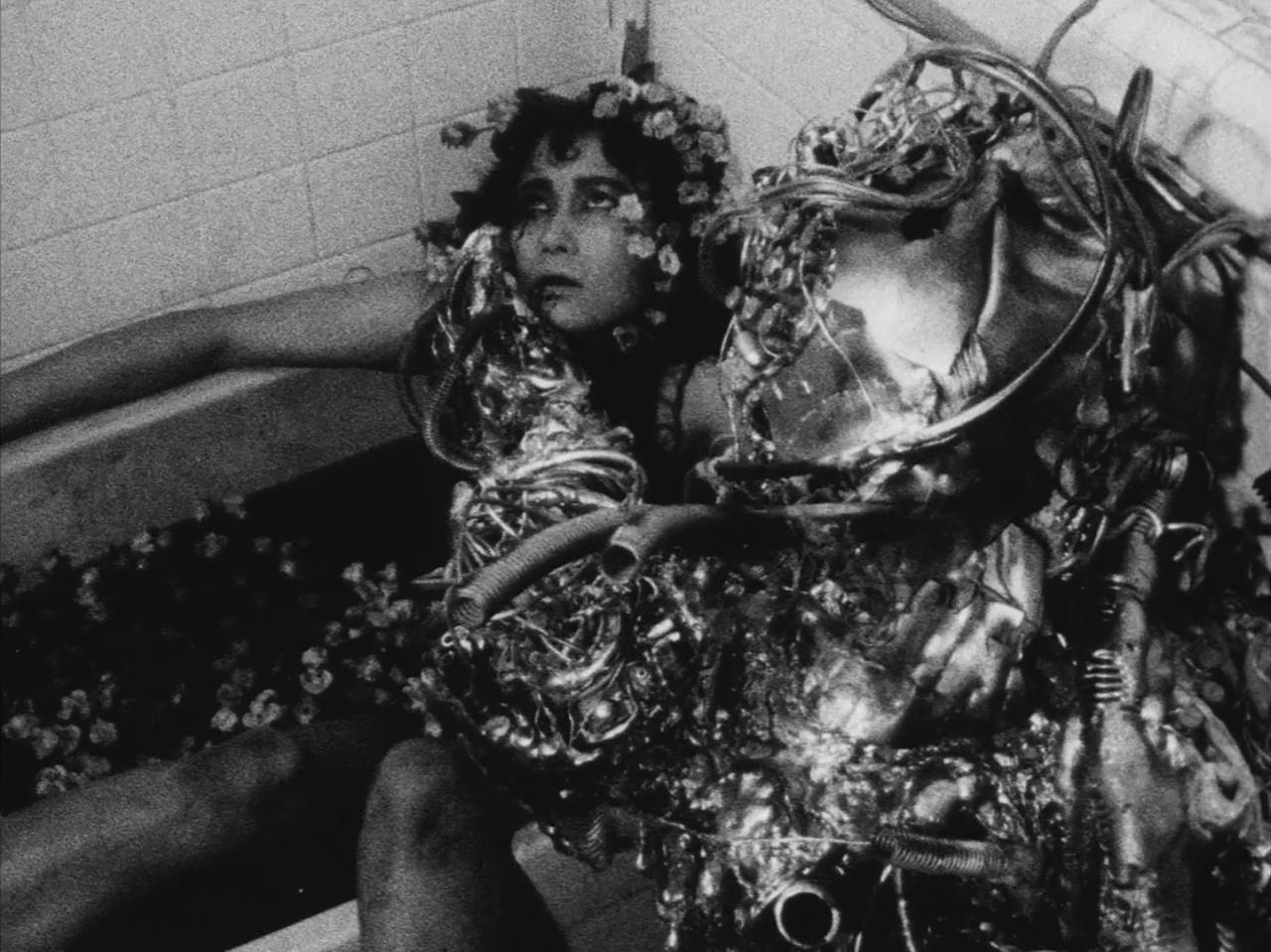
Slowly but surely the metal is taking over their bodies (mostly done using stop-motion animation), turning them both into metal-human hybrids. This takes a while, and is documented in beautiful detail in the grainy B&W cinema verité style, augmented with the hardened edges of industrial music.

Once it starts, it is a relentless onslaught, and the victims here are bewildered, terrified, and powerless to stop it.

To this point, the film is a hyperactive low-budget body horror escapade, but strangely compelling. We know where this story is going, but it is clever enough to make us want to see it through.

The salaryman’s transformation is much further along by the time the girlfriend turns up, equally starting to transform. They end up being compelled to have what I’ll just call “drillsex,” which at this point provides a much-needed moment of relative levity.

Others have described the film as something of a mash-up between Un Chien Andalou (1925), Videodrome (1983), and Eraserhead (1977) in Japan, and I have to nod and say “yes, but with all these films thrown in a blender while you’re watching them.” Tetsuo vibrates with energy and intensity, never relents from its breakneck pace, and cranks the music up to 11.

Since it’s release, we’ve all started down its path: rare is the moment now where you don’t see someone glued to their smartphone, to the point where we treat it as an extension of “ourselves.” The messages of the film regarding societal sexual repression, industrialized alienation, body dysmorphia, work-life imbalance, and are alternately sublimated and beaten over your head.

Being so hyperkinetic and, well, metal is likely to be overwhelming for any casual viewer, even though the film clocks in at a mere 67 minutes (and thank heavens its not any longer). By the end, you’re not sure if the salaryman and his girl likes what has ultimately become of them or not.

It reminds of a rollercoaster you’ve never been on before: terrifying, exhilarating, and you’re relieved you survived it — and then, knowing that you did, you want to go back and do it again.

Tsukamoto served as writer, director, producer, art director, lighting director cinematographer and editor of the film. A number of the other crew members who worked on the film quit in disgust or in dispute with what Tsukamoto was doing.

It is a visionary, hugely influential and eye-popping film in many ways, but I think most people whose idea of a horror movie is Friday the 13th would probably turn down a second opportunity to see it. That said, a little of that metal fetishism stays with you, in the sense that you can’t unsee it.
Journey Into Prehistory (1955)

(Czech title: Cesta do pravěku)
dir. Karel Zeman
⭐️⭐️⭐️⭐️

There’s a song by the Norwegian band synth-pop band a-ha on their debut album, Hunting High and Low, called “Living a Boy’s Adventure Tale.” Karel Zeman’s remarkable second feature film, Journey Into Prehistory (US title: Journey to the Beginning of Time) is that phrase fleshed out in colour.

It uses the framework of a group of pre-teen and teen boys thirsty for knowledge and adventures as a vehicle to achieve Zeman’s own boyhood dreams, combining 2D and 3D models, animation, and live-action into a seamless Sci-fi fantasy film. While slow-moving by today’s standards, it is a perfect illustration of the kind of imaginative escapades you would have found in books and serialized magazine stories in the late 19th and early 20th centuries.

For those not familiar with Zeman’s work, his films are some of the most effective combinations of live-action and animation ever done to that point — until a fan of his, Terry Gilliam, began his own filmmaking career. While I haven’t seen many Zeman films, the other two I have seen — the amazing 1962 Baron Munchausen and the jaw-droppingly incredible 1958 Invention for Destruction — are just mind-blowing masterpieces of imagination. Zeman combines his own filmic skills with whimsical tales and brings great stories into the visual world of movies.

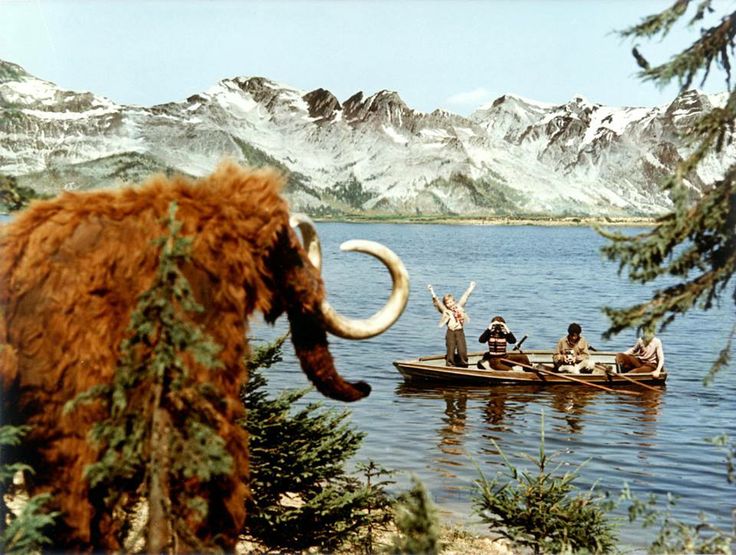
The boys encounter their first prehistoric creature — a curious wooly mammoth.

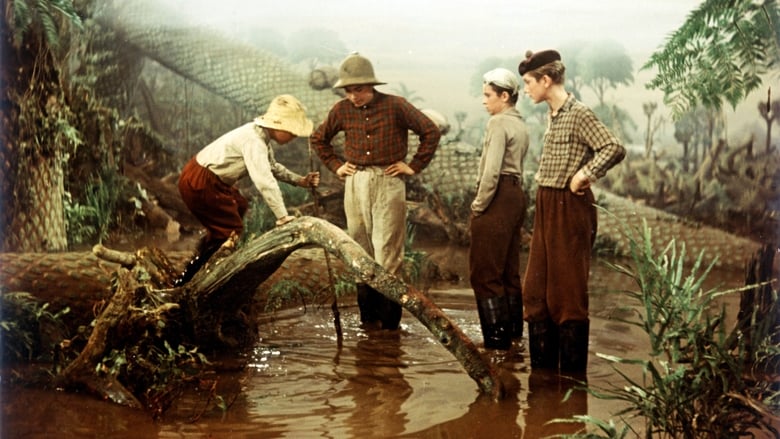
In the film, the boys learn about the prehistoric creature the trilobite by examining the fossil of one. The youngest, Jirka (Vladimir Bejval), is disappointed that there are no living triobites left, so the older boys propose taking a trip back in time to find one — like you do — and take a boat up river into a cave that allows them to pass through it, and into progressively earlier eras of earth’s development as the continue upstream.

The oldest boy Petr (Josef Lukáš) narrates most of the film and does most of the rowing and planning, while the second-oldest Toník (Petr Herrmann) keeps a logbook. Jenda (Zdeněk Husták) and Jirka, the younger boys, help out as they can, with Jirka in particular running off to explore too eagerly, which causes the occasional misadventure.

Jirka (left) is a bit of a jerk-a sometimes, deliberately ignoring safety warnings to explore.

They indeed pass through the four main periods of prehistory (as defined in 1955) — from the Ice Age, to the Tertiary, the Mezozoic and the Paleozoic, and all the way back to Silurian age.

This film is more sparse on the effects compared to Zeman’s later ones, but importantly when special effects appear, they are as realistic as it was possible to make them. Some effects used puppetry, some used a very smooth form of stop-motion, but clever use of shot-matching allowed the actors to travel with beautiful backgrounds and “living” prehistoric creatures very smoothly integrated and fluidly animated.

Along their journey, they encounter and learn about progressively older examples of prehistoric creatures. Interestingly (at least to me), the film makes no attempt to get the boys back to their own time, even after tragedy befalls their original vessel. I don’t want to say more about the plot to avoid spoilers, but the film is both blatantly educational but also filled with moments of danger, suspense, and the single-minded energy of the young to sate their curiosity.

The Czech version runs 93 minutes, and while the pacing makes it sometimes hard to stay on board with the slowly-unfolding story, the promise of another effects sequence soon will hold most viewers, and also curiosity about how the story will be resolved.

A life-size Stegasaurus model was built for this sequence.

A US version was created later, using a new intro and outro where the boys (replaced by US actors shot only from the back of their heads in the opening and end sequences) imagine the whole adventure while visiting the Museum of Natural History, and stretches credibility pretty hard. The recut US version runs only 84 minutes, dropping some exposition to get to the effects more quickly.

The story is a mash-up of Jules Verne’s 1912 novel The Lost World and a Russian novel called Plutonia from 1915, both obviously influences on Zeman (he would go on to a brilliant and straight-up later film combining several Verne stories named after the primary story its based on, the novel Facing the Flag).

For many years, the existing prints of Journey Into Prehistory were of such low quality that the film almost passed into unseen obscurity, following its initial worldwide success. Thankfully, the film has since been digitally restored and repaired, so we can see it the way Zeman intended.

A friendly creature from long before the dinosaurs

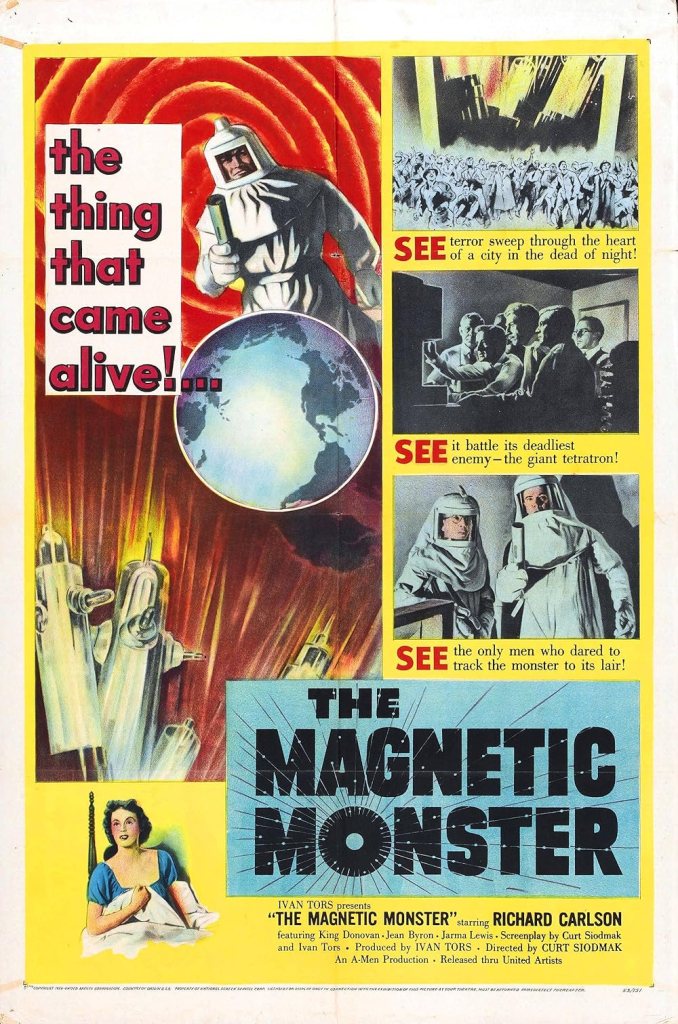
The Magnetic Monster (1953)

dirs. Curt Siodmak and Herbert L. Strock
⭐️⭐️⭐️
52-week film challenge, film 51

Despite some laughably bad science in much of it, no actual monster in the traditional sense of the term, and an effects-heavy climactic scene borrowed from another movie entirely, this Atomic Age film ends up being better (and surprisingly suspenseful) than you’d expect.

The investigation begins.

In 1953, America’s veterans had returned home, and the country had collectively forged a new direction: confident, industrious, lots of new inexpensive housing, the GI bill to get college-educated or trade-skilled, and basically hope for a bright future for nearly everyone. That said, there was the shadow of the coming nuclear arms race, and an understanding that scientific exploration isn’t always for the betterment of mankind.

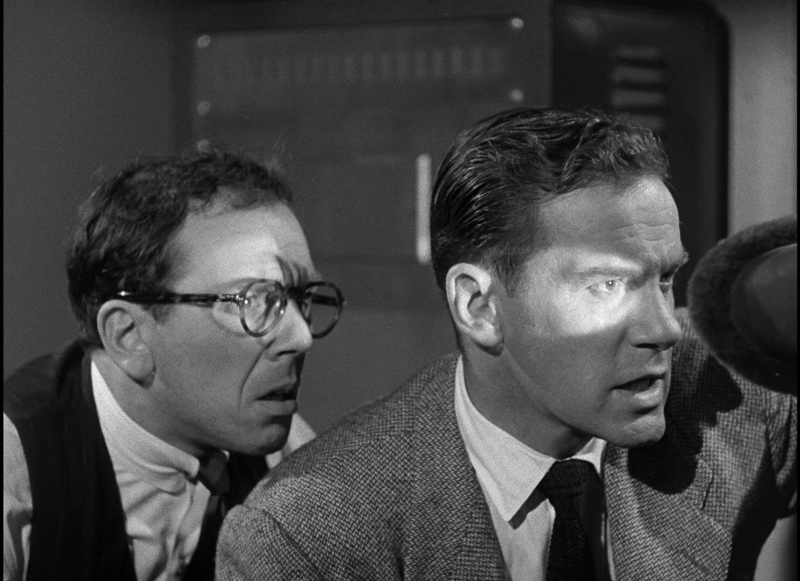
There’s a lot of magnetism in this flick, but sadly none between Drs Stewart (center left) and Forbes (center right)

That’s the mindset needed to better understand this picture, the first of a trilogy (!) of adventures involving the Office of Scientific Investigation (OSI), a group of scientists who investigate possible irresponsible uses of … SCIENCE! (Cue Thomas Dolby music here). Richard Carlson, also seen in It Came From Outer Space and many other cult pictures, stars as Dr Jeff Stewart.

His partner in this one is Dr Dan Forbes (King Donovan, another fantasty-film actor), and the first half of this film is basically a more-scientific police procedural — there’s a business in town that suddenly has all kinds of weird things happening, specifically things getting magnetised (as we quickly find out). The effect appears to be coming from a flat above the magnetised store, but by the time they work this out, the “culprit” has fled the scene, taking whatever it was that was causing this with them.

Oh yeah, we should remember to wear these protective suits from time to time!

The sub-plot, such as it is, is that Stewart’s wife is pregnant but not showing (a constant source of conversation between them — “why aren’t you fat yet?” for example), and Stewart is inspired to buy a house for what he is sure will be a baby boy, but can barely afford it because apparently OSI officials are in it for the love of … SCIENCE! Bonus points for a now-hilarious breakdown of what it will take to buy a house in the early 50s on their basic budget.

“Why aren’t you fat yet?” patronizes Dr. Stewart.

Drawn-out story short, Stewart and Forbes track down an irresponsible scientist, Dr Howard Denker (Leonard Mudie) who was fooling around with making unstable elements and accidentally created a whopper — a radioactive isotope that, every 11 hours, uses magnetism to create energy from every available source in order to double its mass. While the problematic element is still small enough to fit in a briefcase, its exponential needs and growth means it will very quickly become a huge problem that threatens to destroy Earth, aka uncontained nuclear fusion.

Stewart and Forbes confront Dr Denker, who has brought this element on board a commercial plane (!) to try and get it to a university in California to make it their problem to solve, as he is dying from radiation poisoning. Literally in his dying breaths, Denker absolves himself from any responsibility for creating this world-eating thing, saying that he wasn’t responsible for the consequences of his experimentation.

Amoral dying scientist is also irresponsible at handling dangerous materials!

Thus, the second half of the movie is a race against time. Even though the element is still of a size that is portable, it will continue to cause havoc every 11 hours when it needs to be “fed” — and its appetite is also exponetionally growing. The OSI convinces the town to undergo a blackout so that all available electricity can be diverted to the next “feeding” of the element so as to minimize the consequences — but now they have 11 hours until this thing is going to need 600 million watts of power for its next “meal.”

Stewart consults with various other scientists (more doctors per square inch in this movie than any other I can think of!) and eventually comes up with a theory: if he “over feeds” the element, it should split up into two stable elements, ending the threat to earth. But where to get that kind of power?

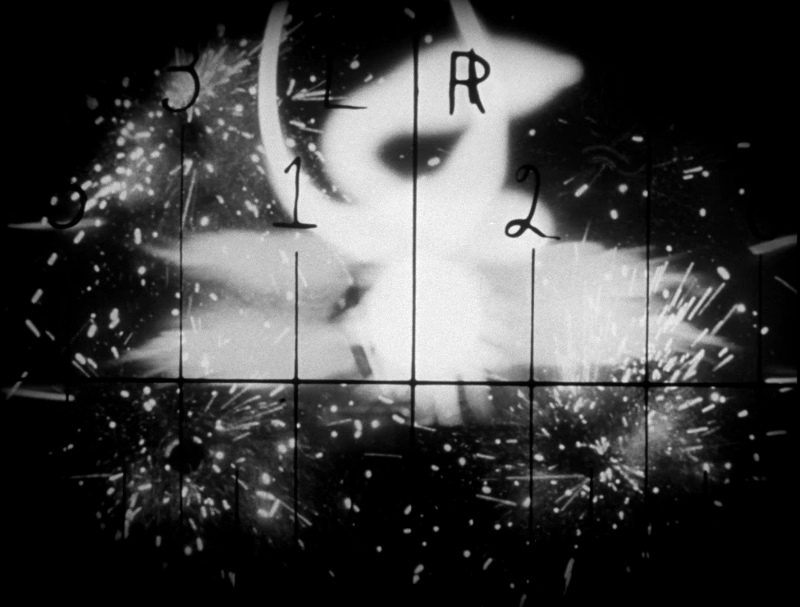
Stewart and Forbes witness the element drawing energy out of thin air (above), creating micro-explosions and growth.

A US general blabs about a top-secret energy facility deep underground off the coast of Nova Scotia in Canada, and can provide the 600 million watts, but may not be able to be pushed much beyond that. Stewart and Forbes take the risk, fly as quickly as possible to the base, and make it just in time for the start of the magnetisation cycle that starts the “feeding” frenzy of energy collection.

The underground base and its magnetron/cycletron (not sure) are huge and impressive — and come from another movie, the 1934 silent German film Gold, very much in the mold of Metropolis’ special effects. Nearly-seamless editing puts Stewart at the controls of the machine as he pushes it well beyond its tolerances to “overfeed” the element, eventually causing the machine’s destruction — and a few tense moments of magnetisation where Stewart — who has barely escaped with his life — thinks he may have failed, and the world is doomed.

Happily, the magnetised things suddenly fall off the walls, and Earth is saved. The taxpayers of Canada are on the hook for replacing a now-dead power station, but let’s not talk about that! Quick, back to domestic bliss, patronising sexism, and house-buying!

Dr Stewart saves the world … but not this power station … by pushing it into the Danger Zone.

Despite the all-over-the-place levels of scientific credibility, The Magnetic Monster is actually a surprisingly gripping film that holds audience suspense, still. It’s that 1950s earnestness of “we can do anything” spirit that foreshadows the space program and other great accomplishments of the following decades, I think, but it still works.

The OSI’s own computer (seen here) is called “M.A.N.I.A.C,” and it’s dancing like it never danced before.

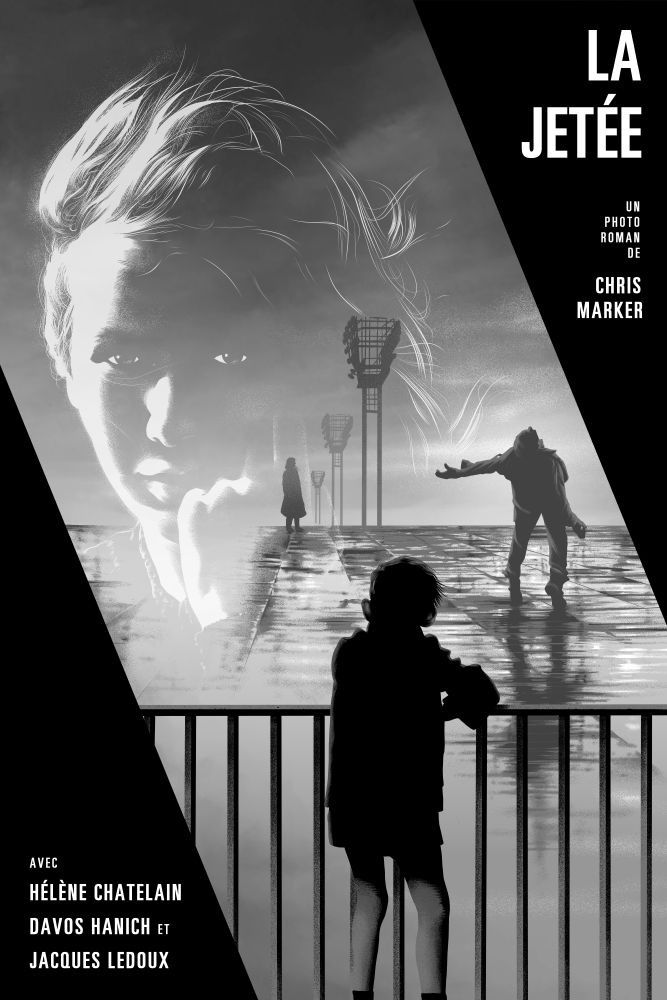
La Jetée (1962)

dir. Chris Marker
⭐️⭐️⭐️⭐️⭐️
52-week film challenge, film 46

I believe I am correct in saying that La jetée, at only 28 minutes long, is the shortest film in “Sight & Sound” magazine’s listing of the greatest films in history (currently ranked at #67 in the critics’ poll, but #35 in the directors’ poll). Nonetheless, its impact on the medium of film, on storytelling, and on the notion of “science fiction” is significant.

Some wag once called it “a slide show with an IQ of 180,” and they’re … not wrong. Except for a small moment of moving images, the film is composed almost entirely of photographic still images, where the viewer must study what’s briefly on screen carefully to extract as much information as possible, combining the visual information with the audio cues and narration. Of course the medium of film is itself a series of photographed still images, but show quickly enough that the illusion of movement, of synchronised sound, of emotion and performance, is fluid.

Here, director Marker slows down the flow to create an irony, rendering it as a unique method from which we get our information; we infer, rather than see, the passage of time between each image — that interesting process in our minds where our vague memories and our dreams cross each others’ paths.

The “story,” such as it is, is stark and minimal: in a bleak post-nuclear dystopia sometime after World War III, a man is selected by a small group of scientists (German, it seems, given the whispering that occasionally appears behind Jean Négroni’s vital and nearly poetic narration), to engage in an experiment to save the present by calling on the past and the future to provide a solution — induced psychological “time travel”

The man has always held some strong mental images to keep his memories intact, and these scientists can see into people’s minds, so they have picked him. While being held captive, he is injected with something to prompt his (mental) return to the past, before the current situation, where he meets a woman not unlike “The Time Traveller’s Wife” — a figure not part of his memories, who accepts each new visit without question, calls him “her ghost” and builds a bond of trust and friendship with him.

Having successfully sent him into the past, the scientist then attempt to send him into the future, with far more obscure results. The man, seduced by the woman of his “dreams,” appears to “escape” his present and live permanently within his memories with this woman — combining the hazy glow of happy memories with this new dream-like woman, forging his own personal paradise.

Despite the vagueness that is part and parcel of this story, there is a definite ending I won’t spoil. The narration acts as a hypnotic element drawing the viewer in alongside the score — the visuals, the narration, the score, and the still-image juxtaposition of past, present, and future all interplay with each other to create a remarkable journey that is likely to stay with viewers as they reassess their own recollections, dreams, and reality.

Yes, the Terry Gilliam film 12 Monkeys is something of an expanded and re-envisioned remake of La jetée, but I’d encourage anyone who hasn’t seen that (or even if they have) to sit with La jetée and let it mess with your own head a little bit.

Even the title is a bit of a mind-slip: Literally, it refers to the jetway at Orly airport (which we repeatedly come back to), but it’s been pointed out to me that the could be seen as a play on là j’étais, which translates to “there I was.”