The General (1926, dirs. Buster Keaton, Clyde Bruckman)

⭐️⭐️⭐️⭐️⭐️
52-week film challenge, film 23

Blah blah blah Tom Cruise blah blah stunts blah blah Mission Impossible blah blah blah. You want stunts? You want life-threatening risks? You want thrills? Buster Keaton had Tom Cruise beat, handily, nearly 100 years ago with The General. Not only that, but you’ll learn at least a dozen new ways to stop a train you probably never thought of before.

Some of what he accomplishes in this 79-minute film seriously could have killed or severely injured him, and in fact he was knocked unconscious on one occasion during the filming. Several of the spike-pulling moments in the film would have put his life in severe danger if he had mistimed his actions, and there’s a lot of cow-catcher stunt work performed with the train and boxcars moving at speeds that added a great deal of risk to the shots.

The plot is pretty typical Keaton: there’s a girl he wants, but there’s an obstacle or set of obstacles in the way, and by a combination of dumb luck and reckless foolhardiness he blunders his way into overcoming the obstacles and gets the girl. The film is based on a true story of a Civil War locomotive chase, though Keaton for reasons unclear switched the sides, believing the public would be more sympathetic to the Confederate side, thus making the Union soldiers the villains.

Perhaps this contributed to the film’s poor performance at the box office at the time, despite having an exceedingly high budget (much to the studio’s consternation). But, to be fair, every dollar of it is on screen).

In The General, Keaton is Johnnie Gray, the engineer of his beloved locomotive, and is wooing a girl from the Lee family of Marietta, Georgia (having spent a fair amount of time in Marietta, this has always been an added bonus in the film for me). When the Civil War breaks out, the father and brother of Annabelle Lee rush to enlist, as does Keaton.

When he tells the clerk he is a railroad engineer, he is deemed too valuable in that role and turned away, though he is not told why. He comes across the Lee men after being rejected, but turns down their offer to join the line, branding him a coward in their minds.
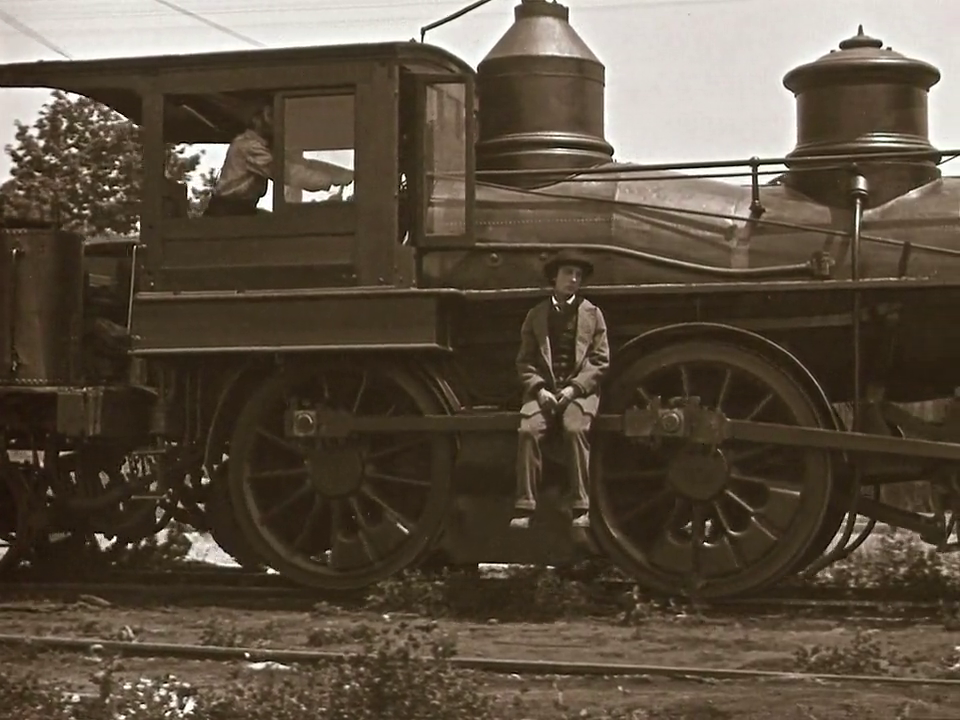
Despondent Johnnie rides the literal rail after being rejected by his girl and her family.

They tell Annabella of his cowardice, and she rejects him “until I see you in uniform.” A year later — a time lapse not made explicitly clear in the film — a gang of disguised Union operatives plan to hijack a Confederate train (guess which one) and use it to destroy bridges behind them as the travel north, cutting off the Confederate supply lines.

The ruse succeeds and strands Keaton, but he quickly finds both another locomotive and a group of Confederate soldiers to give chase — but as he pulls out, he fails to realise that the locomotive was not attached to the rail cars full of soldiers, so now it is just him chasing The General and its carful of Union saboteurs to get his train back.

And now, the plot wrinkle: Annabella was on the train being hijacked to go see her wounded-in-battle father, and unlike her fellow passengers, did not disembark the train during the dinner break, instead heading to the luggage car to retrieve something. She is thus captured by the Union hijackers, and held prisoner aboard The General.

After losing his second locomotive, he continues the chase anyway he can.

Once Johnnie discovers this some time later, he becomes determined not just to get his own locomotive back, but to rescue his girl and stop their dastardly plan. Before and up to that point, the film engages in a series of incredible stunts as the rogues engage in a series of gambits to slow or stop Keaton’s chase, believing Keaton’s train is full — once they discover it’s just the engine and him, the stunts get even more impressive, and occasionally some malarkey goes on in other locations besides the two trains.
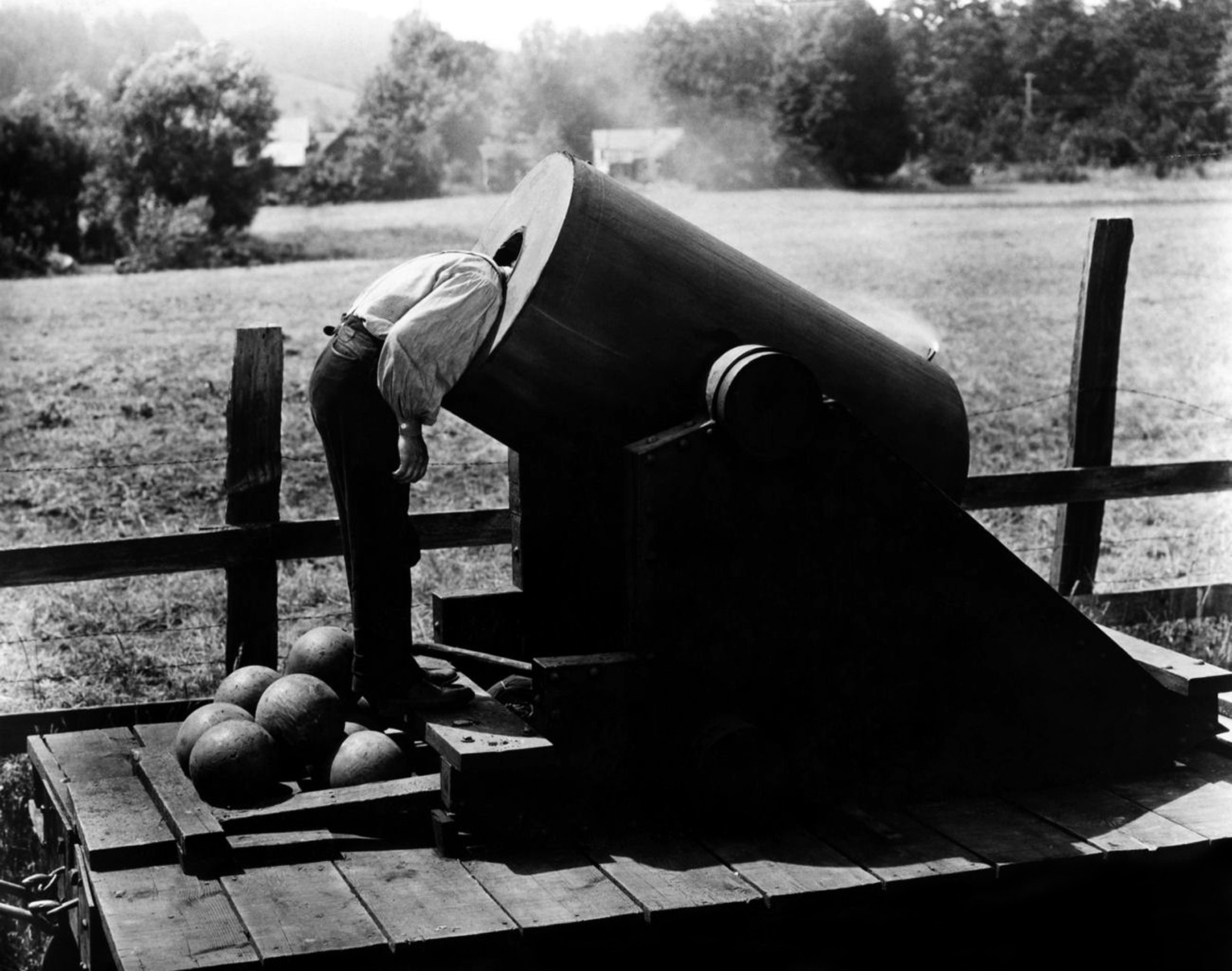
Checking to see if the canon he was towing in his earlier attempt to catch The General was working.

Keaton’s physical stunt-work is just mind-blowing to watch, especially considering that films in those days didn’t have the luxuries of safety considerations (though they did have stunt people for some long shots, those are much fewer than you’d expect — it’s mostly all Keaton). He climbs all over that locomotive like a spider, all while the train is in motion. If you’ve seen any of his films, you know he is the undisputed master of the thrilling-comedy-stunt moment, and there’s nothing Tom Cruise or anyone else can do about it.

The rail-thin Johnnie follows the raiders to a dinner where they reveal their plan.

I don’t think I’m spoiling anything by saying it all resolves in the end, Johnnie goes from civilian engineer to decorated leiutenant thanks to a field promotion, changes his occupation to “soldier” and finally enlists properly. Of course, the Lee family witness the finale and are deeply impressed, none more so than Annabelle.

Johnnie and Annabelle after he frees her from captivity by pretending to be a Union soldier.

Although it didn’t do well at its initial box-office debut, the film has risen steadily in the minds of both critics and cinephiles, and is now widely regarded as a true classic — and still routinely places very highly in lists of the all-time greatest movies, and still boasts the single most-expensive stunt shot in silent-movie history, which forms the spectacular climax of the film. While I’m still confused as to why Keaton reversed the sides to make it a peculiarly pro-Confederate film, the stellar filmmaking and Keaton’s performance overcome that one lapse in judgement.

You will hardly believe your eyes as a full-on steam locomotive (in real life, the “Texas”) crosses a burning bridge and crashes into the river below; this is not a model shot, nor were any special effects used or needed — director Clyde Bruckman just left the wreckage there in the river bed until it was finally salvaged for scrap during WWII.
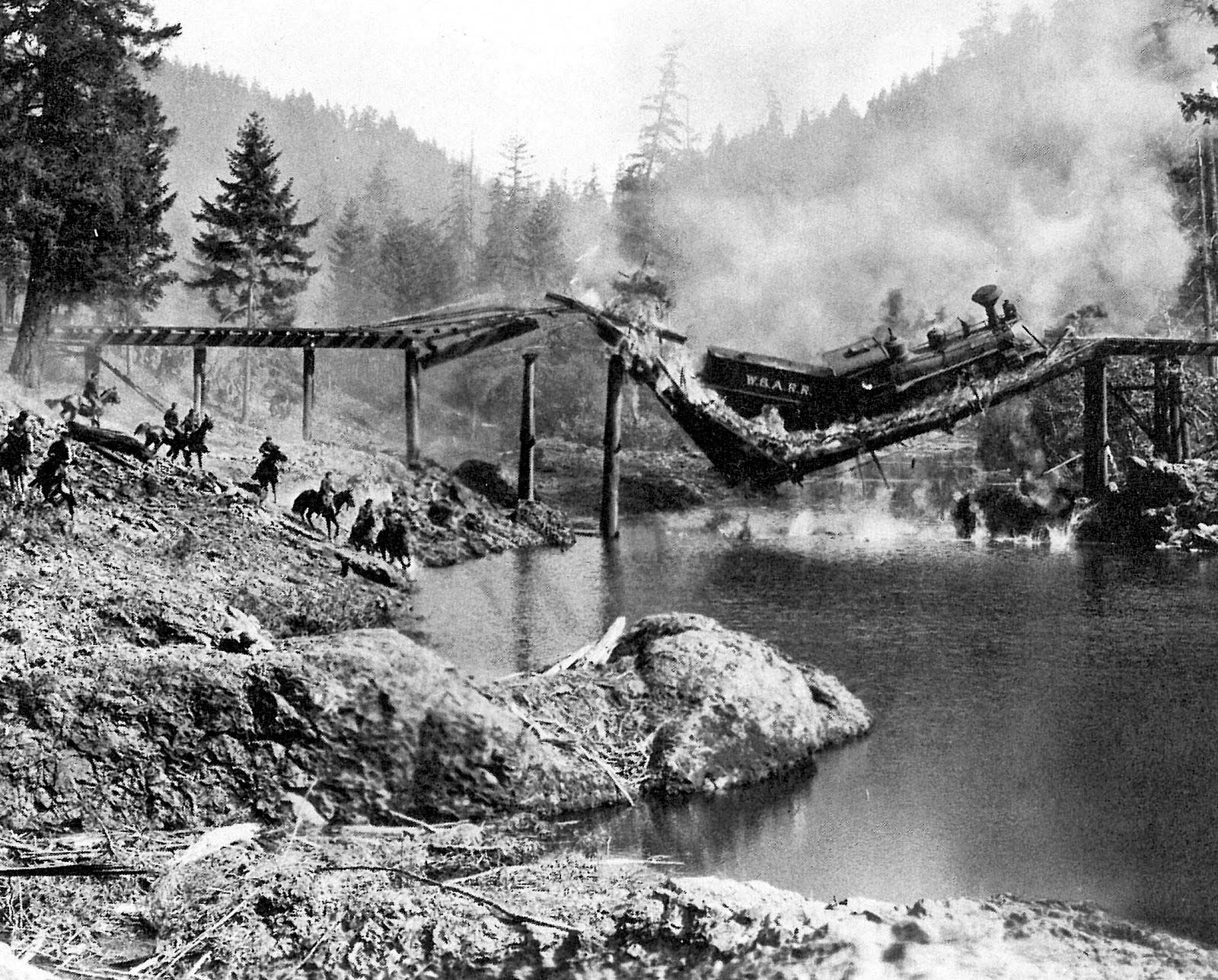
They really did build a bridge, set it on fire, then drive a train across it and plunge it into the river. For realz! No wonder it went over budget!

Apart from crowd scenes where a lot of running or marching is required, the film is mostly speed-corrected to show the actors in natural motion, and this really brings the sophisticated nature of late-silent era filmmaking to the fore. The recreated original score is also a treat, though alternative and more modern scores exist for the 4K Blu-ray release (the first silent movie released on Blu-ray, and a wise choice among many good options).

Apart from being in B&W, I believe you could show this to modern audiences and they would still find the pacing to be attention-holding, the story layered enough for today’s audiences, the humour still funny, and the stunt-work disbelieved to be as real as it actually was. It’s a mystery to me why the film isn’t a regular visitor to revival-house cinemas, or better known to this generation’s cinephiles.

I’m just glad nobody’s been dumb or reckless enough to try and remake it, because The General is truly a unique example of the best the reckless early days of American filmmaking has to offer that really holds up across its nearly 100-year history. Plus it’s a better movie than any of the Mission: Impossible series. There, I said it.
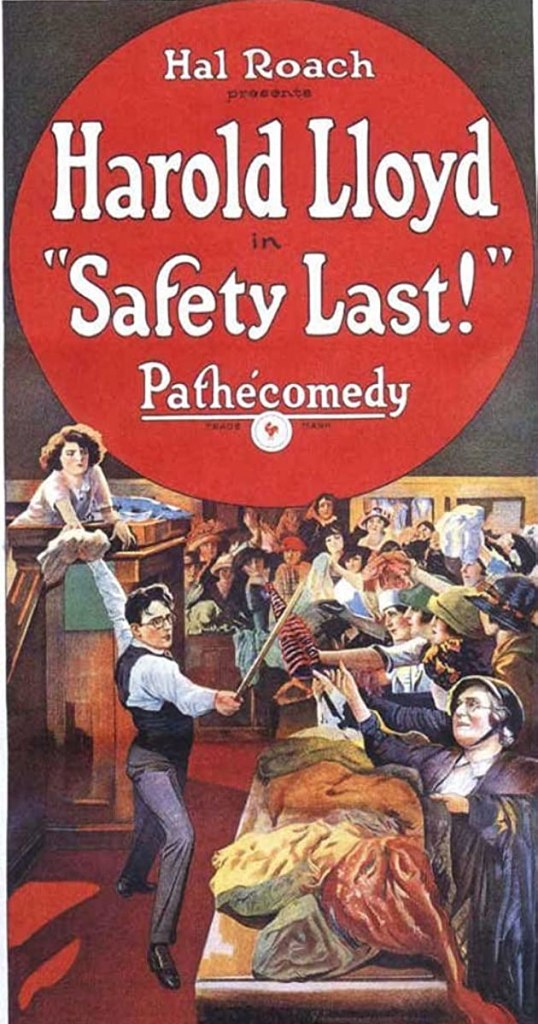
Safety Last! (1923, dirs. Fred Newmeyer & Sam Taylor)

⭐️⭐️⭐️⭐️

52-week film challenge, film 14

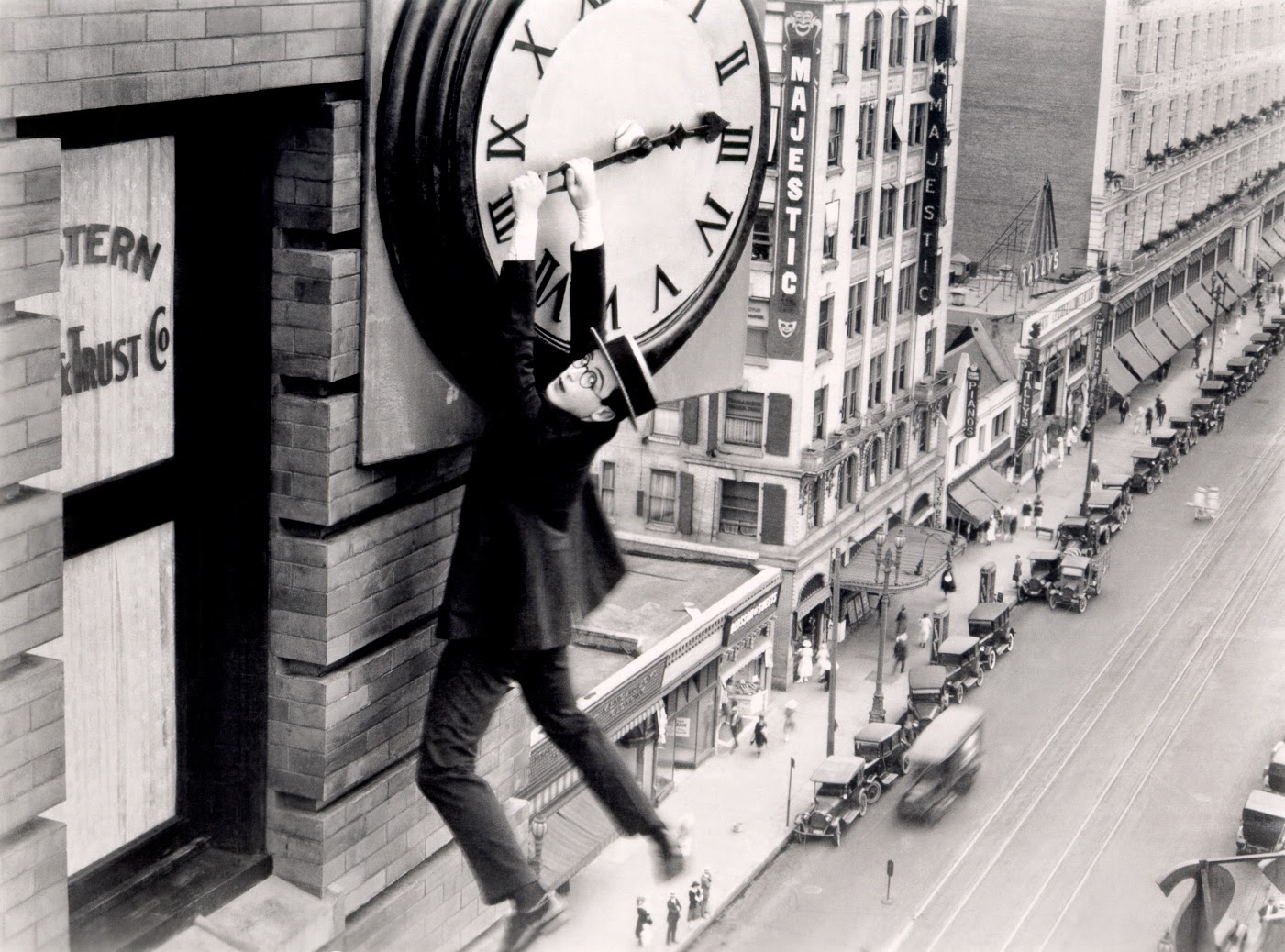
Anyone who’s paid any attention at all to the silent era of movies will have seen at least one of the most famous silent-movie stunts — Harold Lloyd, seemingly halfway up climbing the side of a building, hanging on for dear life as he grabs hold of a giant clock after putting a foot wrong. Suddenly, the clock face comes partially undone, leaving him hanging high over a busy street. This is of course from one of Lloyd’s full-length features, Safety Last!, and it is a gem — but only one of the amazing stunts in the film, which is also quite funny.

Lloyd is often thought of last when one tries to name the giants of silent-era comedy, behind Chaplin and Keaton, but for my money he’s actually the most versatile of the bunch. While Chaplin almost always played a tramp in his silents, and Keaton forever plays a stone-faced version of the unluckiest man alive, Lloyd is often the sunny embodiement of American Exceptionalism, resiliently cheerful and sure that everything is going to work out despite the craziest things happened to him, and indeed that blind faith carries him through.

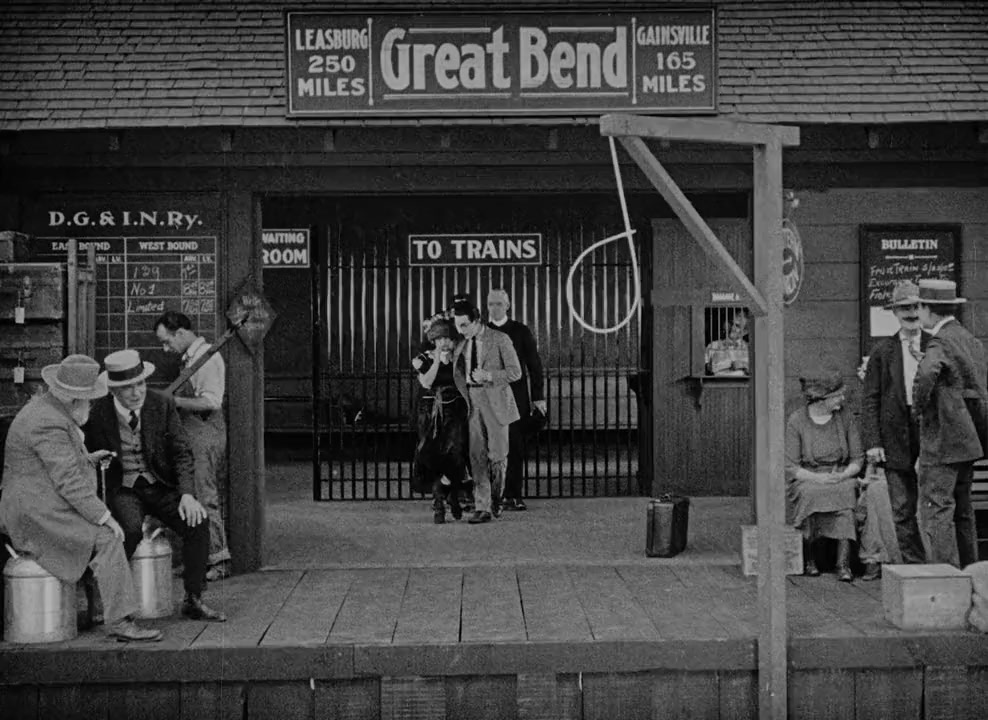
In Safety Last!, Lloyd opens the film looking like he’s in potentially fatal trouble — in jail and perhaps saying his goodbyes to his loved ones, with a hangman’s noose in the foreground. The set changes slightly, and we see in fact that noose was on a mail peg designed to allow the train to deliver a bag of parcels without stopping, and Lloyd was just a small-town young man on his way to the big city to make his mark.

He was doing this to secure his relationship to his intended bride (played by real-life wife Mildred Davis), by ensuring he has a career that can support a household and eventual family. The earnestness just radiates off Lloyd’s can-do attitude and beaming, positive face, but in fact like any such fellow he has to start small — sharing a room with a friend, working hard, and not quite catching the American Dream somehow … this film was only a few years prior to the start of the Great Depression, but somehow foreshadowed that all was not well with the game of “work your way to success.”

In another tell-tale America-of-the-20s trait, he puffs up his level of success to impress his girl, which in turn means he ends up spending most of his meagre paycheque on gifts he sends to her … skipping meals, hiding from the landlady, and making other sacrifices. In one scene, he ponders the cost of another gift while also staring at an advert for a “businessman’s lunch” (which costs 50¢ … you should see this film just to marvel at the prices of things!), and as he pushes himself to sacrifice for his bride-to-be, his minds “disappears” each of the five plates that were included in that luncheon. You can feel Lloyd’s hunger pangs.

As you might expect, the girl gets the idea to come visit and surprise him, and on very short notice he has to come up with ways to convince her he is as successful as he has boasted, hiding his lowly “real life.” While to modern audiences this thin plot moves along fairly slowly, there are always impressive stunts and action sequences (just him getting to the office is a great section of pratfalls and dangerous gambles) to fill the time until the next plot point.

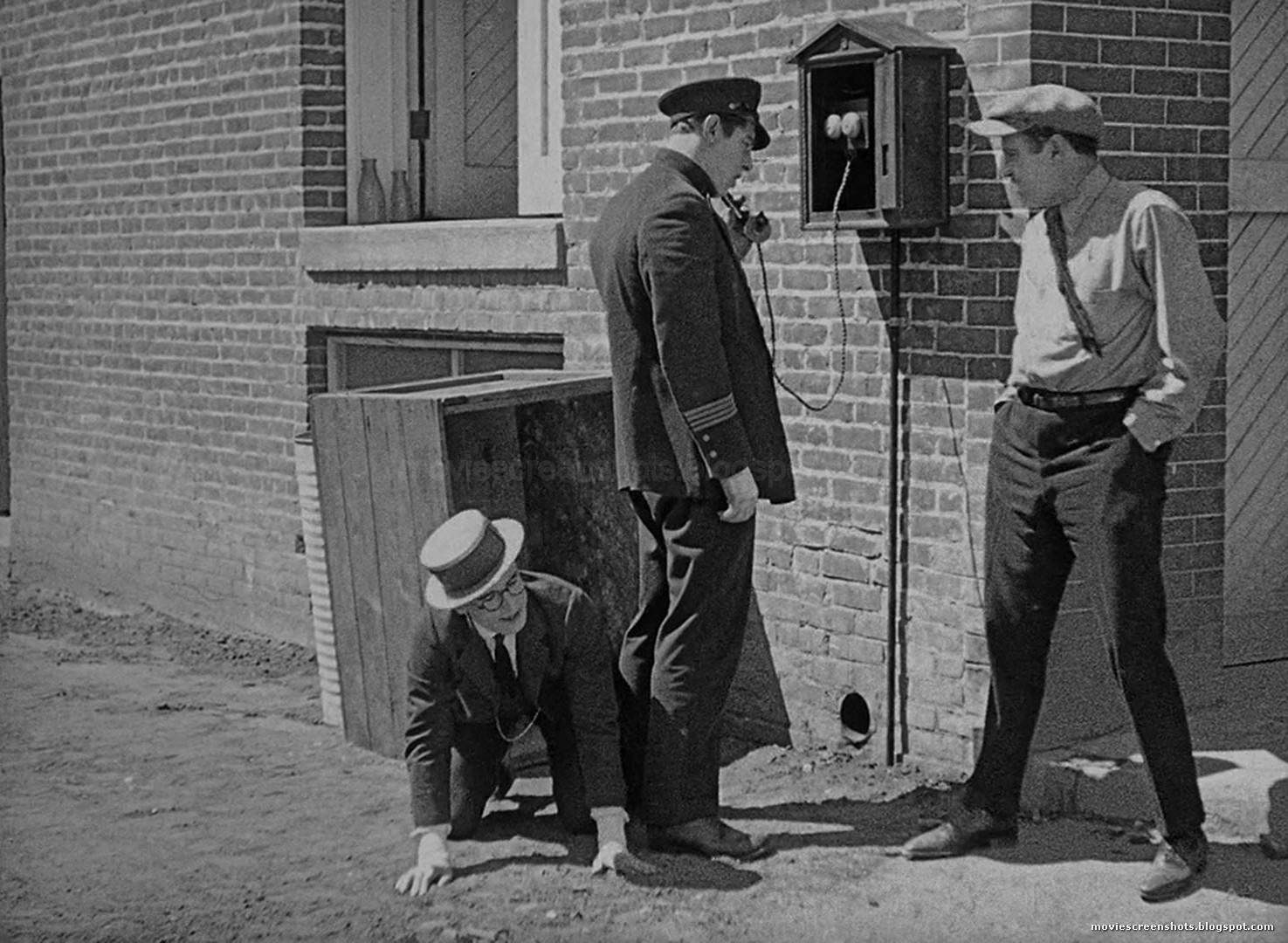
Lloyd pays off a colleague not to reveal that he’s not the manager and this isn’t his office.

Mostly, Lloyd’s character (who was known as the “glasses man” in his earlier work, but he finally identifies the character as being himself — Harold Lloyd — on a business card, suggesting some real-life incidents are incorporated into the tale) just combines his incredible physicality with on-screen great luck in avoiding being killed or decapitated as would happen to the rest of us if we tried these stunts. Yes, there were stuntmen used and some clever camera trickery for the finale, but Lloyd is visibly on-screen for a number of these feats and it adds richly to the action.

In a panic over being found out as not the success he portrayed to his girl, he overhears the owner of the store wishing for a big publicity stunt and, thinking of his friend “Limpy” (the incredible Bill Strother, both a supporting character and sometimes Lloyd’s double for steeplejack and stunt sequences) who loves climbing buildings, offers a sure-fire plan to draw a crowd: he’ll climb to the top of the very tall department store building!

In an earlier sequence that sets up the climax of the film, Lloyd recognises a policeman in town as being an old buddy from their youth, and goads Limpy into helping him play a knock-down gag on the copper. But he doesn’t see his friend go inside and be replaced with a different cop, so when the prank is successful the furious flatfoot swears revenge on Limpy (Lloyd having quickly escaped). This sets up the dilemma that sees Limpy unable to scale the building in Lloyd’s stead (he was going to just take Lloyd’s glasses, hat and coat to fool the bosses), and Lloyd having to be coached into doing the climbing himself as the cop continues to chase Limpy around the store.

The sub-plot that sets up the finale

Of course, Lloyd doesn’t think he can do it, but Limpy reassures him that he’ll ditch the mad cop and take his place if he just climbs up a couple of floors. Well, the cop doesn’t give up that easily, and Limpy swings by a window every floor to encourage Lloyd to climb just another floor or two … until finally Lloyd has barely survived climbing up the entire building, reaping the entire $1,000 reward* for himself into the bargain, thus securing his forthcoming marriage.

*Lloyd is shown to be netting $15 every two weeks — remember this is 1923 — so a grand is like three years of wages in a single day, and of course it is implied he’ll be promoted as well.

Before the big climb and during it, there are numerous funny moments and smaller-scale stunts to keep things moving along, but the film — as ingenious and humourous as it is — still feels like the kind of plot that would sustain a film only half its one hour 13 minute runtime, and just throws in a lot of sequences that feel like (clever) padding.

Lloyd’s Not-Of-London … his actual position at the store.

That said, it’s very worth seeing. The incredibly clever way they did the climatic climbing sequences really make it easy to believe he’s hanging by a thread incredibly high up, but it wasn’t quite like that (you’ll have to guess how they did it in the silent era without the modern safety constraints and optical techniques such things would have today, I’m not telling).

I will however say that there’s a short Criterion Channel documentary made much later that reveals the secrets of Safety Last called Safety Last: Location and Effects that will spill the beans if you can’t figure it out yourself.

Throw in some incredibly well-trained pigeons (yes, really), a truly hilarious one-line cameo by a little old lady, and Lloyd’s amazing physical comedy, and you end up splitting your time between chuckling and staring wide-eyed at how he’s going to get out of this new bit of trouble.

If you’ve only seen sequences or still images from the film, I’d encourage you to watch the whole thing. Of course it was a big hit with audiences in its day, but in some ways it still embodies some uniquely American ideas about work-life balance, exploitative capitalism, and risk-reward philosophies that stand up today. Despite these subtle but weighty themes, it’s a feel-good film that everyone in the family will enjoy. Still!