Punk 45: I’m a Mess! (Various Artists)

D-I-Y or Die! Art, Trash, & Neon
Punk 45s in the UK 1977-78
(2022, CD, Soul Jazz Records)
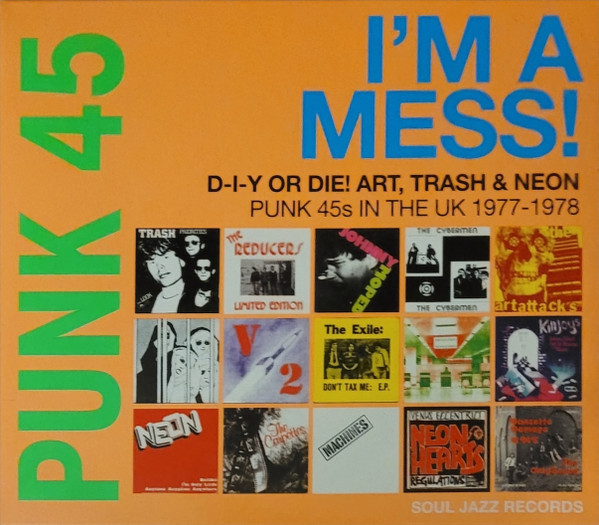
Recently, I have discovered that this compilation is in fact part of a series of punk compilations from Soul Jazz Records that started in 2013 under the “brand” name of “Punk 45,” with each release given a title borrowed from one of the songs on the disc, a subtitle describing the overall style, and a sub-subtitle covering the specific period.

The one we’re reviewing in this case, for example, is the most recent original compilation, though the label reissued the first disc in the Punk 45 series, “Kill the Hippies! Kill Yourself!” on vinyl only in 2024, which I view as symbolic of society’s general regression but is more honestly probably an attempt to lift the comp series out of obscurity.

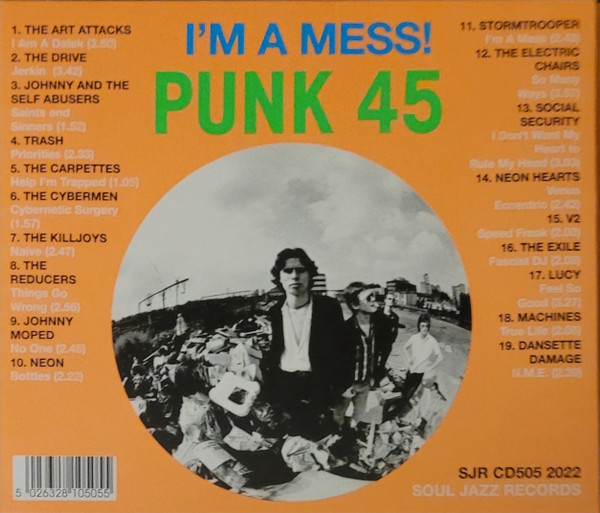
Before we dive in, a brief clarification: the track listing on the back of I’m a Mess! might have been the actual running order at one point in the production process, but it’s not the one we actually get — a truly DIY sort of error, you might say. The correct song order is reflected below.

Overall, this is a compilation of indie punk singles released in the UK in 1977 and 1978, a sampler rather than a comprehensive collection. Now that the background is out of the way, let’s dive in.

The Art Attacks – “I am a Dalek”
Well you know this title is going to grab my attention, given my lifetime love of the TV show “Doctor Who.” And indeed, what’s more punk than a Dalek? Their entire worldview is that everyone but themselves are unworthy and should either be subjugated or killed. It defines punk rock right from the start with three chords, a cloud of dust from furious playing, barely-tuneful singing and multi-tracked Dalek chanting.

The Drive – “Jerkin’”
Rock has a history of songs about masturbation, which is funny because people often join rock bands as much to get hooked up with groupies as they do to make music. This one is far more tuneful than “I am a Dalek” and has a more polished rock sound that betrays their pub rock background.

A lot of bar bands devolved into punk rockers when they observed which way the wind was blowing, and went right back to their usual styles a year or two later, let’s be honest

Jonny & The Self Abusers* – “Saints and Sinners”
Speaking of masturbation, this band is the forerunner of Simple Minds, a band you generally don’t think of when the work “punk” is in the conversation. But by damn, they do a nice job of putting the bass up front on their take on fast punk. The song matter is simple, but well sung and with a bit of harmony thrown in. Nice drop-dead ending also, the first on this album but a common exit for many punk songs.

(*this is how the band’s name is spelled on this compilation; I have seen the name spelled a bit differently elsewhere)

Trash – “Priorities”
Trash have a pretty good vocalist and (gasp!) backing vocals. Like Jonny and the Self Abusers — the bass is the anchor here, alongside the (talented) drummer. Punk is about very simple song structures and simple messages, and this embodies that principle.

The Carpettes – “Help, I’m Trapped”
Speaking of backing vocals, this one is so fast it’s almost punk rapping, with the chorus handled by the rest of the band (with a bit of echo) to give it a distinct sound. A good example of a song that doesn’t outstay the strength of its concept, like a few others here.

Stormtrooper – “I’m a Mess”
The title track of the compilation. The backdrop of chords gives us some under-melodies to add a bit of sophistication (just a bit) to the usual wall of guitar, drum, and vocals. This is an example of punk as being reflective of what was going on in Thatcher’s England.

The Electric Chairs – “So Many Ways”
Wait, what’s this?? GIRLS?? Well I never! And the guitar isn’t the lead instrument, rather a drum machine is? And is that … a sitar? What the blazes is going on? A hint of synth? Robotic “singing”? Did this band time-travel back four years from 1981?

Clearly this is where DIY ethic mentioned in the title comes in. One has to remember that sounding like robots was a fresh take on a punk vocal at the time. I do actually believe I can detect a hint of melody in here as well. Seven singles in, and punk is already evolving! I’m happy to see some female representation at this early stage.

Social Security – “I Don’t Want My Heart to Rule My Head”
Things are just going from bad (as in amateurish) to worse (not very punk, really) with this ahead-of-its-time New Wave-ish anti-love lament. Our narrator really, really wants you to know he’s not interested in a long-term relationship, so his idea here is that this must be anti-rock music, in that he’s not doing this pull groupies — or, apparently, get famous.

Neon Hearts – “Venus Eccentric”
Finally, frenetic sax makes its punk debut. The song consists of the singer complaining about what a bad relationship he’s in, but apparently the sex is great, so I have to give him points for broaching what would become a universal theme in rock music. Bonus points for a fast-paced but distinctive guitar solo.

The Cybermen – “Cybernetic Surgery”
Some punters with ambition and cultural references to Doctor Who (again) provide us what the punks always said they were like emotionally. There is some early vocoder use to make a sort of “cyber” vocal here and there. Musically quite catchy, with a sax break in the middle. As ruthlessly efficient as the monster they are named after.

The Killjoys – “Naive”
Now here’s a real punk song — the singer blaming other people and society in general for his ills. There’s some female vocals supporting the chorus of “I’m bitter” which sadly devolves into various moaning/screaming.

The Reducers – “Things Go Wrong”
More women! And another song about blaming others for the world’s ills, or your specific ills. It doesn’t have the frenetic pace of first-wave punk songs, but it certainly has the attitude and “bad relationships with various entities” subject matter down pat.

Johnny Moped – “No One”
This song takes the opposite approach — its message is that I am no one, and no one is going to make me feel bad. The lead singer brings a distinct northern accent to the party. Punk failed to get away from the “guitar player needs a solo, however short it might be” mentality of rock pretty early on, but this one finishes with a more typical hard-rock ending.

Neon – “Bottles”
Strange sounds in a loop a the beginning, possibly produced by bottles on guitar strings (GET IT?). Vocals pushed back in the mix on the verses, but not on the chorus — hmmm — and they sound like hippies that have been ordered to go punk. It’s not very good, but at least it’s short.

V2 – “Speed Freak”
Air raid sirens enter the chat as a song intro .. at last. A fast rap of verses followed by the simple chorus of (mostly) “Speed freak yeah.” Not the first song here that has been poorly mixed, either.

The Exile – “Fascist DJ”
A complaint rant about a club DJ who wouldn’t take requests. Literally, that’s it.

Lucy – “Feels So Good”
Now here we have a song tailor-made for pogoing, with an urgent beat and a DIY lyric about the DIY ethic. Moves along at a fast clip, which makes the guitar solo more work (and shorter) than it would otherwise be.

Machines – “True Life”
Old-school punk/rap with a lyric about facing up to the fact that the world sucks and it won’t get any better. Nihilist, maybe, but not wrong.

Dansette Damage – “N.M.E.”
Ah, yes, the old “song starts at one tempo in the intro, then picks up a different tempo when the lyrics start” trick. As you might guess, this song is about a fellow obsessed with the New Musical Express newspaper (I guess you could say it was his “enemy” — thank you, thank you, I’ll be here all week). The title eventually becomes all, and the song devolves from there, as is proper and correct for obsession songs.

Is this compilation worth your time? If you have an interest in unsung OG punk rock, then yes — there are some gems here amongst the mediocrity. It hasn’t aged poorly, I will say that for it, but I’ll also say it is mostly pretty clear why these bands didn’t advance within the movement.

One last note: the vinyl version of this compilation featured a bonus single for Record Store Day 2022 that included a b-side which is not part of the CD version. Both the a- and b-side of the single contained songs by the band Stormtrooper. The a-side was the title song in the compilation, “I’m a Mess.” The extra song on the b-side is “It’s Not Me.”
Radio On (1979)

dir. Chris Petit
⭐️⭐️
52-week film challenge, film 45

I’ll admit it, the soundtrack of Radio On is what pulled me into watching it. The very late 70s, 1978-79 in particular, were the original “post-punk” years and pivotal to me finding my musical “tribe,” which covered punk, ska, and especially New Wave with its synthpop vibes, calling back to Kraftwerk and other synth pioneers.

On that front, the film ticks many of my musical boxes: early Devo, Kraftwerk, Robert Fripp, Ian Dury, Wreckless Eric, Lene Lovich, The Rumour, and David Bowie all appear in full or (mostly) bits, so the soundtrack would normally get five stars from me — except that you rarely hear the full songs. Still, the aesthetic is there, and it’s the best part of the movie.

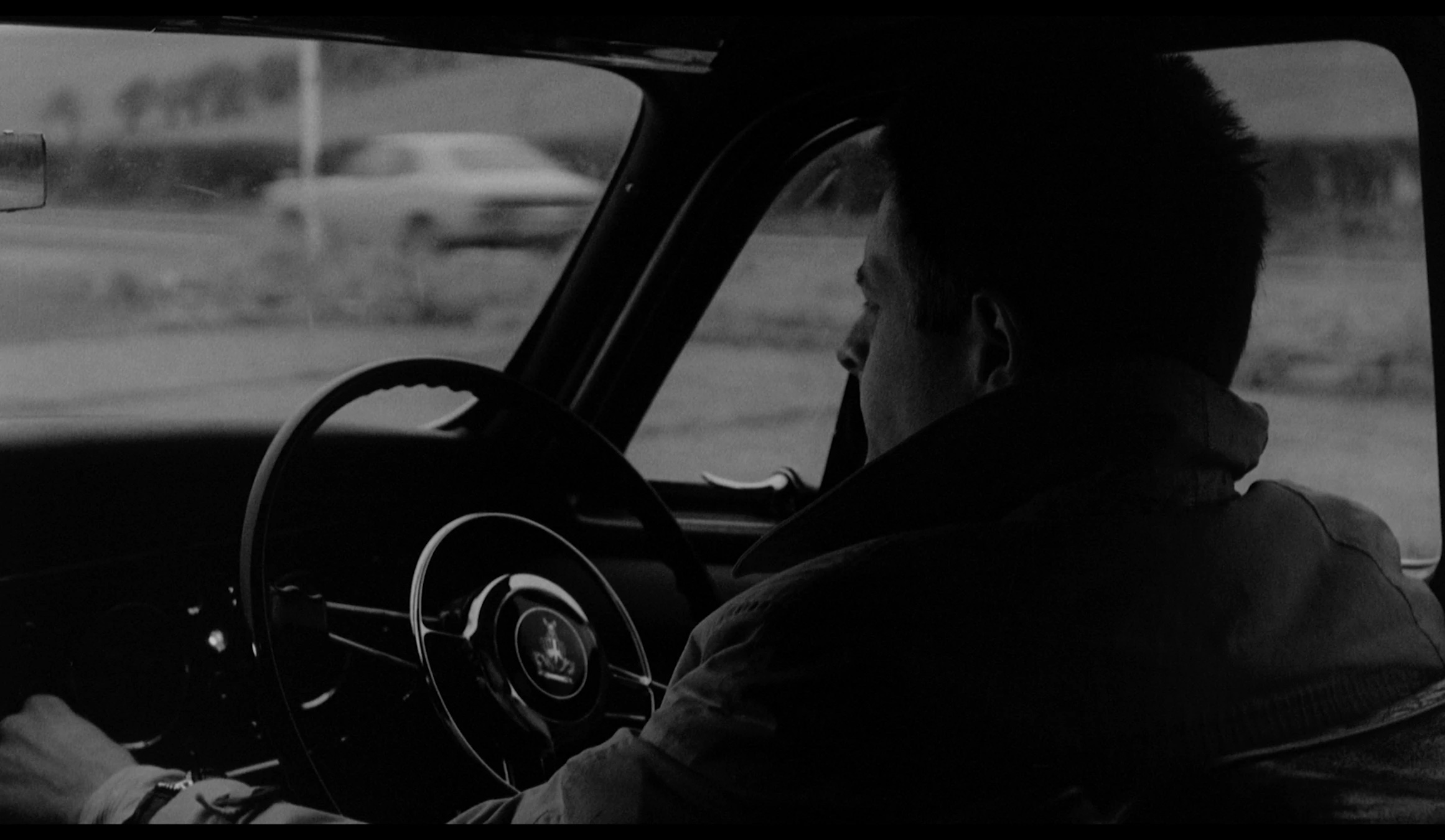
As for the film itself, it has the loosest of possible plots: a man named Robert (David Beames) who works as a DJ for a chain of biscuit (cookie) factories — yes, playing music live to workers — has to leave his empty life in London to drive to Bristol, as his brother there has committed suicide for no discernible reason. Most of the movie is simply Robert driving to — and then back from — Bristol, making this technically a (rare) British road movie.

This is literally about 90 percent of the movie.

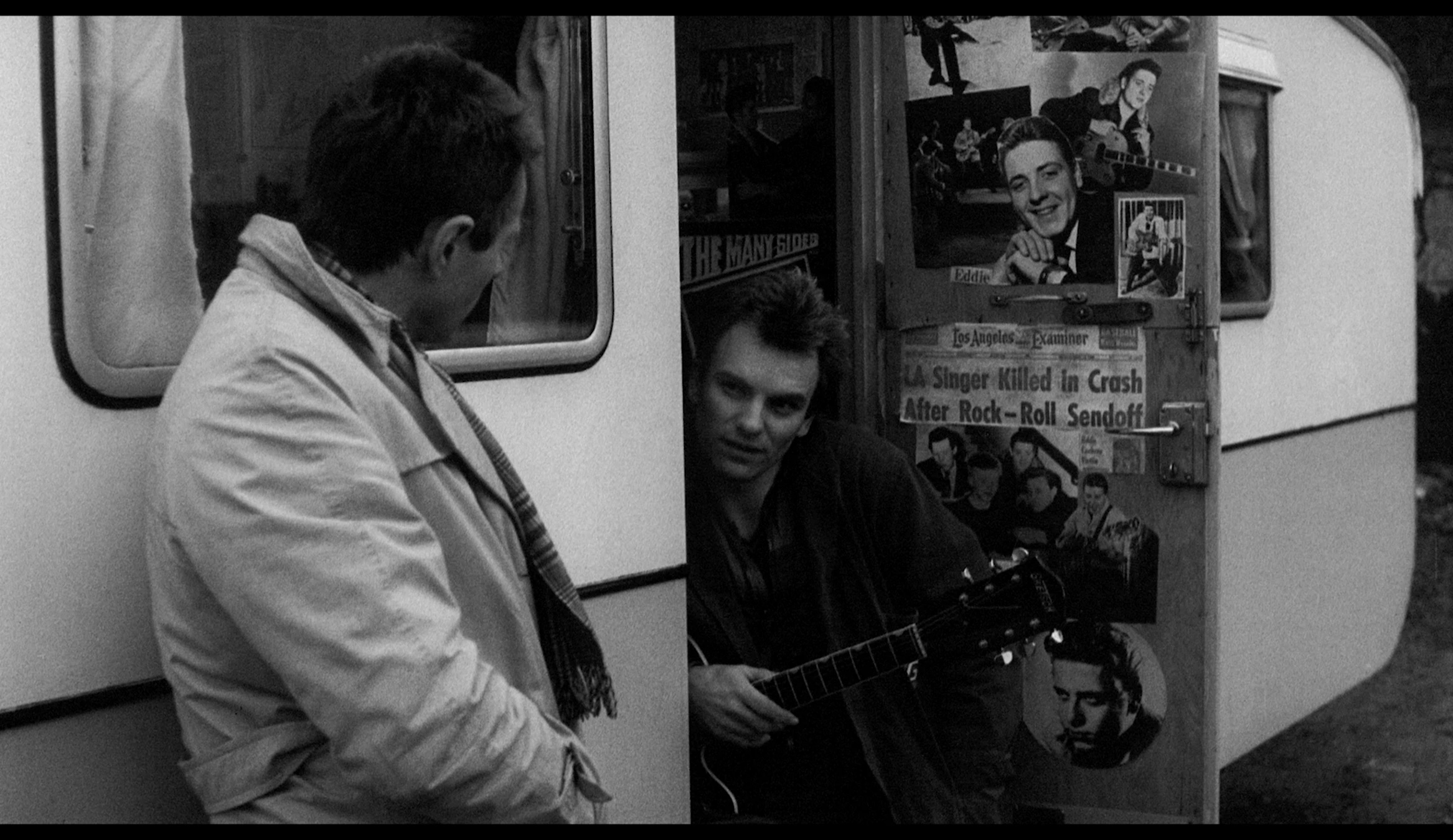
It’s shot in black and white by Martin Schäfer, best known for being Wim Wenders’ assistant cameraman — and indeed, Wenders is also involved in this. Along the journey to Bristol, he meets a few people (including Gordon Sumner, better known as Sting from The Police, who plays a homeless troubadour) and shares a few moments with various people, including a couple of girls, but nothing much actually happens.

This lack of clear story and the litany of drifting, directionless characters is undoubtedly meant to convey the post-punk generations’ alienation from “society” and general ennui and aimlessness in the aftermath of punk, heralding an ongoing emergence of a world where not much gets done, and nobody seems to care much, or commit to anything. The performances, particularly Beames’ Robert, offer moody minimalism and slacker angst, which has been the soundtrack to successive generations ever since.

As symbolism, that angst and purposlessness comes across in the film; 40+ years after Radio On was made, things haven’t changed that much, though some inconsequential music and fashion trends have periodically managed to march through in the meantime. So we get a lot of well-shot but visually-flat driving to “nowhere” and then back again.

Robert finally gets to Bristol, pokes around a bit, talks to his brother’s girlfriend/partner (who has little to say) for a few days, hangs out in Bristol a bit, then begins the journey home, none the wiser. As mentioned, he meets some people going to Bristol and on the way back, and while these encounters inject some interest and really minor amounts of insight, nothing much comes of them.

The “ending” of the film, where Robert finally must abandon his misbehaving car and take the train the rest of the way home is the most interesting point in the film, primarily in contrast to the monotony that came before it.

I don’t want to make it sound like I hated this film, I didn’t — a journey is a journey, and some scenes were filmed in specific neighbourhoods I know from my own travels, and did I mention the soundtrack? — but Radio On has little to offer beyond its great musical choices and some kind of vague statement on the desperation of living in the very late 70s as a member of the “lost” generation, which as far as I can tell are still mired in their own entropy.

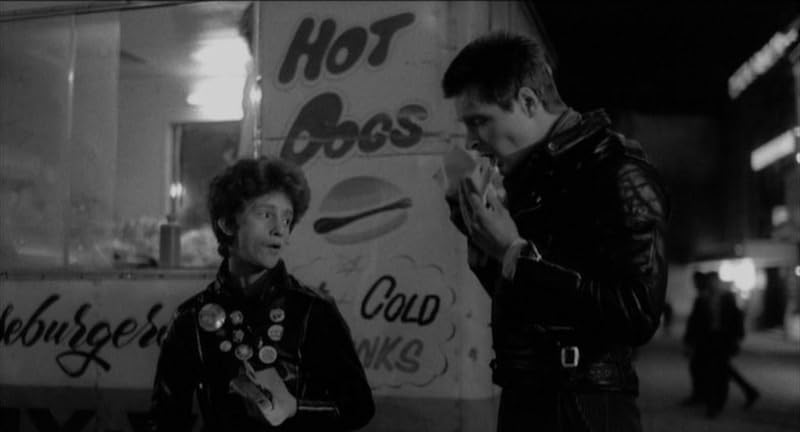
If you knew this place in 1979, you were a pretty cool kid.

Brighton Rock (1948)

Dir. John Boulting
⭐️⭐️⭐️⭐️
52-week film challenge, film 44

Whilst away on a quick vacation, I had an opportunity to see Brighton Rock, a Graham Greene adaption starring Sir Richard Attenborough and, yes, William Hartnell. Although all of the Doctors are fine actors, the more I see of Hartnell the more I admire the variety he brings to his parts.

I’m beginning to believe that Hartnell did actually say that the only man in England who could replace him as The Doctor would be Patrick Troughton; they both mold themselves into the part instead of (as happens too often these days) the part being effectively written especially for the one character an actor plays especially well. Hartnell is only a featured player in this one, where the lead is Sir Richard Attenborough playing “Pinkie” Brown, a ruthless small-time gangster who leads a small-time gang of crooks, of which Hartnell’s Dallow is the most loyal but least adventurous … at least at first.

They spend their time shaking down some merchants of Brighton, a popular seaside tourist town on the southwest coast of England. Having been there, I can attest that things have only changed superficially there in the decades since this was made.

The story starts after the murder of a gang leader named Kite, that the police suspect was the result of gang wars in Brighton. They couldn’t be more correct: young Pinkie Brown has just taken over Kite’s old gang, and when Brown discovers that a man named Fred Hale is in town for the day doing a newspaper promotion, Brown blames Fred (who clearly had some unshown previous dealings with the gang) for Kite’s death.

The gang confront Fred in a pub, then chase him around the area until Pinkie manages to kill him on an amusement park ride. Before that, Fred meets local busybody and brassy entertainer Ida Arnold (Hermione Baddeley) who picks up on the fact that Fred’s scared. When he is in fact killed, the police think it was a heart attack, but Ida starts trying to reveal the truth.

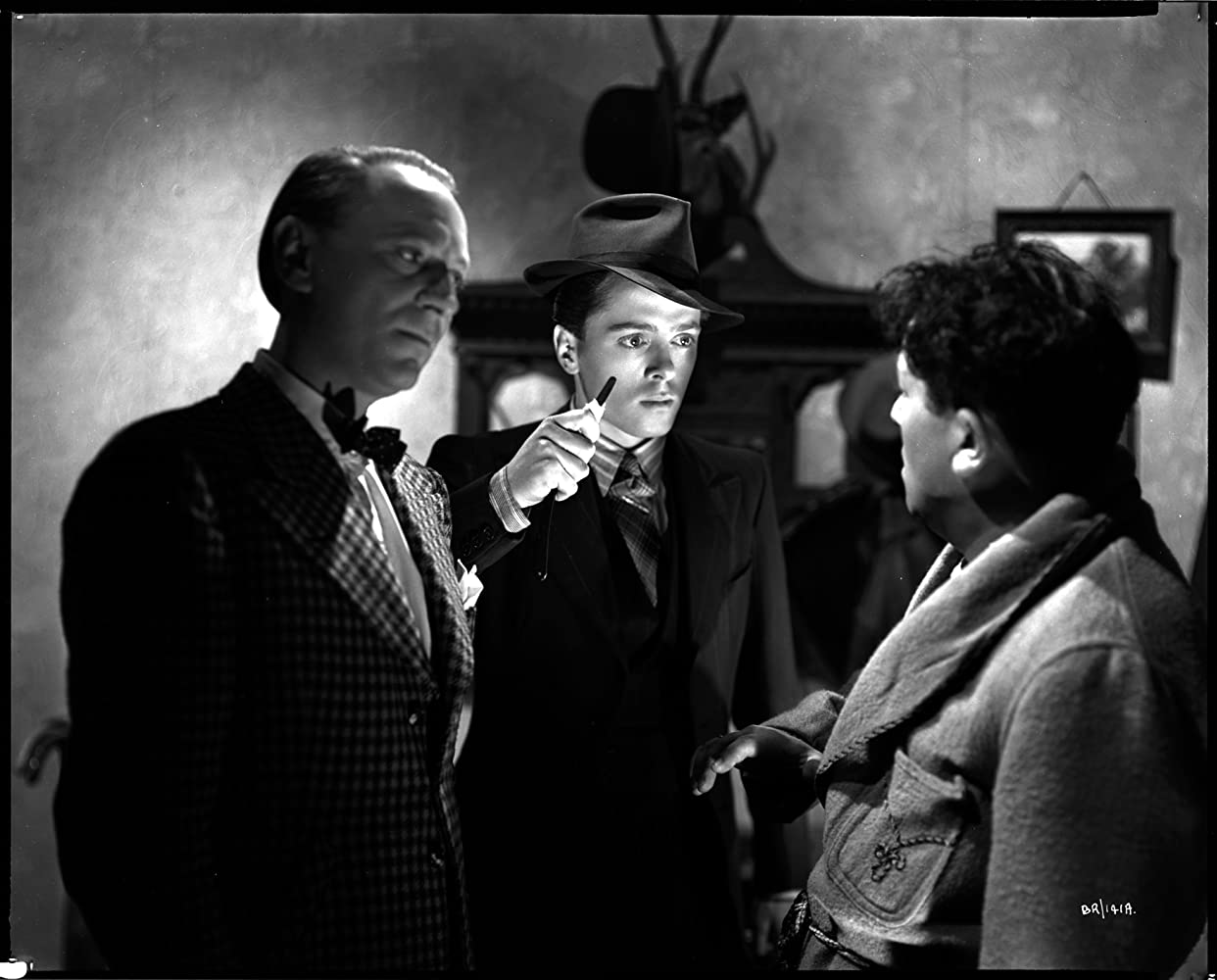
Pinkie shows Fred the jig is up and leads him to his death in the Haunted House ride.

Following the murder, Pinkie moves to cover up when he died, by having his lieutenant Spicer distribute the remaining contest cards as though Fred was still doing it, but Spicer was seen putting one of the cards in the cafe where Fred was seen. Pinkie decides to put a card under the table at the cafe himself, and meets the same waitress that waited on Fred, a sweet doe-eyed thing named Rose (Carol Marsh). Pinkie alternates between “flirting” with her and trying to find out what she knows.

Ida comes into the cafe, and gets a suspicious vibe off Pinkie that Rose probably sees as dark and exciting and thus attractive. Pinkie asks Rose out, but he’s not truly interested in her; she’s smart and knows he’s somehow involved in the gangs. Pinkie has designs to marry Rose purely so she cannot give evidence against him (as was English law at the time).

This sets the main plot in motion, to see how these scenarios will resolve themselves, and the answer is “not quite as you’d expect,” thanks to a number of well-done additional elements, including Pinkie’s conflict with the older boss of a rival gang; that Pinkie has no loyalty even to his own gang; a phonograph record Pinkie makes in a booth that we eagerly await the result of, which includes a great twist. The various elements really add to the story.

As with other Graham Greene works, the screenplay wrestles with the differences between Catholic morality — which is heavy on themes of damnation and forgiveness — versus individual moralities of mainly non-religious or not strongly so individuals when those moralities conflict. The film was seen as having excessive violence and thus didn’t quite break even on release, but in the US (where it was retitled Young Scarface) the violence wasn’t seen as excessive, and thus didn’t do well there either.

Ida’s got a bad feeling about this …

Brighton Rock (the title actually refers to a popular candy of the time) consistently shows up quite high in lists of the best British films, and I suspect this is mostly due to Attenborough’s incredibly strong performance as the paranoid and borderline-psychotic Pinkie. It certainly does a good job of capturing the unseemly underbelly of a resort town, and is populated with a variety of colourful British characters.

The performances, from the unnerving Pinkie to the fiercely loyal Dallow to the semi-innocent Rose and the caricaturish Ida are all “rock”-solid, and the gang fight was seen as shocking at the time. There are enough unexpected plot turns to keep even those not fond of “gangster movies” interested, and the contrasting themes of dark motives and bright, happy tourists (not extras; the tourist scenes were shot serepticiously) is a wonderful backdrop that breaks up the frequent cruelty.

Not a single person in the crowd scenes knew they were being filmed for this movie.

If you like old movies with a lot of character action but aren’t fond of US-type gangster movies, Brighton Rock might be worth a try. The twist at the end is brilliant — but made Graham Greene angry, and that’s more than enough to go on for me.