⭐️⭐️⭐️⭐️
52-week film challenge, film 21
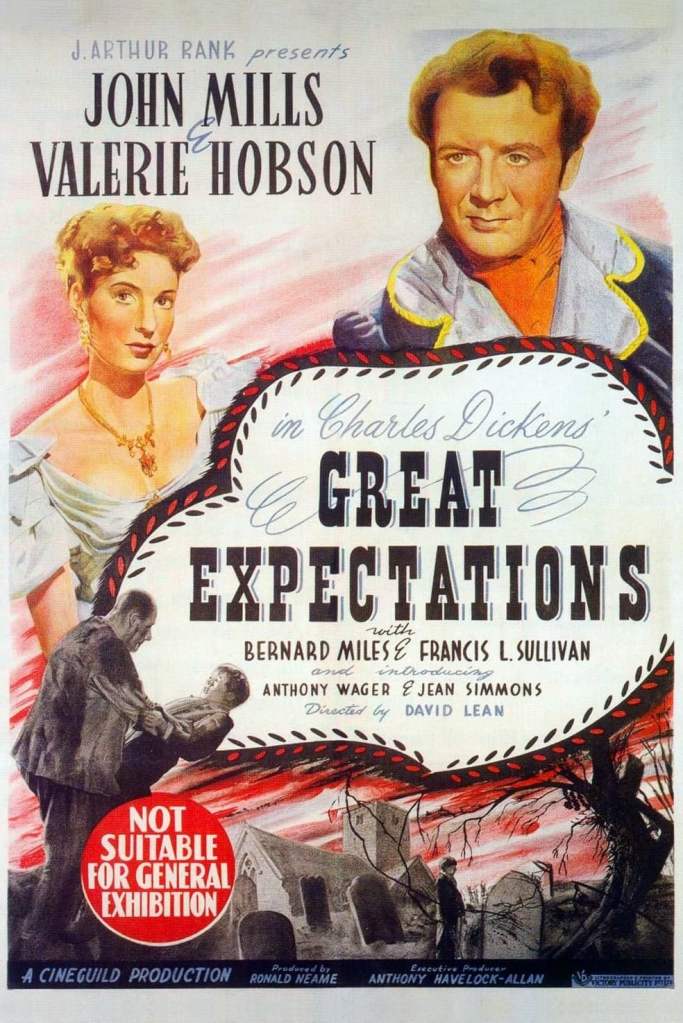
Whether you are a fan of Dickens, or you’ve not read any of his work beyond A Christmas Carol, this is a fantastic film adaptation to offer insight into Dickens’ other work, full of strong visual language to put you in the authors’ mindset and life experiences. Great Expectations covers poverty, the working class, and injustice, but contrasts this with power, privilege and good old British eccentricity; themes Dickens constantly came back to in his other works.
As an adaptation of the book, Lean and his fellow screenwriters condense and cut some plot strands in order to make for a followable two-hour film, and made the deliberate choice to make the film in B&W rather than colour to further establish the film as being part of a bygone age. As a single film, no other version since has surpassed it.
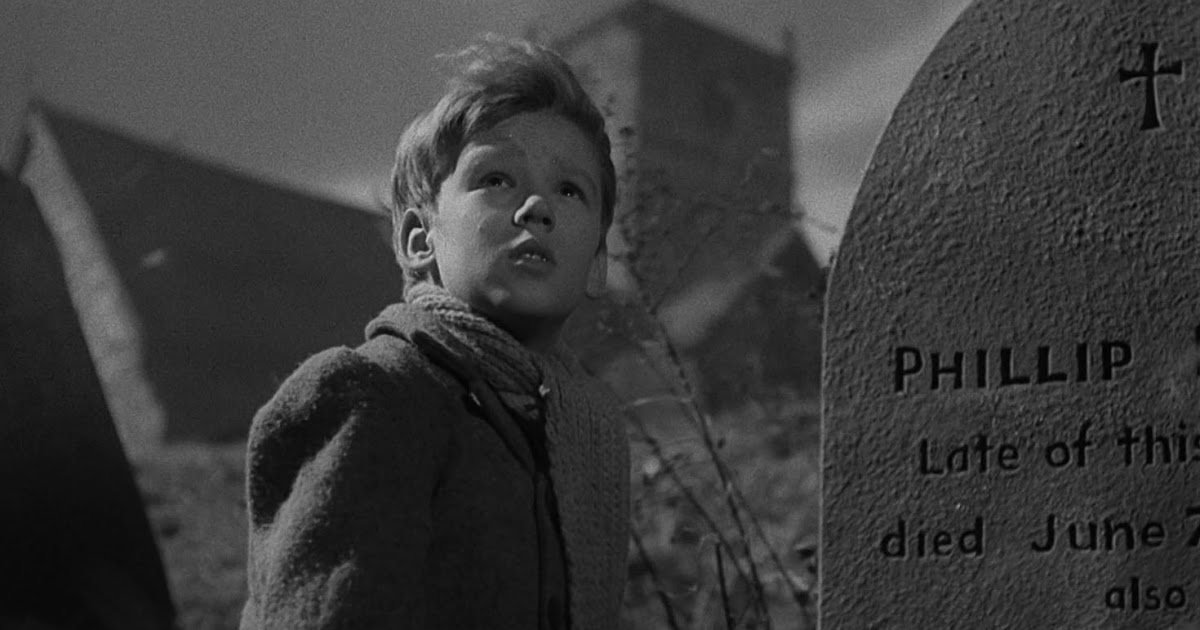
Without trying to rehash the entire plot, an orphan named Philip Pirrup, whom absolutely everyone calls “Pip” as a single first and last name, is living with his older sister and her husband Joe, a kindly blacksmith. A chance encounter with the desperate escaped convict Abel Magwich in the graveyard of Pip’s parents and an act of kindness on Pip’s part sets in motion plot lines that will only show up much later.

In the meantime, Pip falls into the orbit of an eccentric patron, Miss Havisham, who has a macabre backstory and a young adopted daughter Estella, who is seemingly impervious to love and rather cold (and occasionally brusque), though of course young Pip falls in love with her anyway. As an adult, Estella does take on a beau but is, as Pip observes, simply using him. She explains matter-of-factly (again) to Pip that she has no heart and does this to all men — except Pip. It is a beautifully understated moment of foreshadowing where Pip finally “gets” her and what Miss Havisham has done to her.

As Pip turns 20, he discovers he has a mysterious benefactor (whom he assumes is Miss Havisham) who wants Pip trained in London to become a proper gentleman of society. Leaving his family, his patron, Estella and all he has known, he travels and meets up with a boyhood colleague, Herbert Pocket, who becomes his roommate and friend. A year later, matters come to a head as the benefactor reveals himself, setting in motion the means to resolve the various plot lines (and finally some action scenes!).
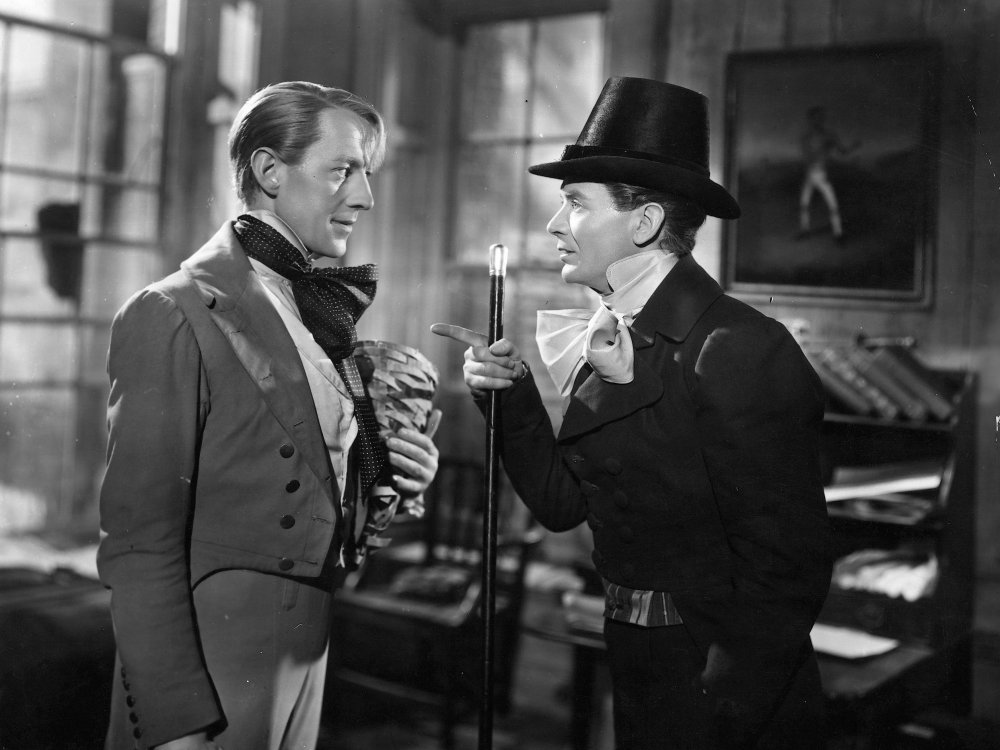
A David Lean film is always beautifully shot and extremely well-directed, and this one is no exception. The B&W cinematography, apart from the opening sequence, was shot by Guy Green, who also worked with Lean on his other Dickens’ film, the even more memorable 1948 Oliver Twist. Both Alec Guinness and Martita Hunt had played their respective roles (Herbert Pocket and Miss Havisham) in a stage adapterion of the tale Guinness wrote, which prompted Lean to make the film in the first place (though he did not use Guinness’ stage script).
Lean definitely had a talent for picking and working with child actors, as both the young Pip (Anthony Wager) and the boy Herbert (John Forrest) are great in their parts, and a young Jean Simmons beautifully played the young Estella, with Valerie Hobson seamlessly taking on the adult Estella. Also of note is the ageless Frances L. Sullivan, who flawlessly played the lawyer Mr Jaggers in perfect Victorian style, but to be fair he had experience in the part — he had played the same role in a 1934 film version of Great Expectations as well!

There are only two serious errors in this film in my opinion, one of which was unavoidable: you can’t film the entire story, it would have likely doubled the running length of the film. Lean does his best to choose the best plot strands to follow, and resolves them all satisfactorily, but in truth Dickens’ lengthy storyline — it was originally written as a serial for a magazine, and the novel was originally published in three volumes — doesn’t lend itself to anything less than a mini-series.
The other flaw (and this was a big one) was casting a 38-year-old John Mills as the adult (21 year-old) Pip. I have no quibble with Mills’ excellent and emotional performance, but the age jump between the boy Pip and the (mature!) man Pip is just not credible on-screen. In a rare foot wrong, Lean should have cast a younger actor — at times, Mills looks more like 26-year-old Alec Guiness’ father than his contemporary.
A trip back to the mannered and class-centric world of Dickens’ time is probably not for everyone, even as beautifully realised as it is here, but as a picture of a bygone age (and Dickens’ clever way of pointing out the injustices and flaws of it), Great Expectations puts you right into the author’s imagination. The resolution of the film is a bit fast and tidy, but not before a series of memorable scenes in which Pip first (accidentally) destroys Miss Havisham and then forcibly prevents Estella from becoming Havisham’s prisoner — a powerful statement on the importance of finding your own way in the world, regardless of your circumstances or background.

 The Chasbah